
 Click main image to view in full screen. Unlock all 32 preview images:
Theory of Constraints (TOC) Fundamentals – PowerPoint PPTX Template
PowerPoint (PPTX) + Word (DOCX) 101 Slides


BENEFITS OF THIS DOWNLOADABLE POWERPOINT DOCUMENT
- Increase Throughput & Profitability by focusing on the constraints that limit overall performance.
- Reduce WIP & Lead Times by synchronizing production with bottleneck capacity.
- Maximize Lean ROI by directing improvement efforts where they deliver the greatest business impact.
OPERATIONAL EXCELLENCE PPT TEMPLATE DESCRIPTION
THEORY OF CONSTRAINTS (TOC) FUNDAMENTALS TRAINING PRESENTATION & PRACTITIONER TOOLKIT
When organizations face late deliveries, rising work-in-process (WIP), and missed financial targets despite working harder, the problem may be a lack of system-wide focus. Theory of Constraints (TOC) Fundamentals helps identify the primary bottleneck, unlock its capacity, and align the value stream to improve profitability, flow, and delivery reliability.
EXECUTIVE SUMMARY
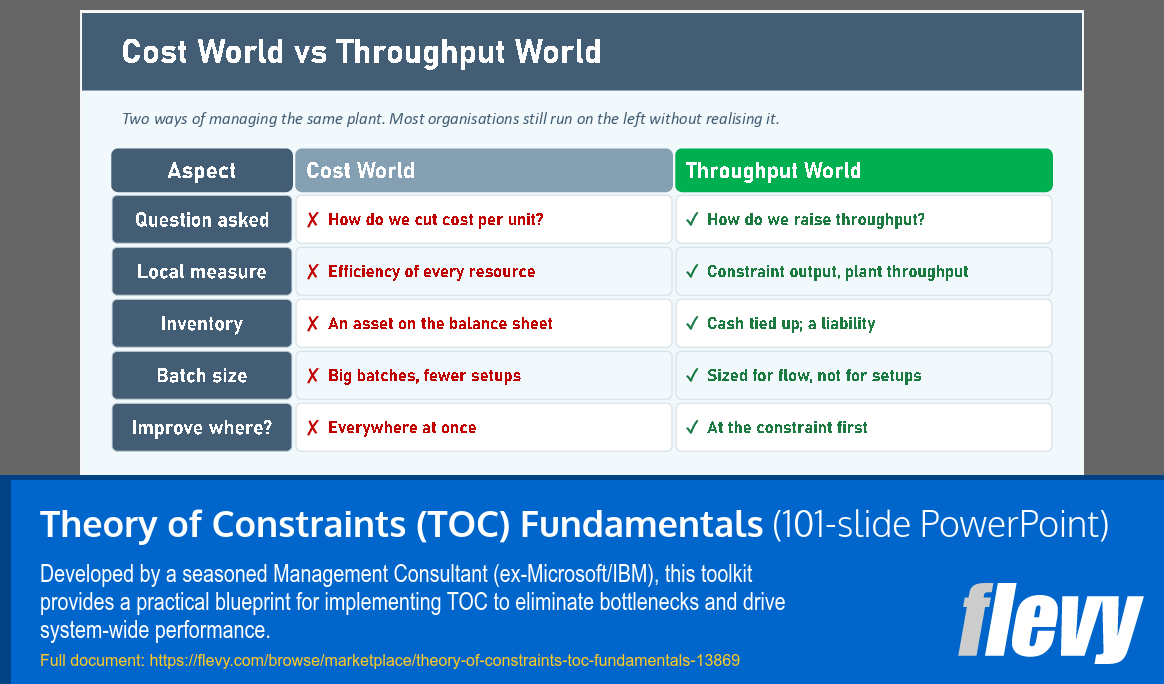
TOC Fundamentals is a one-day training course and practitioner toolkit comprising eight progressive modules. It shifts management thinking from the "Cost World" of reducing unit costs everywhere to the "Throughput World" of maximizing system output. Participants learn the Five Focusing Steps (5FS), Throughput Accounting (TA), Drum-Buffer-Rope (DBR), and color-coded Buffer Management. The course also integrates TOC with Lean tools such as Value Stream Mapping (VSM), 5S, TPM, and SMED to focus waste elimination on system constraints. A practical 30-60-90 day roadmap connects strategy with implementation.
KEY BENEFITS
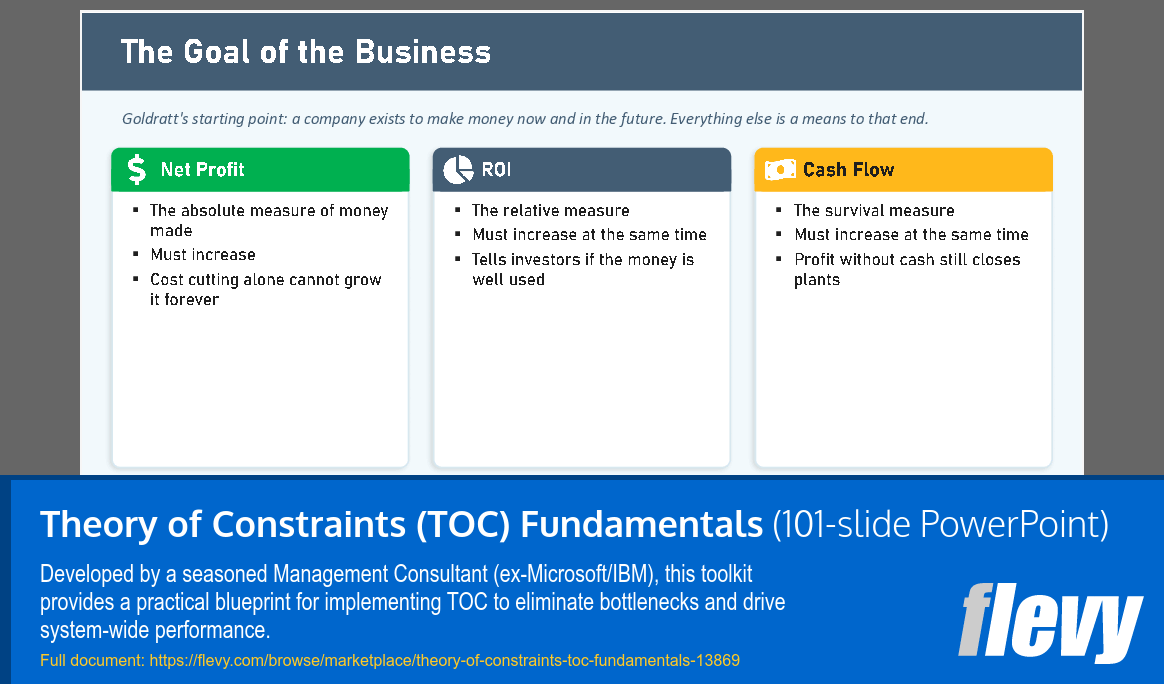
• Align Performance with Goldratt's Goal: Improve Net Profit, ROI, and Cash Flow by prioritizing system throughput over local efficiency.
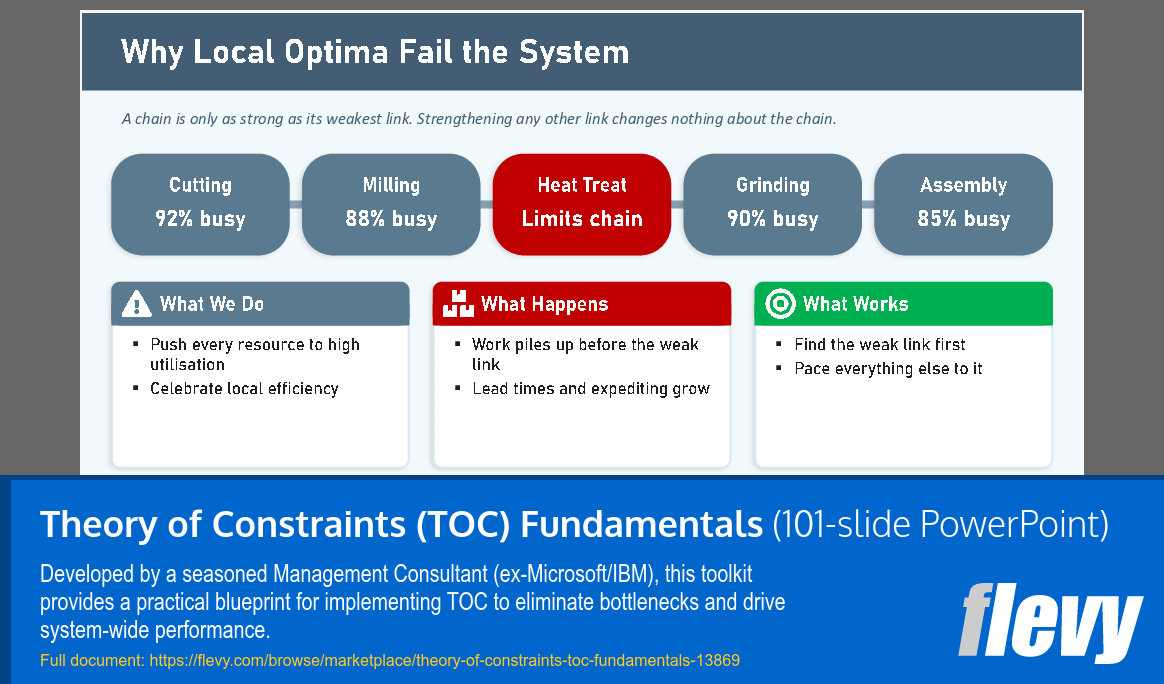
• Avoid the Local Efficiency Trap: Understand how excessive non-bottleneck utilization increases WIP and lead times, and apply subordination rules to protect flow.
• Improve Production and Service Scheduling: Use DBR to align material release with constraint capacity and reduce lead times and scheduling disruption.
• Focus Lean and Six Sigma Projects: Apply TOC buffer diagnostics to direct VSM, Kaizen, TPM, and DMAIC projects toward meaningful capacity gains.
• Address Project and Supply Chain Constraints: Apply Critical Chain Project Management (CCPM) to reduce harmful multitasking and consumption-based replenishment to help prevent stock-outs.
• Translate Learning into Action: Use eight practical exercises for site audits, DBR mapping, and accountable 30-60-90 day pilot planning.
TARGET AUDIENCE – WHO IS IT FOR?
• OpEx and Lean/Six Sigma Practitioners: Champions, Green Belts, and Black Belts seeking greater financial impact from improvement projects.
• Operations Leaders: Operations Directors, Plant Managers, and Value Stream Managers overseeing capacity, WIP, and production scheduling.
• Executive Leadership: CEOs, COOs, CFOs, and OpEx or Supply Chain VPs sponsoring transformation and removing policy constraints.
• Transformation and Project Leaders: PMO Directors and R&D Managers managing complex portfolios and cross-functional change.
WHAT'S INCLUDED IN THE BOX?
• 100+ Slide PowerPoint Presentation: Editable 16:9 deck featuring executive-ready layouts, visual cards, comparison matrices, and case vignettes.
• Eight-Exercise Team Pack:
• Part A – Facilitator Guide: Session timings, setup instructions, debrief questions, and worked solutions.
• Part B – Participant Handouts: Printable one-page worksheets, routing puzzles, symptom-sorting cards, and scoring matrices.
• Course Outline and Slide Mapping: Detailed instructional guide and session agenda.
• Manufacturing and Business Case Studies: Illustrative UniCo/Alex Rogo, Precision Parts, and Riverside Fabrication scenarios linked across the modules.
LEARNING OBJECTIVES
By completing this course, participants will be able to:
• Explain TOC's business goal and how system constraints govern overall performance.
• Distinguish Cost World from Throughput World thinking and use T, I, and OE in decisions.
• Apply the Five Focusing Steps to physical and policy constraints.
• Schedule and protect constraints using DBR and Green/Yellow/Red Buffer Management.
• Integrate TOC with VSM, 5S, Kaizen, TPM, SMED, and Kanban.
• Apply TOC to CCPM, consumption-based replenishment, and Thinking Processes.
• Recognize seven implementation pitfalls and establish review routines.
• Develop an accountable 30-60-90 day pilot roadmap.
DETAILED TRAINING CONTENTS
Module 1: Why Constraints Matter
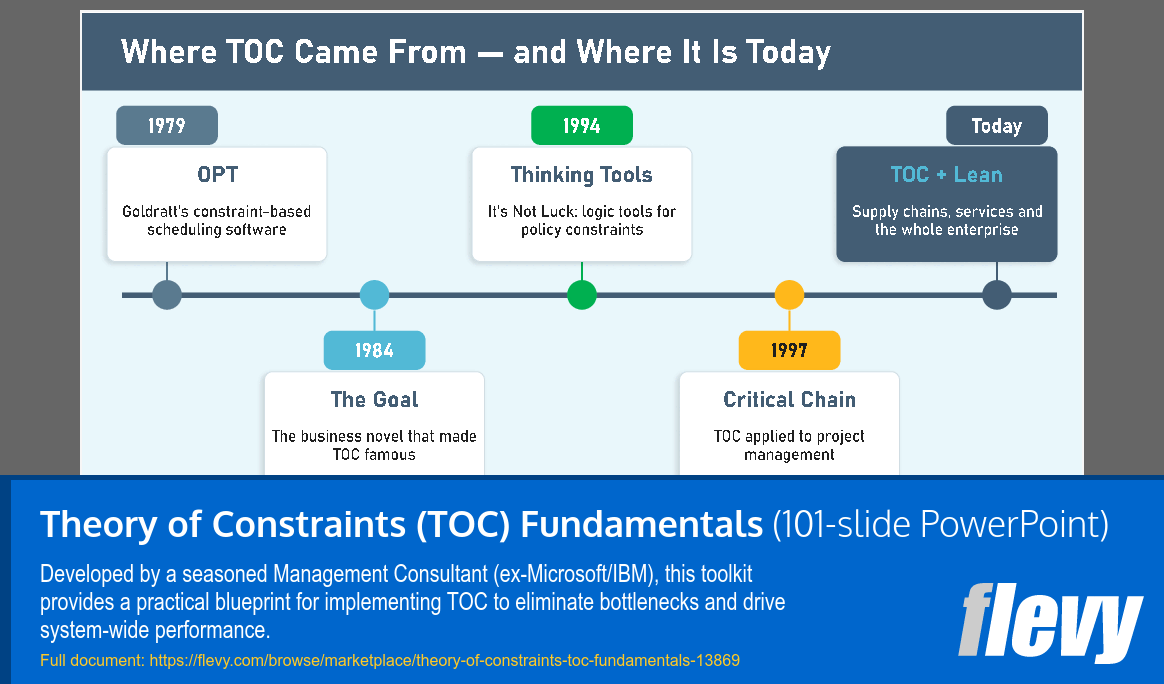
• Goldratt's business goal: simultaneous improvement in Net Profit, ROI, and Cash Flow.
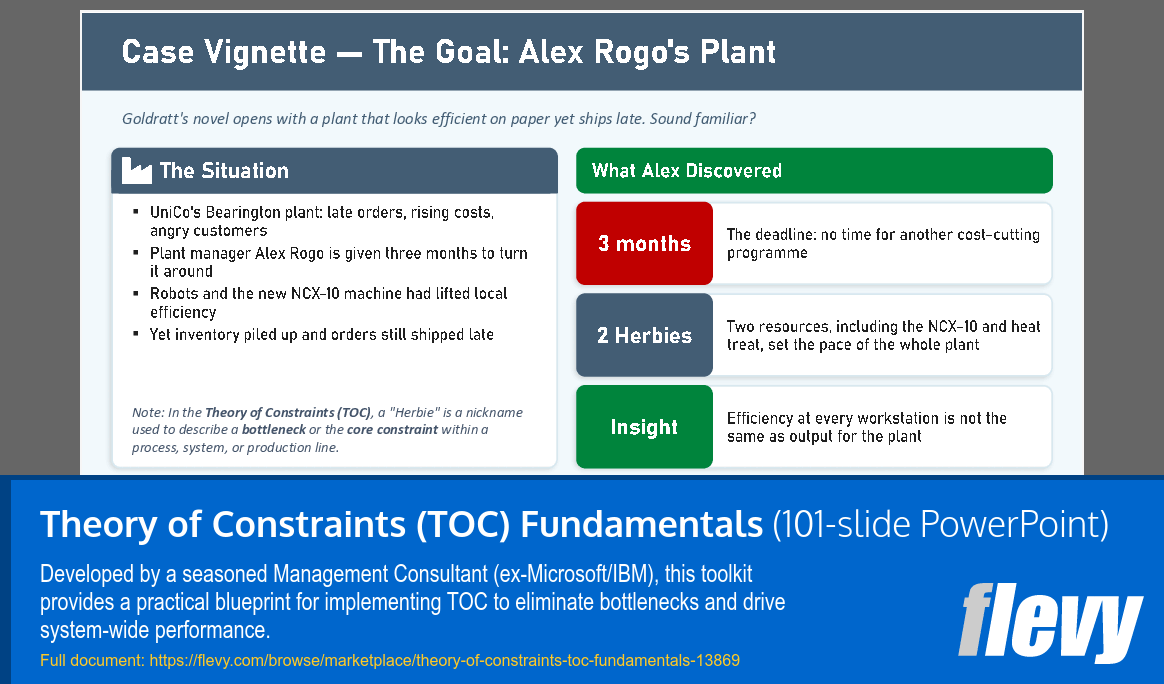
• UniCo's Alex Rogo case and the "Herbie" Scout hike analogy.
• Cost World versus Throughput World decision-making.
Module 2: Core Concepts and Measures
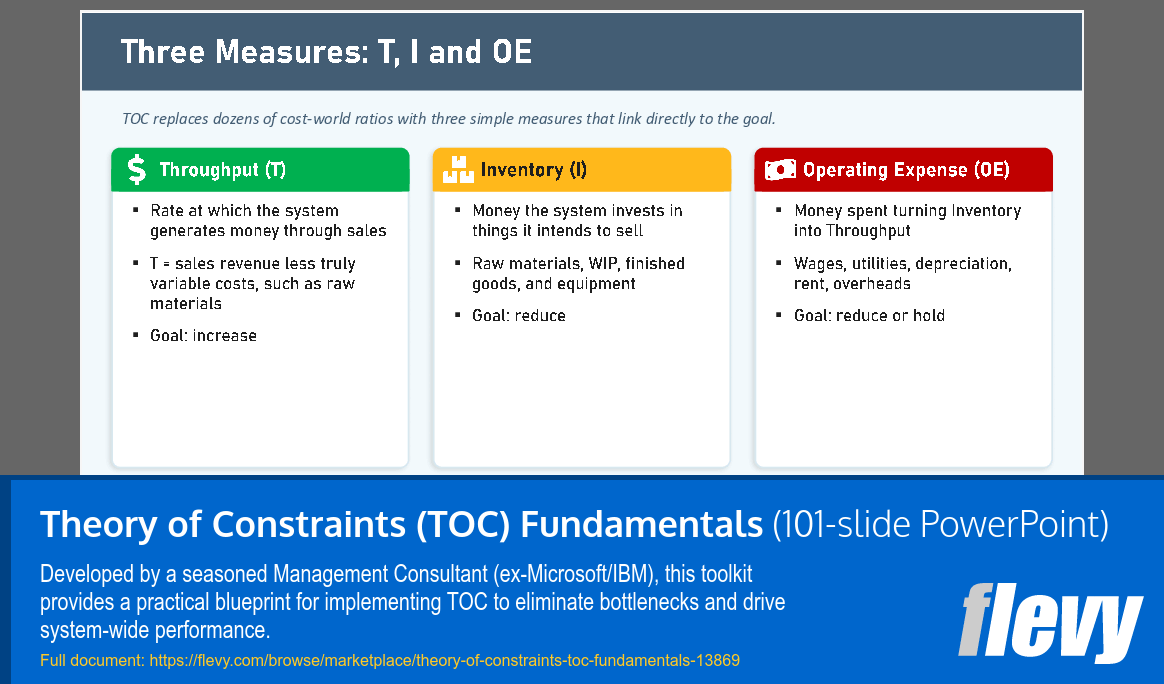
• Throughput (T), Inventory (I), and Operating Expense (OE).
• Throughput Accounting and product mix selection by throughput per constraint minute.
• Bottlenecks, Capacity-Constrained Resources (CCRs), and four constraint types.
Module 3: The Five Focusing Steps
• Identify, Exploit, Subordinate, Elevate, and Go Back.
• Shop-floor indicators and zero-cost exploitation tactics.
• Subordination rules for scheduling, quality, maintenance, and performance measures.
Module 4: Drum-Buffer-Rope and Buffers
• DBR mechanics: Drum (schedule), Buffer (time protection), and Rope (material release).
• Green, Yellow, and Red zones with corresponding action rules.
Module 5: Integrating TOC and Lean
• TOC determines where to focus; Lean provides the tools for improvement.
• Direct VSM, 5S, Kaizen, TPM, OEE, and SMED toward system constraints.
Module 6: Beyond the Shop Floor
• Consumption-based replenishment versus forecast-driven push.
• CCPM and TOC Thinking Process tools, including CRT and EC.
Module 7: Best Practices and Pitfalls
• Implementation stages: Prepare, Pilot, Extend, and Sustain.
• Avoid seven deployment pitfalls and metrics that undermine flow.
Module 8: Leading TOC and Action Planning
• Executive sponsorship and one-page constraint dashboards.
• Accountable 30-60-90 day pilot plans and review routines.
PROPOSED 1-DAY WORKSHOP AGENDA
• 09:00–10:35: TOC Principles and Core Metrics
• 10:35–10:50: Morning Refreshment Break
• 10:50–12:40: Five Focusing Steps and DBR Flow
• 12:40–13:25: Executive Lunch Break
• 13:25–15:05: Integrated OpEx and Extended TOC
• 15:05–15:20: Afternoon Refreshment Break
• 15:20–17:00: Implementation Pitfalls, Leadership, and Roadmap
GLOSSARY OF KEY TERMS
• Throughput (T): Money generated through sales, calculated as sales revenue minus truly variable costs, such as raw materials.
• Inventory (I): Money invested in items intended for sale, including raw materials, WIP, and finished goods.
• Operating Expense (OE): Money spent converting Inventory into Throughput, including labor, utilities, rent, and depreciation.
• Constraint (Bottleneck): A resource, policy, or market limitation whose capacity restricts total system output.
• Five Focusing Steps (5FS): TOC's improvement cycle: Identify, Exploit, Subordinate, Elevate, and Go Back.
• Drum-Buffer-Rope (DBR): A scheduling method in which the constraint sets the pace (Drum), time buffers protect flow (Buffer), and material release follows constraint capacity (Rope).
• Buffer Management: A control method using Green (OK), Yellow (Locate/Plan), and Red (Expedite/Act) zones to monitor order progress.
• Throughput Accounting (TA): A management accounting approach that prioritizes decisions and product mix using throughput per constraint minute rather than allocated overhead.
FREQUENTLY ASKED QUESTIONS (FAQs)
How does TOC differ from traditional Lean Manufacturing?
TOC identifies *where* improvement should focus by finding system constraints. Lean supplies tools such as 5S, Kaizen, and SMED to determine *how* to improve those areas.
Does DBR replace Kanban pull systems?
Not necessarily. DBR controls material release according to constraint capacity, while Kanban provides local pull signals between workstations. Both can be used together.
Can Throughput Accounting complement GAAP or IFRS reporting?
Yes. GAAP/IFRS supports external financial reporting, while Throughput Accounting helps managers assess pricing, product mix, and investment decisions without relying on potentially misleading cost allocations.
How can we identify a bottleneck when queues shift between workstations?
Changing product mixes or excessive material release may cause bottlenecks to shift. Module 3 and Exercise 2 introduce load-versus-capacity analysis to identify the main physical or policy constraint.
Why should non-bottleneck workers sometimes remain idle?
Keeping every machine busy can increase WIP and lead times without increasing sales. Available capacity can instead support setups, quality checks, maintenance, and cross-training.
How does CCPM help prevent project delays?
CCPM reduces hidden task-level safety margins, limits harmful multitasking, pools safety into a Project Buffer, and monitors progress using Fever Charts.
Is this training suitable for healthcare and administrative services?
Yes. Module 3 applies the Five Focusing Steps to office quote-to-cash workflows, while Module 6 addresses service queues, policy constraints, and supply chains.
What materials support the group exercises?
The package includes a Word document with facilitator debriefs and printable one-page handouts covering routing datasets, symptom-sorting cards, pitfall audit scorecards, and 30-60-90 day planning templates.
Got a question about the product? Email us at support@flevy.com or ask the author directly by using the "Ask the Author a Question" form. If you cannot view the preview above this document description, go here to view the large preview instead.
Source: Best Practices in Operational Excellence, Lean Management PowerPoint Slides: Theory of Constraints (TOC) Fundamentals PowerPoint (PPTX) Presentation Slide Deck, Operational Excellence Consulting
ABOUT THE AUTHOR

Operational Excellence Consulting, founded in 2009 by Allan Ung, draws from extensive experience at Microsoft, IBM, and Underwriters Laboratories (UL). We specialize in strategy deployment, customer experience design, and operational excellence, applying Design Thinking, Lean, and Systems Thinking to maximize customer value and minimize waste.
Our
... [read more]
Ask the Author a Question
You must be logged in to contact the author.




























