
CHANNEL DISTRIBUTION STRATEGY EXAMPLE PPT DESCRIPTION
Explore the Telco 3G Strategy Report, crafted by industry experts, detailing product strategies, pricing models, and marketing insights for telecom professionals. Telco 3G Strategy Report is a 157-slide PPT PowerPoint presentation slide deck (PPT) available for immediate download upon purchase.
This is a report of a telecom company (sanitized) about its 3G strategy. The document outlined product strategy/product offerings, pricing plan, promotion channels and distribution channels/mix. It is a good reference for strategy development in a dynamic environment.
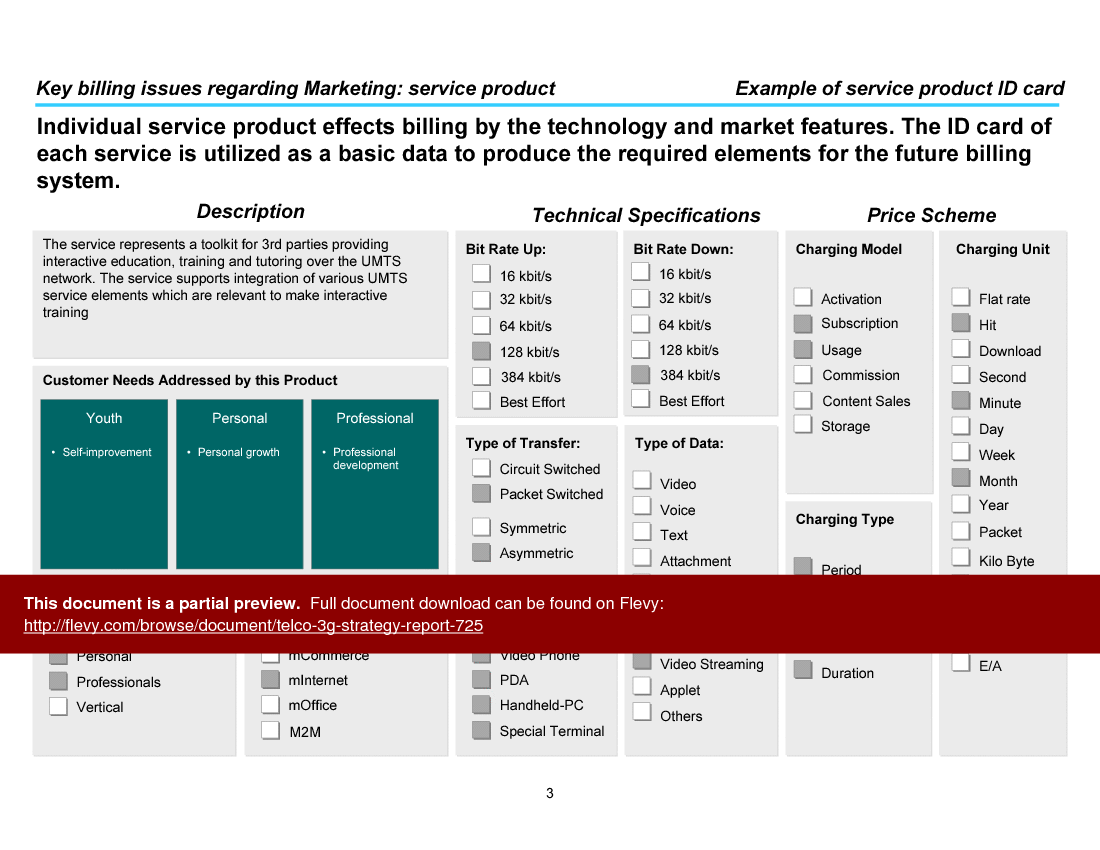
The Telco 3G Strategy Report delves into the intricacies of billing issues and marketing strategies for 3G services. It provides a comprehensive toolkit for third-party providers to integrate various UMTS service elements, addressing customer needs across youth, personal, and professional segments. The report meticulously categorizes service products by bit rate, type of data, and charging models, ensuring a thorough understanding of the technical specifications and pricing schemes.
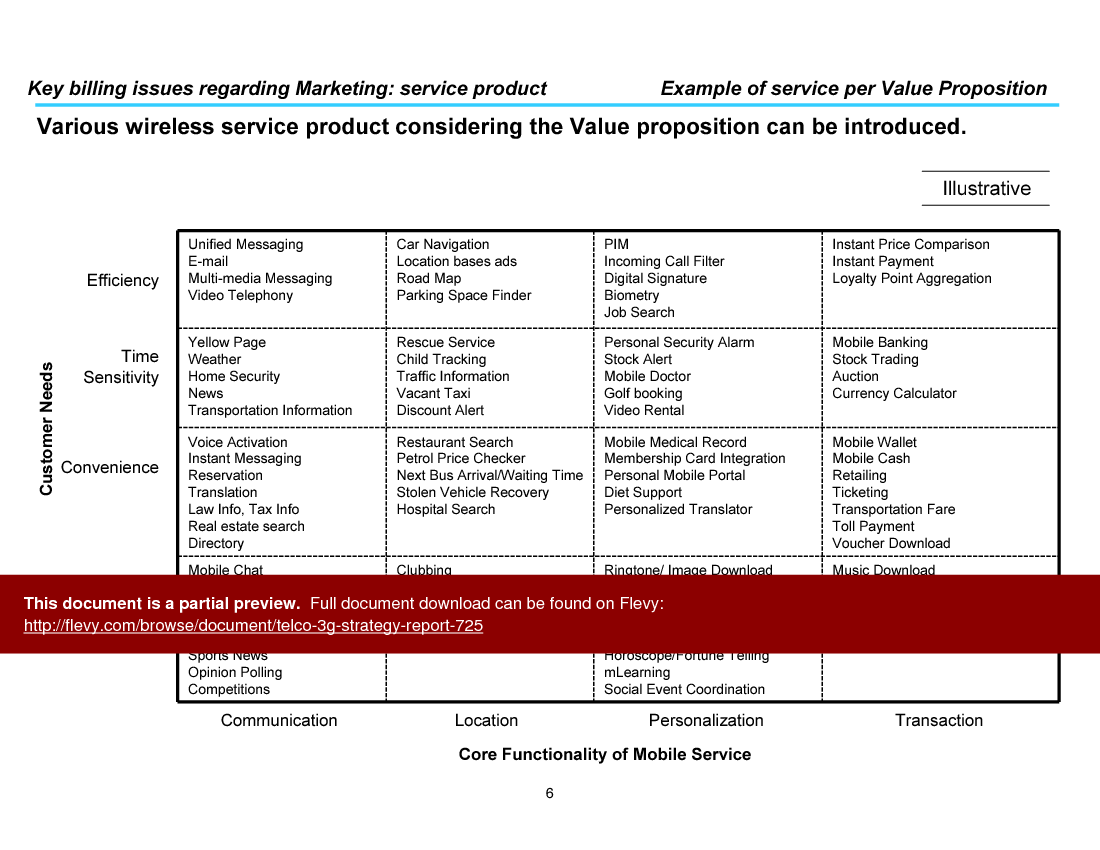
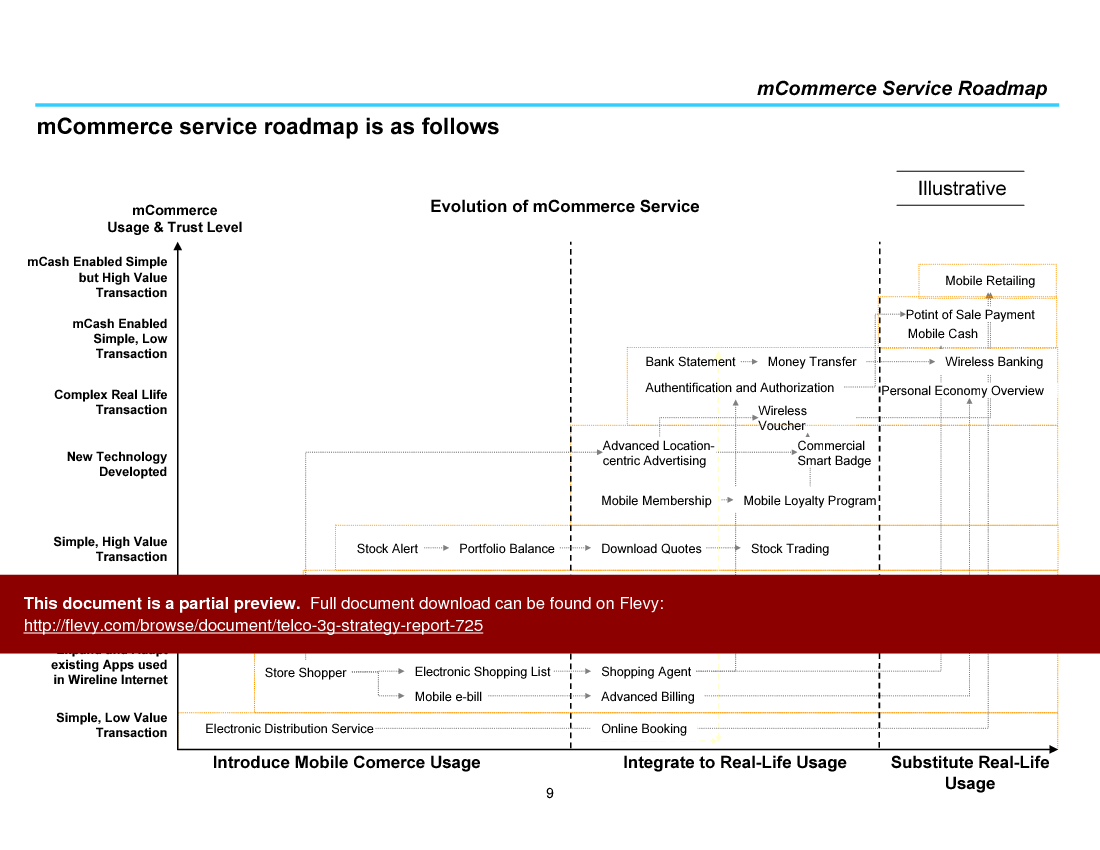
The document also explores the value propositions of various wireless service products, emphasizing efficiency, time sensitivity, and convenience. It illustrates how mobile services can be tailored to meet diverse customer needs, from unified messaging and video telephony to mobile banking and personalized translators. The mCommerce service roadmap is particularly insightful, outlining the evolution of mobile commerce services and the integration of new technologies to enhance user trust and transaction value.
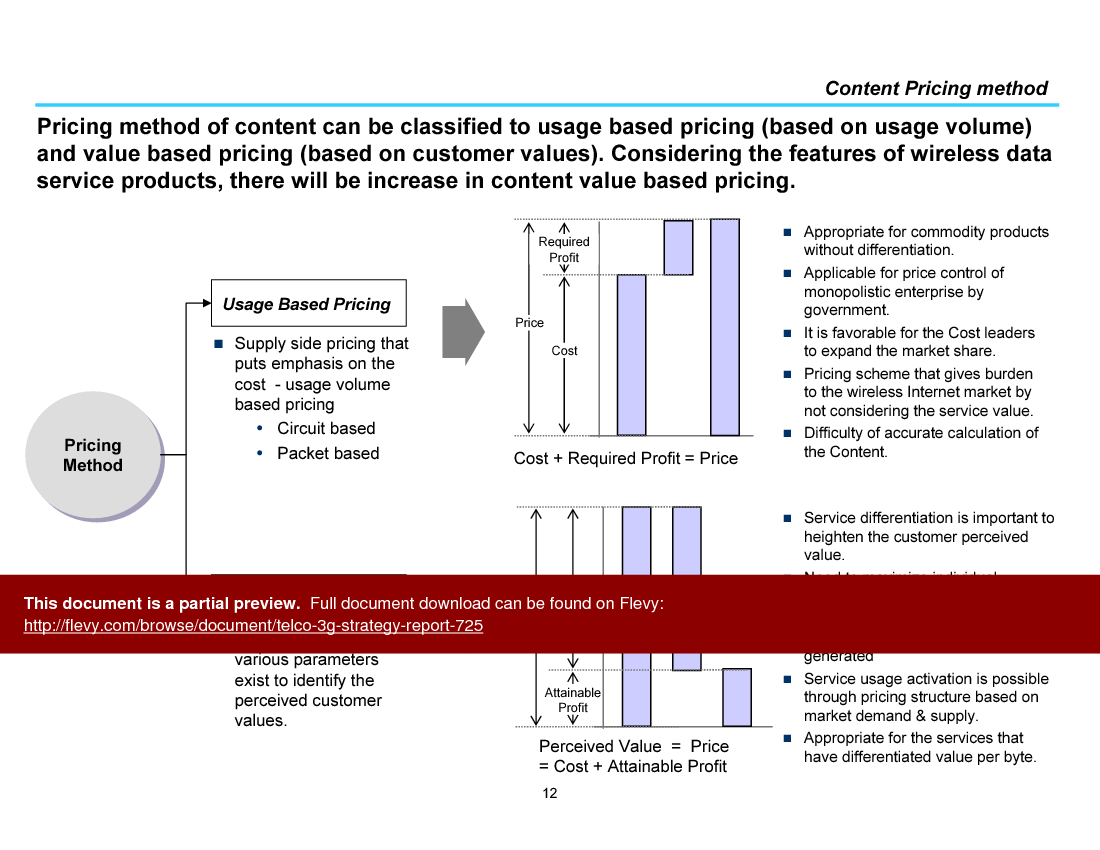
Pricing strategies are another focal point, with detailed discussions on usage-based and value-based pricing methods. The report highlights the importance of service differentiation and customer value perception in determining pricing schemes. It also provides examples of value-based pricing solutions, showcasing how individual user context management can optimize revenue streams and customer satisfaction.
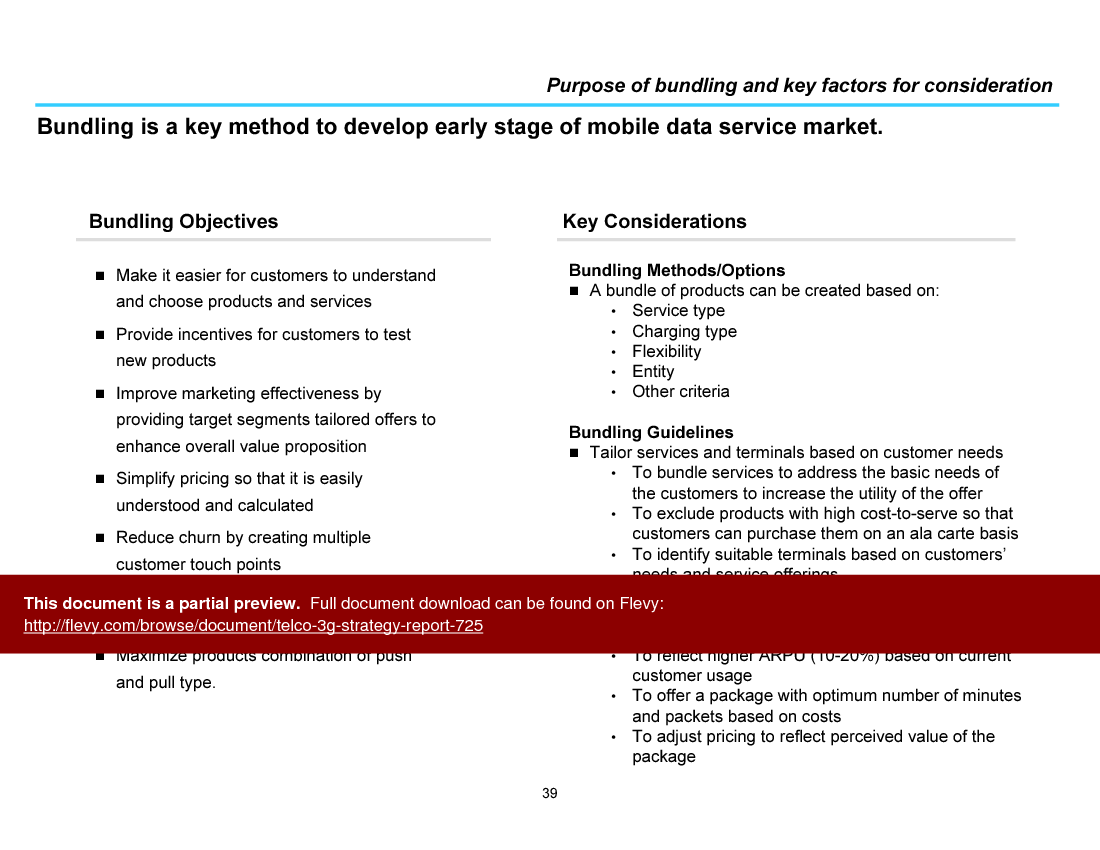
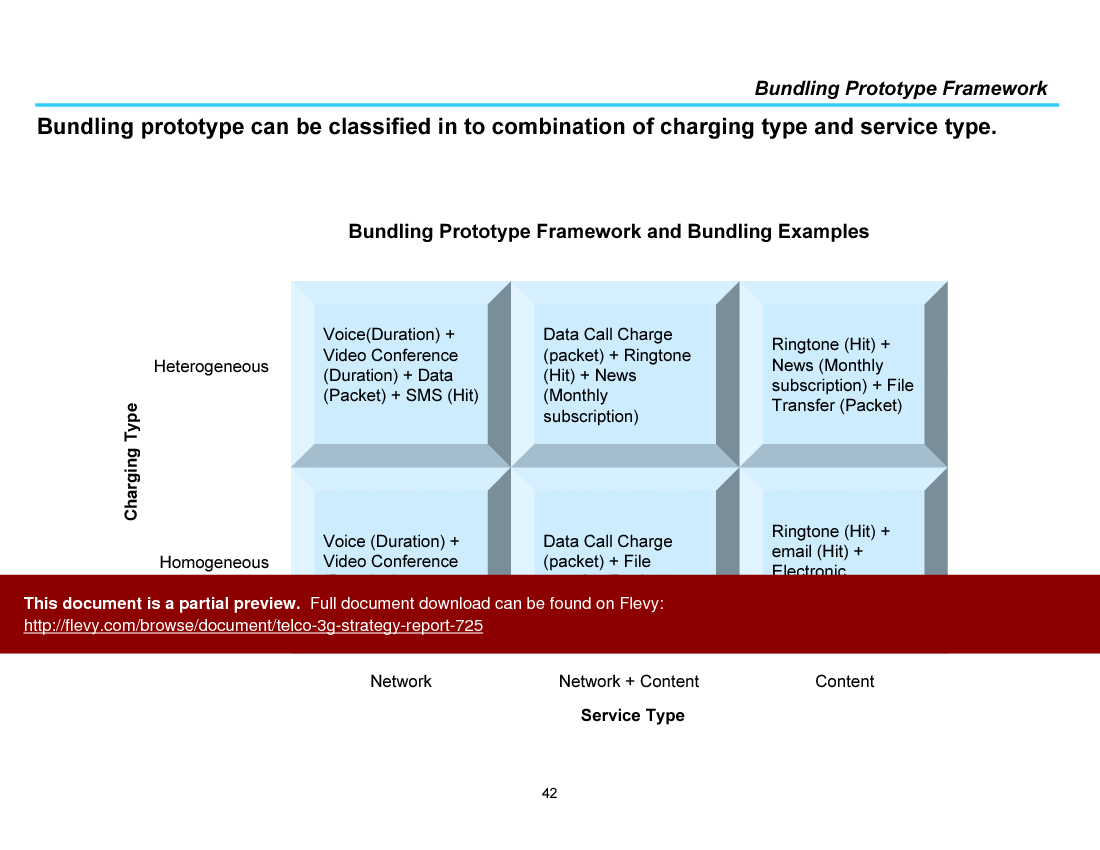
The report also addresses the complexities of bundling products and services, offering a framework for creating effective bundles based on service type, charging type, and customer needs. It underscores the significance of flexible and speedy billing systems to accommodate the dynamic nature of next-generation services. The insights on customer interaction and electronic channel expansion further reinforce the need for continuous innovation in billing practices to enhance customer satisfaction and operational efficiency.
Got a question about the product? Email us at support@flevy.com or ask the author directly by using the "Ask the Author a Question" form. If you cannot view the preview above this document description, go here to view the large preview instead.
MARCUS OVERVIEW
This synopsis was written by Marcus [?] based on the analysis of the full 157-slide presentation.
Executive Summary
The Telco 3G Strategy Report is a consulting-grade presentation that outlines the evolution from voice-centric services to a diverse range of data-driven offerings. This report, crafted with precision, provides actionable insights into billing capabilities, market strategies, and product development necessary for telecom professionals to thrive in the competitive landscape. By leveraging this report, executives can enhance their understanding of next-generation services, optimize billing systems, and effectively meet customer demands, ensuring successful market penetration and sustained growth.
Who This Is For and When to Use
• Telecom executives and strategists focused on 3G service implementation
• Product managers developing innovative telecom offerings
• Marketing teams aiming to understand customer needs and service trends
• Billing and finance professionals responsible for pricing strategies and revenue management
Best-fit moments to use this deck:
• During strategic planning sessions for 3G service launches
• When developing new billing models and pricing strategies
• In workshops aimed at enhancing customer engagement and service offerings
• For training sessions on market trends and competitive analysis
Learning Objectives
• Define the evolution of telecom services from voice to data-centric offerings
• Build a comprehensive billing strategy that accommodates diverse service types
• Establish effective pricing models that reflect customer needs and market conditions
• Identify key customer segments and tailor service offerings accordingly
• Analyze market trends to inform product development and marketing strategies
• Implement frameworks for continuous service innovation and customer satisfaction
Table of Contents
• Evolution of Next Generation Services (page 1)
• Key Billing Issues and Marketing Considerations (page 2)
• Customer Needs and Value Proposition (page 5)
• Pricing Models and Strategies (page 10)
• Service Roadmap for mCommerce (page 9)
• Case Studies on Global 3G Revenue Forecast (page 8)
• Recommendations for Billing System Enhancements (page 12)
Primary Topics Covered
• Next Generation Services - Transition from voice-based products to a variety of data services, necessitating new skills and billing capabilities.
• Billing System Requirements - Essential features for billing systems to support diverse service offerings and customer needs.
• Customer Value Proposition - Aligning service functionalities with customer expectations for efficiency, convenience, and personalization.
• Pricing Strategies - Development of context-based pricing models that reflect perceived customer value and service usage patterns.
• Market Trends - Insights into global revenue forecasts and the evolution of mCommerce services.
• Service Development Roadmap - Strategic planning for the introduction of new services and enhancements to existing offerings.
Deliverables, Templates, and Tools
• Service product ID card template for categorizing offerings based on customer needs and technical specifications
• Billing capability assessment model to evaluate existing systems against next-generation requirements
• Pricing strategy framework for developing competitive and customer-centric pricing models
• Customer segmentation analysis tool to identify and target key demographics effectively
• Market trend analysis report template for ongoing competitive assessment
• Service roadmap template for planning the rollout of new offerings
Slide Highlights
• Overview of next-generation service evolution and its implications for telecom providers
• Detailed analysis of customer needs and how they shape service offerings
• Visual representation of the pricing model evolution and its impact on revenue generation
• Case studies highlighting successful implementation of mCommerce strategies
• Framework for assessing and enhancing billing systems to meet future demands
Potential Workshop Agenda
Understanding Next Generation Services (90 minutes)
• Discuss the evolution from voice to data services
• Identify key market trends and customer expectations
Billing Strategy Development (120 minutes)
• Analyze existing billing systems and identify gaps
• Develop context-based pricing models and strategies
Customer Segmentation and Value Proposition (90 minutes)
• Explore customer needs and preferences
• Create tailored service offerings based on segmentation analysis
Customization Guidance
• Tailor billing systems to accommodate new service types and pricing models
• Adjust marketing strategies based on customer segmentation insights
• Update service offerings based on ongoing market trend analysis
Secondary Topics Covered
• Impact of technological advancements on service delivery
• Strategies for enhancing customer engagement through personalized offerings
• Best practices for integrating billing systems with new service developments
• Insights into competitive pricing strategies in the telecom sector
FAQ What are the key features of a next-generation billing system?
A next-generation billing system should support diverse service types, provide real-time billing capabilities, and allow for flexible pricing models that reflect customer usage patterns.
How can we effectively segment our customer base?
Customer segmentation can be achieved by analyzing demographic, behavioral, and psychographic data to identify distinct groups with specific needs and preferences.
What pricing strategies are most effective for new telecom services?
Context-based pricing strategies that align with customer value perceptions and service usage patterns tend to be the most effective for new telecom services.
How can we enhance customer satisfaction through billing?
Enhancing customer satisfaction can be achieved by providing clear, detailed invoices, offering flexible payment options, and ensuring prompt billing cycles.
What role does customer insight play in service development?
Customer insight is crucial for understanding needs and preferences, which informs the development of tailored service offerings that enhance satisfaction and loyalty.
How should we approach the introduction of new services?
A structured roadmap that includes market analysis, customer feedback, and competitive benchmarking should guide the introduction of new services.
What are the challenges of transitioning to a 3G billing model?
Challenges include integrating new billing systems, managing diverse service offerings, and ensuring compliance with regulatory requirements.
How can we leverage technology to improve billing processes?
Leveraging technology can streamline billing processes, enhance data accuracy, and provide real-time insights into customer usage and billing patterns.
Glossary
• 3G - Third generation of mobile telecommunications technology, enabling higher data rates.
• Billing System - A system used to track and manage customer billing and payments.
• mCommerce - Mobile commerce, the buying and selling of goods through mobile devices.
• Value Proposition - The promise of value to be delivered to customers, highlighting the benefits of a service.
• Customer Segmentation - The process of dividing a customer base into distinct groups based on shared characteristics.
• Context-Based Pricing - Pricing strategies that consider the context in which a service is used, including customer behavior and preferences.
• Service Roadmap - A strategic plan outlining the development and rollout of new services.
• Market Trends - Patterns and changes in the market that can influence business strategies and decisions.
• Customer Insight - Understanding customer behavior, preferences, and needs to inform business decisions.
• Pricing Model - A framework for determining how prices are set for services offered to customers.
• Telecom - Short for telecommunications, referring to the transmission of information over distances for communication.
• Usage-Based Pricing - A pricing model where customers are charged based on their actual usage of a service.
• Customer Experience - The overall perception and interaction a customer has with a brand or service.
• Revenue Management - The process of optimizing revenue through pricing strategies and customer segmentation.
• Service Offering - A specific product or service provided to customers, often tailored to meet their needs.
• Customer Loyalty - The tendency of customers to continue purchasing from a particular brand or service provider.
• Operational Efficiency - The ability to deliver services effectively while minimizing costs and maximizing productivity.
• Competitive Advantage - A condition or circumstance that puts a company in a favorable position compared to its competitors.
• Integration - The process of combining different systems or processes to work together effectively.
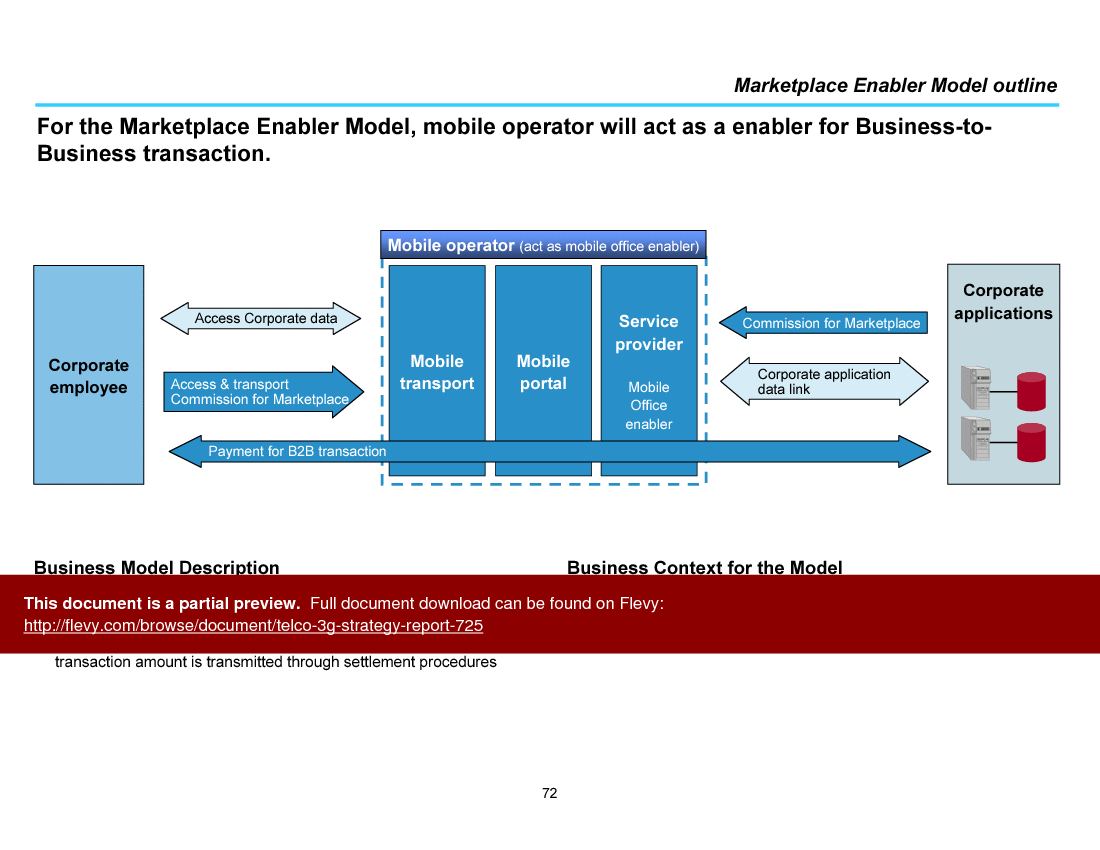
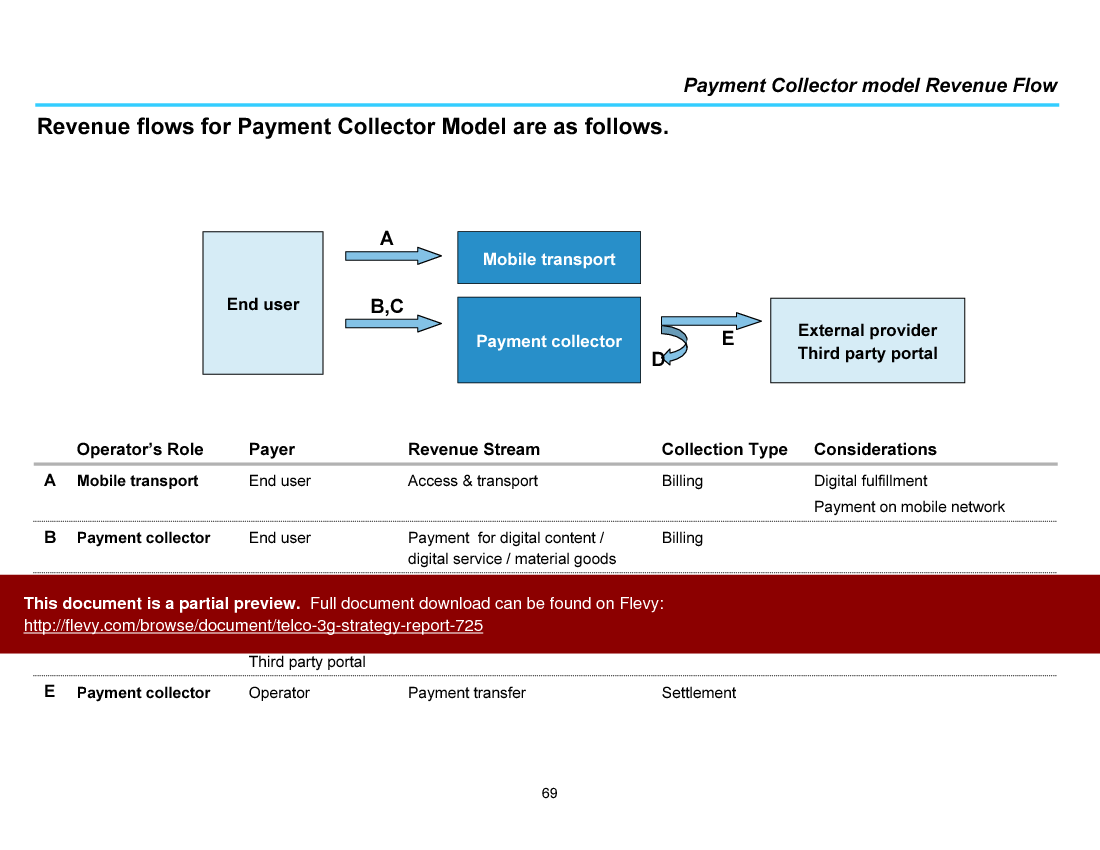
This PPT slide outlines business models for mobile operators transitioning to next-generation services, categorized into Business-to-Consumer (B2C) and Business-to-Business (B2B). In the B2C segment, the "Access & Transport Provider" model positions operators as conduits for services, while the "Content & Service Aggregator" model involves curating content. The "Full mCommerce Player" manages transactions with unified billing, and the "Payment Collector" acts as an intermediary for payments. The B2B segment includes the "Mobile Office Enabler," which empowers businesses to utilize mobile networks, and the "Marketplace Enabler," facilitating B2B transactions. This structured approach highlights the evolving role of mobile operators in the digital ecosystem and the implications for revenue sharing and market dynamics.
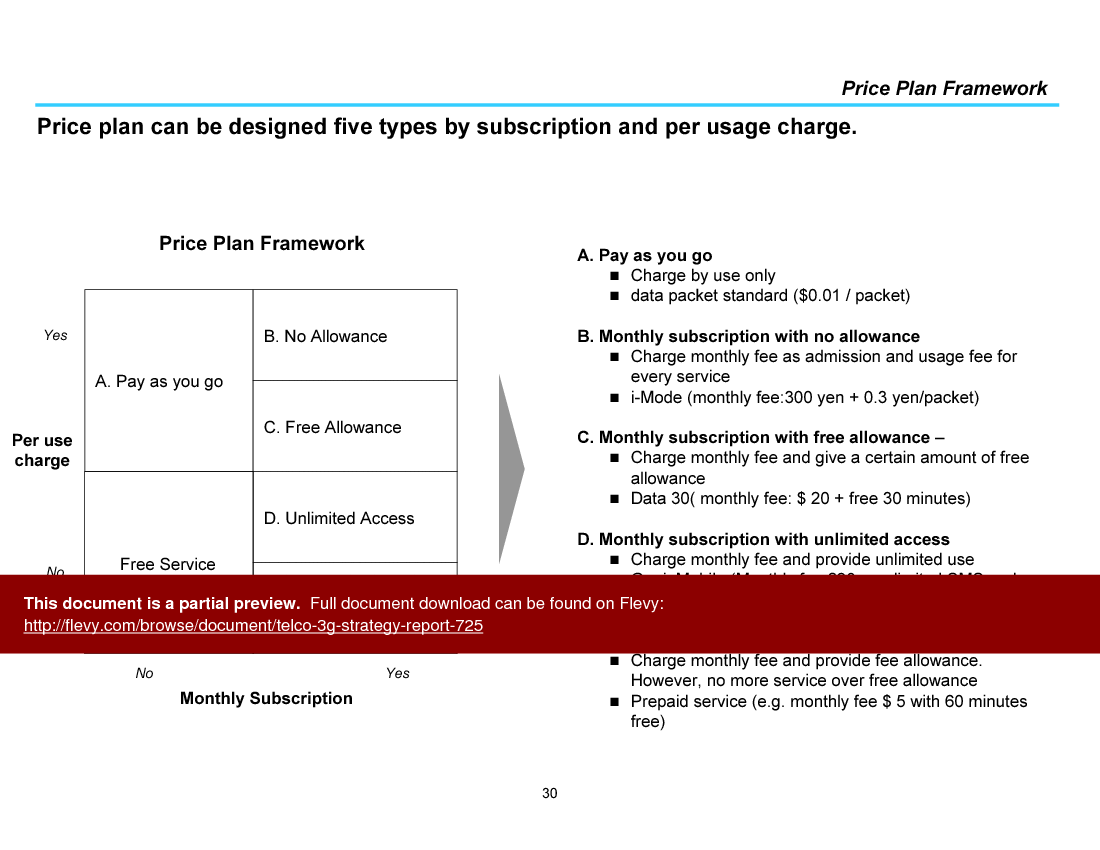
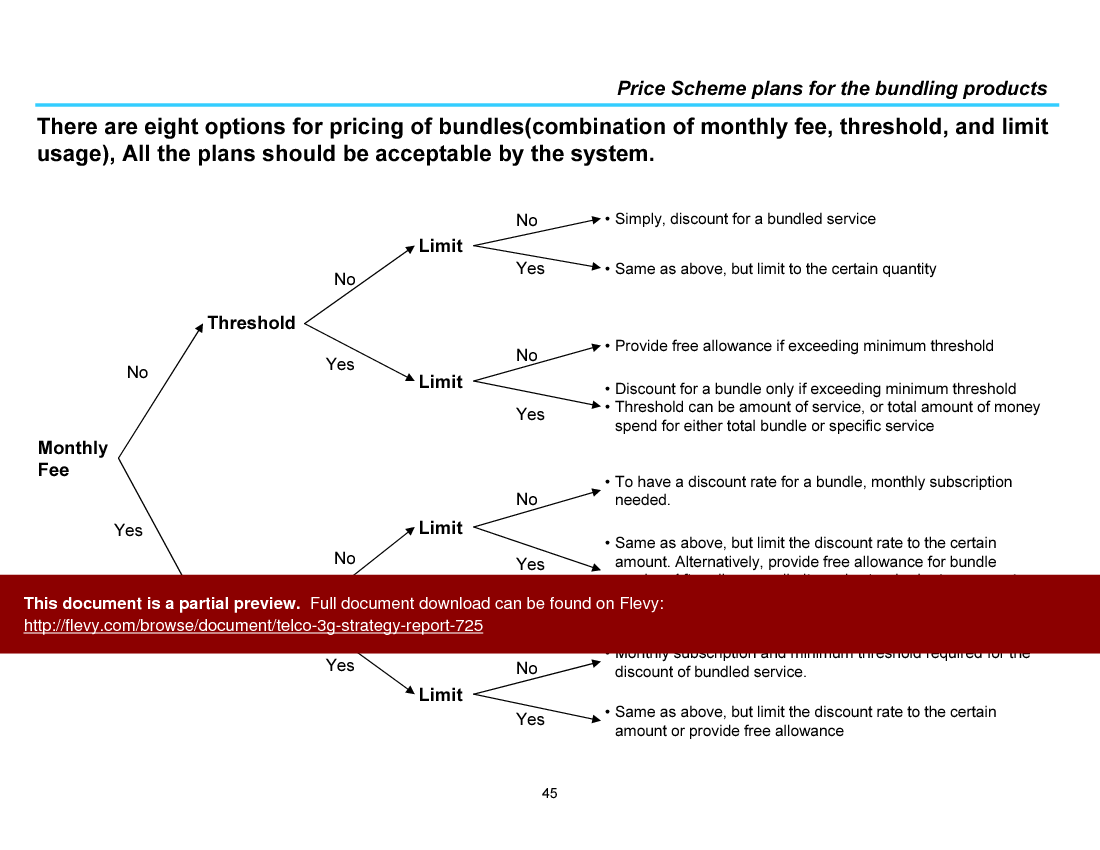
This PPT slide presents a decision-making framework for pricing bundles in the telecom industry, focusing on monthly fees, thresholds, and limits. It outlines eight pricing options in a flowchart that guides users through scenarios based on customer usage and spending patterns. The first decision point examines whether a threshold is met; if not, a discount for bundled services is offered. If the threshold is reached, the next decision involves the applicability of limits, determining whether customers receive a free allowance or contingent discounts. The flowchart explores combinations of thresholds and limits, emphasizing flexibility in pricing strategies to tailor offerings based on customer behavior and preferences.
The 3G platform business model integrates mobile and web portals in the billing and settlement process, emphasizing mobile transport and fixed internet access for service delivery. It illustrates the flow of requests and fulfillment for digital content, services, and material goods. The platform acts as a hub, connecting mobile and web portals, with distinct billing processes for each. Payments can occur through various channels, including subscriptions, providing flexibility for user engagement. The aggregator serves as an intermediary between external providers—content, service providers, and e-merchants—and the platform, managing information flow and content availability. This model supports both wireless and wired portals, highlighting the aggregator's role in content selection and formatting, ensuring quality and relevance in offerings.
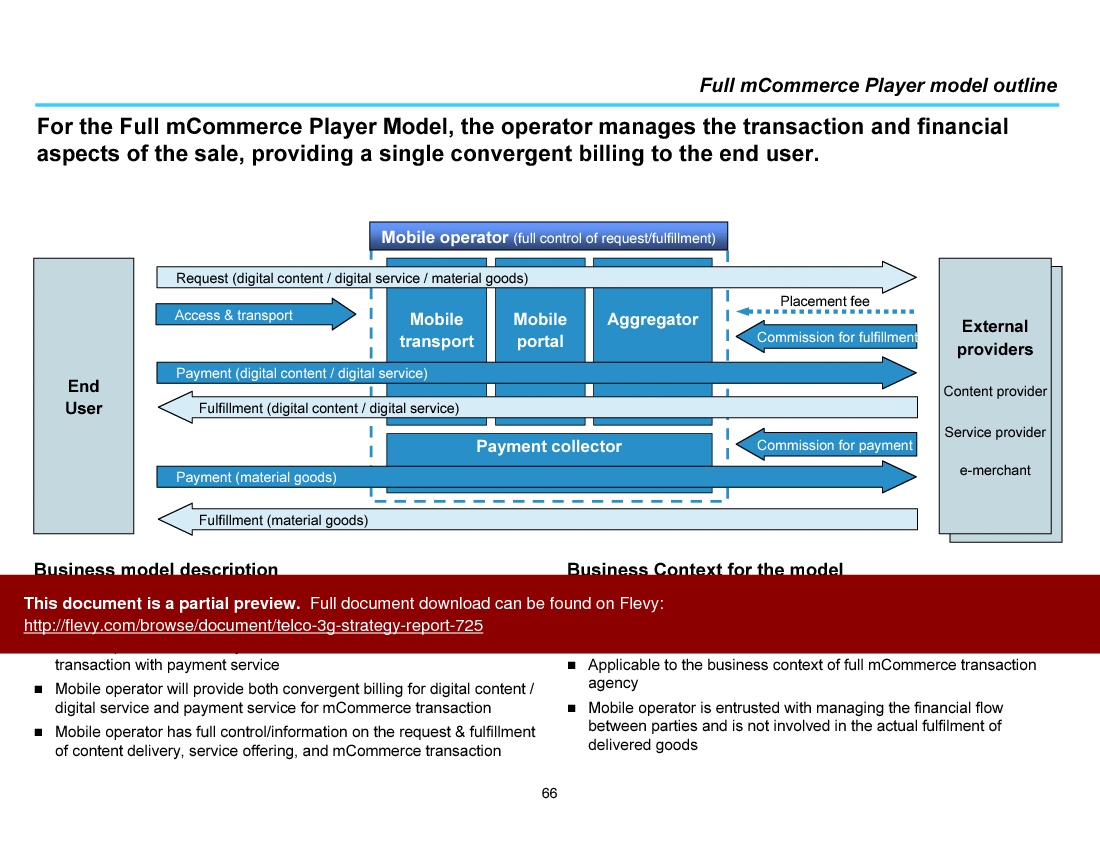
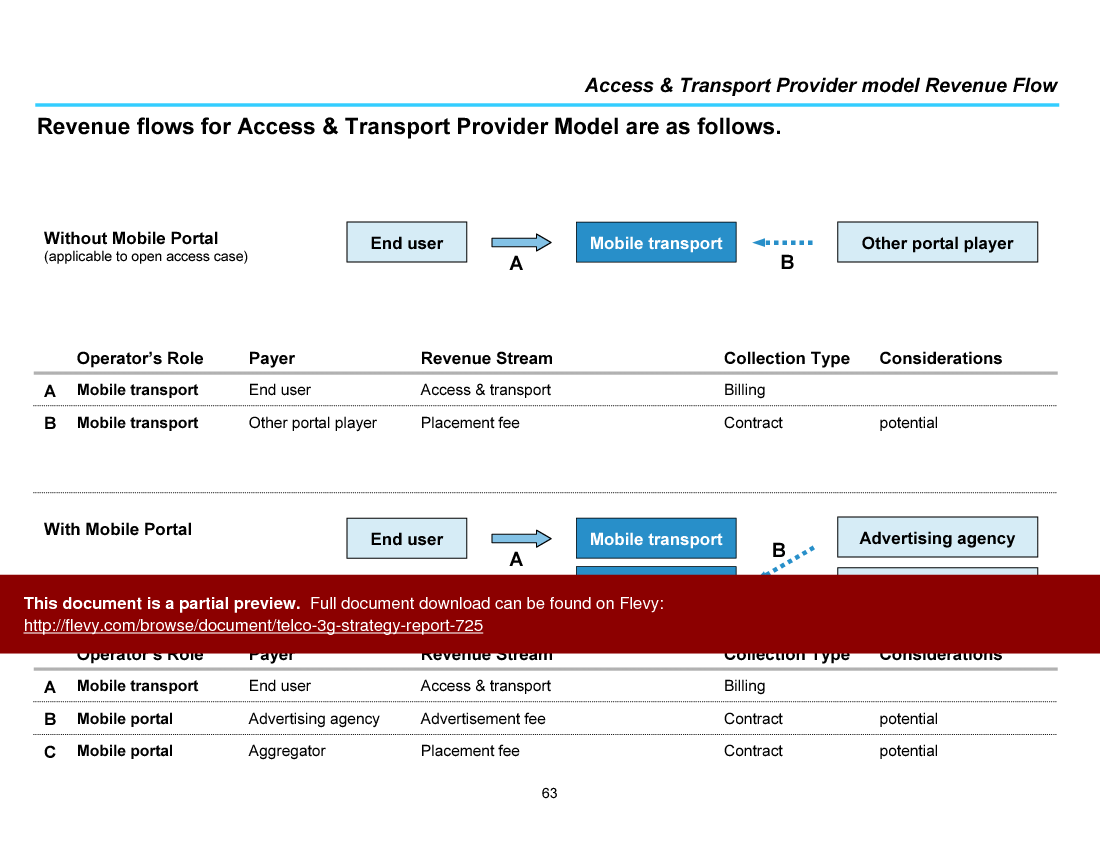
This PPT slide outlines 4 B2C business models: Access & Transport Provider, Content & Service Aggregator, Full mCommerce Player, and Payment Collector. The Access & Transport Provider Model generates revenue through access and transport fees based on network usage, requiring capabilities for mobile network access and basic billing functions, with no revenue sharing. The Content & Service Aggregator Model adds sales charges for content and services, necessitating capabilities for content aggregation and complex billing that includes both network usage and content sales. The Full mCommerce Player Model allows direct sales of tangible assets and services, requiring capabilities from previous models and involving complex mCommerce transactions. The Payment Collector Model offers flexible billing with optional access fees, emphasizing settlement services for mCommerce transactions, adding complexity to the billing process. Each model presents distinct operational requirements and revenue implications for strategic evaluation.
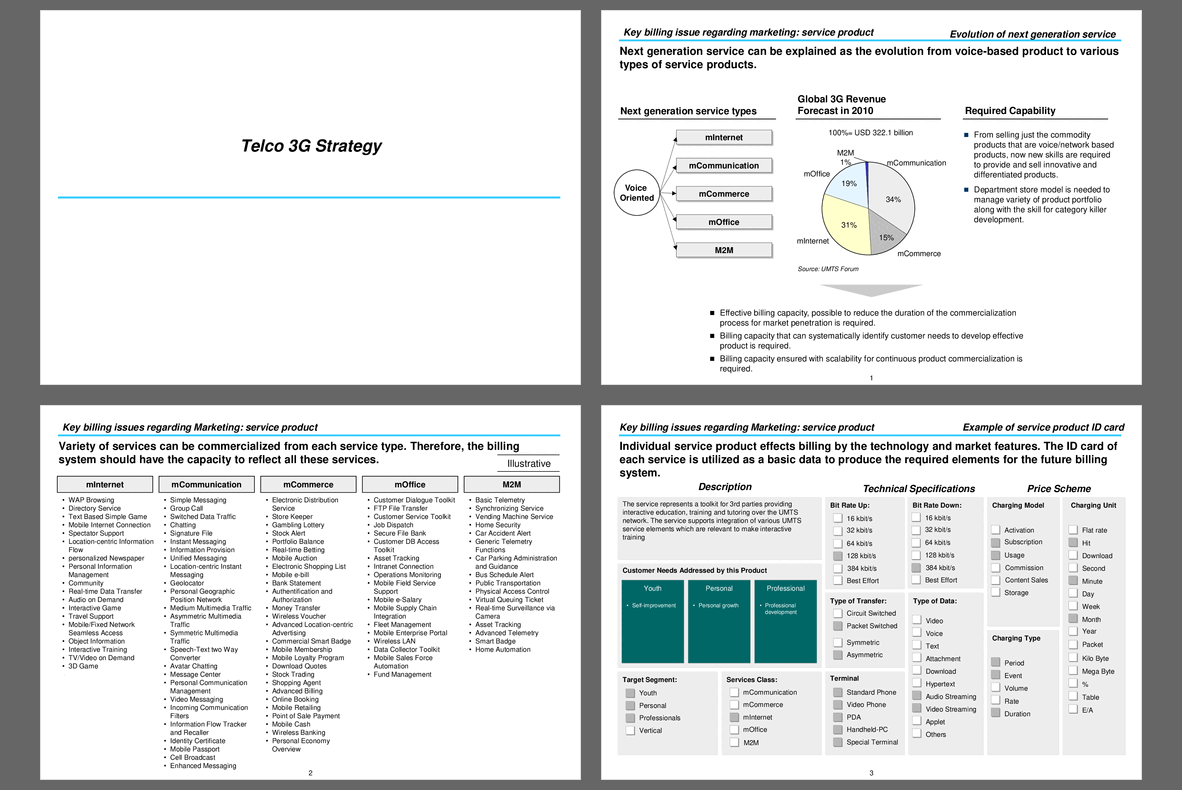
This PPT slide analyzes the evolution of service products in the telecommunications sector, focusing on next-generation services such as mInternet, mCommunication, mCommerce, mOffice, and M2M (Machine to Machine). These services represent a shift from traditional voice-oriented offerings to complex, data-driven solutions. A pie chart illustrates the projected global revenue distribution for 3G services in 2010, totaling USD 322.1 billion, with mInternet capturing the largest share at 34%, followed by mCommunication at 31%, and mCommerce at 15%. The slide highlights the need for enhanced billing capabilities to support this transition, suggesting that effective billing systems can expedite market penetration. Telecom companies must also develop new skills for marketing and selling these innovative products. The "department store model" indicates a strategic approach to managing a diverse product portfolio, emphasizing category management in this evolving landscape.
Mobile communication providers in Europe are entering the wireless LAN market, with key players like Ericsson and Telenor Mobil adopting various strategies. Ericsson focuses on 3 main initiatives: merging mobile enterprise communication systems with 3G technology to enhance private business networks, promoting wireless LAN services in public areas using the HiperLAN/2 standard, and introducing Bluetooth technology for personal area networks (PAN). Telenor Mobil targets new markets by developing integrated solutions leveraging HiperLAN/2 and 3G networks. Effective billing systems are essential for differentiating mobile and wireless LAN usage, requiring access point installations in high-traffic areas and a separate subscription process for IP addresses. Future billing models should accommodate monthly rates and usage-based charges to improve customer satisfaction and operational efficiency. Challenges exist in classifying and integrating fees based on user activity across different network types.
Roaming revenue from GSM operators in foreign markets is projected to exceed 10% of total revenue on average by 2002, indicating significant reliance on roaming services in the telecom sector. SWISSCOM's contribution to roaming revenue is 22.2% in 2002, highlighting the importance of these services for major telecom players. The annual growth rate for global roaming revenue among telecom companies in Western Europe is expected to exceed 5%, suggesting a robust upward trend. Automatic roaming between GSM and other standards, such as WCDMA, is categorized into stages: GSM Plastic Roaming, GSM Automatic Roaming, and Inter-generation Roaming. Telecom carriers can enhance roaming services using R-UIM (Removable User Identity Module), allowing access to GSM networks where roaming agreements exist, crucial for service continuity for international travelers.
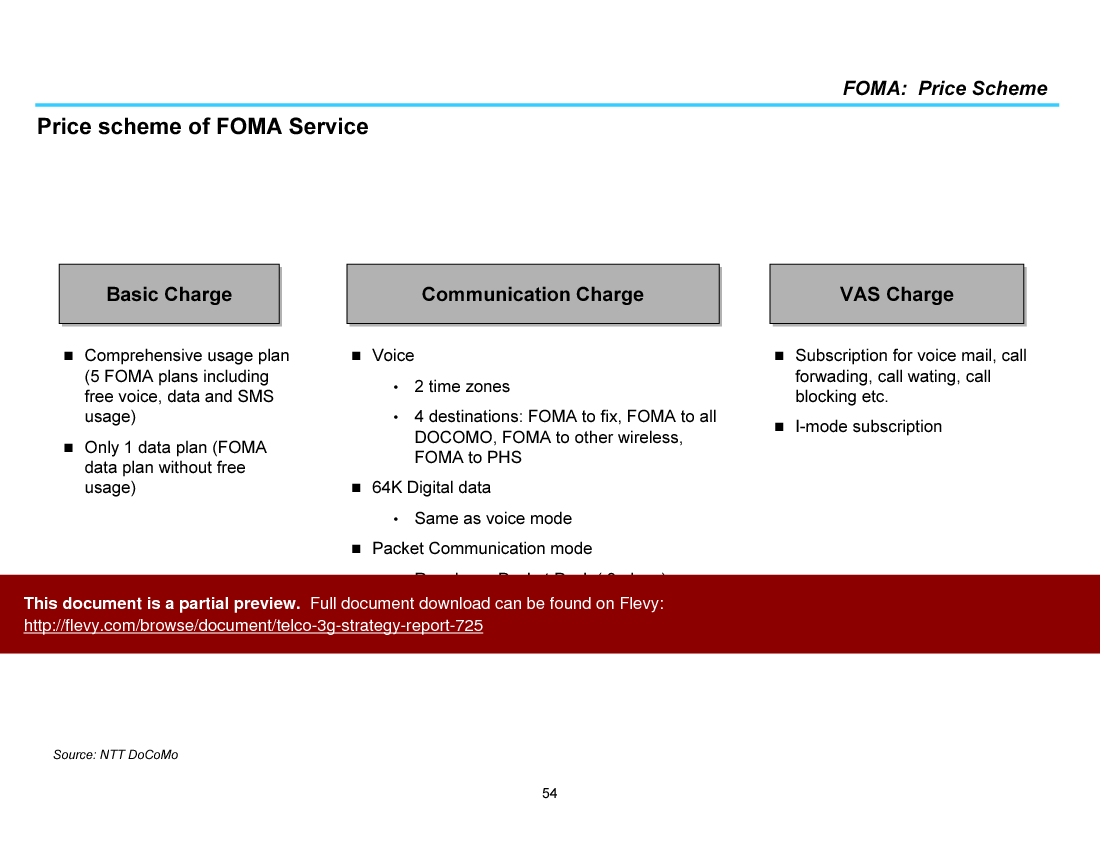
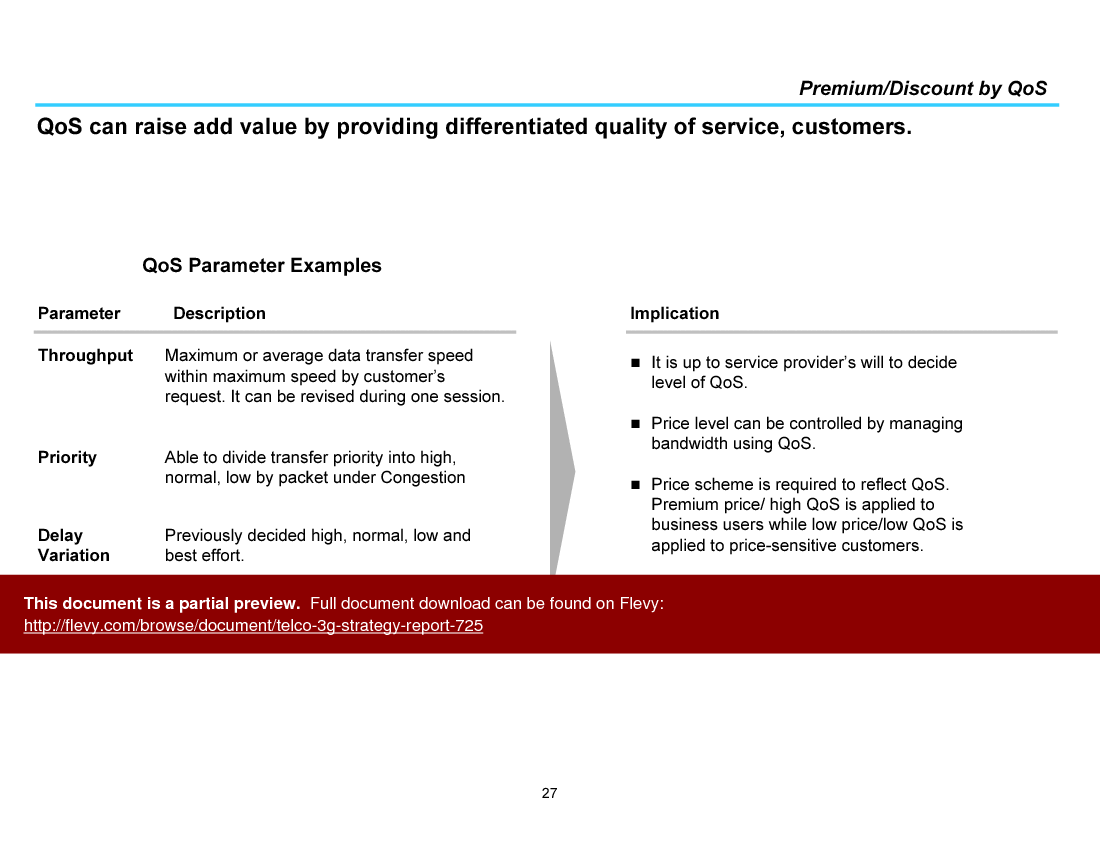
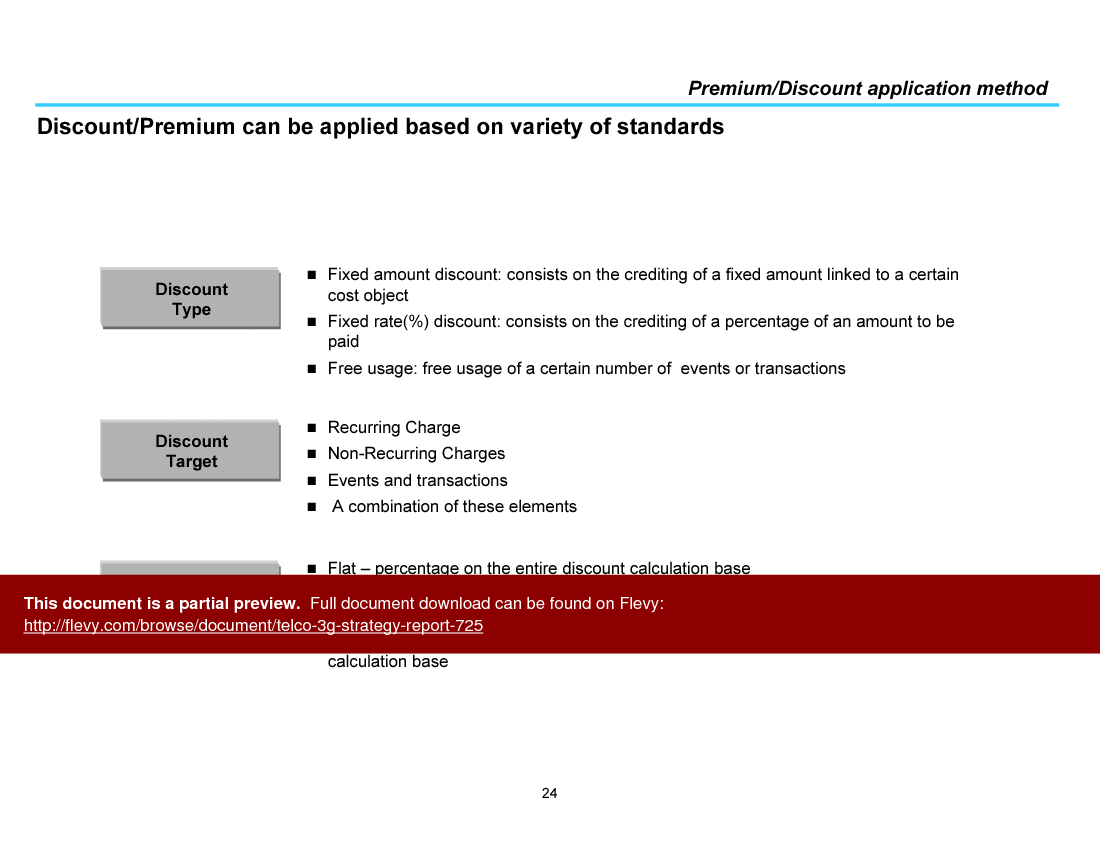
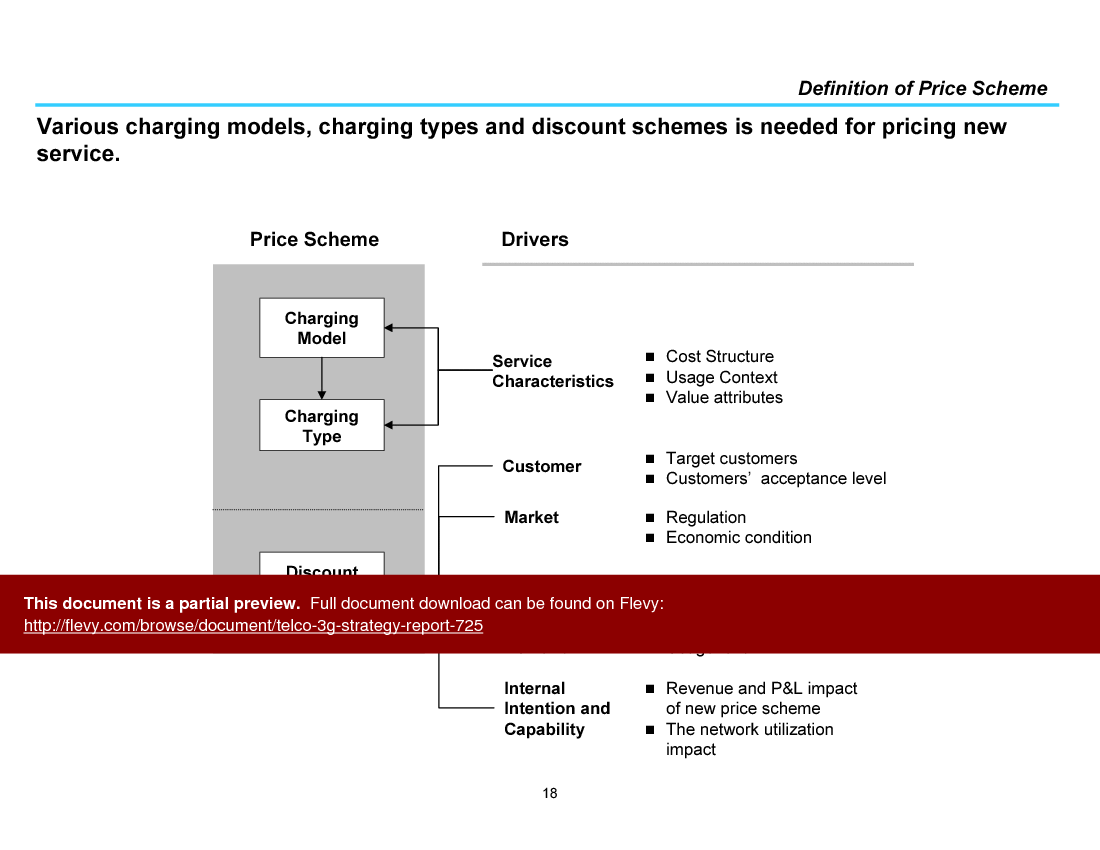
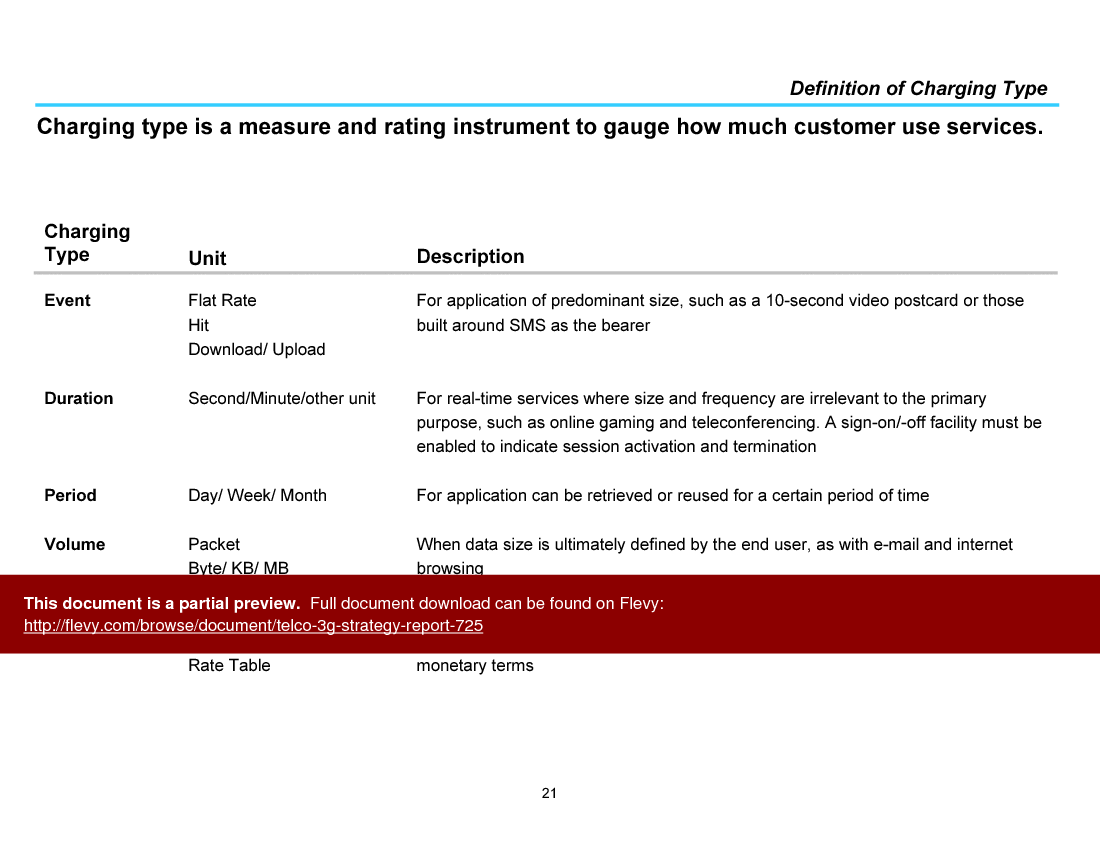
This PPT slide outlines pricing schemes for a telecommunications service, categorized into 3 components: Charging Model, Charging Type, and Charging Unit, with a focus on Premium/Discount Schemes. The Charging Model includes 4 approaches: Activation, Subscription, Usage, and Commission, each tailored to different customer needs. The Charging Type consists of Event, Duration, and Period, indicating how charges apply based on actions or timeframes. Charging Units specify billing metrics like flat rates, hits, and data volume in KB or MB, enhancing transparency. The Premium/Discount Scheme considers factors like time, location, and customer group, allowing for adaptable pricing strategies. A robust billing system is essential for managing these diverse pricing models effectively.
This PPT slide outlines various revenue-generating models for services provided to end users. A well-structured charging model clarifies revenue generation and enhances customer acceptance of pricing. Key models include:
- Activation/Admission: One-time fees for initial service activation.
- Subscription: Recurring payments for service access over a defined period, creating a steady revenue stream.
- Usage: Charges based on individual service use, effective for infrequent services.
- Commission: Fees for facilitating transactions, highlighting a performance-based revenue approach.
- Content Sales: Revenue from selling virtual or physical goods.
- Storage: Fees for data storage solutions, increasingly relevant in the digital age.
These models impact customer engagement and pricing strategies.
This PPT slide illustrates evolving customer expectations regarding billing in the telecommunications sector, categorizing them into 3 levels: unanticipated, expected, and basic. Unanticipated expectations involve complex service and pricing schemes that customers will demand in the future. Expected expectations include customization, immediate responses, and accurate information, while basic expectations cover clear discount specifications and understandable pricing. Many customers express concerns about billing reliability, highlighting a gap that needs addressing. Competing operators are enhancing their billing services, raising stakes for companies that fail to adapt. Organizations must improve billing processes to meet rising expectations, as failure to do so could lead to customer dissatisfaction and loss.
The evolving value chain in the mobile industry presents new business opportunities for mobile operators, necessitating adaptations in their business models. Key segments include Content, Network, and Retail. The Content segment focuses on service creation and aggregation, emphasizing personalized offerings and corporate intranets. The Mobile Network segment highlights the need for robust infrastructure, including virtual mobile networks and location-based data services, to meet rising data demands. Hardware & Software Platforms stress the importance of secure technical components, such as security applications and payment solutions. Handsets & Appliances cover consumer devices and essential navigation systems. Distribution & Retail examines delivery channels and customer acquisition strategies, addressing the diverse customer base from individual consumers to corporate users, requiring tailored offerings for different market segments.
This PPT slide outlines various commercializable services in the telecommunications sector, categorized into mInternet, mCommunication, mCommerce, mOffice, and M2M (Machine to Machine). The mInternet section includes WAP browsing and directory services, focusing on mobile internet connectivity. mCommunication features messaging services like instant and video messaging for real-time user interaction. mCommerce highlights transactional services such as electronic shopping and mobile banking, reflecting the rise of mobile commerce. The mOffice category lists tools like customer dialogue toolkits and asset tracking to enhance business operations. Lastly, M2M introduces automation and telemetry services, emphasizing smart technologies and real-time data management. A flexible billing system is essential to accommodate these diverse offerings.
This PPT slide presents a structured roadmap for mCommerce services, illustrating the evolution of mobile commerce offerings. It categorizes service levels by complexity and user trust, with the vertical axis labeled "Usage & Trust Level," featuring categories like "mCash Enabled Simple,, but High Value Transaction." The horizontal axis outlines a progression from basic functionalities, such as "Bank Statement" and "Money Transfer," to advanced services like "Mobile Loyalty Program" and "Commercial Smart Badge." This progression reflects a strategic intent to enhance user experience. The roadmap emphasizes technology development, showcasing innovations like "Advanced Location-centric Advertising" and "Mobile Membership," which indicate a trend towards personalized, location-based offerings.
This PPT slide outlines a pricing strategy focused on customer perception, categorized into 3 approaches: single pricing, differentiated pricing, and context-based pricing. Single pricing sets a uniform price for all content, exemplified by a "bell download" service at $1.80, which may disconnect pricing from perceived value. Differentiated pricing tailors prices based on market demand and perceived value, with examples like a new song at $3.00, popular songs at $2.00, and oldies at $0.50, aligning prices with customer willingness to pay. Context-based pricing advocates for real-time customization based on factors like usage location, urgency, and individual preferences, suggesting that understanding context enhances pricing effectiveness. This framework aims to maximize profitability while improving customer satisfaction by refining pricing models to align with consumer behavior.
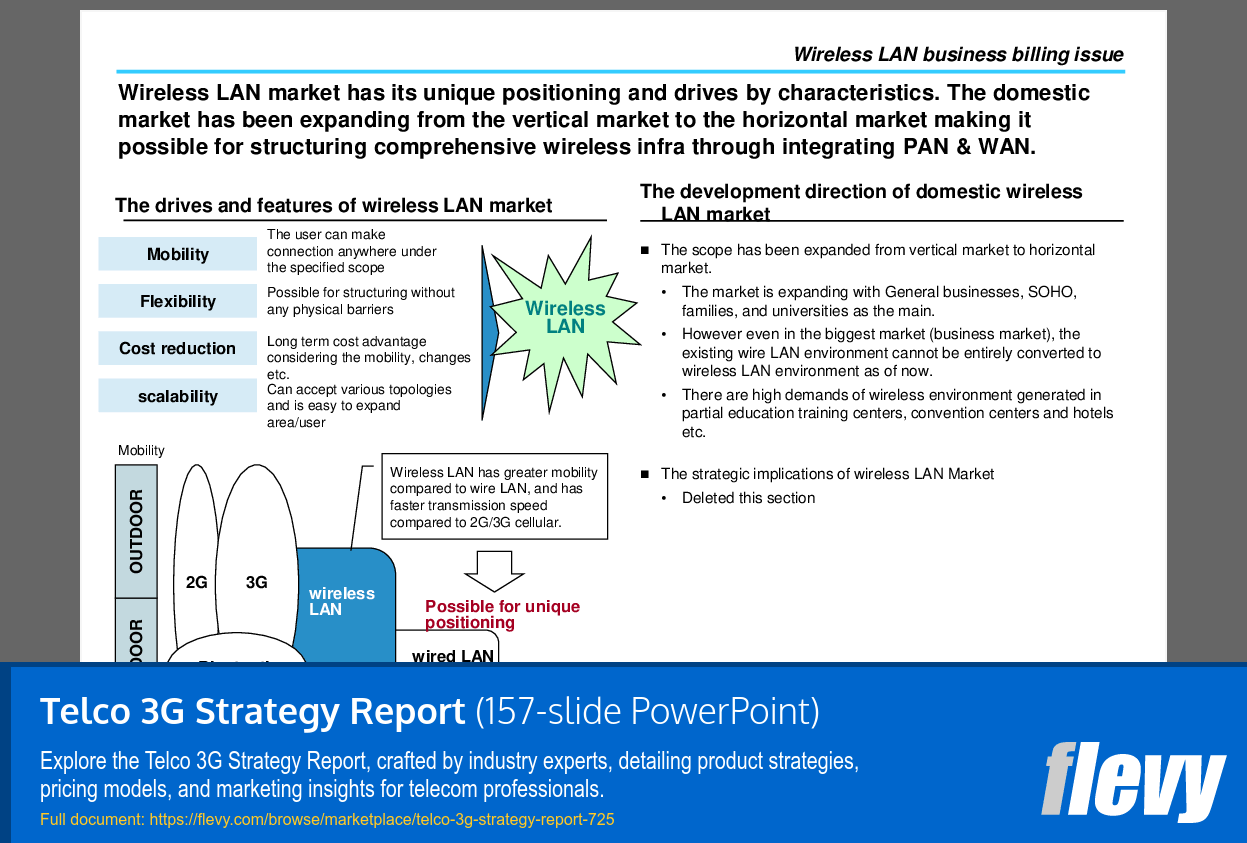
The Wireless LAN sector is transitioning from a vertical to a horizontal market, integrating Personal Area Networks (PAN) and Wide Area Networks (WAN). Key features include mobility, allowing users to connect from various locations; flexibility, enabling network structuring without physical constraints; cost reduction, particularly in long-term mobility; and scalability, accommodating various configurations based on user demand. The domestic Wireless LAN market is growing among diverse user groups, including businesses, small office/home office (SOHO) setups, families, and educational institutions. However, existing wired LAN environments cannot fully transition to wireless, indicating a market gap. There is significant demand for wireless environments in venues like training centers and hotels, presenting opportunities for service providers.
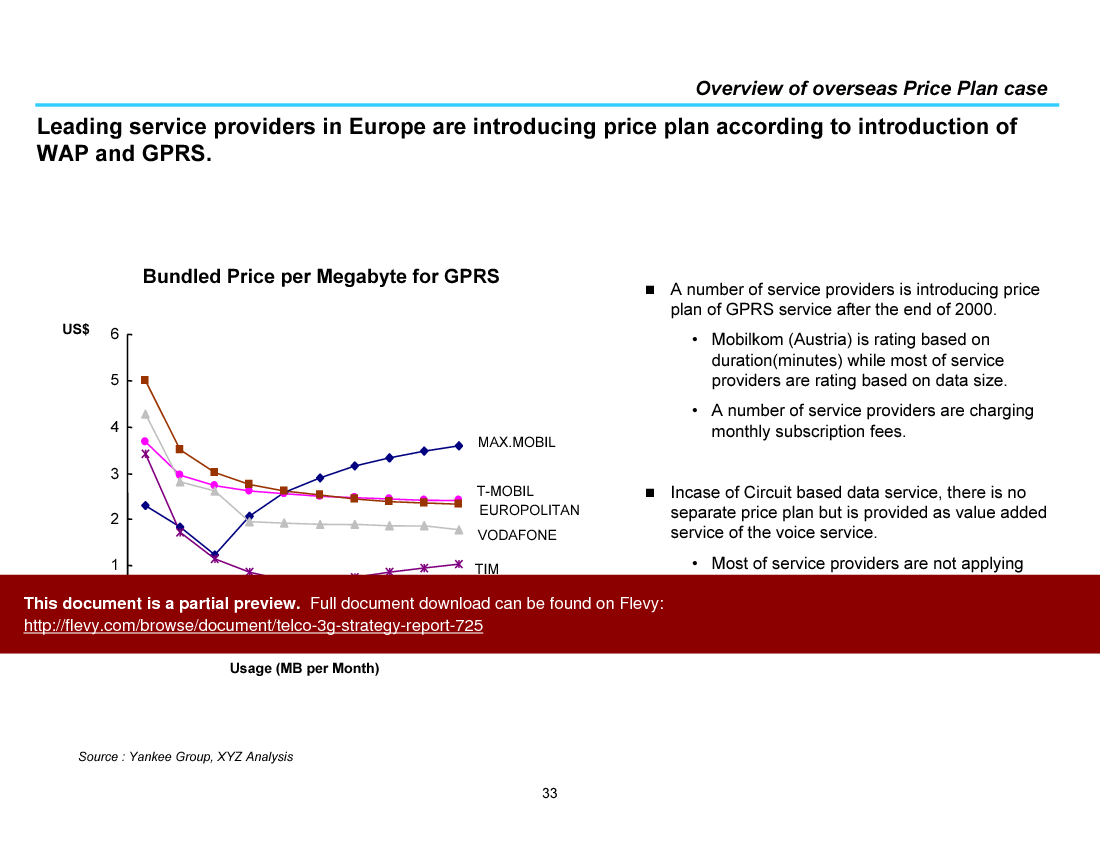
This PPT slide analyzes telecommunications technologies categorized into 3G, 2.5G, and 2G, with data transmission rates from 9.6 to 2000 kbps. Key technologies include CDMA/3XRTT, Edge, GPRS/1XRTT, and HSCDS/IS - 95B. A graphical representation illustrates significant performance differences, highlighting advancements in speed offered by 3G technologies. The evaluation of applications such as transaction processing, messaging, location services, and video streaming shows varying performance ratings, with transaction processing and messaging performing well across most technologies, while high-quality video struggles at lower data rates. This analysis reveals the relationship between technology capabilities and application performance, guiding investment decisions in advanced telecommunications services.
This PPT slide presents a framework for service bundling in telecommunications, categorizing it into 3 types: Fixed Bundling, Semi-Customized Bundling, and Full Customized Bundling, arranged from low to high customization. Fixed Bundling offers a limited selection based on customer segmentation, appealing to those who prefer simplicity. Semi-Customized Bundling allows customers to choose from a predefined pool of services, providing flexibility without overwhelming complexity. Full Customized Bundling grants complete freedom in service selection and pricing, though it may lead to confusion regarding savings compared to individual purchases. Recommendations for bundling should be informed by customer usage behavior, emphasizing a data-driven approach to enhance satisfaction and optimize offerings. Balancing simplicity and customization is crucial for meeting diverse customer needs in service selection.
This PPT slide presents a framework for designing price plans tailored to different customer segments in telecom. It illustrates various pricing strategies structured to meet diverse consumer needs, with price plans labeled A, B, C, and D plotted against cost, showing distinct slopes for different strategies. Customizing subscription amounts and slopes allows businesses to create pricing options appealing to both high-value and budget-conscious customers. These price plans apply to both voice and data services, indicating a comprehensive strategy across telecom offerings. The framework emphasizes the importance of segmentation in pricing, suggesting that tailored strategies can enhance customer satisfaction and increase revenue streams.
This PPT slide presents a strategic framework for optimizing outcomes in the next-generation service market, focusing on customer understanding and behavior modification regarding product offerings and pricing structures. It outlines a predicted pricing scheme with 3 scenarios: “No retail billing,” “complexity is king,” and “keep it simple,” indicating that pricing complexity influences customer willingness to engage.
Two primary approaches to increase customer usage are depth, which refers to increasing the usage of specific services, and scope, which involves expanding the number of services utilized. The 5 key strategies include: “Understand the Customer,” “Obtain Permission,” “Educate the Customer,” “Maintain and Reinforce Permission,” and “Direct the Customer.” This structured approach aims to enhance customer experience and drive revenue growth by aligning customer behavior with business objectives.
This PPT slide provides a strategic overview of billing outsourcing in traditional and online commerce. It categorizes payment methods based on transaction size and scope, with the horizontal axis distinguishing large and small transactions and the vertical axis differentiating offline and online commerce. Key payment methods include cash, credit card/account deposits, and e-cash.
Billing outsourcing offers advantages for 3G service providers, as maintaining a sophisticated billing system can be prohibitively expensive. Outsourcing allows companies to avoid significant upfront investments in infrastructure, facilitating quicker service launches. By leveraging external resources, companies can save time on operational aspects, particularly beneficial for smaller firms lacking independent billing capabilities. Partnering with established outsourcing firms enhances customer trust, providing a competitive edge in customer acquisition and retention.
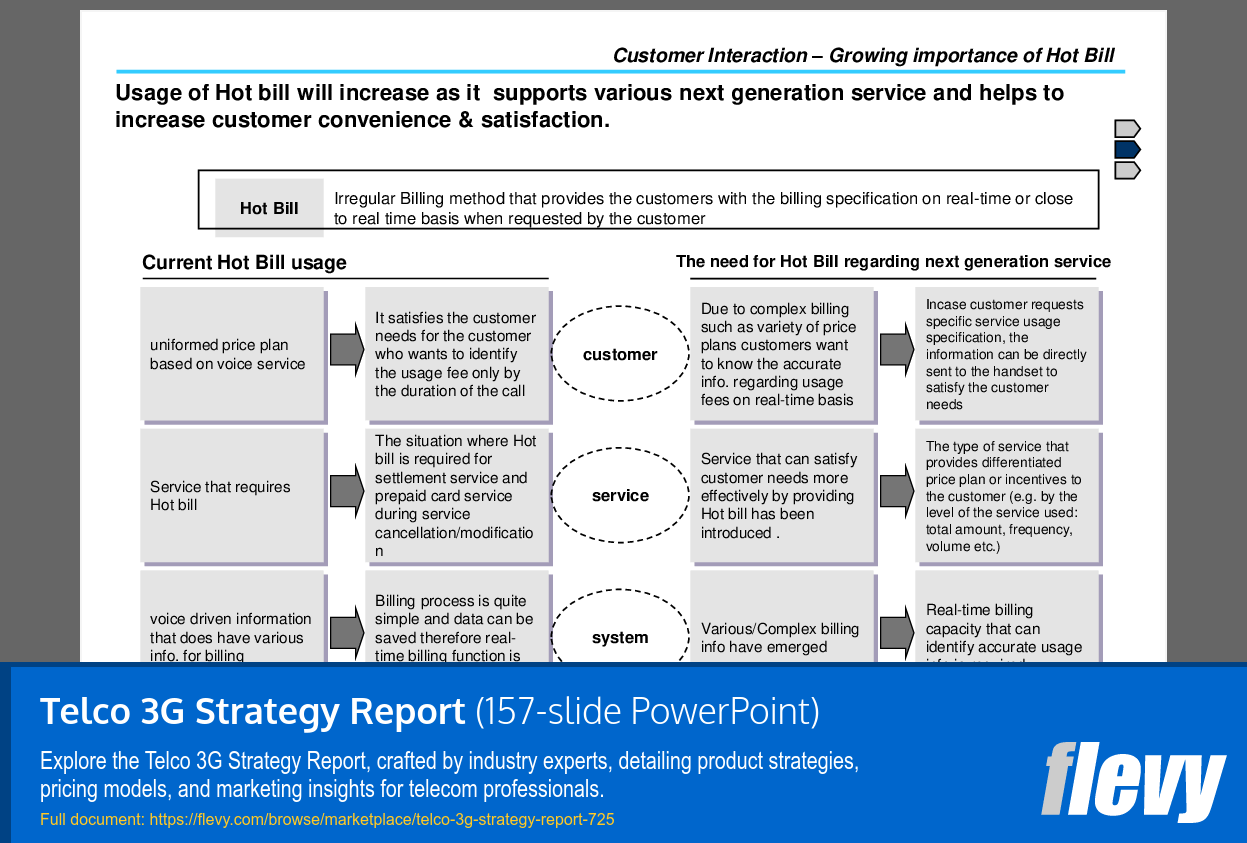
The "Hot Bill" billing method in telecommunications enhances customer convenience by providing real-time or near-real-time billing information upon request. This method is essential for customers tracking usage based on call duration. Current usage scenarios include uniform price plans for voice services and the necessity of Hot Bill for settlement services and prepaid card transactions during service cancellations or modifications. The billing process is efficient, supporting real-time functionality. As billing complexity increases with various pricing plans, customers seek accurate, real-time usage information. Specific service usage details can be sent directly to handsets, improving customer satisfaction. The trend toward complex billing information indicates a shift towards personalized billing experiences based on service usage metrics such as total amount, frequency, and volume.
This PPT slide outlines billing and settlement challenges in integrating wire and wireless services. The first issue involves the Operator Mobile Network and an affiliated fixed portal responsible for content delivery and eCommerce transactions, indicating operational complexities in billing management. The third-party fixed portal also delivers content and eCommerce services, necessitating seamless billing integration to satisfy a large email subscriber base. The mobile content provided through the Operator's site highlights the need for web authorization processes for billing, pointing to potential user experience gaps. Additionally, the Operator can offer payment services to third-party portals, creating a revenue-sharing model and new income streams. The portal site open-related issue suggests ongoing revenue opportunities through payment services, indicating avenues for profitability in a competitive environment.
This PPT slide discusses the transition from 2G to 3G mobile networks, focusing on Mobile Identification Number (MIN) mobility as a facilitator for integrating 3G services. MIN mobility is classified into 3 categories: location mobility, operator mobility, and service mobility. Countries implementing number mobility will have an advantage in launching 3G services. Billing complications arise during transitions between 2.5G (GPRS) and 3G (WCDMA) networks, particularly at the "hands off" point where different billing rates apply. These issues can lead to confusion in data production and are exacerbated by simultaneous voice and data usage on 3G networks. A robust system is necessary to manage transitions effectively across different network stages, highlighting the complexities of mobile number management during technological upgrades.
This PPT slide provides an overview of a telecommunications service product focused on billing implications and market features. It serves as a toolkit for third parties in interactive education, training, and tutoring over the UMTS network, integrating elements that enhance training capabilities. The target audience is segmented into Youth, Personal, and Professional categories, each addressing distinct needs like self-improvement, personal growth, and professional development, indicating a tailored marketing strategy. Technical specifications include bit rates ranging from 16 kbit/s to 384 kbit/s, circuit and packet switching types, and various data types for broad applicability. The "Price Scheme" outlines activation, subscription, and flat rate models, critical for understanding financial implications for potential customers.
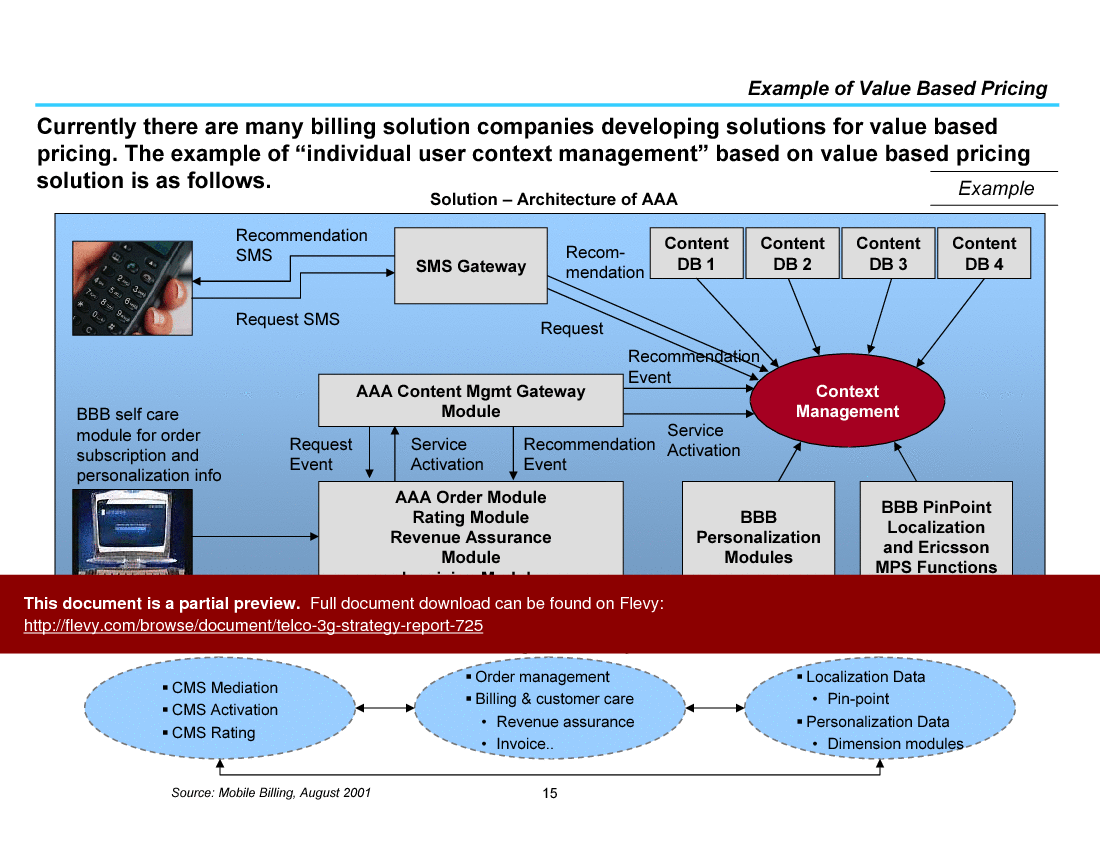
This PPT slide outlines a billing solution architecture focused on individual user context management. The "Context Management" module serves as a hub for processing user requests and recommendations. The SMS Gateway acts as a key entry point for user interactions, linked to the AAA Content Management Gateway Module, which manages incoming requests and triggers service activations. Several content databases (Content DB 1 to Content DB 4) support personalized recommendations based on user preferences. The AAA Order Module includes functions like rating, revenue assurance, and invoicing, ensuring accurate billing. BBB personalization modules and localization functions enhance adaptability to various user contexts, driving customer satisfaction and loyalty through tailored services.
Source: Best Practices in Channel Distribution Strategy Example, Strategic Plan Example, Telecom Industry PowerPoint Slides: Telco 3G Strategy Report PowerPoint (PPT) Presentation Slide Deck, Documents & Files
The average daily rate of a McKinsey consultant is $6,625 (not including expenses). The average price of a Flevy document is $65.
Trusted by over 10,000+ Client Organizations
Since 2012, we have provided business templates to over 10,000 businesses and organizations of all sizes, from startups and small businesses to the Fortune 100, in over 130 countries.

"As an Independent Management Consultant, I find Flevy to add great value as a source of best practices, templates and information on new trends. Flevy has matured and the quality and quantity of the library is excellent. Lastly the price charged is reasonable, creating a win-win value for
the customer, Flevy and the various authors. This is truly a service that benefits the consulting industry and associated clients. Thanks for providing this service.
"
– Jim Schoen, Principal at FRC Group
"[Flevy] produces some great work that has been/continues to be of immense help not only to myself, but as I seek to provide professional services to my clients, it gives me a large "tool box" of resources that are critical to provide them with the quality of service and outcomes they are expecting."
– Royston Knowles, Executive with 50+ Years of Board Level Experience
"Flevy.com has proven to be an invaluable resource library to our Independent Management Consultancy, supporting and enabling us to better serve our enterprise clients.
The value derived from our [FlevyPro] subscription in terms of the business it has helped to gain far exceeds the investment made, making a subscription a no-brainer for any growing consultancy – or in-house strategy team."
– Dean Carlton, Chief Transformation Officer, Global Village Transformations Pty Ltd.
"One of the great discoveries that I have made for my business is the Flevy library of training materials.
As a Lean Transformation Expert, I am always making presentations to clients on a variety of topics: Training, Transformation, Total Productive Maintenance, Culture, Coaching, Tools, Leadership Behavior, etc. Flevy
It is well worth the money to purchase these presentations. Sure, I have the knowledge and information to make my point. It is another thing to create a presentation that captures what I want to say. Flevy has saved me countless hours of preparation time that is much better spent with implementation that will actually save money for my clients.
"
– Ed Kemmerling, Senior Lean Transformation Expert at PMG
"I have used FlevyPro for several business applications. It is a great complement to working with expensive consultants. The quality and effectiveness of the tools are of the highest standards."
– Moritz Bernhoerster, Global Sourcing Director at Fortune 500
"Flevy is now a part of my business routine. I visit Flevy at least 3 times each month.
Flevy has become my preferred learning source, because what it provides is practical, current, and useful in this era where the business world is being rewritten.
many challenges and there is the need to make the right decisions in a short time, with so much scattered information, we are fortunate to have Flevy. Flevy investigates, selects, and puts at our disposal the best of the best to help us be successful in our work.
"
– Omar Hernán Montes Parra, CEO at Quantum SFE
"As a young consulting firm, requests for input from clients vary and it's sometimes impossible to provide expert solutions across a broad spectrum of requirements. That was before I discovered Flevy.com.
Through subscription to this invaluable site of a plethora of topics that are key and crucial to consulting, I
have been able to exceed expectations and deliver quality advice and solutions to my clients. The quality and expertise of the authors are exemplary and gives me great confidence to use as part of my service offerings.
I highly recommend this company for any consultant wanting to apply international best practice standards in their service offerings.
"
– Nishi Singh, Strategist and MD at NSP Consultants
"I like your product. I'm frequently designing PowerPoint presentations for my company and your product has given me so many great ideas on the use of charts, layouts, tools, and frameworks. I really think the templates are a valuable asset to the job."
– Roberto Fuentes Martinez, Senior Executive Director at Technology Transformation Advisory
Download our free compilation of 50+ Strategy & Transformation slides and templates. Frameworks include McKinsey 7-S, Balanced Scorecard, Disruptive Innovation, BCG Curve, and many more.