
 Click main image to view in full screen. Unlock all 11 preview images:
Technical Error Handling & Recovery Procedure – Word DOCX
Word (DOCX) + PowerPoint (PPTX) 79 Pages


BENEFITS OF THIS DOWNLOADABLE WORD DOCUMENT
- Prevent retries from creating a second failure. Govern retryability, idempotency, side effects, attempt budgets, timeout behavior, and authoritative state before automated recovery compounds the original problem.
- Turn partial and unknown outcomes into controlled operating states. Define what happens when distributed transactions time out, only part of a workflow succeeds, fallback activates, or nobody yet knows whether the operation actually occurred.
- Prove recovery instead of assuming it. Use evidence, reconciliation, escalation, verification, and falsifier logic to determine whether service was genuinely restored rather than simply observing that an alarm disappeared.
INFORMATION TECHNOLOGY WORD DESCRIPTION
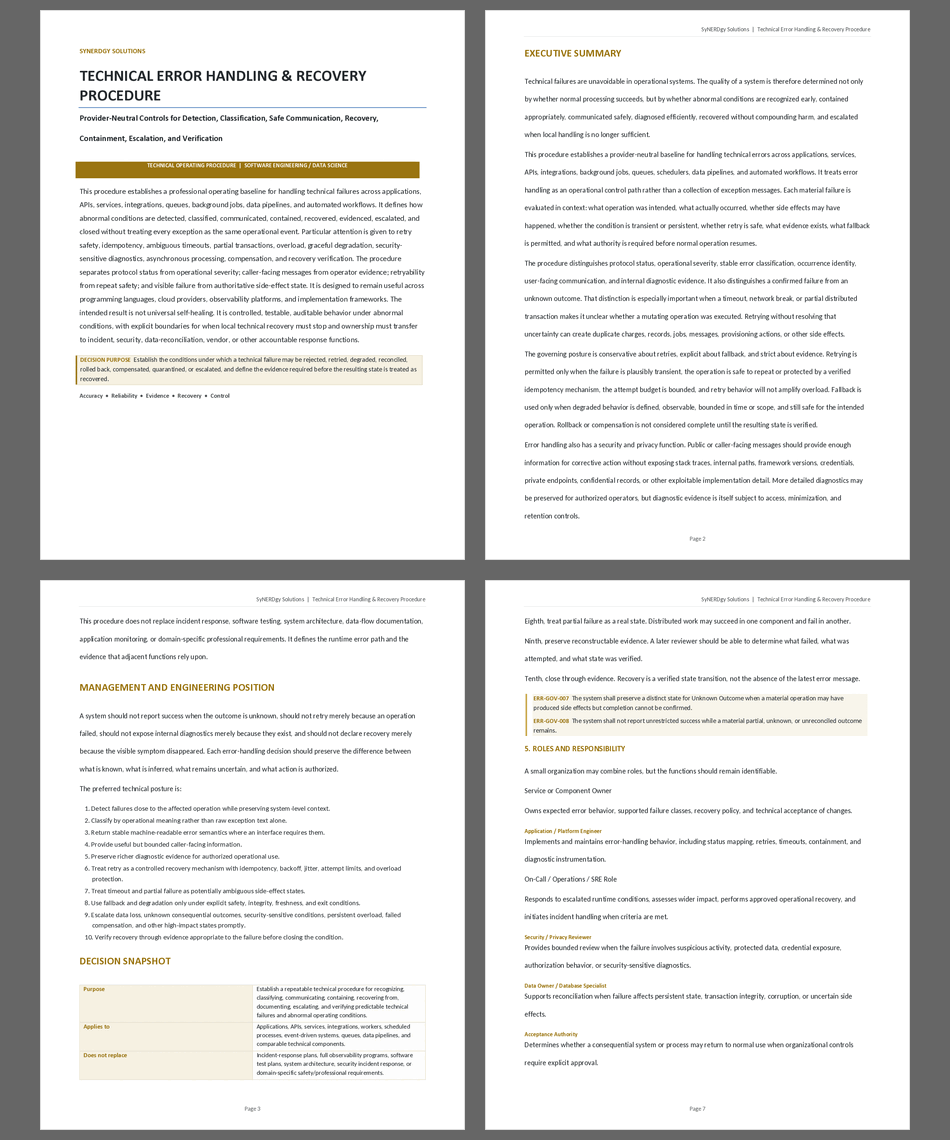
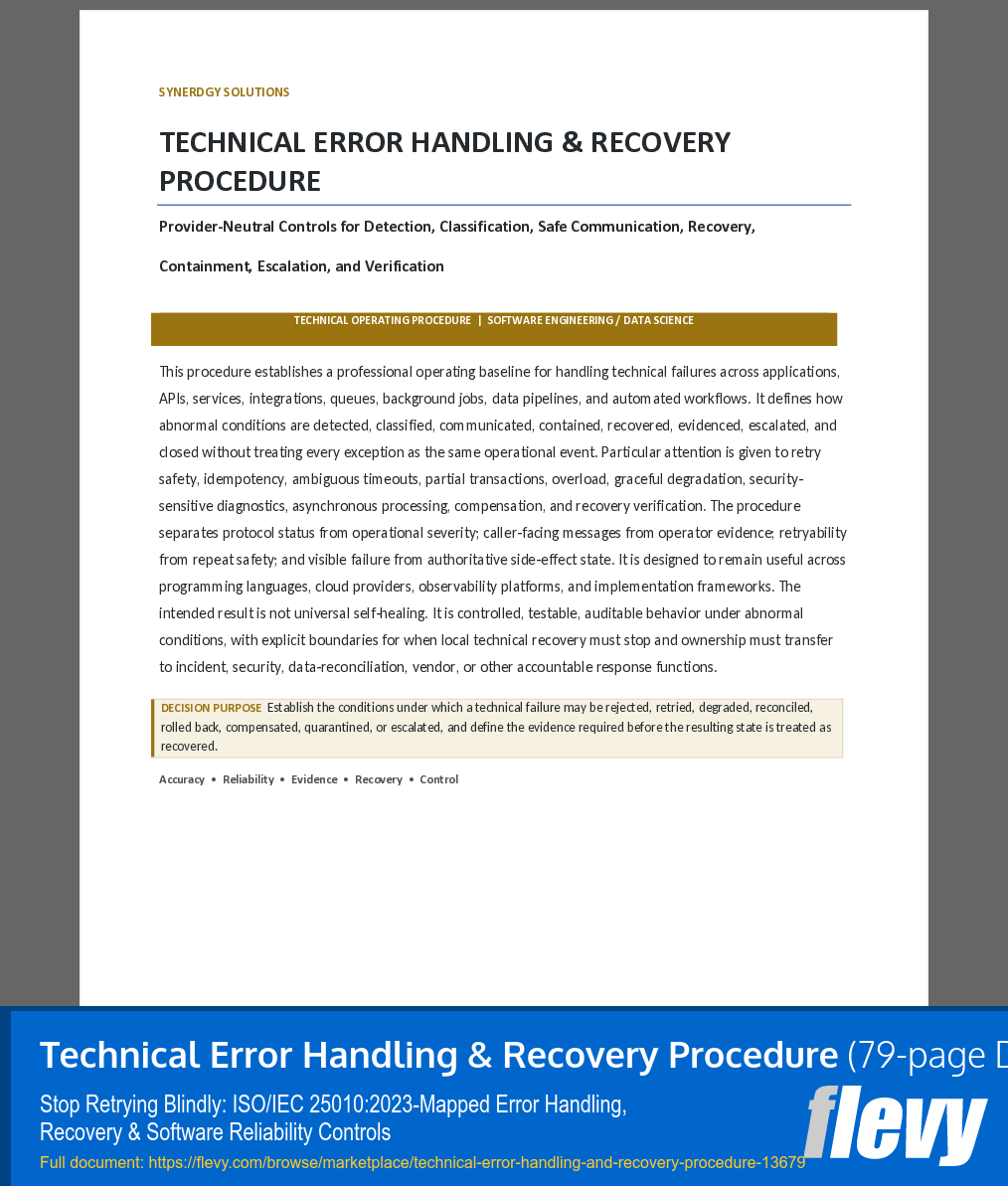
Technical Error Handling & Recovery Procedure is a 77-page editable, provider-neutral operating procedure for organizations that need reliable, controlled, and auditable technical failure behavior across applications, APIs, services, integrations, queues, background jobs, scheduled processes, data pipelines, and automated workflows.
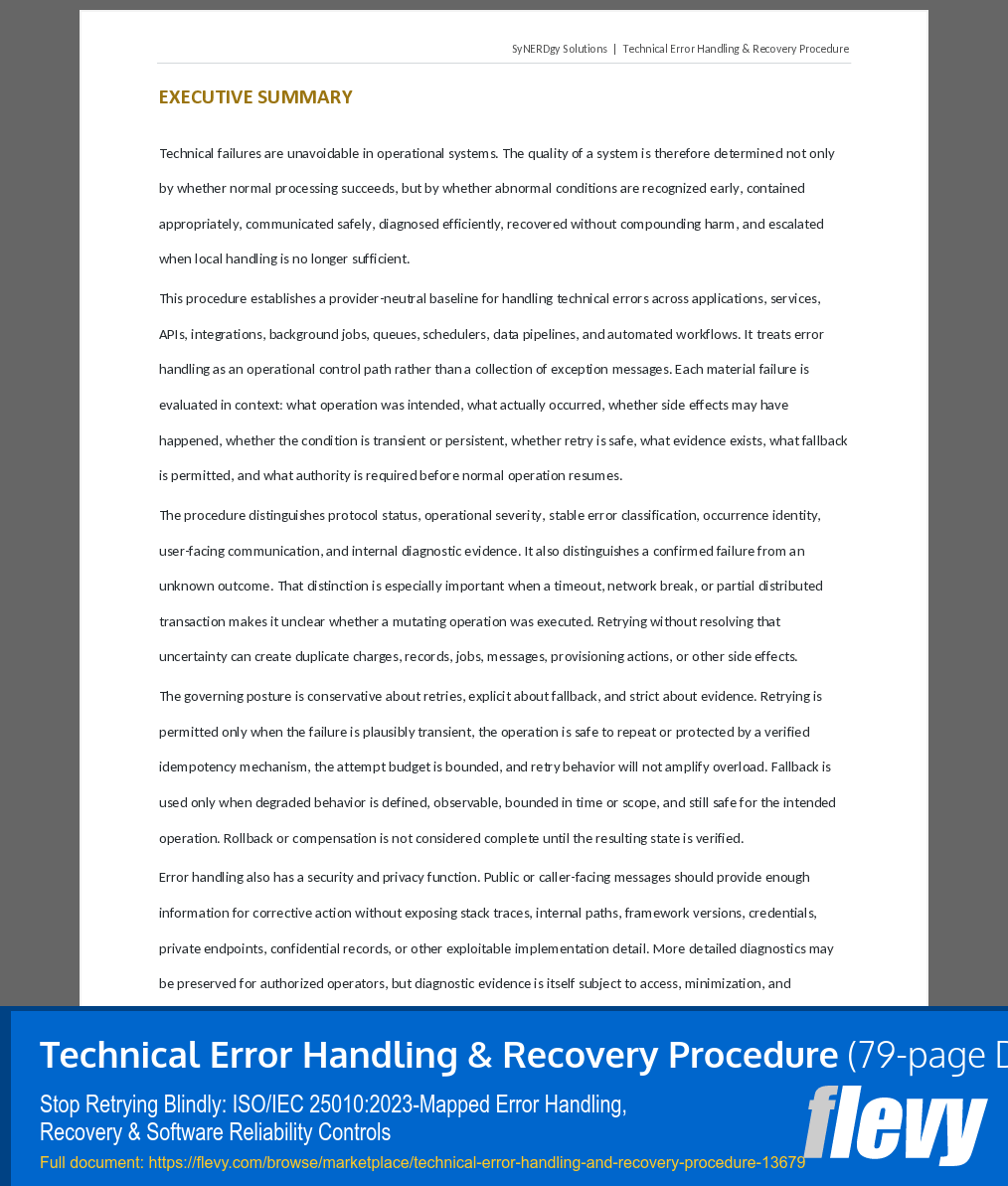
Software failures are unavoidable. What separates a resilient system from a dangerous one is not whether errors occur, but whether the system can detect the failure, classify it correctly, communicate it safely, contain its impact, determine whether retry is appropriate, recover without creating additional damage, escalate when local recovery is no longer safe, and prove the resulting state before declaring recovery complete.
This procedure turns those decisions into a repeatable technical error handling and failure recovery framework.
It addresses a common weakness in software reliability programs: teams often have exception handling, monitoring, retries, and incident response, yet no coherent operating model connecting them. A service may automatically retry a timeout without knowing whether the first attempt already changed durable state. A queue worker may replay work that partially succeeded. An API may return a generic server error even though the correct state is actually Outcome Unknown. A fallback may keep an application available while silently violating freshness, integrity, security, or transaction requirements.
The procedure is designed to control those middle states instead of compressing every technical problem into "success" or "failure."
Its operating model covers technical error handling, API error handling, retry and idempotency, timeout management, distributed-system failure recovery, dependency failure, graceful degradation, fallback behavior, circuit breaking, partial transactions, compensation, rollback, queue and asynchronous processing failure, data-integrity errors, recovery verification, escalation, and diagnostic evidence management.
A central principle is simple:
A failure event is not the same thing as the resulting failure state.
A timeout, exception, malformed input, failed write, broken transport connection, unavailable dependency, or rejected request is an event. The resulting operating state may instead be rejected, retry pending, degraded, outcome unknown, partially committed, compensating, quarantined, escalated, or reconciled.
That distinction matters because different states require different recovery decisions. A timeout during validation does not have the same meaning as a timeout after a payment, database write, provisioning action, message publication, or external transaction may already have occurred.
Control Retry Instead of Retrying Blindly
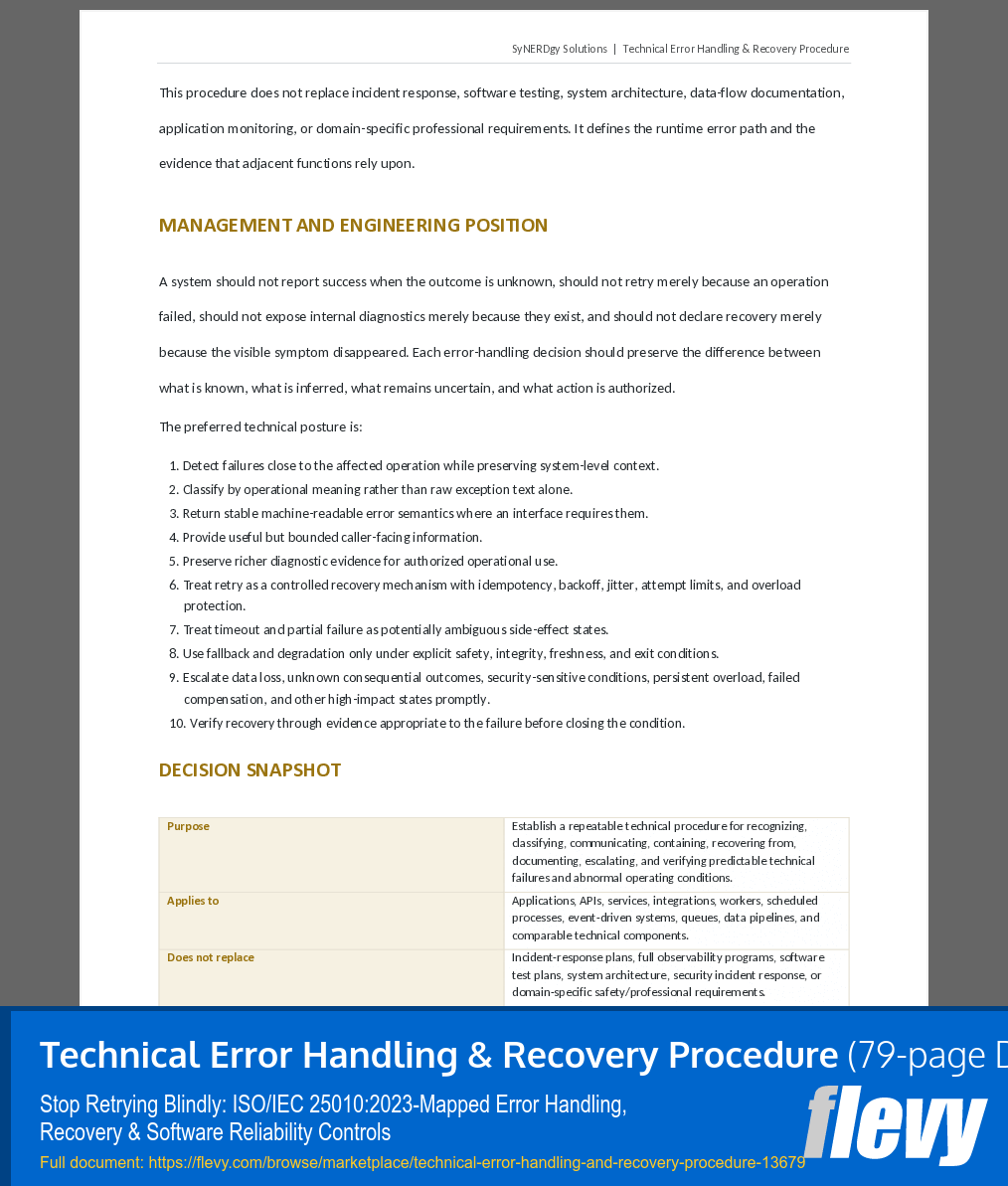
The procedure treats retry as a controlled recovery mechanism, not a default response to failure.
Before automatic retry is permitted, teams must determine whether the condition is plausibly transient, whether the operation is safe to repeat, whether the previous attempt could already have created side effects, whether idempotency or duplicate suppression exists, whether the retry is occurring at the correct system layer, whether a dependency is overloaded, whether a server has issued pushback, and whether the total retry or elapsed-time budget has been exhausted.
This makes the document particularly useful for teams searching for a practical retry policy, retry decision matrix, idempotency framework, API retry strategy, retry with exponential backoff, retry budget, duplicate transaction prevention, replay safety procedure, or distributed-system retry guidance.
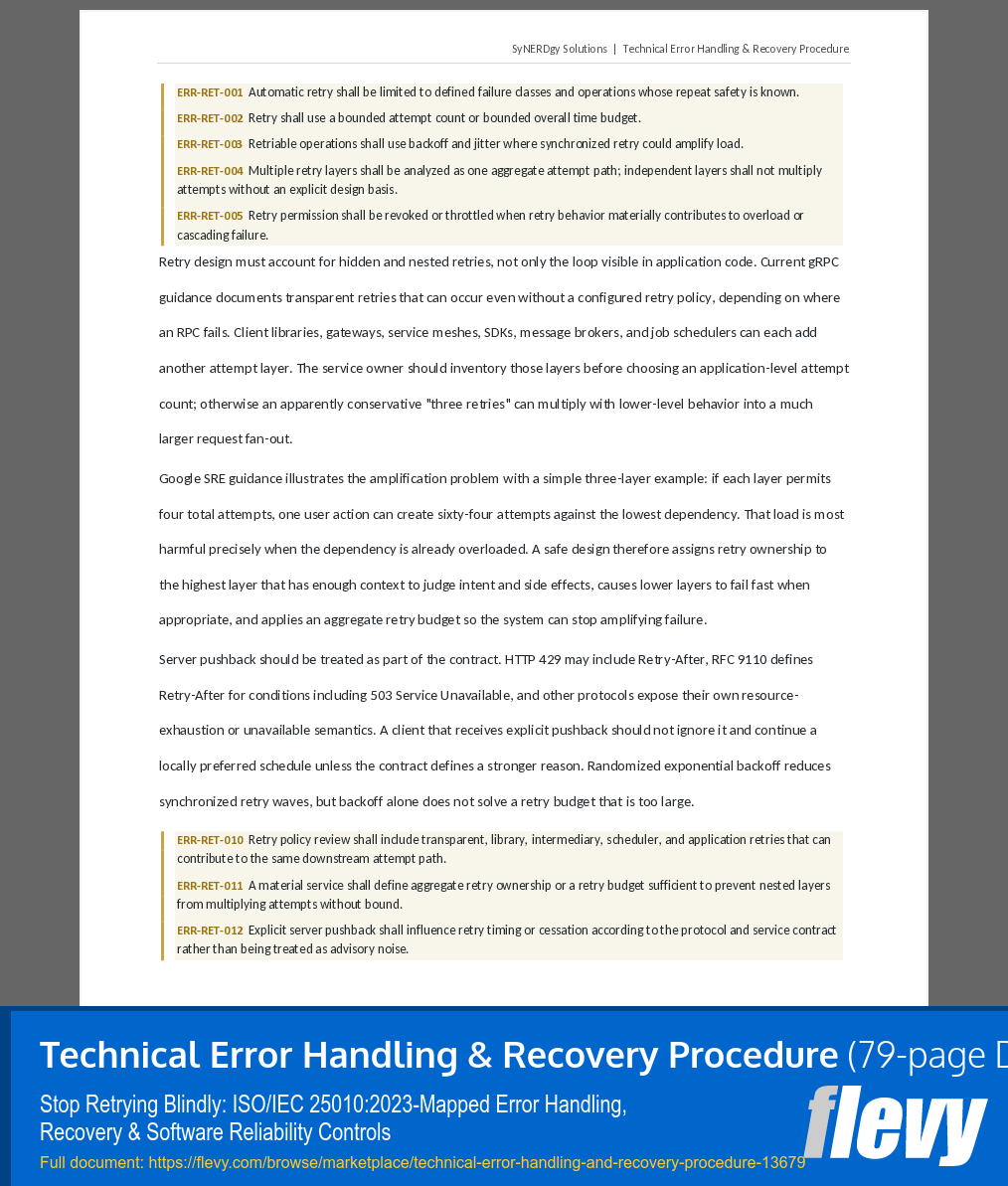
The procedure also addresses nested retry behavior. Client libraries, gateways, SDKs, service meshes, job schedulers, brokers, and application logic can each introduce their own retry layer. Individually reasonable retry counts can multiply into a damaging request storm against the very dependency already struggling to recover.
The control objective is therefore not merely "use exponential backoff." It is to establish retry ownership, attempt budgets, backoff and jitter, server pushback handling, overload protection, and evidence that the operation is actually repeat-safe.
Govern Idempotency and Duplicate Side Effects
A transient error does not automatically make a mutating operation safe to repeat.
Payments, notifications, resource creation, reservations, provisioning, database writes, job submissions, and other consequential operations may succeed even when the caller never receives a successful response. Blind replay can therefore create duplicate charges, duplicate records, duplicate jobs, repeated notifications, or conflicting business actions.
The procedure addresses this through idempotency keys, durable operation identity, duplicate-suppression records, transaction state, compare-and-set or version preconditions, replay windows, status queries, and compensating actions where appropriate.
It also distinguishes protocol idempotency from business idempotency. An API method that appears technically repeatable may still generate audit events, notifications, downstream writes, or other side effects requiring separate controls.
Treat Timeout as Evidence, Not a Verdict
Timeout is an observation about elapsed time. It is not proof that an operation failed before execution.
The procedure distinguishes connection timeouts, request and RPC deadlines, downstream dependency deadlines, queue wait timeouts, lock acquisition timeouts, processing timeouts, caller cancellation, shutdown cancellation, and worker lease expiration.
For side-effecting operations, it requires teams to determine whether the resulting state is known absent, known complete, partial, or unknown before deciding whether to retry, reconcile, compensate, or escalate.
This provides a structured basis for timeout handling, deadline propagation, cancellation handling, unknown outcome recovery, long-running operation design, asynchronous status patterns, and transaction reconciliation.
Control Partial Failure and Unknown Outcomes
Distributed systems rarely fail neatly.
One component may succeed while another fails. A payment may commit before a network response disappears. A job may write data but fail before recording completion. A message may be published while the producing service believes the request failed. Compensation may succeed for some side effects and fail for others.
The procedure preserves partial failure and unknown outcome as legitimate operating states, rather than forcing uncertain work into a false success or failure classification.
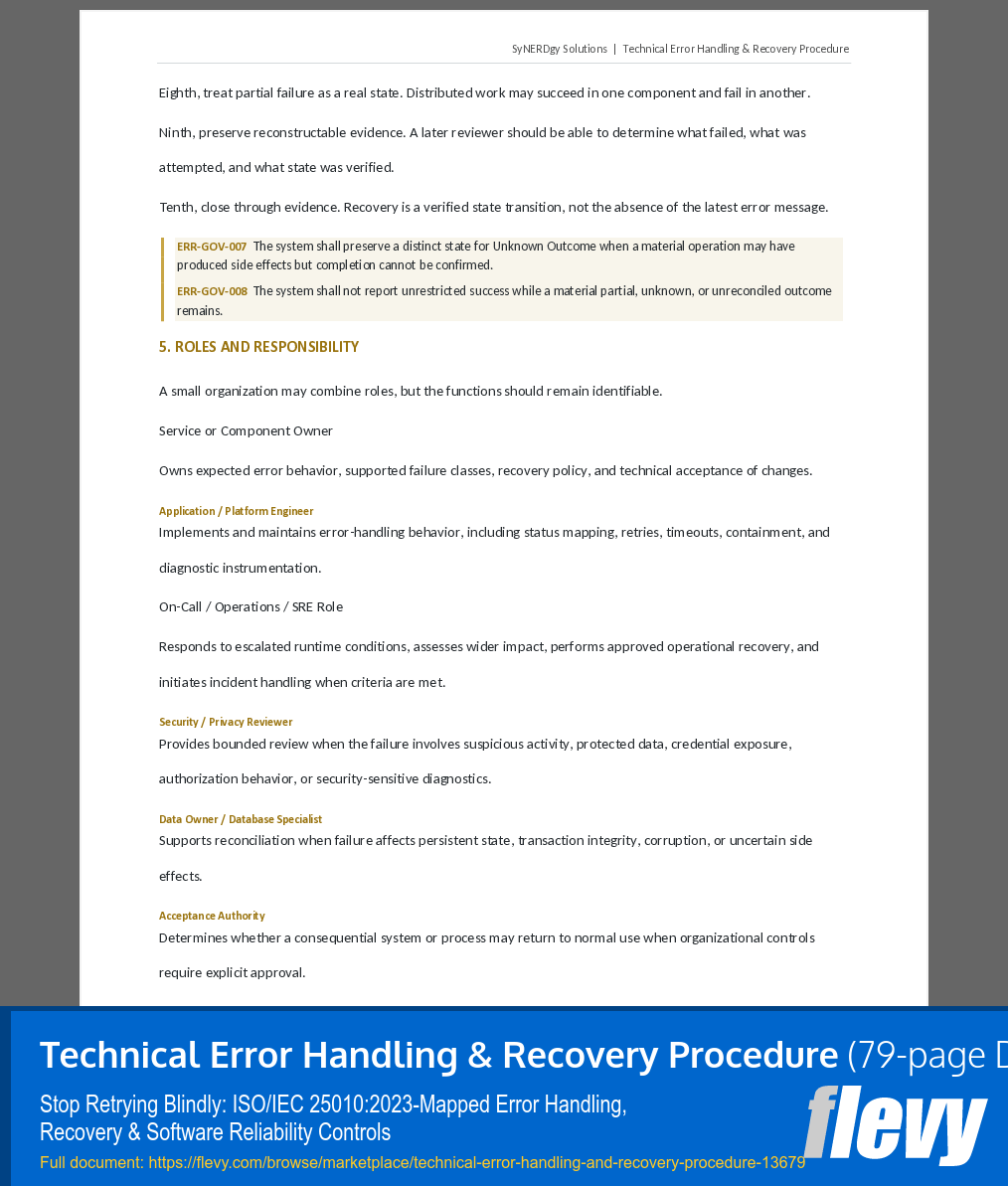
Recovery is not complete simply because an exception stopped appearing.
The resulting side-effect state must be known, reconciled, compensated, transferred to an accountable owner, or explicitly retained as unresolved. The enterprise operating model includes states such as Failed After Partial Side Effect, Outcome Unknown, Compensating, Compensation Failed, Reconciled, and Transferred/Escalated.
That makes the procedure useful for partial transaction recovery, distributed transaction failure, reconciliation procedures, compensation workflows, saga-style recovery, duplicate processing prevention, unknown transaction status, and authoritative-state verification.
Separate Error Classification From Error Messages
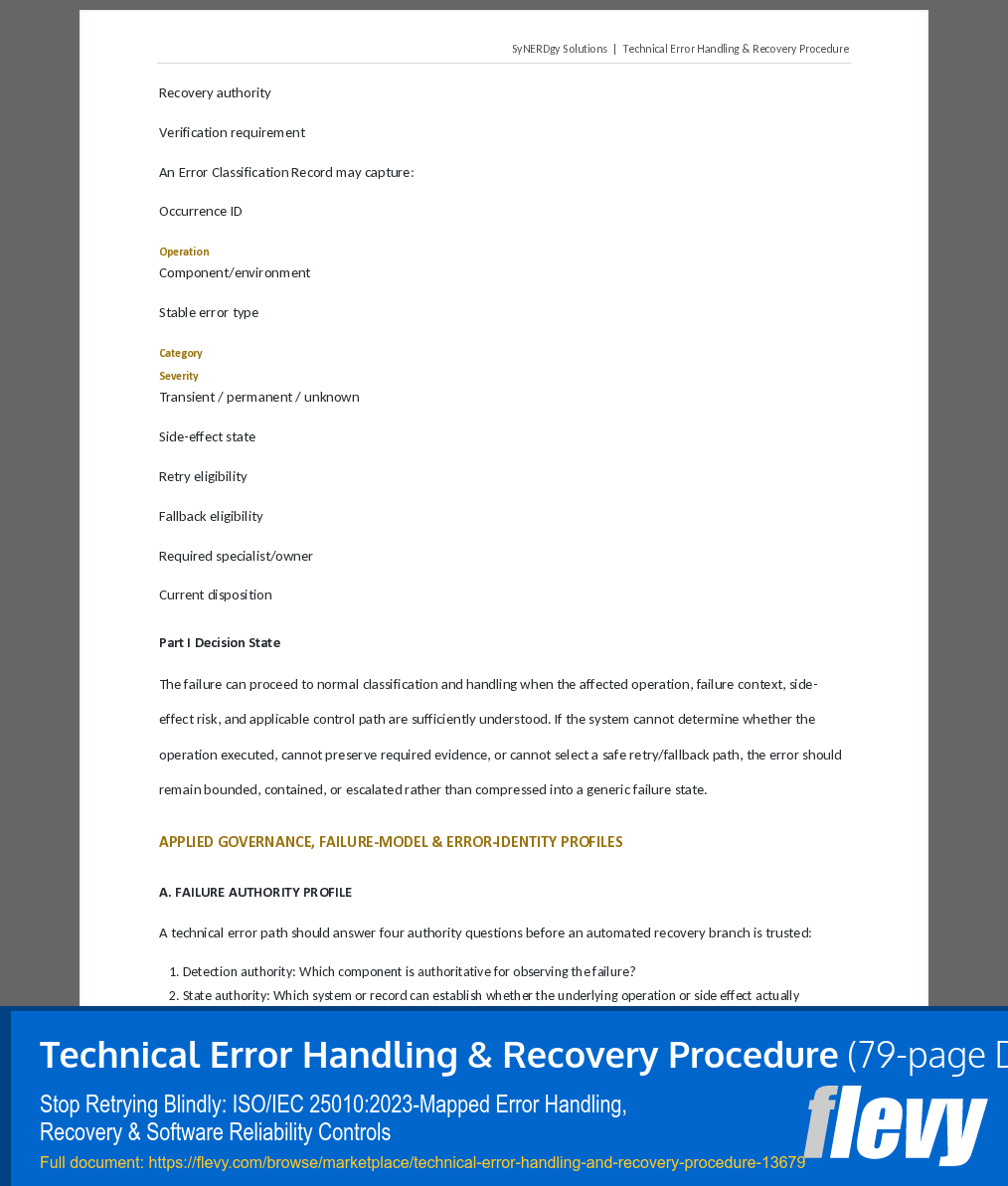
The procedure establishes a stable error taxonomy based on operational meaning rather than free-form exception text.
Suggested categories include request/input failures, authentication, authorization, precondition or state conflicts, timeout and cancellation, dependency and transport problems, concurrency conflicts, resource exhaustion, internal invariant failures, data-integrity problems, partial or unknown outcomes, asynchronous processing failures, configuration and compatibility problems, and security-sensitive conditions.
Stable error classification supports more reliable:
API contracts, monitoring, alerts, dashboards, SRE operations, support workflows, software testing, analytics, automated recovery, and incident escalation.
It also prevents clients and operational systems from depending on unstable natural-language error messages to determine whether a request should be corrected, retried, reconciled, or escalated.
Build Safer API Error Contracts
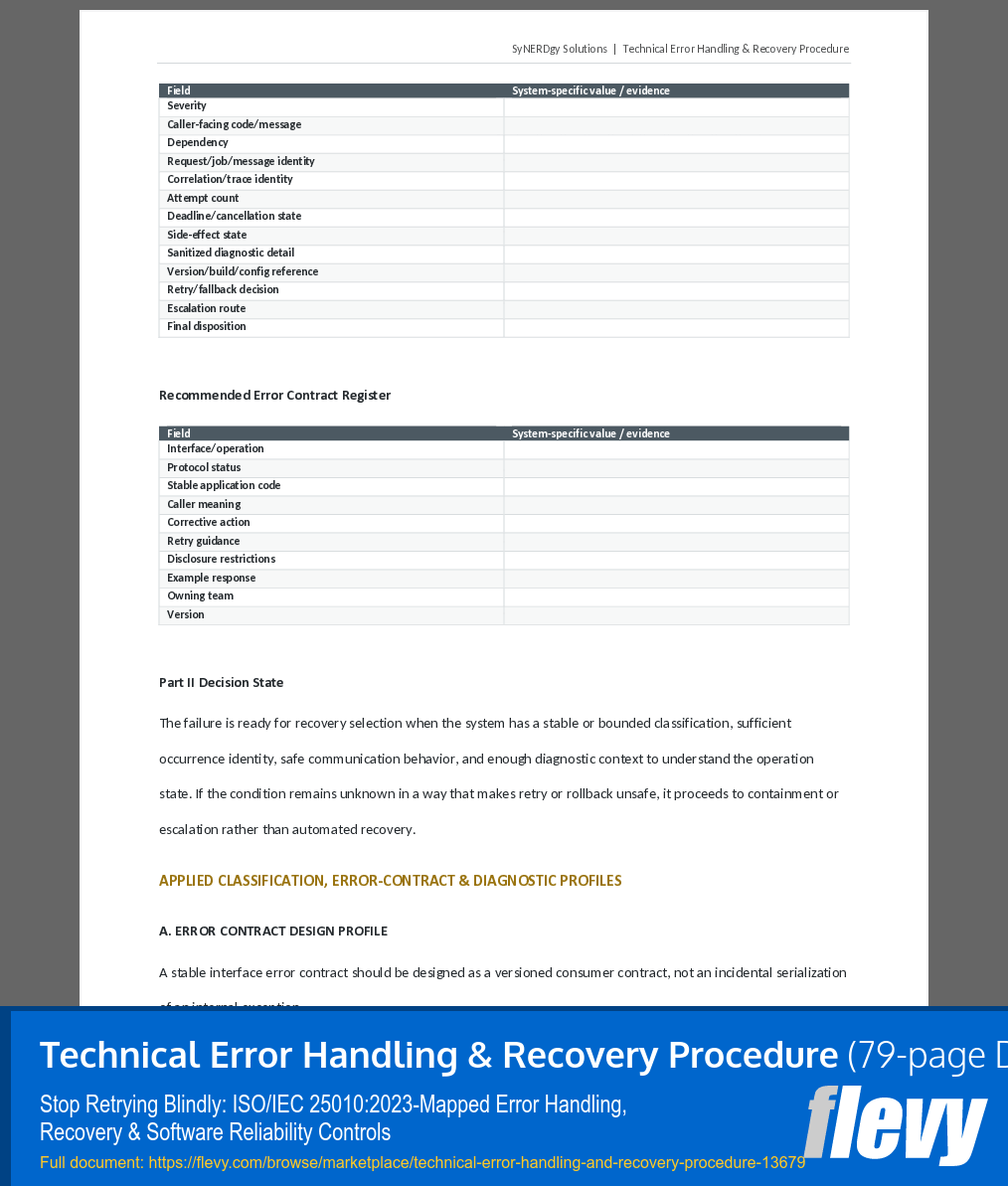
For machine-consumed interfaces, the procedure separates:
protocol status, stable application error type, occurrence identity, human-readable detail, corrective action, retry guidance, and state ambiguity.
For HTTP APIs, it discusses the use of RFC 9457 Problem Details, including stable problem types, occurrence references, safe extension fields, protocol-status consistency, and the distinction between human-readable explanatory text and fields intended for programmatic handling.
The broader control objective applies beyond HTTP and supports API error response design, machine-readable errors, stable application error codes, client retry guidance, API failure contracts, support correlation IDs, and error schema governance.
Protect Sensitive Diagnostic Information
Technical error handling is also a security boundary.
Caller-facing responses should provide enough information for correction or support without exposing stack traces, internal file paths, framework versions, private hostnames, internal service names, SQL statements, credentials, authentication material, tokens, confidential data, restricted identifiers, or sensitive authorization logic.
More detailed evidence can be preserved for authorized engineers, support personnel, security teams, or forensic functions, but that evidence remains subject to access controls, minimization, retention, and integrity requirements.
The procedure draws on recognized error-handling, logging, and diagnostic principles, including RFC 9457, RFC 9110, W3C Trace Context, CWE error-disclosure and logging considerations, OWASP logging guidance, NIST security-control concepts, OpenTelemetry error semantics, and SRE retry/reliability practices.
Improve Logging, Metrics, Tracing, and Error Telemetry
A mature failure-handling system should not dump the same unrestricted exception into every telemetry channel.
The procedure distinguishes the roles of:
metrics for bounded failure rates and trends,
traces for distributed execution and dependency paths,
logs and structured events for occurrence-level diagnostics and state transitions, and
durable business or operational records for authoritative transaction, recovery, or reconciliation evidence.
It also distinguishes the original operation failure, recovery attempts, and failures of the recovery mechanism itself.
This improves observability by preventing recovery activity from being confused with primary service failure and reduces unnecessary telemetry duplication and high-cardinality metric labels.
Contain Failure Before It Spreads
When a system is overloaded, aggressive recovery can become part of the outage.
The procedure addresses containment through techniques such as bounded retry, backoff and jitter, retry budgets, circuit breaking, bulkheads, load shedding, controlled fallback, degradation, and escalation.
These controls help prevent a local technical failure from becoming a cascading reliability event.
Fallback is treated carefully. A secondary path or degraded service should only be used when the resulting behavior still satisfies the requirements that matter. Availability alone does not prove that a fallback preserves data integrity, authorization behavior, freshness, transaction semantics, performance, or other required characteristics.
Verify Recovery Before Closure
The procedure rejects one of the most dangerous shortcuts in production operations:
"The error stopped, therefore the system recovered."
A recovery claim should establish what happened, what corrective action occurred, what authoritative state now exists, whether side effects were resolved, whether retries or compensation created secondary problems, and what evidence supports returning the service or operation to normal use.
The procedure therefore connects technical recovery to recovery verification, reconciliation evidence, post-recovery checks, acceptance authority, escalation handoff, and explicit unresolved-state tracking.
The intended result is controlled, testable, and auditable abnormal behavior rather than unrealistic promises of universal self-healing.
Fourteen Reusable Implementation Annexes
The buyer receives the complete procedure together with 14 implementation annexes designed to turn the written controls into maintainable operating records.
These support error taxonomy, retry decisions, fallback conditions, partial-failure state modeling, diagnostics, retry policy, escalation, recovery verification, change impact, retry-layer topology, idempotency and status tracking, disclosure and logging controls, unknown-outcome reconciliation, and recovery falsification.
The result is not merely an error handling template. It is an operational control framework that can be adapted across programming languages, infrastructure providers, software architectures, API technologies, messaging systems, and observability platforms.
Works With Other SyNERDgy Technical Reliability Resources
Technical Error Handling & Recovery Procedure is designed to sit inside a broader reliability and assurance chain.
Pair it with System Integration Requirements & Control Specification when interface behavior, API contracts, dependency expectations, failure semantics, and integration acceptance conditions need to be established before runtime recovery behavior is designed.
Pair it with Application Monitoring, Observability & Performance Plan to define how failures, degraded conditions, telemetry blindness, dependency problems, capacity pressure, and recovery states are detected and surfaced operationally.
Pair it with Software Testing & Acceptance Protocol to turn retry, fallback, timeout, partial-failure, reconciliation, compensation, and recovery requirements into testable evidence supporting release and acceptance decisions.
Pair it with System Architecture Overview when teams first need a controlled description of system boundaries, components, authority, dependencies, deployment structure, resilience, and recovery architecture.
The procedure itself explicitly separates its runtime error-handling responsibilities from adjacent requirements, testing, architecture, data-flow, monitoring, incident-response, security, and professional-control artifacts.
Together, the core reliability sequence becomes:
System Integration Requirements & Control Specification → Application Monitoring, Observability & Performance Plan → Technical Error Handling & Recovery Procedure → Software Testing & Acceptance Protocol
Operationally:
Define → Detect → Recover → Prove
Technical Error Handling & Recovery Procedure gives engineering, DevOps, SRE, platform, architecture, QA, technical consulting, and operational teams a reusable framework for controlling what happens when software stops behaving normally.
Instead of relying on generic exception handling, unlimited retries, informal troubleshooting, or assumptions that disappearing alerts equal recovery, organizations can establish a traceable model for technical error handling, API failure management, retry safety, idempotency, timeout handling, partial-failure recovery, graceful degradation, distributed-system resilience, diagnostic evidence, escalation, reconciliation, and verified recovery.
The objective is not to eliminate technical failure.
It is to make failure bounded, understandable, recoverable, and provable.
Got a question about the product? Email us at support@flevy.com or ask the author directly by using the "Ask the Author a Question" form. If you cannot view the preview above this document description, go here to view the large preview instead.
Source: Best Practices in Information Technology, Incident Management Word: Technical Error Handling & Recovery Procedure Word (DOCX) Document, SyNERDgy Solutions | R&D Systems
ABOUT THE AUTHOR

SyNERDgy Solutions develops proprietary enterprise frameworks and professional systems for complex organizational and technical environments.
Our work spans operational excellence, governance and risk, enterprise architecture, systems and AI, assurance, implementation, evidence analysis, and financial decision support.
SyNERDgy products are independently developed and subsequently cross-mapped
... [read more]
Ask the Author a Question
You must be logged in to contact the author.




























