
 Click main image to view in full screen. Unlock all 13 preview images:
System Integration Requirements & Control Specification – Word DOCX
Word (DOCX) + PowerPoint (PPTX) 75 Pages


BENEFITS OF THIS DOWNLOADABLE WORD DOCUMENT
- Turns vague integration expectations into traceable, verifiable requirements across interfaces, authority, data, failure behavior, recovery, observability, and acceptance.
- Helps teams expose high-risk integration conditions before production, including retries, duplicate actions, partial completion, unknown states, provider dependencies, authorization gaps, and recovery failures.
- Provides a reusable, provider-neutral control baseline that connects integration requirements to ownership, implementation, testing, evidence, change control, and final production acceptance.
INFORMATION TECHNOLOGY WORD DESCRIPTION
A system integration is not production-ready simply because two applications can exchange data.
Connectivity proves that a path exists. It does not automatically prove that the parties agree on data meaning, authority, completion state, failure behavior, retry handling, security boundaries, recovery expectations, observability, or the evidence required to accept the integration for operational use.
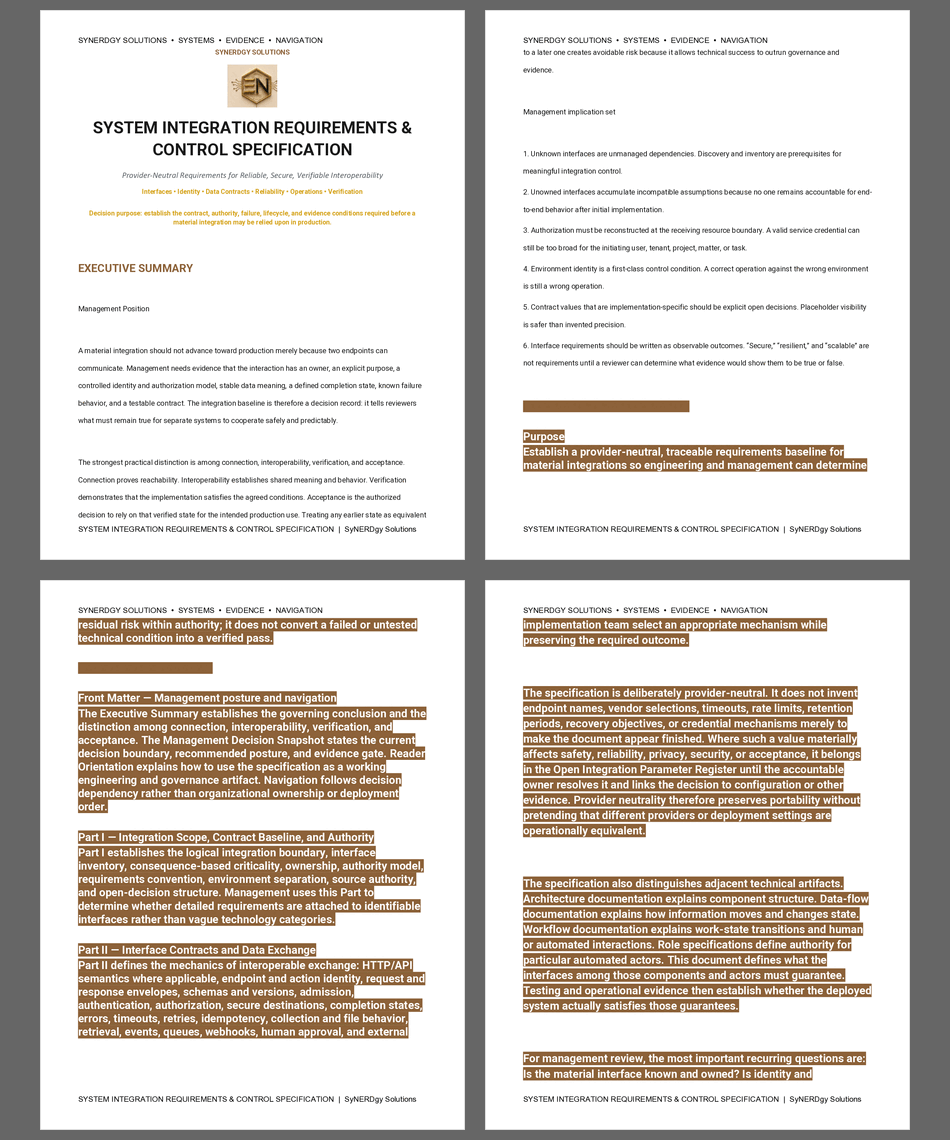
The System Integration Requirements & Control Specification is a comprehensive 74-page editable Word document designed to help organizations define, govern, verify, and accept material system integrations through a structured requirements and control baseline.
The specification is ISO/IEC/IEEE 29148:2018-informed, using established requirements-engineering principles to support requirements that are clear, necessary, feasible, unambiguous, verifiable, and traceable. The document uses that professional reference basis as an engineering foundation. It does not claim ISO certification, endorsement, or automatic organizational compliance.
This resource is designed for enterprise architects, integration architects, API and platform teams, engineering managers, technical business analysts, software and systems teams, solution designers, implementation consultants, security reviewers, QA and assurance professionals, system owners, digital-transformation teams, and delivery leaders responsible for integrations that must operate reliably beyond the happy path.
The specification addresses a common weakness in integration programs: teams often document how systems connect without fully defining what the integration must guarantee.
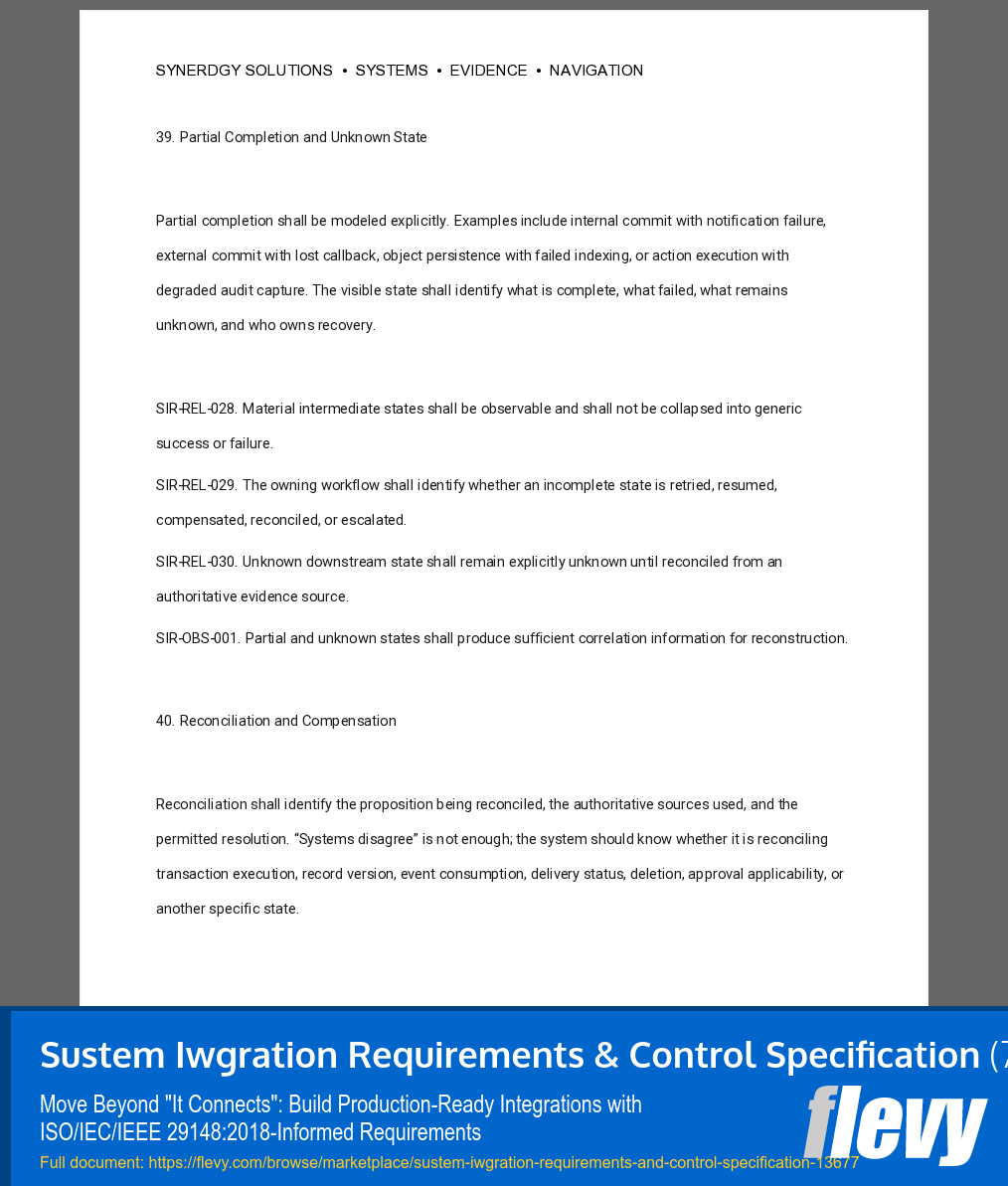
A basic interface description may identify an endpoint, message, file transfer, database connection, event, or external provider. That alone does not establish what should happen when authentication succeeds but authorization context is incomplete; a request times out after downstream processing; a message is delivered twice; an external provider accepts a transaction but has not actually completed the business action; two systems temporarily disagree about authoritative state; an event arrives late or out of order; a dependency becomes unavailable; a migration introduces mixed versions; or a workflow enters a partial or unknown state.
The System Integration Requirements & Control Specification provides a structured framework for defining these conditions before they become production incidents.
It helps teams establish requirements across the integration lifecycle, including system and interface boundaries, ownership, criticality, identity and access expectations, data semantics, environment separation, interface contracts, error behavior, reliability, recovery, operational monitoring, evidence, lifecycle changes, verification, and production acceptance.
The specification also distinguishes among several concepts that are frequently collapsed into one another:
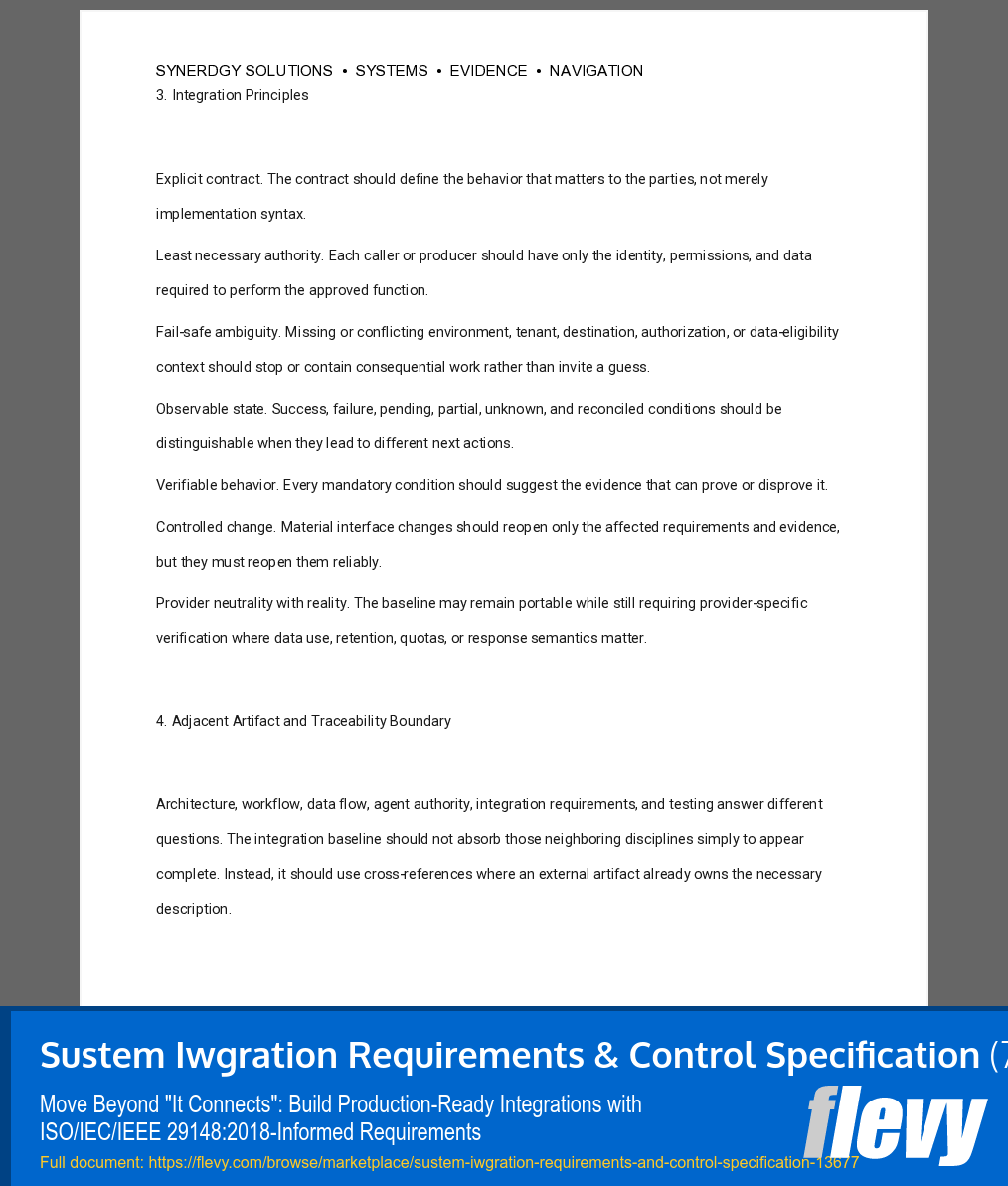
Connection is not the same as interoperability. Interoperability is not the same as verification. Verification is not the same as production acceptance.
That distinction allows project teams and decision-makers to evaluate integrations based on demonstrated behavior rather than assuming that a successful connection test proves the surrounding operating model is safe and complete.
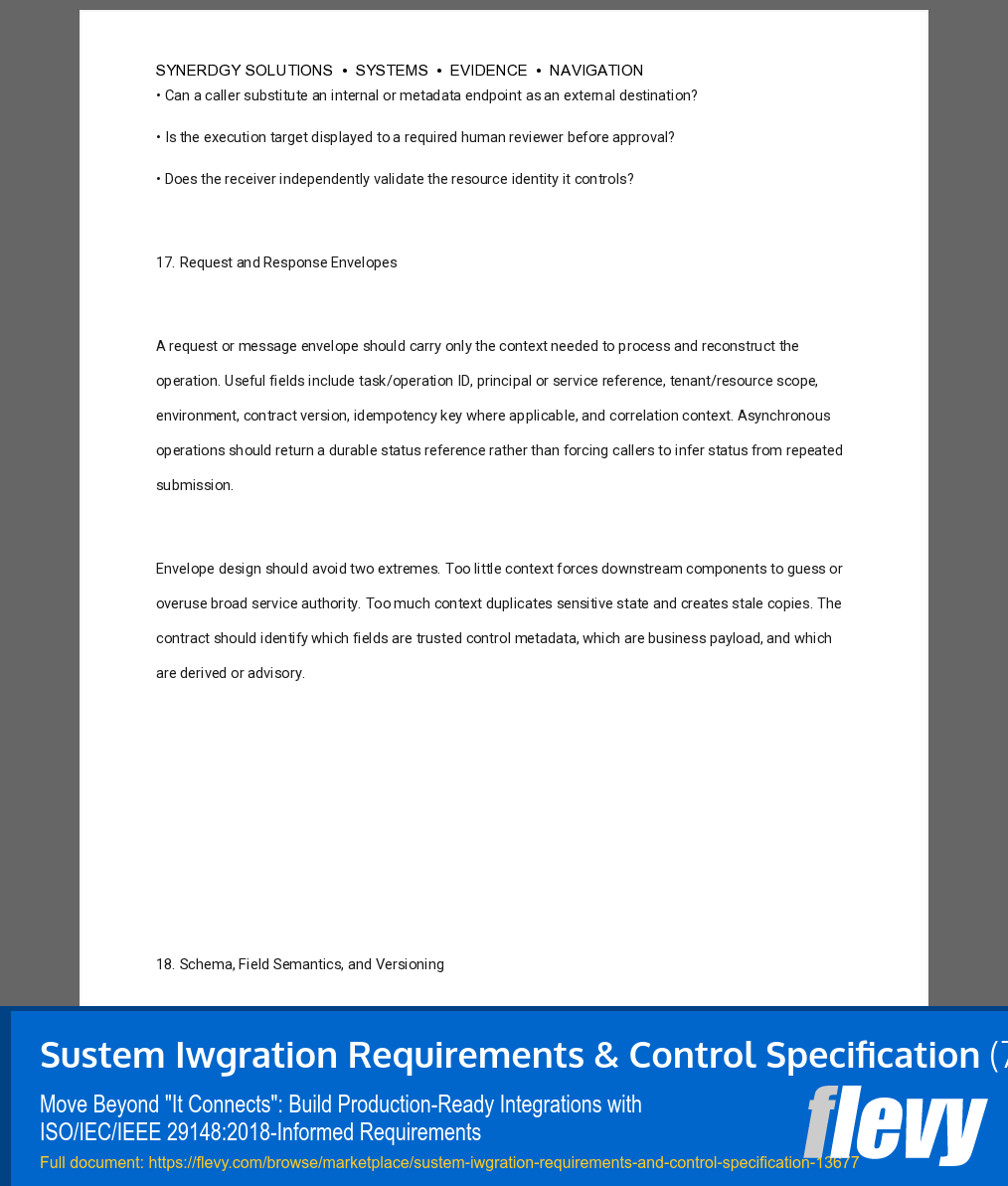
Particular attention is given to modern distributed-system risks. The framework supports integrations involving synchronous APIs, asynchronous processing, events, queues, callbacks, webhooks, external platforms, identity services, databases, data pipelines, automated workflows, third-party providers, and other cross-system dependencies.
It provides a governance structure for defining expectations around authentication and authorization, retries, duplicate activity, idempotency, timeouts, capacity, concurrency, partial completion, unknown outcomes, reconciliation, degraded operation, recovery, migration, rollback, compatibility, change impact, observability, and evidence.
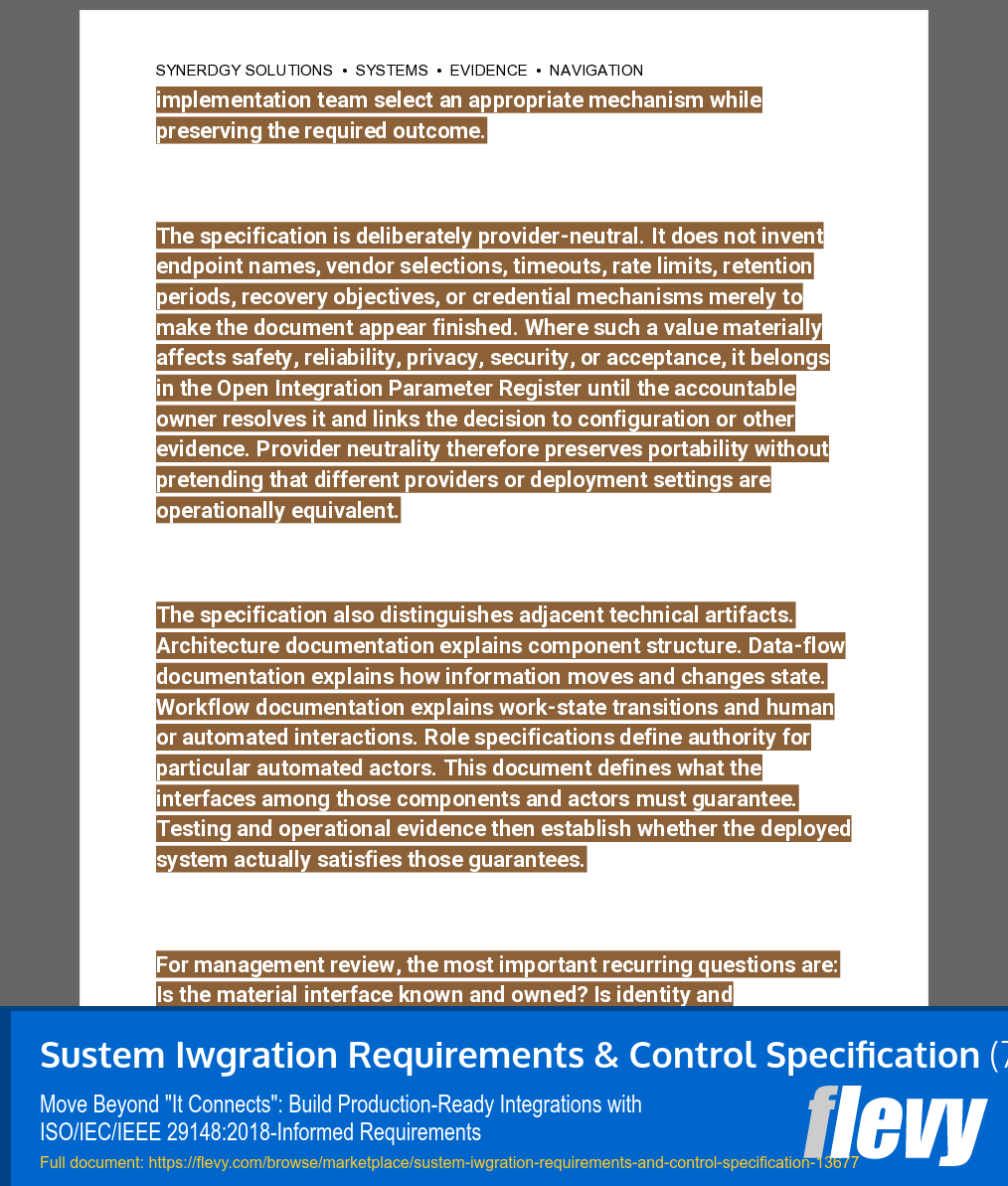
Rather than filling a template with invented implementation values, the specification deliberately separates stable requirements from environment-specific parameters.
Organizations can therefore identify what must be true while keeping unresolved implementation decisions visible until they are assigned, resolved, tested, and evidenced by the appropriate owner. This makes the document suitable for early architecture and requirements work as well as later implementation, verification, migration, incident remediation, and acceptance activities.
The resource also helps prevent requirements from becoming disconnected from execution. It is structured so that integration requirements can be connected to accountable owners, implementation decisions, verification activities, evidence, exceptions, change management, and final acceptance.
The buyer receives an editable specification supported by 12 implementation annexes and operating records designed to help translate the control framework into a maintainable project or organizational baseline. These supporting components provide reusable structures for managing interfaces, requirements, technical decisions, assurance evidence, unresolved parameters, lifecycle changes, and acceptance without requiring a particular commercial tool or platform.
The document is intentionally technology-neutral and provider-neutral.
It does not require a specific cloud environment, API gateway, identity platform, authentication mechanism, messaging technology, programming language, monitoring product, vendor, timeout value, retry policy, rate limit, recovery objective, or software-delivery methodology. Teams can adapt the specification to their actual architecture while retaining a consistent governance and evidence structure.
Use the System Integration Requirements & Control Specification when:
• Defining a new API, service, system, data, or provider integration
• Replacing or migrating an existing integration
• Establishing requirements before development begins
• Preparing integration testing and acceptance criteria
• Clarifying interface ownership and decision authority
• Strengthening authentication, authorization, or trust-boundary requirements
• Introducing asynchronous processing, queues, events, or callbacks
• Addressing unreliable retries, duplicate actions, or unknown completion states
• Improving integration observability and auditability
• Investigating recurring cross-system failures
• Managing external-provider dependencies
• Planning version transitions, migration, rollback, or decommissioning
• Determining whether production evidence is sufficient for operational acceptance
This resource is particularly useful for organizations where integrations technically function but remain difficult to govern, verify, troubleshoot, change, or defend.
The result is not merely a list of endpoints.
It is a structured requirements and control baseline designed to help teams answer a much harder question:
What must this integration reliably guarantee before the organization should depend on it?
Deliverable: 74-page editable Microsoft Word specification.
Format: Editable DOCX.
Professional basis: ISO/IEC/IEEE 29148:2018-informed requirements engineering, supported by established systems, security, interface, API, identity, reliability, observability, and assurance references.
Core outcome: Replace vague "integrate these systems" instructions with traceable, verifiable requirements and a controlled path from interface definition through production acceptance.
Got a question about the product? Email us at support@flevy.com or ask the author directly by using the "Ask the Author a Question" form. If you cannot view the preview above this document description, go here to view the large preview instead.
Source: Best Practices in Information Technology, Enterprise Architecture Word: System Integration Requirements & Control Specification Word (DOCX) Document, SyNERDgy Solutions | R&D Systems
ABOUT THE AUTHOR

SyNERDgy Solutions develops proprietary enterprise frameworks and professional systems for complex organizational and technical environments.
Our work spans operational excellence, governance and risk, enterprise architecture, systems and AI, assurance, implementation, evidence analysis, and financial decision support.
SyNERDgy products are independently developed and subsequently cross-mapped
... [read more]
Ask the Author a Question
You must be logged in to contact the author.




























