
 Click main image to view in full screen. Unlock all 11 preview images:
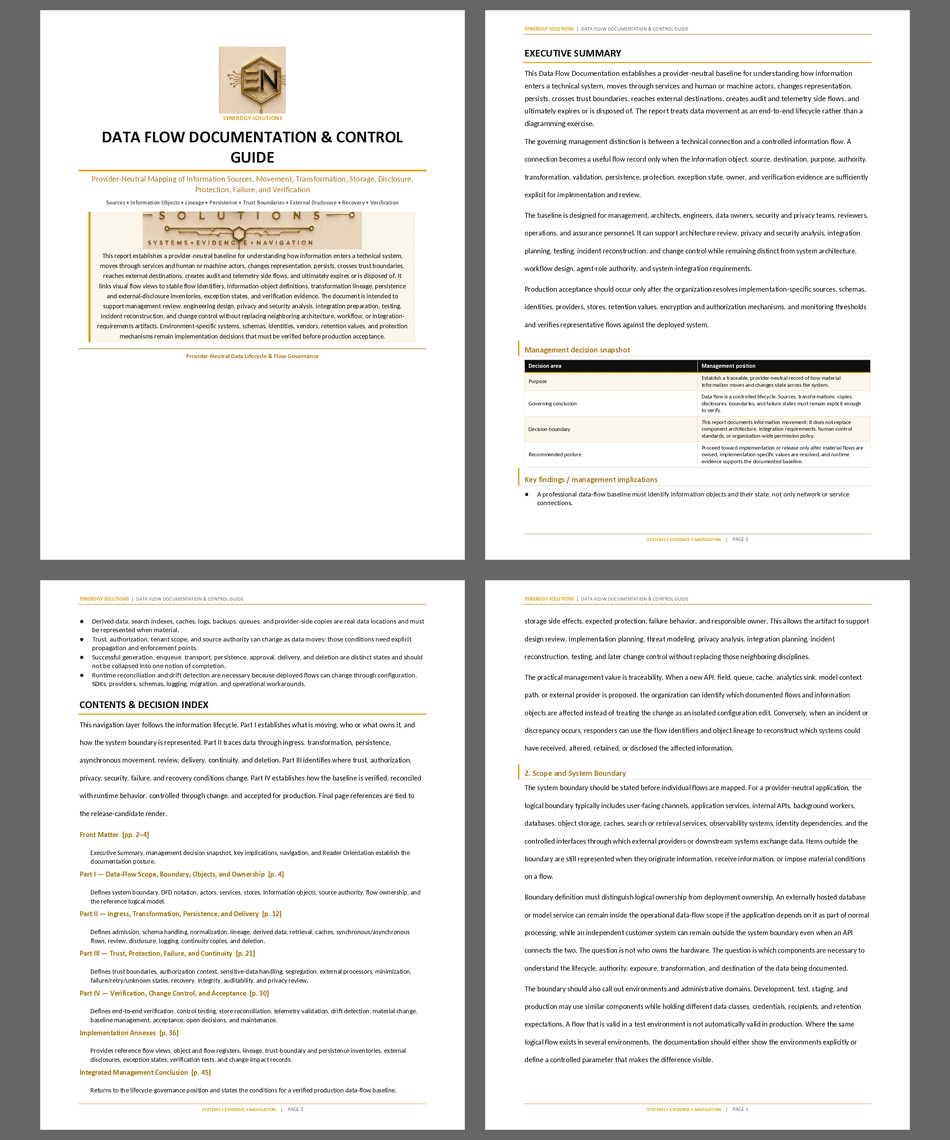
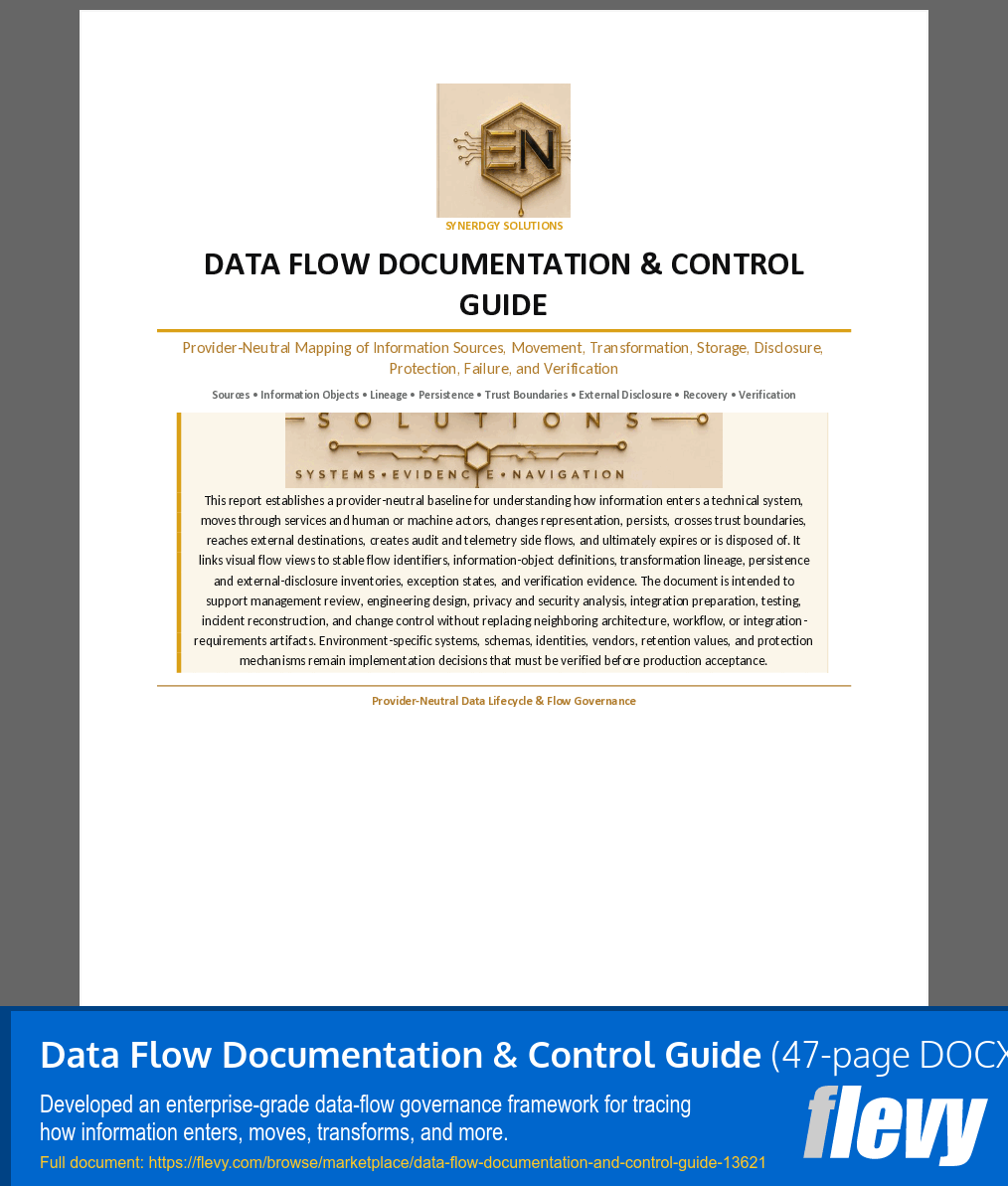
Data Flow Documentation & Control Guide – Word DOCX
Word (DOCX) + PowerPoint (PPTX) 47 Pages


BENEFITS OF THIS DOWNLOADABLE WORD DOCUMENT
- Find the data paths your architecture diagram misses
- Connect data maps to real governance controls.
- Verify that the deployed system still matches the approved design.
GOVERNANCE WORD DESCRIPTION
Organizations routinely discover that their "data flow" is far more complicated than the architecture diagram suggests. Information gets copied into logs, caches, queues, analytics stores, backups, AI context windows, third-party services, telemetry systems, and human-review processes. Data may change format, cross trust boundaries, create derived records, or remain in secondary locations long after the primary record is deleted. When nobody can confidently explain where the information went, who had authority over it, what controls applied, or whether the deployed system still matches the approved design, security, privacy, AI governance, audit, and incident response all become harder.
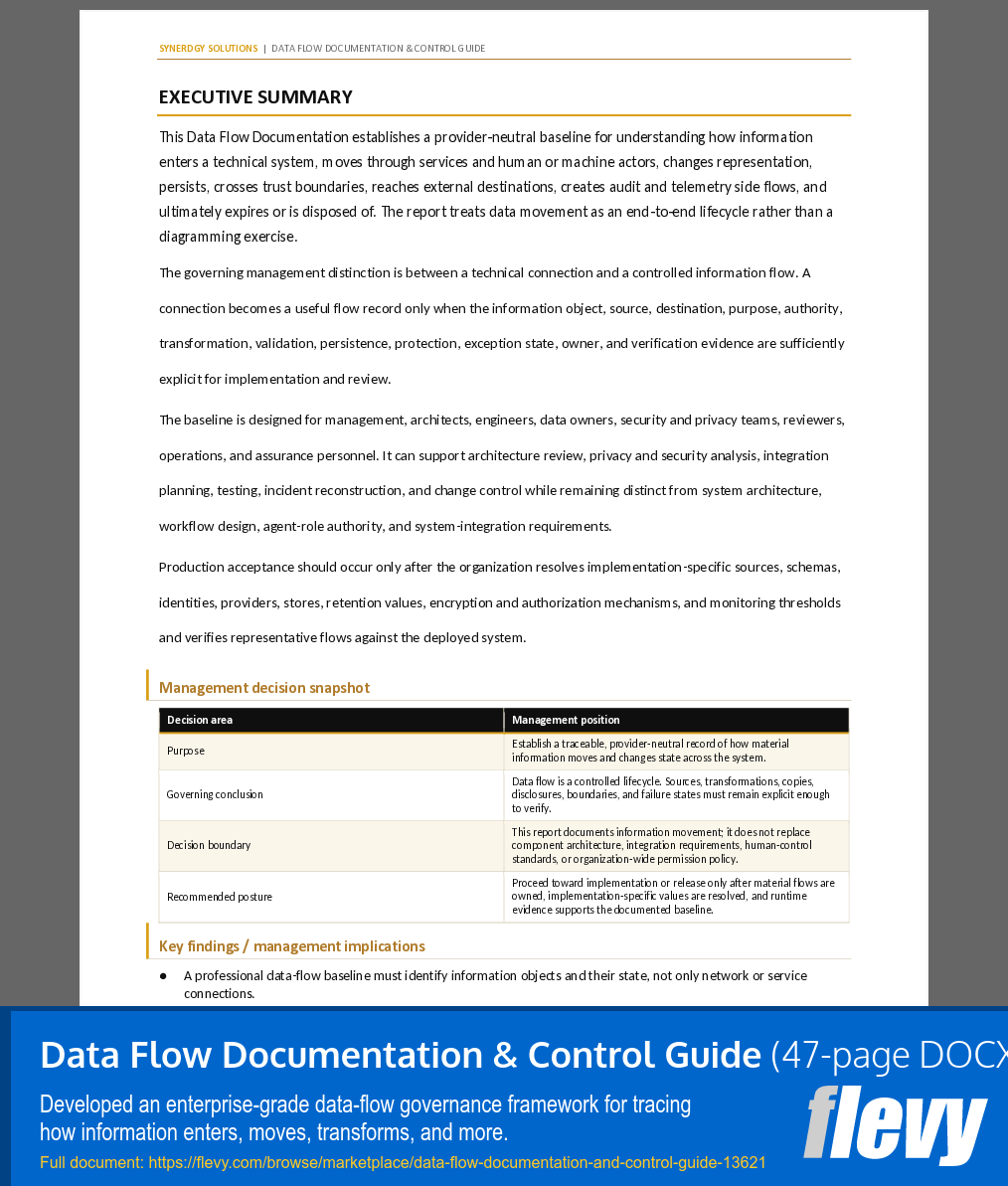
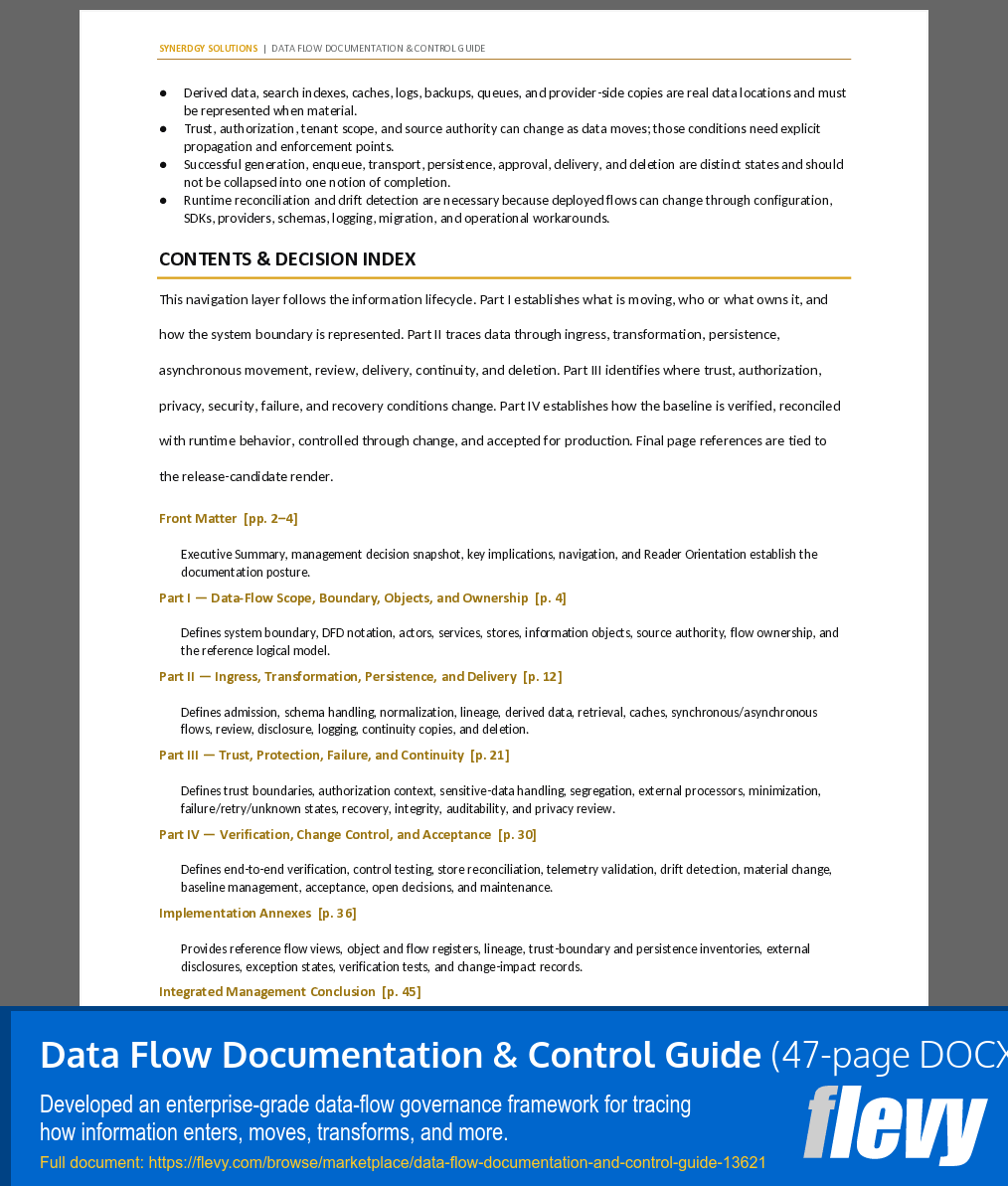
The Data Flow Documentation & Control Guide is a 47-page editable enterprise framework for documenting and governing the full lifecycle of information movement. It goes beyond drawing arrows between systems. It connects high-level flow maps to the operational records needed to establish where data originates, how it moves, what transformations occur, where copies persist, which trust boundaries are crossed, which external processors receive data, how exceptions and failures are handled, and how the organization verifies that runtime behavior still matches the documented design.
Use the guide to map an existing application or AI workflow, document a new system before implementation, investigate hidden copies and external destinations, establish data lineage, identify trust-boundary and authorization gaps, support privacy and security reviews, document AI data paths, prepare system-integration requirements, evaluate deletion and retention behavior, review third-party providers, investigate drift, support audit or assurance work, and create a defensible baseline for production acceptance and change control.
The framework covers ingress and admission controls, source authority and provenance, schema validation, transformations and lineage, AI-generated and derived data, caching and replication, synchronous and asynchronous movement, human-review flows, external disclosures, logging and telemetry, backups and archives, deletion and de-propagation, identity and authorization context, sensitive-data handling, tenant segregation, secrets and credentials, failure and retry behavior, unknown execution states, degraded modes, continuity and recovery, reconciliation, auditability, runtime verification, drift detection, and lifecycle change control.
It also includes reusable implementation structures such as an Information Object Register, a 28-flow Reference Flow Register, Transformation and Lineage Matrix, Trust Boundary and Protection Register, Persistence and Copy Inventory, External Disclosure and Provider Register, Exception and Recovery Matrix, 20-test Verification Matrix, Change-Impact and Drift Review, and Implementation Decision and Acceptance Package.
Got a question about the product? Email us at support@flevy.com or ask the author directly by using the "Ask the Author a Question" form. If you cannot view the preview above this document description, go here to view the large preview instead.
Source: Best Practices in Governance, Data Analytics Word: Data Flow Documentation & Control Guide Word (DOCX) Document, SyNERDgy Solutions | R&D Systems
ABOUT THE AUTHOR

SyNERDgy Solutions develops proprietary enterprise frameworks and professional systems for complex organizational and technical environments.
Our work spans operational excellence, governance and risk, enterprise architecture, systems and AI, assurance, implementation, evidence analysis, and financial decision support.
SyNERDgy products are independently developed and subsequently cross-mapped
... [read more]
Ask the Author a Question
You must be logged in to contact the author.




























