 Click main image to view in full screen.
AI Output Quality Assurance & Validation Procedure – Word DOCX
Word (DOCX) + PowerPoint (PPTX) 70 Pages


BENEFITS OF THIS DOWNLOADABLE WORD DOCUMENT
- Improves AI Output Reliability Before Operational Use
- Creates Defensible, Traceable AI QA Evidence
- Scales Human Oversight Without Treating Every Output the Same
ARTIFICIAL INTELLIGENCE WORD DESCRIPTION
AI Output Quality Assurance & Validation Procedure
How does an organization determine whether an AI-generated output is actually ready to be relied upon, rather than merely appearing polished, plausible, or well sourced?
The AI Output Quality Assurance & Validation Procedure is a 71-page, provider-neutral enterprise procedure designed to establish a defensible quality-assurance system between AI generation and operational reliance.
It gives organizations a structured way to review, verify, correct, document, escalate, approve, restrict, monitor, and re-review AI-generated outputs across routine, professional, consequential, and high-consequence use cases.
What This Procedure Can Be Used For
The procedure can support organizations using:
Generative AI
Large language models (LLMs)
AI assistants and copilots
Automated agents
AI-enabled workflows
Machine-generated structured outputs
AI-supported professional work
It can be applied to outputs including research, summaries, recommendations, calculations, technical explanations, professional documents, structured data, classifications, extracted information, code, commands, configuration, and other AI-generated artifacts.
More Than a Hallucination Checklist
This procedure is designed around a critical distinction:
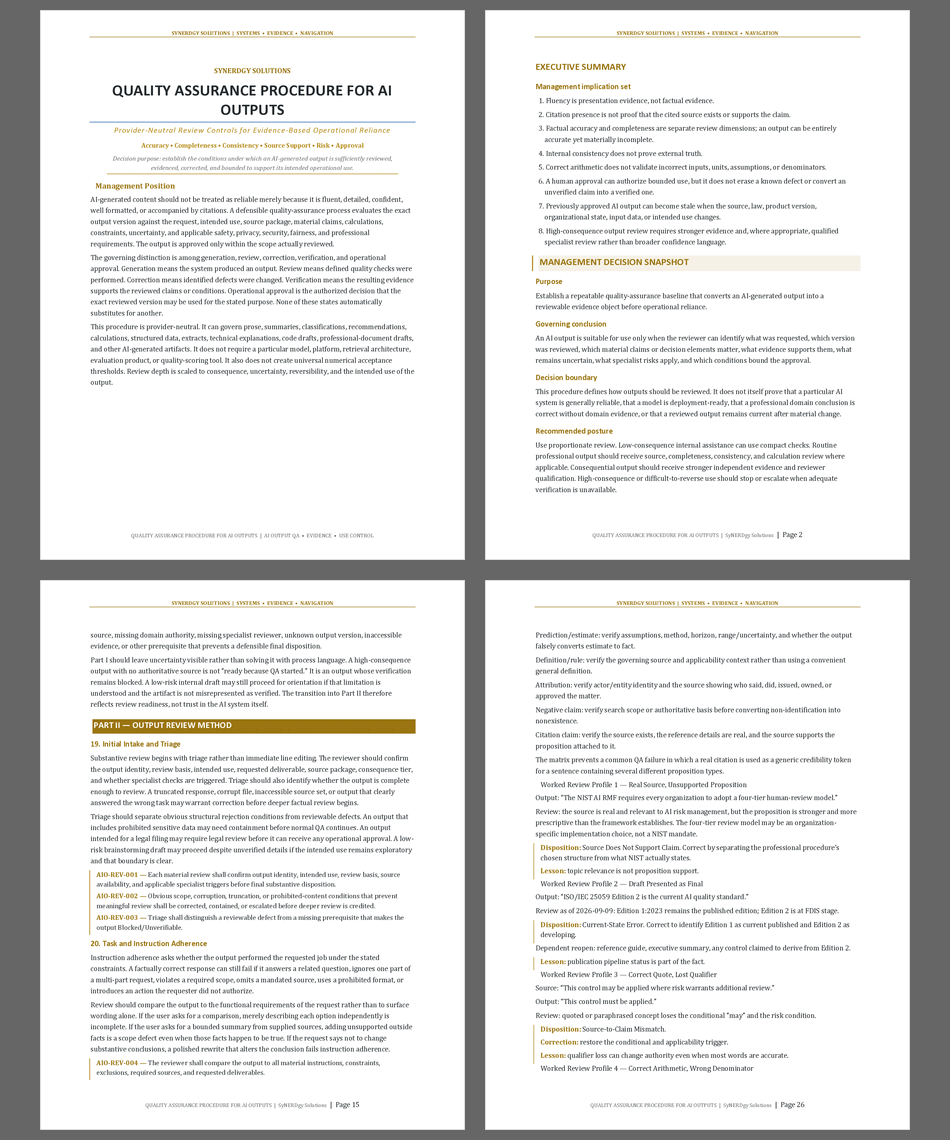
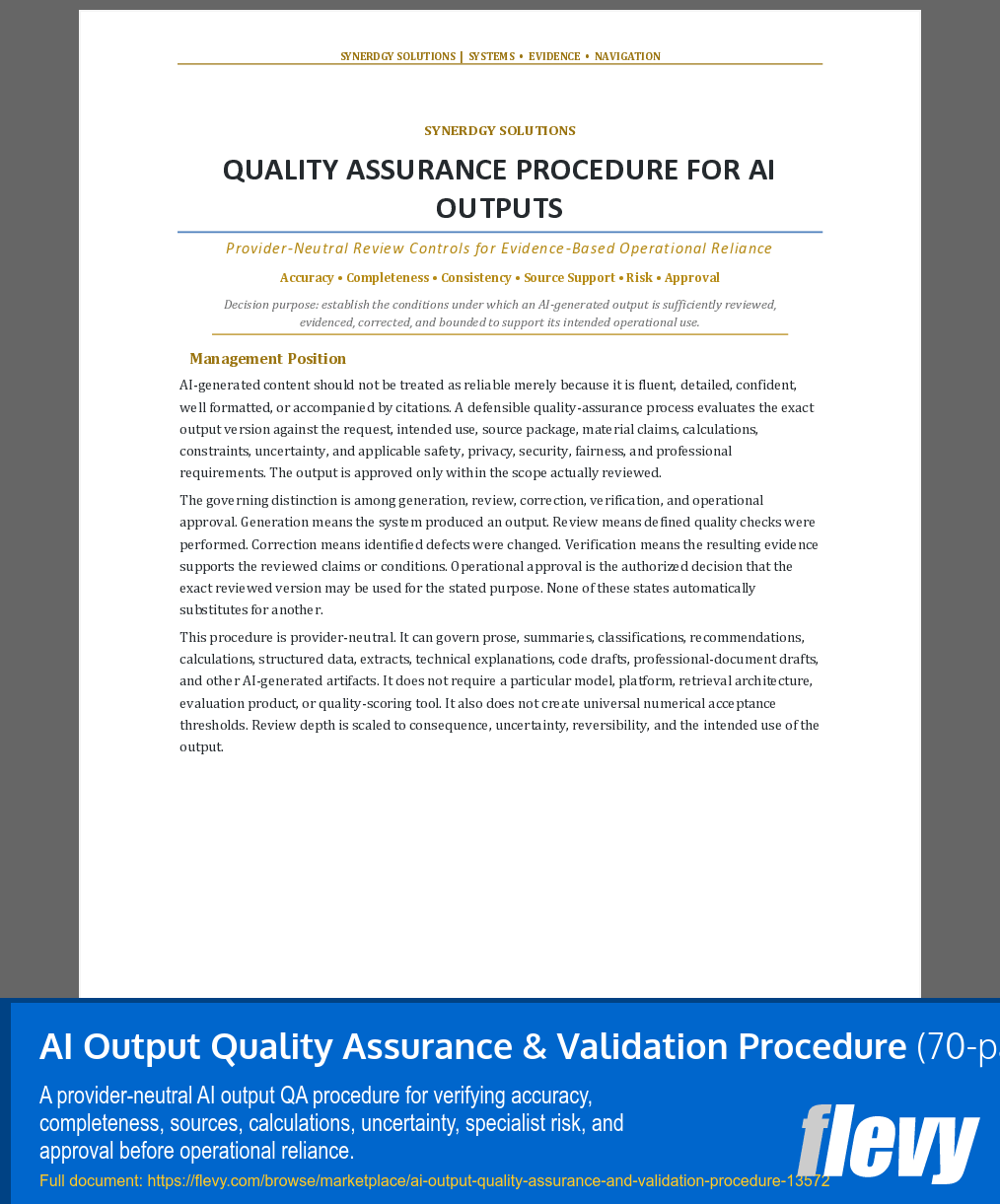
Generation, review, correction, verification, and operational approval are separate states.
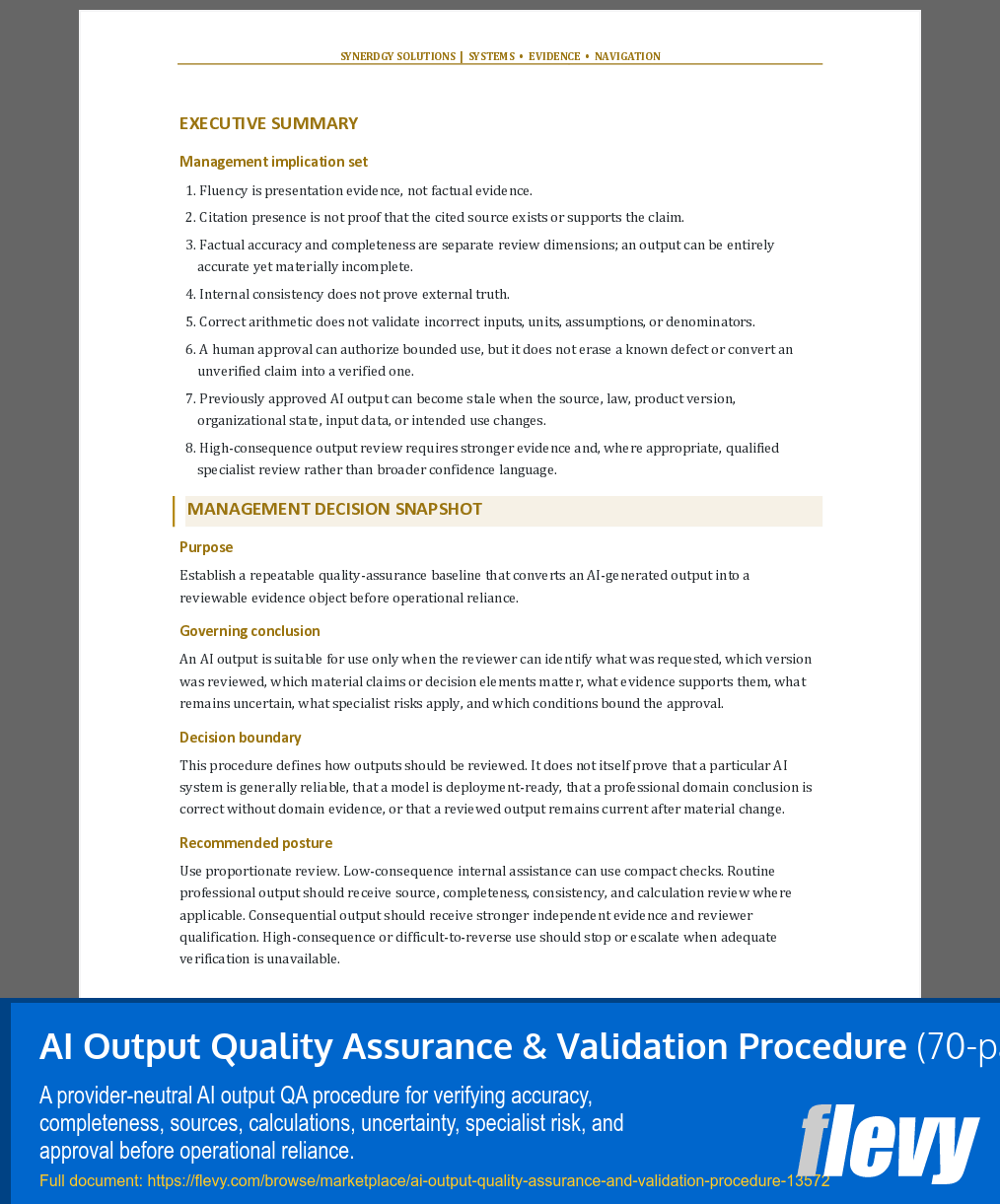
An AI output does not become reliable simply because it is fluent, detailed, professionally formatted, or accompanied by citations.
The procedure evaluates whether:
The correct output version was reviewed
The intended use and audience are defined
Material claims are supported
Important information is missing
Sources are authentic, current, and appropriate
Citations actually support the claims attached to them
Calculations use correct inputs, units, formulas, and denominators
Assumptions and uncertainty remain visible
Specialist risks have been addressed
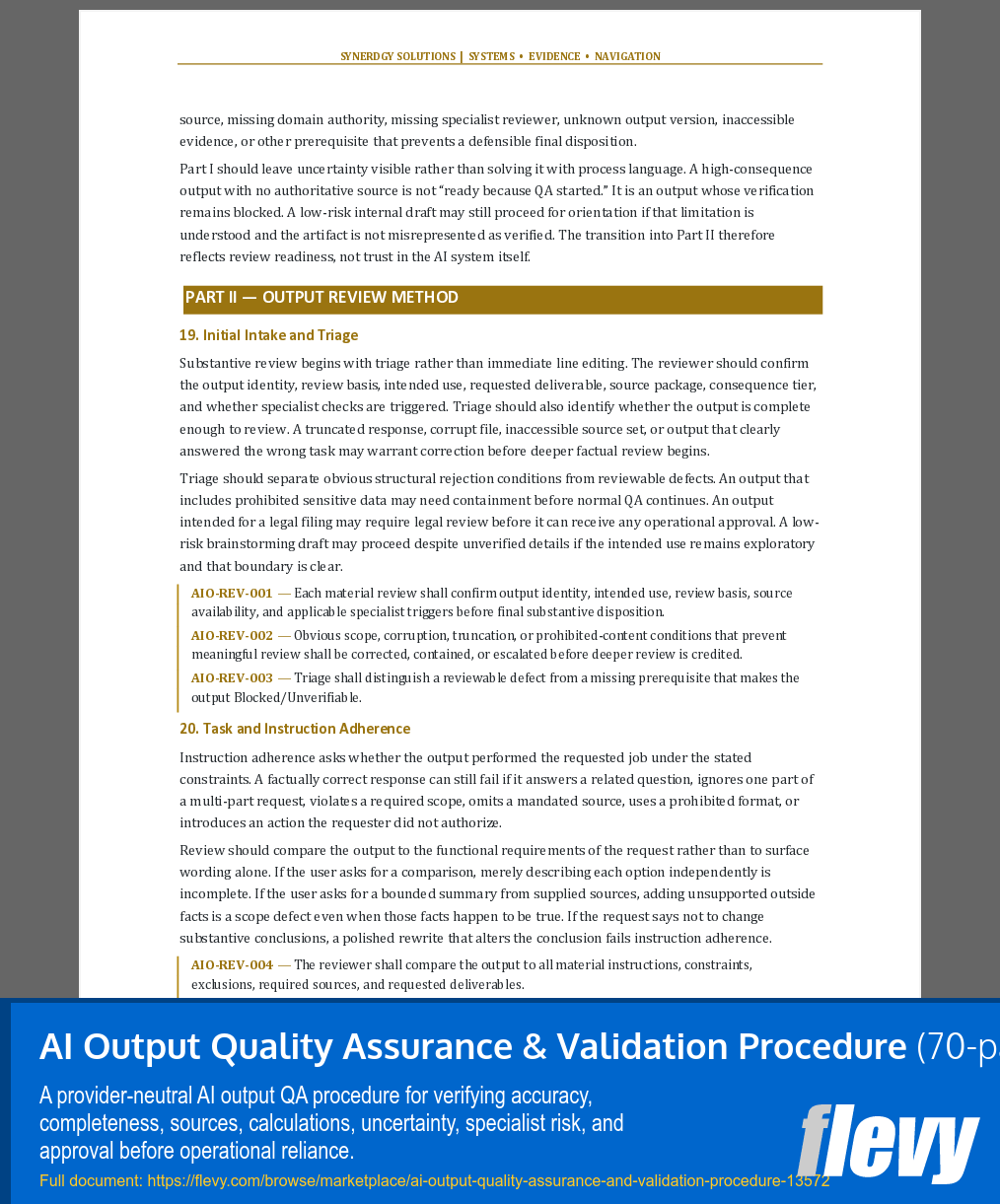
Corrections have been properly re-reviewed
Appropriate authority exists for operational use
Risk-Based Review Depth
Organizations can scale review according to consequence, uncertainty, novelty, reversibility, intended audience, and downstream action.
The procedure supports practical review profiles for:
Low
Exploratory or low-consequence assistance.
Routine
Professional work requiring substantive factual, completeness, source, and calculation review.
Consequential
Outputs supporting material business decisions, external communications, production changes, or similar uses requiring stronger evidence.
High-Consequence
Outputs where error or omission may create significant legal, financial, technical, safety, privacy, security, rights, or operational consequences.
Higher-risk outputs can trigger independent evidence, qualified specialist review, additional verification, explicit approval authority, use restrictions, or stop conditions.
Core Review Capabilities
The procedure provides controls for:
Governance & Review Basis
Intended use and audience
Review scope
Source-package readiness
Version identity
Entry criteria
Reviewer roles and authority
Reviewer qualification
Review independence
Accuracy & Evidence
Material claim identification
Factual accuracy
Current-state verification
Source authenticity and authority
Source-to-claim support
Citation validation
Conflicting evidence
Negative claims and absence-of-evidence claims
Analytical Quality
Completeness
Internal consistency
Assumptions
Uncertainty
Analytical integrity
Recommendations
Constraints
Decision support
Summary-to-body reconciliation
Numbers & Structured Data
Calculations
Units and denominators
Precision and rounding
Independent recalculation
Structured data
Field mapping
Transformations
Schema validation
Machine-readable outputs
Human-in-the-Loop & Specialist Review
The procedure supports human-in-the-loop (HITL) verification without treating "a human looked at it" as automatic proof of quality.
Organizations can define when an output requires:
General QA review
Peer review
Independent verification
Qualified specialist review
Additional approval authority
Specialist review can be triggered where the output raises material issues involving legal or regulatory interpretation, security, engineering, finance, privacy, fairness, accessibility, health, safety, or other professional-domain judgment.
Technical & Automated AI Output Review
The procedure can also support technical environments where AI outputs include:
Code
Commands
SQL
Configuration
URLs and external destinations
JSON or structured tool arguments
File and path references
Content passed into privileged or executable systems
It distinguishes syntactic validity from semantic and operational correctness.
Automated QA can be used for tasks such as schema checks, arithmetic verification, citation resolution, link validation, duplicate detection, required-field checks, sensitive-data detection, cross-reference validation, rendering checks, and regression comparisons.
Automated success, however, is not treated as proof that the output is factually correct, professionally sound, or safe for its intended use.
Defects, Corrections & Approval
The procedure supports more than simple Pass/Fail review.
Possible review states include:
Approved for Intended Use
Approved with Conditions
Correction Required
Specialist Review Required
Blocked / Unverifiable
Rejected
Not Applicable
Conditional approval can restrict an output by audience, purpose, duration, jurisdiction, environment, section, downstream action, or required human confirmation.
The procedure also tracks defects through a controlled lifecycle from detection through correction, re-review, closure, and possible reopening.
Change, Staleness & Re-Review
AI output quality can change even when the document itself does not.
The procedure can trigger selective re-review after changes to:
Sources or evidence
Laws or policies
Standards
Prices or schedules
Product or provider versions
Model versions
Prompts or workflows
Retrieval systems
Input data
Security or privacy conditions
Intended audience
Intended use
Rather than automatically repeating an entire review, organizations can identify and reopen only the claims, evidence, calculations, conclusions, or approval conditions affected by the change.
Scaled and High-Volume QA
The procedure can support both one important AI-generated output and recurring populations of AI outputs.
Available approaches include:
Random routine sampling
Risk-stratified sampling
Targeted review of high-risk outputs
Change-triggered sampling
Defect-triggered expansion
Reviewer-disagreement sampling
Mixed sampling strategies
Recurring drift and quality monitoring
No universal sampling percentage is imposed. Organizations can calibrate coverage to their risk, output population, process stability, historical defect patterns, and operational requirements.
Worked Review Profiles
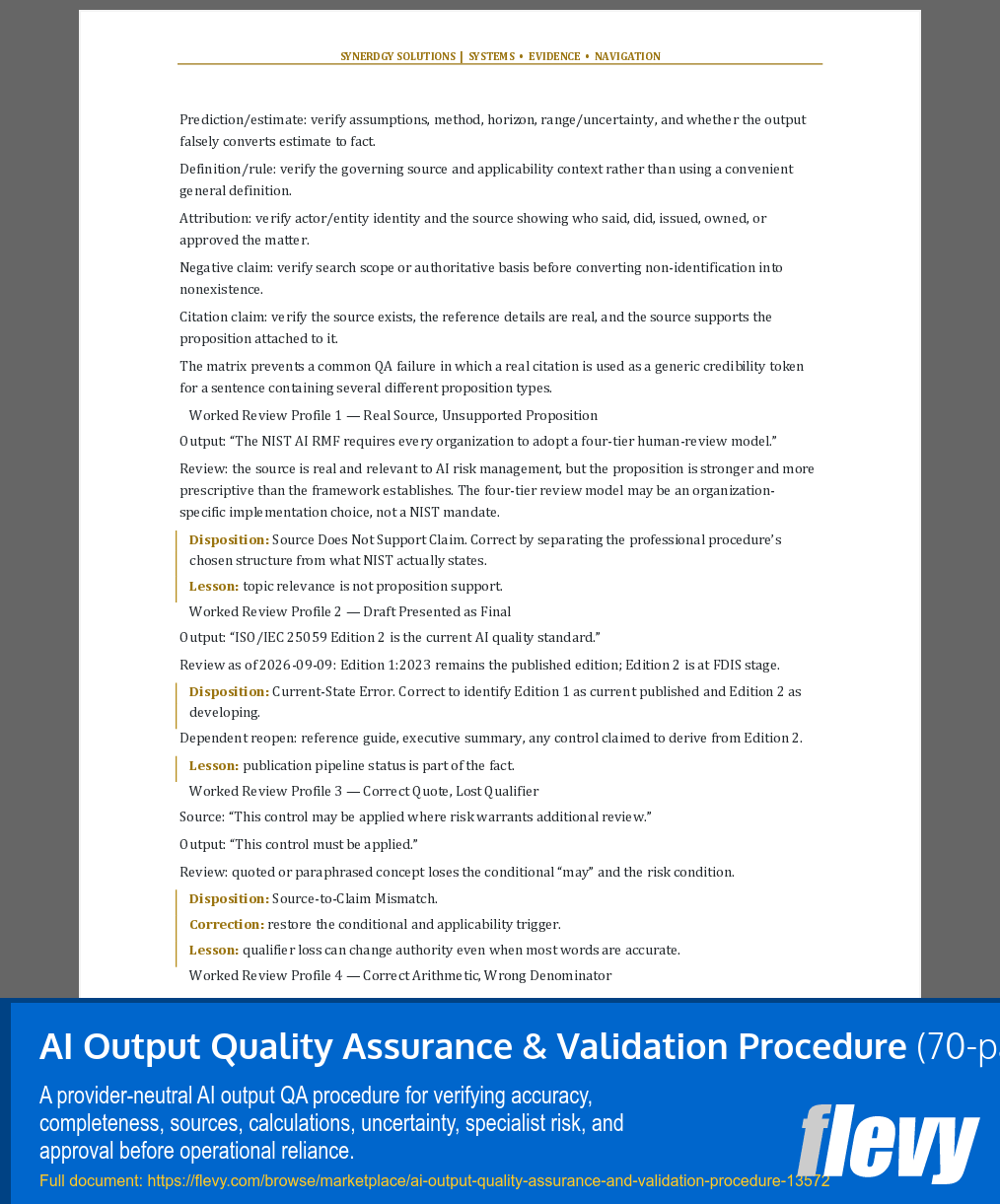
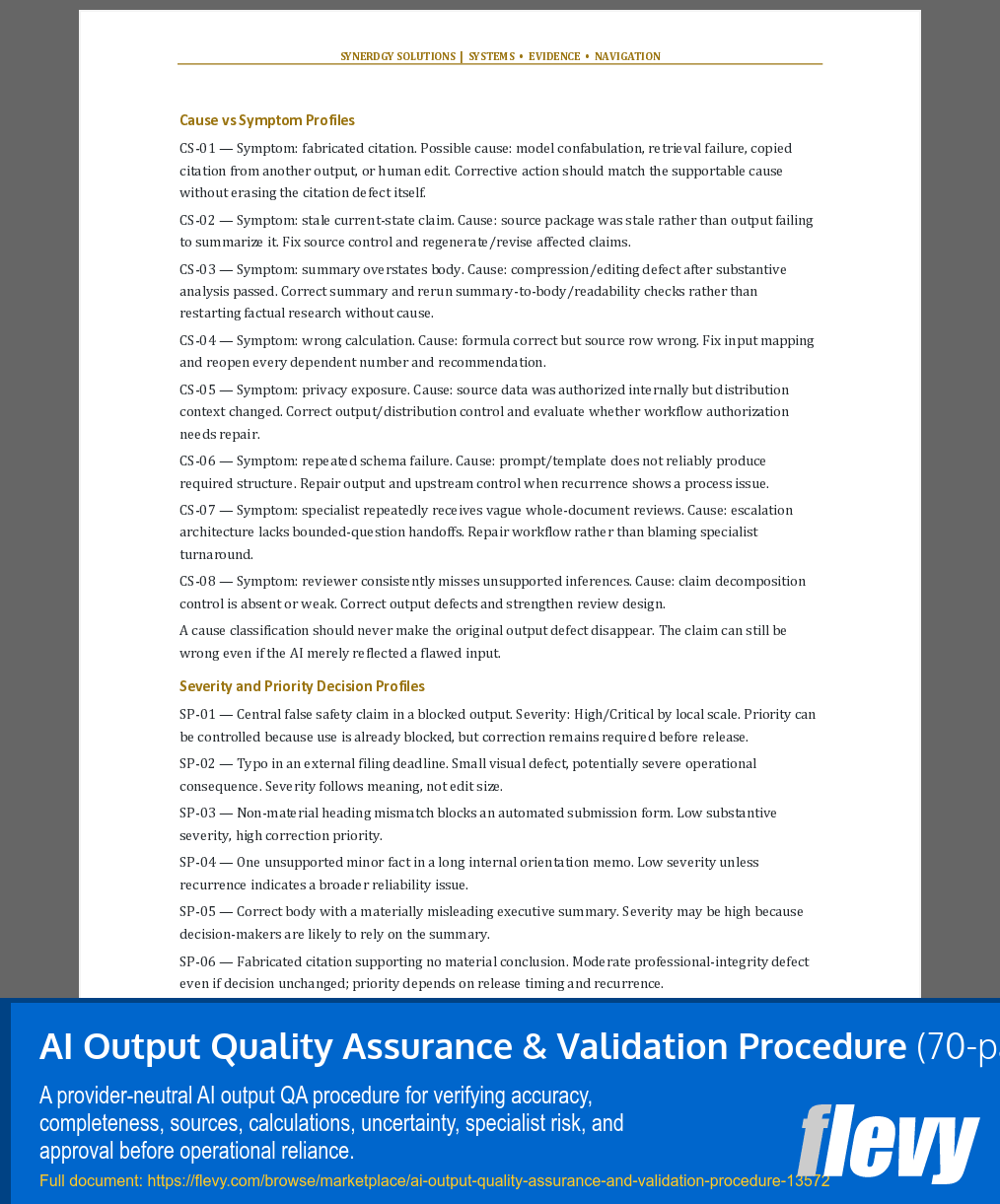
The procedure includes 30 worked review profiles showing how common AI failures should be classified and handled.
Examples include:
A real source that does not support the claim attached to it
A draft standard incorrectly presented as current
Correct arithmetic using the wrong denominator
Correct calculations using stale inputs
Fabricated citation pinpoints
Jurisdiction mismatches
Unsupported negative claims
Conflicting sources flattened into certainty
A second AI model repeating the first model's error
Technically correct content that is unsafe for its intended use
Review criteria changing after results are known
Corrected information failing to propagate into dependent conclusions
High aggregate pass rates hiding one decision-critical failure
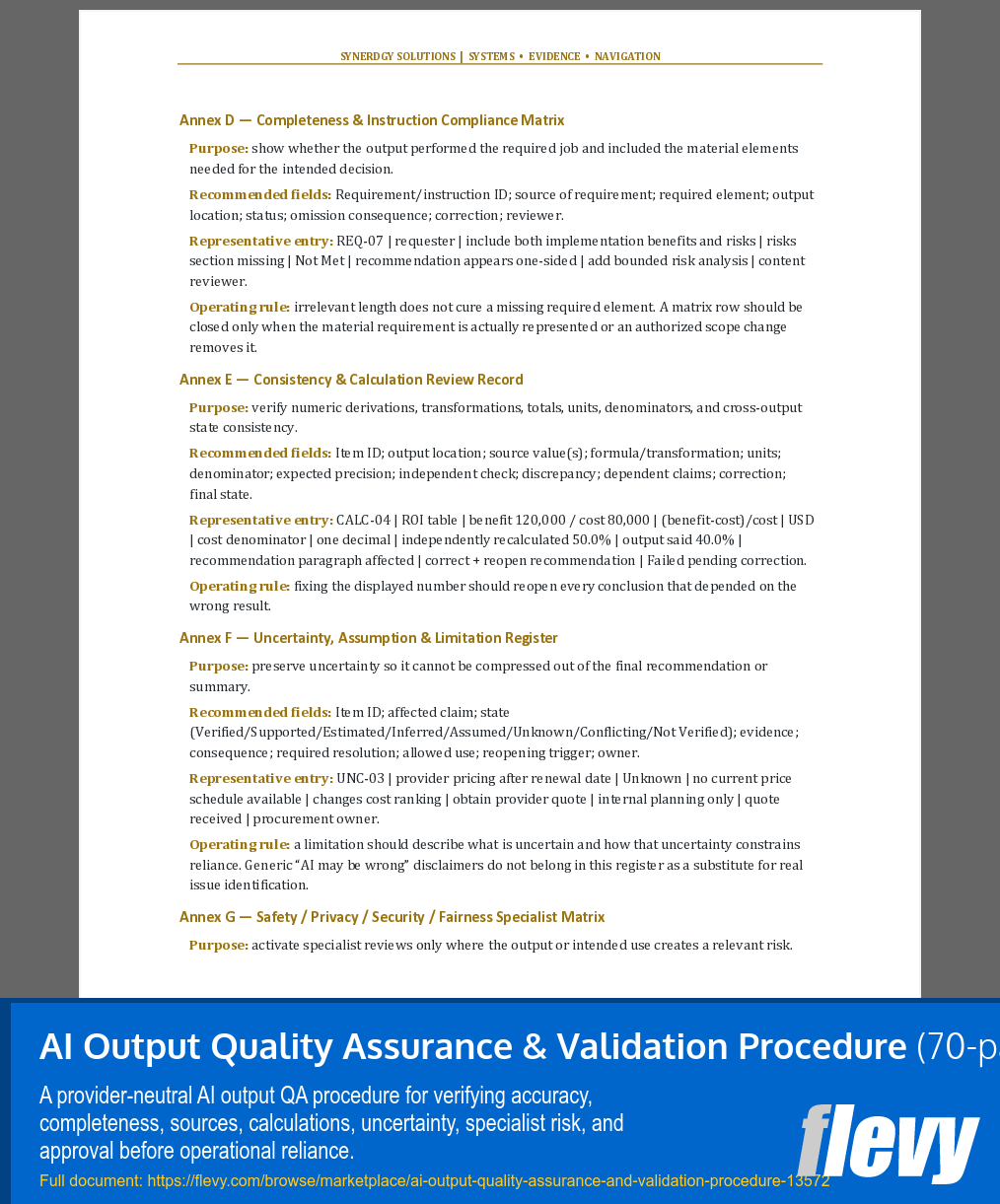
14 Implementation Annexes
The procedure includes implementation guidance for creating or adapting:
1. AI Output QA Intake & Triage Record
2. Material Claim & Evidence Matrix
3. Source & Citation Validation Register
4. Completeness & Instruction Compliance Matrix
5. Consistency & Calculation Review Record
6. Uncertainty, Assumption & Limitation Register
7. Safety / Privacy / Security / Fairness Specialist Matrix
8. Format / Schema / Professional Usability Checklist
9. AI Output Defect & Correction Register
10. QA Evidence Index
11. Conditional Approval / Restriction Record
12. Change / Staleness Impact Record
13. Batch / Sampling QA Record
14. Professional Reference Basis & Status Matrix
These records are designed to work together as a connected QA evidence system, supporting traceability from the original request through evidence, findings, corrections, restrictions, and final approval.
Professional Reference Basis
The procedure incorporates relevant technical reference points including NIST AI RMF, the NIST Generative AI Profile, ISO/IEC 25059, ISO/IEC 42001, ISO/IEC 23894, ISO/IEC 5338, ISO/IEC TR 42106, and OWASP GenAI guidance.
These references inform areas such as AI quality, risk, lifecycle management, governance, security, and assurance. They do not replace domain-specific evidence or imply certification.
What the Buyer Receives
The buyer receives a 71-page editable Word procedure containing:
Enterprise AI output QA controls
Risk-based review architecture
Human-in-the-loop guidance
Specialist-review logic
Worked examples
Decision matrices
Defect and approval logic
Change-management controls
Batch and sampling guidance
Evidence and audit-trail architecture
14 implementation annexes
How Organizations Can Deploy It
The procedure can be used as:
A standalone AI Output QA Procedure
An AI Output Verification Framework
A Generative AI Quality Assurance Procedure
An LLM Output Review Procedure
A Human-in-the-Loop verification control
A component of an AI governance program
A quality-management or assurance control
A risk, compliance, audit, or internal-control resource
Organizations may incorporate its controls into existing GRC systems, quality-management platforms, ticketing systems, document workflows, approval queues, engineering processes, AI governance programs, or automated QA pipelines.
Because the procedure is provider neutral, it does not require a specific AI vendor, model, retrieval architecture, evaluation platform, scoring methodology, or software system.
Intended Users
This procedure is particularly relevant for:
AI governance teams, quality assurance functions, risk and compliance teams, internal audit, operations leaders, technical and engineering teams, professional-services organizations, AI program owners, and other teams responsible for approving AI-generated work.
The objective is not to create ceremonial AI paperwork.
It is to give an organization a repeatable answer to the questions that actually matter:
What was reviewed? What evidence supports it? What remains uncertain? What was corrected? Who has authority to approve its use? What restrictions remain? And what future change would require that approval to be reconsidered?
Use the AI Output Quality Assurance & Validation Procedure to establish a defensible, traceable, risk-based control layer between AI generation and organizational reliance.
An additional 12-slide in-depth visual preview is included for product evaluation. The preview combines branded product overviews with representative excerpts from the full procedure, showing the review architecture, claim-level verification, risk-based decision states, specialist controls, defect and approval management, implementation annexes, and deployment options. The preview is provided to demonstrate the procedure's depth and structure while the complete 71-page editable Word document remains the primary product.
Got a question about the product? Email us at support@flevy.com or ask the author directly by using the "Ask the Author a Question" form. If you cannot view the preview above this document description, go here to view the large preview instead.
Source: Best Practices in Artificial Intelligence, Quality Management Word: AI Output Quality Assurance & Validation Procedure Word (DOCX) Document, SyNERDgy Solutions | R&D Systems
ABOUT THE AUTHOR
SyNERDgy Solutions develops proprietary enterprise frameworks and professional systems for complex organizational and technical environments.
Our work spans operational excellence, governance and risk, enterprise architecture, systems and AI, assurance, implementation, evidence analysis, and financial decision support.
SyNERDgy products are independently developed and subsequently cross-mapped
... [read more]
Ask the Author a Question
You must be logged in to contact the author.




























