
McKinsey 3 years on staff, 15 years freelance trainer & coach | Barbara Minto Approved | BCG training designer | Coaches at FX10 and ASX 10 | Startup founder | Author | C-suite Coach.
Learn how to make the complex clear and the clear compelling in your communication
Use my simple five-step process
Piggy back from my experience working with people from almost all professions over decades
PRESENTATION DEVELOPMENT PPT DESCRIPTION
Editor Summary
Structured Thinking 101: Clarity Through Storylines is a 39-slide PowerPoint (PPTX) deck presenting a five-step structured-thinking process to improve business communication.
Read moreDeveloped by Davina Stanley, an ex-McKinsey consultant, it includes 5 deliverables: a communication strategy template, message framing patterns, a message map template, a document finalization checklist, and feedback forms. Target users include corporate executives, project managers, data analysts, consultants, and teams. Sold as a digital download on Flevy for immediate use.
Use this deck when teams must convert complex analysis into a clear, persuasive message—for example before board presentations, strategic reports, or internal workshops.
Corporate executives preparing a board paper who need to define the core outcome and audience priorities using a communication strategy template.
Project managers synthesizing program status into a one-page message map for steering-committee review.
Data analysts framing findings into structured patterns to highlight implications for decision makers.
Internal trainers running a session on feedback-driven improvements to written and verbal communications.
The five-step process is informed by the Minto Pyramid Principle and emphasizes MECE, top-down message framing, and hypothesis-led structuring common in consulting practice.
Clarity is critical in business communication of all kinds, yet difficult to achieve.
To add insult, clarity is necessary, but not sufficient.
Powerful professional communication must also deliver an insightful message, while often prepared in collaboration with others and under great pressure.
How do you do that?
This deck offers five clear steps to help you clarify and convey complex ideas in any format for any audience. It explains how to:
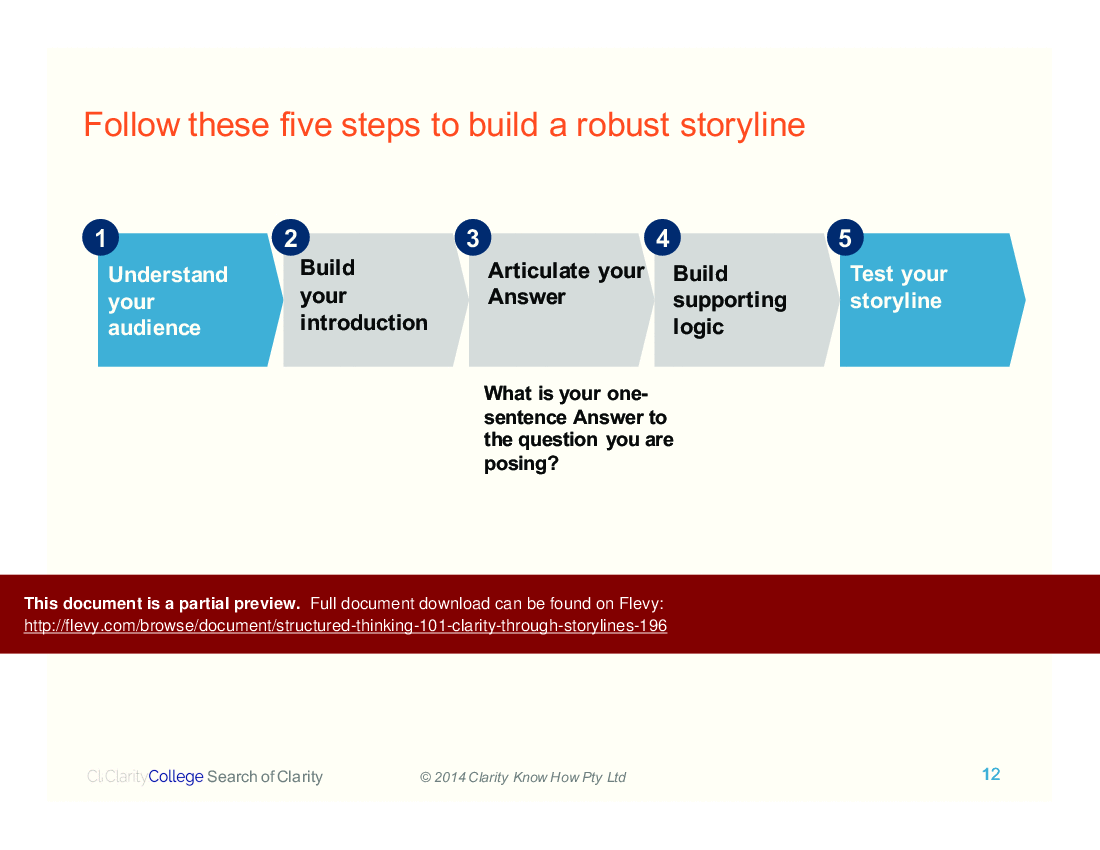
1 / Flush out your communication strategy, so your message achieves a clear purpose. This needs to be done in collaboration with your leader who has commissioned the paper to ensure it is on point.
2 / Frame your messaging using time-worn patterns. I offer my 10 favourite structures, or 'patterns' to stimulate your own thinking.
3 / Firm up your messaging using a highly structured one pager. A dot-dash outline isn't enough. These show a hierarchy of ideas, but still allow you to wander. You need something structured to keep you on track, and force you to distil your thinking.
4 / Finalise your document, whether that be a paper, presentation or something else. It's the thinking that matters. It doesn't matter what format you use, the messaging must be clear and compelling. Once that is clear, the document is easy to create.
5 / Feed back and feed forward to apply any learnings from this communication to the next. It is a shame to move so quickly that you don't capture what you learned from a communication so you can feed it into the next one. Understanding stakeholders happens over time, and this can be a useful thing to reflect upon. As can optimising your paper-writing process to gain maximum efficiency and minimise rework.
Informed by the Minto Pyramid Principle and decades of communication consulting experience, these steps have proven to work in a wide range of consulting and business settings.
This deck was prepared by Davina Stanley of Clarity First. Davina specialises in helping executives get to the point, using the Pyramid Principle. She learned the techniques at McKinsey. Barbara Minto reviewed and approved her training in 2009 and she has used them to help executives globally ever since.
Got a question about the product? Email us at support@flevy.com or ask the author directly by using the "Ask the Author a Question" form. If you cannot view the preview above this document description, go here to view the large preview instead.
MARCUS OVERVIEW
This synopsis was written by Marcus [?] based on the analysis of the full 39-slide presentation.
Executive Summary
This presentation, "Structured Thinking 101: Clarity Through Storylines," offers a five-step structured-thinking process designed to enhance clarity and effectiveness in business communication. Developed by Davina Stanley, an ex-McKinsey consultant, this deck provides consulting-grade insights comparable to McKinsey, Bain, or BCG-quality presentations (not affiliated). Users will learn to synthesize complex data into clear messages, making it easier to communicate ideas quickly and effectively, especially in high-stakes environments like board meetings and presentations.
Who This Is For and When to Use
• Corporate executives seeking to improve communication strategies
• Project managers tasked with delivering complex information
• Data analysts needing to present findings clearly
• Consultants preparing client presentations
• Teams collaborating on strategic initiatives
Best-fit moments to use this deck:
• Preparing for high-stakes presentations
• Collaborating on board papers or reports
• Conducting workshops focused on communication clarity
• Training sessions for teams on effective messaging
Learning Objectives
• Define the core outcome of your communication efforts
• Identify and understand your primary audience and their needs
• Frame your message using structured patterns for clarity
• Firm up the message map to ensure logical flow and coherence
• Finalize documents that effectively convey your message
• Implement feedback mechanisms to improve future communications
Table of Contents
• Introduction to Structured Thinking (page 3)
• The Five-Step Process (page 5)
• Flushing Out the Communication Strategy (page 7)
• Framing the Message (page 11)
• Firming Up the Message Map (page 15)
• Finalizing the Document (page 20)
• Feedback and Feed Forward (page 25)
Primary Topics Covered
• Communication Strategy - Define the desired outcome and identify key audiences to tailor your message effectively.
• Message Framing - Utilize structured patterns to organize and present your ideas clearly.
• Message Mapping - Develop a logical flow of information that adheres to the MECE principle (Mutually Exclusive, Collectively Exhaustive).
• Document Finalization - Ensure that the final communication is visually appealing and easy to navigate.
• Feedback Mechanisms - Implement processes to evaluate the effectiveness of your communication and learn from each experience.
Deliverables, Templates, and Tools
• Communication strategy template for defining outcomes and audience needs
• Message framing patterns for organizing ideas
• Message map template for structuring key points
• Document finalization checklist to ensure clarity and visual appeal
• Feedback forms to gather insights on communication effectiveness
Slide Highlights
• Overview of the five-step structured-thinking process
• Visual representation of message mapping techniques
• Examples of effective communication patterns
• Templates for flushing out communication strategies
• Feedback mechanisms to enhance future messaging
Potential Workshop Agenda
Introduction to Structured Thinking (30 minutes)
• Overview of the five-step process
• Discussion on the importance of clarity in communication
Hands-On Activity: Flushing Out Communication Strategies (60 minutes)
• Breakout sessions to define outcomes and identify audiences
• Group sharing of strategies and insights
Message Mapping Workshop (60 minutes)
• Interactive session to create message maps
• Peer reviews to enhance clarity and coherence
Feedback and Feed Forward Session (30 minutes)
• Reflection on communication experiences
• Strategies for continuous improvement
Customization Guidance
• Adjust the communication strategy template to fit specific organizational contexts
• Tailor message framing patterns to align with industry-specific language
• Modify the message map to reflect unique project goals and audiences
• Incorporate company branding into final documents for consistency
• Use feedback forms to capture insights relevant to your team’s communication style
Secondary Topics Covered
• The role of storytelling in business communication
• Techniques for engaging diverse audiences
• Importance of visual aids in presentations
• Strategies for collaborative messaging in teams
• Common pitfalls in business communication and how to avoid them
Topic FAQ
What are the typical phases of a structured-thinking process for business communication?
A commonly used structured-thinking process moves from defining the communication strategy through framing and structuring the message, then finalizing the document and capturing lessons. The deck "Structured Thinking 101: Clarity Through Storylines" breaks this into 5 steps: flush out strategy, frame the message, firm up the message map, finalize the document, and feed back & feed forward — 5 steps.
What is a message map and how should I use one in a presentation?
A message map is a visual representation that lays out key points and their logical flow to ensure clarity and coherence. It helps condense hierarchical ideas into a single reference that guides drafting and review; the product provides a message map template to create that structured one-pager — message map template.
How does the MECE principle apply to organizing presentation content?
MECE (Mutually Exclusive, Collectively Exhaustive) is used to ensure ideas do not overlap and together cover the topic, reducing ambiguity and gaps in logic. Applying MECE helps construct a clear message map and logical flow, a central topic covered in the Structured Thinking 101 deck — MECE principle.
What features should I expect in a communication-clarity toolkit for executives?
Practical toolkits include artifacts to define outcomes and audiences, ready-made framing patterns, a structured message-map template, a document finalization checklist, and feedback mechanisms to capture learnings. "Structured Thinking 101: Clarity Through Storylines" lists these specific templates and tools as core components — communication strategy template.
How long should a structured-thinking workshop take and what agenda works best?
The sample agenda in the deck totals 180 minutes: 30 minutes for an introduction to the five-step process, 60 minutes for flushing out communication strategies, 60 minutes for message mapping, and 30 minutes for feedback and feed forward, suitable for a focused half-day workshop using the materials — 180 minutes.
If I have a tight deadline for a board presentation, which structured-thinking steps should I prioritize?
Under time pressure, prioritize flushing out the communication strategy to define the core outcome and audience, then frame the message using a pattern, and firm up a concise message map before rapid finalization. These steps align with the deck’s five-step process and support efficient drafting — the five-step process.
What methods help teams capture lessons from presentations to improve future communications?
Use structured feedback mechanisms—feedback forms and facilitated discussions—to record what worked and what didn’t, then feed those learnings into the next communication cycle. The deck explicitly includes feedback forms and a feed forward step to operationalize continuous improvement — feedback forms.
How do pre-built templates compare with bespoke coaching for improving executive papers and presentations?
Pre-built templates provide repeatable artifacts to reduce drafting time, enforce structured thinking, and help minimize rework; bespoke coaching adds tailored guidance. The deck is designed to be customizable and to improve efficiency in document preparation, offered as a 39-slide deck with editable templates — 39 slides.
Document FAQ
These are questions addressed within this presentation.
What is structured thinking?
Structured thinking is a method of organizing thoughts and ideas systematically to enhance clarity and effectiveness in communication.
How can this deck improve my presentations?
This deck provides frameworks and templates that help you clarify your message, ensuring that your audience understands your key points quickly.
Who developed this presentation?
The presentation was developed by Davina Stanley, an experienced consultant with a background at McKinsey.
What are the 5 steps in the structured-thinking process?
The 5 steps are: flush out the communication strategy, frame the message, firm up the message map, finalize the document, and feed back & feed forward.
Is this material suitable for all industries?
Yes, the principles of structured thinking and clear communication are applicable across various industries and sectors.
How can I implement feedback from my audience?
Use feedback forms and discussions to gather insights on what worked and what didn’t, and apply these learnings to future communications.
Can I customize the templates provided in this deck?
Absolutely. The templates are designed to be flexible and can be tailored to fit your specific needs and organizational context.
Where can I find additional resources?
Additional resources, including courses and books, can be found at ClarityFirstProgram.
Glossary
• Structured Thinking - A methodical approach to organizing thoughts for clear communication.
• MECE - A principle ensuring that ideas are mutually exclusive and collectively exhaustive.
• Message Map - A visual representation of key points and their logical flow.
• Communication Strategy - A plan outlining the desired outcomes and audience for a communication effort.
• Feedback Mechanism - A process for gathering insights on communication effectiveness.
• Framing - The act of presenting information in a structured manner to enhance clarity.
• Visual Aids - Tools such as charts and graphs that support verbal communication.
• Stakeholder - An individual or group with an interest in the outcome of a communication.
• Engagement - The process of involving the audience in the communication.
• Collaboration - Working together to achieve a common goal in communication.
• Clarity - The quality of being clear and easy to understand.
• Storytelling - The art of conveying information through narrative to engage the audience.
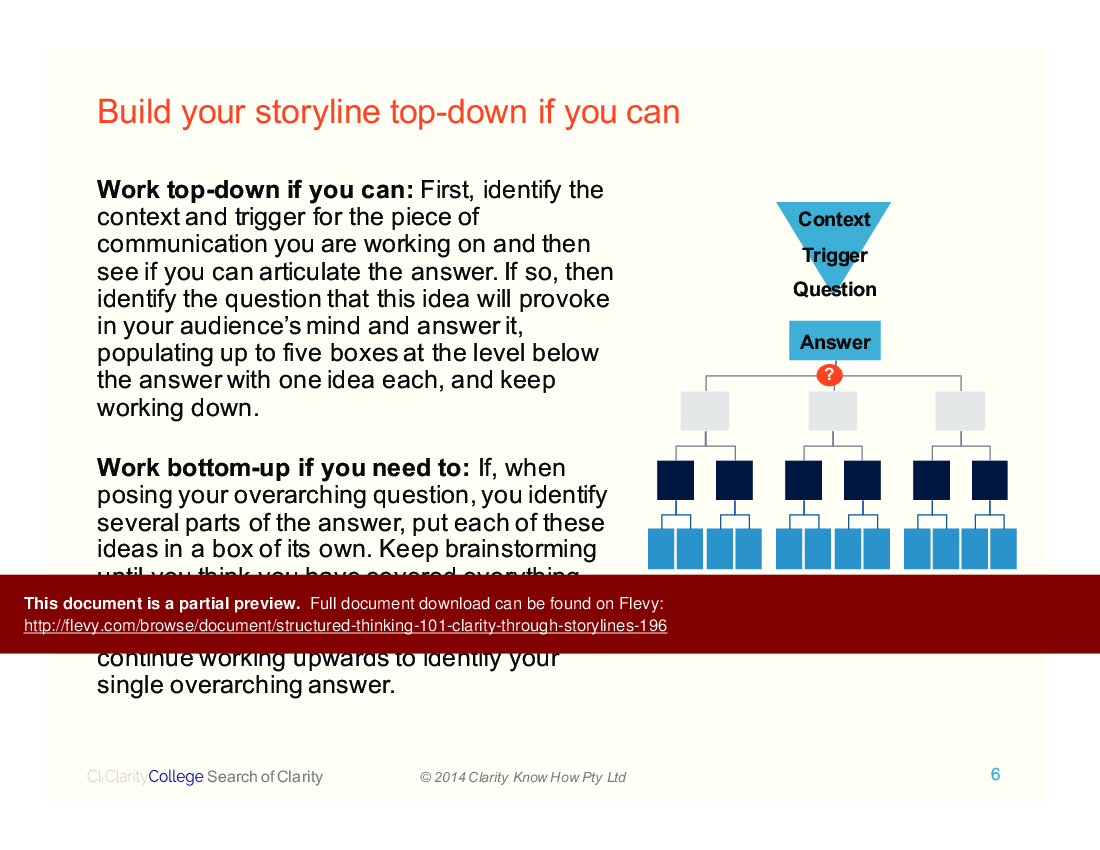
This PPT slide outlines effective messaging strategies through top-down and bottom-up approaches. The top-down method, depicted as a funnel, saves time and minimizes communication gaps by starting with the main message and breaking it down into supporting points. In contrast, the bottom-up approach, framed as a pyramid, is useful when the main message is unclear, encouraging brainstorming and refinement to identify key points. This approach enhances accuracy by considering all relevant details before reaching a conclusion. Users are advised to refer to patterns in subsequent pages and sketch ideas to determine the best framework for their situation, allowing flexibility in communication strategy.
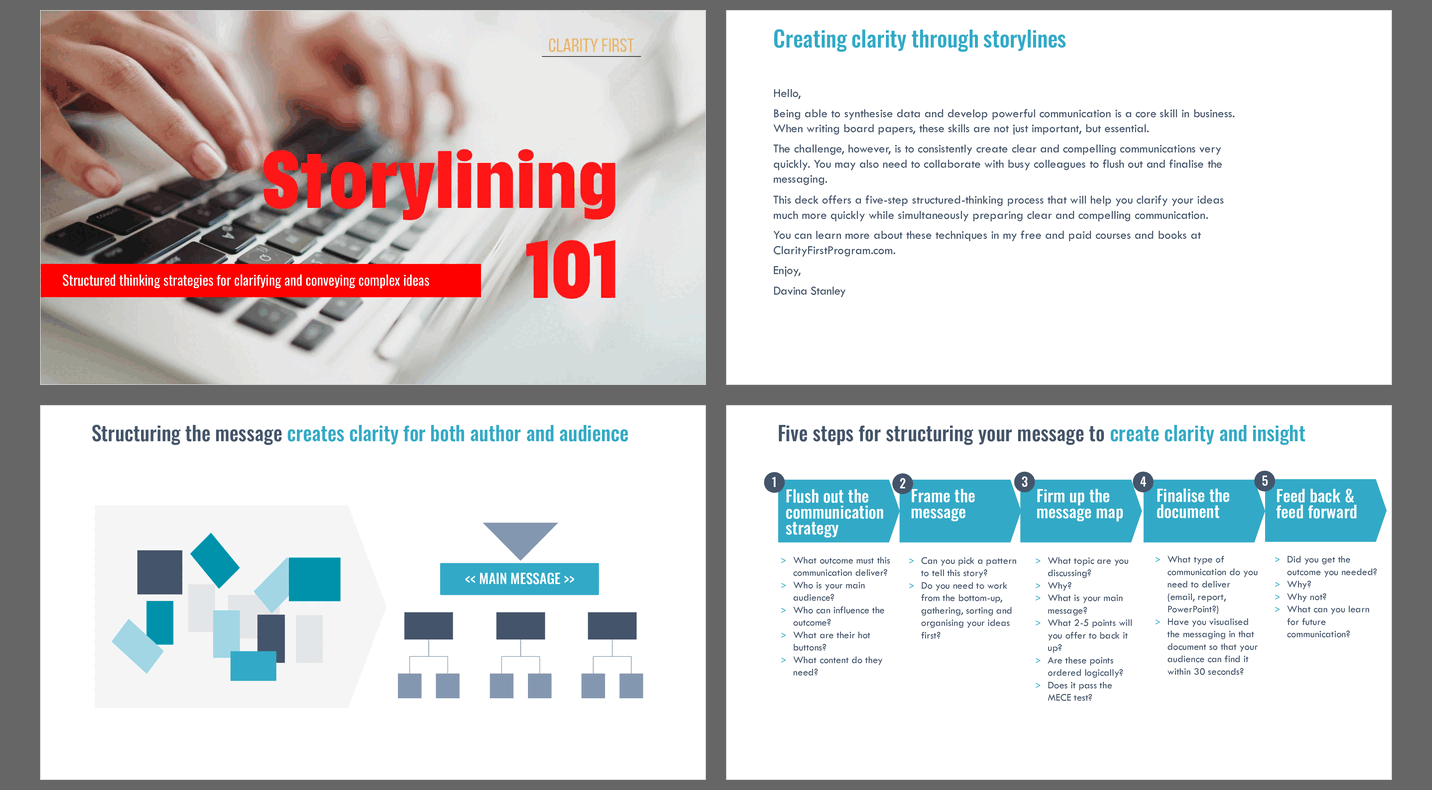
This PPT slide focuses on structuring messages for clarity, emphasizing the "MAIN MESSAGE" as the core idea. Surrounding it are smaller shapes representing supporting points or sub-messages, indicating a hierarchical message structure. This visual layout enhances engagement and understanding by using diverse shapes and colors. Clear communication benefits both the audience and the author, aiding in organizing thoughts and arguments. Effective message structuring ensures key points are grasped without confusion, leading to productive discussions. This framework is applicable across contexts, from corporate presentations to strategic planning, serving as a valuable resource for executives conveying complex ideas succinctly.
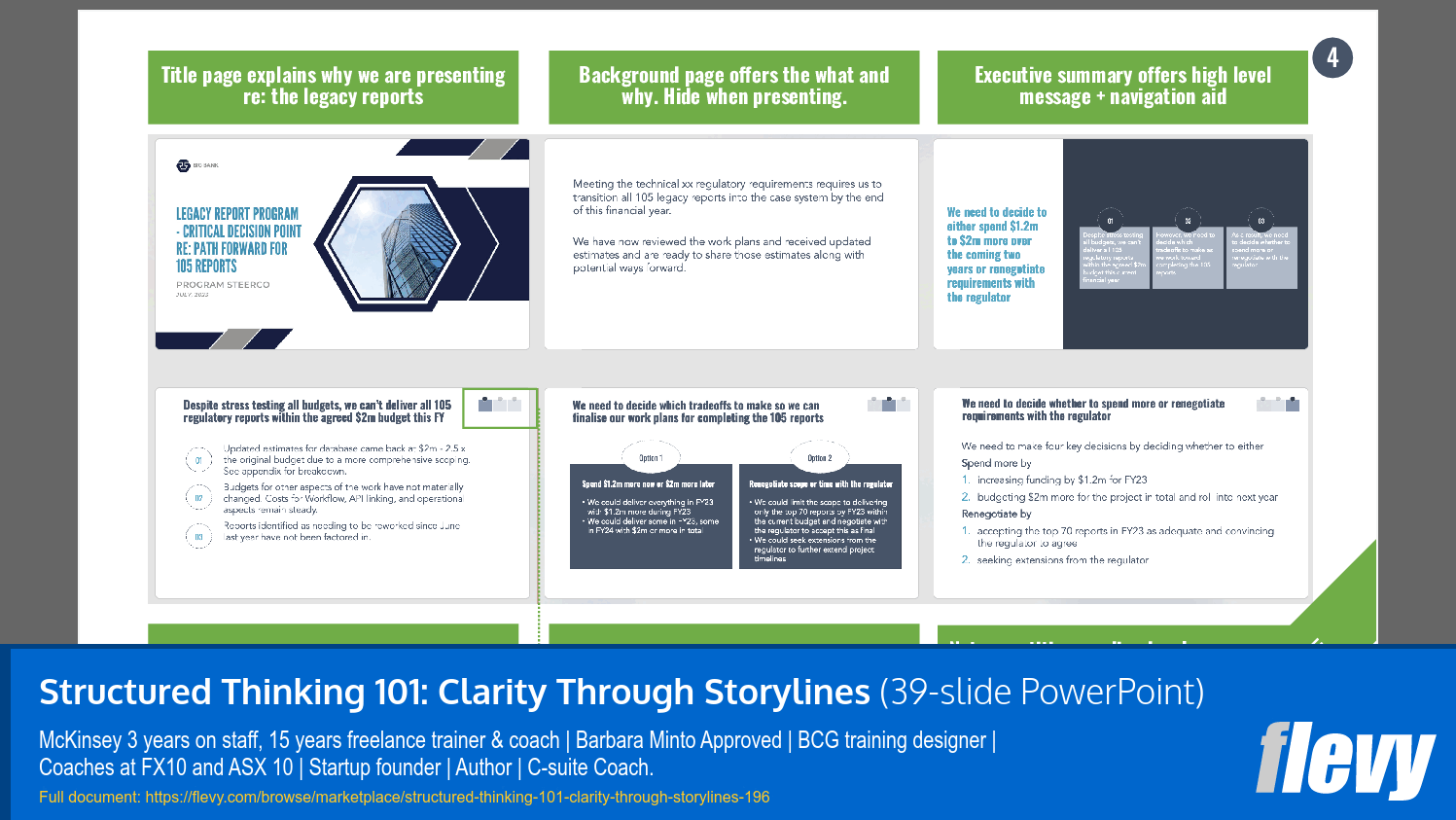
This PPT slide presents a structured overview of the transition of 105 legacy reports within a regulatory framework. The technical requirements necessitate migrating all reports into a new case system by the fiscal year's end. Updated project estimates have exceeded the original $2 million budget, prompting a reassessment of financial commitments. Two primary options are outlined: spending an additional $1.2 million to $2 million over the next 2 years or renegotiating the scope of work with the regulator. Evaluating trade-offs and implications of each choice on project timelines and deliverables is crucial for regulatory compliance and effective decision-making.
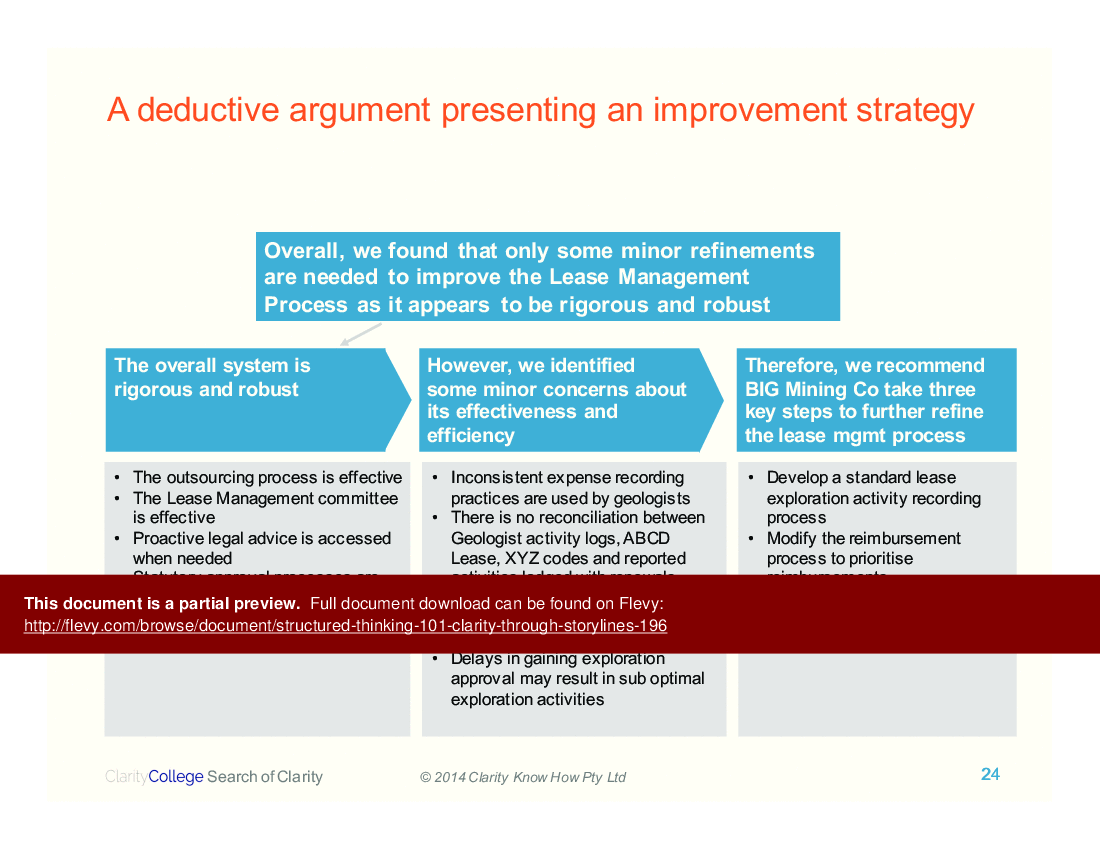
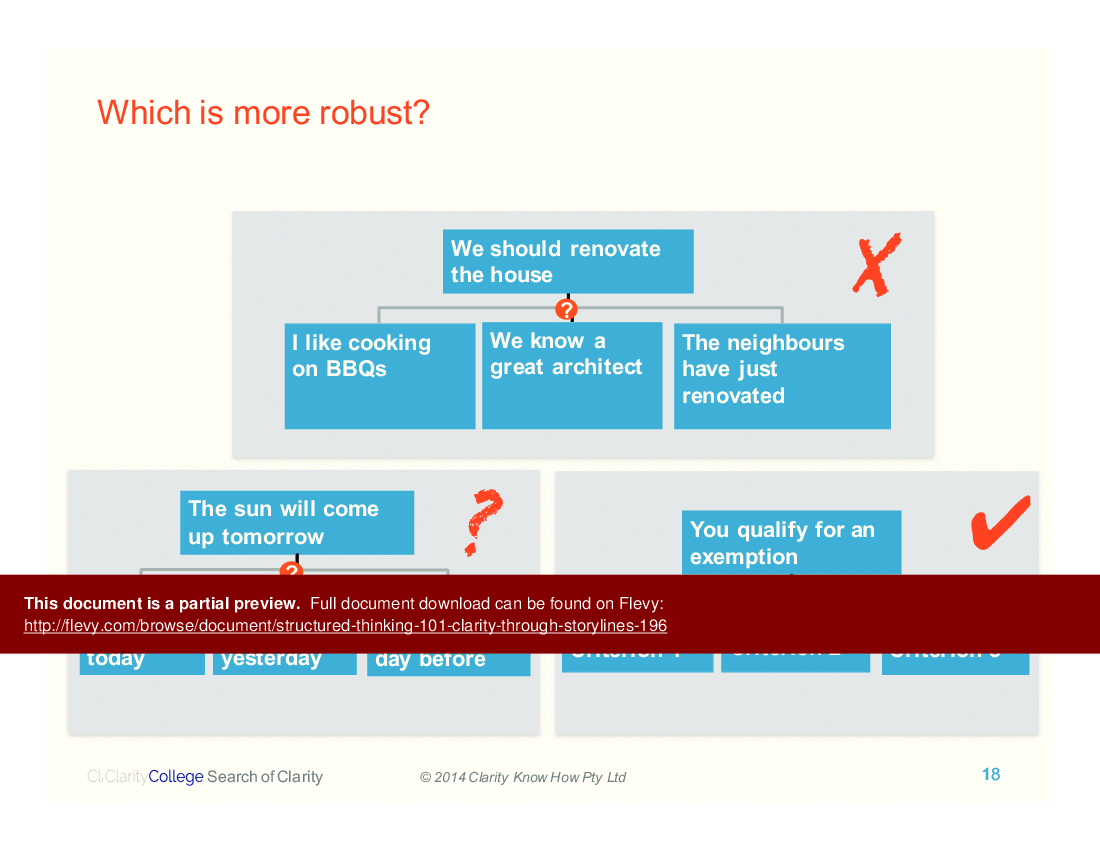
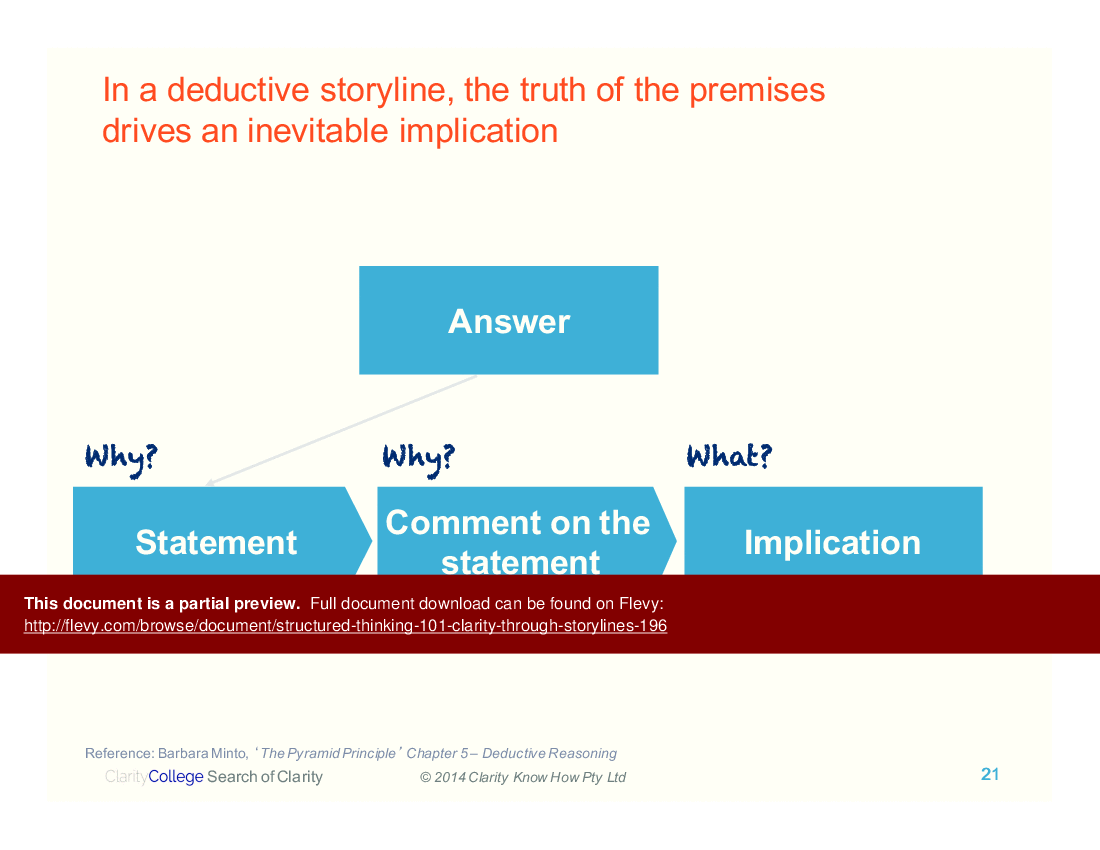
This PPT slide presents 2 communication structures: "Grouping structures" and "Deductive structures." Grouping structures allow for a central message supported by individual ideas, breaking down broad concepts into manageable components for clarity. Deductive structures present a firm recommendation upfront, supported by logically connected reasons leading to a specific action, effectively persuading decision-makers. Both structures streamline complex information, catering to busy executives who need concise insights. Utilizing these frameworks enhances message retention and facilitates better decision-making, making them valuable for refining messaging strategies in corporate environments.
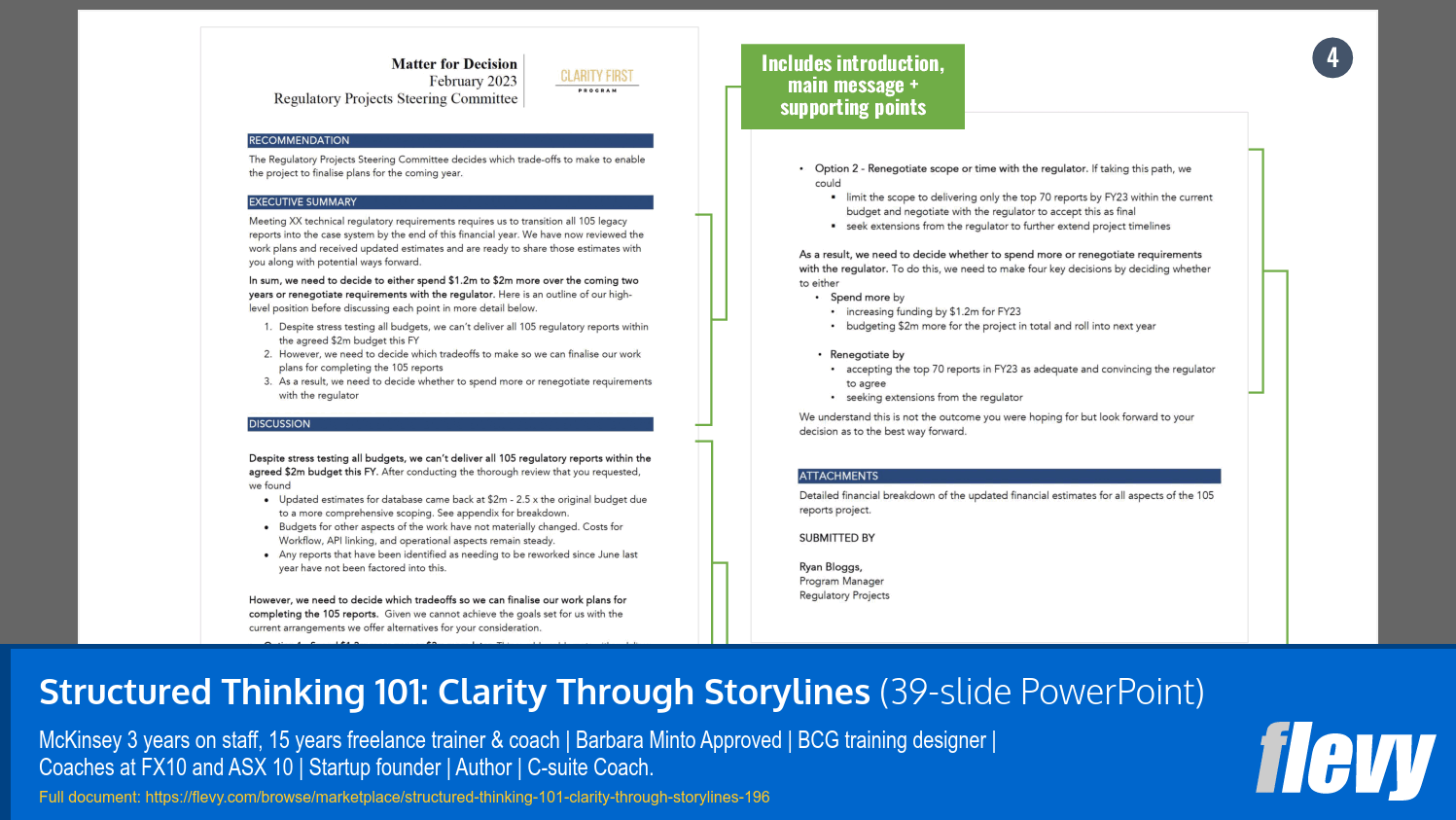
This PPT slide outlines key considerations for the Regulatory Projects Steering Committee regarding budgetary decisions for the upcoming fiscal year. It recommends allocating an additional $1.2 million to $2 million over the next 2 years or renegotiating requirements with the regulator to meet technical regulatory requirements and transition legacy reports into a new case system. The current budget is set at $2 million,, but the committee cannot deliver all 105 regulatory reports this financial year. Updated estimates indicate potential cost increases, necessitating critical decisions on spending and scope, including options to increase the budget or limit report delivery. The slide serves as a strategic guide for aligning financial resources with regulatory obligations and evaluating trade-offs.
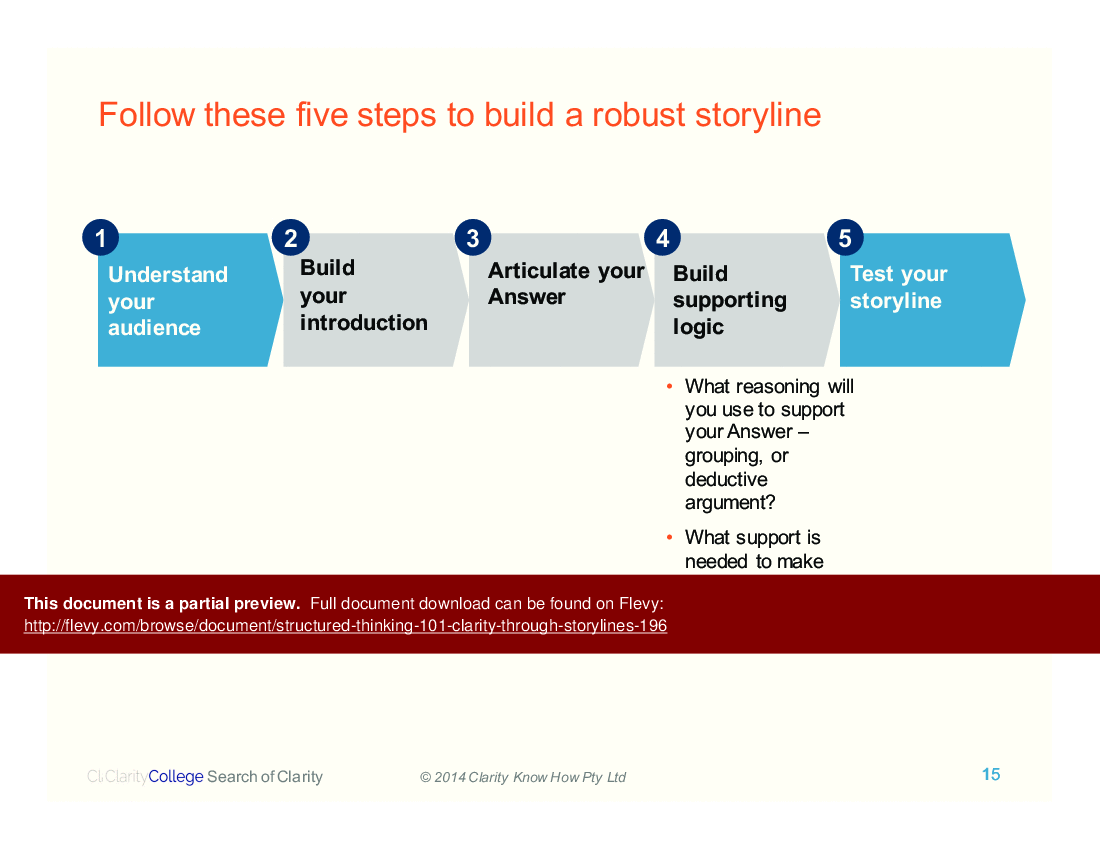
This PPT slide outlines a structured approach to enhance communication effectiveness through 5 key steps. The first step, "Flush out the communication strategy," focuses on defining the desired outcome, identifying the primary audience, influential stakeholders, and necessary content. The second step, "Frame the message," emphasizes selecting a narrative pattern and determining the appropriate top-down or bottom-up approach for organizing ideas. The third step, "Firm up the message map," clarifies the main message and supporting points, ensuring they follow the MECE principle (Mutually Exclusive, Collectively Exhaustive) for clarity. The fourth step, "Finalise the document," addresses the format of communication, considering the medium—email, report, or presentation—for effective audience comprehension. Lastly, "Feed back & feed forward" highlights the importance of evaluating communication effectiveness, reflecting on outcomes, and applying lessons learned for continuous improvement in messaging strategies.
This PPT slide outlines a decision-making process for regulatory compliance and budget allocation for transitioning 105 legacy reports into a new case system. An estimated $1.2 million to $2 million is required over the next 2 years, as the original budget of $2 million is insufficient. Updated estimates for database work have risen to $2 million, indicating a need for a more thorough project scope. Budgets for related tasks, such as workflow and API linking, remain unchanged, suggesting potential cost savings. The decision framework includes 2 options: increase spending to complete all tasks in FY23 or renegotiate with the regulator to deliver a subset of reports by FY23 or seek extensions. The urgency of this decision underscores its importance in aligning financial implications with regulatory obligations.
The SCORE framework enhances messaging effectiveness through 5 key components. "S" emphasizes quickly setting the scene by articulating the "What," "Why," and "Main Message" to establish context. "C" focuses on balancing strategic and operational detail, ensuring comprehensive understanding. "O" highlights organizing ideas in a structured hierarchy using methods like "Grouping," "Deductive," and "MECE" (Mutually Exclusive, Collectively Exhaustive) to avoid redundancy. "R" prepares the audience for productive discussion, making messaging relevant and engaging. Lastly, "E" stresses engaging the audience through appropriate mediums, styles, and tones to ensure message retention. The SCORE framework is a practical tool for refining messaging strategies.
Source: Best Practices in Presentation Development, Communications Strategy, Pyramid Principle PowerPoint Slides: Structured Thinking 101: Clarity Through Storylines PowerPoint (PPTX) Presentation Slide Deck, Clarity First
McKinsey 3 years on staff, 15 years freelance trainer & coach | Barbara Minto Approved | BCG training designer | Coaches at FX10 and ASX 10 | Startup founder | Author | C-suite Coach.
Clarity First helps ambitious professionals communicate complex ideas with compelling clarity and less rework.
These documents emerge from 25+ years' of helping execs globally across consulting and industry. Author, Davina Stanley ...
• was approved by Barbara Minto to teach the Pyramid Principle in 2009.
• coached and trained McKinsey consultants globally for
... [read more] 15+ years
• helped design the structured thinking program at BCG in Australia
• has coached and trained professionals from graduates to the C-suite to lift the quality of their communication while cutting rework for 25+ years.
• wrote three books for ...
... everyday business communication - the So What Strategy, with Gerard Castles (2017).
... leading teams that need to present to senior leaders and boards - Elevate (2024)
... writing papers and presentations for senior leaders and boards - Engage (mid 2024)
The average daily rate of a McKinsey consultant is $6,625 (not including expenses). The average price of a Flevy document is $65.
Trusted by over 10,000+ Client Organizations
Since 2012, we have provided business templates to over 10,000 businesses and organizations of all sizes, from startups and small businesses to the Fortune 100, in over 130 countries.
"As a young consulting firm, requests for input from clients vary and it's sometimes impossible to provide expert solutions across a broad spectrum of requirements. That was before I discovered Flevy.com.
Through subscription to this invaluable site of a plethora of topics that are key and crucial to consulting, I
have been able to exceed expectations and deliver quality advice and solutions to my clients. The quality and expertise of the authors are exemplary and gives me great confidence to use as part of my service offerings.
I highly recommend this company for any consultant wanting to apply international best practice standards in their service offerings.
"
– Nishi Singh, Strategist and MD at NSP Consultants
"As a niche strategic consulting firm, Flevy and FlevyPro frameworks and documents are an on-going reference to help us structure our findings and recommendations to our clients as well as improve their clarity, strength, and visual power. For us, it is an invaluable resource to increase our impact and value."
– David Coloma, Consulting Area Manager at Cynertia Consulting
"I have used Flevy services for a number of years and have never, ever been disappointed. As a matter of fact, David and his team continue, time after time, to impress me with their willingness to assist and in the real sense of the word. I have concluded in fact
that it is not at all just a repository of documents/resources but, in the way that David and his team manage the firm, it is like dealing with consultants always ready to assist, advise and direct you to what you really need, and they always get it right.
I am an international hospitality accomplished senior executive who has worked and lived during the past 35 years in 23 countries in 5 continents and I can humbly say that I know what customer service is, trust me.
Aside from the great and professional service that Flevy's team provide, their wide variety of material is of utmost great quality, professionally put together and most current.
Well done Flevy, keep up the great work and I look forward to continue working with you in the future and to recommend you to a variety of colleagues around the world.
"
– Roberto Pelliccia, Senior Executive in International Hospitality
"I like your product. I'm frequently designing PowerPoint presentations for my company and your product has given me so many great ideas on the use of charts, layouts, tools, and frameworks. I really think the templates are a valuable asset to the job."
– Roberto Fuentes Martinez, Senior Executive Director at Technology Transformation Advisory
"FlevyPro has been a brilliant resource for me, as an independent growth consultant, to access a vast knowledge bank of presentations to support my work with clients. In terms of RoI, the value I received from the very first presentation I downloaded paid for my subscription many times over! The
quality of the decks available allows me to punch way above my weight – it's like having the resources of a Big 4 consultancy at your fingertips at a microscopic fraction of the overhead.
"
– Roderick Cameron, Founding Partner at SGFE Ltd
"The wide selection of frameworks is very useful to me as an independent consultant. In fact, it rivals what I had at my disposal at Big 4 Consulting firms in terms of efficacy and organization."
– Julia T., Consulting Firm Owner (Former Manager at Deloitte and Capgemini)
"As a small business owner, the resource material available from FlevyPro has proven to be invaluable. The ability to search for material on demand based our project events and client requirements was great for me and proved very beneficial to my clients. Importantly, being able to easily edit and tailor
the material for specific purposes helped us to make presentations, knowledge sharing, and toolkit development, which formed part of the overall program collateral. While FlevyPro contains resource material that any consultancy, project or delivery firm must have, it is an essential part of a small firm or independent consultant's toolbox.

"
– Michael Duff, Managing Director at Change Strategy (UK)
"Flevy.com has proven to be an invaluable resource library to our Independent Management Consultancy, supporting and enabling us to better serve our enterprise clients.
The value derived from our [FlevyPro] subscription in terms of the business it has helped to gain far exceeds the investment made, making a subscription a no-brainer for any growing consultancy – or in-house strategy team."
– Dean Carlton, Chief Transformation Officer, Global Village Transformations Pty Ltd.
Receive our FREE whitepaper on the Top 101 Consulting Frameworks
Download our 200+ page guide summarizing the Top 101 Management Consulting Frameworks. Each framework provides a structured approach to analyzing and solving a common business problem.