
 Click main image to view in full screen. Unlock all 13 preview images:
Software Testing & Acceptance Protocol – Word DOCX
Word (DOCX) + PowerPoint (PPTX) 71 Pages


BENEFITS OF THIS DOWNLOADABLE WORD DOCUMENT
- Connects requirements, risks, defects, and release decisions to traceable test evidence.
- Preserves failed, blocked, inconclusive, accepted-risk, and residual-risk states instead of reducing testing to simple pass/fail.
- Provides reusable operating records for evidence, defects, regression, exceptions, and acceptance without locking the buyer into a specific toolchain.
INFORMATION TECHNOLOGY WORD DESCRIPTION
Software testing creates little business value when teams can only prove that tests ran. The real question is whether the resulting evidence is strong enough to support a release, acceptance, defect-closure, or risk decision.
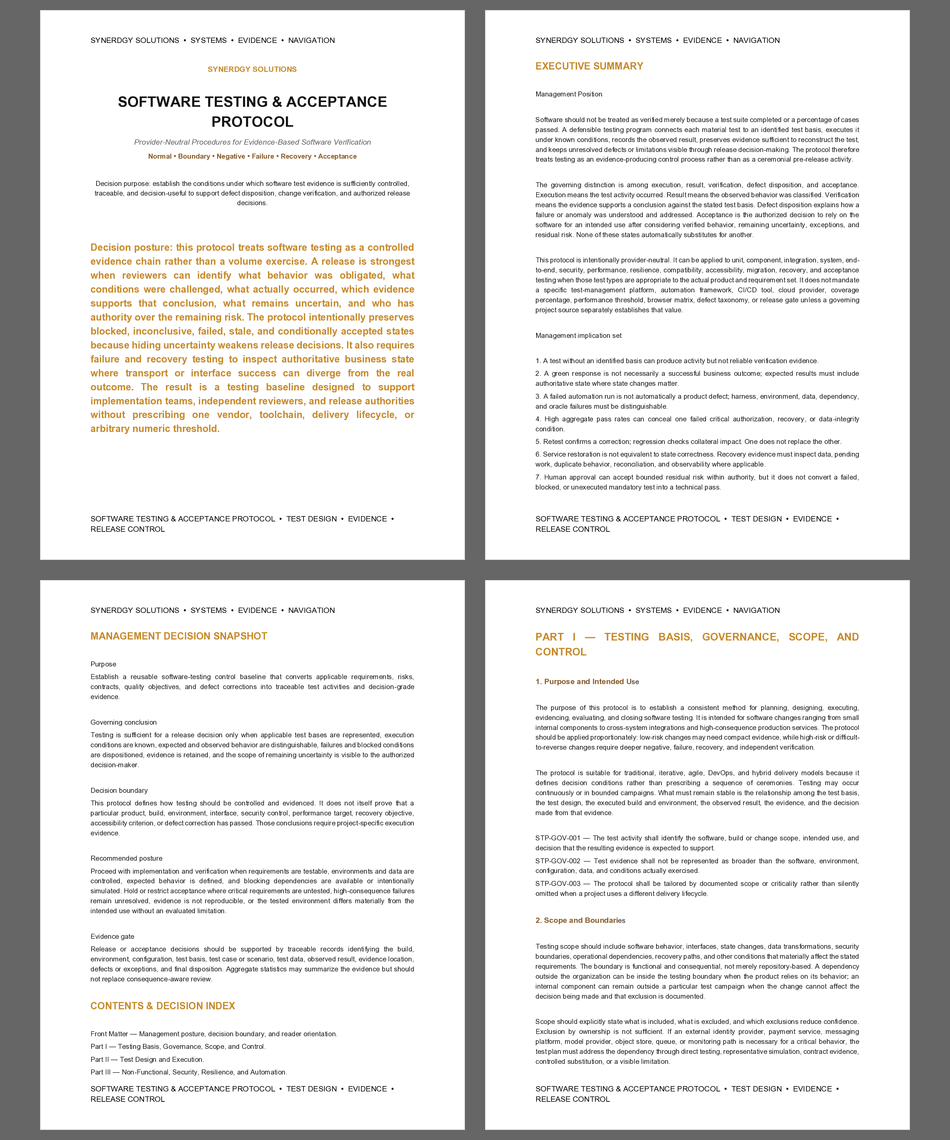
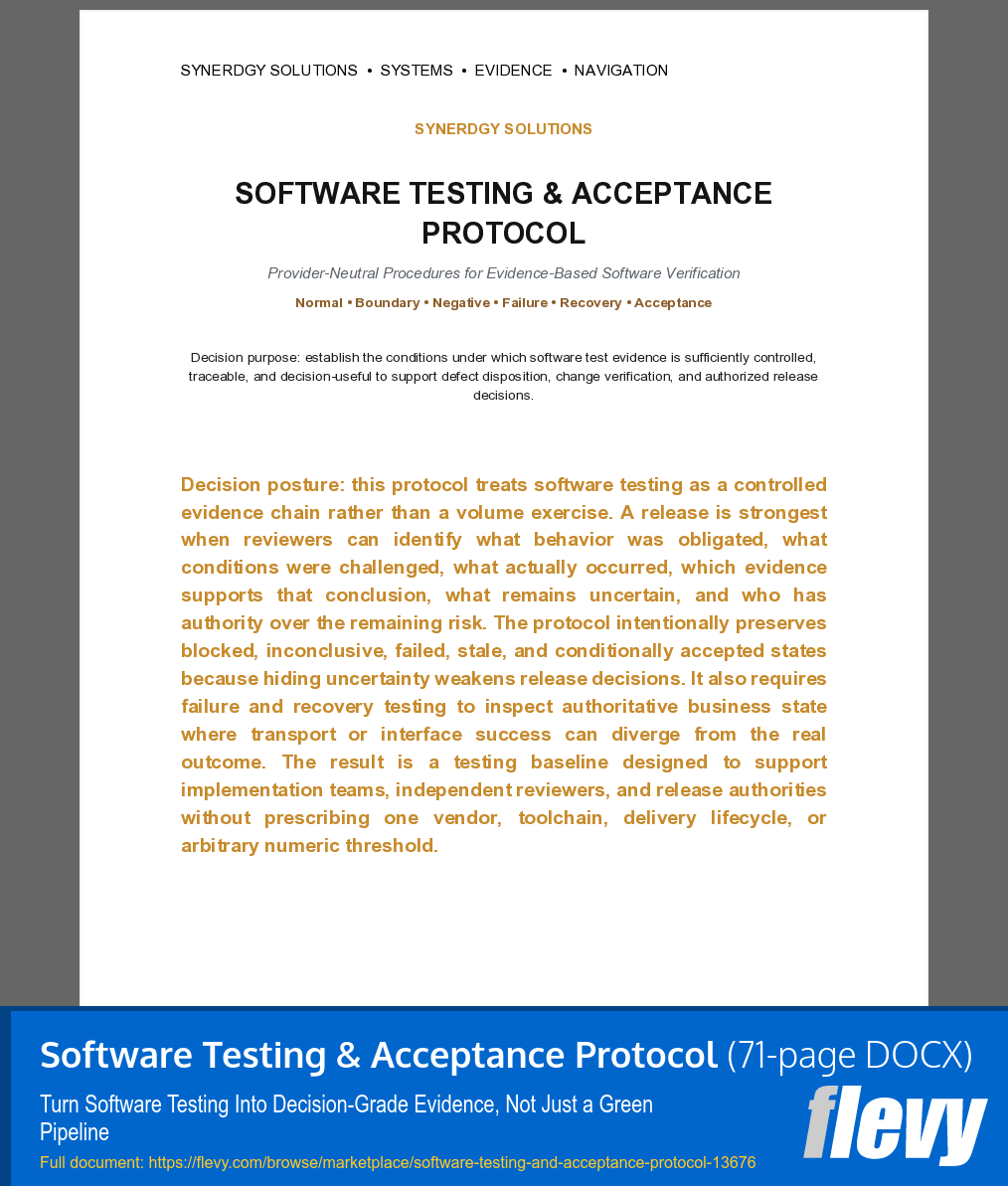
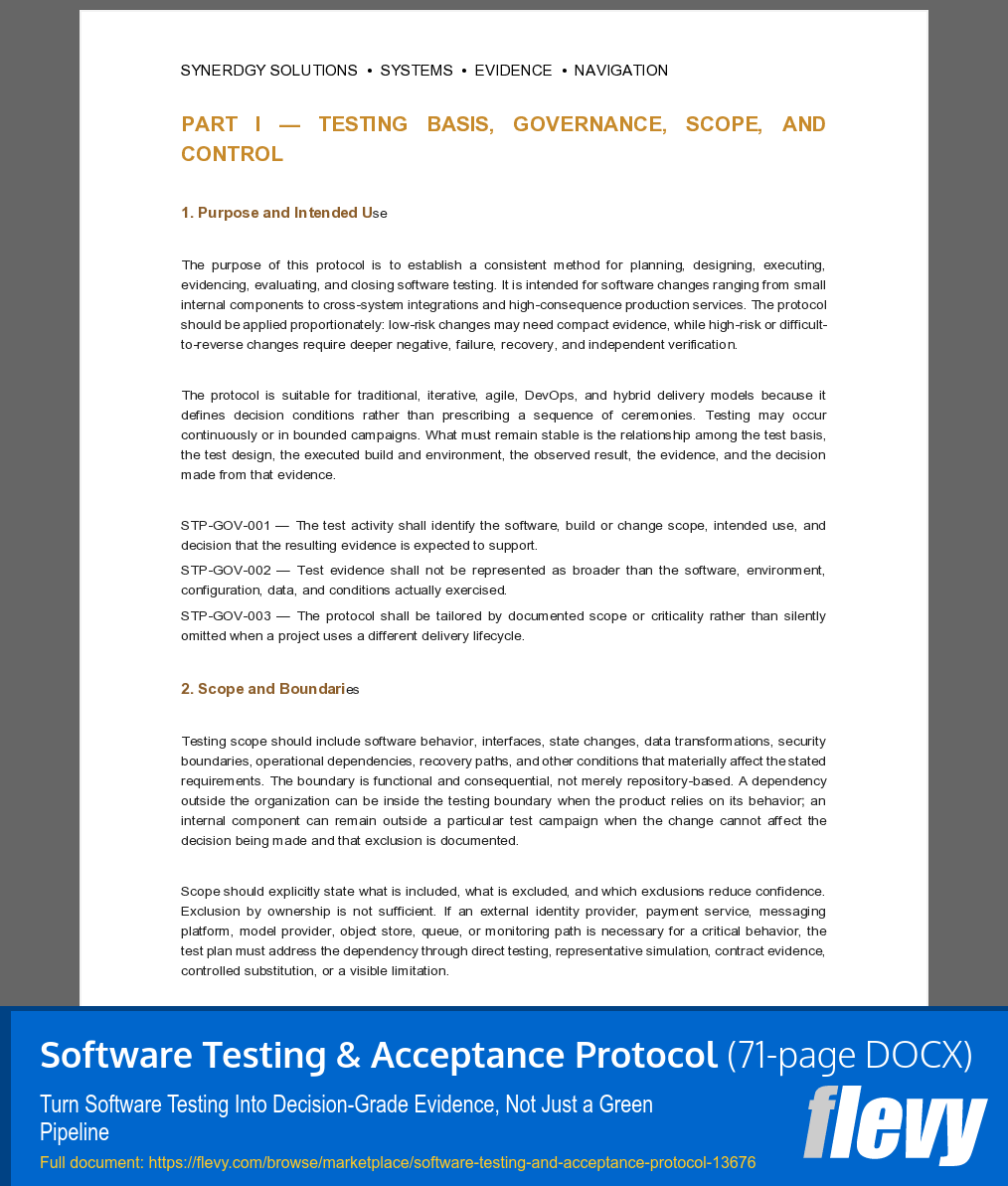
The Software Testing & Acceptance Protocol is a comprehensive 70-page editable Word document designed to help organizations establish a structured, evidence-based approach to software verification from initial test basis through final acceptance and closure. It provides a provider-neutral control framework for teams that need more than a generic test plan, basic checklist, or pass/fail dashboard.
The protocol is designed for QA leaders, engineering managers, software and systems teams, product owners, release authorities, implementation teams, technical consultants, assurance reviewers, governance professionals, risk teams, and organizations responsible for demonstrating that software behavior has been meaningfully evaluated before reliance or release.
Rather than treating testing as a volume exercise, the protocol structures testing around the relationship between requirements, risks, test conditions, execution, observed results, supporting evidence, defects, regression impact, exceptions, residual risk, and authorized acceptance.
This distinction becomes especially important in modern software environments where a technically successful response may not represent a successful business outcome. Integrations, asynchronous processing, external providers, queues, callbacks, authorization boundaries, distributed workflows, state changes, recovery processes, and automated services can create situations where a test appears successful while the underlying system remains incomplete, inconsistent, duplicated, unauthorized, degraded, or otherwise unsuitable for acceptance.
The protocol provides a reusable operating baseline for addressing those problems systematically.
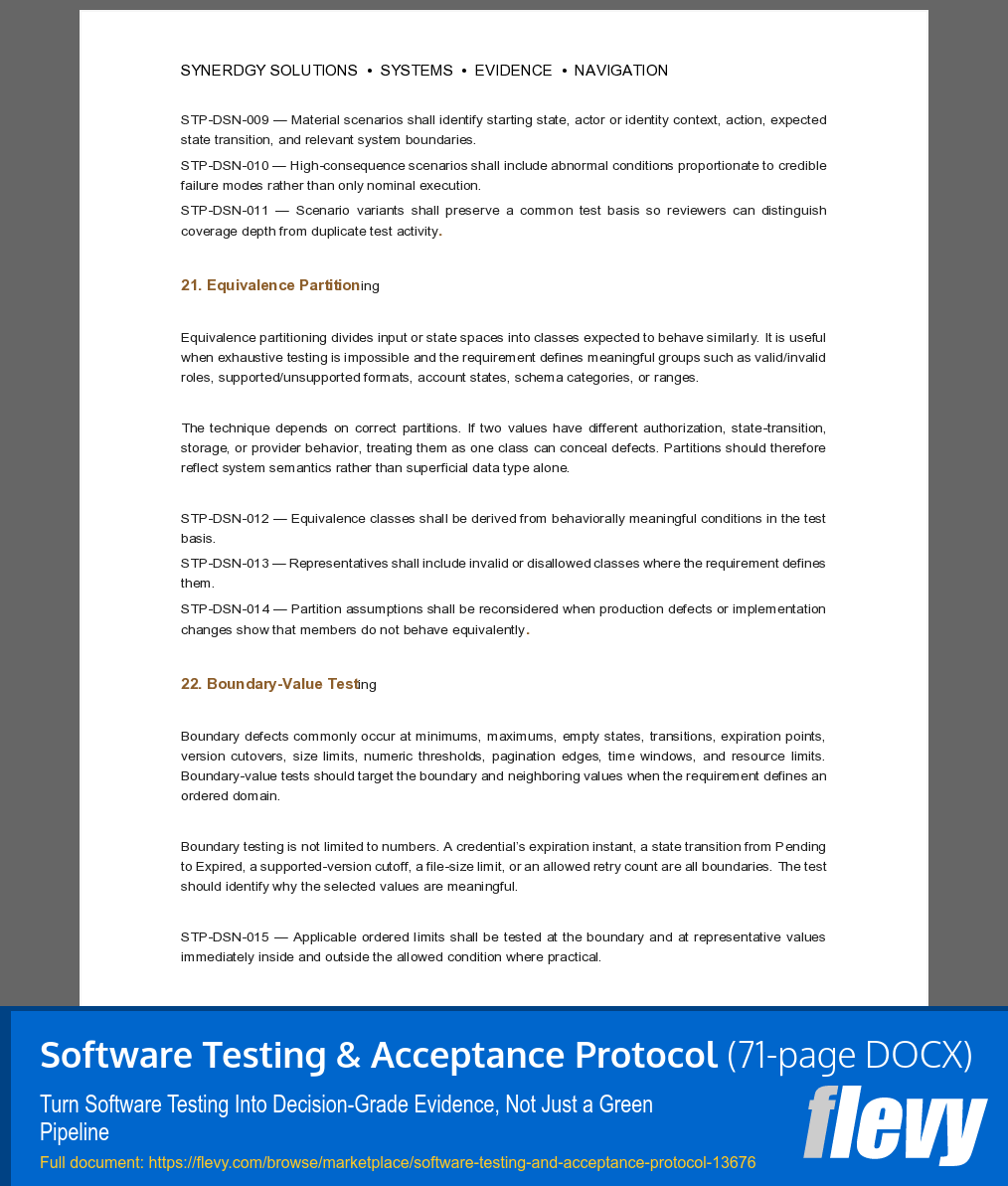
It supports the planning and governance of multiple testing levels and testing types, including functional testing, integration testing, system testing, end-to-end testing, regression testing, security verification, performance and capacity evaluation, resilience and recovery testing, compatibility, migration, accessibility, usability, and acceptance testing when applicable to the product and risk environment.
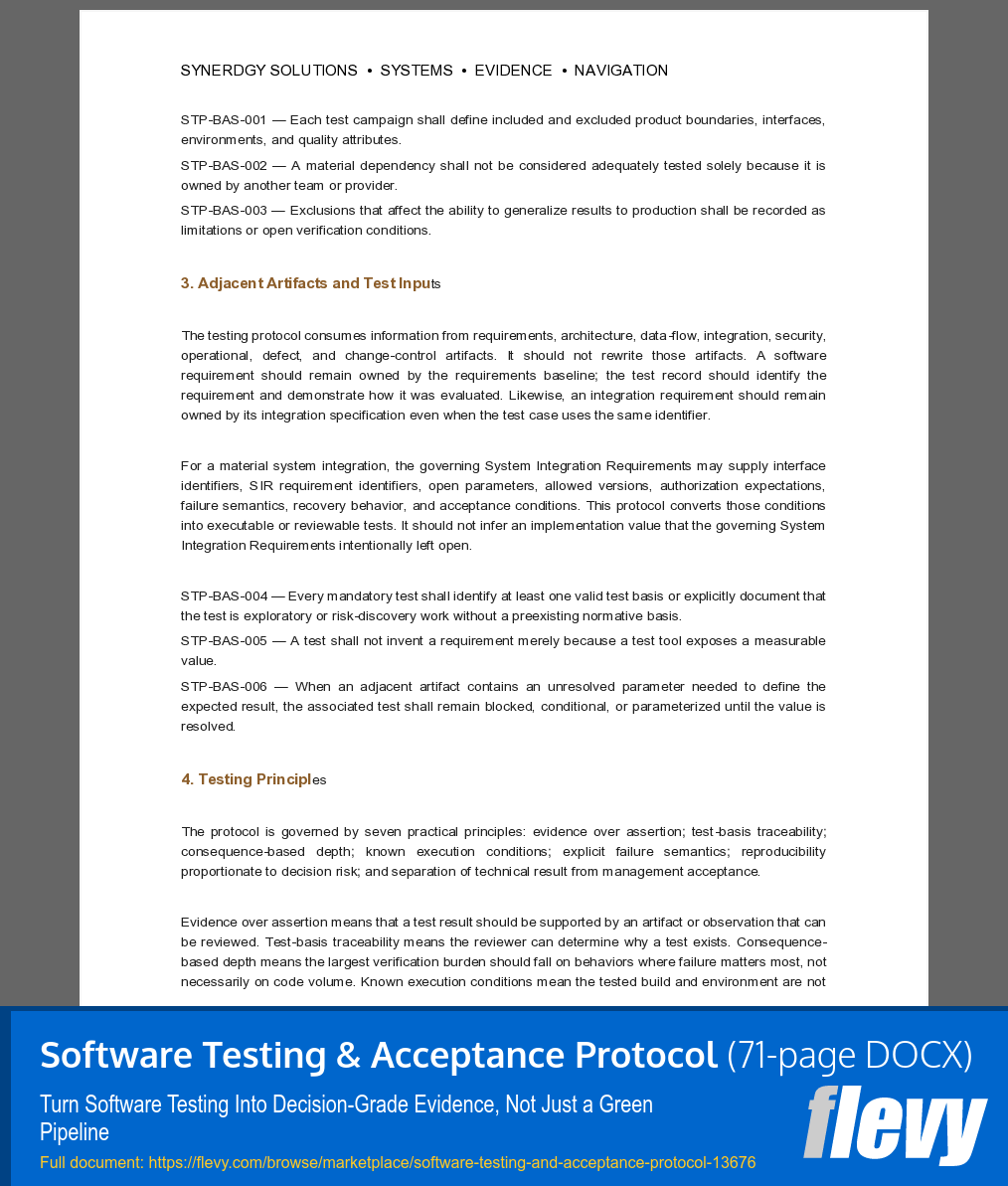
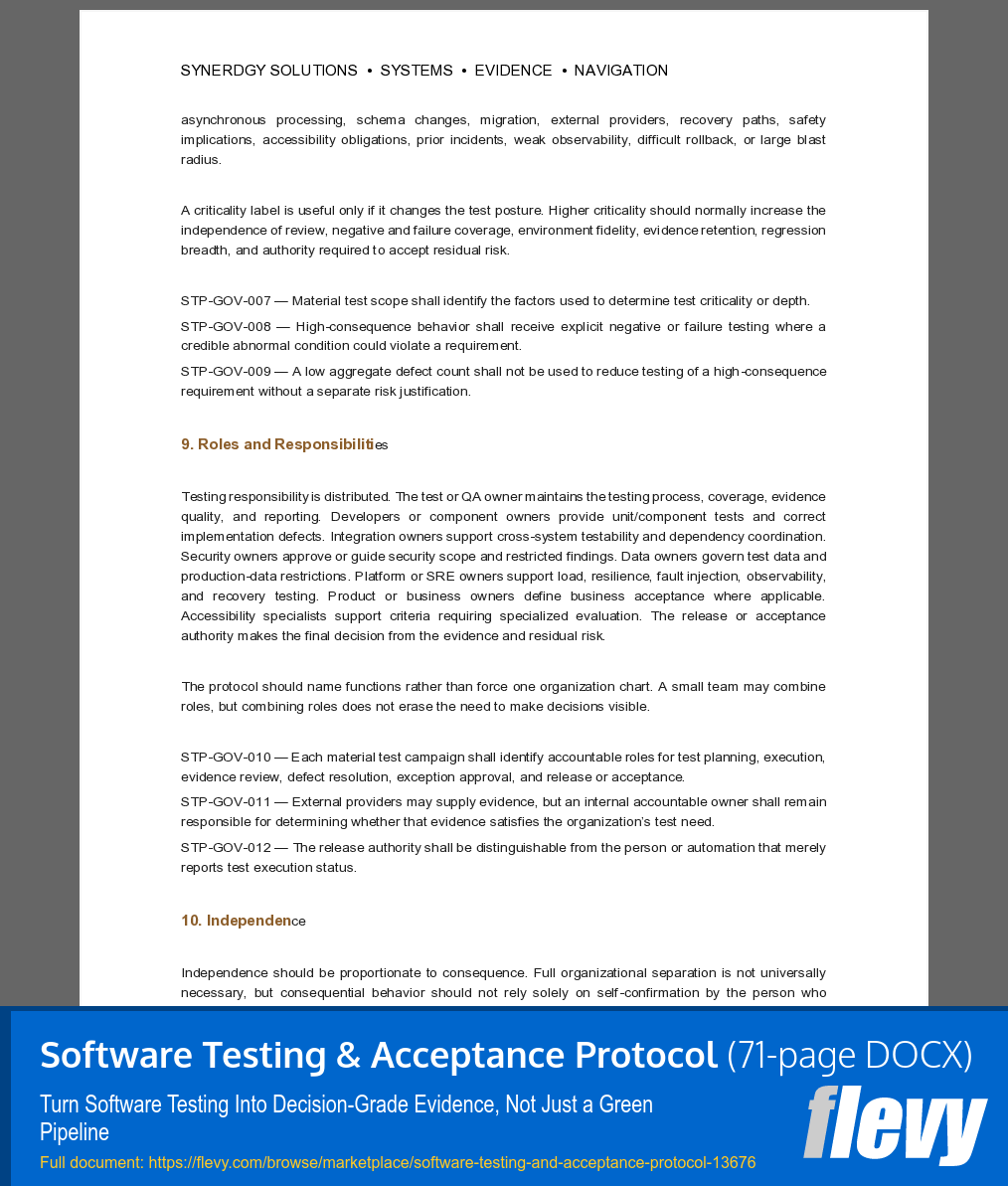
The document also addresses the conditions that make test results trustworthy. This includes test-basis traceability, scope boundaries, criticality, roles and responsibilities, review independence, test environments, configuration identity, test data governance, sensitive-data restrictions, entry criteria, expected-result design, and evidence requirements.
For organizations operating APIs, integrations, event-driven systems, automated workflows, or other distributed architectures, the protocol provides structured coverage for difficult verification areas such as interface behavior, authentication and authorization, state transitions, data transformation, external-provider dependencies, concurrency, delayed or duplicated activity, retries, partial completion, unknown outcomes, reconciliation, and recovery.
Testing depth can be scaled according to consequence, uncertainty, and reversibility rather than applying the same ceremonial checklist to every software change.
The protocol also strengthens the connection between testing and release governance.
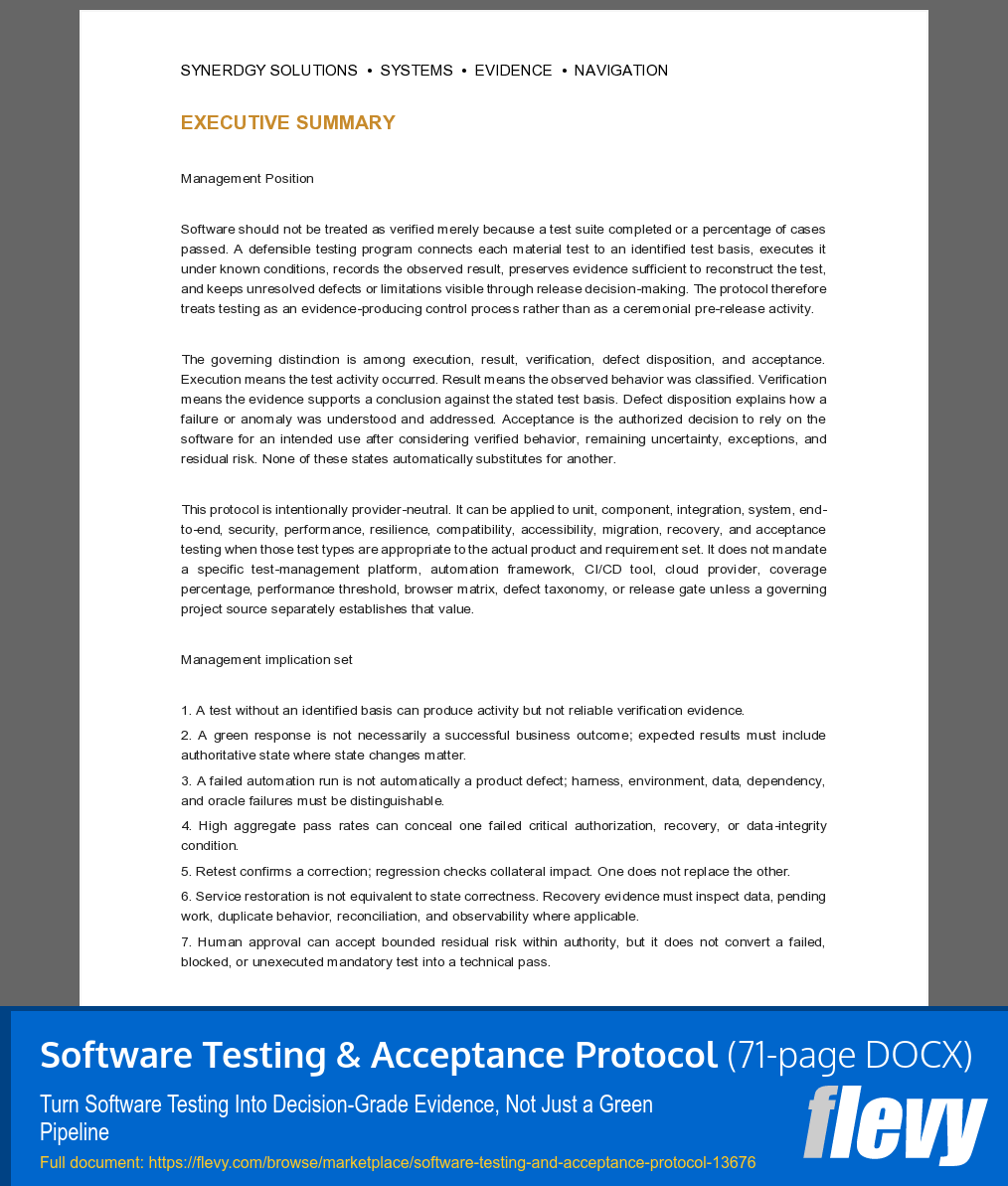
A test result is not automatically an acceptance decision. A corrected defect is not automatically verified. A retest does not automatically prove that surrounding behavior remains unaffected. A restored service does not automatically prove that data, queued work, external effects, permissions, or authoritative business state are correct.
The document therefore establishes a structured approach for preserving distinctions among execution, result classification, verification, defect disposition, retesting, regression review, exceptions, residual risk, and final acceptance.
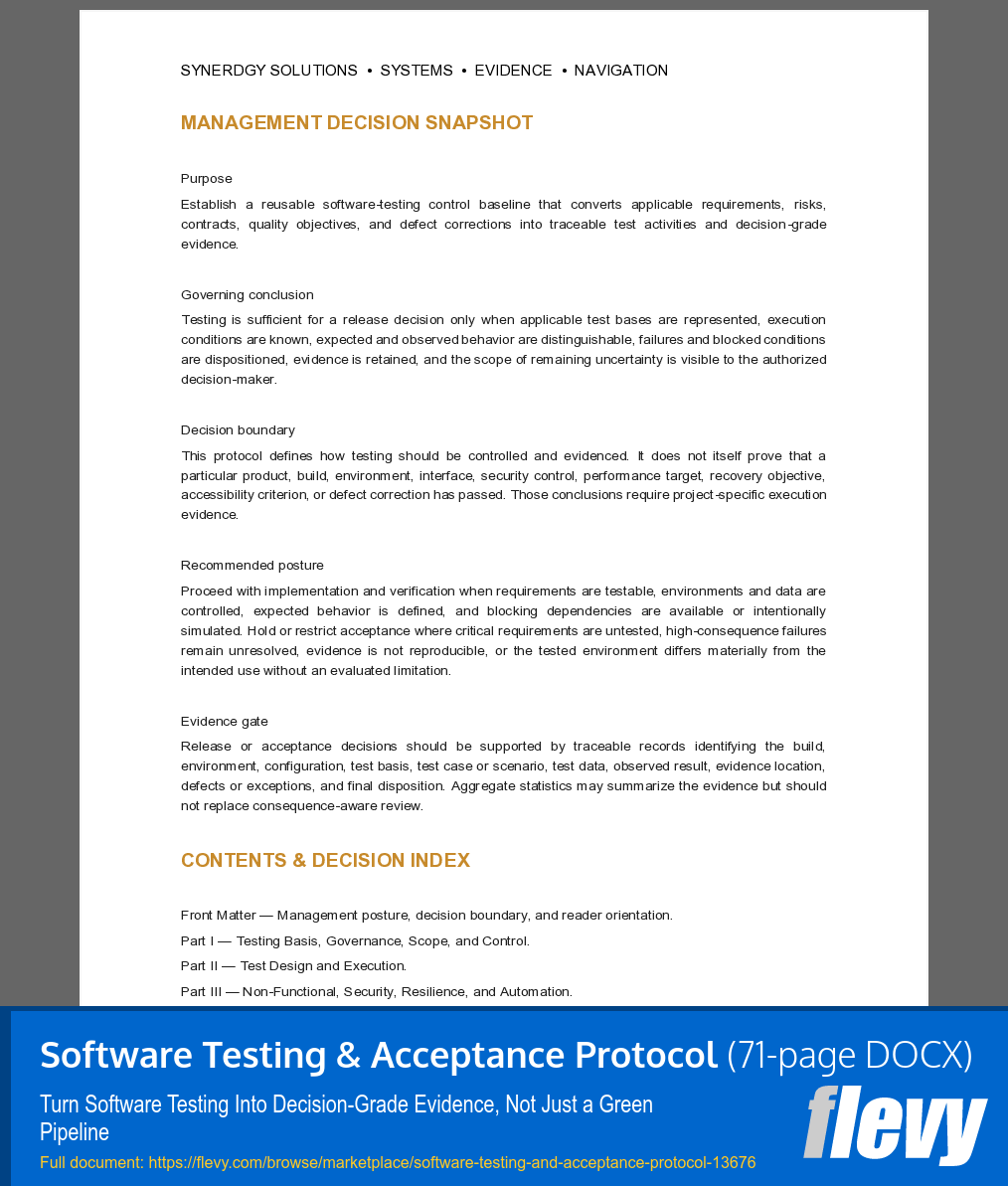
This allows decision-makers to see not only what passed, but also what failed, what was blocked, what remained inconclusive, what was deferred, what was accepted with known limitations, and what evidence supports the final decision.
The protocol includes reusable operating records that support implementation and ongoing governance across the testing lifecycle. These records help teams maintain traceability among test bases, cases, environments, evidence, defects, changes, exceptions, and release decisions without requiring a specific commercial test-management platform.
The document is intentionally provider-neutral and tool-neutral. It does not require a particular CI/CD platform, cloud provider, testing framework, test-management system, defect taxonomy, coverage percentage, performance threshold, browser matrix, or release methodology. Organizations can tailor the protocol to Agile, DevOps, iterative, traditional, hybrid, or continuous-delivery environments while preserving a consistent evidence and decision structure.
This resource is particularly valuable for organizations that are experiencing:
• High test pass rates but weak confidence in release readiness
• Inconsistent testing practices across teams or projects
• Poor traceability between requirements and verification
• Integration failures that are difficult to reproduce or explain
• Defects closed without sufficient retest evidence
• Regression scope based primarily on intuition
• Automated tests that produce results without decision-quality evidence
• Unclear handling of blocked, inconclusive, or partially verified conditions
• Release decisions made under schedule pressure without visible residual risk
• Difficulty demonstrating why a system or change was considered acceptable
The Software Testing & Acceptance Protocol is not simply a testing checklist. It is an implementation-ready governance and assurance framework for organizations that need software testing to produce evidence that can survive technical review, management review, operational scrutiny, and consequential release decisions.
Deliverable: 70-page editable Microsoft Word document.
Format: Editable DOCX.
Designed for: Software development, QA, engineering, systems integration, technology governance, risk management, implementation, release management, and assurance environments.
Core outcome: Move from "the tests ran" to "we can demonstrate what was tested, what the evidence supports, what remains uncertain, and why the release decision is defensible."
Got a question about the product? Email us at support@flevy.com or ask the author directly by using the "Ask the Author a Question" form. If you cannot view the preview above this document description, go here to view the large preview instead.
Source: Best Practices in Information Technology, Quality Management Word: Software Testing & Acceptance Protocol Word (DOCX) Document, SyNERDgy Solutions | R&D Systems
ABOUT THE AUTHOR

SyNERDgy Solutions develops proprietary enterprise frameworks and professional systems for complex organizational and technical environments.
Our work spans operational excellence, governance and risk, enterprise architecture, systems and AI, assurance, implementation, evidence analysis, and financial decision support.
SyNERDgy products are independently developed and subsequently cross-mapped
... [read more]
Ask the Author a Question
You must be logged in to contact the author.




























