
 Click main image to view in full screen.
Real Estate Investment Trust (REIT) Guide – PowerPoint PPTX Template
PowerPoint (PPTX) 11 Slides


BENEFITS OF THIS DOWNLOADABLE POWERPOINT DOCUMENT
- Provides an introduction to Real Estate Investment Trusts (REIT)
REAL ESTATE PPT TEMPLATE DESCRIPTION
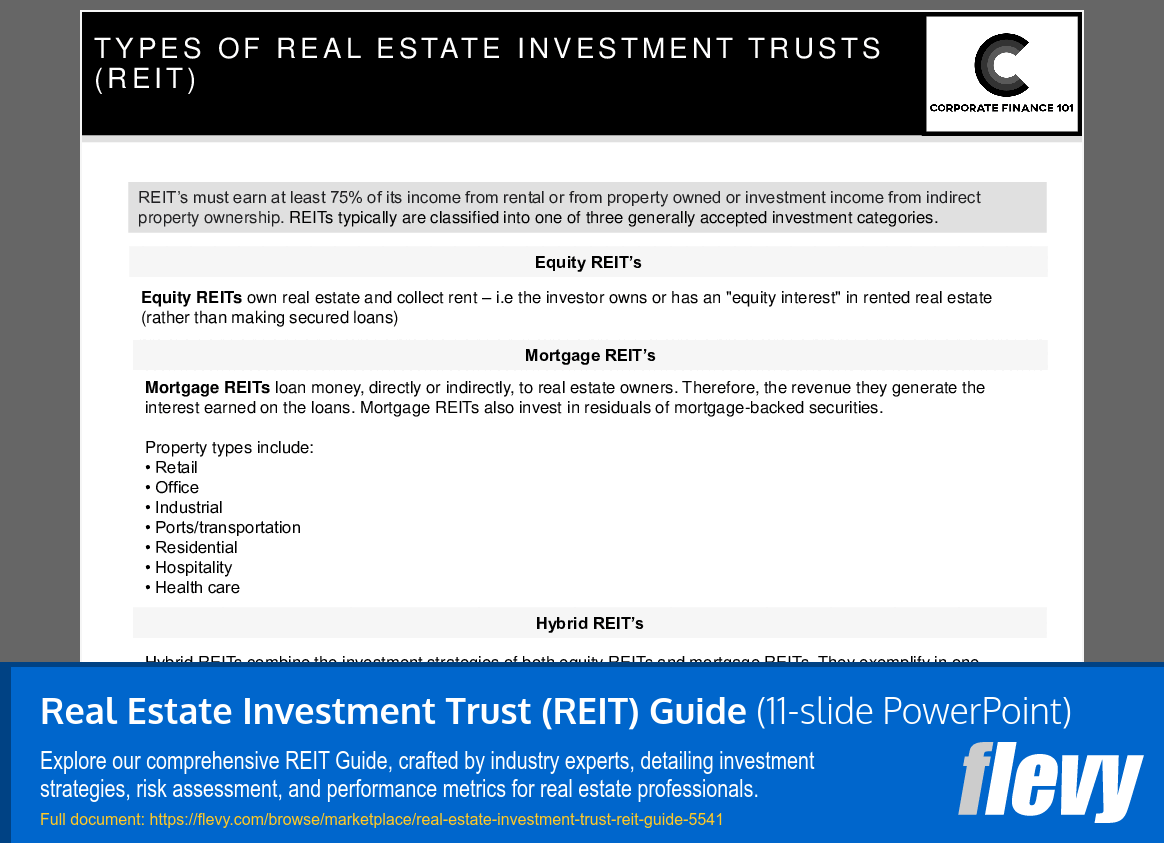
A REIT (real estate investment trust) is a company that makes investments in income-producing real estate and earns at least 75% of its income from rental or from property owned or investment income from indirect property ownership.
REITs own and/or manage income-producing commercial real estate, whether it's the properties themselves or the mortgages on those properties. They are intended to offer ordinary investors an affordable way to afford to invest in diversified portfolios of income-producing real estate. REIT investing allows investors to tap into the potential of the real estate industry without actually buying any physical assets.
The purpose of this guide is to outline:
1. The types of real estate entities
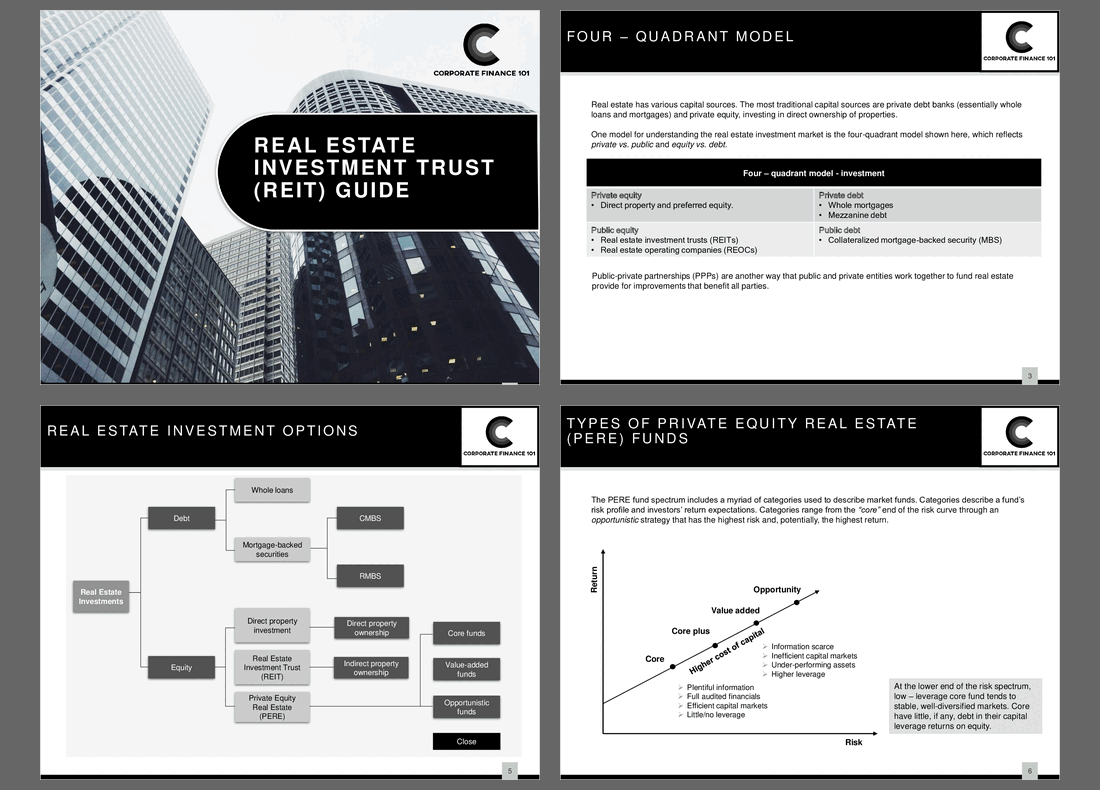
2. The four-quadrant model for understanding the real estate investment market
3. Real estate investment options
4. Types of Real Estate Private Equity (PERE) Funds
5. Types of Real Estate Investment Trusts (REITs)
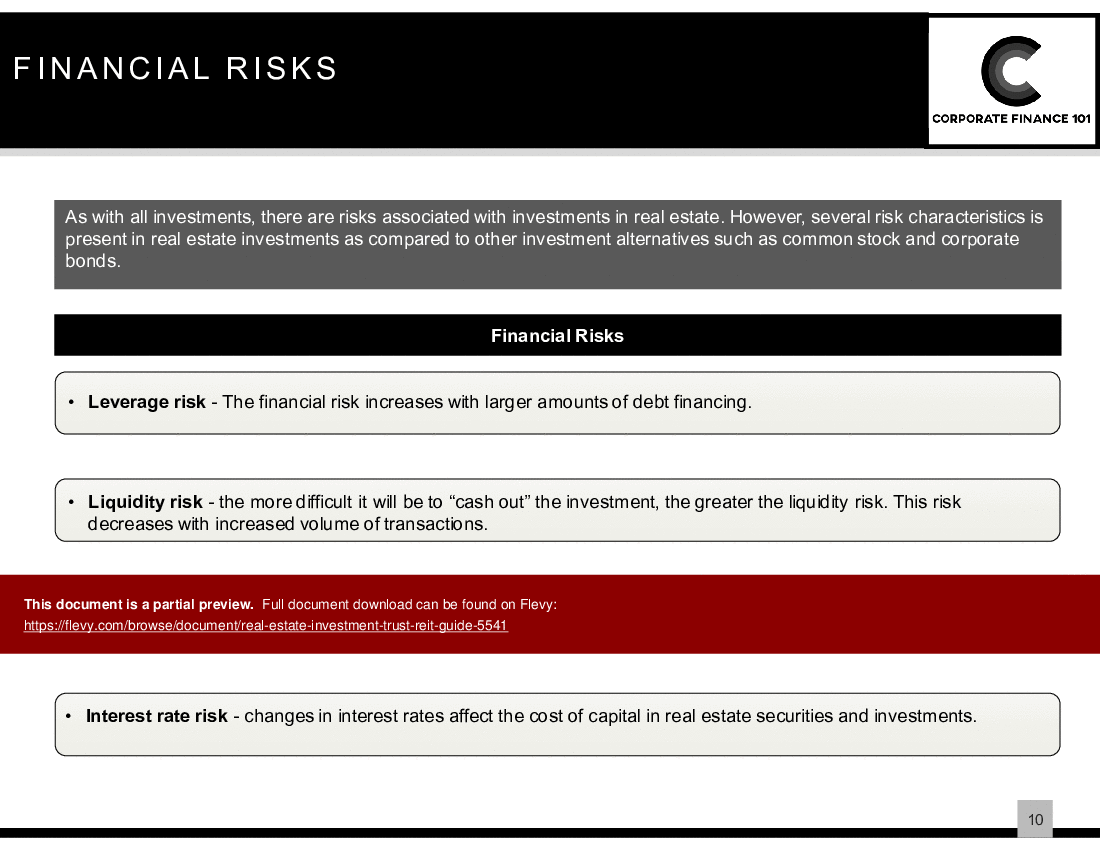
6. Financial risks associated with real estate
7. Performance measurement of a REIT
Got a question about the product? Email us at support@flevy.com or ask the author directly by using the "Ask the Author a Question" form. If you cannot view the preview above this document description, go here to view the large preview instead.
PRESENTATION DEEP DIVE ANALYSIS
This deep-dive analysis was generated from the full 11-slide PowerPoint presentation.
REAL ESTATE PPT TEMPLATES
Source: Best Practices in Real Estate PowerPoint Slides: Real Estate Investment Trust (REIT) Guide PowerPoint (PPTX) Presentation Slide Deck, Corporate Finance 101