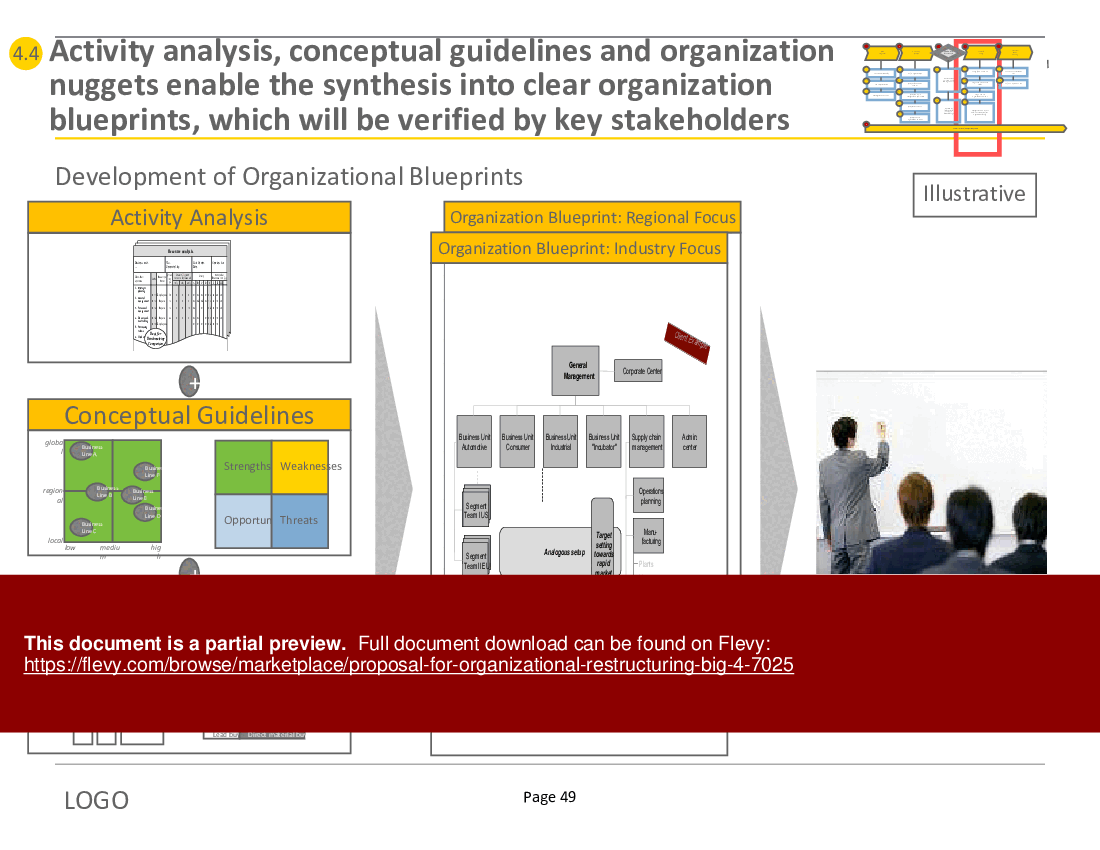

Provides a world class framework for pitching organisational restructuring proposals.
Specifically provides a methodology for organisational restructuring on the Sales function in a chemical plant.
Provide a world class format to follow when sharing proposals with clients.
STRATEGIC PLAN EXAMPLE PPT DESCRIPTION
Company restructuring plan template PPT: Get a ready-to-use Proposal for Organizational Restructuring (Big 4) to streamline your business restructure and team realignment. Download now. Proposal for Organizational Restructuring (Big 4) is a 68-slide PPT PowerPoint presentation slide deck (PPTX) available for immediate download upon purchase.
The document attached covers a detailed proposal shared by a worldclass consulting firm around organisational restructuring of a large chemical company in China.
Project Objectives
Improve sales capabilities to secure wins in business such as redecoration
Adapt Key Account management methodology to grow Project business
Expand sales coverage to 2nd tier and 3rd tier cities and attract more mid-class customers
Integrate distribution networks to reduce inefficiency
Align internal organization to support future growth
Proposal Coverage
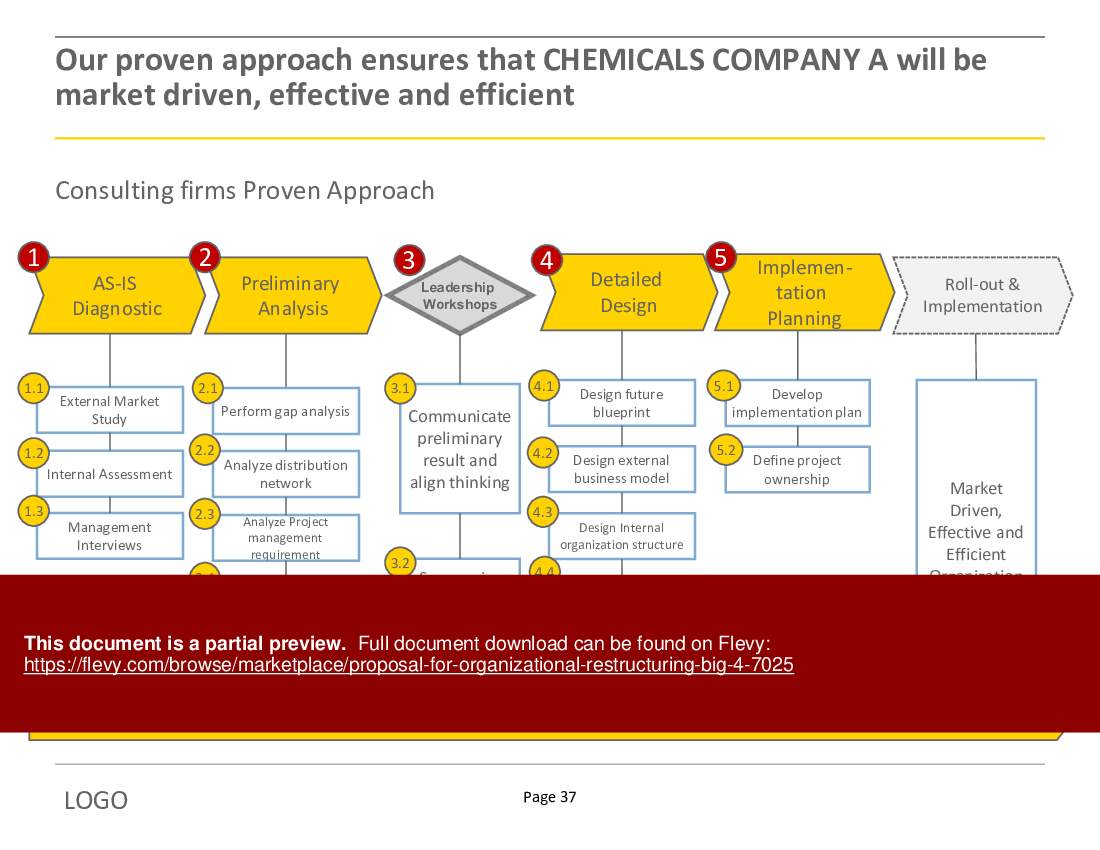
Diagnose current "AS-IS" sales channel and organization structure
Benchmark industry intelligence and best practice
Identify gaps for improvement
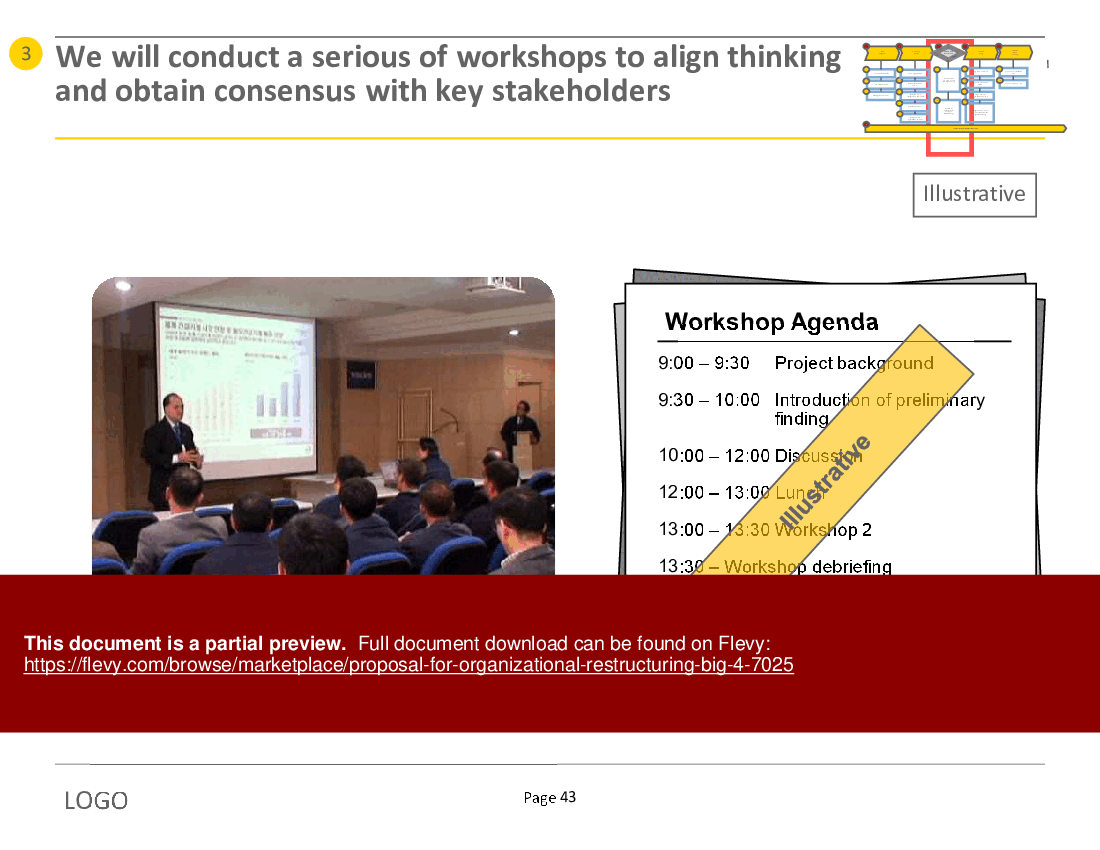
Hold workshop with leadership to confirm preliminary analysis
Derive optimal sales channel structure
Integrate distributor network
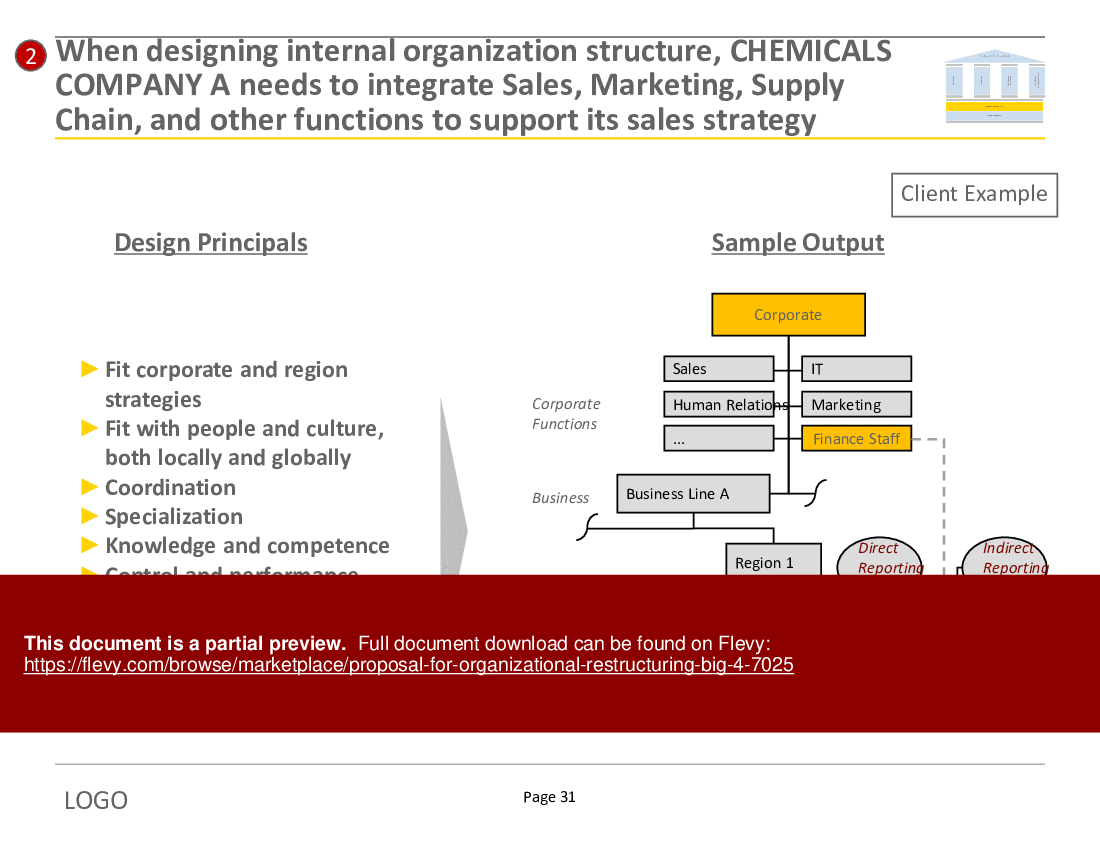
Align internal organization to support new sales channel
Develop implementation plan
About the Client
CHEMICALS COMPANY A supplies a full range of interior and exterior decoration and protection products for both the professional and do-it-yourself (DIY) markets in China, including paints, lacquers and varnishes, as well as products for surface preparation (pre-deco products) In China, only BRAND and BRAND are identified as the front-line paints brands
Issues at hand:
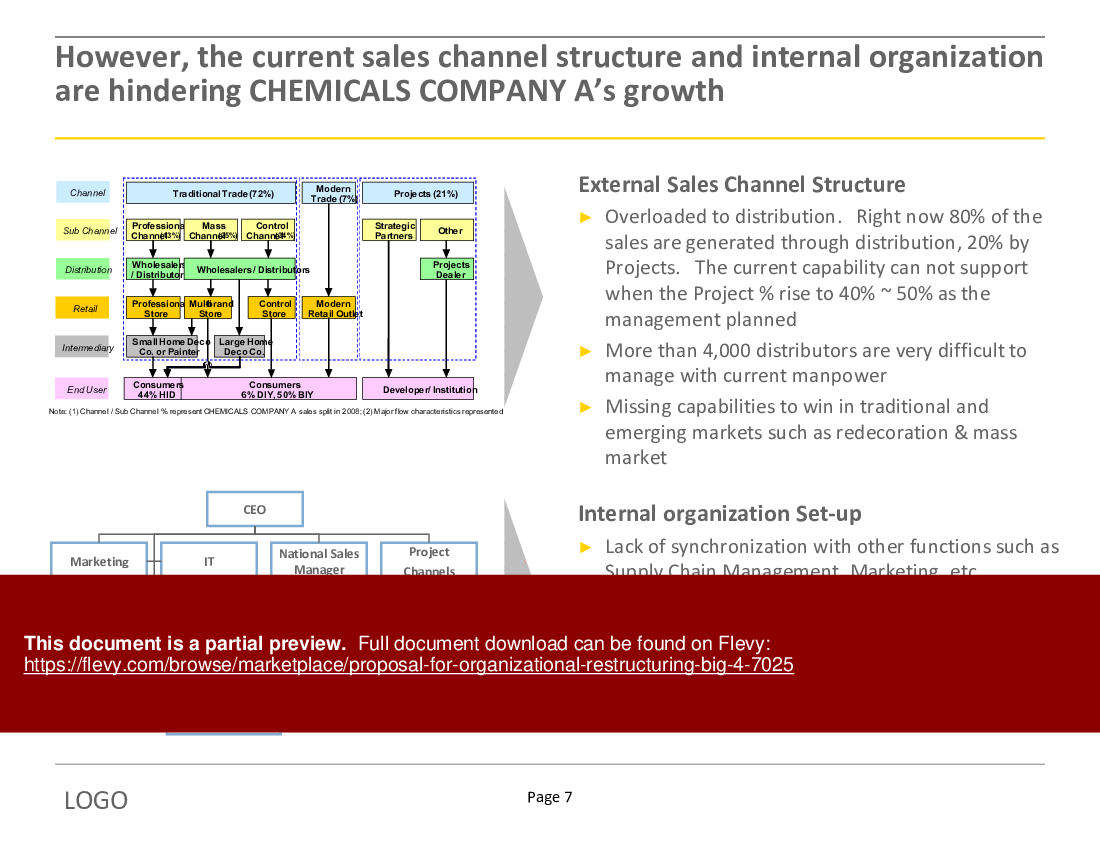
External Sales Channel Structure
• Overloaded to distribution.
• Right now 80% of the sales are generated through distribution, 20% by Projects.
• The current capability can not support when the Project % rise to 40% ~ 50% as the management planned
• More than 4,000 distributors are very difficult to manage with current manpower
• Missing capabilities to win in traditional and emerging markets such as redecoration & mass market
Internal Organization Set-up
• Lack of synchronization with other functions such as Supply Chain Management, Marketing, etc.
• Slow response to market requirements and competitions due to internal inefficiency
• Centralized organization disenfranchises staff in the regional offices , created motivation issues
Consulting firms preliminary analysis:
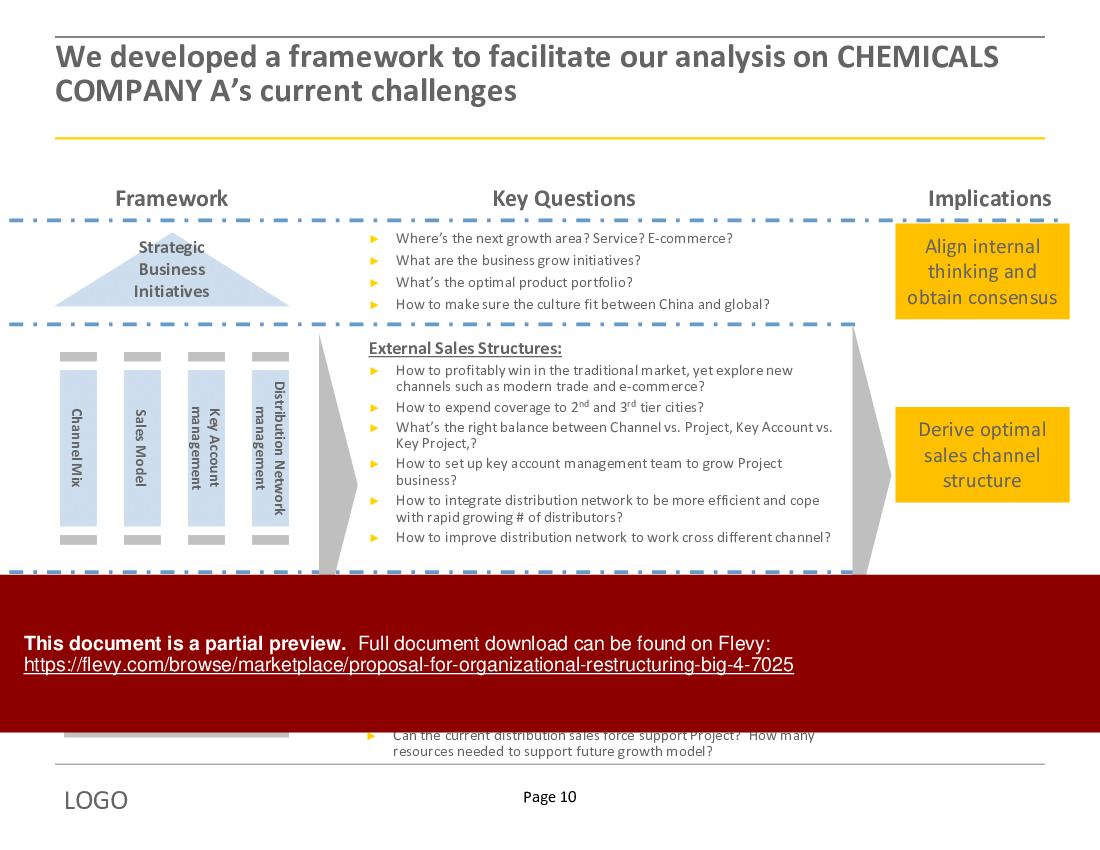
• Where's the next growth area? Service? E-commerce?
• What are the business grow initiatives?
• What's the optimal product portfolio?
• How to make sure the culture fit between China and global?
External Sales Structures:
• How to profitably win in the traditional market, yet explore new channels such as modern trade and e-commerce?
• How to expend coverage to 2nd and 3rd tier cities?
• What's the right balance between Channel vs. Project, Key Account vs. Key Project, etc.?
• How to set up key account management team to grow Project business?
• How to integrate distribution network to be more efficient and cope with rapid growing # of distributors?
• How to improve distribution network to work cross different channel?
Internal organization Competencies:
• How to realign internal organization structure to support sales channel and regional? Key functions to consider include Sales, Marketing, SCM, and other supports.
• Centralized or Decentralized management? How to balance Central vs. Regional?
• What competencies does Sales organization need to have? Does CHEMICALS COMPANY A provide sufficient training?
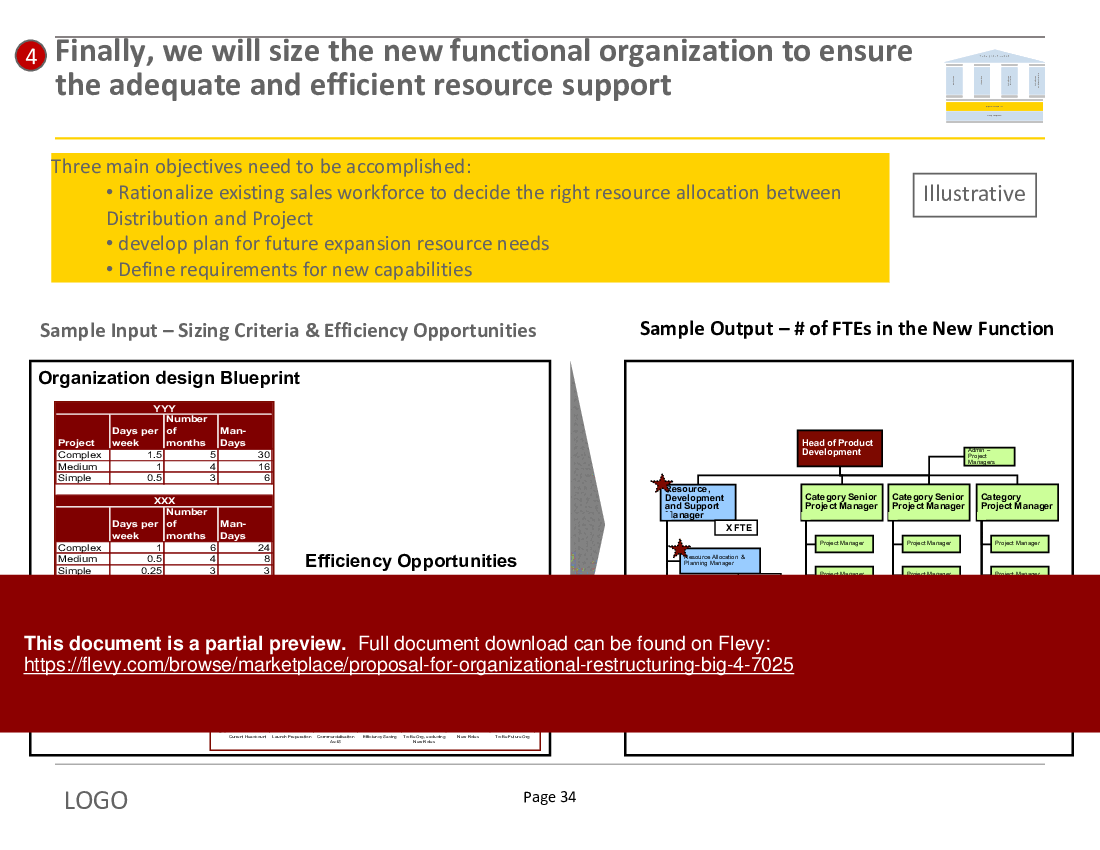
• Can the current distribution sales force support Project? How many resources needed to support future growth model?
Got a question about the product? Email us at support@flevy.com or ask the author directly by using the "Ask the Author a Question" form. If you cannot view the preview above this document description, go here to view the large preview instead.
MARCUS OVERVIEW
This synopsis was written by Marcus [?] based on the analysis of the full 68-slide presentation.
Executive Summary
This proposal outlines a comprehensive plan to re-invent CHEMICALS COMPANY A’s organizational structure to foster future growth in the competitive Chinese market. The consulting firm's preliminary analysis identifies key challenges, including an overloaded distribution network and inefficiencies in internal organization. The project approach focuses on aligning sales channels, enhancing key account management, and integrating distribution networks. The proposed timeline and team structure ensure a systematic rollout of the new organizational framework. This project is designed to position CHEMICALS COMPANY A as a market leader, leveraging its established presence and capabilities.
Who This Is For and When to Use
• Corporate executives seeking to optimize organizational structure for growth
• Integration leaders managing sales channel realignment
• Consultants focused on operational efficiency and market strategy
• Business development teams aiming to enhance key account management
Best-fit moments to use this deck:
• During strategic planning sessions to assess organizational capabilities
• When launching initiatives to penetrate new market segments
• In workshops aimed at aligning internal teams with market demands
Learning Objectives
• Define the optimal organizational structure to support growth initiatives
• Build a streamlined sales channel strategy that integrates traditional and modern trade
• Establish effective key account management practices tailored to local market needs
• Identify and implement best practices for distributor management
• Develop a comprehensive change management strategy to facilitate smooth transitions
• Align internal functions such as Sales, Marketing, and Supply Chain to support strategic objectives
Primary Topics Covered
• Market Analysis - A thorough examination of CHEMICALS COMPANY A's current market position and competitive landscape in China.
• Sales Channel Optimization - Strategies to balance project and distribution sales, enhancing overall sales effectiveness.
• Key Account Management - Framework for managing key accounts to drive revenue growth and customer satisfaction.
• Distributor Network Integration - Approaches to streamline distributor management and improve operational efficiency.
• Organizational Structure Redesign - Recommendations for a new organizational model that supports strategic growth initiatives.
• Change Management Strategy - A structured approach to facilitate transitions and ensure stakeholder alignment throughout the organization.
Deliverables, Templates, and Tools
• Sales channel optimization framework template
• Key account management process guide
• Distributor performance assessment tool
• Organizational structure redesign blueprint
• Change management communication plan
• Implementation timeline and action plan
Slide Highlights
• Overview of CHEMICALS COMPANY A's growth trajectory in China
• Analysis of current sales channel inefficiencies
• Proposed organizational structure to support future growth
• Key account management framework emphasizing relationship building
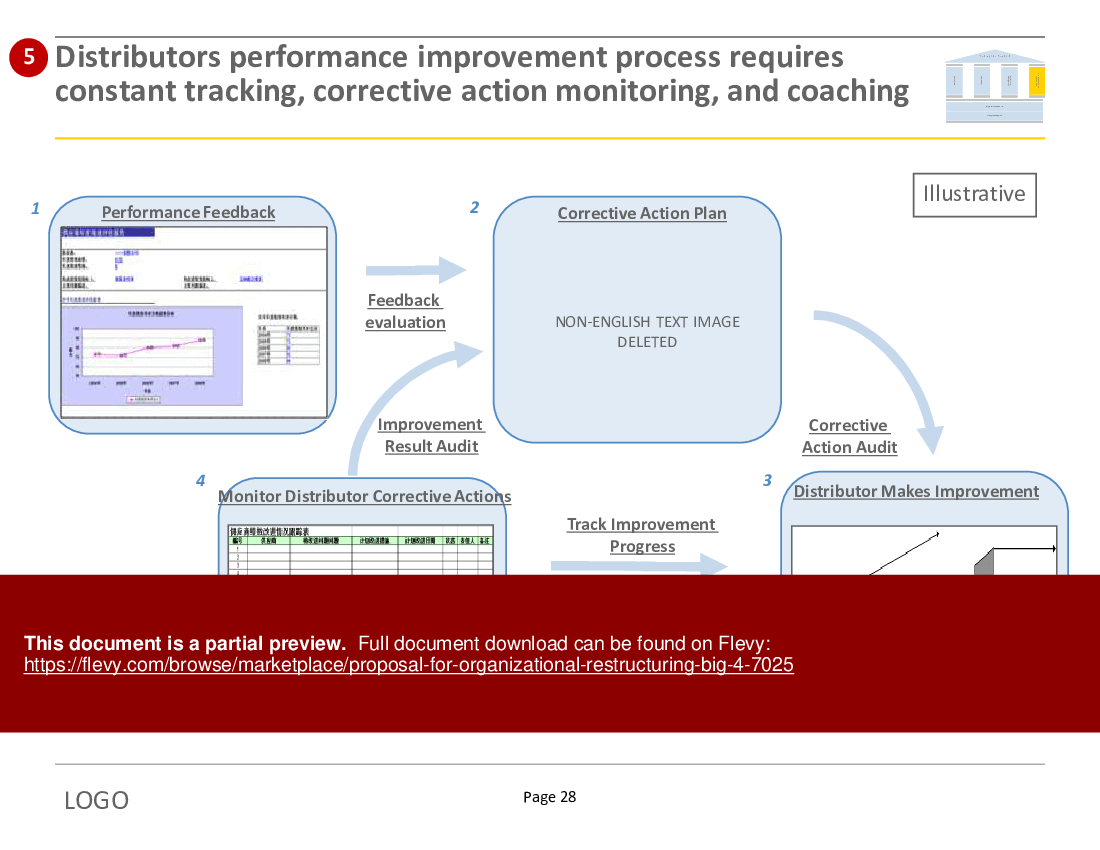
• Distributor management strategy focusing on performance improvement
Potential Workshop Agenda
Sales Channel Optimization Workshop (90 minutes)
• Review current sales channel performance and identify gaps
• Discuss strategies for integrating project and distribution sales
• Develop action items for implementation
Key Account Management Alignment Session (60 minutes)
• Define key account criteria and management processes
• Align on roles and responsibilities for account managers
• Establish performance metrics for key accounts
Distributor Management Strategy Session (90 minutes)
• Evaluate current distributor performance and categorization
• Develop strategies for improving distributor engagement
• Create a roadmap for implementing changes in distributor management
Customization Guidance
• Tailor the sales channel strategy to reflect local market conditions and customer preferences
• Adjust key account management processes based on specific industry requirements
• Modify the organizational structure to align with CHEMICALS COMPANY A's strategic goals and culture
Secondary Topics Covered
• Competitive landscape analysis in the Chinese paints market
• Demographic shifts impacting product demand
• Infrastructure challenges affecting market expansion
• Best practices in customer relationship management
• Trends in e-commerce and modern trade channels
FAQ What are the main challenges CHEMICALS COMPANY A faces in the Chinese market?
The company faces an overloaded distribution network, inefficiencies in internal organization, and increasing competition from both local and international brands.
How will the proposed changes impact sales performance?
The changes aim to streamline sales processes, enhance key account management, and improve distributor relationships, ultimately driving revenue growth.
What is the timeline for implementing the new organizational structure?
The proposed timeline spans several months, with key milestones outlined for each phase of the project, including diagnostics, analysis, and implementation.
How will success be measured post-implementation?
Success will be measured through performance metrics related to sales growth, distributor engagement, and customer satisfaction within key accounts.
What resources are needed for effective change management?
Effective change management will require dedicated personnel for training, communication, and ongoing support to ensure smooth transitions across the organization.
What role does the distributor network play in the new strategy?
The distributor network is critical for expanding market reach and improving operational efficiency; the strategy focuses on optimizing distributor performance and engagement.
How will the new organizational structure improve internal collaboration?
The new structure will enhance alignment between Sales, Marketing, and Supply Chain functions, fostering better communication and collaboration across teams.
What are the expected outcomes of the proposed changes?
Expected outcomes include improved market positioning, enhanced sales capabilities, and a more agile organizational structure that can respond to market demands effectively.
Glossary
• Key Account Management (KAM) - A strategic approach to managing a company's most important customers.
• Distributor Network - A system of distributors that facilitate the sale and distribution of products.
• Sales Channel - The method through which a company sells its products to customers.
• Change Management - The process of managing change within an organization to minimize resistance and maximize engagement.
• Organizational Structure - The way in which the activities of an organization are coordinated and managed.
• Market Analysis - The assessment of market conditions to inform strategic decisions.
• Performance Metrics - Standards used to measure the efficiency and effectiveness of actions taken within the organization.
• Customer Relationship Management (CRM) - Strategies and technologies used to manage interactions with customers.
• E-commerce - The buying and selling of goods and services over the internet.
• Project Management - The discipline of planning, executing, and closing projects.
• Sales Optimization - The process of improving sales performance through various strategies and techniques.
• Operational Efficiency - The ability to deliver products or services in the most cost-effective manner without compromising quality.
This PPT slide analyzes centralized versus decentralized management structures across 4 categories: Customer Responsiveness, Growth Imperative, Performance & Motivation, and Internal Efficiency. Centralized structures insulate functional units from market dynamics, leading to a disconnect with customer needs, while decentralized models enhance responsiveness, but complicate coordination. Central decision-making may stifle growth, whereas decentralized approaches allow for regional development, but risk prioritization conflicts. Centralized models foster functional excellence, but struggle with alignment to strategic goals, while decentralized models promote accountability, but may misallocate resources. Centralized structures support functional expertise, whereas decentralized models face challenges in standardization and information sharing, hindering innovation. The Hybrid model offers flexibility, but introduces management complexity.
This PPT slide outlines a strategic framework for Chemicals Company A, divided into Framework, Key Questions, and Implications. The Framework focuses on strategic business initiatives, including channel mix, sales model, and distribution network management, emphasizing the interaction and optimization of business components. Key Questions address growth strategies, such as identifying new growth areas, exploring sales channels, and balancing sales approaches, while considering the cultural fit between operations in China and global strategies. The Implications section highlights the need for cohesive internal communication and an optimal sales channel structure, underscoring efficiency and adaptability. Additionally, it calls for reinventing the internal organization to support future growth, reflecting the importance of evolving organizational capabilities to meet market demands.
This PPT slide outlines a pricing strategy to motivate distributors through a structured approach, emphasizing the relationship between unit price and sales volume. It illustrates 2 key time frames for large distributor sales at 4 and 6 months, with unit prices plotted against varying sales volumes. The green line represents base pricing, while dotted red lines indicate adjustments of -3% and -6% for different sales volumes. As sales volume increases, opportunities arise to reward top-performing distributors with favorable pricing. Key terms include "small volume prices" and "KAM pricing," indicating specific tiers for distributor performance. Pricing issues for consideration include competitor pricing evaluation, conflicts between key account and distributor pricing, and growth incentives. A straightforward three-tier pricing system is suggested to enhance distributor engagement and performance through targeted pricing mechanisms.
This PPT slide presents a framework for evaluating in-house versus outsourcing decisions using capability mapping. It categorizes business functions based on 2 dimensions: economies of scale and strategic importance. The vertical axis, "Economies of Scale," ranges from low to high, indicating cost benefits in delivering functions. The horizontal axis, "Strategic Importance," assesses how critical a function is to the organization’s core strategy. Functions like IT systems, facilities management, and HR are positioned within the matrix, suggesting that those with high strategic importance and economies of scale are better suited for in-house management, while lower importance functions may be considered for outsourcing. Specific activities, such as "Consider Outsourcing or Discontinue," highlight a proactive evaluation of less critical functions. This structured approach aids organizations in resource allocation, enhancing operational efficiency and aligning capabilities with strategic goals.
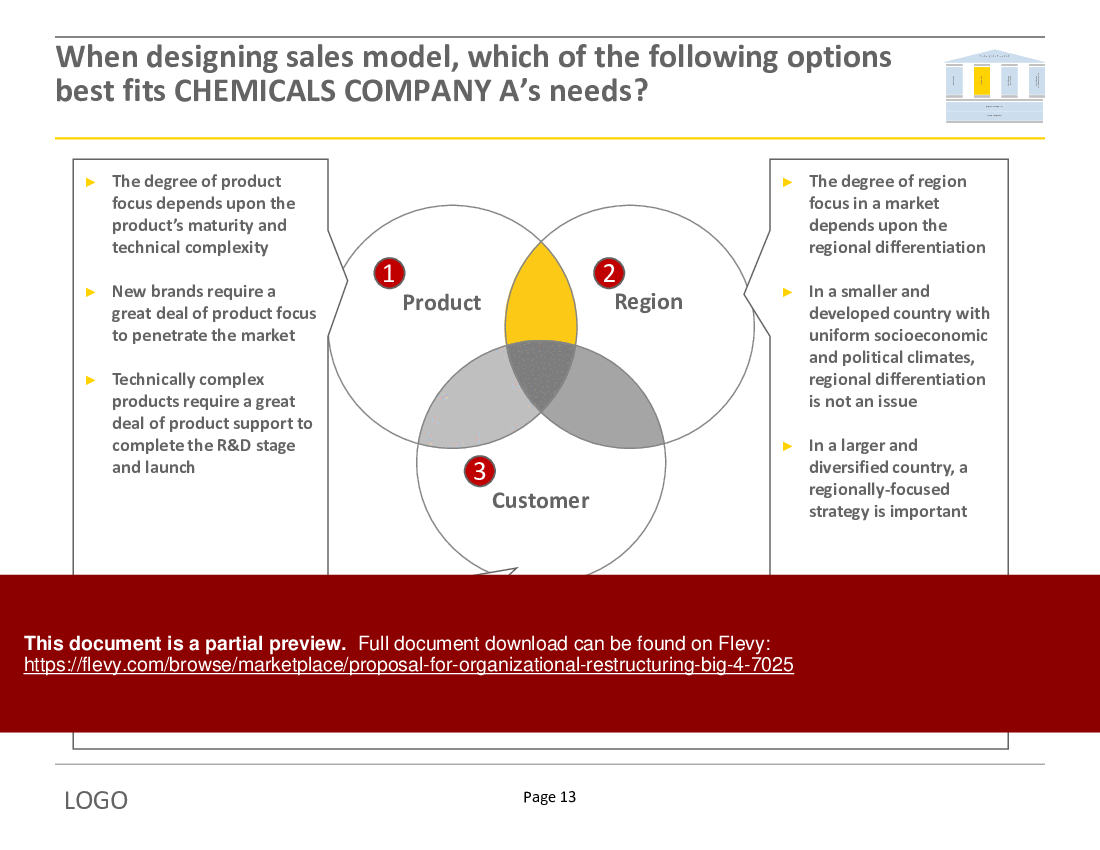
This PPT slide presents a framework for designing a sales model for Chemicals Company A, focusing on 3 critical dimensions: Product, Region, and Customer. The Product dimension indicates that product complexity and maturity dictate the required sales focus, with new brands needing substantial emphasis for market entry and complex products requiring support during R&D and launch. The Region dimension highlights the necessity of regional differentiation, advocating for a tailored strategy in diverse markets. The Customer dimension stresses understanding purchasing power and specific needs across customer segments, reinforcing that a one-size-fits-all approach is inadequate. This framework encourages a customized sales model aligned with market conditions and product characteristics.
This PPT slide outlines a change management strategy for CHEMICALS COMPANY A, focusing on 4 components: Communication, Team Building, Transition to New Processes/Organization, and Success Tracking.
Communication emphasizes delivering direct, fact-based information to stakeholders through various media, fostering cultural change. Team Building integrates activities into workshops to strengthen team dynamics. The Transition to New Processes/Organization necessitates structured training on sustainable processes, new organizational structures, and IT system adaptations, clarifying responsibilities for organizational interfaces. Success Tracking involves monitoring new process implementation and identifying critical milestones to eliminate obstacles. This strategy ensures effective change management while addressing cultural shifts within the organization.
This PPT slide outlines CHEMICALS COMPANY A's sales strategy focused on mid-tier customers, categorizing cities into 3 tiers based on population and GDP. Tier 1, labeled "Big Bosses," includes 3 cities with populations over 6 million and per capita GDP exceeding $6,000, representing the wealthiest market segment. Tier 2 is divided into "High Flyers," larger cities; "Rich Cousins," smaller affluent cities; and "Modest Neighbors," indicating broader market potential. Tier 3, labeled "Poor Relatives," consists of around 600 cities with populations under 1.5 million and per capita GDP below $2,000. This tier emphasizes a strategic pivot for CHEMICALS COMPANY A towards capturing mass market opportunities, shifting focus from high-end markets to a more inclusive strategy targeting a wider customer base.
This PPT slide outlines action plans for organizational restructuring in a chemical company, focusing on the "Training of Implementation Team." It specifies tasks such as "Nomination of team members" and "Preparation and distribution of invitations," with assigned individuals including Mr. X and Mrs. Y, and team coaches. The HR department will provide support, emphasizing collaboration. A timeline spanning eight weeks visually represents task distribution, facilitating progress tracking and ensuring timely completion. This structured approach highlights the importance of defined roles, responsibilities, and coordination in achieving successful restructuring outcomes.
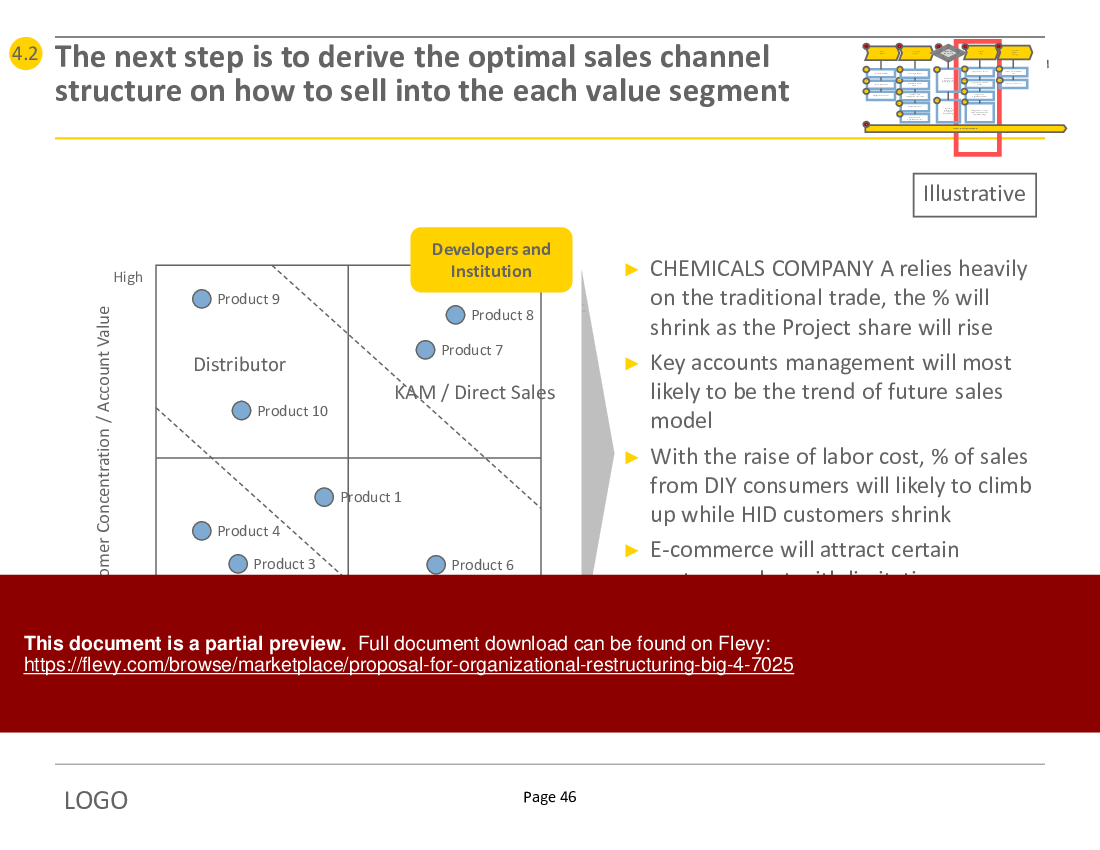
This PPT slide provides a strategic overview of the sales channel structure for a chemicals company, focusing on selling into various value segments. A two-dimensional matrix plots customer concentration against market size, categorizing products into "Developers and Institution," "Distributor," and "Non-Focus." Products in the "Distributor" quadrant indicate reliance on traditional sales channels, while "Developers and Institution" suggest a tailored approach with key account management. Market trends indicate a shift from traditional trade to project-based sales, necessitating adaptation of the sales model. Rising labor costs may increase DIY consumer sales and decrease HID customer sales. E-commerce emerges as a potential channel, with limitations. Growth in sales from smaller cities will require an expanded distributor network, highlighting the need for strategic realignment of sales channels to optimize market opportunities.
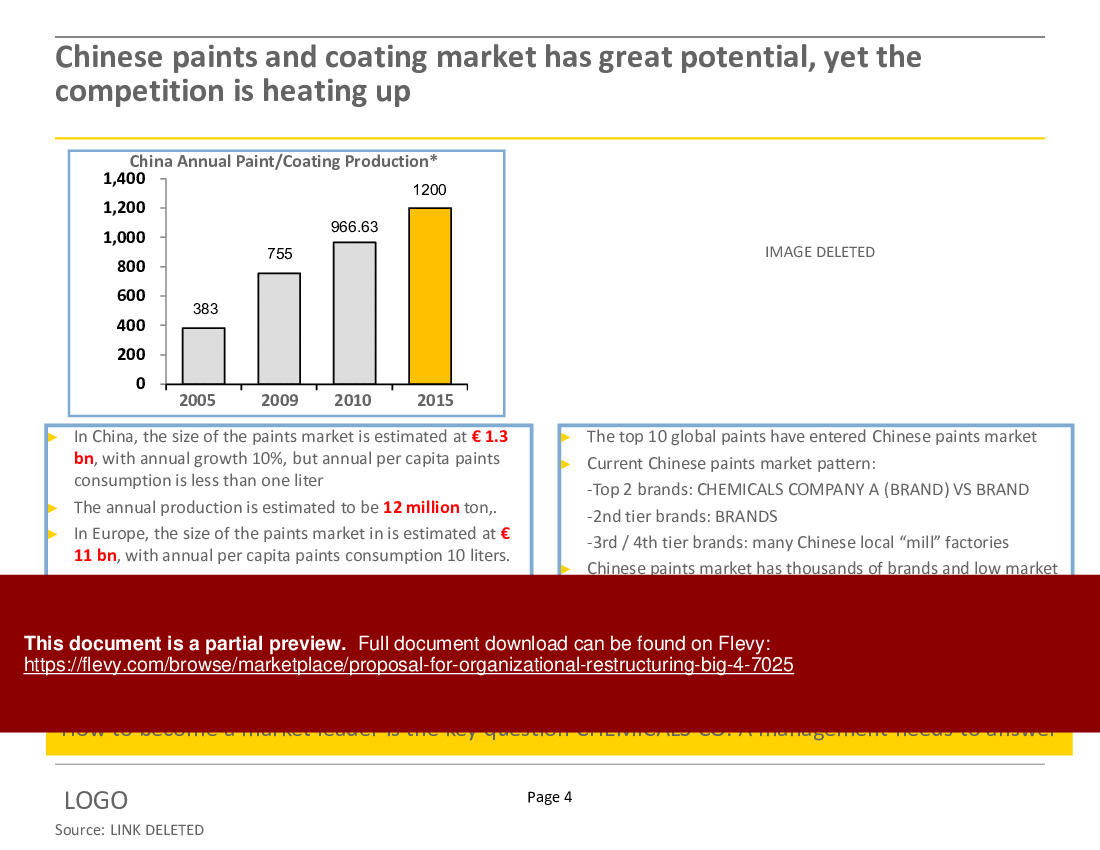
CHEMICALS COMPANY A experienced significant growth in China, with revenue increasing from €687 million in 2007 to €1,249 million in 2010, reflecting a compound annual growth rate (CAGR) of 22.05%. Employee count rose from 5,100 to 6,700 during the same period, indicating a CAGR of 9.52%. By 2011, the company operated 29 manufacturing facilities and invested €275 million in a multi-site facility and an innovation center. With a nationwide sales network of 7,400 personnel, CHEMICALS COMPANY A held an 11.9% market share in the paints market in 2011, effectively competing against brands with a notable 15% share for other paint products. The company supplies a diverse range of products for both professional and DIY markets, enhancing its competitive positioning.
This PPT slide presents a framework for optimizing the sales channel mix for CHEMICALS COMPANY A, categorizing channels into E-commerce, Services, Projects, Modern Trade, and Traditional. Key questions guide strategic thinking on target customers, market impacts, and unique value propositions, essential for resource allocation. Evaluating growth areas and capabilities is critical for balancing Key Accounts, Direct sales, and Project-based engagements to enhance profitability. Specific market considerations include the DIY market in China and the impact of major retailers like Home Depot exiting that market. This analysis informs channel allocation and profitability strategies, ensuring alignment with the company's growth objectives.
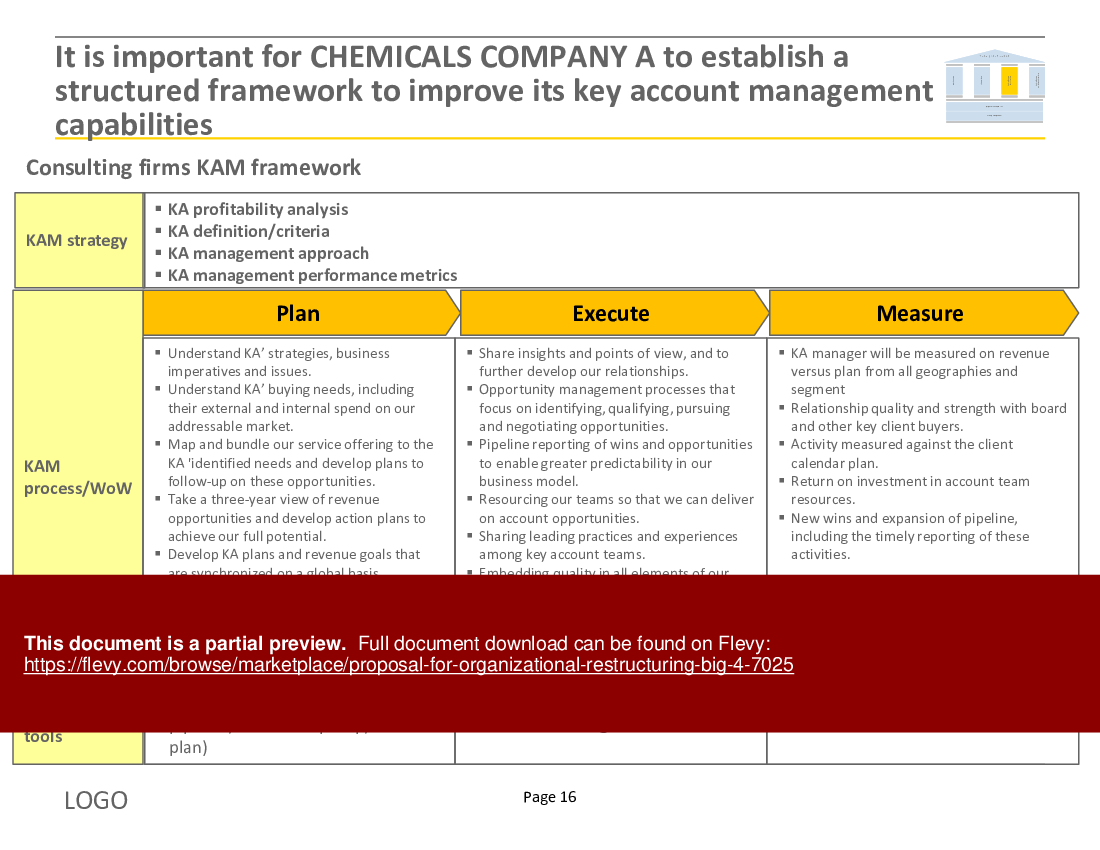
This PPT slide outlines a structured framework for enhancing key account management (KAM) capabilities for Chemicals Company A, divided into 3 sections: Plan, Execute, and Measure.
The "Plan" section focuses on aligning service offerings with key account needs, developing actionable plans, and creating client relationship maps to identify revenue opportunities over a three-year horizon.
The "Execute" section emphasizes sharing insights, fostering relationships, and implementing pipeline reporting to improve operational predictability. It highlights the importance of resourcing teams effectively to meet account opportunities and embedding quality in execution.
The "Measure" section details performance metrics for KAM managers, evaluating revenue outcomes, relationship quality, and alignment with client plans, while tracking return on investment in account resources and pipeline expansion. This structured approach systematically enhances KAM capabilities, driving better business results.
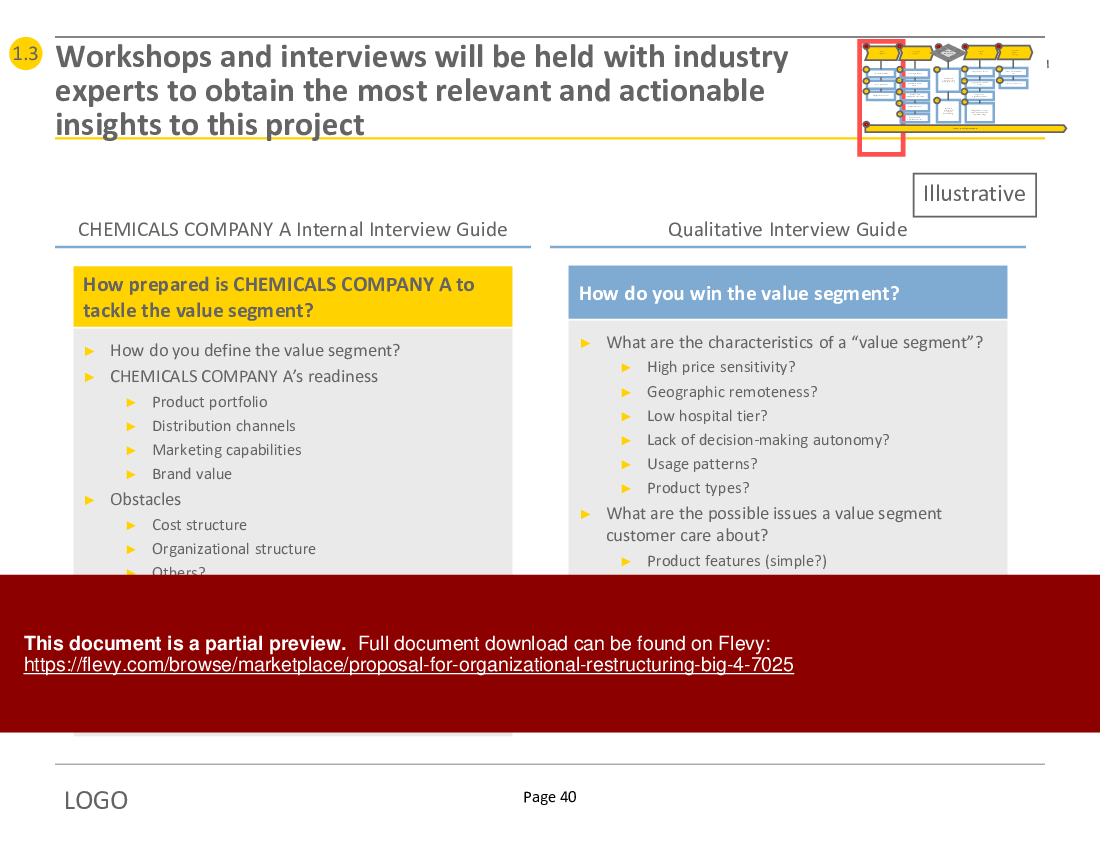
This PPT slide outlines a strategic approach for conducting an internal assessment to understand market positioning within a specific value segment. It emphasizes analyzing product portfolios and channel strategies, evaluating internal capabilities and market dynamics. The central graphic depicts a framework illustrating customer segments, product offerings, and distribution channels, highlighting their interconnections and influence on overall strategy. Sections labeled "Process Activities," "Subject Areas," and "Calculating the Impact" detail specific tasks and methodologies for the assessment. This structured approach aligns activities with the goal of enhancing market understanding, informing strategic decisions to refine product offerings and distribution strategies, ultimately driving growth in a competitive environment.
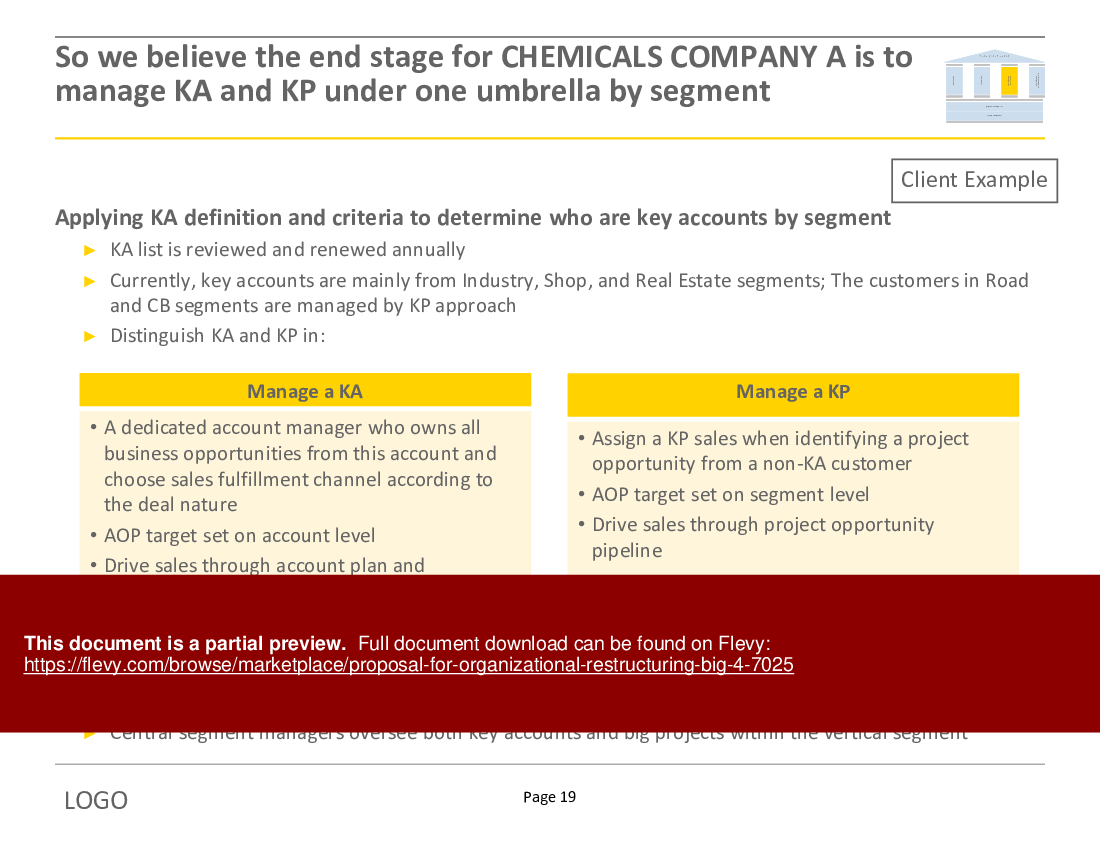
This PPT slide addresses key account management (KAM) complexities for COMPANY A, focusing on 3 areas of ambiguity. "Customer – Channel Alignment" highlights the need for clear definitions of roles for Key Account (KA) and Key Partner (KP) sales teams, particularly during customer transitions between these categories, which can impact sales dynamics. The "Offering – Channel Alignment" section examines KA as a customer access channel, questioning its effectiveness in fulfilling sales and the need for strategic alignment between sales channels and product offerings. Lastly, "Channel – Function Alignment" emphasizes the importance of clarity in roles and responsibilities (R&Rs) within the account team structure to enhance sales execution. Addressing these ambiguities is essential for optimizing sales strategies and aligning internal structures with COMPANY A's strategic objectives.
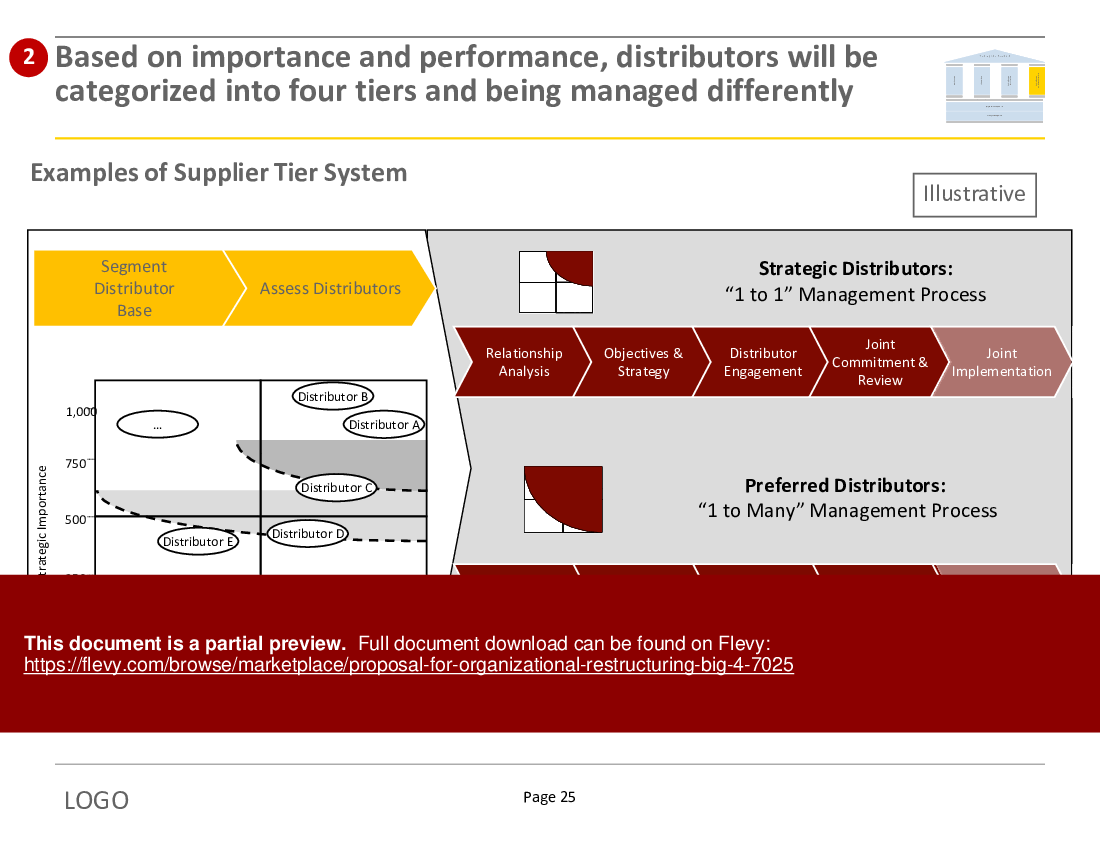
This PPT slide outlines a tiered system for categorizing distributors into 4 levels based on "Strategic Importance" and "Relationship Value." Distributors are classified as Strategic Distributors or Preferred Distributors. Strategic Distributors are managed through a "1 to 1" process, focusing on personalized engagement, relationship analysis, and joint commitment. Preferred Distributors utilize a "1 to Many" approach, emphasizing broader engagement strategies, goal setting, and community involvement. This tier system enables organizations to allocate resources efficiently, enhancing relationships with key distributors and maximizing overall performance. The matrix visually represents distributor positioning, simplifying data for decision-makers.
Source: Best Practices in Strategic Plan Example, Restructuring PowerPoint Slides: Proposal for Organizational Restructuring (Big 4) PowerPoint (PPTX) Presentation Slide Deck, Shaleen Sinha
The average daily rate of a McKinsey consultant is $6,625 (not including expenses). The average price of a Flevy document is $65.

Trusted by over 10,000+ Client Organizations
Since 2012, we have provided business templates to over 10,000 businesses and organizations of all sizes, from startups and small businesses to the Fortune 100, in over 130 countries.
"As a young consulting firm, requests for input from clients vary and it's sometimes impossible to provide expert solutions across a broad spectrum of requirements. That was before I discovered Flevy.com.
Through subscription to this invaluable site of a plethora of topics that are key and crucial to consulting, I
have been able to exceed expectations and deliver quality advice and solutions to my clients. The quality and expertise of the authors are exemplary and gives me great confidence to use as part of my service offerings.
I highly recommend this company for any consultant wanting to apply international best practice standards in their service offerings.
"
– Nishi Singh, Strategist and MD at NSP Consultants
"FlevyPro provides business frameworks from many of the global giants in management consulting that allow you to provide best in class solutions for your clients."
– David Harris, Managing Director at Futures Strategy
"As a consultant requiring up to date and professional material that will be of value and use to my clients, I find Flevy a very reliable resource.
The variety and quality of material available through Flevy offers a very useful and commanding source for information. Using Flevy saves me time, enhances my expertise and ends up being a good decision."
– Dennis Gershowitz, Principal at DG Associates
"I like your product. I'm frequently designing PowerPoint presentations for my company and your product has given me so many great ideas on the use of charts, layouts, tools, and frameworks. I really think the templates are a valuable asset to the job."
– Roberto Fuentes Martinez, Senior Executive Director at Technology Transformation Advisory
"As a small business owner, the resource material available from FlevyPro has proven to be invaluable. The ability to search for material on demand based our project events and client requirements was great for me and proved very beneficial to my clients. Importantly, being able to easily edit and tailor
the material for specific purposes helped us to make presentations, knowledge sharing, and toolkit development, which formed part of the overall program collateral. While FlevyPro contains resource material that any consultancy, project or delivery firm must have, it is an essential part of a small firm or independent consultant's toolbox.
"
– Michael Duff, Managing Director at Change Strategy (UK)
"As a niche strategic consulting firm, Flevy and FlevyPro frameworks and documents are an on-going reference to help us structure our findings and recommendations to our clients as well as improve their clarity, strength, and visual power. For us, it is an invaluable resource to increase our impact and value."
– David Coloma, Consulting Area Manager at Cynertia Consulting
"One of the great discoveries that I have made for my business is the Flevy library of training materials.
As a Lean Transformation Expert, I am always making presentations to clients on a variety of topics: Training, Transformation, Total Productive Maintenance, Culture, Coaching, Tools, Leadership Behavior, etc. Flevy
It is well worth the money to purchase these presentations. Sure, I have the knowledge and information to make my point. It is another thing to create a presentation that captures what I want to say. Flevy has saved me countless hours of preparation time that is much better spent with implementation that will actually save money for my clients.
"
– Ed Kemmerling, Senior Lean Transformation Expert at PMG
"As a consulting firm, we had been creating subject matter training materials for our people and found the excellent materials on Flevy, which saved us 100's of hours of re-creating what already exists on the Flevy materials we purchased."
Download our free compilation of 50+ Strategy & Transformation slides and templates. Frameworks include McKinsey 7-S, Balanced Scorecard, Disruptive Innovation, BCG Curve, and many more.