
This presentation is created by former McKinsey, BCG, Deloitte, EY, and Capgemini consultants. It explains the approach to Product Lifecycle Analysis utilized by global strategy consulting firms.
Editor Summary
34-slide PowerPoint presentation for Product Lifecycle Analysis developed by former McKinsey, BCG, Deloitte, EY, and Capgemini consultants, outlining a 5-phase approach to analyzing product lifecycles.
Read moreIncludes tools and templates such as the Bass Diffusion Model framework, Consumer Adoption Curve visualization, Lifecycle-Performance Factor Matrix template, and Strategic Positioning Matrix. Targeted at marketing executives, product managers, business analysts, and consultants. Used for launch planning, growth analysis, and competitive positioning. Sold as a digital download on Flevy.
Use this deck when organizations need to define stage-specific product marketing actions—during launches, when diagnosing stagnant products, or when assessing substitution risk and competitive position.
Marketing executives designing stage-specific launch and pricing plans using the Consumer Adoption Curve and stage-based strategies.
Product managers forecasting adoption and revenue for new releases using the Bass Diffusion Model and historical sales inputs.
Business analysts assessing market potential, competitors, and barriers via the Lifecycle-Performance Factor Matrix.
Consultants building strategic positioning recommendations and substitution risk analysis for clients.
The 5-phase, hypothesis-driven approach that combines segmentation, quantitative forecasting, and matrix-based competitive assessment mirrors methods used in strategy consulting at McKinsey, BCG, and Deloitte.
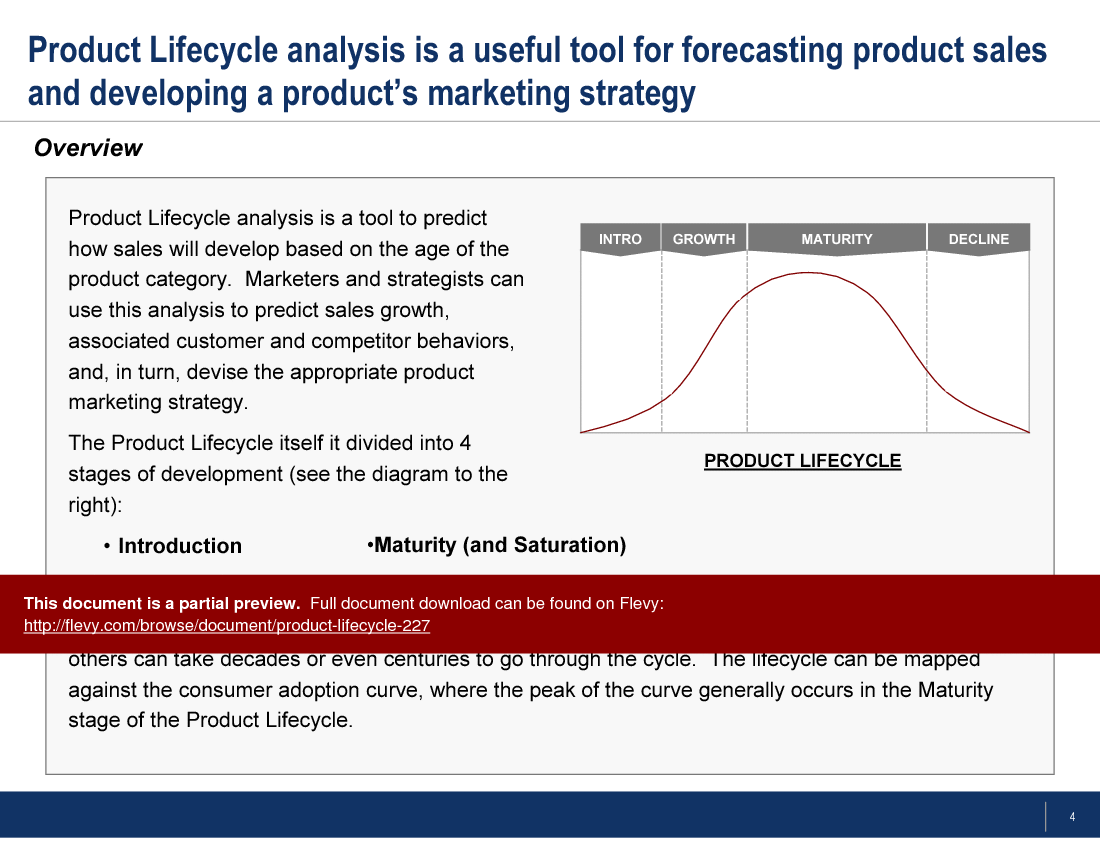
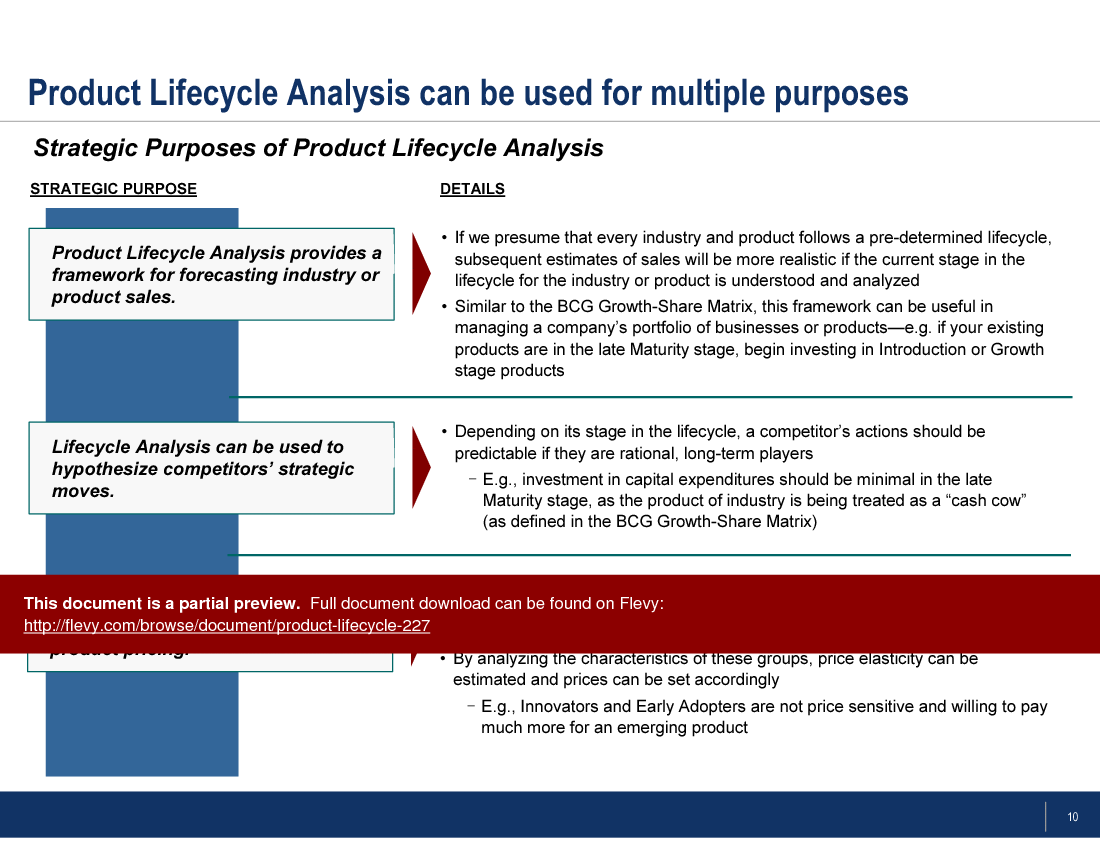
Product Lifecycle Analysis is an invaluable tool for developing a robust product marketing strategy. Marketers and strategists can use this analysis to predict sales growth, associated customer and competitor behaviors, and, in turn, devise the appropriate product marketing strategy.
The Product Lifecycle itself it divided into 4 stages of development:
• Introduction
• Growth
• Maturity (and Saturation)
• Decline (and Termination)
The length of each period varies tremendously. Some products have very short cycles, whereas others can take decades or even centuries to go through the cycle. The lifecycle can be mapped against the consumer adoption curve, where the peak of the curve generally occurs in the Maturity stage of the Product Lifecycle.
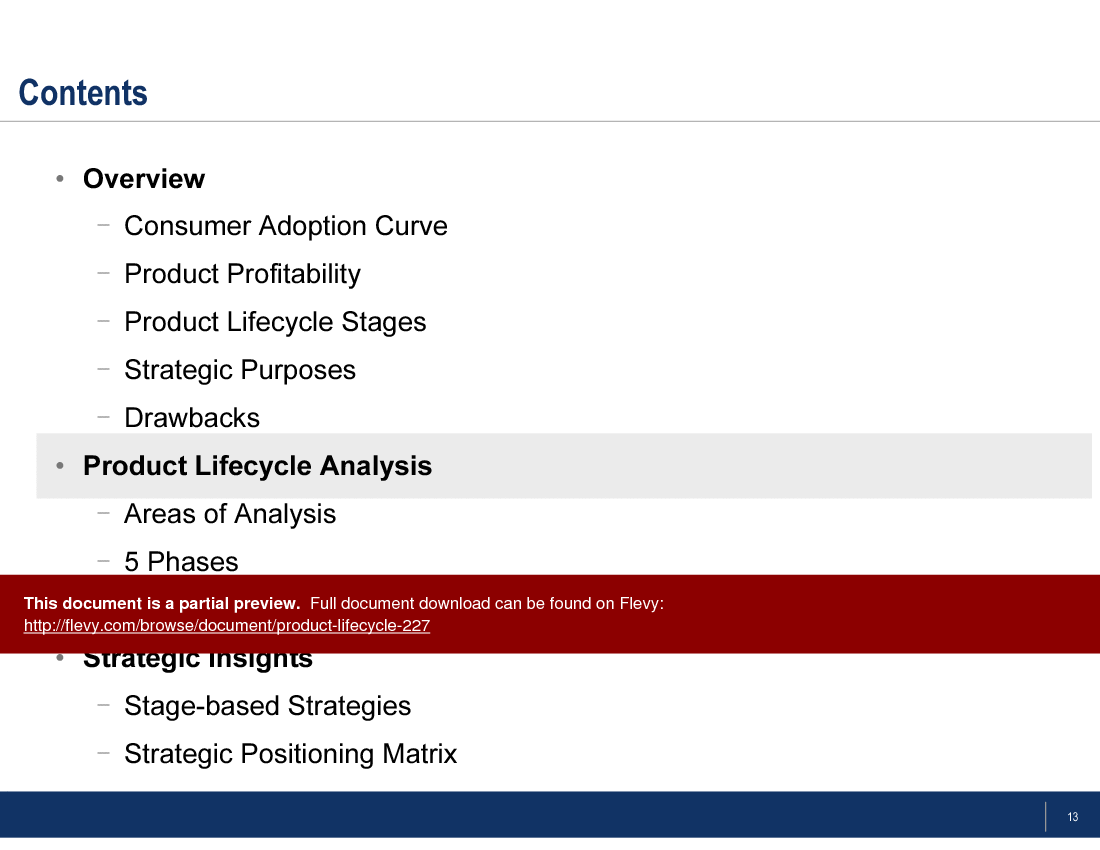
This document details a 5-phase approach to proper Product Lifecycle Analysis and draws out key strategic insights at each stage of the lifecycle. Additional concepts discussed include:
• Consumer Adoption Curve
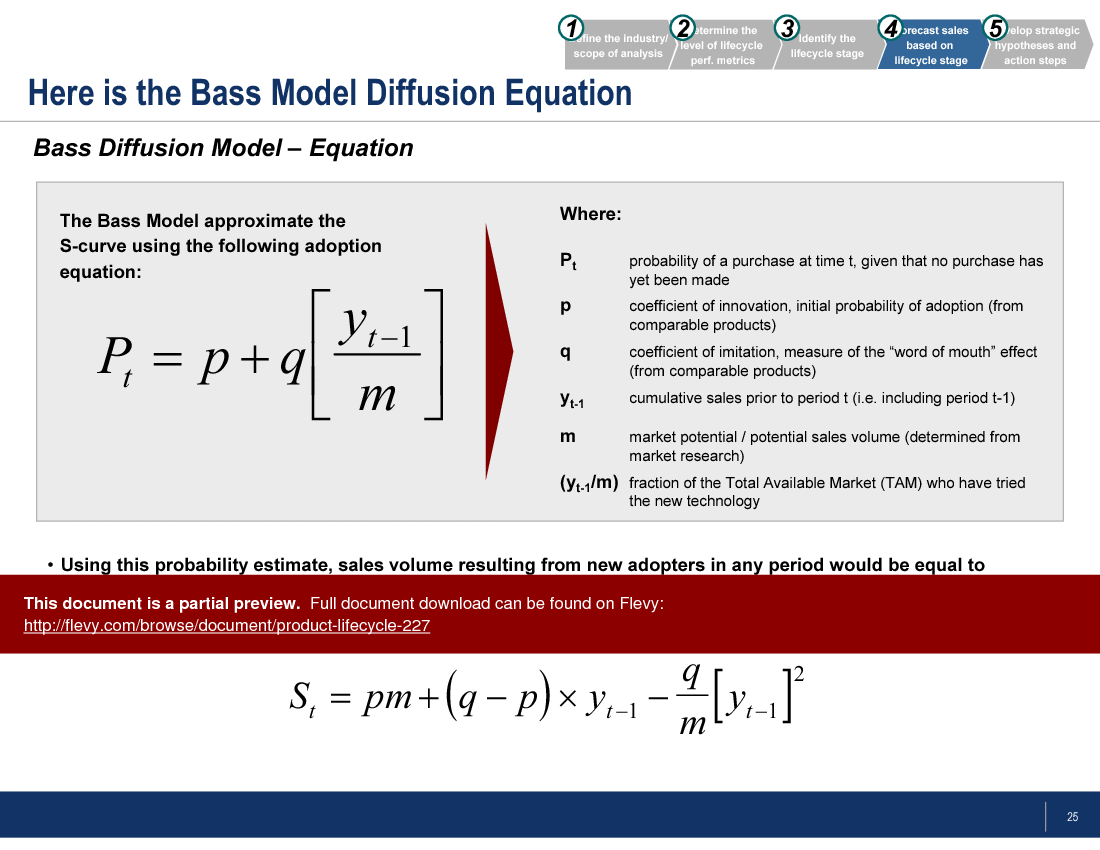
• Bass Diffusion Model
• Lifecycle-Performance Factor Matrix
• Strategic Positioning
• Substitution Analysis
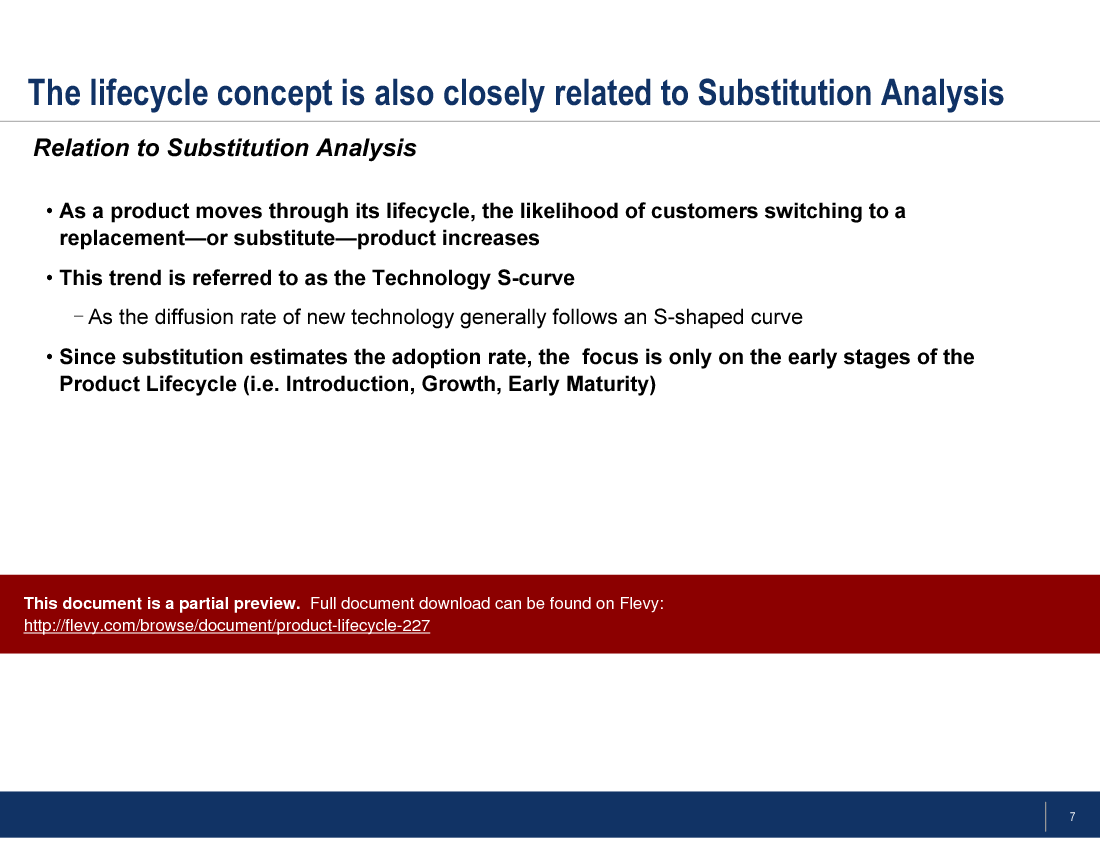
The document offers a detailed exploration of the Substitution Analysis, highlighting how the likelihood of customers switching to alternative products increases as a product progresses through its lifecycle. This is encapsulated in the Technology S-curve, which provides a framework for understanding the diffusion rate of new technologies. The focus is on the early stages of the Product Lifecycle, where strategic decisions can significantly impact market positioning and competitive advantage.
The Product Lifecycle Analysis also integrates the Lifecycle-Performance Factor Matrix, which helps in identifying key performance metrics across different stages. This matrix is crucial for understanding market potential, competitive dynamics, and strategic positioning. By leveraging this analysis, executives can make informed decisions on product development, marketing strategies, and resource allocation to maximize profitability and market share.
Got a question about the product? Email us at support@flevy.com or ask the author directly by using the "Ask the Author a Question" form. If you cannot view the preview above this document description, go here to view the large preview instead.
MARCUS OVERVIEW
This synopsis was written by Marcus [?] based on the analysis of the full 34-slide presentation.
Executive Summary
This Product Lifecycle Analysis presentation is designed to equip corporate executives and consultants with a structured framework for developing effective product marketing strategies. Created by former consultants from McKinsey, BCG, and Deloitte, this consulting-grade PowerPoint deck outlines a 5-phase approach to Product Lifecycle Analysis, detailing key strategic insights at each stage. Users will learn to forecast product sales, understand consumer behavior, and devise targeted marketing strategies, ultimately enhancing their decision-making processes.
Who This Is For and When to Use
• Marketing executives looking to refine product strategies
• Product managers tasked with lifecycle management
• Business analysts focused on market forecasting
• Consultants advising clients on product positioning
Best-fit moments to use this deck:
• During product launch planning to establish marketing strategies
• When analyzing existing products to identify growth opportunities
• In strategic meetings to assess competitive positioning and market dynamics
Learning Objectives
• Define the Product Lifecycle and its stages for effective analysis
• Identify key consumer segments using the Consumer Adoption Curve
• Develop strategic hypotheses based on lifecycle stages
• Forecast sales using historical data and the Bass Diffusion Model
• Analyze competitive dynamics through the Lifecycle-Performance Factor Matrix
• Establish pricing strategies tailored to each lifecycle stage
Primary Topics Covered
• Product Lifecycle Stages - The lifecycle is divided into 4 stages: Introduction, Growth, Maturity, and Decline, each requiring distinct marketing strategies.
• Consumer Adoption Curve - Illustrates how different consumer segments (Innovators, Early Adopters, etc.) adopt products over time, impacting marketing approaches.
• Bass Diffusion Model - A forecasting tool for estimating market penetration and sales based on consumer adoption patterns.
• Lifecycle-Performance Factor Matrix - A framework for assessing product performance against external factors at each lifecycle stage.
• Strategic Positioning - Insights into how to position products competitively based on their lifecycle stage and market dynamics.
• Substitution Analysis - Examines how the likelihood of consumers switching to substitute products increases as a product matures.
Deliverables, Templates, and Tools
• Lifecycle-Performance Factor Matrix template for assessing product performance
• Bass Diffusion Model framework for forecasting sales
• Consumer Adoption Curve visualization for identifying target segments
• Strategic Positioning Matrix for competitive analysis
• Guidelines for developing stage-specific marketing strategies
• Performance metrics checklist for validating lifecycle stages
Slide Highlights
• Overview of the Product Lifecycle and its stages
• Visual representation of the Consumer Adoption Curve
• Detailed Lifecycle-Performance Factor Matrix
• Examples of strategic options for each lifecycle stage
• Insights into the Bass Diffusion Model and its applications
• Strategic Positioning Matrix linking lifecycle stages with competitive positioning
Potential Workshop Agenda
Introduction to Product Lifecycle Analysis (60 minutes)
• Overview of the Product Lifecycle and its significance
• Discussion on the Consumer Adoption Curve and its implications
Sales Forecasting Techniques (90 minutes)
• Deep dive into the Bass Diffusion Model
• Hands-on exercise for forecasting sales using historical data
Strategic Planning Session (120 minutes)
• Group analysis of current products using the Lifecycle-Performance Factor Matrix
• Development of stage-specific marketing strategies
Customization Guidance
• Tailor the Consumer Adoption Curve to reflect your target market demographics
• Adjust the Lifecycle-Performance Factor Matrix based on industry-specific metrics
• Incorporate company-specific data into the Bass Diffusion Model for accurate forecasting
• Modify strategic recommendations based on competitive landscape analysis
• Update examples and case studies to align with current market trends
Secondary Topics Covered
• Impact of technological innovation on product lifecycles
• Market dynamics affecting product profitability
• Competitive strategies for each lifecycle stage
• Consumer behavior trends influencing product adoption
• Challenges in applying the Product Lifecycle framework
Topic FAQ
What are the typical stages of the product lifecycle and what do they imply for marketing strategies?
The Product Lifecycle is commonly divided into 4 stages: Introduction, Growth, Maturity, and Decline. Each stage calls for different marketing emphases—awareness and pricing tactics in Introduction, scaling and market share in Growth, defense or extension strategies in Maturity, and harvesting or termination in Decline. These are the 4 stages.
How does the Consumer Adoption Curve affect product targeting and messaging?
The Consumer Adoption Curve segments buyers (Innovators, Early Adopters, Early Majority, Late Majority, Laggards) to inform timing and messaging. Early-stage tactics target Innovators/Early Adopters, while later stages shift to mass-market channels; mapping these segments guides who to prioritize at each stage using the Consumer Adoption Curve visualization.
When should I use the Bass Diffusion Model for forecasting and what inputs are needed?
Use the Bass Diffusion Model to estimate adoption and sales trajectories for new products by combining historical sales data with parameters for innovation and imitation effects. It is suited for launch and early-growth forecasting and relies on historical time-series data and adoption assumptions tied to the Bass Diffusion Model.
What is a Lifecycle-Performance Factor Matrix and how does it help product assessment?
The Lifecycle-Performance Factor Matrix assesses a product’s performance against external factors—market potential, competitor count, barriers to entry, and growth rate—to identify its current lifecycle stage and strategic needs. It supports diagnostic analysis by mapping these comparisons in the Lifecycle-Performance Factor Matrix.
What should I look for when selecting a product lifecycle toolkit for my team?
Prioritize inclusion of segmentation visuals, quantitative forecasting tools, competitive-positioning templates, and stage-based strategy guidance so the toolkit supports both analysis and decisions. Check for resources such as a Bass Diffusion Model framework, Consumer Adoption Curve visualization, and a Strategic Positioning Matrix when evaluating options.
How do I assess the cost versus value of buying lifecycle templates versus building them internally?
Evaluate expected time savings, analytic rigor, and ease of customization against your internal capability to implement forecasting and matrices. A purchased pack that includes ready-to-use models—like a Bass Diffusion Model framework and Lifecycle-Performance Factor Matrix—can reduce build time and provide templates for immediate analysis.
I need to forecast sales for a new product launch—what practical steps and tools should I use?
Combine historical analogs or early sales data with an adoption segmentation analysis, then apply a diffusion model to generate scenarios. Practically, map target segments with the Consumer Adoption Curve and run forecasts using the Bass Diffusion Model to produce sales scenarios and sensitivity ranges.
My product is in maturity and facing rising substitution—what analyses help decide whether to defend, innovate, or exit?
Conduct Substitution Analysis to quantify switching risk, reassess positioning with a Strategic Positioning Matrix, and evaluate lifecycle performance metrics (market potential, competitors, barriers) to compare defensive, innovation, or exit options. These analyses are captured in Substitution Analysis and the Strategic Positioning Matrix.
Document FAQ
These are questions addressed within this presentation.
What is the Product Lifecycle?
The Product Lifecycle is a model that describes the stages a product goes through from introduction to decline, helping marketers strategize accordingly.
How does the Consumer Adoption Curve influence marketing strategies?
Understanding the Consumer Adoption Curve allows marketers to tailor their strategies to different consumer segments, optimizing outreach and engagement.
What is the Bass Diffusion Model?
The Bass Diffusion Model is a forecasting tool that estimates how new products are adopted over time, based on social interactions and prior customer behavior.

How can I apply the Lifecycle-Performance Factor Matrix?
Use the matrix to assess your product's performance against key external factors, helping to identify its current lifecycle stage and inform strategic decisions.
What are the strategic options during the Maturity stage?
During the Maturity stage, companies can maintain their position, defend against competitors, or innovate to extend the product's lifecycle.
What are the drawbacks of Product Lifecycle Analysis?
The framework assumes a predictable growth pattern for all products, which may not hold true in rapidly changing industries or for disruptive innovations.
How can I forecast sales using the Product Lifecycle?
Sales can be forecasted by analyzing historical sales data and adjusting growth rates based on the product's current lifecycle stage.
What is Substitution Analysis?
Substitution Analysis examines the likelihood of consumers switching to alternative products as a product moves through its lifecycle.
How do I determine the appropriate pricing strategy in the Introduction stage?
Pricing strategies can vary; you may choose to skim the market with high prices or penetrate the market with lower prices, depending on competition and demand.
What metrics should I consider when assessing lifecycle performance?
Key metrics include relative growth rate, market potential, number of competitors, and barriers to entry, among others.
Glossary
• Product Lifecycle - The stages a product goes through from introduction to decline.
• Consumer Adoption Curve - A model illustrating the rate at which consumers adopt new products.
• Bass Diffusion Model - A forecasting model for estimating product adoption based on social interactions.
• Lifecycle-Performance Factor Matrix - A tool for assessing product performance against external factors.
• Substitution Analysis - The study of consumer behavior regarding switching to alternative products.
• Strategic Positioning - The process of positioning a product competitively in the market.
• Market Penetration - The percentage of potential customers who have purchased a product.
• Sales Forecasting - The process of estimating future sales based on historical data.
• Lifecycle Stage - The current phase of a product within the Product Lifecycle.
• Innovation - The introduction of new ideas or products to the market.
• Market Dynamics - The factors that influence the behavior of buyers and sellers in a market.
• Competitive Positioning - The strategy of positioning a product against competitors in the market.
• Performance Metrics - Quantitative measures used to assess product performance.
• Strategic Hypotheses - Proposed strategies based on analysis of market conditions and product lifecycle.
• Market Share - The portion of a market controlled by a particular company or product.
• Product Profitability - The financial gain obtained from selling a product after costs are deducted.
• Growth Rate - The rate at which a product's sales increase over time.
• Market Segmentation - The process of dividing a market into distinct groups of buyers.
• Competitive Analysis - The assessment of competitors within a market to inform strategic decisions.
• Consumer Behavior - The study of how individuals make decisions to spend their resources on consumption-related items.
• Pricing Strategy - The method used to price a product based on market conditions and competition.
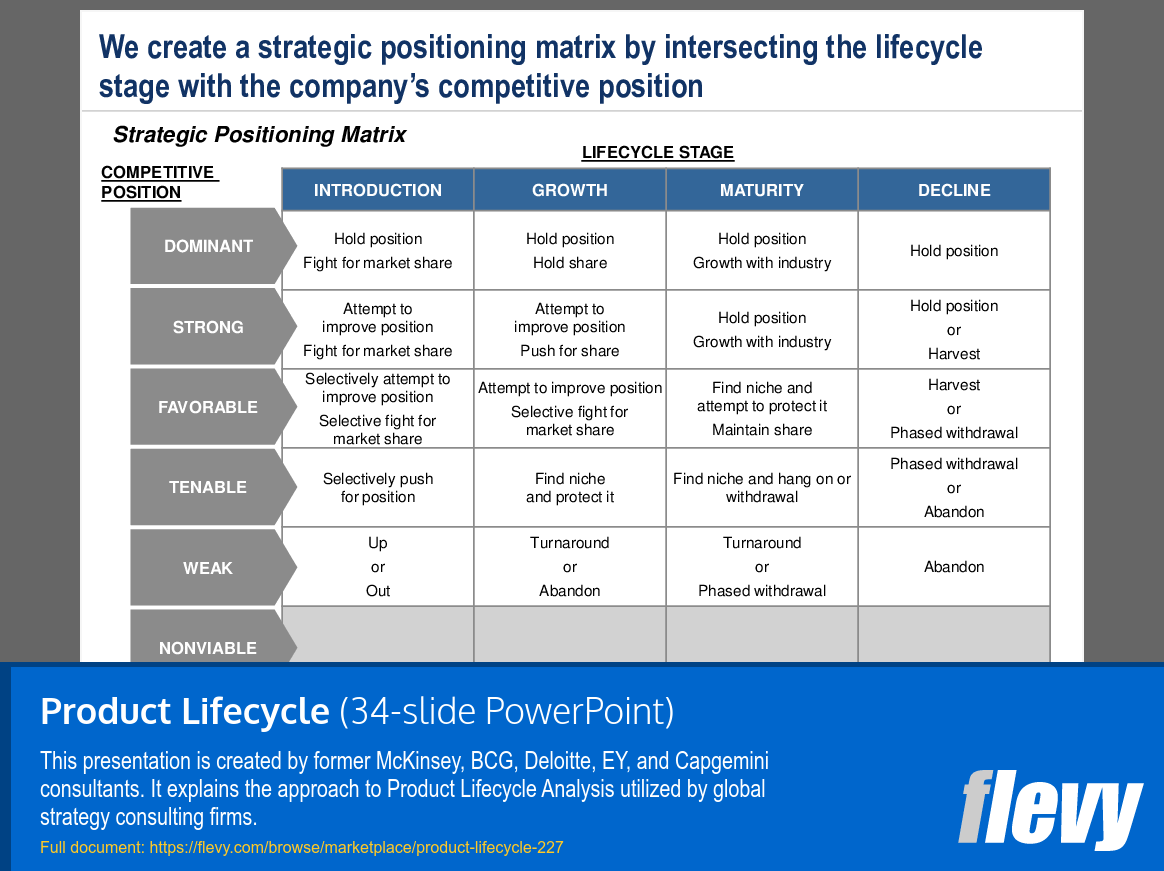
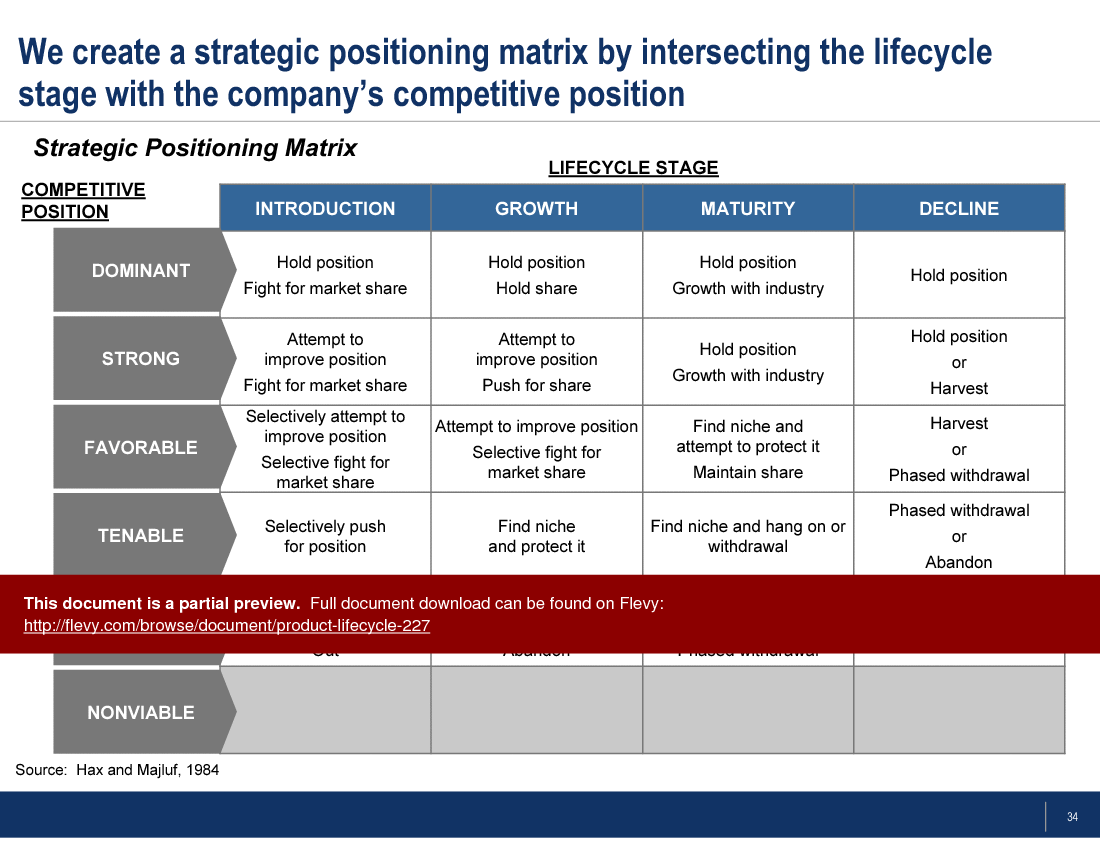
The Strategic Positioning Matrix integrates competitive position with product lifecycle stages: Introduction, Growth, Maturity, and Decline. In the Introduction stage, dominant firms hold their position while fighting for market share, whereas strong firms improve their position. Favorable positions suggest selective improvement, tenable positions recommend a selective push, and weak positions may require market entry or exit considerations. Nonviable positions warrant no further investment.
In the Growth stage, dominant firms maintain their position, while strong firms push for greater market share. Favorable positions focus on improvement, tenable positions find and protect niches, and weak positions may still need to decide on pushing or exiting.
During the Maturity stage, dominant and strong positions grow with the industry, while favorable positions protect niches. Weak positions may consider a turnaround, and nonviable positions are unsustainable.
In the Decline stage, strategies range from holding positions to harvesting or phased withdrawal, especially for weaker and nonviable positions. This matrix guides executives in aligning strategic initiatives with market standing and product lifecycle stages.
This PPT slide outlines 3 primary areas of Product Lifecycle Analysis. First, it emphasizes determining the applicability of the lifecycle concept to the product, involving the collection of historical and current sales data, as well as forecasts. Statistical and graphical analyses are suggested to visualize sales trends.
Next, forecasting sales development is crucial, focusing on predicting potential sales levels, exemplified by household appliances. This includes estimating new households, purchase likelihood, and replacement rates, with customer surveys as a method for gathering consumer uptake data.
Finally, predicting the timing of future developments involves analyzing historical product behavior and comparing it with similar products. Insights from this analysis inform strategic decisions on product launches, marketing strategies, and resource allocation. This structured approach aids organizations in optimizing product strategies aligned with market dynamics.
This PPT slide visualizes the Product Lifecycle, highlighting profitability across 4 stages: Introduction, Growth, Maturity, and Decline. In the Introduction phase, sales are low, resulting in minimal cash flow and profits. The Growth stage sees significant sales increases, improved cash flow, and rising profits, necessitating investment in marketing and distribution. During Maturity, sales peak and stabilize; cash flow remains healthy,, but profits may decline due to competition and market saturation, requiring strategic adjustments to maintain market share. In the Decline stage, sales sharply drop, leading to reduced cash flow and profits, prompting actions such as product innovation or market repositioning. Lifecycle analysis assumes predictable sales and profitability patterns, guiding strategic decision-making and enhancing operational efficiency.
This PPT slide outlines 3 strategic options for businesses in the Maturity stage of the product lifecycle. The first strategy, Maintenance, focuses on sustaining market position through targeted advertising, promotions, and pricing strategies when threats from new competitors are low. The second strategy, Defense, is essential when existing competitors change their marketing tactics, requiring adjustments in advertising, product performance, and pricing to maintain profitability. The third strategy, Innovation, aims to expand the market by developing new product variations or significant innovations, including "flankers" to capture different market segments. Identifying core competencies is crucial to navigate potential industry consolidation at the end of the Maturity stage.
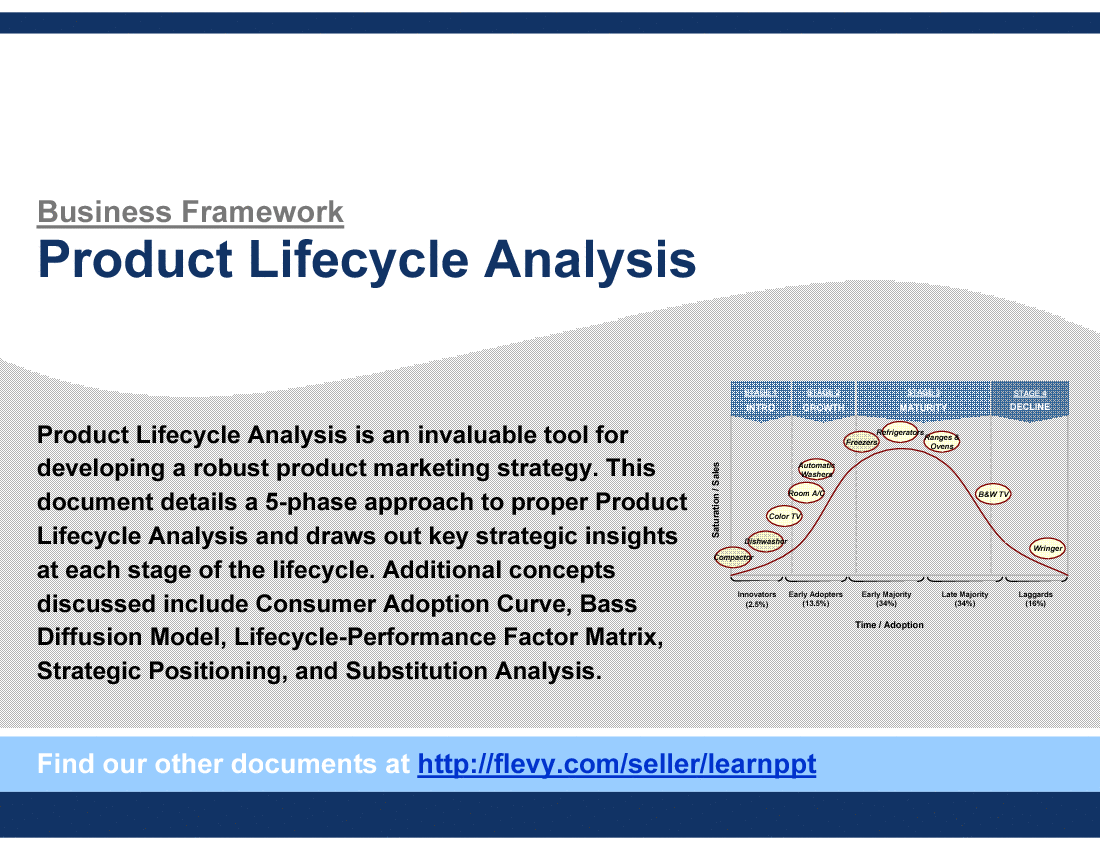
This PPT slide visualizes the product lifecycle of household durables, categorizing products into 4 stages: Introduction, Growth, Maturity, and Decline. In the Introduction stage, early market entrants like Compactors and Dishwashers are highlighted. The Growth stage features Automatic Washers and Room Air Conditioners, indicating broader acceptance. The Maturity stage showcases established products such as Refrigerators and Ranges & Ovens, reflecting significant market penetration. The "Crossing the Chasm" concept is emphasized, marking the transition from early adopters to the early majority, critical for sustained growth through strategic marketing. The Decline stage includes products like B&W TVs and Wringer washers, signaling a downturn in sales and the need for innovation to maintain market relevance.
This PPT slide illustrates the relationship between the Product Lifecycle and the Consumer Adoption Curve, consisting of 4 stages: Introduction, Growth, Maturity, and Decline. Each stage corresponds to consumer segments, from Innovators (2.5%) to Laggards (16%). The Introduction stage focuses on attracting Innovators and Early Adopters to establish market presence. The Growth stage sees increased adoption among Early Majority consumers, requiring strategic marketing for revenue growth. The Maturity stage involves retaining customers and differentiating from competitors as the market saturates. The critical point of "Crossing the Chasm" marks the transition from Early Adopters to Early Majority, necessitating targeted strategies. The Decline stage indicates decreased market interest, prompting decisions to innovate, discontinue, or reposition the product. Understanding consumer behavior throughout the lifecycle is essential for developing effective marketing strategies.
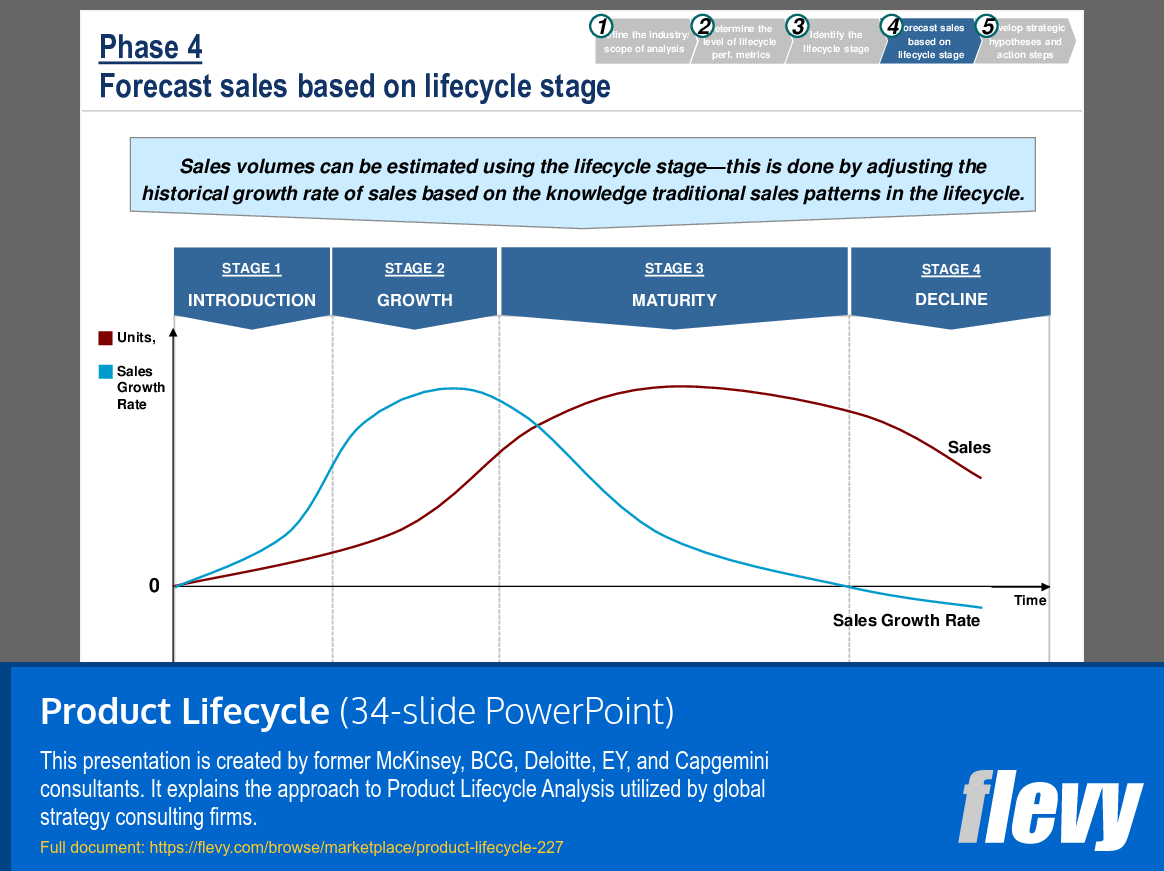
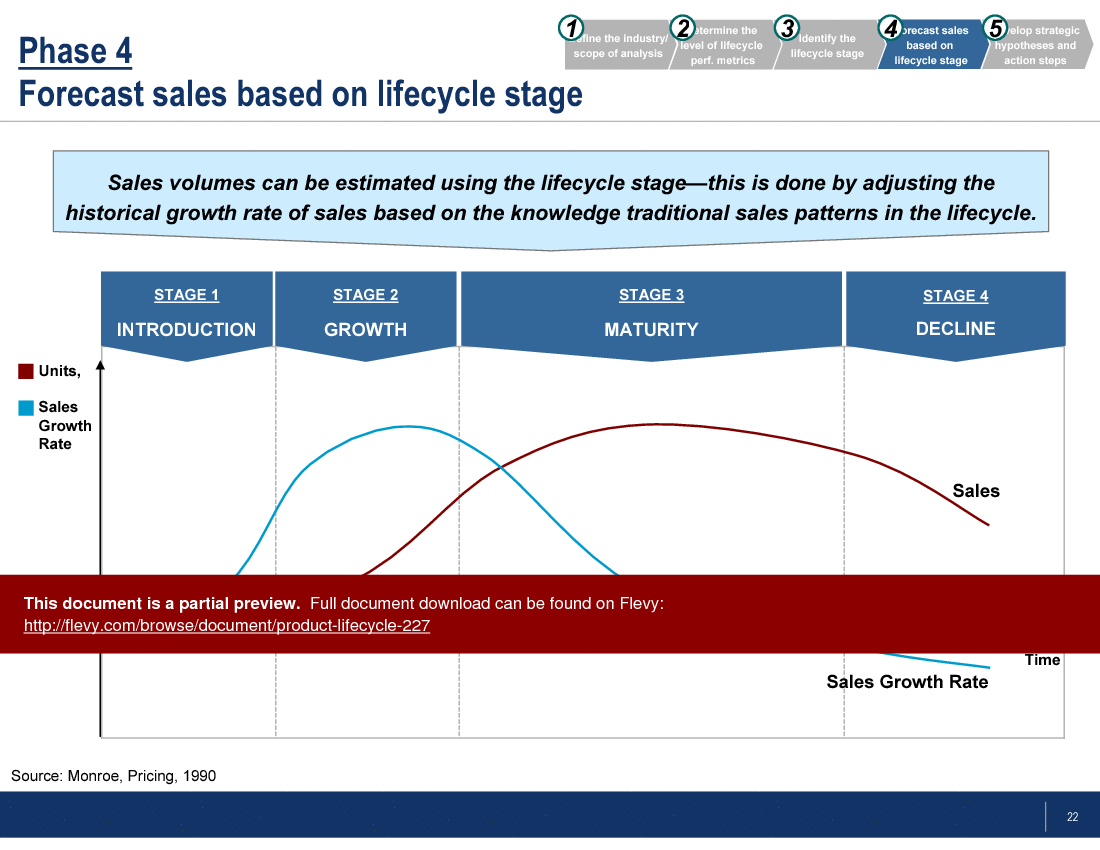
This PPT slide presents a framework for forecasting sales based on the product lifecycle, categorized into 4 phases: Introduction, Growth, Maturity, and Decline. In the Introduction phase, sales volumes are low, but gradually increase as market acceptance grows. The Growth stage sees a significant uptick in sales and peak growth rates due to increased market penetration. During Maturity, growth stabilizes, and sales rise at a slower pace, indicating market saturation and the need for strategic adjustments. In the Decline stage, sales decrease, and the growth rate turns negative, prompting companies to innovate or reposition offerings to maintain market relevance. Analyzing historical sales patterns and growth rates enables organizations to anticipate market dynamics and adjust strategies effectively throughout the product lifecycle.
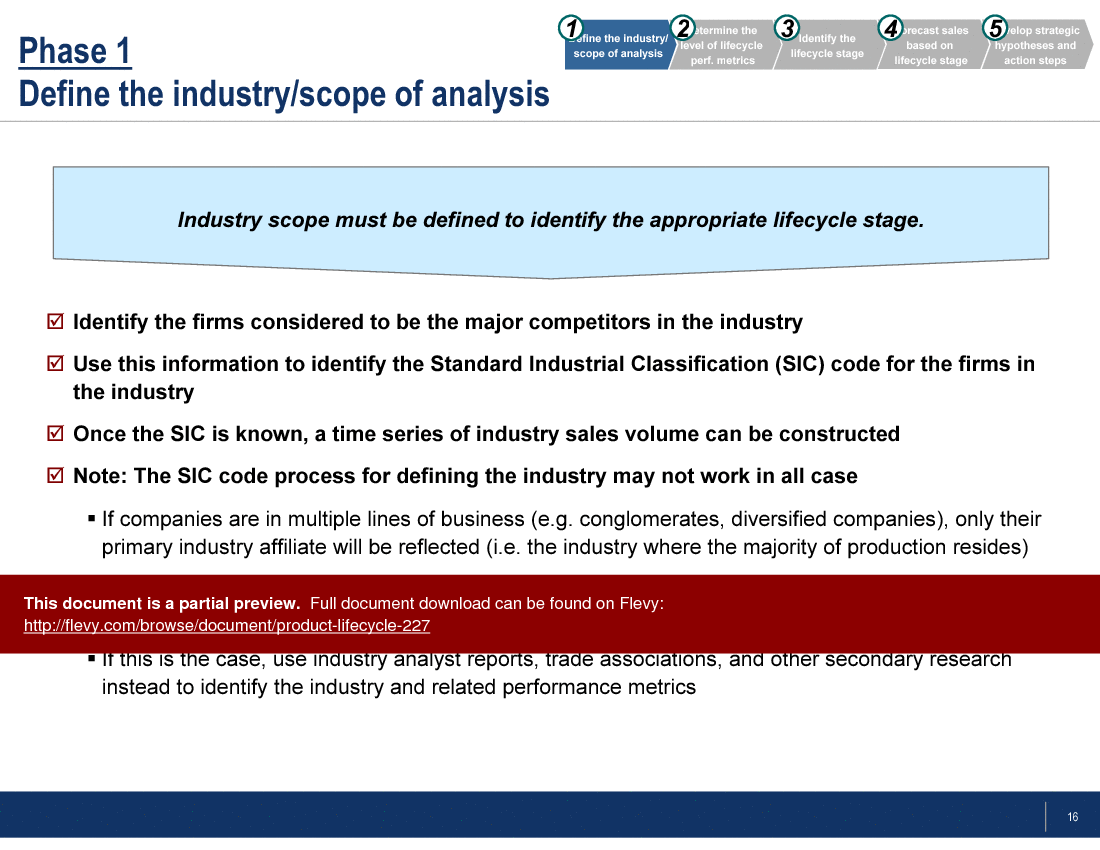
This PPT slide outlines a structured approach to Product Lifecycle Analysis, divided into 5 phases. The first phase focuses on defining the industry and scope, emphasizing the importance of identifying the Standard Industrial Classification (SIC) code for targeted analysis. The second phase evaluates product performance against 7 external factors, including market trends and competitive dynamics, ensuring metrics are validated with reliable data. The third phase develops a Lifecycle-Performance Factor Matrix to assess the product's lifecycle stage against generic performance metrics. The fourth phase forecasts sales using the Bass Diffusion Model, particularly for new technologies. Finally, the fifth phase culminates in developing strategic hypotheses and actionable steps based on insights from previous phases, guiding informed decision-making.
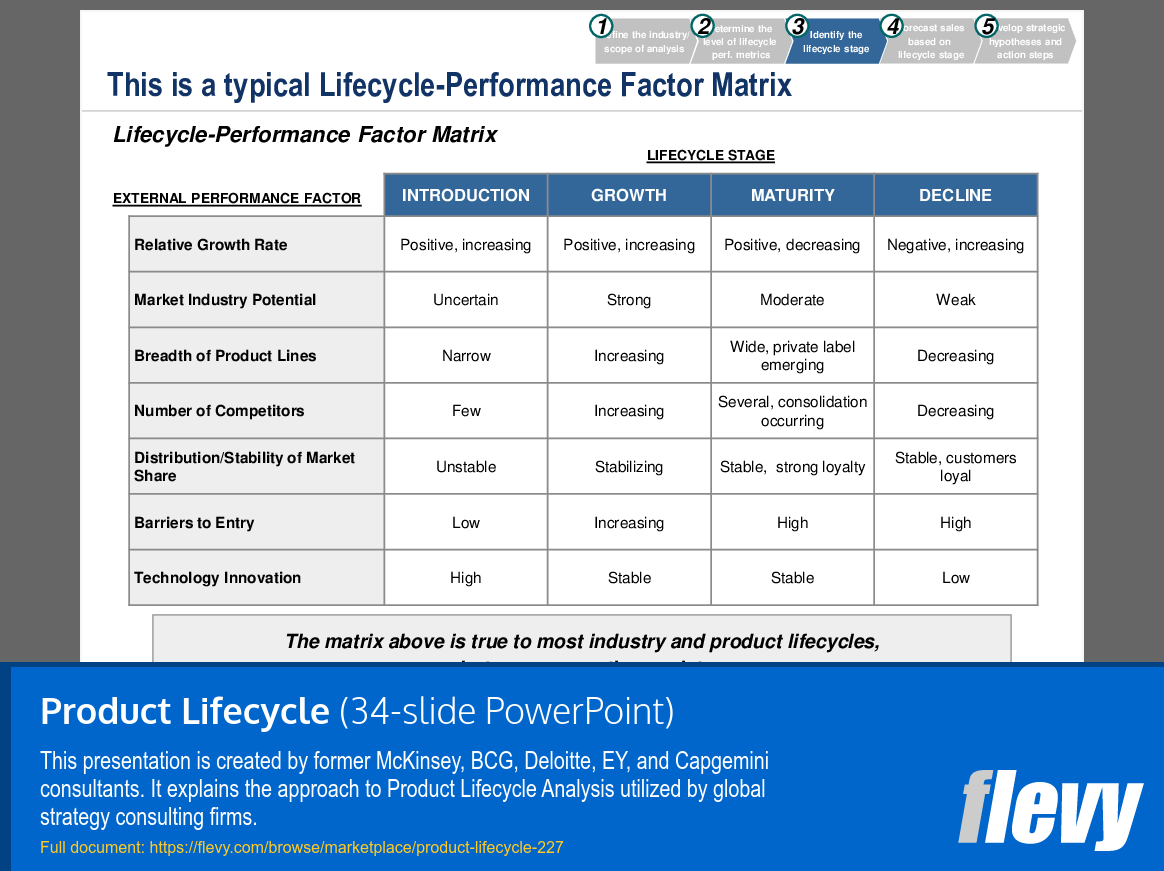
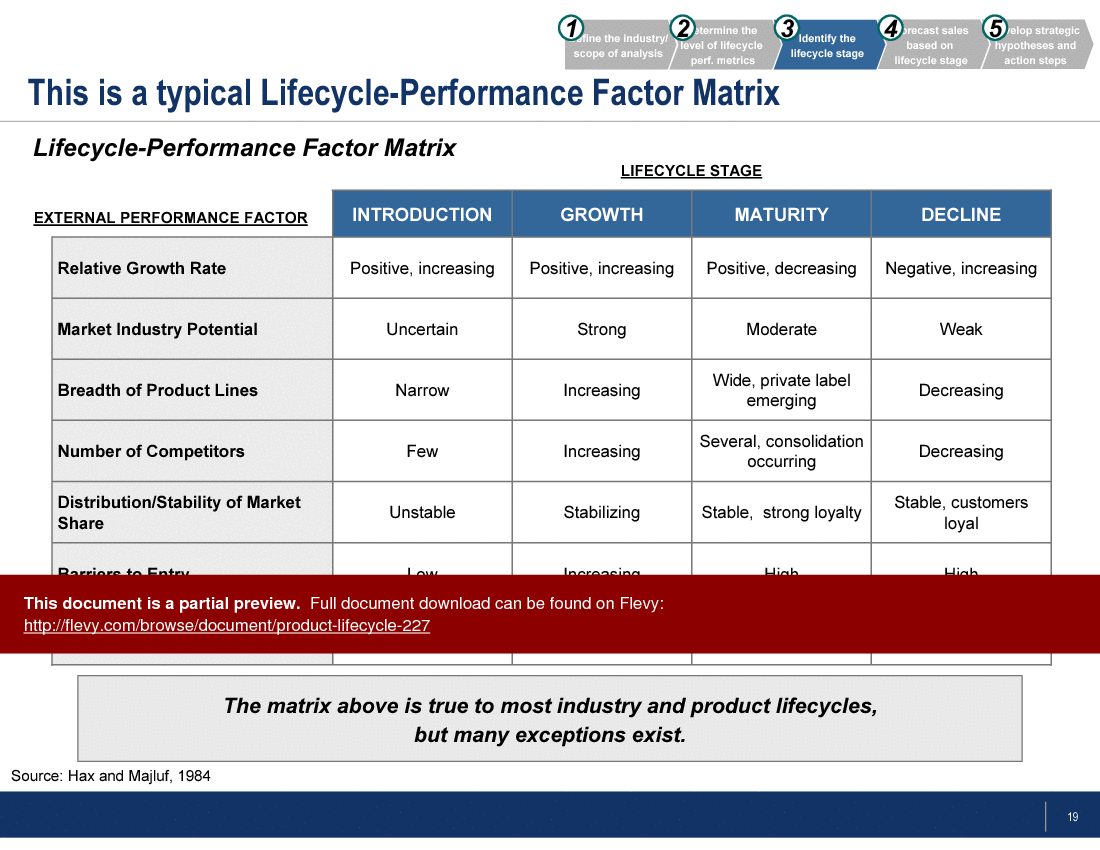
The Lifecycle-Performance Factor Matrix evaluates external performance factors across product lifecycle stages: Introduction, Growth, Maturity, and Decline. The Relative Growth Rate shows initial positive trends, but declines during Maturity, indicating challenges in sustaining growth. Market Industry Potential starts uncertain, strengthens in Growth, and moderates in Maturity, reflecting changing market demand dynamics. Breadth of Product Lines expands during Growth, indicating diversification, while in Maturity, increased competition from private labels emerges. The Number of Competitors rises through Growth and Maturity, leading to a crowded market. Distribution and Stability of Market Share stabilizes in Growth and Maturity, suggesting brand loyalty develops over time, but wanes in Decline. Barriers to Entry are low initially, increasing through Growth and remaining high in Maturity, deterring new entrants. Technology Innovation is high in Introduction, stabilizes in Growth and Maturity,, but drops in Decline, indicating slowed innovation as the product ages.
This presentation is created by former McKinsey, BCG, Deloitte, EY, and Capgemini consultants. It explains the approach to Product Lifecycle Analysis utilized by global strategy consulting firms.
We are a team of management consultants trained by top tier global consulting firms (including McKinsey, BCG, Deloitte, EY, Capgemini) with a collective experience of several decades. We specialize in business frameworks based on real-life consulting engagements.
We have served 100s of clients that range from Fortune 500 companies to tech startups to
... [read more] $1B+ private companies.
Utilize our consulting frameworks to apply structured thinking & analysis to address your business challenges, uncover strategic insights, and implement workable solutions. Our PowerPoint presentations follow traditional consulting slide design formats, starting with a clear slide headline. Easily customize and repurpose our slides for your own business presentations.
Beyond business frameworks & methodologies, we also offer PowerPoint templates and other business templates. Our templates are professionally designed and have been used in thousands of deliverables & work products across hundreds of clients.
The average daily rate of a McKinsey consultant is $6,625 (not including expenses). The average price of a Flevy document is $65.
Trusted by over 10,000+ Client Organizations
Since 2012, we have provided business templates to over 10,000 businesses and organizations of all sizes, from startups and small businesses to the Fortune 100, in over 130 countries.
"I have used Flevy services for a number of years and have never, ever been disappointed. As a matter of fact, David and his team continue, time after time, to impress me with their willingness to assist and in the real sense of the word. I have concluded in fact
that it is not at all just a repository of documents/resources but, in the way that David and his team manage the firm, it is like dealing with consultants always ready to assist, advise and direct you to what you really need, and they always get it right.
I am an international hospitality accomplished senior executive who has worked and lived during the past 35 years in 23 countries in 5 continents and I can humbly say that I know what customer service is, trust me.
Aside from the great and professional service that Flevy's team provide, their wide variety of material is of utmost great quality, professionally put together and most current.
Well done Flevy, keep up the great work and I look forward to continue working with you in the future and to recommend you to a variety of colleagues around the world.
"
– Roberto Pelliccia, Senior Executive in International Hospitality
"FlevyPro provides business frameworks from many of the global giants in management consulting that allow you to provide best in class solutions for your clients."
– David Harris, Managing Director at Futures Strategy
"As an Independent Management Consultant, I find Flevy to add great value as a source of best practices, templates and information on new trends. Flevy has matured and the quality and quantity of the library is excellent. Lastly the price charged is reasonable, creating a win-win value for
the customer, Flevy and the various authors. This is truly a service that benefits the consulting industry and associated clients. Thanks for providing this service.
"
– Jim Schoen, Principal at FRC Group
"FlevyPro has been a brilliant resource for me, as an independent growth consultant, to access a vast knowledge bank of presentations to support my work with clients. In terms of RoI, the value I received from the very first presentation I downloaded paid for my subscription many times over! The
quality of the decks available allows me to punch way above my weight – it's like having the resources of a Big 4 consultancy at your fingertips at a microscopic fraction of the overhead.
"
– Roderick Cameron, Founding Partner at SGFE Ltd
"As a consulting firm, we had been creating subject matter training materials for our people and found the excellent materials on Flevy, which saved us 100's of hours of re-creating what already exists on the Flevy materials we purchased."
– Michael Evans, Managing Director at Newport LLC
"One of the great discoveries that I have made for my business is the Flevy library of training materials.
As a Lean Transformation Expert, I am always making presentations to clients on a variety of topics: Training, Transformation, Total Productive Maintenance, Culture, Coaching, Tools, Leadership Behavior, etc. Flevy
It is well worth the money to purchase these presentations. Sure, I have the knowledge and information to make my point. It is another thing to create a presentation that captures what I want to say. Flevy has saved me countless hours of preparation time that is much better spent with implementation that will actually save money for my clients.
"
– Ed Kemmerling, Senior Lean Transformation Expert at PMG
"As a niche strategic consulting firm, Flevy and FlevyPro frameworks and documents are an on-going reference to help us structure our findings and recommendations to our clients as well as improve their clarity, strength, and visual power. For us, it is an invaluable resource to increase our impact and value."
– David Coloma, Consulting Area Manager at Cynertia Consulting
"The wide selection of frameworks is very useful to me as an independent consultant. In fact, it rivals what I had at my disposal at Big 4 Consulting firms in terms of efficacy and organization."

– Julia T., Consulting Firm Owner (Former Manager at Deloitte and Capgemini)
Download our free compilation of 50+ slides and templates on Organizational Design, Change Management, and Corporate Culture. Methodologies include ADKAR, Burke-Litwin Change Model, McKinsey 7-S, Competing Values Framework, etc.