
According to McKinsey, structured problem solving can be used to address almost any complex challenge in business or public policy. Consulting deliverables typically take the form of PowerPoint presentations.
AIM:
1. This document explains how to identify, define and solve problems in a structured manner and communicate findings effectively to the client. It has a strong focus on hypothesis generation techniques utilized by the world's leading consulting firm.
2. It introduces tools that consultants can add to their toolkit of skills and use for many types of problem-solving and is suitable for anyone who is looking for a robust methodology to solve complex problems.
CONTENTS
The Problem Solving and Decision Making deck outlines the following topic:
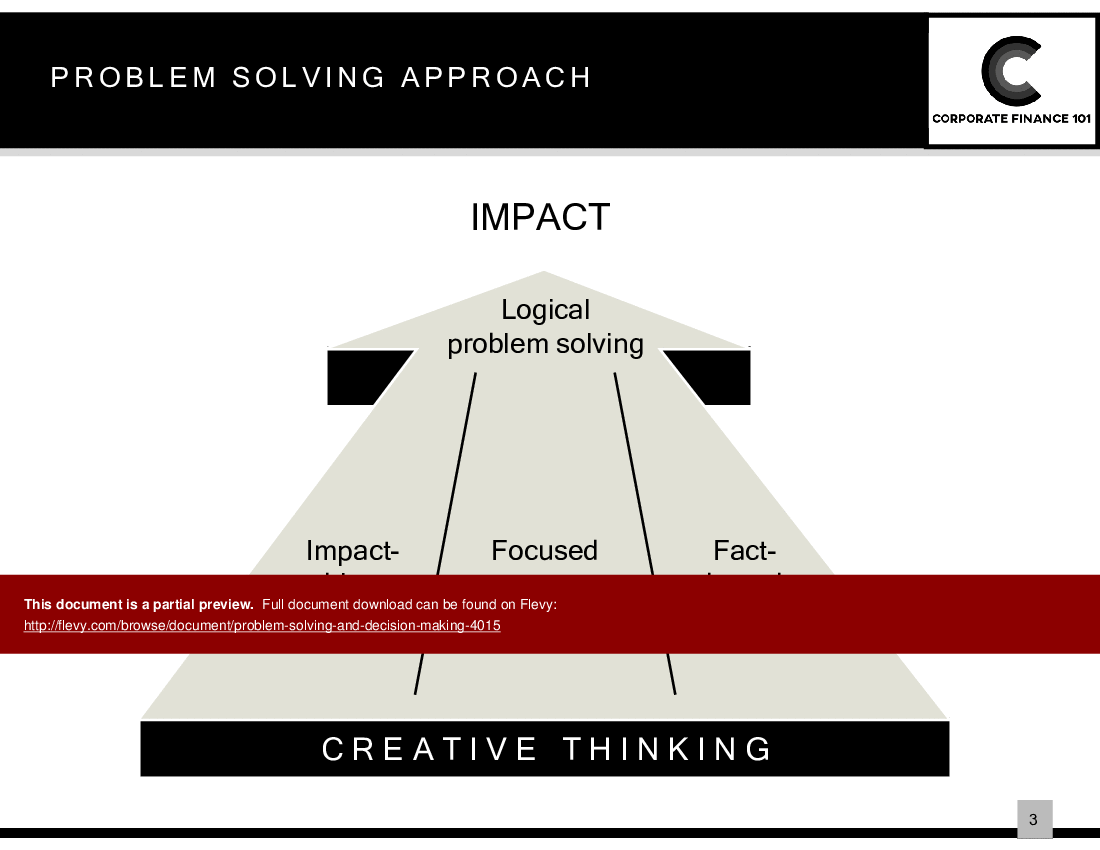
1. The key principles of the logical problem-solving approach – Impact driven, focused and fact-based
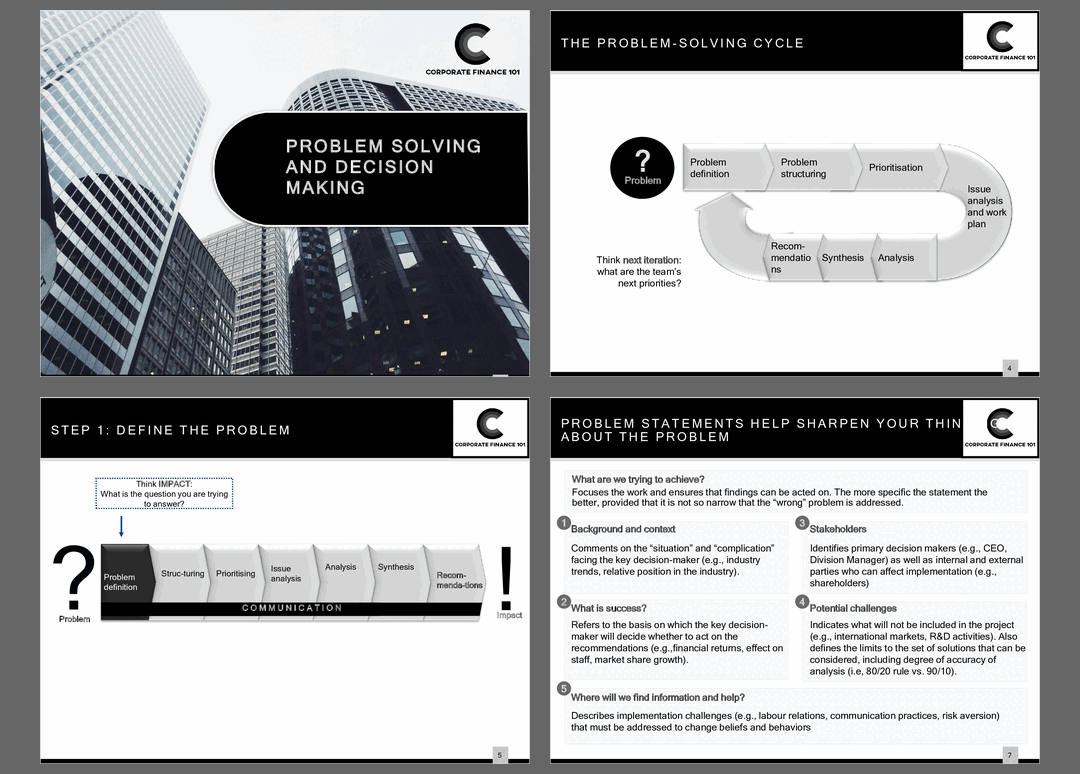
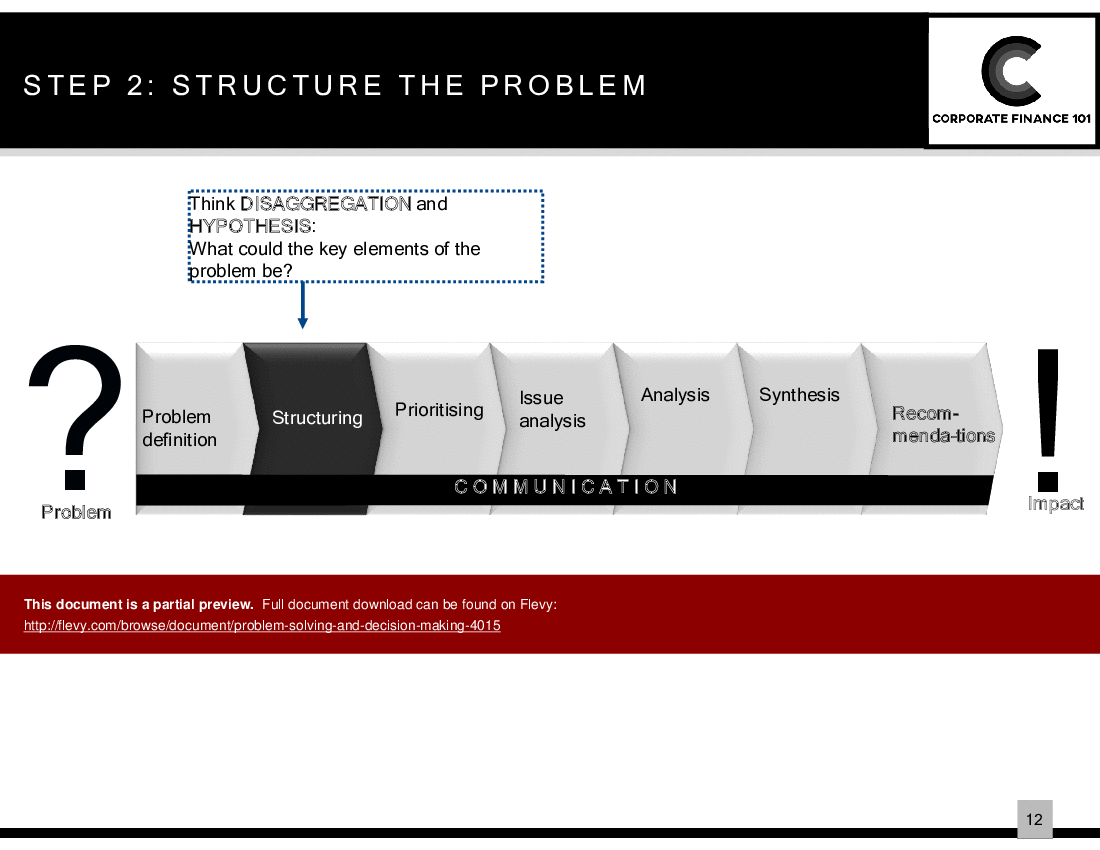
2. The problem-solving cycle – problem definition, problem structuring, prioritization, issue analysis and work plan, analysis, synthesis, and recommendations
3. Problem statement "framework"
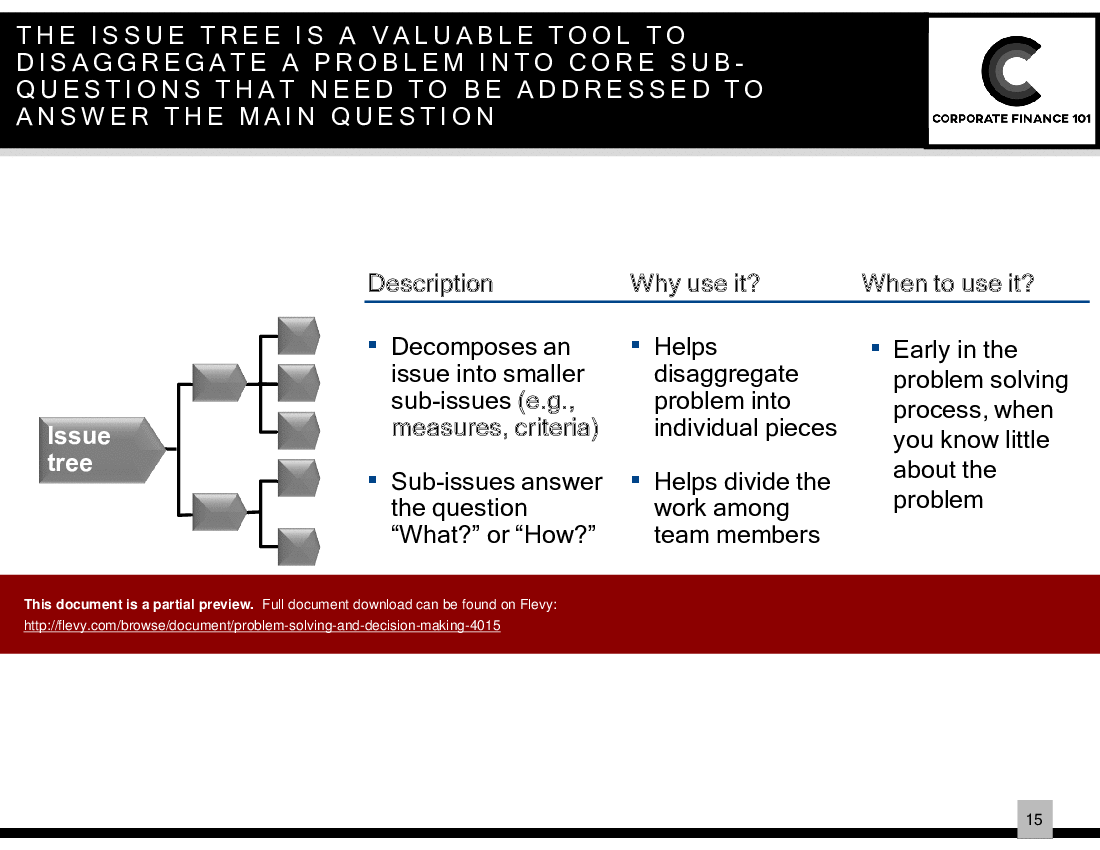
4. What is an issue tree and why is it important?
5. Prioritization and methods for prioritizing
6. Synthesis and it's objective
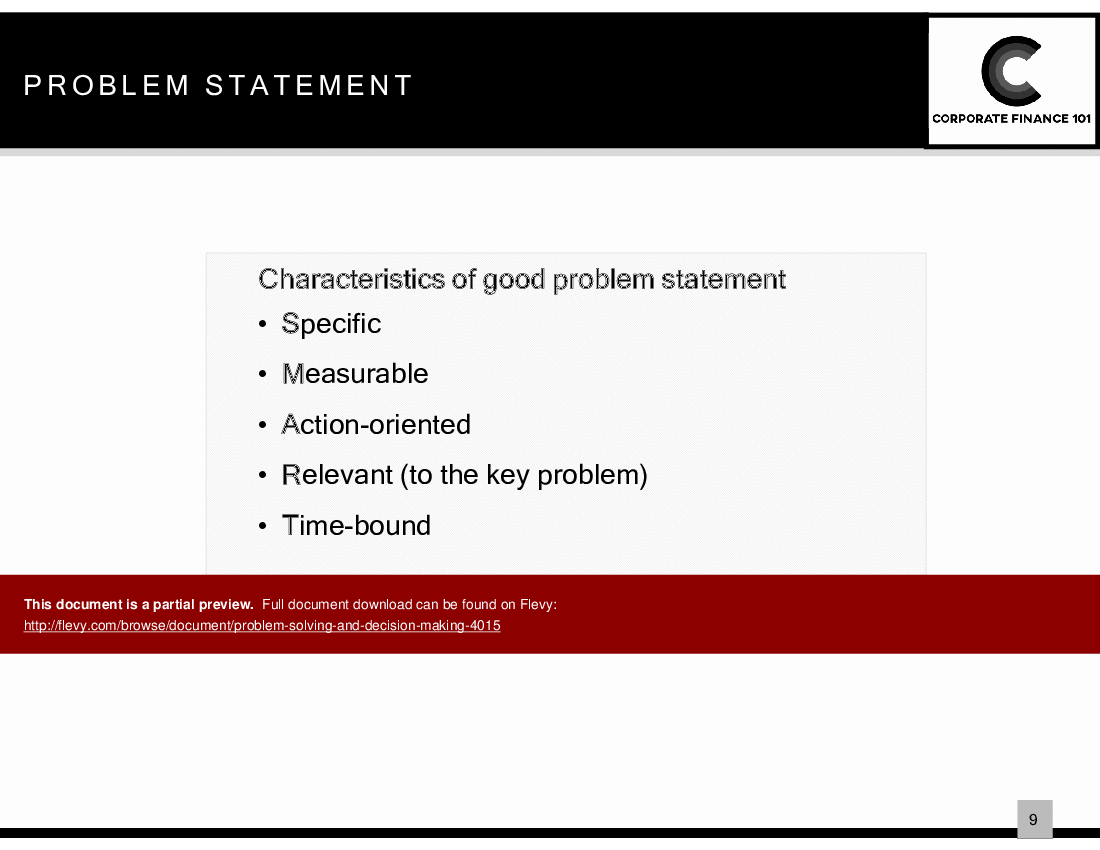
This deck emphasizes the importance of a well-defined problem statement, highlighting characteristics such as specificity, measurability, action orientation, relevance, and time-bound criteria. It guides you through the process of structuring the problem, encouraging disaggregation and hypothesis generation to identify key elements. The issue tree is presented as a crucial tool for breaking down complex problems into manageable sub-issues, facilitating efficient analysis and team collaboration.
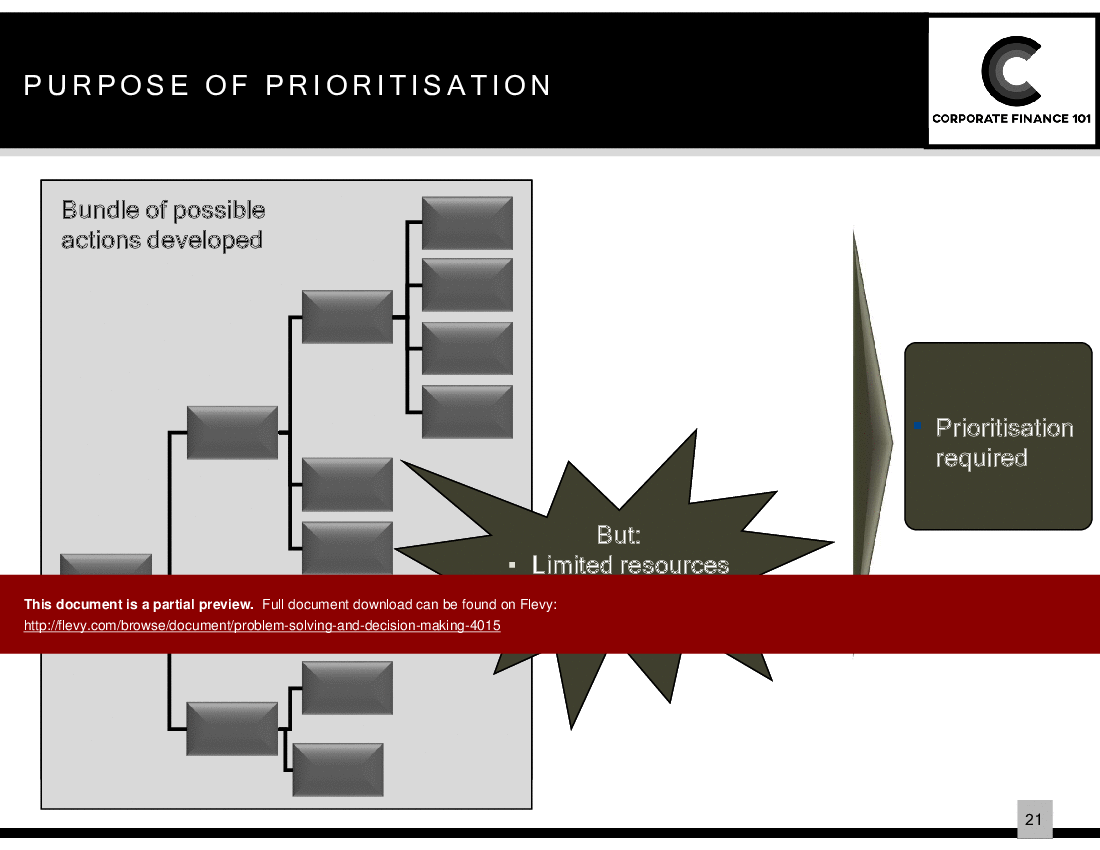
The PPT also delves into prioritization, stressing the need to focus on high-impact actions given limited resources. It covers the entire problem-solving cycle, from problem definition to developing actionable recommendations. The distinction between summary and synthesis is clarified, ensuring that your conclusions are not just a collection of facts, but a coherent, actionable strategy. This resource is designed to equip you with a comprehensive framework for tackling intricate business challenges.
Got a question about the product? Email us at support@flevy.com or ask the author directly by using the "Ask the Author a Question" form. If you cannot view the preview above this document description, go here to view the large preview instead.
Executive Summary
This presentation on Problem Solving and Decision Making offers a structured approach to enhance problem-solving capabilities, utilizing methodologies developed by ex-McKinsey consultants. It emphasizes the importance of defining problems clearly, structuring them effectively, and prioritizing issues to facilitate efficient decision-making. By employing these techniques, corporate executives and consultants can achieve faster answers, optimize resource usage, and significantly impact their business outcomes.
Who This Is For and When to Use
• Corporate executives seeking to improve decision-making processes
• Consultants aiming to enhance their problem-solving frameworks
• Project managers responsible for strategic initiatives
• Business analysts focused on data-driven insights
Best-fit moments to use this deck:
• During strategic planning sessions to define and structure complex problems
• In workshops aimed at enhancing team problem-solving skills
• When preparing for critical decision-making meetings
Learning Objectives
• Define the core problem using clear and actionable statements
• Structure complex problems into manageable components
• Prioritize issues effectively to allocate resources efficiently
• Analyze data to support decision-making processes
• Synthesize findings into actionable recommendations
• Communicate insights and recommendations clearly to stakeholders
Table of Contents
• Importance of Good Problem-Solving and Decision-Making (page 2)
• Objectives and Approach (page 3)
• Problem-Solving Approach (page 4)
• The Problem-Solving Cycle (page 5)
• Step 1: Define the Problem (page 6)
• Step 2: Structure the Problem (page 12)
• Step 3: Prioritization (page 21)
• Step 4: Issue Analysis and Work Plan (page 24)
• Step 5: Analysis (page 25)
• Step 6: Synthesize Findings (page 26)
• Step 7: Develop Recommendations (page 30)
Primary Topics Covered
• Importance of Good Problem-Solving - Effective problem-solving leads to faster answers, better resource utilization, and increased business impact.
• Problem-Solving Cycle - A structured process that includes defining, structuring, prioritizing, analyzing, synthesizing, and recommending actions.
• Defining the Problem - Establishing a clear problem statement that is specific, measurable, action-oriented, relevant, and time-bound.
• Structuring the Problem - Breaking down complex issues into manageable components using tools like issue trees.
• Prioritization - Techniques for determining which issues to address first based on impact and feasibility.
• Synthesis of Findings - Drawing conclusions from analysis to inform decision-making and recommendations.
Deliverables, Templates, and Tools
• Problem statement template for clear definition
• Issue tree model for structuring complex problems
• Prioritization matrix for assessing issues
• Analysis framework for data evaluation
• Synthesis guide for summarizing findings
• Recommendation format for presenting actionable insights
Slide Highlights
• Overview of the problem-solving cycle illustrating each step in the process
• Examples of effective problem statements and their characteristics
• Visual representation of an issue tree to aid in problem structuring
• Prioritization techniques and methods for efficient resource allocation
• Synthesis strategies for developing a powerful main message
Potential Workshop Agenda
Introduction to Problem Solving (30 minutes)
• Overview of the importance of problem-solving
• Discussion of common challenges in decision-making
Defining and Structuring Problems (60 minutes)
• Interactive session on crafting effective problem statements
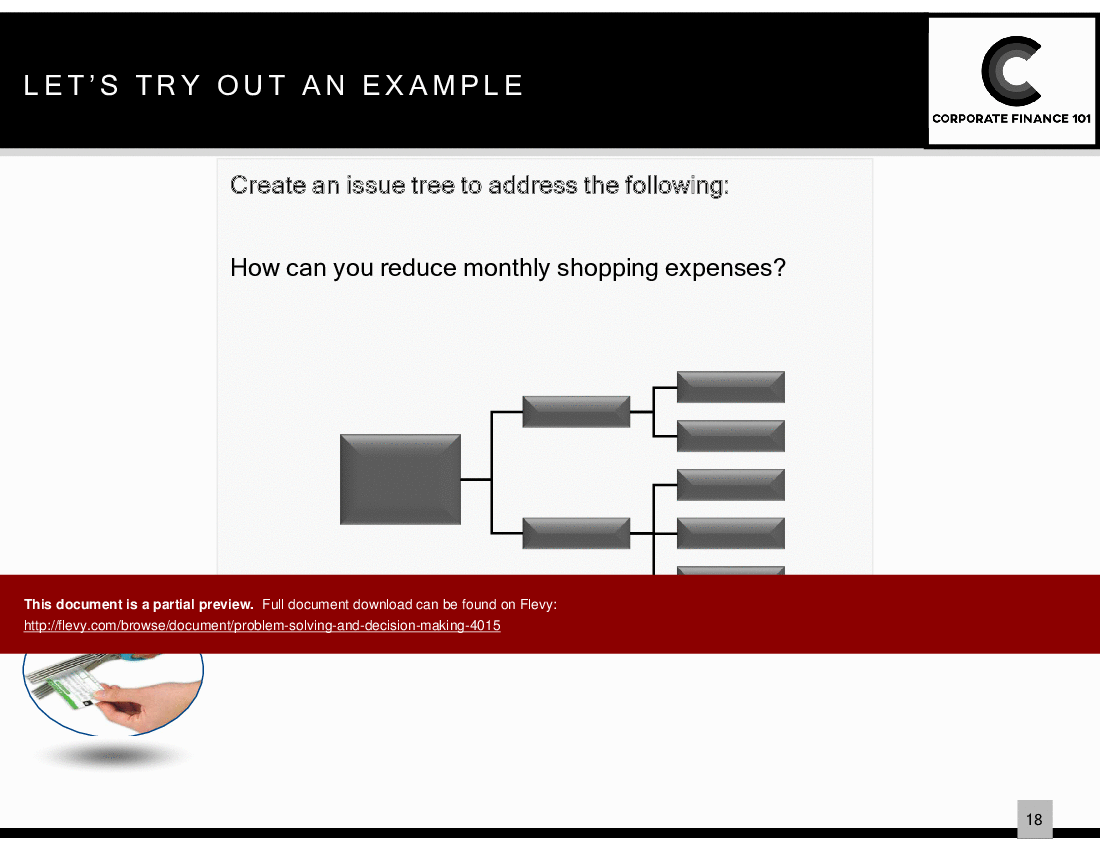
• Group activity to create issue trees for complex scenarios
Prioritization Techniques (45 minutes)
• Presentation on methods for prioritizing issues
• Practical exercise to apply prioritization techniques
Synthesis and Recommendations (45 minutes)
• Workshop on synthesizing findings and developing actionable recommendations
• Group presentations of synthesized insights
Customization Guidance
• Adapt problem statement templates to fit specific organizational contexts
• Modify issue tree structures based on industry-specific challenges
• Tailor prioritization methods to align with team dynamics and resources
• Incorporate company-specific data and metrics into analysis frameworks
Secondary Topics Covered
• Creative thinking in problem-solving
• Logical problem-solving methodologies
• Impact-driven decision-making frameworks
• Communication strategies for presenting findings
Topic FAQ
Document FAQ
These are questions addressed within this presentation.
What is the significance of a well-defined problem statement?
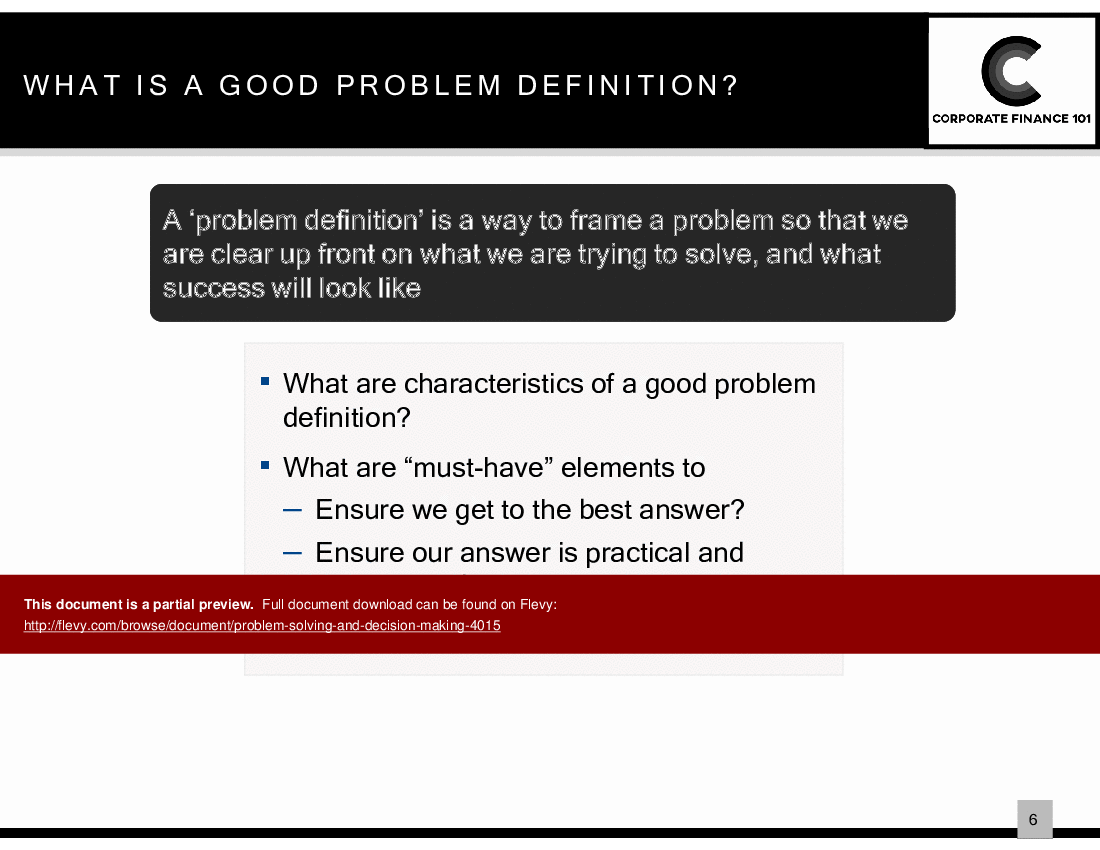
A well-defined problem statement clarifies what needs to be solved and sets the foundation for actionable insights.
How can I structure complex problems effectively?
Using tools like issue trees allows you to break down complex problems into manageable components for better analysis.
What prioritization methods are recommended?
Methods include back-of-the-envelope calculations, qualitative input from team discussions, and assessing potential impact.
How do I synthesize findings into actionable recommendations?
Focus on the implications of your analysis and present clear, targeted recommendations that align with business objectives.
What is the role of communication in problem-solving?
Effective communication ensures that insights and recommendations are understood and actionable by stakeholders.
How can I involve my team in the problem-solving process?
Encourage team participation through workshops and collaborative exercises to foster a shared understanding of challenges.
What are common pitfalls in problem-solving?
Common pitfalls include vague problem definitions, lack of prioritization, and insufficient data analysis.
How can I ensure my recommendations are practical and implementable?
Base recommendations on thorough analysis and align them with organizational capabilities and resources.
Glossary
• Problem Statement - A clear articulation of the issue to be addressed.
• Issue Tree - A visual tool for breaking down complex problems into smaller components.
• Prioritization Matrix - A framework for assessing the importance and urgency of issues.
• Synthesis - The process of combining findings to draw actionable conclusions.
• Recommendation - A proposed course of action based on analysis and synthesis.
• Impact-Driven - A focus on achieving significant outcomes through effective problem-solving.
• Creative Thinking - The ability to generate innovative solutions to complex problems.
• Logical Problem Solving - A structured approach to analyzing and resolving issues.
• Communication Strategy - A plan for effectively conveying insights and recommendations to stakeholders.
• Data Analysis - The process of evaluating data to support decision-making.
• Stakeholders - Individuals or groups with an interest in the outcome of a decision.
• Collaboration - Working together to achieve common goals in problem-solving.
• Implementation Challenges - Obstacles that may arise during the execution of recommendations.
• SMART Criteria - A framework for setting specific, measurable, achievable, relevant, and time-bound objectives.
• Efficiency - The ability to achieve maximum productivity with minimum wasted effort or expense.
• Evidence-Based - Making decisions based on data and factual information.
• Decision-Making Framework - A structured approach to making informed choices.
• Action Plan - A detailed outline of steps to be taken to achieve specific goals.
• Team Dynamics - The interactions and relationships between team members during problem-solving.
• Business Impact - The effect of decisions on organizational performance and outcomes.
• Resource Allocation - The process of distributing available resources to various tasks or projects.
Source: Best Practices in Problem Solving, Decision Making, Bain PowerPoint PowerPoint Slides: Problem Solving and Decision Making PowerPoint (PPT) Presentation Slide Deck, Corporate Finance 101
|
Receive our FREE whitepaper on the Top 101 Consulting Frameworks
Download our 200+ page guide summarizing the Top 101 Management Consulting Frameworks. Each framework provides a structured approach to analyzing and solving a common business problem. |










