
 Click main image to view in full screen. Unlock all 13 preview images:
OEC TPM Maturity Diagnostic Toolkit – PowerPoint PPTX Template
PowerPoint (PPTX) + Zip archive file (ZIP) 36 Slides


BENEFITS OF THIS DOWNLOADABLE POWERPOINT DOCUMENT
- JIPM-Aligned Auditing: Anchors your internal assessments directly to the global benchmarking standards published by the Japan Institute of Plant Maintenance, ensuring your site meets the precise requirements expected by external examiners.
- Unified 8-Pillar Synchronization: Establishes a single, highly visible maturity rubric across all departments, replacing isolated individual pillar efforts with a definitive, site-wide benchmark.
- Expose Foundational Gaps: Uncovers hidden structural, standard-setting, and data infrastructure deficiencies on the shopfloor before they can disrupt official validation audits.
MATURITY MODEL PPT TEMPLATE DESCRIPTION
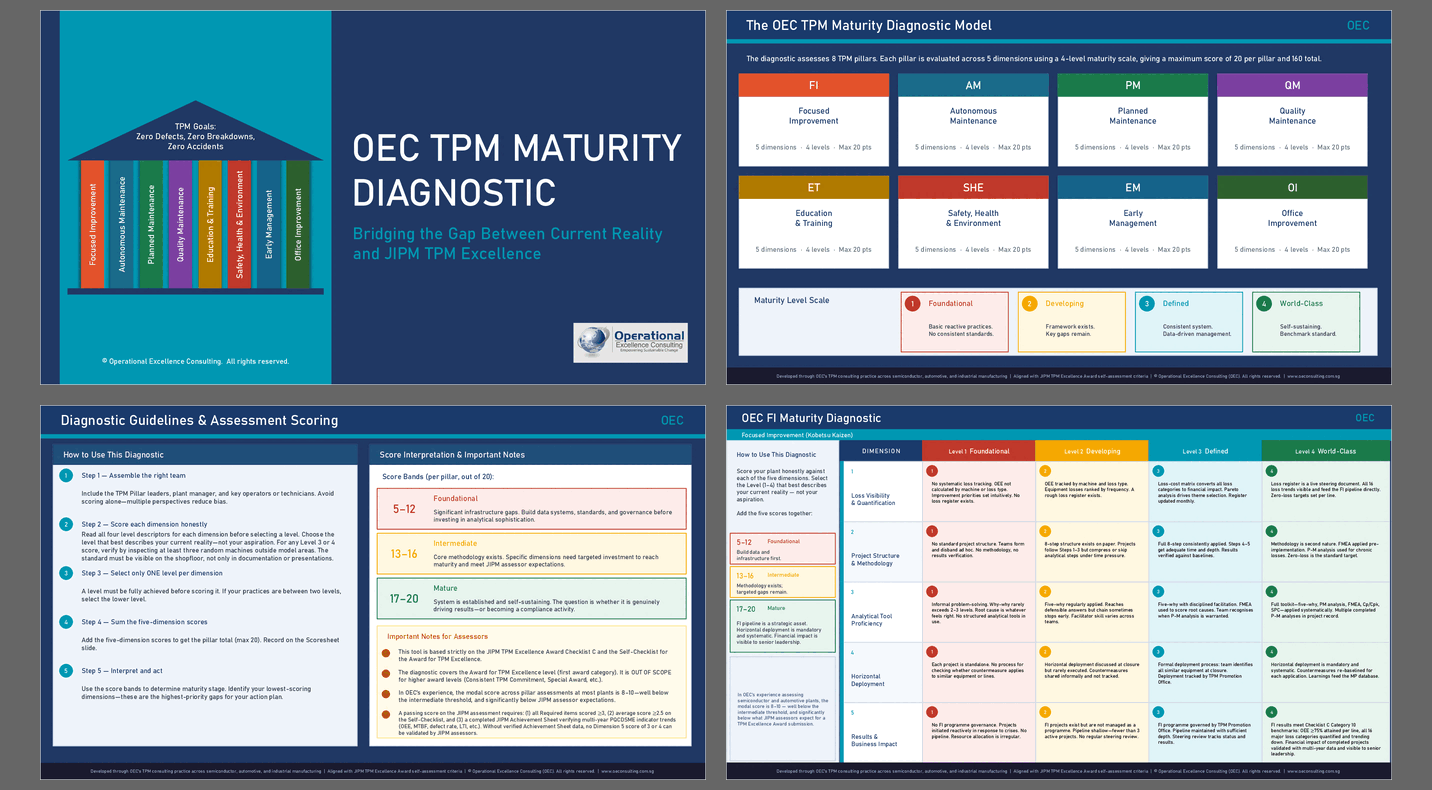
OEC TPM MATURITY DIAGNOSTIC TOOLKIT (JIPM-ALIGNED)
Stop "trophy-hunting" and start transforming. Evaluate your shopfloor reality objectively with a rigorous, JIPM-aligned diagnostic built to eliminate score inflation and chart a calibrated roadmap to sustainable TPM excellence.
EXECUTIVE SUMMARY
The OEC TPM Maturity Diagnostic is a robust pre-assessment framework engineered to bridge the gap between an organization's current operational state and the world-class benchmarks established by the Japan Institute of Plant Maintenance (JIPM). Developed from decades of consulting expertise in the semiconductor, automotive, and industrial manufacturing sectors, this toolkit translates a frontline "Gemba" mindset into strict, anti-bias protocols. It ensures your maturity baseline matches true equipment performance, preventing score drift and anchoring your transformation in hard manufacturing reality.
TARGET AUDIENCE
• Plant Managers & Operations Directors seeking an unvarnished site health check.
• TPM Promotion Office Leads & CI Directors managing multi-site rollouts and JIPM award preparation.
• Pillar Leaders responsible for auditing and driving specific implementation tracks (AM, PM, FI, QM, etc.).
THE PROBLEM: THE "PILLAR CONSISTENCY GAP"
A major pain point for many manufacturing leaders is the lack of a consistent roadmap across the various TPM pillars. While the Autonomous Maintenance (AM) pillar benefits from a well-defined 7-step process, most other essential pillars lack a clear, step-by-step progression toward maturity. This inconsistency often leads to "foundational gaps," where plants invest in advanced improvement tools before establishing the data infrastructure and standards that JIPM assessors actually evaluate.
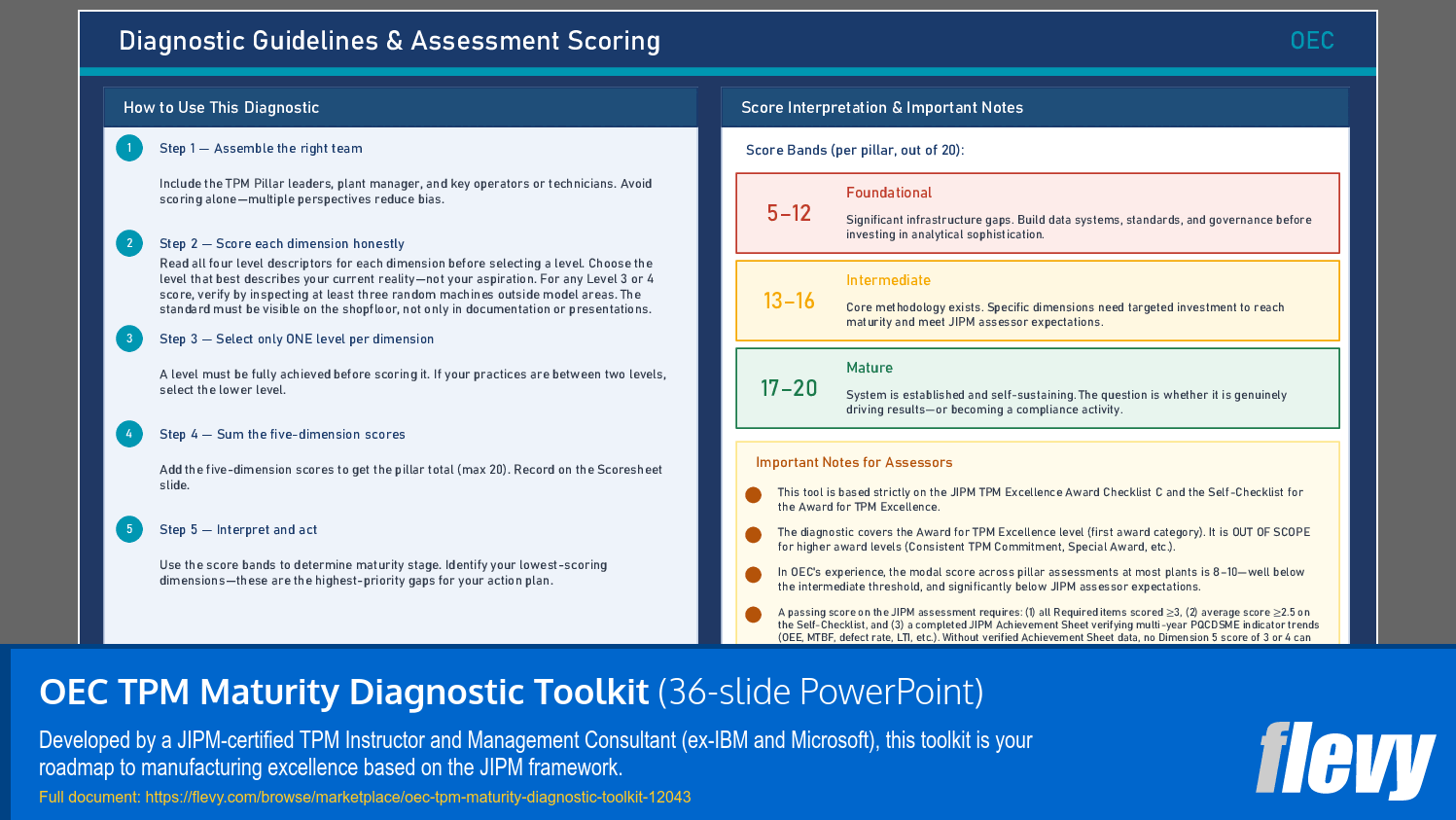
Furthermore, standard self-assessments are frequently plagued by score inflation. In OEC's experience, most sites score themselves as "ready," but a rigorous diagnostic typically reveals a modal score of 8–10 out of 20 per pillar—well below the 17–20 threshold expected for a TPM Excellence Award submission.
THE SOLUTION: A UNIFIED 8-PILLAR FRAMEWORK
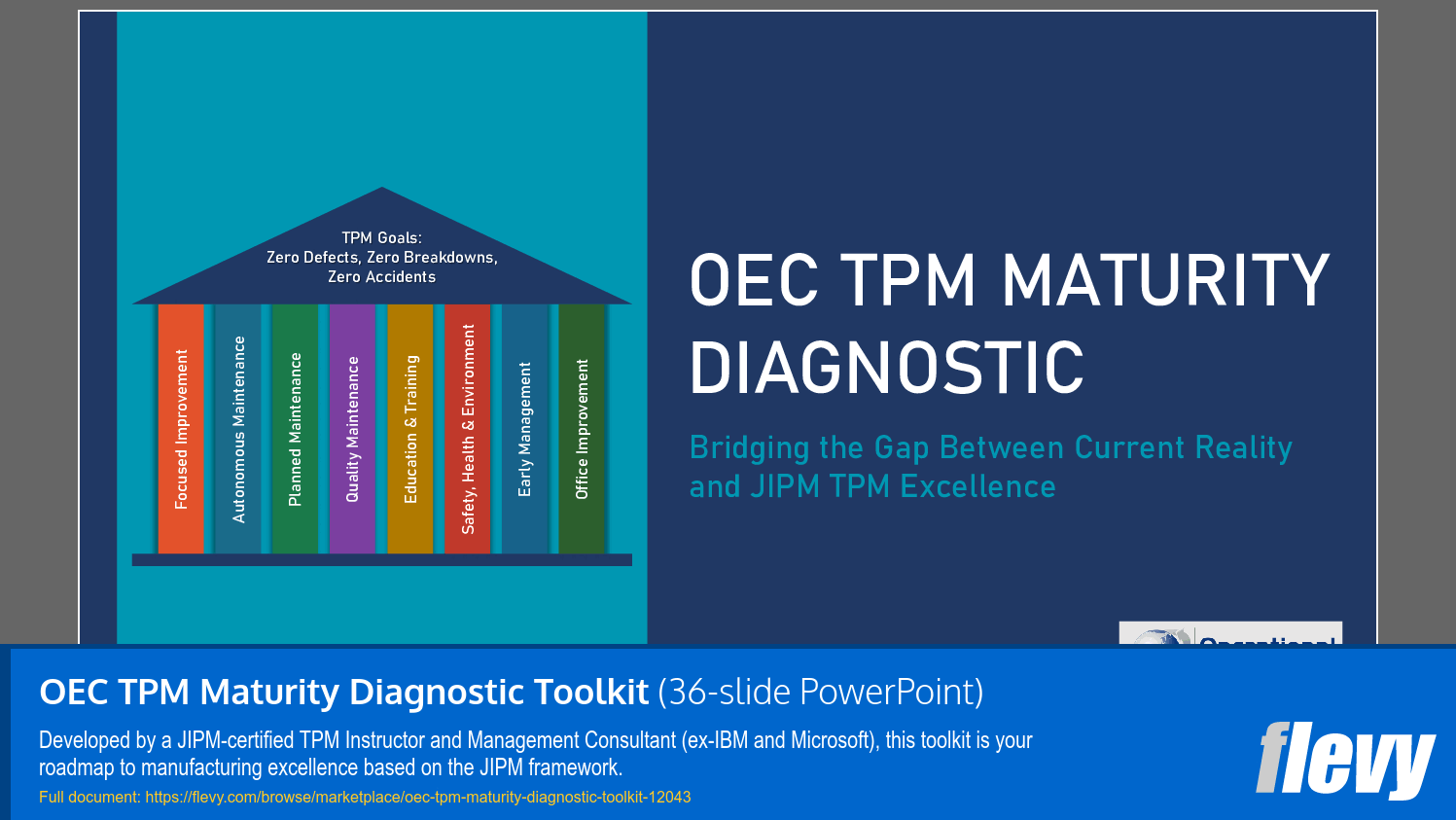
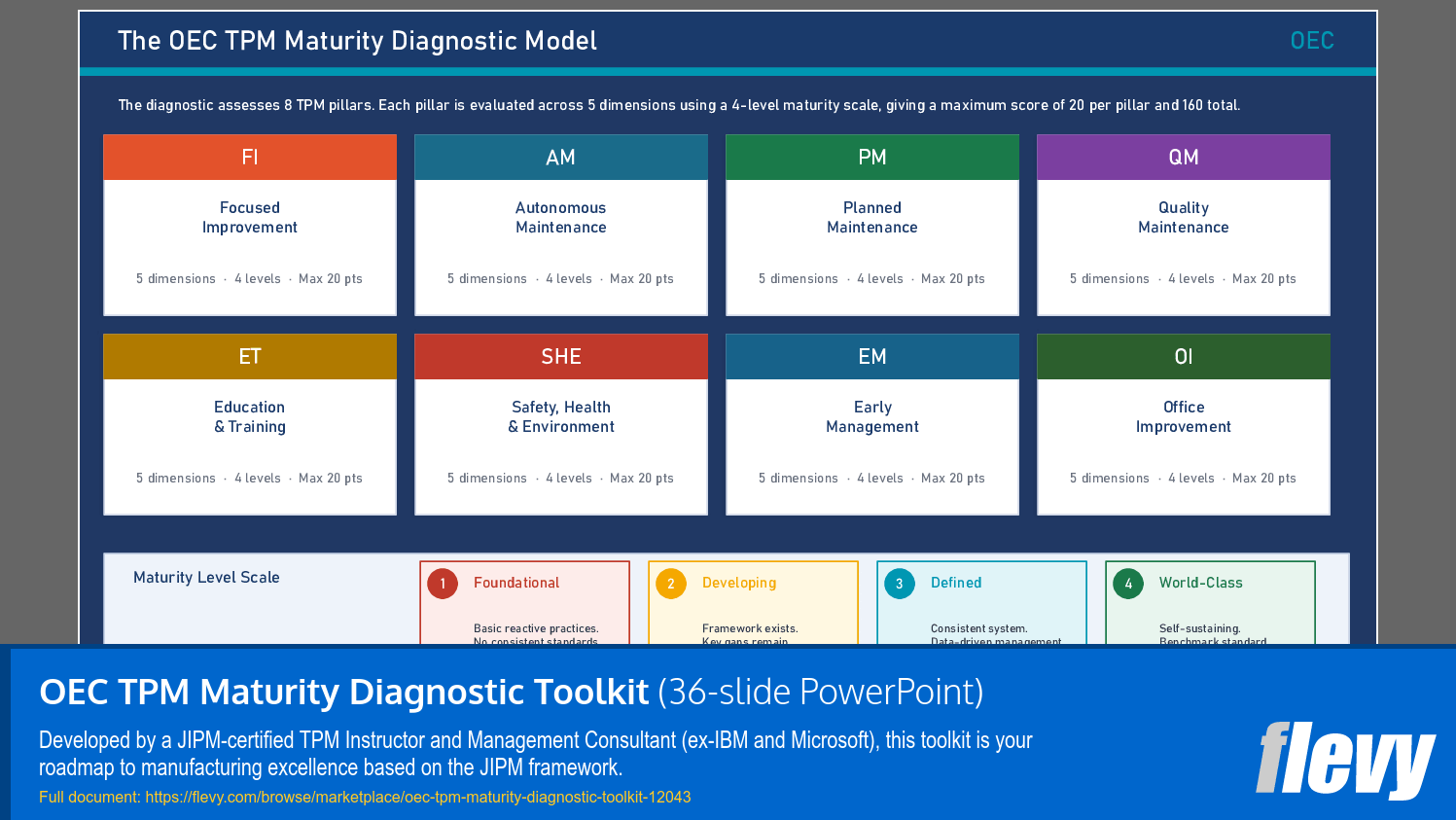
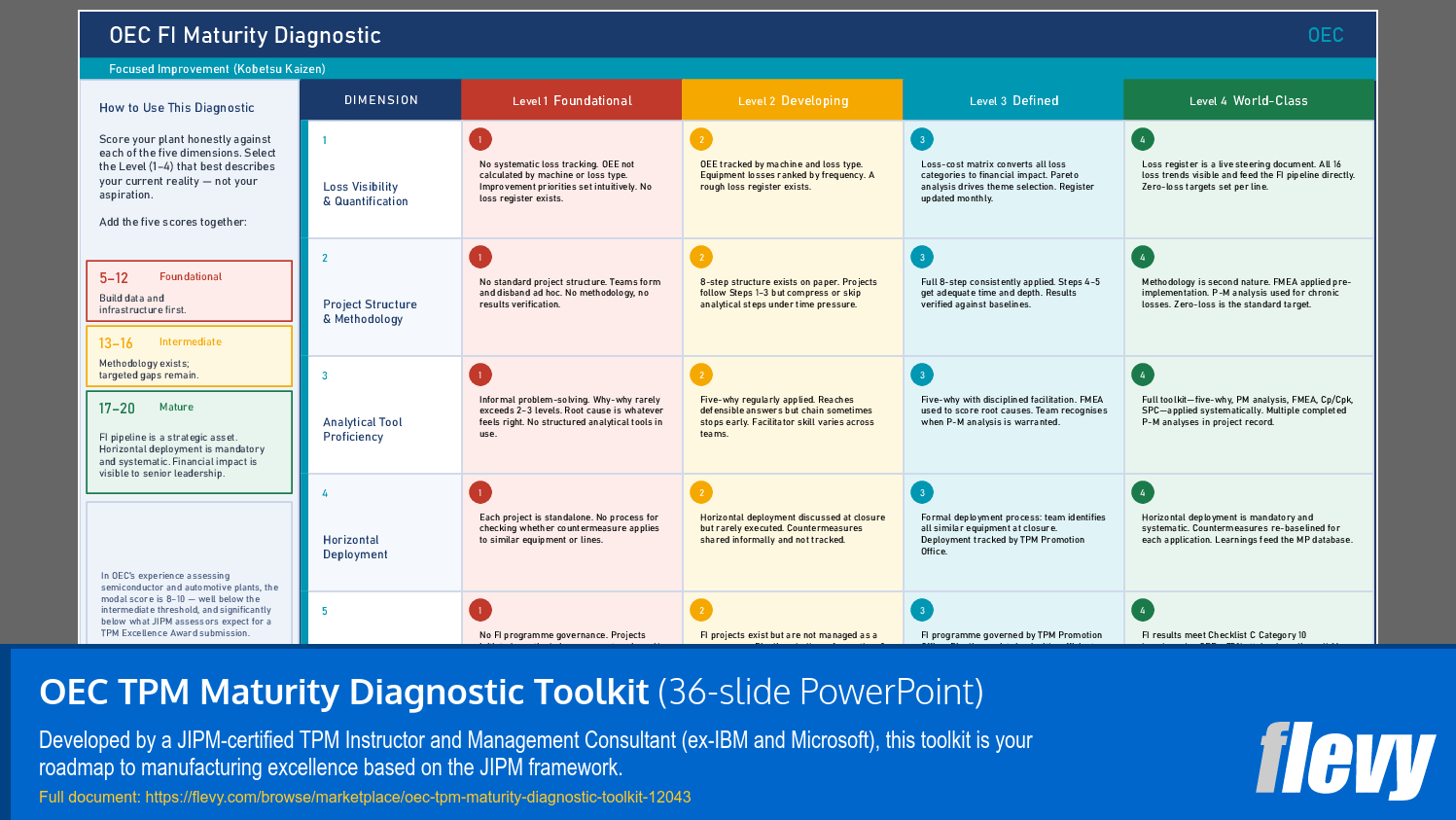
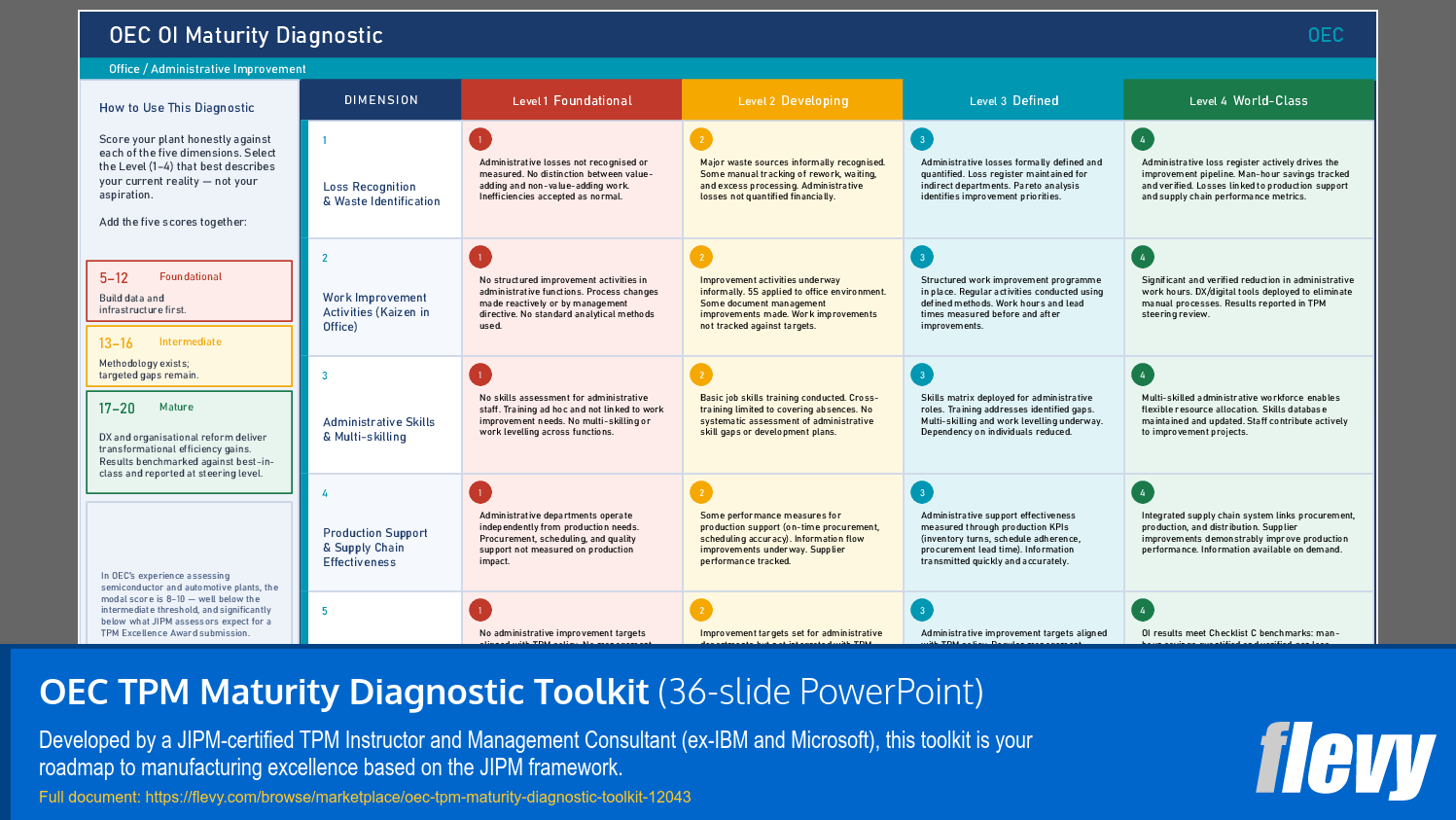
This toolkit provides a single, coherent diagnostic covering all 8 JIPM TPM pillars, each evaluated across 5 consistent dimensions and 4 maturity levels.
THE 5 EVALUATION DIMENSIONS (ROWS)
1. Goal Alignment: Integration with corporate policy and financial loss-cost matrices.
2. Organization & Promotion System: Strength of overlapping small groups and governance.
3. Implementation Rigor: Steady progress through step-by-step execution and standards.
4. Methods & Tools: Analytical proficiency (5-Why, P-M Analysis, FMEA, CBM).
5. Results & Business Impact: Tangible PQCDSME improvements and sustainability.
THE 4-LEVEL MATURITY SCALE (COLUMNS)
• Level 1: Foundational – Basic reactive practices; no consistent standards.
• Level 2: Developing – Framework exists, but with significant structural gaps.
• Level 3: Defined – Consistent, data-driven system operating reliably across the full scope.
• Level 4: World-Class – Self-sustaining, optimized system that serves as a global benchmark.
UNIQUE TOOLKIT FEATURES
• Strictly JIPM-Aligned: Every dimension and level descriptor maps directly to the JIPM TPM Excellence Award Checklist C and the Self-Checklist criteria.
• Peer-Pillar Anti-Inflation Protocol: A mandatory safeguard where pillar leaders score a peer's pillar rather than their own, neutralizing ownership bias.
• "Absence of Evidence" Shopfloor Walks: Protocols to settle scoring disagreements by inspecting random machines (not just "model areas") to verify operator reality.
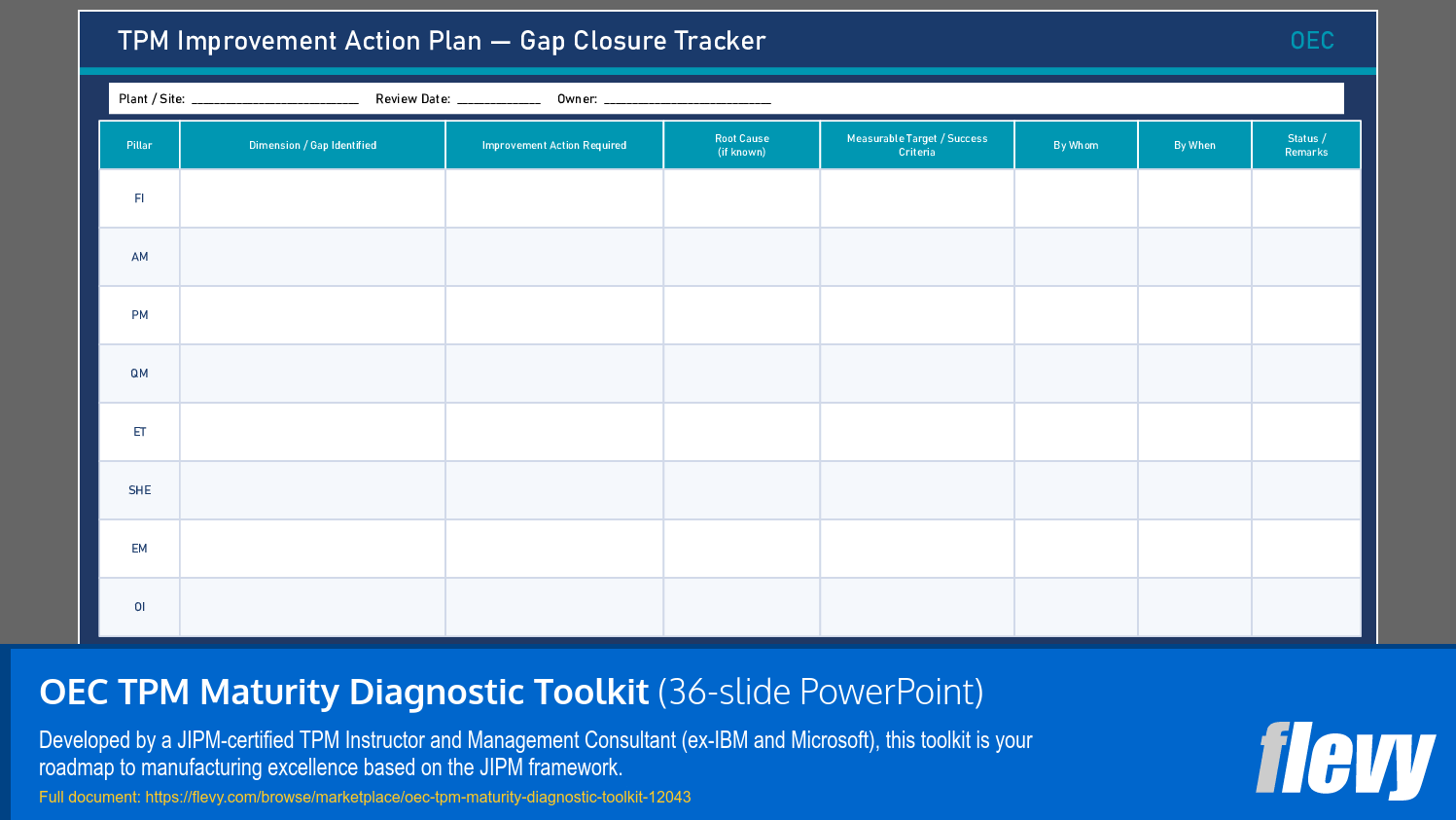
• Sequenced Action Planning: Focuses resources on a maximum of two priority dimensions per pillar, prioritizing JIPM required items and infrastructure before advanced tools.
WHAT'S INCLUDED IN THE BOX?
This comprehensive, three-part digital toolkit delivers a complete practitioner workflow: Assess Honestly → Score Systematically → Act Deliberately.
1. The Assessment Instrument (PPTX): A professional 16-slide deck detailing the 4-level maturity rubric for all 40 dimensions across the 8 pillars.
2. The Assessor Guidelines (PPTX): A step-by-step facilitation manual covering team composition, consensus-building, and shopfloor verification criteria.
3. The Scoring & Dashboard Tool (Excel): A pre-formatted workbook that automatically generates radar charts to visualize "pillar imbalance," a 4-period Trend Tracker, and an embedded Action Plan tracker.
LEARNING OBJECTIVES
By deploying this diagnostic workshop, your leadership and operational teams will:
1. Calibrate Understanding: Align your core steering committee on what world-class JIPM TPM standards actually require.
2. Master Objective Evaluation: Implement evidence-based auditing techniques that cut through management narratives down to operator reality.
3. Design Focused Roadmaps: Construct structured gap-closure action plans that prioritize critical compliance and data infrastructure items first.
4. Sustain Operational Gains: Establish a repeatable biannual health check cadence that prevents score drift and drives compounding manufacturing metrics.
DETAILED DIAGNOSTIC STRUCTURE
Focused Improvement (FI):
Evaluation Dimensions: Loss Visibility & Quantification • Project Structure & Methodology • Analytical Tool Proficiency • Horizontal Deployment • Results & Business Impact
Autonomous Maintenance (AM):
Evaluation Dimensions: Equipment Condition & Cleaning Standards • Operator Inspection & Abnormality Detection • AM Step Progression & Standard-Setting • AM–FI–PM Integration • Results & Business Impact
Planned Maintenance (PM):
Evaluation Dimensions: Failure Data Management & Analysis • Maintenance Method Selection (TBM/CBM) • Maintenance Efficiency & Spare Parts Mgmt • AM–PM Role Clarity & Integration • Results & Business Impact
Quality Maintenance (QM):
Evaluation Dimensions: Defect Visibility & Data Collection • Root Cause Analysis & Recurrence Prevention • QM Matrix & Condition Standards • 4M Condition Control & Quality Assurance • Results & Business Impact
Education & Training (ET):
Evaluation Dimensions: Training Needs Assessment & Design • Skills Visibility & Competency Assessment • Maintenance Skill Training Infrastructure • TPM Qualification & Certification • Results & Business Impact
Safety, Health & Environment (SHE):
Evaluation Dimensions: Legal Compliance & Hazard Recognition • Accident & Near-Miss Management • Safety Measures & Risk Elimination • Environmental Management & Conservation • Results & Business Impact
Early Management (EM):
Evaluation Dimensions: MP Information Collection & Utilisation • Equipment Development Management System • Initial Phase Control & Vertical Start-up • Design for Maintainability & Operability • Results & Business Impact
Office / Admin Improvement (OI):
Evaluation Dimensions: Loss Recognition & Waste Identification • Work Improvement Activities • Administrative Skills & Multi-skilling • Production Support & Supply Chain Effectiveness • Results & Business Impact
FREQUENTLY ASKED QUESTIONS (FAQs)
1. Does this tool replace official JIPM audit checklists?
No. While official JIPM documents focus heavily on compliance auditing, this diagnostic serves as a strategic development tool. It is engineered to uncover structural gaps and map out an actionable improvement path before your official external audit.
2. Can this framework be scaled across multiple factory locations?
Yes. By deploying a standardized 4-level rubric across 40 operational dimensions, corporate operations and continuous improvement directors can seamlessly track, compare, and benchmark TPM maturity across different plants.
3. Is there guidance included to ensure objective scoring?
Yes. The toolkit includes a dedicated Guidelines for Assessors companion manual. This documentation outlines specific protocols to eliminate departmental bias and prevent artificial score inflation.
4. Can team members fill out the rubrics independently?
Preliminary individual evaluations work great as pre-workshop input, but final scoring must be completed during a cross-functional workshop. True site calibration occurs when the steering committee aligns on a single, unified consensus score per dimension.
5. How does the toolkit handle conflicting scores during workshops?
If workshop participants disagree by two or more maturity levels, a strict shopfloor verification rule is triggered. The team leaves the conference room to audit a random machine and interview operators, letting physical evidence resolve the dispute.
6. Are automated charts and summary reporting dashboards included?
Yes. The Excel tool features a built-in "Pillar Summary" tab. Once maturity scores are inputted, a consolidated summary data table and a high-resolution radar chart generate automatically to highlight performance imbalances.
7. What is the JIPM Achievement Sheet and why does it matter?
The Achievement Sheet is a mandatory JIPM application document. It functions as a data-driven layer that forces plants to validate their operational maturity with multi-year, hard performance trends rather than just active meeting governance.
8. What software is required to use this toolkit?
No specialized platforms, external macros, or plugins are required. The toolkit runs natively on standard business applications: Microsoft PowerPoint (.pptx) for the frameworks and Microsoft Excel (.xlsx) for the scoring engine.
Got a question about the product? Email us at support@flevy.com or ask the author directly by using the "Ask the Author a Question" form. If you cannot view the preview above this document description, go here to view the large preview instead.
Source: Best Practices in Maturity Model, TPM PowerPoint Slides: OEC TPM Maturity Diagnostic Toolkit PowerPoint (PPTX) Presentation Slide Deck, Operational Excellence Consulting
ABOUT THE AUTHOR

Operational Excellence Consulting, founded in 2009 by Allan Ung, draws from extensive experience at Microsoft, IBM, and Underwriters Laboratories (UL). We specialize in strategy deployment, customer experience design, and operational excellence, applying Design Thinking, Lean, and Systems Thinking to maximize customer value and minimize waste.
Our
... [read more]
Ask the Author a Question
You must be logged in to contact the author.




























