
 Click main image to view in full screen. Unlock all 12 preview images:
AI Maturity Framework – Word DOCX
Word (DOCX) 46 Pages


BENEFITS OF THIS DOWNLOADABLE WORD DOCUMENT
- Provides a framework for assessing AI maturity and building a scalable enterprise AI strategy tailored to your organization.
- Provides a practical framework for turning AI initiatives into measurable, governed, and repeatable business outcomes.
- Provides an executive framework for identifying AI capability gaps, prioritizing investments, and scaling AI across your organization.
ARTIFICIAL INTELLIGENCE WORD DESCRIPTION
Curated by McKinsey-trained Executives
AI Maturity Framework: Executive Guide to Enterprise AI Transformation
Turn AI Pilots Into Predictable, Scaled, Profitable Operations
The Problem Every Enterprise Faces
Most organizations have an AI capability problem disguised as a technology problem.
• ❌ Dozens of AI pilots running, but few reach production
• ❌ Teams work for months, then discover the real constraint wasn't technical
• ❌ Executives disagree on what "AI success" even means
• ❌ Every new use case starts from scratch—no shared platform, no shared learning
• ❌ Governance either blocks everything or approves risky use cases without controls
• ❌ Data access, quality and permissions are a bottleneck for every initiative
• ❌ Best people burn out managing stakeholders instead of solving the problem
• ❌ Benefits were promised at the start, but nobody tracks if they actually arrived
• ❌ Adoption is low because workflows weren't redesigned for AI
• ❌ You can't scale because every function is building its own version of the same thing
That's not a technology problem. That's a maturity problem.
The gap isn't AI capability. It's organizational readiness to deliver value repeatedly, safely and measurably.
Introducing: AI MATURITY FRAMEWORK
A Consulting-Grade Executive System for Moving From AI Ambition to Measurable Business Outcomes
What if your organization could:
• ✅ Move use cases from approval to production in 30 days, not 12 months?
• ✅ Measure AI value like you measure everything else—with Finance sign-off and attribution?
• ✅ Scale AI safely without creating ungoverned risk or bottlenecks?
• ✅ Let teams own decisions without requiring executive approval for everything?
• ✅ Reduce the cost of AI delivery by 40% through shared platforms and reusable patterns?
• ✅ Identify exactly which capability gap is holding back everything else?
• ✅ Prevent AI projects from stalling between pilot and scale?
• ✅ Grant autonomy to agents while maintaining control and compliance?
This framework makes all of that possible.
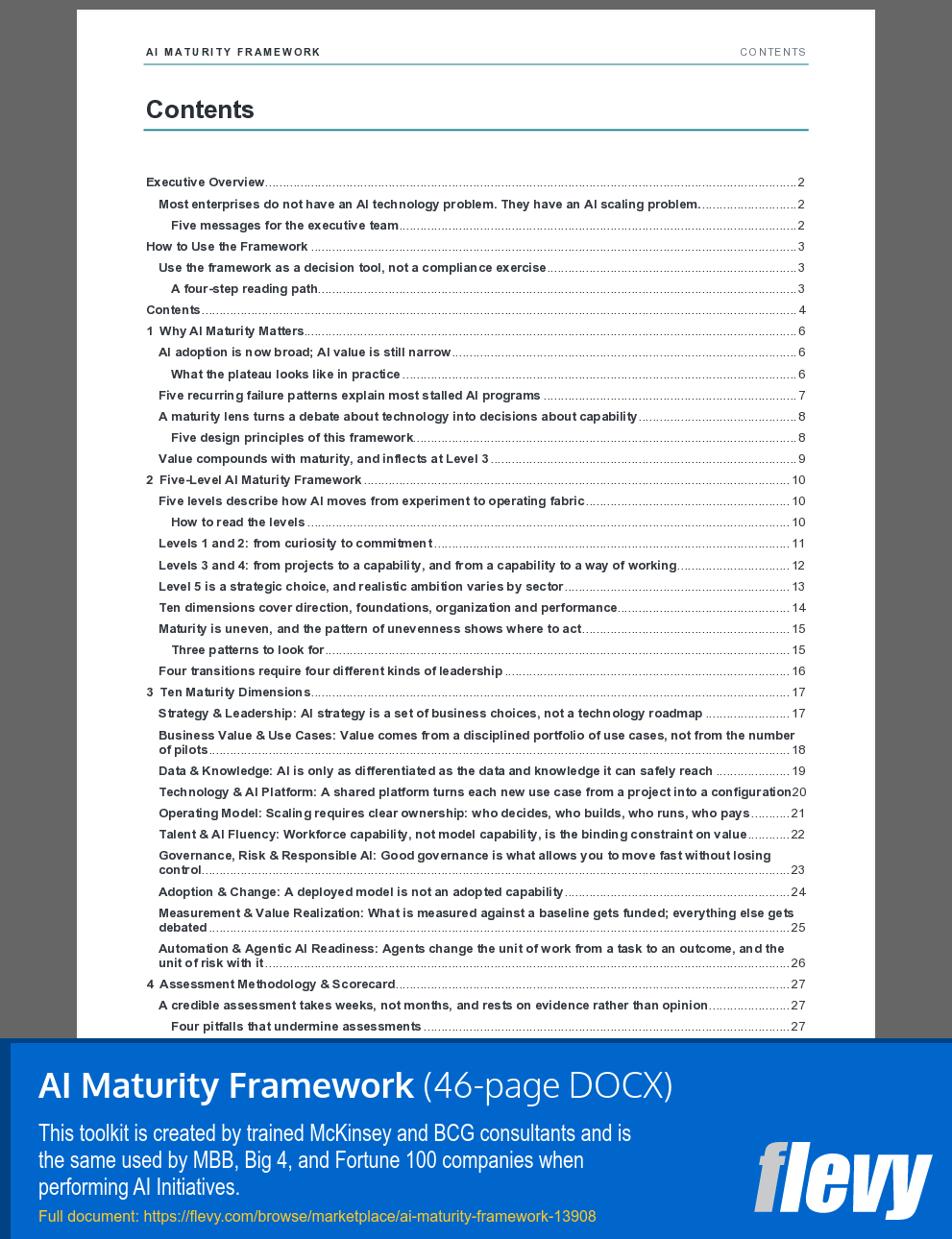
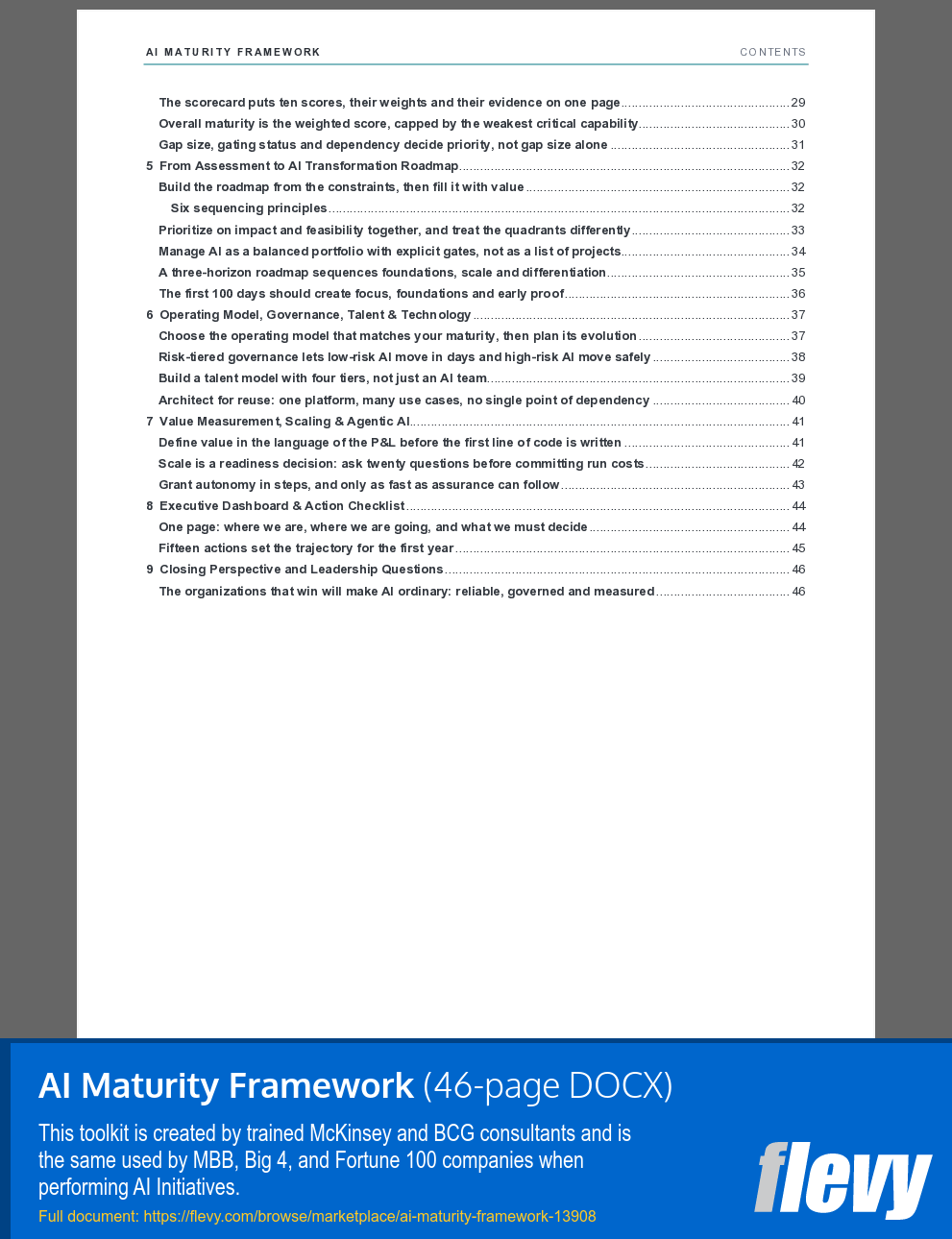
TABLE OF CONTENTS
PART 1: EXECUTIVE OVERVIEW & HOW TO USE THE FRAMEWORK
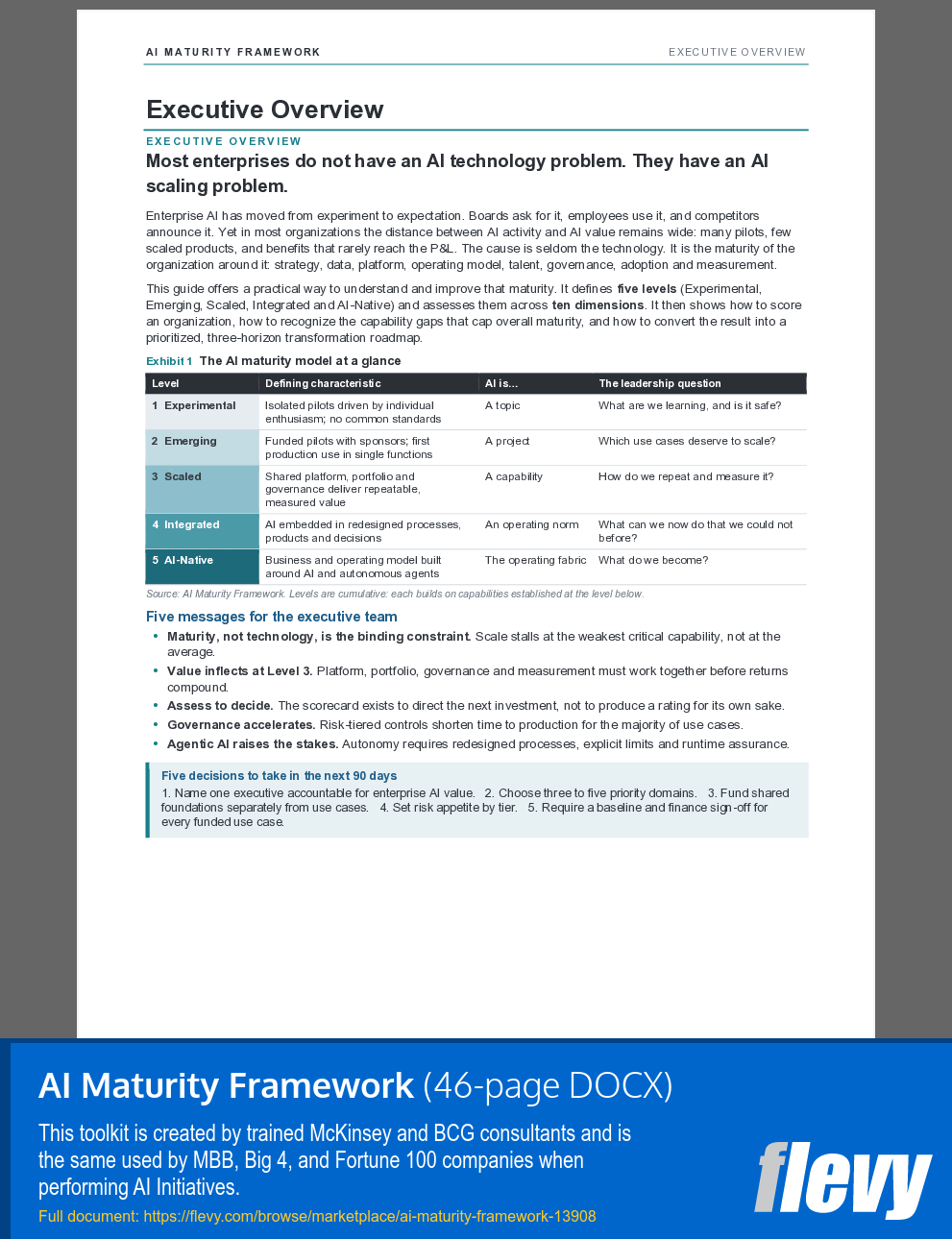
• Executive Overview: Why maturity matters, and what the five levels mean
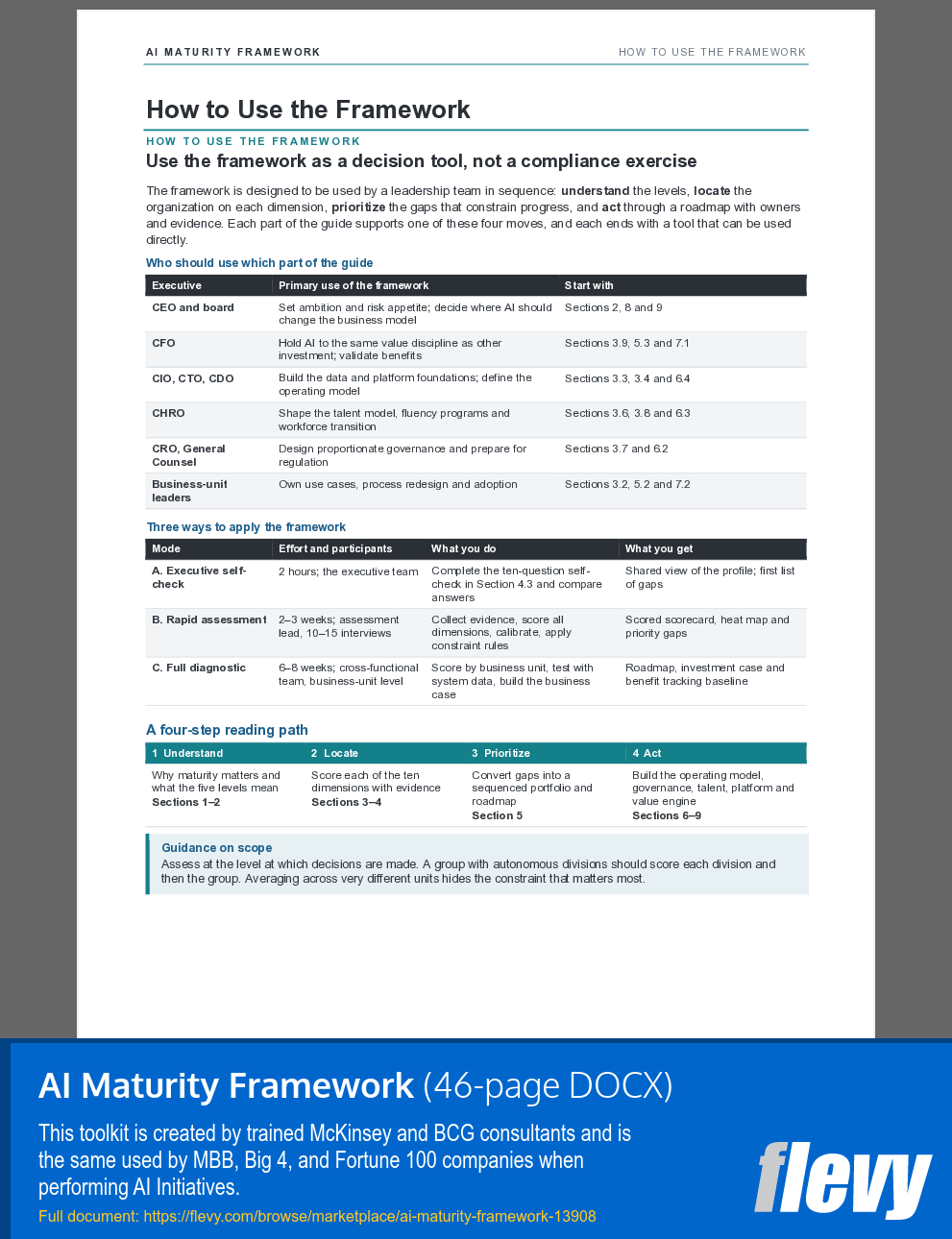
• How to Use This Framework: Four reading paths for different roles
• Contents: Complete TOC with page numbers
PART 2: WHY AI MATURITY MATTERS
The business case for closing capability gaps before scaling volume
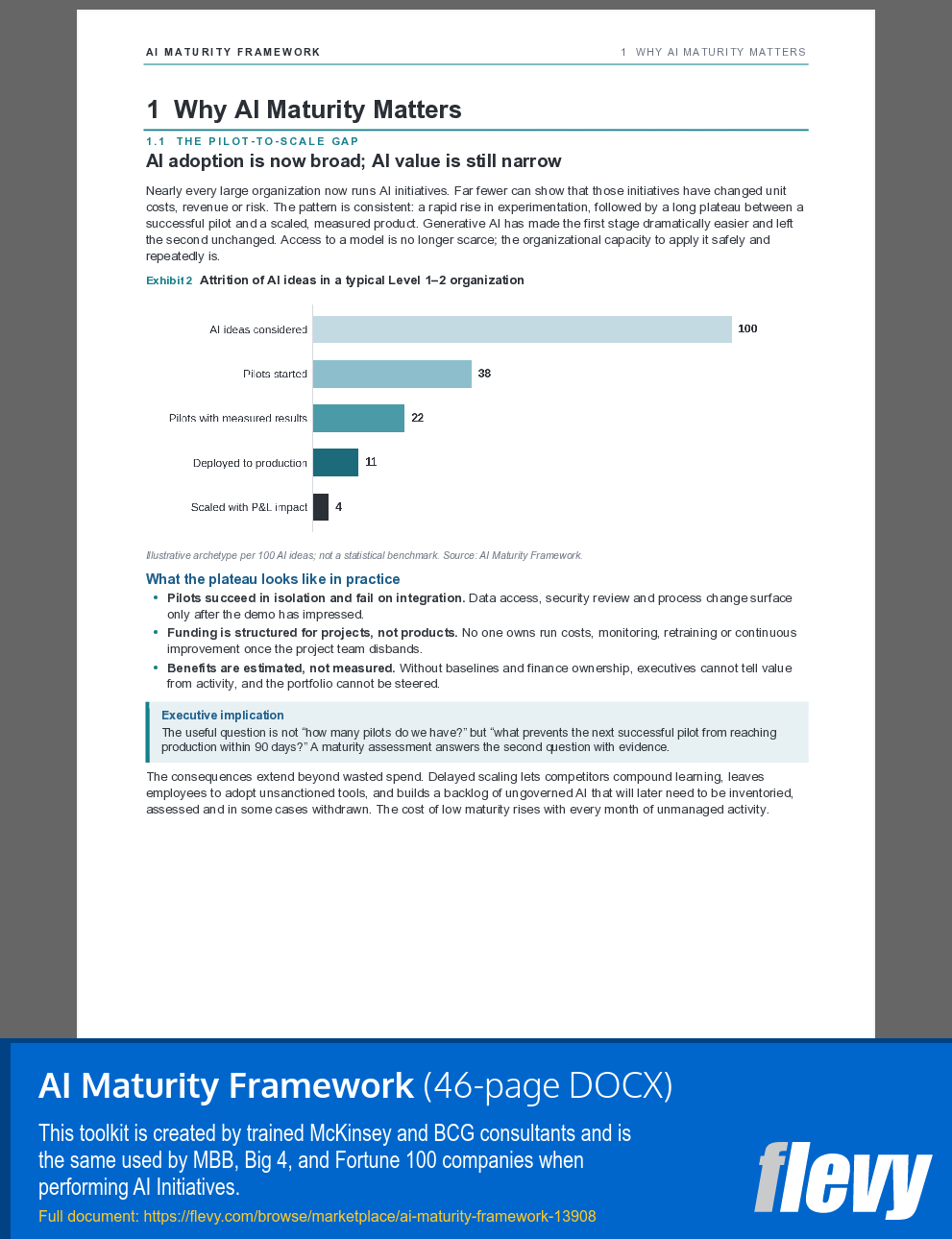
• The pilot-to-scale gap: Why most organizations have 100 ideas but only 4 in production
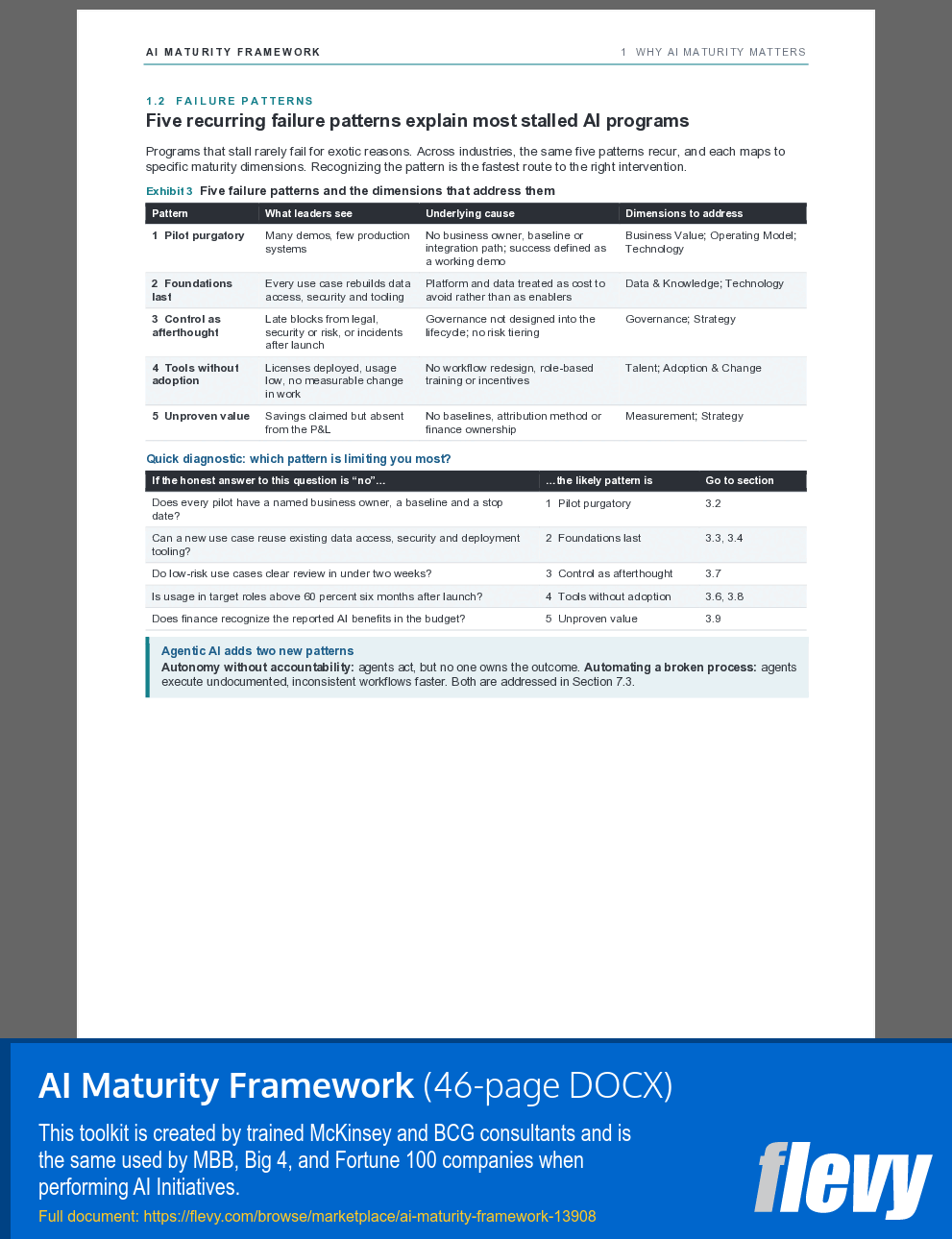
• Five recurring failure patterns and where they show up
• Why a maturity lens beats benchmarking and peer comparison
• How value inflects at Level 3 and compounds with maturity
PART 3: FIVE-LEVEL AI MATURITY FRAMEWORK
Understanding the levels, transitions, and what each looks like in practice
• The five-level model: What each level is, how to recognize it, and what comes next
• Levels 1–2 (Experimental, Emerging): From curiosity to commitment
• Levels 3–4 (Scaled, Integrated): From projects to a capability, and capability to operations
• Level 5 (AI-Native): Strategic choice, and realistic three-year targets by sector
• The ten-dimension framework: How dimensions interact and which are gating
• Maturity heat map: Real-world illustration; how to read it
• Level transitions: Why each transition is different; common traps and how to avoid them
PART 4: TEN MATURITY DIMENSIONS
One page per dimension with levels 1–5, evidence, gaps, priority actions and metrics
Dimension 1: Strategy & Leadership
• Where will AI create advantage, and who is accountable?
• From Level 1 (No ambition) → Level 5 (Strategy assumes machine intelligence)
• KPI: Share of strategic priorities with AI-enabled targets; executive fluency score
• Questions: Which three outcomes will AI change most? What are we deliberately choosing not to do?
Dimension 2: Business Value & Use Cases
• Is the portfolio disciplined and value-led?
• From Level 1 (Demos without owners) → Level 5 (AI-first discovery and self-service)
• KPI: Pilot-to-production conversion; share of use cases with finance-validated value
• Questions: How many active pilots have a baseline and a stop date? What would we stop funding tomorrow?
Dimension 3: Data & Knowledge
• Can AI safely reach the data and knowledge it needs?
• From Level 1 (Data siloed, prepared manually) → Level 5 (Automated, self-maintaining)
• KPI: Share of priority data under quality SLAs; time to provision for new use case
• Questions: Which datasets give us advantage? Can AI retrieve only what users are entitled to see?
Dimension 4: Technology & AI Platform
• Is delivery a reusable, secure, governed service?
• From Level 1 (Public tools, no standard) → Level 5 (Multi-model, orchestrated, self-optimizing)
• KPI: Time to production; share of AI on the platform; cost per transaction; incident rate
• Questions: How long to deploy an approved use case? What if our primary model provider changes?
Dimension 5: Operating Model
• Who decides, who builds, who runs, who pays?
• From Level 1 (Scattered, no owner) → Level 5 (Embedded in every team, outcome-funded)
• KPI: Time in intake queue; share of production AI with named run owner; share of persistent funding
• Questions: When a model degrades, who owns the fix? Is our AI team a bottleneck or a multiplier?
Dimension 6: Talent & AI Fluency
• Do people have the skills and confidence to use and build AI?
• From Level 1 (Skills in a few enthusiasts) → Level 5 (Continuous learning, citizen builders certified)
• KPI: Share of employees at target fluency; specialist retention; internal fill rate for AI roles
• Questions: Which ten roles will change most? Could our managers redesign a workflow with AI next week?
Dimension 7: Governance, Risk & Responsible AI
• Are risks managed in proportion and in time?
• From Level 1 (Informal) → Level 5 (Runtime guardrails for agents; external assurance)
• KPI: Share of production AI in inventory; time to approve low-risk use cases; audit findings closed on time
• Questions: Can we list every AI system, its tier and owner? How long does low-risk approval take?
Dimension 8: Adoption & Change
• Does work actually change when AI is deployed?
• From Level 1 (Voluntary, sporadic) → Level 5 (Co-creation and continuous experimentation)
• KPI: Active usage in target roles; task completion time; employee trust; share of capacity redeployed
• Questions: Which team has highest usage, and what did they do differently? What happens to the time AI saves?
Dimension 9: Measurement & Value Realization
• Is value proven against baselines and reflected in the P&L?
• From Level 1 (Anecdotal) → Level 5 (Real-time telemetry and automated attribution)
• KPI: Share of benefits validated by Finance; realized-to-planned value ratio; payback period
• Questions: Of the benefits we reported last year, how much appears in the P&L? Which costs are missing from business cases?
Dimension 10: Automation & Agentic AI Readiness
• Can we grant autonomy to agents safely and measurably?
• From Level 1 (None; rule-based only) → Level 5 (Agent networks running end-to-end processes)
• KPI: Share of process volume handled by agents; exception rate; cost per outcome
• Questions: Which decisions would we let an agent make? Who is accountable when an agent acts incorrectly?
PART 5: ASSESSMENT METHODOLOGY & SCORECARD
How to score, calibrate and use results to set targets
• Assessment process: Five-step methodology, evidence hierarchy (A/B/C/D grades)
• Scoring rubric: From raw evidence to a credible 1.0–5.0 score per dimension
• Scorecard and executive self-check: 10-minute diagnostic; weights; heat map
• Calculating overall maturity: Weighted score, gating caps, value-proof caps
• Capability-gap matrix: Priorities, timelines, dependencies; five common profiles
PART 6: FROM ASSESSMENT TO TRANSFORMATION ROADMAP
Convert gaps into a sequenced, owned roadmap
• From gaps to initiatives: Matching each archetype to an initiative family and lead owner
• Impact × feasibility prioritization: Bubble chart, scoring criteria, quadrant strategy
• Portfolio model and stage gates: Three categories (optimize core, extend/grow, transform/bet); gating logic
• Three-horizon roadmap: Horizon 1 (0–6 months, stabilize), H2 (6–18 months, scale), H3 (18–36 months, integrate)
• The first 100 days: Launch plan, investment emphasis, roadmap risks
PART 7: OPERATING MODEL, GOVERNANCE, TALENT & TECHNOLOGY
How to structure for execution
• Operating model: Hub-and-spoke comparison, decision-rights matrix, evolution at each level
• Governance: Framework (principles, standards, gates, assurance); risk tiers; proportionate controls
• Talent: Model by tier (leaders, builders, translators, power users, everyone); fluency levels; emerging roles
• Technology and data: Reference architecture (six layers); build/buy decisions; design principles
PART 8: VALUE MEASUREMENT, SCALING & AGENTIC AI
How to measure, scale safely and grant autonomy
• Value measurement: Five levers; realization ladder; converting time saved to cash
• Scaling AI: Scale-readiness checklist (20 criteria across five domains; go/conditional/hold)
• Agentic AI readiness: Five autonomy levels (assist to goal-directed); prerequisites and guardrails
PART 9: EXECUTIVE DASHBOARD & ACTION CHECKLIST
One-page view and 15 actions to set trajectory
• Executive dashboard: Overall score, gating constraints, leading indicators, decisions needed
• Action checklist: 15 critical actions organized by timeline (next 30 days, days 31–90, 3–12 months)
• Five things to stop: What's wasting energy and what to do instead
PART 10: CLOSING PERSPECTIVE & LEADERSHIP QUESTIONS
Ten questions every executive team should answer
• Why maturity compounds value and accelerates decision-making
• Ten diagnostic questions (one per dimension) that surface execution risk
• The final test: If you can't answer six of these with evidence, you're earlier than you think—and that's your roadmap
THE FRAMEWORK AT A GLANCE
30 Professional Exhibits
✅ Five-level maturity model
✅ Ten-dimension framework matrix
✅ Maturity heat map (illustrative enterprise)
✅ Four transitions and their leadership requirements
✅ Dimension scoring scale
✅ Five failure patterns and remedies
✅ AI value curve by maturity level
✅ Assessment scorecard
✅ Capability-gap matrix and profiles
✅ Impact × feasibility prioritization matrix (bubble chart)
✅ AI portfolio model (three categories)
✅ Stage-gate model
✅ Three-horizon roadmap
✅ 100-day launch plan
✅ Operating-model comparison
✅ Decision-rights matrix
✅ Governance framework (four layers)
✅ Risk tiers and proportionate controls
✅ AI talent model (five tiers)
✅ AI fluency levels
✅ AI platform reference architecture (six layers)
✅ AI value framework (five levers)
✅ Value realization ladder
✅ Scale-readiness checklist
✅ Agentic AI readiness model (five autonomy levels)
✅ Executive AI maturity dashboard
✅ Executive action checklist
✅ Radar chart: Current state vs. 12-month target
✅ Leading indicators dashboard
✅ Strategic project leadership questions
WHY THIS FRAMEWORK DELIVERS RESULTS
✅ Maturity-first, not technology-first – Stop wasting money on tools before the organization can use them
✅ Outcome-focused, not activity-focused – Every workstream connects back to a business result
✅ Gated by constraints, not averaged – Weak critical capabilities cap the overall level; you fix those first
✅ Built on evidence, not opinion – Every score is tied to observable indicators, not survey responses
✅ Repeatable across organizations – Same framework works for a startup and a 10,000-person enterprise
✅ Fast and actionable – Rapid assessment (2–3 weeks) produces a prioritized roadmap in 90 days
✅ Finance-friendly – Value is baselined, tracked and attributed to the P&L; not estimated
✅ Adoption-built-in – Change and realization are part of the framework, not afterthoughts
✅ Scalable by design – Shared foundations let you move the next use case from idea to production in 30 days, not 12 months
✅ Governance that accelerates – Risk tiers shorten approval for low-risk use cases from weeks to days
WHO USES THIS FRAMEWORK
✅ CEOs and Founders – Move from AI ambition to predictable outcomes; step out of the critical path
✅ Chief Strategy Officers – Set the standard for how AI projects run; reduce strategic risk
✅ CTOs and CDOs – Build shared platforms and governed ecosystems; reduce duplicate effort
✅ CFOs and Finance Leaders – Tie AI investment to measurable P&L impact; validate benefits
✅ COOs and Heads of Operations – Standardize project delivery; reduce chaos and rework
✅ CHROs – Build talent models and fluency programs; plan for role changes from automation
✅ Board Members and Governance Leads – Ask the right questions; spot execution risk early
✅ Private Equity and M&A Teams – Run diligence faster; execute post-deal integration in 100 days
✅ Consultants and Advisors – Raise client standards; use this as your engagement framework
✅ Business Unit Leaders – Own your AI outcomes; increase success rate from 20% to 70%+
✅ Program and Project Management Offices – Govern without bureaucracy; make decisions faster
THIS FRAMEWORK SOLVES THESE CRITICAL PROBLEMS
❌ We have dozens of pilots but few reach production scale
✅ The portfolio model and stage gates identify which pilots to fund, and the scale-readiness checklist prevents premature scaling.
❌ Every new AI project starts from zero—no shared platform, data or governance
✅ The technology dimension and platform reference architecture show exactly what to build once, then reuse.
❌ Governance either blocks everything or approves risky things
✅ The risk-tiered governance framework applies proportionate controls; low-risk use cases move in days, not months.
❌ Our best people are trapped in meetings and stakeholder management
✅ The decision-rights matrix and meeting cadence eliminate unnecessary forums and push decisions down.
❌ Benefits were promised at the start, but nobody tracks if they arrived
✅ The value measurement framework baselines with Finance in week one and tracks monthly; each benefit has an owner.
❌ We can't scale because every function is building its own version
✅ The operating model and talent dimension show how to build once and reuse across teams and business units.
❌ Executives disagree on what "AI success" even means
✅ The success-metrics framework defines baseline, target, owner and date in week one; no debate at the end.
❌ Data access and quality are bottlenecks for every use case
✅ The data dimension and platform architecture show how to build governed, permission-aware data products that enable speed.
❌ Agents and autonomous systems are risky, and we don't know how to control them
✅ The agentic AI readiness model shows five autonomy levels, prerequisites for each, and the guardrails needed.
❌ We can't repeat success or predict outcomes
✅ This framework is the same whether the project is a six-week priority or a six-month transformation; scale comes from consistency.
IMPLEMENTATION ROADMAP: 90 DAYS TO PREDICTABLE EXECUTION
Days 1–5: Diagnose
• Run the assessment
• Identify the lowest gating score (data, technology, governance, strategy)
• Understand why you're stuck between Levels 2 and 3
Days 6–30: Decide
• Approve the target profile (typically Level 3 across all ten dimensions in 18–24 months; Level 4 in priority domains)
• Sequence investments by dependency (fix gating constraints first)
• Approve a Horizon 1 roadmap (0–6 months)
Days 31–60: Build
• Stand up the shared platform or data foundation first (whichever is the lowest gating score)
• Assign owners for priority use cases and roadmap initiatives
• Establish governance, decision rights and meeting cadence
Days 61–90: Launch
• Move 3–5 priority use cases into production on the new platform
• Baseline benefits with Finance; establish measurement
• Establish adoption targets and track against them
Months 4–6: Scale and Institutionalize
• Industrialize delivery on the platform (most new use cases reuse existing infrastructure)
• Move from project funding to persistent product team funding
• Begin Horizon 2 priorities
WHAT YOU GET IN THE BOX
✅ Complete 45-page strategic framework – Tested at organizations from startups to Fortune 500
✅ 30 professional exhibits – Heat maps, roadmaps, matrices, decision flows, all publication-ready
✅ One-page canvas – Holds the entire project on one visual for alignment and reference
✅ Assessment scorecard – Score yourself today; identify the lowest constraint; prioritize the roadmap
✅ Scale-readiness checklist – 20 criteria across five domains; go/conditional-go/hold decision
✅ 100-day playbook – Week-by-week roadmap with deliverables and owners
✅ Executive dashboard template – Current state, target, gap, leading indicators, decisions required
✅ Action checklist – 15 critical moves organized by timeline
✅ Fully editable Word (.docx) – Customize examples, company names, industry language, metrics
✅ Executive summaries – Every section starts with the bottom line; skim in 15 minutes or read in depth
✅ Professional formatting – Strategic color palette, call-out boxes, headers/footers, detailed TOC
WHY THIS IS DIFFERENT
✅ Not another AI strategy book – This is an operating system for how to decide, organize and execute
✅ Not theoretical – Every framework has a worked example, a template and step-by-step instructions
✅ Not one-size-fits-all – Scales from a five-person startup to a 5,000-person enterprise
✅ Built for speed – Go from assessment to a working roadmap in 30 days
✅ Evidence-based – Scoring is tied to observable indicators, not opinion or aspiration
✅ Finance-friendly – Value is baselined, tracked and attributed; not estimated
✅ Founder-friendly – Designed so the CEO doesn't need to be in every meeting
✅ Board-ready – Strategy, hypotheses, risks, decisions and benefits are all documented
✅ Implementation-ready – Governance, KPIs, roles and accountability are built into the framework
✅ Proven at scale – Patterns from hundreds of organizations moving from founder-dependent to predictable execution
DOWNLOAD NOW
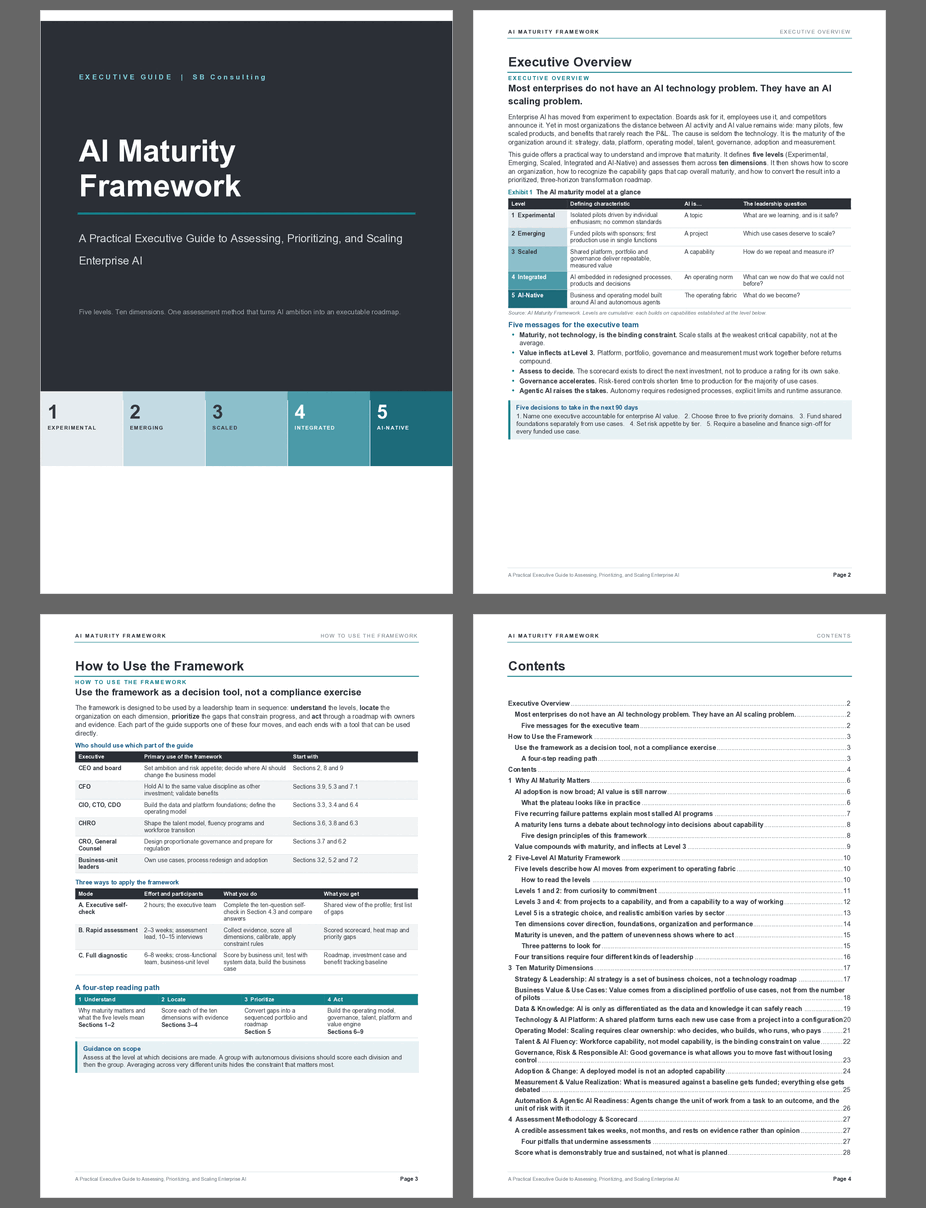
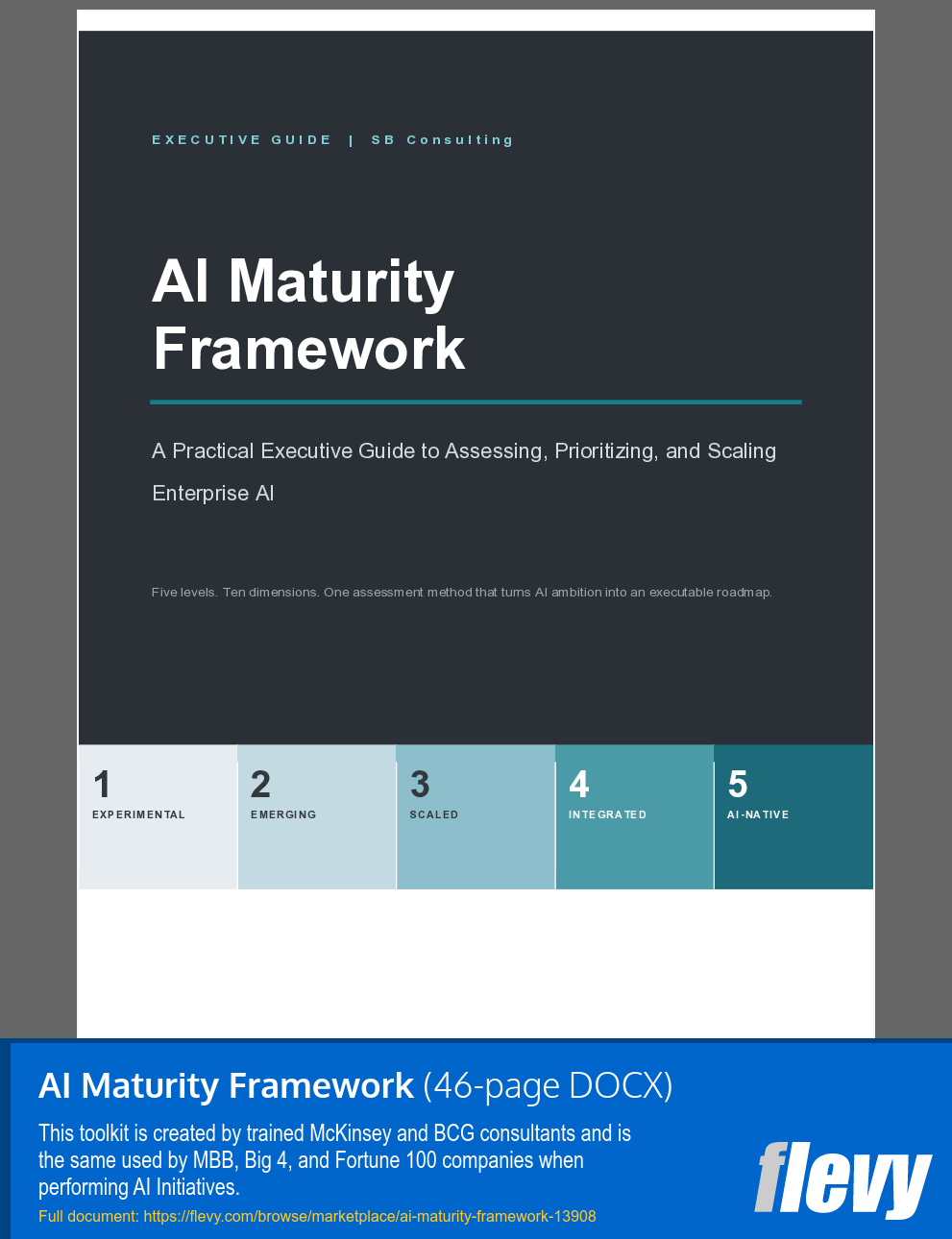
AI MATURITY FRAMEWORK
*A Practical Executive Guide to Assessing, Prioritizing, and Scaling Enterprise AI*
✅ Strategic clarity. Clear problem definition. Testable hypotheses. Owned outcomes.
✅ Fast decisions. Risk-tiered governance. Decision rights. Escalation paths. One-day resolution times.
✅ Measurable results. Baselined with Finance. Tracked monthly. Ownership and accountability.
✅ Founder-free operations. Repeatable execution. Distributed decisions. Scale without the CEO.
Turn vague AI ambitions into clear, measurable, scaled competitive advantage.
Your next strategic project—and your next competitive advantage—starts here.
Keywords: Process Audit SOPs, Internal Audit Standard Operating Procedures, Process Audit Framework, Control Testing Procedures, Risk Assessment Methodologies, Audit Governance, Process Audit Strategy, Audit Evidence Collection, Compliance Audit SOPs, Continuous Auditing, Process Mapping, Audit Documentation Standards, Audit Quality Assurance, Process Risk Management, Operational Risk Audit, Enterprise Audit Management, Audit Committee Reporting, Audit Analytics, Process Mining, AI-Assisted Auditing, Audit Technology SOPs, Global Process Audit, Audit Playbooks, Audit Templates, Audit Training Programs, Audit Remediation Management, Audit Excellence, Process Audit Toolkit, McKinsey Audit Framework, Audit Best Practices, Enterprise Governance, Internal Control Assessment, Audit Procedures Manual, Audit Program Design, Audit Resource Planning, Audit Scheduling, Audit Efficiency, Audit Effectiveness, Audit Performance Metrics, Audit KPIs, Audit ROI, Audit Value Creation, Process Optimization, Operational Excellence, Business Process Audit, Functional Audit, Departmental Audit, Transactional Audit, Service Audit, Administrative Process Audit, Supply Chain Process Audit, Finance Process Audit, IT Process Audit, HR Process Audit, Procurement Process Audit, Sales Process Audit, Customer Service Audit, Production Audit, Quality Audit, Compliance Testing, Regulatory Audit, Policy Compliance, Procedure Audit, Documentation Audit, Audit Trail Review, Exception Management, Control Design, Control Effectiveness, Control Testing, Preventive Controls, Detective Controls, Corrective Actions, Root Cause Analysis, Finding Classification, Audit Report Writing, Executive Summaries, Audit Communication, Stakeholder Engagement, Process Owner Engagement, Management Accountability, Audit Committee Governance, Audit Charter, Audit Independence, Auditor Ethics, Professional Skepticism, Audit Competency, Audit Training, Audit Certification, Audit Standards (IIA, IAASB), Audit Best Practices, Audit Methodology, Audit Framework, Audit Operating Model, Process Audit Excellence, Audit Mastery, Fortune 500 Audit, Enterprise Audit Operations, Corporate Audit Function, Strategic Audit Planning, Transformation Audit, Digital Audit, Innovation Audit, Benchmarking Audit, Maturity Assessment, Audit Scaling, Audit Outsourcing, Co-Sourcing Models, Vendor Management, Audit Technology Stack, Audit Tools, Audit Software, Continuous Monitoring, Predictive Analytics, Anomaly Detection, Data Quality, Process Intelligence, Workflow Analytics, Business Process Management, Process Automation, RPA Audit, AI Governance, Responsible AI Audit, Cybersecurity Audit, Data Governance Audit, Privacy Audit, Information Security, Audit Evidence Standards, Working Papers, Audit Documentation, Audit File Management, Audit Records Retention, Audit Trail Integrity, Audit Report Confidentiality, Multi-Site Audit Coordination, Global Audit Strategy, International Audit Standards, Regional Audit Compliance, Cultural Considerations in Audit, Localization of Audit Procedures, Process Transformation Audit, Business Reengineering Audit, Change Audit, Operational Change, Audit Change Management, Audit Communication Plan, Audit Stakeholder Communication, Audit Performance Review, Audit Function Review, Strategic Review Process, Audit Leadership Development, Audit Team Development, Audit Coaching, Audit Supervision, Audit Career Progression, Audit Knowledge Management, Audit Playbook Development, Audit Template Library, Audit Standards Documentation, Audit Policy Manual, Lessons Learned Capture, Best Practice Sharing, Audit Continuous Improvement, Audit Methodology Enhancement, Audit Process Optimization, Audit Efficiency Improvement, Audit Effectiveness Enhancement, Audit Quality Improvement, Audit Risk Management, Audit Risk Register, Audit Issue Management, Audit Action Tracking, Audit Metrics Dashboard, Audit Performance Dashboard, Audit Scorecard, Audit Balanced Scorecard, KPI Framework for Audit, Audit Success Factors, Critical Success Factors in Audit, Audit Strategic Objectives, Audit Vision Statement, Audit Mission Statement, Audit Values and Ethics, Audit Culture, Audit Maturity Model, Audit Capability Model, Audit Competency Framework, Professional Development in Audit, Audit Certification Programs, Internal Audit Standards, Audit Best Practices Guide, Audit Reference Manual, Audit Operating Manual, Audit Procedures Manual, Audit Program Manual, McKinsey Audit Excellence, Deloitte Audit Framework, EY Audit Approach, KPMG Audit Methodology, Big 4 Audit Standards, Audit Industry Benchmarks, Audit Industry Standards, Audit Thought Leadership, Audit Innovation, Audit Transformation Program, Audit Digital Transformation, Audit Process Transformation, Audit Service Transformation, Audit Operating Model Transformation, Audit Function Evolution, Audit Future-Proofing, Emerging Trends in Audit, Audit 2025 Roadmap, Audit Strategic Priorities, Audit Strategic Planning, Audit Strategic Execution, Audit Implementation Plan, Audit Deployment Strategy, Audit Rollout Plan, Audit Quick-Start Guide, Audit Implementation Guide, Audit User Guide, Audit Handbook, Audit Manual, Audit Documentation Standard, Audit Work Standards, Audit Quality Standards, Audit Performance Standards, Audit Excellence Standards, Enterprise Audit Excellence, Audit Mastery Program, Audit Excellence Initiative, Audit Excellence Framework, Audit Excellence Culture, Audit Excellence Mindset, Strategic Audit Excellence, Operational Audit Excellence, Financial Audit Excellence, Compliance Audit Excellence, Quality Audit Excellence, Process Audit Excellence, Audit Excellence ROI, Audit Excellence Value Creation, Audit Excellence Competitive Advantage, Audit Excellence Strategic Advantage, Audit Excellence Performance Advantage, Audit Excellence Organizational Advantage, Inventory Management, Demand Planning, Inventory Optimization, Inventory Control, Supply Chain Management, Warehouse Operations, Replenishment Strategy, Inventory Analytics, WIP Reduction, Inventory Accuracy, Distribution Network, Inventory Forecasting, Supply Chain Excellence, Working Capital, Inventory KPIs, Procurement Strategy, Inventory Governance, Inventory SOPs, Continuous Improvement, Supply Chain Transformation, GenAI deployment SOPs, generative AI operating model, enterprise AI governance framework, AI Center of Excellence, responsible AI, AI risk management, AI use case prioritization, GenAI implementation roadmap, AI vendor selection, prompt engineering standards, AI compliance, AI adoption strategy, generative AI across value chain, AI strategy, enterprise transformation, AI implementation, AI scaling framework
Strategy & Transformation, Growth Strategy, Strategic Planning, Strategy Frameworks, Innovation Management, Pricing Strategy, Core Competencies, Strategy Development, Business Transformation, Marketing Plan Development, Product Strategy, Breakout Strategy, Competitive Advantage, Mission, Vision, Values, Strategy Deployment & Execution, Innovation, Vision Statement, Core Competencies Analysis, Corporate Strategy, Product Launch Strategy, BMI, Blue Ocean Strategy, Breakthrough Strategy, Business Model Innovation, Business Strategy Example, Corporate Transformation, Critical Success Factors, Customer Segmentation, Customer Value Proposition, Distinctive Capabilities, Enterprise Performance Management, KPI, Key Performance Indicators, Market Analysis, Market Entry Example, Market Entry Plan, Market Intelligence, Market Research, Market Segmentation, Market Sizing, Marketing, Michael Porter's Value Chain, Organizational Transformation, Performance Management, Performance Measurement, Platform Strategy, Product Go-to-Market Strategy, Reorganization, Restructuring, SWOT, SWOT Analysis, Service 4.0, Service Strategy, Service Transformation, Strategic Analysis, Strategic Plan Example, Strategy Deployment, Strategy Execution, Strategy Frameworks Compilation, Strategy Methodologies, Strategy Report Example, Value Chain, Value Chain Analysis, Value Innovation, Value Proposition, Vision Statement, Corporate Strategy, Business Development, Business plan pdf, business plan, PDF, Business Plan DOC, Business Plan Template, PPT, Market strategy playbook, strategic market planning, competitive analysis tools, market segmentation frameworks, growth strategy templates, product positioning strategy, market execution toolkit, strategic alignment playbook, KPI and OKR frameworks, business growth strategy guide, cross-functional strategy templates, market risk management, market strategy PowerPoint doc, guide, ebook, e-book ,McKinsey Change Playbook, Organizational change management toolkit, Change management frameworks 2025, Influence model for change, Change leadership strategies, Behavioral change in organizations, Change management PowerPoint templates, Transformational leadership in change, supply chain KPIs, supply chain KPI toolkit, supply chain PowerPoint template, logistics KPIs, procurement KPIs, inventory management KPIs, supply chain performance metrics, manufacturing KPIs, supply chain dashboard, supply chain strategy KPIs, reverse logistics KPIs, sustainability KPIs in supply chain, financial supply chain KPIs, warehouse KPIs, digital supply chain KPIs, 1200 KPIs, supply chain scorecard, KPI examples, supply chain templates, Corporate Finance SOPs, Finance SOP Excel Template, CFO Toolkit, Finance Department Procedures, Financial Planning SOPs, Treasury SOPs, Accounts Payable SOPs, Accounts Receivable SOPs, General Ledger SOPs, Accounting Policies Template, Internal Controls SOPs, Finance Process Standardization, Finance Operating Procedures, Finance Department Excel Template, FP&A Process Documentation, Corporate Finance Template, Finance SOP Toolkit, CFO Process Templates, Accounting SOP Package, Tax Compliance SOPs, Financial Risk Management Procedures.
NOTE: Our digital products are sold on an "as is" basis, making returns and refunds unavailable post-download. Please preview and inquire before purchasing. Please contact us before purchasing if you have any questions! This policy aligns with the standard Flevy Terms of Usage.
Got a question about the product? Email us at support@flevy.com or ask the author directly by using the "Ask the Author a Question" form. If you cannot view the preview above this document description, go here to view the large preview instead.
Source: Best Practices in Artificial Intelligence, Maturity Model Word: AI Maturity Framework Word (DOCX) Document, SB Consulting
ABOUT THE AUTHOR

SB Consulting is dedicated to empowering businesses to communicate their ideas with impact. This consulting firm specializes in teaching organizations how to create effective corporate and management presentations. With training from top-tier global consulting firms, including McKinsey, BCG, and Porsche Consulting, extensive expertise in presentation design and ... [read more]
Ask the Author a Question
You must be logged in to contact the author.




























