
Editor Summary
118-slide PowerPoint training presentation for Mergers & Acquisitions that provides a structured M&A methodology and practical tools.
Read moreCovers M&A phases, trends, guiding principles, the "XYZ Approach," case examples, synergy calculation, and common pitfalls. Deliverables include a target screening checklist, due diligence framework, valuation model, integration planning template, synergy quantification worksheet, and communication plan template (6 tools). Crafted with McKinsey/Bain/BCG-quality rigor (not affiliated). Target users: corporate executives, acquisition consultants, integration leaders, and financial analysts. Sold as a digital download on Flevy with immediate digital download.
Use this training when an organization needs to align M&A strategy, train new deal teams, prepare for diligence and valuation, or design post‑deal integration plans — for example during pre-acquisition workshops, onboarding, or integration planning.
Corporate executives aligning strategy and objectives in pre-acquisition strategy sessions using screening criteria.
Acquisition consultants learning target screening, due diligence sequencing, and synergy calculation exercises.
Integration leaders building detailed integration plans and stakeholder communication schedules with templates.
Financial analysts running valuation and sensitivity checks using the provided valuation model and synergy worksheet.
The deck’s XYZ approach and emphasis on rigorous screening, valuation, and integration mirror the analytical, hypothesis-driven consulting practices associated with McKinsey, Bain, and BCG.
This is a training material used for merger and acquisition projects.
It includes:
• Guiding Principles For Successful M&A
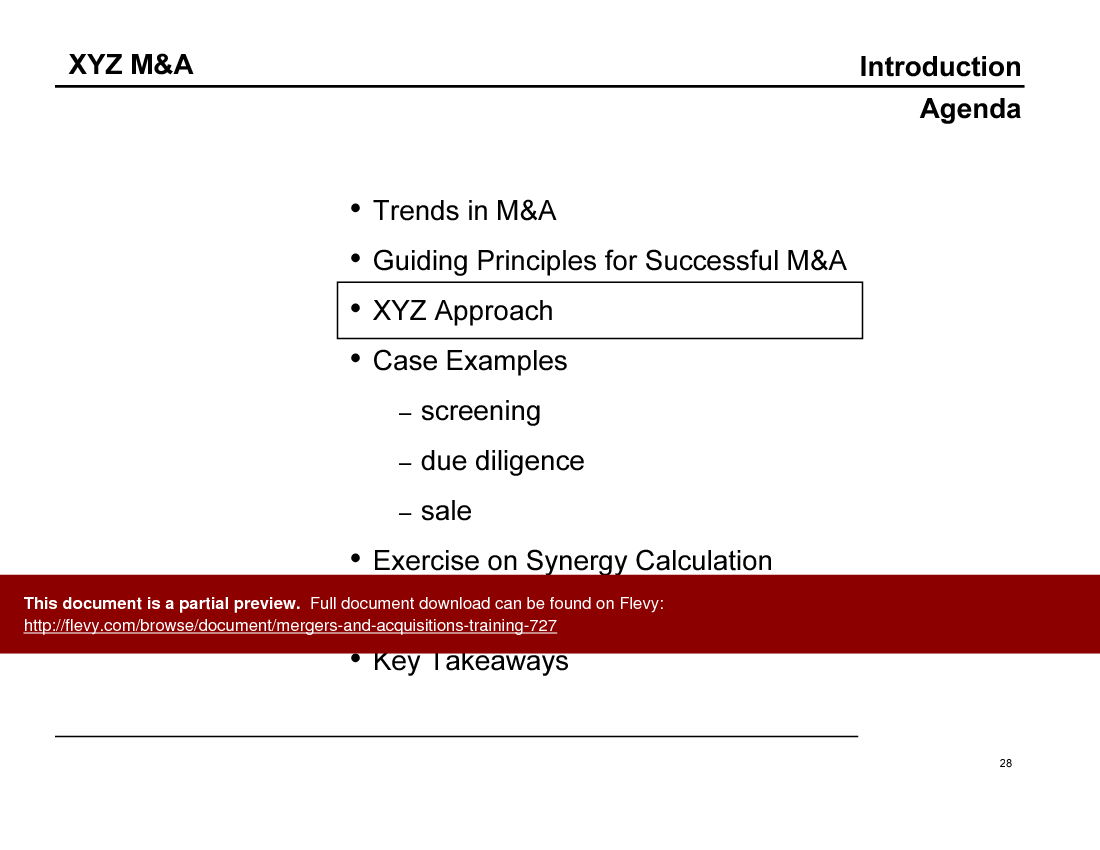
• The Firms M&A Approach
• Case Examples
• How to Calculate Synergies
• Typical Watchouts
• Key Takeaways
It contains many useful frameworks and tools that can be adapted for use in M&A deals.
merger & acquisition, M&A, due diligence, consulting, tools, approach, synergies,
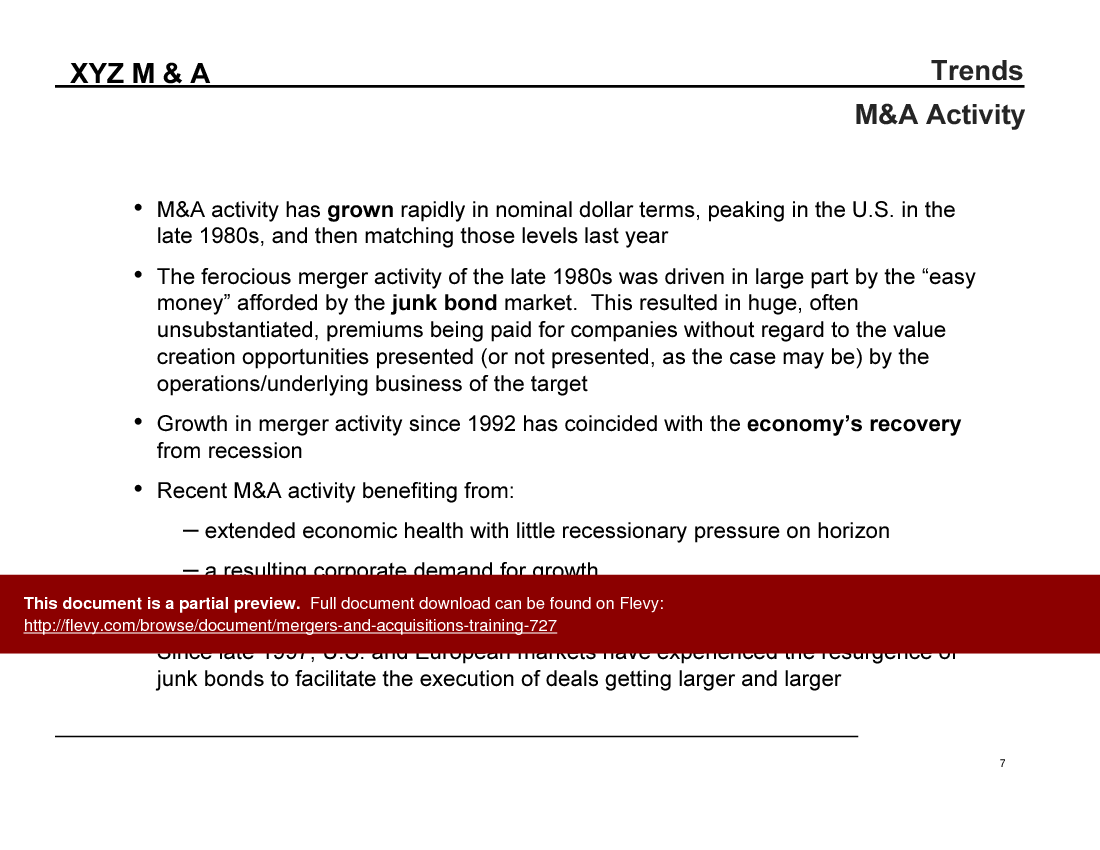
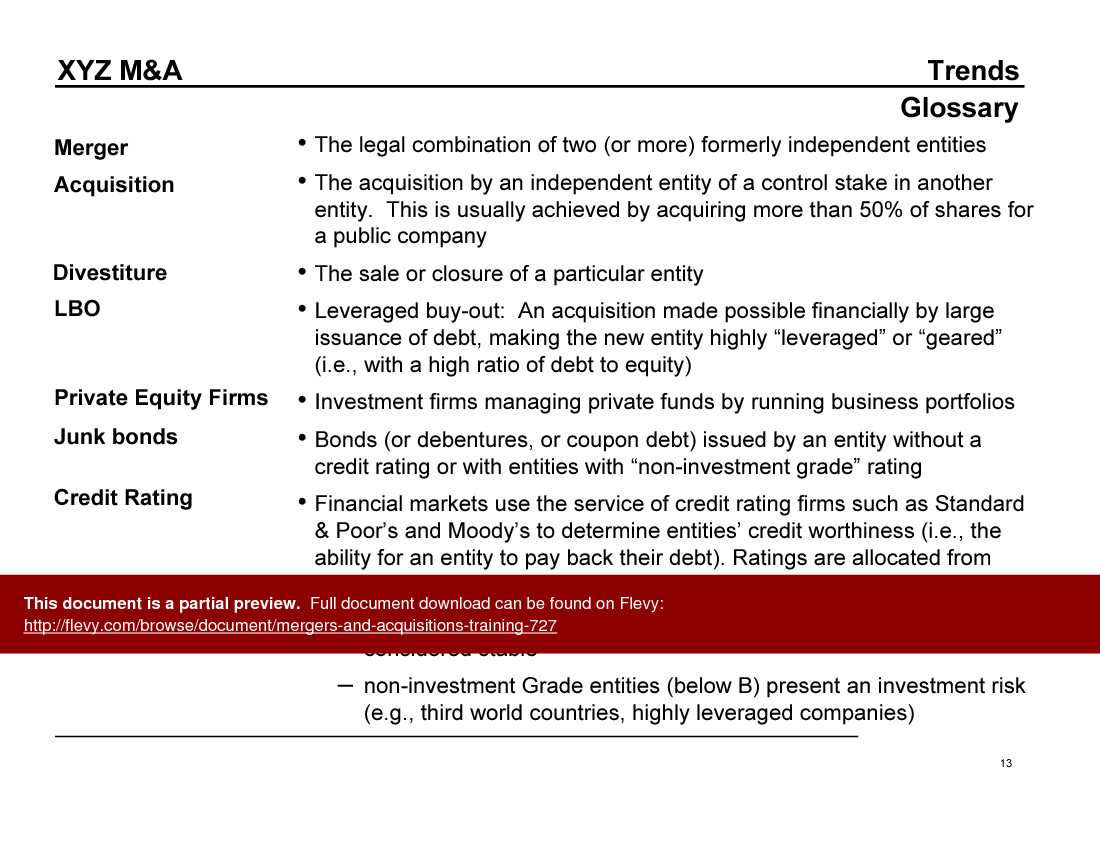
This training material delves into the intricacies of M&A activities, highlighting the rapid growth in nominal dollar terms and the significant role of the junk bond market in the late 1980s. It examines how economic recovery has influenced recent M&A activity, emphasizing the importance of thorough due diligence and strategic analysis to ensure fair pricing. The document provides a detailed glossary of key terms, ensuring clarity and understanding of essential concepts.
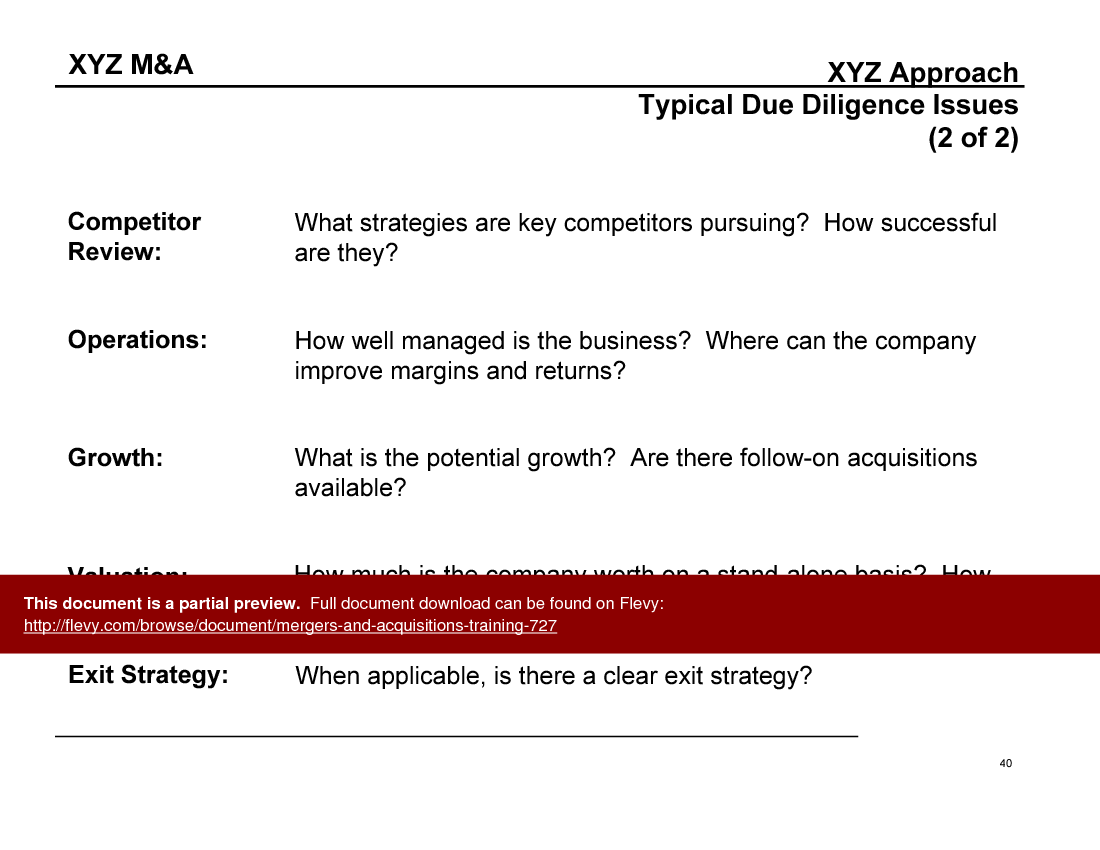
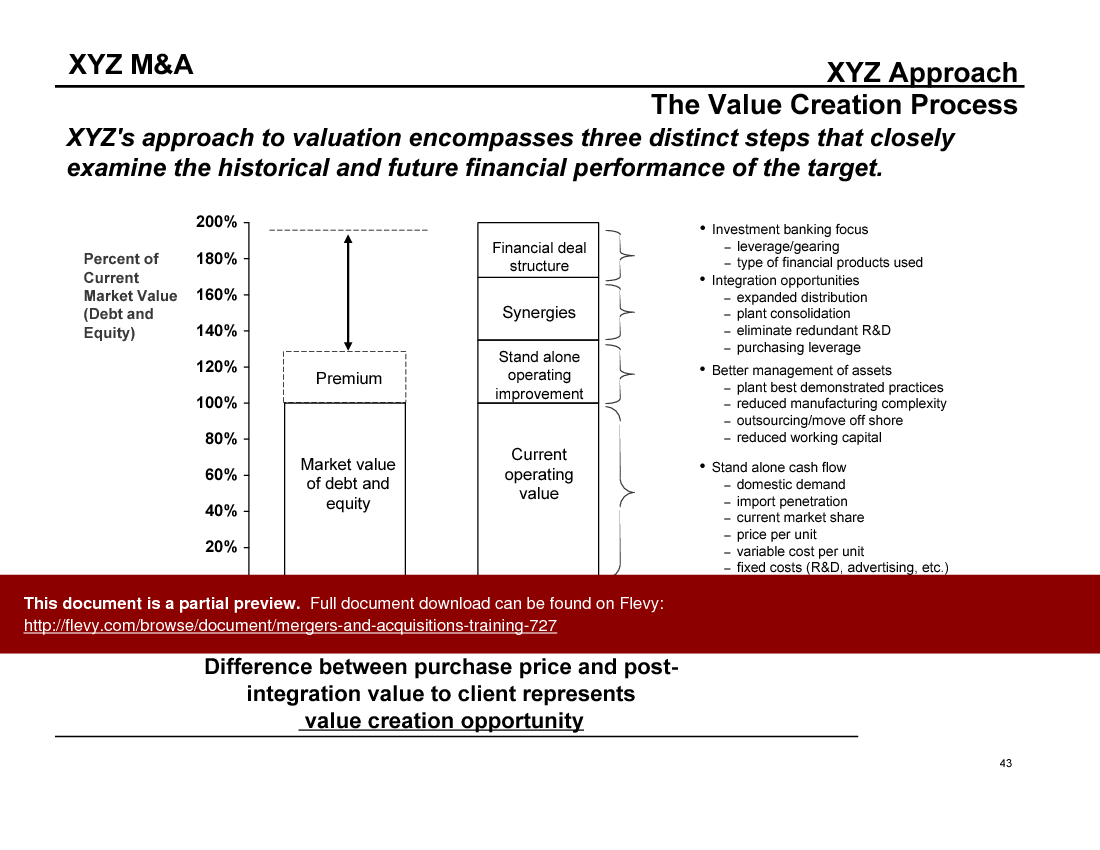
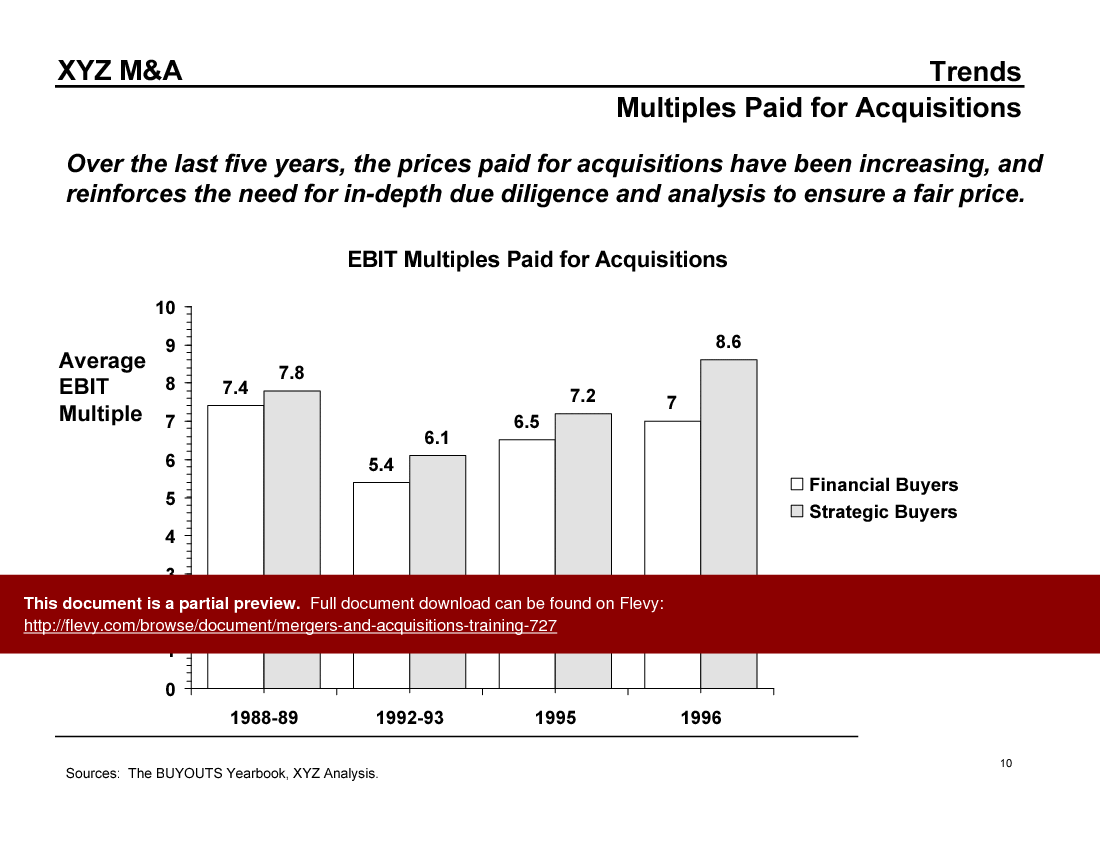
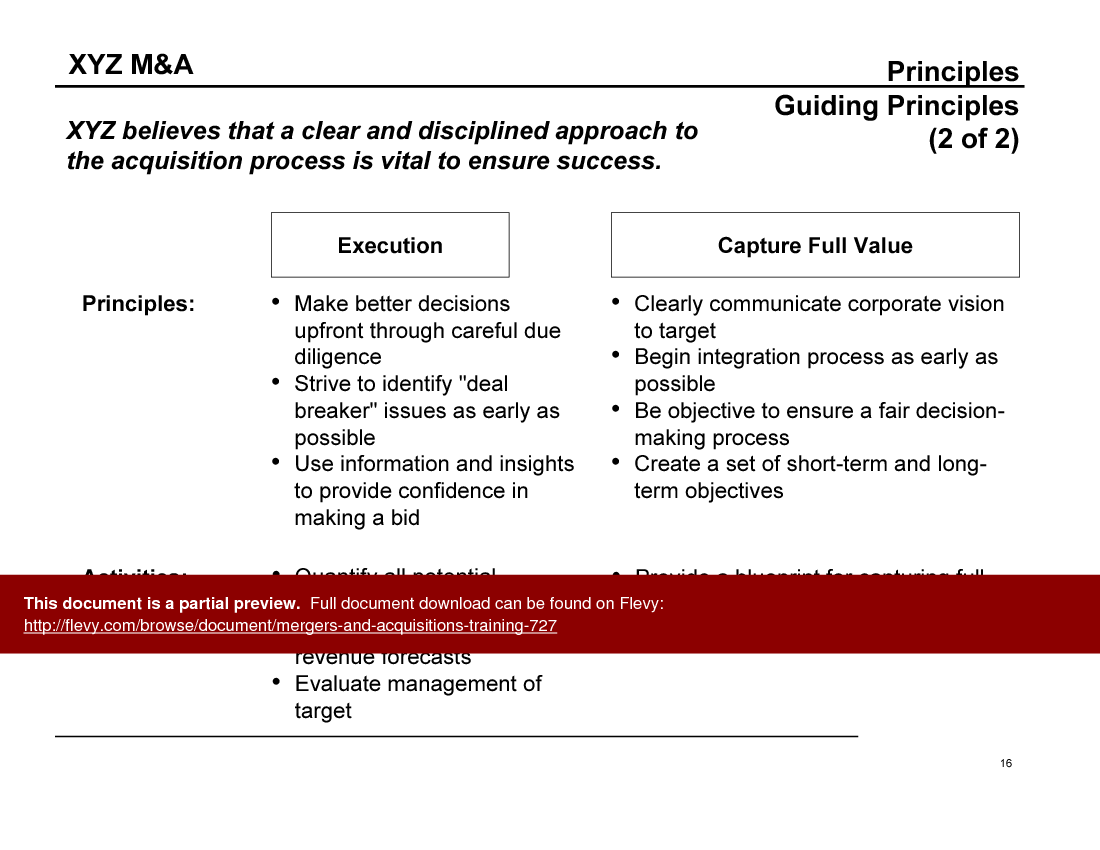
The document also includes a comprehensive analysis of multiples paid for acquisitions over the years, underscoring the rising prices and the necessity for in-depth due diligence. It offers a structured approach to valuation, focusing on historical and future financial performance. The training material emphasizes the importance of identifying deal-breaker issues early and using information to build confidence in making bids.
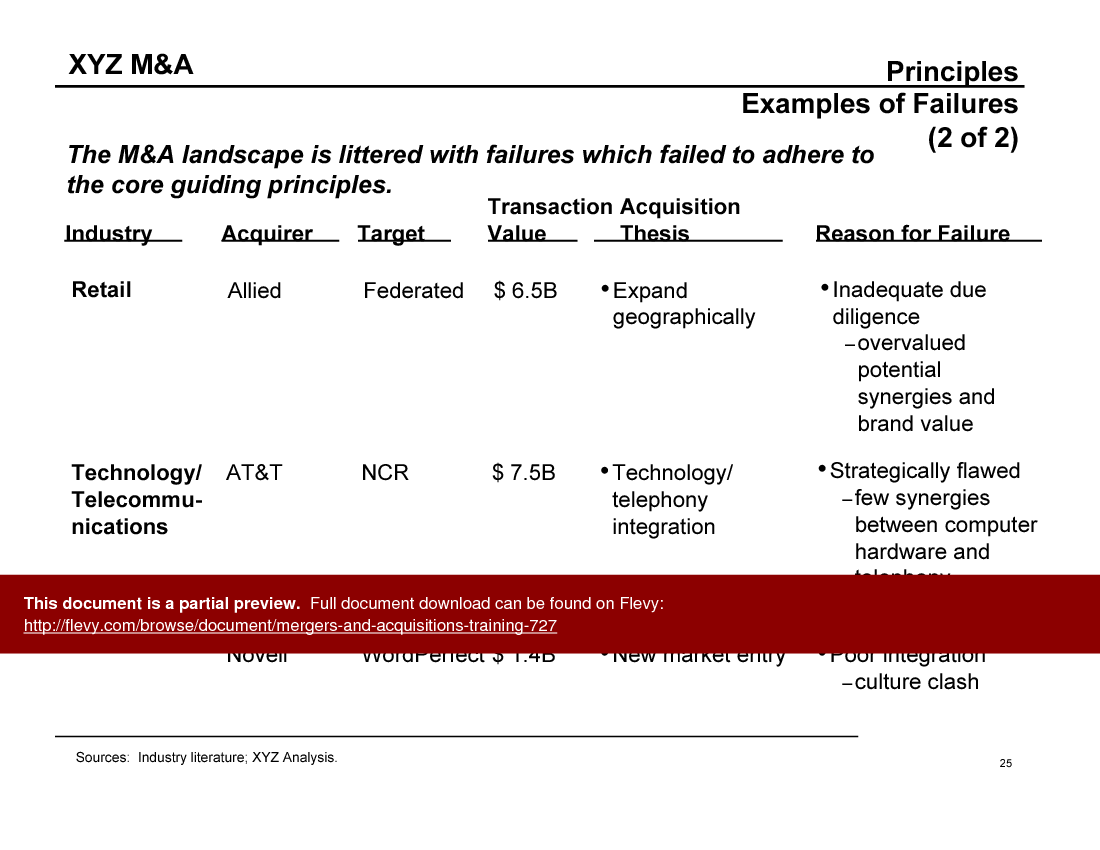
Case examples are provided to illustrate the application of M&A principles in real-world scenarios. These examples cover various industries, showcasing the evaluation of potential acquisition candidates, market segment analysis, and the impact of strategic decisions on business growth and value realization. The document also includes exercises on synergy calculation, encouraging practical application of the concepts discussed.
The training material concludes with key takeaways, summarizing the major steps in the M&A process, from strategy development to integration. It highlights the complementary role of XYZ in the M&A process, focusing on strategic issues and value quantification. This document is an invaluable resource for executives looking to navigate the complexities of M&A and maximize the value of their transactions.
Got a question about the product? Email us at support@flevy.com or ask the author directly by using the "Ask the Author a Question" form. If you cannot view the preview above this document description, go here to view the large preview instead.
MARCUS OVERVIEW
This synopsis was written by Marcus [?] based on the analysis of the full 118-slide presentation.
Executive Summary
This Mergers & Acquisitions (M&A) training presentation provides a structured approach to understanding the complexities of M&A processes, tailored for new acquisition consultants and corporate executives. Crafted with the rigor expected from a McKinsey, Bain, or BCG-quality framework (consulting-grade; not affiliated), this deck covers essential analytical tools, guiding principles, and case examples that enhance decision-making in M&A projects. Participants will learn to identify strategic opportunities, assess potential synergies, and navigate common pitfalls, ultimately enabling them to execute successful M&A transactions.
Who This Is For and When to Use
• Corporate executives overseeing M&A strategy and execution
• Acquisition consultants seeking foundational knowledge in M&A processes
• Integration leaders responsible for post-acquisition integration
• Financial analysts involved in valuation and due diligence
Best-fit moments to use this deck:
• During pre-acquisition strategy sessions to align on objectives
• In training sessions for new consultants entering the M&A field
• When preparing for due diligence and valuation discussions
• As a reference during integration planning post-acquisition
Learning Objectives
• Define the key phases of the M&A process and their significance
• Identify trends and drivers influencing M&A activity
• Analyze potential acquisition targets using screening criteria
• Conduct thorough due diligence to uncover risks and opportunities
• Quantify synergies and assess their impact on valuation
• Develop a structured integration plan to maximize value post-acquisition
Table of Contents
• Introduction to M&A (page 2)
• Trends in M&A (page 5)
• Guiding Principles for Successful M&A (page 15)
• XYZ Approach (page 29)
• Case Examples (page 53)
• Exercise on Synergy Calculation (page 86)
• Typical Watchouts (page 113)
• Key Takeaways (page 116)
Primary Topics Covered
• Trends in M&A - Overview of current M&A activity, including economic drivers and industry-specific trends influencing mergers and acquisitions.
• Guiding Principles - Core principles that guide successful M&A strategies, emphasizing strategic fit and value creation.
• XYZ Approach - A structured methodology for screening targets, conducting due diligence, and executing integration plans.
• Case Examples - Real-world examples illustrating the application of M&A principles and strategies in various industries.
• Synergy Calculation - Techniques for quantifying synergies derived from mergers, including hard and soft synergies.
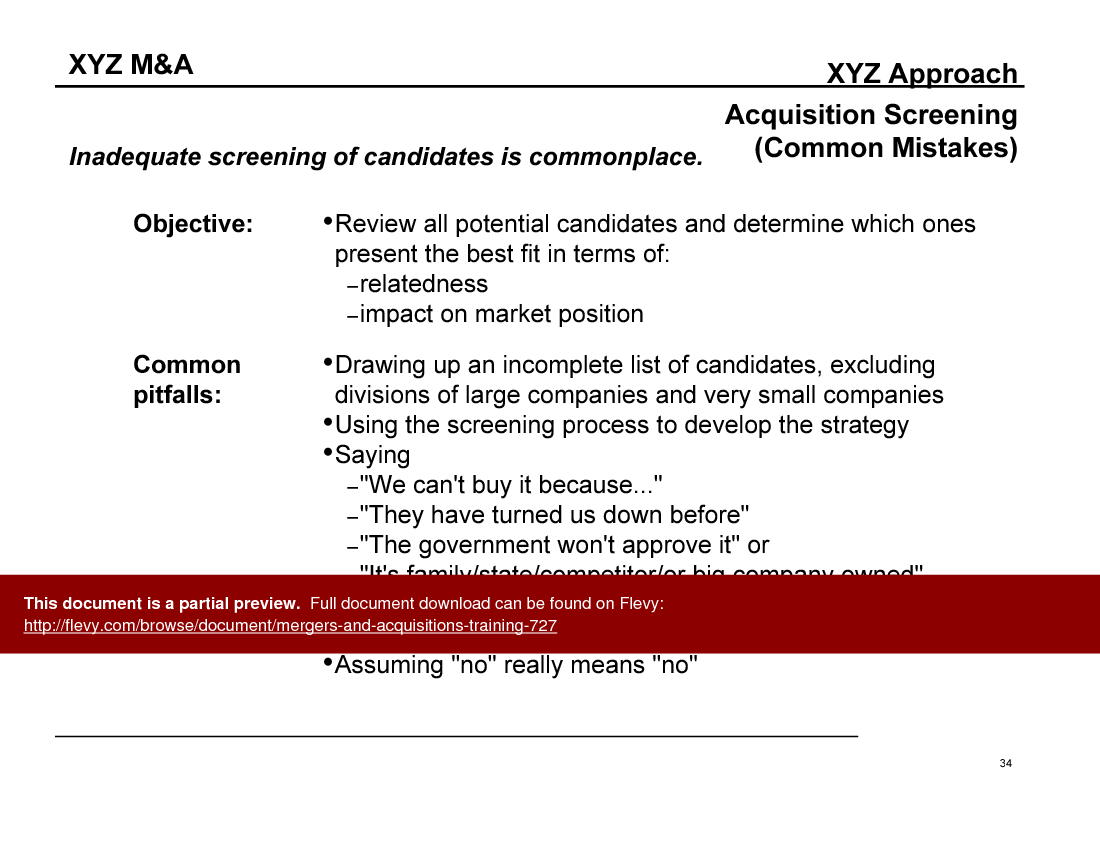
• Common Pitfalls - Identification of frequent mistakes in the M&A process and strategies to avoid them.
Deliverables, Templates, and Tools
• Target screening checklist to evaluate potential acquisition candidates
• Due diligence framework for assessing operational and financial risks
• Valuation model for estimating the fair price of acquisition targets
• Integration planning template to outline key actions and timelines
• Synergy quantification worksheet for calculating potential cost and revenue synergies
• Communication plan template for stakeholder engagement during the M&A process
Slide Highlights
• Overview of M&A trends showcasing historical data and future projections
• Guiding principles slide emphasizing the importance of strategic alignment
• Case example slides that detail successful and failed acquisitions, highlighting lessons learned
• Visual representation of the XYZ approach to M&A, outlining key activities and roles
• Synergy calculation slide illustrating methods for quantifying potential benefits
Potential Workshop Agenda
M&A Overview Session (90 minutes)
• Introduce key M&A concepts and trends
• Discuss guiding principles for successful acquisitions
• Review case examples of M&A successes and failures
Synergy Calculation Workshop (60 minutes)
• Conduct a hands-on exercise to quantify synergies
• Discuss methodologies for estimating cost and revenue synergies
• Share best practices for integrating acquired entities
Integration Planning Session (90 minutes)
• Develop a structured integration plan using provided templates
• Identify key stakeholders and communication strategies
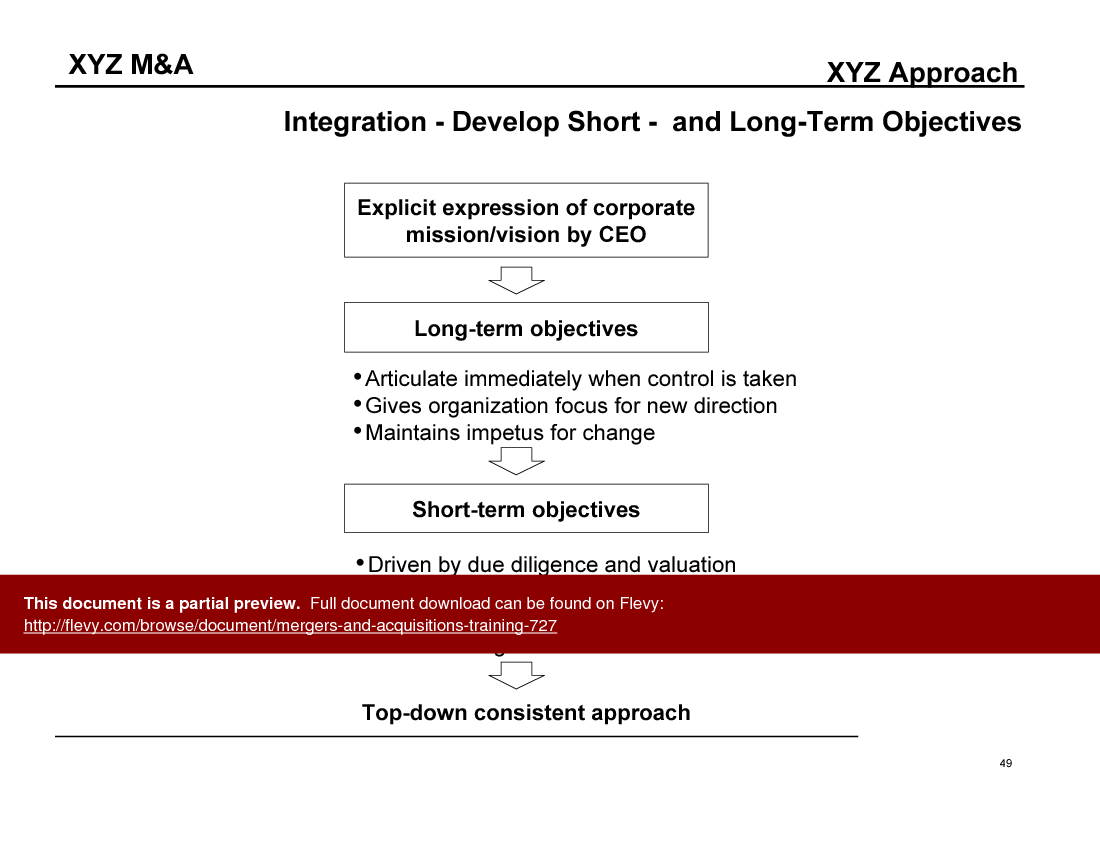
• Outline short-term and long-term objectives for post-acquisition success
Customization Guidance
• Tailor the target screening criteria to align with specific industry dynamics and strategic goals
• Adjust the due diligence framework to focus on unique operational risks relevant to the acquisition
• Modify the integration planning template to reflect organizational culture and management styles
Secondary Topics Covered
• Market dynamics affecting M&A activity
• Financial metrics and valuation techniques for assessing acquisition targets
• Cultural considerations in post-merger integration
• Regulatory and compliance issues in M&A transactions
• Strategies for managing stakeholder expectations during the M&A process
Topic FAQ
What are the typical phases of an M&A process and what does each phase involve?
The M&A process typically includes strategy development, target screening, due diligence, valuation, and integration planning. Strategy defines objectives; screening evaluates market attractiveness and fit; due diligence uncovers risks across financial, operational, and market areas; valuation estimates fair price; integration planning captures synergies and operational alignment across 5 phases.
How do you quantify synergies in an acquisition?
Synergy quantification separates hard synergies (cost savings) and soft synergies (revenue enhancements). Quantification uses detailed line-item estimates, corroborating assumptions during diligence, and a structured worksheet to aggregate impacts. The approach is applied through the deck’s synergy calculation exercise and the synergy quantification worksheet.
What should be included in an M&A due diligence framework?
A due diligence framework should assess financial statements, operational performance, market position, regulatory/compliance risks, and key value drivers to validate assumptions and identify deal breakers. The M&A training includes a deliverable labeled a due diligence framework to structure these analyses and risk checks.
What should I look for when choosing an M&A training deck for my team?
Choose a deck that maps the full M&A lifecycle, provides practical templates (screening, valuation, integration), includes case examples and exercises, and explains common pitfalls. The Mergers & Acquisitions Training deck lists case examples, an XYZ approach, and templates such as a target screening checklist, valuation model, and integration planning template.
How much time is typically required to run M&A training workshops using a slide deck?
Workshop time varies by depth; example agendas include a 90‑minute M&A overview session, a 60‑minute synergy calculation workshop, and a 90‑minute integration planning session. These sessions cover concepts, hands-on synergy exercises, and integration template use in 90, 60, and 90 minutes respectively.
What should I expect to pay for M&A templates and how do I judge their value?
Pricing varies by vendor; judge value by included practical tools and adaptability: target screening checklist, due diligence framework, valuation model, integration planning template, synergy quantification worksheet, and a communication plan template. The Mergers & Acquisitions Training deck explicitly includes those 6 named templates.
I need to integrate 2 companies after an acquisition; what framework should I use to plan integration?
Use a structured integration planning approach that defines short‑ and long‑term objectives, identifies stakeholders and roles, sequences critical integration activities, and tracks milestones. The training provides an integration planning template and a suggested 90‑minute integration planning session to develop that structured plan.
How can I avoid common M&A pitfalls like overestimating synergies or missing deal breakers?
Mitigate those risks through thorough, cross‑functional due diligence, conservative synergy estimates validated by data, and early identification of deal breakers. Use tools such as a due diligence framework, a valuation model to test assumptions, and the synergy quantification worksheet to validate synergy estimates.
Document FAQ
These are questions addressed within this presentation.
What are the key phases of the M&A process?
The M&A process typically includes strategy development, target screening, due diligence, valuation, and integration planning. Each phase is critical for ensuring a successful acquisition.
How do I identify potential acquisition targets?
Use a structured screening process that evaluates candidates based on market attractiveness, strategic fit, and potential synergies. This involves analyzing industry trends and competitive positioning.
What common pitfalls should I avoid in M&A?
Common pitfalls include inadequate due diligence, overestimation of synergies, and poor integration planning. Awareness of these issues can help mitigate risks.
How can I quantify synergies from an acquisition?
Synergies can be quantified by assessing cost savings (hard synergies) and revenue enhancements (soft synergies). Use a synergy calculation worksheet to estimate potential benefits.
What role does due diligence play in the M&A process?
Due diligence is essential for uncovering risks and validating assumptions about the target company. It involves a thorough analysis of financial, operational, and market factors.
How important is integration planning post-acquisition?
Integration planning is crucial for realizing the full value of an acquisition. A well-structured plan ensures that synergies are captured and that the combined entity operates effectively.
What are the guiding principles for successful M&A?
Key principles include ensuring strategic alignment, conducting thorough due diligence, and maintaining clear communication throughout the process.
How do I assess the cultural fit between merging companies?
Evaluate cultural compatibility by analyzing management styles, employee engagement, and organizational values. Conduct interviews and surveys to gather insights from both organizations.
Glossary
• M&A - Mergers and Acquisitions, the process of consolidating companies or assets.
• Synergy - The potential financial benefit achieved through the combination of 2 companies.
• Due Diligence - The investigation and evaluation of a potential investment or acquisition.
• Valuation - The process of determining the current worth of an asset or company.
• Integration - The process of combining 2 companies into one cohesive entity.
• Hard Synergies - Cost savings that can be directly quantified from an acquisition.
• Soft Synergies - Revenue enhancements that arise from improved market positioning or operational efficiencies.
• Screening Criteria - The set of standards used to evaluate potential acquisition targets.
• Market Dynamics - The forces that impact the supply and demand of goods and services in a market.
• Stakeholder - Any individual or group that has an interest in the outcome of a project or transaction.
• Strategic Fit - The degree to which an acquisition aligns with the acquirer's strategic goals.
• Competitive Position - The relative standing of a company in its industry compared to its competitors.
• Portfolio Management - The process of managing a collection of investments or business units.
• Acquisition Thesis - The rationale behind pursuing a specific acquisition.
• Exit Strategy - A plan for how an investor or company intends to divest from an investment or business.
• Market Share - The portion of a market controlled by a particular company or product.
• EBIT - Earnings Before Interest and Taxes, a measure of a firm's profitability.
• DCF - Discounted Cash Flow, a valuation method used to estimate the value of an investment based on its expected future cash flows.
• NPV - Net Present Value, a financial metric used to assess the profitability of an investment.
• ROI - Return on Investment, a measure used to evaluate the efficiency of an investment.
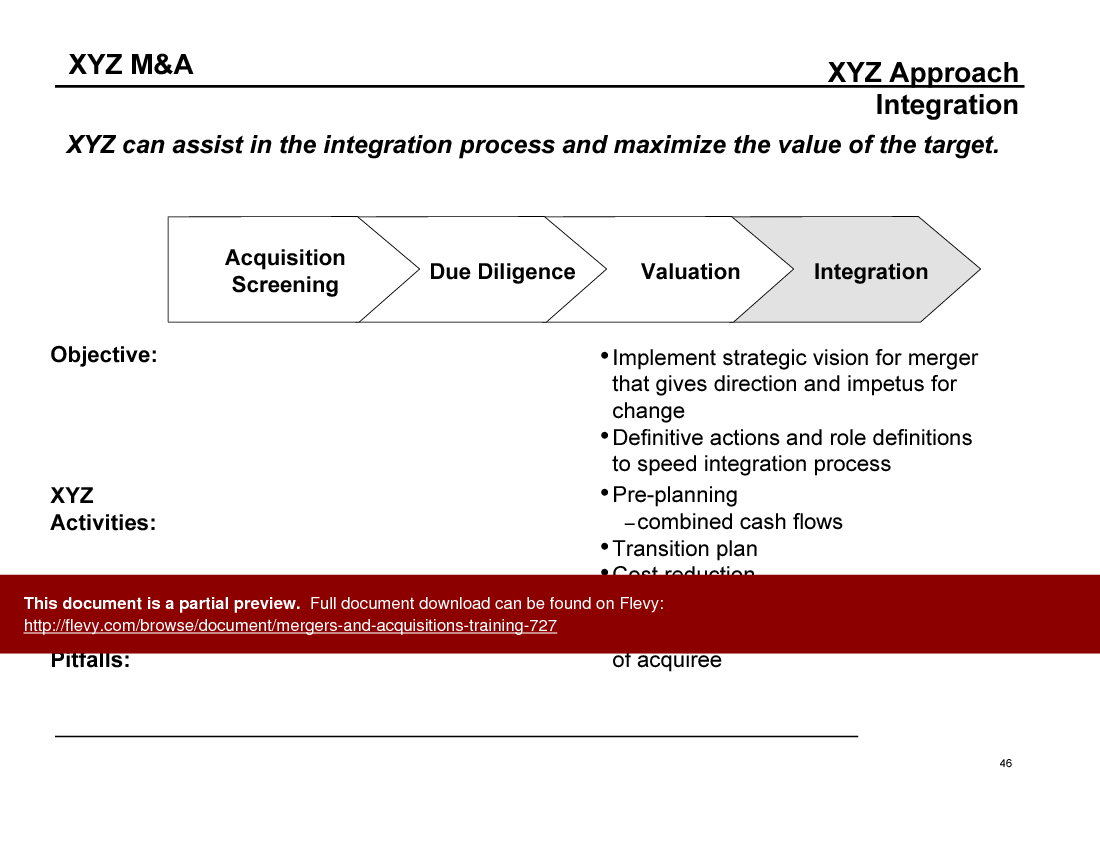
This PPT slide outlines the M&A process, detailing 4 key phases: Acquisition Screening, Due Diligence, Valuation, and Integration. In Acquisition Screening, the focus is on identifying candidates that align with strategic goals, assessing relatedness and market position. Activities include creating industry profiles and target screening, with pitfalls like incomplete candidate lists. Due Diligence aims to inform early decisions, providing a clear agenda for post-acquisition changes and enhancing deal closure likelihood. Key activities involve reviewing market trends and potential synergies, with pitfalls such as overlooking critical "deal breaker" issues. The Valuation phase quantifies the acquisition candidate's strategic value through financial assessments and market dynamics, while pitfalls often involve uncritical acceptance of management projections. Integration focuses on implementing a strategic vision, including cash flow planning and revenue enhancement strategies, with common pitfalls like reluctance to engage in operations and ignoring market dynamics.
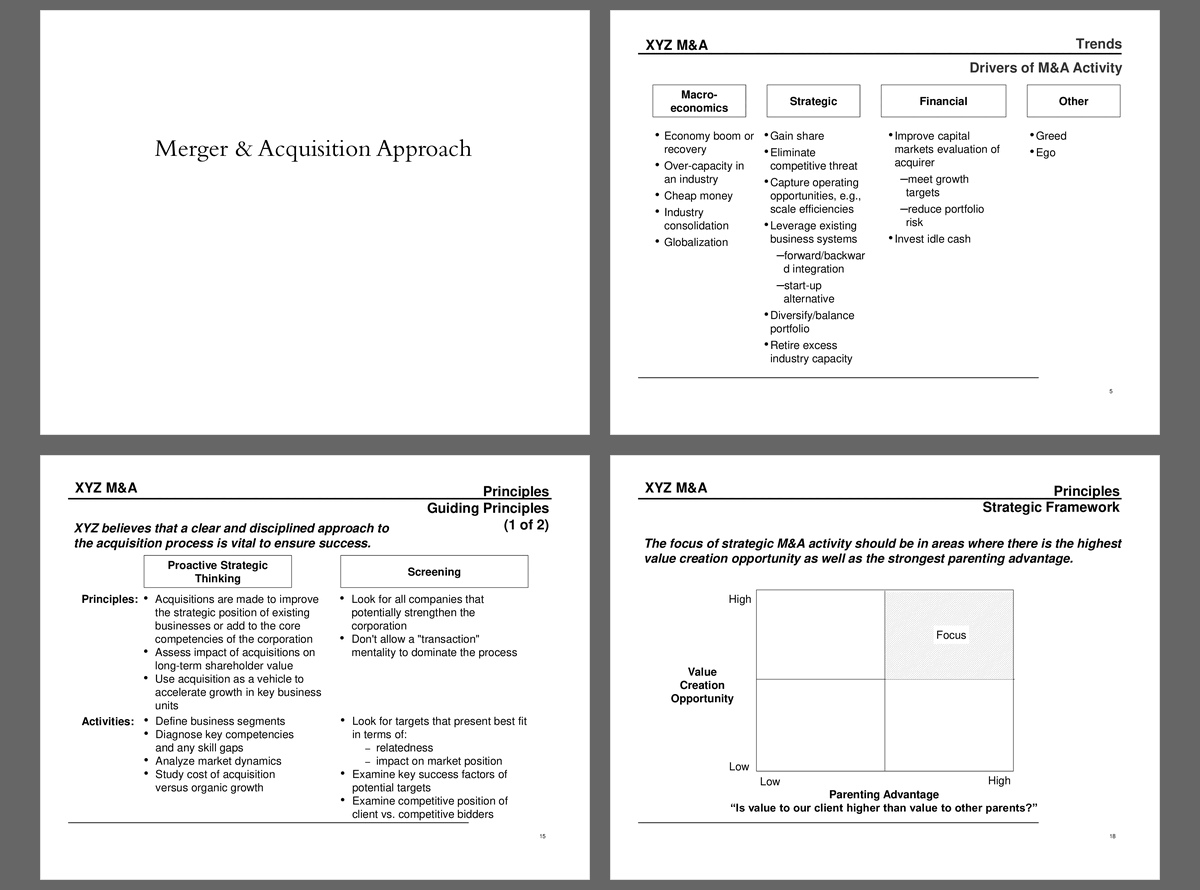
This PPT slide outlines guiding principles for mergers and acquisitions (M&A) at XYZ, focusing on a structured acquisition process. The Proactive Strategic Thinking section emphasizes that acquisitions should enhance strategic positions and core competencies, prioritizing long-term value creation and shareholder value. Key activities include defining business segments, diagnosing key competencies, analyzing market dynamics, and comparing acquisition costs to organic growth. The Screening section identifies potential acquisition targets, advocating for a strategic view rather than a "transaction" mentality. It emphasizes assessing targets based on relatedness and market position impact, aiming for synergies between acquiring and target companies.
This PPT slide outlines a structured approach to M&A valuation, focusing on 4 key components. "Develop Core Business Expectations" involves creating a five-year cash flow forecast, identifying sensitivity areas such as market growth, customer dynamics, cost reduction strategies, and capital expenditures to assess financial health. "Value Target as Stand Alone Business" emphasizes thorough due diligence, including historical financial analysis, future projections, discounted cash flow (DCF) analysis, and comparisons with similar businesses. "Value Potential Synergies" examines alignment with strategic goals, assessing cost reduction and revenue synergies, while considering customer and competitive responses. "Develop Required Capital Structure" addresses financial implications, forecasting combined cash flows and identifying financing sources like equity and secured debt, highlighting the investment bank's role in evaluating affordability and risk.
This PPT slide outlines a structured approach to evaluating mergers and acquisitions (M&A) with 4 selected candidates. Key criteria for selection include size, product mix, geographic mix, and availability, forming the basis for identifying suitable consolidation players. The analysis of potential synergies categorizes them into hard, soft, and soft-soft synergies, with hard synergies representing quantifiable benefits like cost savings, while soft synergies involve cultural or operational improvements. Each candidate pairing will be assessed for both hard and soft synergies, allowing for a nuanced understanding of their complementarity. The integration of results emphasizes drawing conclusions on the best potential consolidation, providing a clear framework for informed decision-making in M&A opportunities.
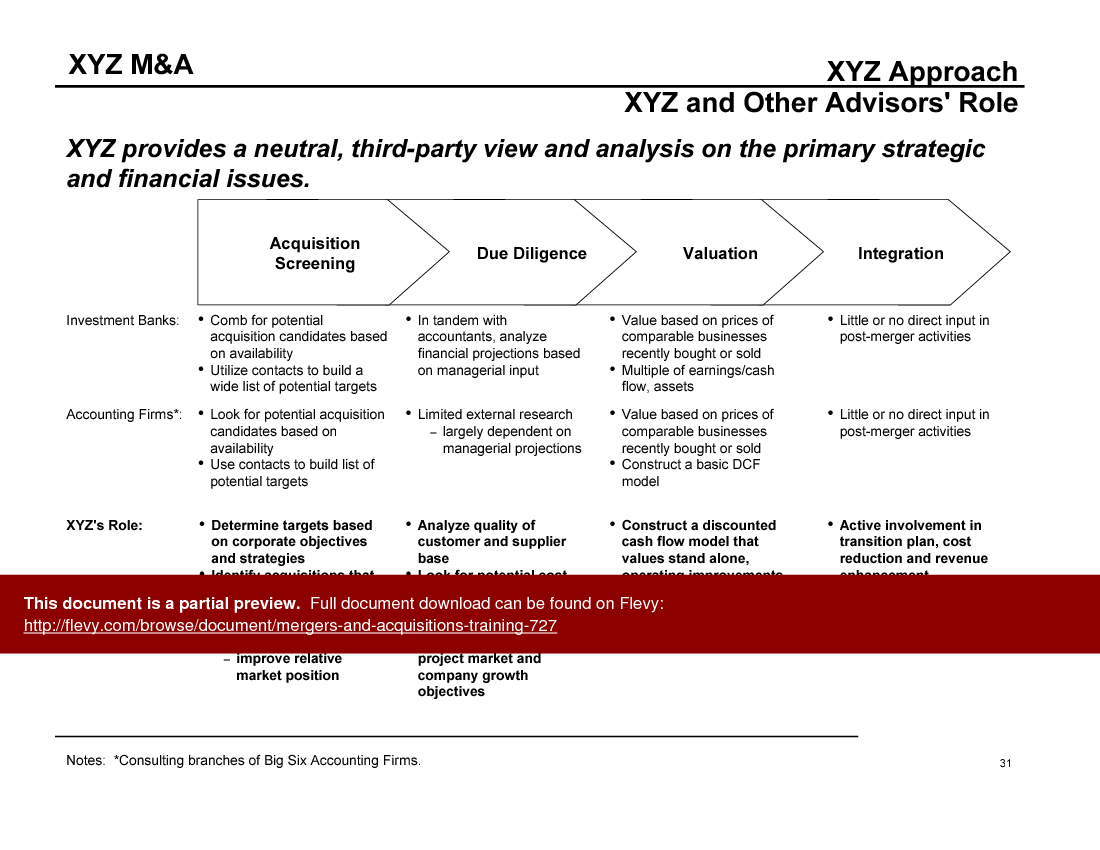
This PPT slide outlines the roles of stakeholders in the M&A process, focusing on XYZ, investment banks, lawyers, and accountants. It includes a bar graph illustrating the percentage of professional time allocated to phases such as candidate identification, due diligence, valuation, deal structure, negotiation, and implementation. XYZ plays a key role in market valuation, screening studies, and portfolio assessments, particularly in the initial stages of candidate investigation. Investment banks support pricing, terms, and board presentations, communicating the strategic rationale of the deal. Lawyers handle legal due diligence and document drafting, ensuring compliance. Accountants conduct financial due diligence, verifying the deal's financial soundness. This collaborative framework highlights the specialized expertise each stakeholder contributes at different M&A stages.
This PPT slide presents a value chain analysis for the sand industry, focusing on foundry and frac whole grain segments. The value chain is segmented into 4 stages: Extraction, Processing, Manufacturers Margin, and Distribution. Extraction involves gathering raw materials, while Processing refers to refining these materials. The Manufacturers Margin indicates profit retained by producers after costs, essential for financial viability. Distribution is the largest cost component, highlighting the significance of logistics in pricing structure. End-user prices range from $20 to $250, reflecting variability based on product type and processing methods. Products are categorized into whole grain and resin-coated types, indicating different market segments and pricing strategies essential for strategic investment decisions.
This PPT slide outlines the relationship between acquisitions and a company's growth strategy, emphasizing integration at both corporate and business unit levels. Corporate objectives include growth and financial targets, setting the foundation for overall corporate strategy and resource management. Business unit objectives define specific goals aligned with corporate strategy, focusing on the strategic position and key success factors. The pathways of "Growth through corporate acquisitions" and "Growth through business unit acquisitions" are essential for overall growth. This comprehensive approach to mergers and acquisitions highlights the necessity of a well-defined strategy that encompasses both corporate and business unit levels, guiding decision-making in M&A activities.
This PPT slide analyzes integration challenges in mergers and acquisitions, focusing on balancing swift operational changes with employee morale. The "hands-off" doom loop illustrates how declining morale among acquired employees can lead to increased attrition rates, exacerbated by performance shortfalls. As morale collapses, acquirers may resort to aggressive interventions, worsening the situation. Developing short- and long-term objectives during integration is essential; without a strategy to address morale issues, acquirers risk losing talent and failing to achieve anticipated synergies. This highlights the need for a thoughtful integration approach that balances urgency with maintaining a motivated workforce.
The XYZ approach evaluates potential mergers and acquisitions through a structured screening process with 4 distinct screens: Broad, Fine, and Thorough. Market Attractiveness criteria include Growth Rate, Industry Concentration, and Key Success Factors, with the Thorough screen providing the most detailed examination. Market Position is assessed via Relative Size and Relative Growth, highlighting the importance of competitive positioning. The Overlap section analyzes the intersection between the acquirer and target, focusing on Competitor dynamics and Customer Cost. Value Creation criteria encompass Stand-alone Financial Performance, Availability of Benefits, and Value of Relatedness. This structured approach ensures a comprehensive evaluation of potential targets, identifying optimal strategic fits in M&A scenarios.
M&A activity is influenced by 4 key drivers: Macroeconomics, Strategic, Financial, and Other.
Macroeconomic factors include economic boom or recovery, industry over-capacity, cheap money availability, industry consolidation, and globalization, which create favorable conditions for M&A.
Strategic drivers focus on gaining market share, eliminating competitive threats, capturing operational efficiencies, and aligning with long-term goals through portfolio diversification and addressing excess capacity.
Financial drivers aim to enhance capital market evaluations, meet growth targets, reduce portfolio risk, and invest idle cash, optimizing financial standing for sustainable growth.
Other drivers, such as greed and ego, may significantly influence M&A decisions despite being less quantifiable. Understanding these diverse drivers provides insights for companies considering M&A strategies.
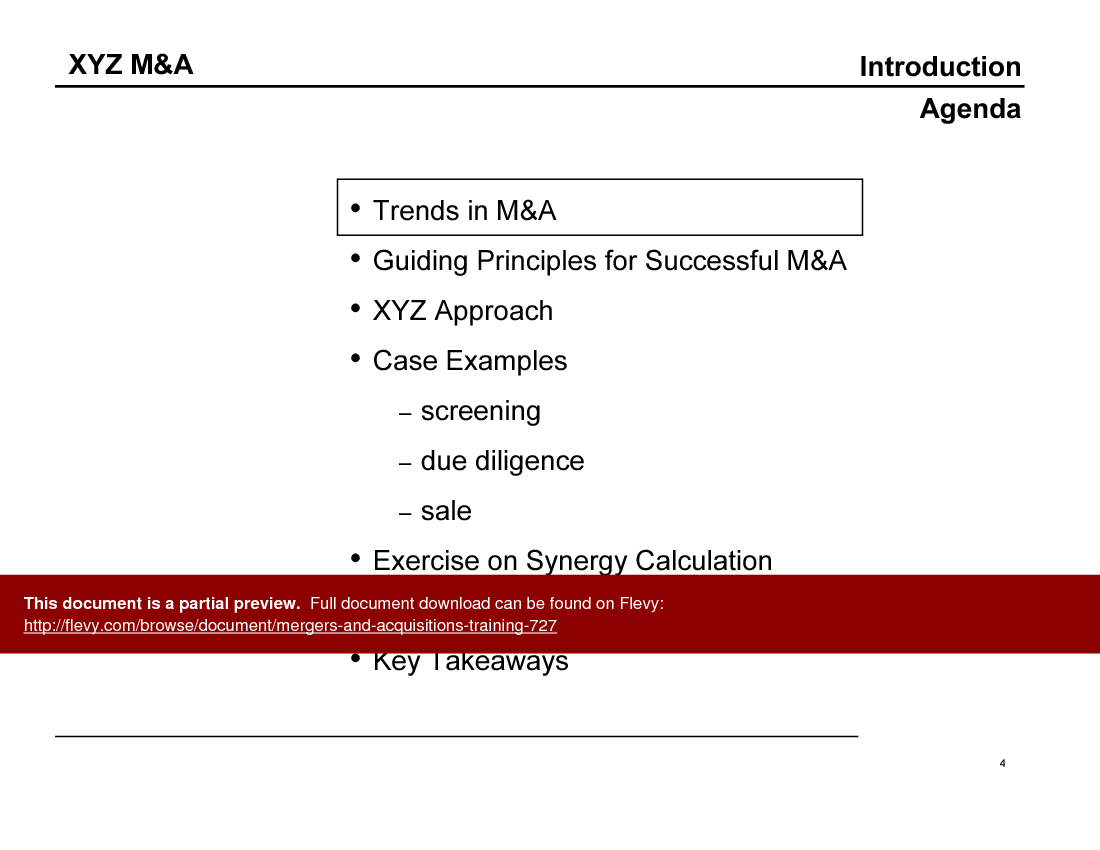
XYZ's structured methodology for acquisitions begins with a critical decision point: whether to pursue an acquisition strategy and which sector or region to focus on. This initial assessment sets the direction for the process. The next step involves identifying suitable acquisition candidates based on attractiveness and availability, narrowing down targets that align with strategic goals. Validating assumptions during screening ensures selected candidates meet necessary criteria. Due diligence follows, examining the target's financials, operations, and market position to uncover potential risks. Target valuation determines the right price, impacting overall deal value. The bid structure and negotiations finalize acquisition terms, while integration planning is essential for realizing the acquisition's value, ensuring effective operation of the merged entities post-acquisition. This structured approach provides a clear roadmap for executives considering acquisitions.
This PPT slide analyzes market segments in the MRI industry, focusing on Radiology and Cardiology. A stacked bar chart illustrates the estimated market share of competitors in 1993 dollars, totaling $1.4 billion. Competitors are color-coded, with segment A dominating Radiology, while segments B and C hold significant shares. The analysis classifies industry segments to identify potential acquisition targets, informing strategic decisions regarding mergers and acquisitions. Estimated market percentages reveal competitive dynamics and growth areas, with clear distinctions between Radiology and Cardiology enabling targeted strategies based on segment characteristics. Data-driven insights are essential for identifying viable M&A opportunities.
This PPT slide presents a strategic framework for evaluating mergers and acquisitions (M&A) using a two-dimensional matrix. The vertical axis represents "Value Creation Opportunity," while the horizontal axis denotes "Parenting Advantage." The matrix is divided into 4 quadrants:
1. The top right quadrant, "Focus," indicates high value creation and parenting advantages, suggesting optimal M&A activity for maximizing returns on investment.
2. The bottom left quadrant shows low value creation and parenting advantages, indicating minimal benefits from M&A efforts.
3. The top left quadrant has high value creation potential, but low parenting advantage, which may hinder success.
4. The bottom right quadrant indicates high parenting advantage, but low value creation opportunity, risking underutilized resources.
This framework encourages decision-makers to align strategic objectives with internal capabilities for effective M&A outcomes.
This PPT slide analyzes the market impact of announced transactions, focusing on stock market reactions to acquisitions categorized as Unrelated, Related, and Focused. Unrelated acquisitions show a negative average price change of approximately -0.1%, indicating minimal cost overlap leads to market skepticism about value creation. Related acquisitions yield a neutral average price change of 0.0%, reflecting cautious optimism due to medium cost overlap and potential synergies. In contrast, Focused acquisitions exhibit a positive average price change of 0.1%, suggesting significant cost overlap and alignment with the acquirer's core competencies enhance market perception. Strategic alignment in M&A activities is crucial for maximizing market reception and shareholder value.
Source: Best Practices in M&A, Synergy PowerPoint Slides: Mergers & Acquisitions Training PowerPoint (PPT) Presentation Slide Deck, Documents & Files
Since 2012, we have provided business templates to over 10,000 businesses and organizations of all sizes, from startups and small businesses to the Fortune 100, in over 130 countries.
"FlevyPro provides business frameworks from many of the global giants in management consulting that allow you to provide best in class solutions for your clients."
– David Harris, Managing Director at Futures Strategy
"As a niche strategic consulting firm, Flevy and FlevyPro frameworks and documents are an on-going reference to help us structure our findings and recommendations to our clients as well as improve their clarity, strength, and visual power. For us, it is an invaluable resource to increase our impact and value."
– David Coloma, Consulting Area Manager at Cynertia Consulting
"Flevy is our 'go to' resource for management material, at an affordable cost. The Flevy library is comprehensive and the content deep, and typically provides a great foundation for us to further develop and tailor our own service offer."
– Chris McCann, Founder at Resilient.World
"I like your product. I'm frequently designing PowerPoint presentations for my company and your product has given me so many great ideas on the use of charts, layouts, tools, and frameworks. I really think the templates are a valuable asset to the job."
– Roberto Fuentes Martinez, Senior Executive Director at Technology Transformation Advisory
"I have found Flevy to be an amazing resource and library of useful presentations for lean sigma, change management and so many other topics. This has reduced the time I need to spend on preparing for my performance consultation. The library is easily accessible and updates are regularly provided. A wealth of great information."
– Cynthia Howard RN, PhD, Executive Coach at Ei Leadership
"I have used FlevyPro for several business applications. It is a great complement to working with expensive consultants. The quality and effectiveness of the tools are of the highest standards."
– Moritz Bernhoerster, Global Sourcing Director at Fortune 500
"My FlevyPro subscription provides me with the most popular frameworks and decks in demand in today’s market. They not only augment my existing consulting and coaching offerings and delivery, but also keep me abreast of the latest trends, inspire new products and service offerings for my practice, and educate me
in a fraction of the time and money of other solutions. I strongly recommend FlevyPro to any consultant serious about success.
"
– Bill Branson, Founder at Strategic Business Architects
"As an Independent Management Consultant, I find Flevy to add great value as a source of best practices, templates and information on new trends. Flevy has matured and the quality and quantity of the library is excellent. Lastly the price charged is reasonable, creating a win-win value for
the customer, Flevy and the various authors. This is truly a service that benefits the consulting industry and associated clients. Thanks for providing this service.
"
– Jim Schoen, Principal at FRC Group
Save with Bundles

This document is available as part of the following discounted bundle(s):
Download our free compilation of 50+ Strategy & Transformation slides and templates. Frameworks include McKinsey 7-S, Balanced Scorecard, Disruptive Innovation, BCG Curve, and many more.