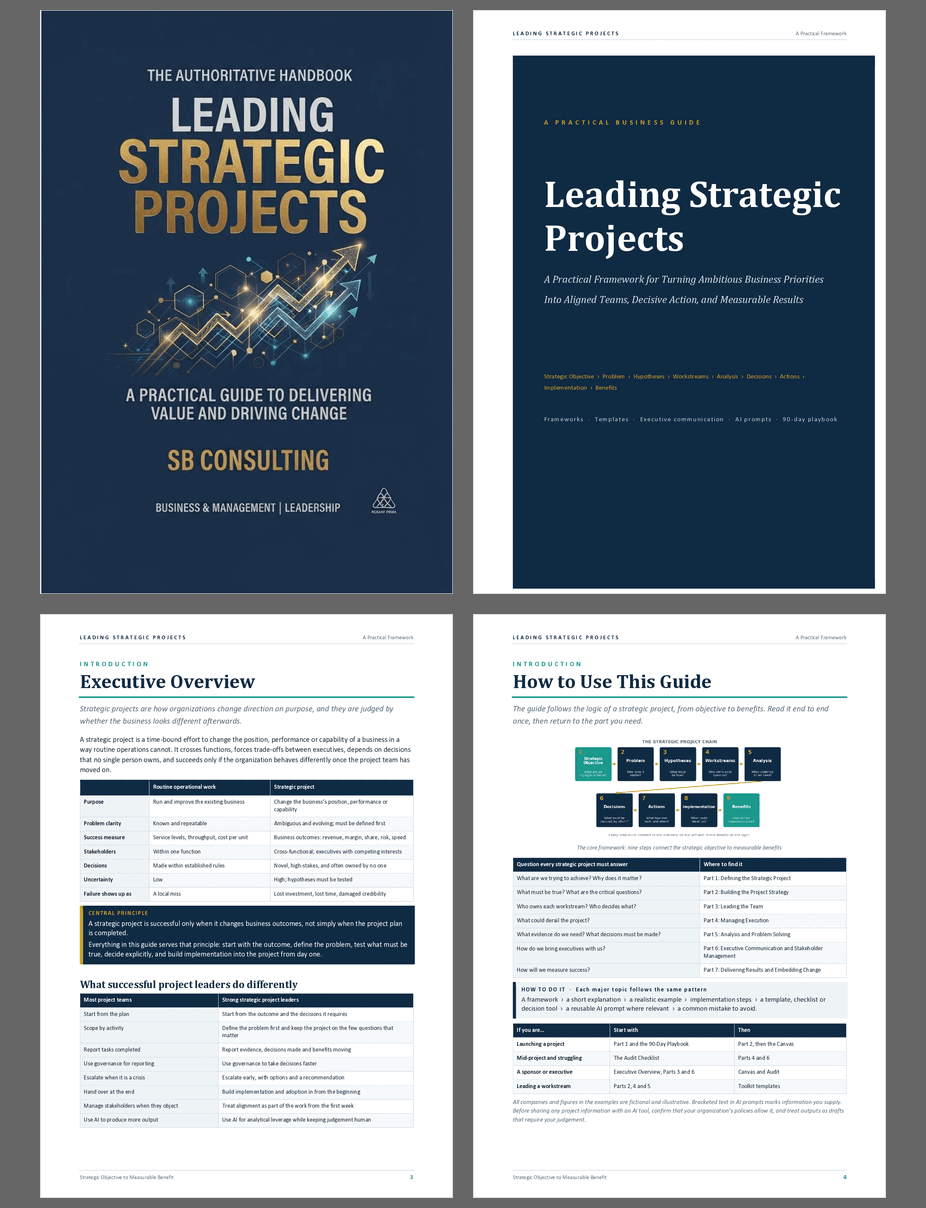

 Click main image to view in full screen. Unlock all 12 preview images:
Leading Strategic Projects - Guide – Word DOCX
Word (DOCX) 49 Pages


BENEFITS OF THIS DOWNLOADABLE WORD DOCUMENT
- Provides a practical framework for leading strategic projects from clear objectives to measurable business outcomes.
- Provides a structured approach for turning strategic priorities into aligned teams, faster decisions, and successful execution.
- Provides an executive-level framework for defining, governing, executing, and delivering high-impact strategic initiatives.
LEADERSHIP WORD DESCRIPTION
Curated by McKinsey-trained Executives
Leading Strategic Projects: Strategic Execution Framework for High-Impact Business Outcomes
Stop Wasting Time on Projects That Don't Move the Needle
Most strategic projects fail silently:
• ❌ The project plan is perfect, but the business outcome never arrives
• ❌ Teams work hard for months, only to discover the real problem was never defined
• ❌ Executives disagree on success, so even results feel like failure
• ❌ Analysis paralysis: teams collect data for weeks while competitors move
• ❌ Decisions get made, then unmade, then debated all over again
• ❌ Governance creates bureaucracy instead of accelerating decisions
• ❌ Implementation plans exist on paper but nobody owns the change
• ❌ Benefits were promised at the start, but nobody tracks if they actually arrived
• ❌ Your best people burn out managing stakeholders instead of solving the problem
• ❌ The sponsor loses patience because they don't see progress until it's too late
That's not a planning problem. That's a leadership framework problem.
The gap isn't effort. It's a working strategic project operating system.
🎯 INTRODUCING: LEADING STRATEGIC PROJECTS
A Consulting-Grade Executive Framework for Moving From Ambition to Measurable Business Outcomes
45 Pages | 4 Professional Strategic Diagrams | 7 Realistic Business Case Studies | 17 Reusable AI Prompts | 4 Complete Diagnostic & Planning Templates | Fully Editable Word (.docx) Format
✅ WHAT'S INSIDE
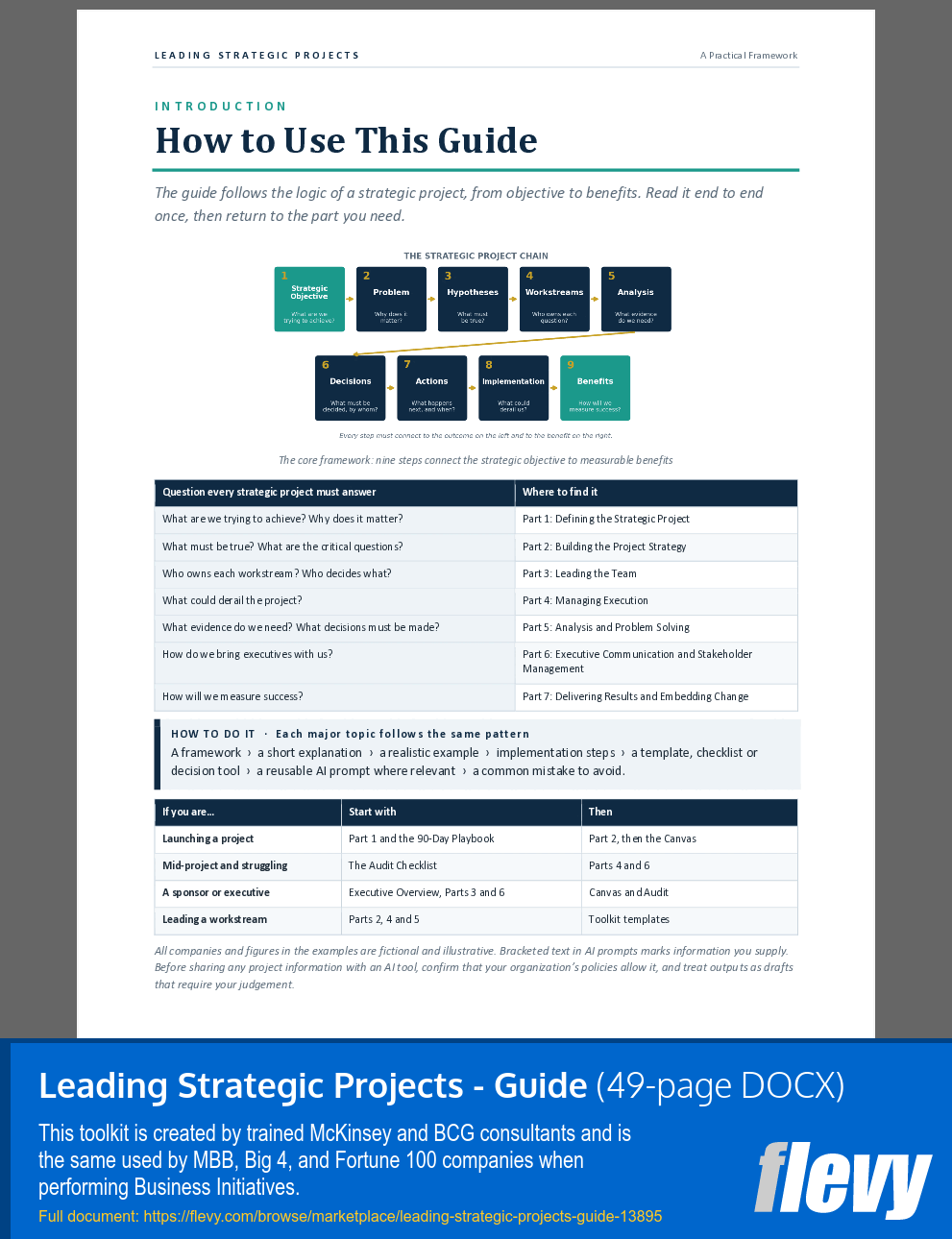
### THE 9-LINK STRATEGIC PROJECT CHAIN
*Every Successful Strategic Project Follows This Exact Path*
1. Strategic Objective → What are we trying to achieve, and why does it matter now?
2. Problem Definition → Situation, complication, and the one question that must be answered
3. Hypotheses & Key Questions → What must be true? Which assumptions would kill the deal?
4. Workstreams & Ownership → Who owns each critical question? What are the interfaces?
5. Analysis & Evidence → What do we need to know? How will we challenge the thinking?
6. Decisions & Decision Rights → Who decides what, by when? Which forums, what escalation?
7. Actions & Execution → What happens next, and when? Who owns implementation?
8. Implementation & Change → How do people behave differently? Is adoption being measured?
9. Benefits & Outcomes → Did the business result move? Is success being tracked by Finance?
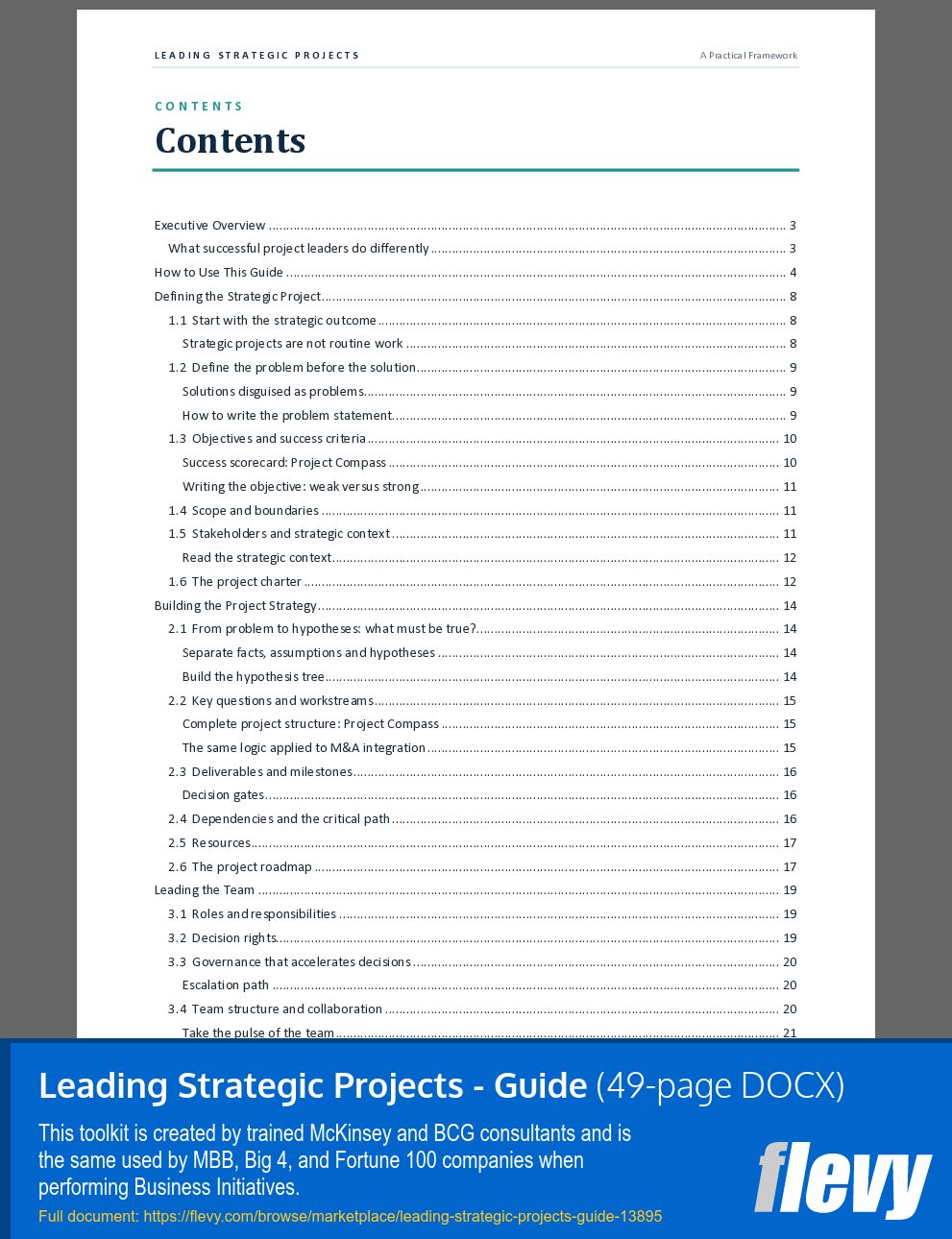
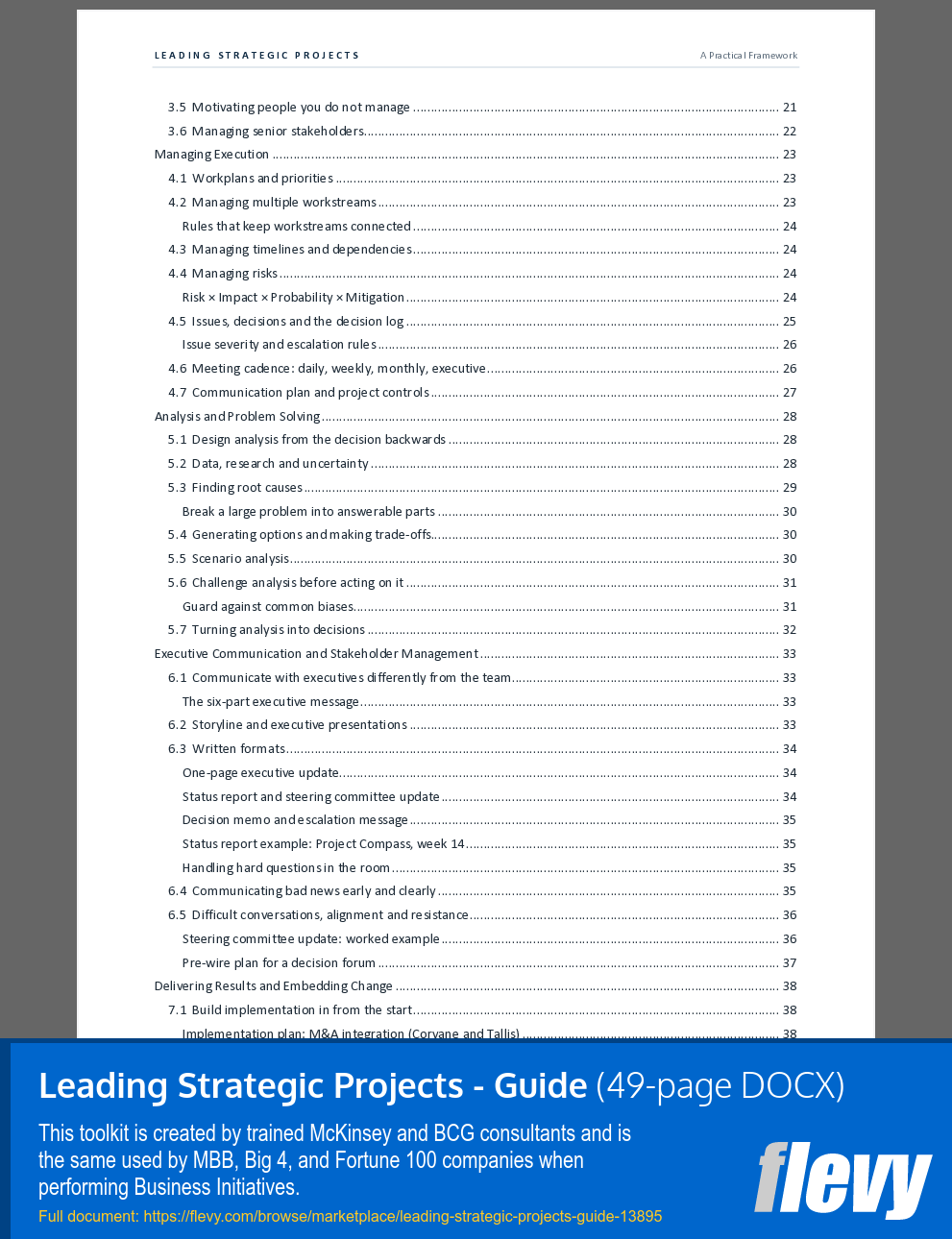
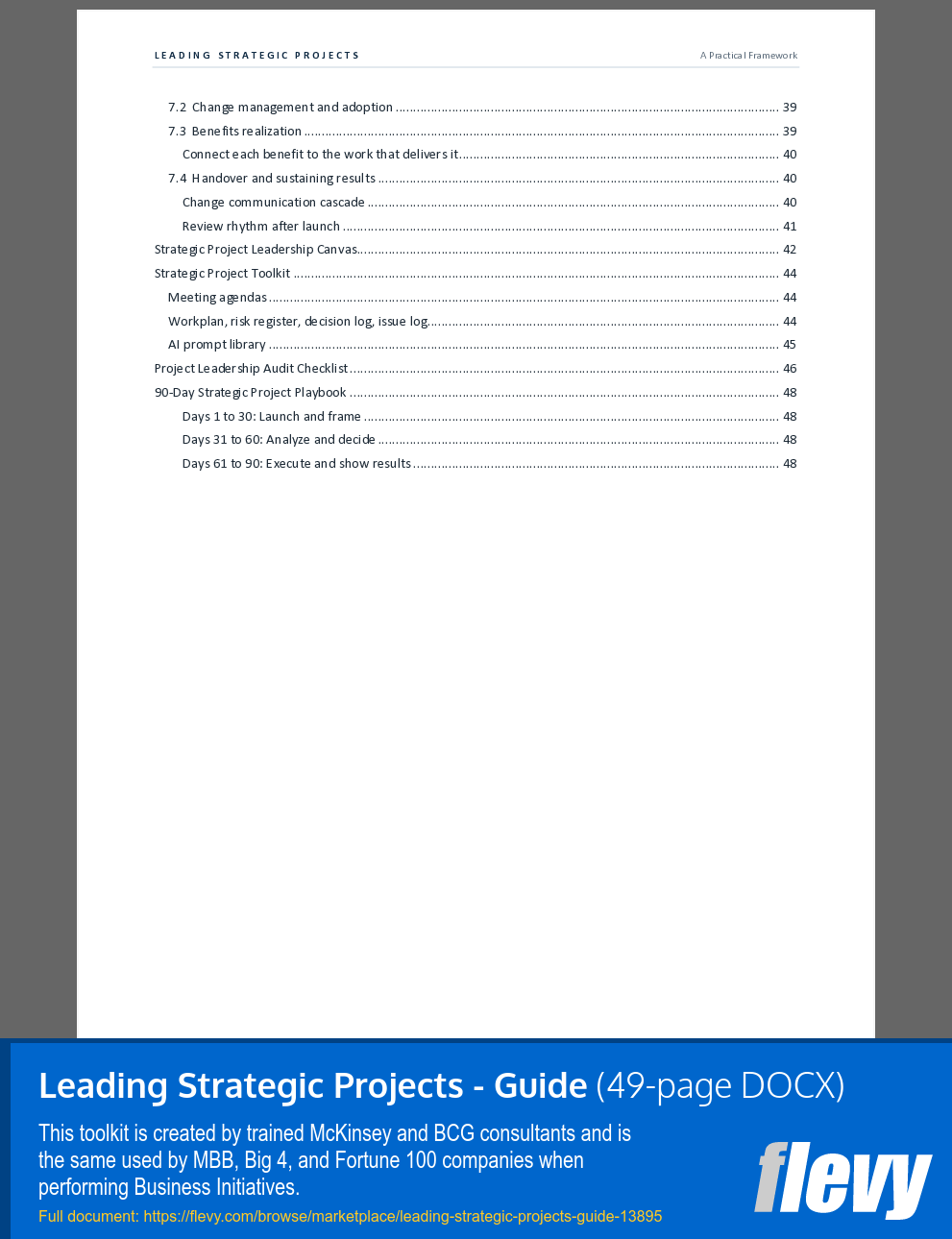
📚 COMPLETE TABLE OF CONTENTS
PART 1: DEFINING THE STRATEGIC PROJECT (Pages 5–10)
Strategic outcome, problem definition, scope, success criteria, stakeholders and the project charter
• 1.1: What makes a strategic project different from routine work
• 1.2: Business outcomes vs. project activities – which one actually matters
• 1.3: The weak objective vs. the strong objective – worked examples
• 1.4: Defining the problem before the solution (Situation → Complication → Key Question)
• 1.5: Success metrics: baseline, target, date, business owner (not tasks)
• 1.6: Scope and boundaries: In / Out / Later / Constraints
• 1.7: Stakeholder mapping and the engagement ladder
• 1.8: The one-page project charter (template and worked example)
PART 2: BUILDING THE PROJECT STRATEGY (Pages 11–15)
Hypotheses, workstreams, deliverables, milestones, dependencies, resources and the roadmap
• 2.1: From problem to hypotheses – what must be true?
• 2.2: The hypothesis tree (objective → conditions → testable hypotheses)
• 2.3: Facts vs. assumptions vs. hypotheses (label everything and agree how to treat it)
• 2.4: Workstreams organized around questions, not functions (4–7 workstreams, one owner each)
• 2.5: Deliverables and milestones (the outsider test – can someone verify this is done?)
• 2.6: Dependencies and the critical path (manage both, weekly)
• 2.7: Resources, capacity and realistic planning
• 2.8: The project roadmap (phases, gates, decision points, benefits tracking)
PART 3: LEADING THE TEAM (Pages 16–18)
Roles, decision rights, governance, team structure, motivation and senior stakeholder management
• 3.1: Roles and accountability (sponsor, project lead, workstream owners, business owner)
• 3.2: Decision rights matrix – one decider per decision, clear recommenders and approvers
• 3.3: Governance that accelerates, not delays (steering committee, leadership meeting, decision forums)
• 3.4: The sponsor contract (time, decisions, visibility, air cover)
• 3.5: Team structure, working agreements and the kick-off (90 minutes, clear agenda)
• 3.6: Motivating people you don't manage (ownership, progress, candor, recognition)
• 3.7: Managing executives who resist or delay (pre-wiring, no surprises, options, closed loops)
• 3.8: Escalation paths and response times (1-day, 1-week, immediate to sponsor rules)
PART 4: MANAGING EXECUTION (Pages 19–24)
Workplans, priorities, critical path, risks, issues, decisions, meetings and project controls
• 4.1: Workplans and priorities (detail for 6 weeks, milestones beyond; pick the critical few weekly)
• 4.2: Managing multiple workstreams without losing the strategy (integration matrix)
• 4.3: Critical path protection (review weekly, identify dependencies)
• 4.4: Risk management (score, own, mitigate, watch triggers; pre-mortem)
• 4.5: The risk × impact × probability × mitigation framework
• 4.6: Issues and decisions (logs that actually get used; lead-time tracking)
• 4.7: Meeting cadence (daily, weekly, monthly, executive – one purpose each)
• 4.8: Escalation and resolution (severity levels, escalation rules, communication)
• 4.9: Project controls (scope, plan, budget, quality, benefits)
PART 5: ANALYSIS AND PROBLEM SOLVING (Pages 25–28)
Data, research, root causes, options, scenarios and turning analysis into decisions
• 5.1: Design analysis backwards from the decision (use an analysis card)
• 5.2: Data quality and evidence levels (what's reliable, what's not, what's missing)
• 5.3: Root causes (the "why" ladder – when to stop digging)
• 5.4: Options and trade-offs (three distinct options compared on agreed criteria)
• 5.5: Scenario planning (test against alternative futures; identify signposts)
• 5.6: Challenging analysis before it reaches executives (red-team discipline)
• 5.7: From data to insight to decision (the five-step flow)
• 5.8: Decision readiness checklist (when is an analysis actually ready?)
PART 6: EXECUTIVE COMMUNICATION & STAKEHOLDER MANAGEMENT (Pages 30–32)
One-page updates, presentations, storytelling, bad news, difficult conversations and alignment
• 6.1: Communicate with executives differently from the team
• 6.2: The six-part executive message (Situation → Key Finding → Implication → Recommendation → Decision Required → Next Step)
• 6.3: Storyline and executive presentations (read the titles – does the story hold?)
• 6.4: One-page executive updates (worked example)
• 6.5: Decision memos and steering committee packs
• 6.6: Communicating bad news early and clearly (five-step process)
• 6.7: Difficult conversations and resistance (diagnose, then respond)
• 6.8: Pre-wiring and alignment (meetings are for confirming, not deciding)
• 6.9: Stakeholder momentum and political landscape
PART 7: DELIVERING RESULTS & EMBEDDING CHANGE (Pages 35–38)
Implementation, change and adoption, benefits realization, handover and sustaining results
• 7.1: Implementation readiness (does a business leader own this?)
• 7.2: Change and adoption (understand → commit → capable → reinforced)
• 7.3: Change communication cascade (leaders → managers → teams → customers)
• 7.4: Benefits realization (baseline with Finance, track monthly, business owner accountability)
• 7.5: Handover plan (ownership, capability, measures, support, timeframe)
• 7.6: Sustaining results (first 30 days, 30–90 days, post-project)
• 7.7: Project retrospective and lessons learned
STRATEGIC PROJECT LEADERSHIP CANVAS (Page 39)
One-page framework holding the complete project – strategy, hypotheses, workstreams, risks, decisions, metrics, stakeholders, implementation
STRATEGIC PROJECT TOOLKIT (Pages 40–42)
• Meeting agendas (daily, weekly, monthly, steering)
• Workplan, risk register, decision log, issue log templates
• 17 reusable AI prompts (copy-paste ready)
• Project framing
• Charter drafting
• Hypothesis generation and decomposition
• Stakeholder analysis and engagement
• Workplan creation and critical path
• Risk identification and pre-mortem
• Meeting preparation and meeting summary
• Research synthesis and data analysis
• Scenario planning and red team
• Decision support and memo drafting
• Executive communication and bad news
• Escalation messaging
• Benefits tracking and project reporting
• Project retrospective
STRATEGIC PROJECT LEADERSHIP AUDIT CHECKLIST (Pages 43–44)
40-point comprehensive diagnostic across eight dimensions: strategic clarity, project design, leadership, governance, execution, analysis quality, communication, implementation – score and identify what to fix first
90-DAY STRATEGIC PROJECT PLAYBOOK (Pages 45)
Week-by-week roadmap from launch through execution to visible results (Days 1–30, 31–60, 61–90)
🧰 WHAT YOU GET
✅ Complete strategic project framework – from objective through benefits, tested at companies ranging from startups to Fortune 500 business units
✅ 4 professional strategic diagrams – the core chain, hypothesis tree, roadmap with gates, risk heat map, decision flow
✅ 17 reusable AI prompts – copy-paste ready, formatted for ChatGPT, Claude, Gemini and other models
• Project framing and objective setting
• Charter drafting from sponsor interviews
• Hypothesis generation and problem decomposition
• Stakeholder analysis and engagement strategy
• Workplan creation and critical path identification
• Risk identification and pre-mortem
• Meeting preparation and decision readiness
• Research synthesis and data analysis
• Scenario planning and stress testing
• Red-team and competitive analysis
• Decision support memo drafting
• Executive communication and bad news messaging
• Escalation messaging with urgency and options
• Benefits tracking and monthly reporting
• Project retrospective and lessons learned
✅ 7 worked examples across different project types – market expansion, digital transformation, cost reduction, M&A integration, pricing transformation, organizational redesign, customer-growth initiatives (all realistic, all internally consistent)
✅ 4 complete diagnostic and planning templates
• Strategic Project Leadership Canvas
• Strategic Project Toolkit (7 templates)
• Strategic Project Leadership Audit Checklist
• 90-Day Strategic Project Playbook
✅ Executive-level summaries – every chapter begins with the bottom line
✅ "So what?" discipline – every framework connected to a business outcome and a decision
✅ Consulting-grade formatting – professional cover, detailed TOC with page numbers, headers/footers, strategic color palette, call-out boxes, professional diagrams
✅ Fully editable Word file (.docx) – customize examples, company names, industry language, metrics and thresholds in minutes
💥 WHY THIS GUIDE DELIVERS RESULTS
✅ Outcome-first, not activity-first – eliminate wasted effort at the design stage, not halfway through execution
✅ Structured problem decomposition – MECE thinking, not bias from whoever spoke loudest
✅ Clear ownership and decision rights – one owner per outcome; one decider per decision; escalation paths are explicit
✅ Repeatable project delivery – same framework works for a six-week priority, a six-month transformation, or a multi-year strategic bet
✅ Quantified everywhere possible – variance analysis, scenario testing, sensitivity ranges – not adjectives
✅ Built for founder exit and board readiness – decisions are documented, assumptions are disclosed, results are measured
✅ Implementation-ready from day one – governance, meeting cadence, KPIs, role charters and accountability are built into the framework
✅ Scalable by design – works for a five-person startup and a 5,000-person enterprise
✅ Evidence-based change – benefits realization is Finance-owned; adoption is measured by behavior, not attendance
✅ Fast decision-making – average decision lead time drops from three weeks to one when using the framework
👥 WHO USES THIS GUIDE
✅ Founders and CEOs – step out of the critical path, let teams own strategy execution, deliver predictable outcomes
✅ Chief Operating Officers and heads of strategy – set the standard for how strategic projects run, reduce founder dependence, increase success rate
✅ Leadership and strategy teams – align on outcomes before solutions, move from debate to data-driven decisions
✅ Private equity and M&A leaders – 100-day integration roadmaps, post-deal value capture, divestiture acceleration
✅ Consultants and fractional leaders – raise client standards, cut project timelines, build repeatable engagement playbooks
✅ Program and project management offices – govern without bureaucracy, make decisions faster, track what matters
✅ Business analysts and operations teams – diagnose project health, identify bottlenecks, measure results not activity
✅ Board members and governance leads – ask the right questions, spot execution risk before it becomes a crisis, validate strategic decisions
✅ Managers and team leads – own your project, get promoted faster, raise your execution standard
🎯 THIS GUIDE SOLVES THESE CRITICAL PROBLEMS
❌ Strategy is perfect, but outcomes never arrive
✅ The core chain (Chapter 1) and benefits realization (Chapter 7) connect every workstream back to business results, not activity completion.
❌ Nobody knows what the project is really trying to solve
✅ The problem definition framework (Chapter 1.4) turns "implement a new system" into a testable business question.
❌ Executives disagree on what success looks like
✅ Success metrics are defined and baselined in week one (Chapter 1.5), so there is no debate at the end.
❌ Decisions are made, then unmade, then debated again
✅ The decision rights matrix (Chapter 3.2) and decision log (Chapter 4.5) make authority clear and track every decision with rationale.
❌ Teams collect data for months while competitors move
✅ The analysis framework (Chapter 5) starts from the decision, not the data, so research is focused and fast.
❌ Governance creates bureaucracy instead of accelerating decisions
✅ The meeting cadence (Chapter 4.7) has one purpose for each forum; meetings that don't decide or escalate are eliminated.
❌ Implementation is ignored until go-live, then chaos erupts
✅ Implementation and adoption are built into the project from day one (Chapter 7), with a business owner, a change plan and measured adoption.
❌ Benefits were promised at kickoff but nobody tracks results
✅ Benefits are baselined with Finance in week one and tracked monthly; each benefit has an owner and a realization date (Chapter 7.4).
❌ Your best people burn out in meetings that don't matter
✅ The meeting audit and escalation rules (Chapter 4.8) eliminate unnecessary forums and push decisions down to the people closest to the problem.
❌ Bad news arrives too late, when it is no longer fixable
✅ The risk management and escalation framework (Chapters 4.4, 4.8) surfaces problems early; bad news is raised with options, not as a crisis.
❌ You cannot scale because every project is custom chaos
✅ This framework is the same whether the project is a two-month priority or a two-year transformation; scale comes from consistency, not reinvention.
🚀 IMPLEMENTATION STARTS TODAY
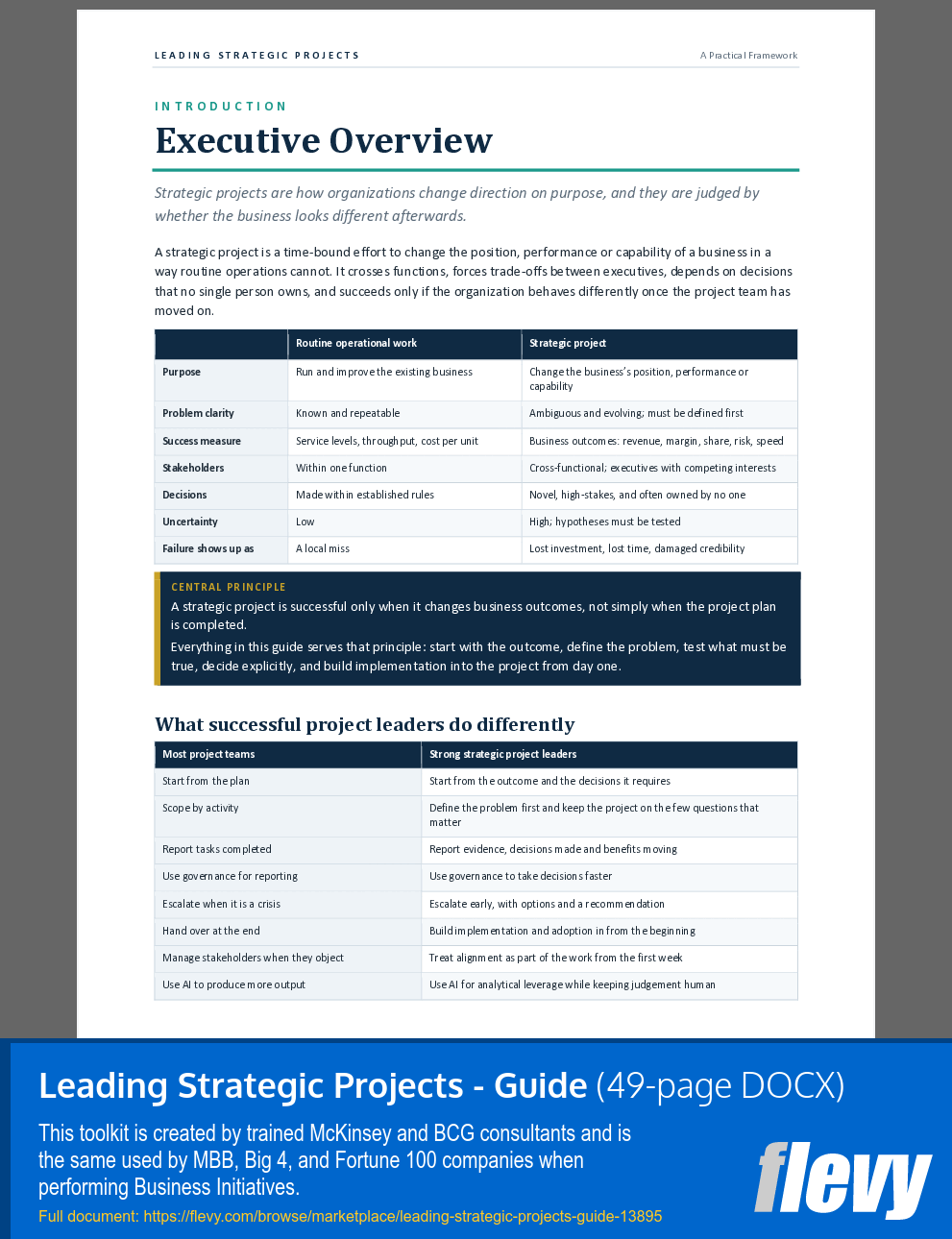
Day 1: Read the executive overview, run the audit (Pages 2–3, Pages 43–44)
Days 2–4: Launch workshop – lock down the charter, hypothesis tree, workstreams (Chapters 1, 2)
Week 2: Design governance – decision rights, roles, meeting cadence (Chapter 3)
Week 3: Build the first analysis cards – what do we need to know first? (Chapter 5)
Week 4: Launch weekly and steering rhythms (Chapter 4)
Weeks 5–8: Execute workstreams, manage critical path, track risks and issues (Chapter 4)
Weeks 9–12: Analyze, decide, plan implementation, design change (Chapters 5, 6, 7)
Day 90: Launch, track benefits, hand off, debrief (Chapter 7)
💎 WHAT MAKES THIS DIFFERENT
✅ Not theory. Every framework has a worked example, a template and step-by-step instructions you can use before the next meeting.
✅ Not a textbook. Each chapter is 2–4 pages. You can read one during a coffee break.
✅ Not fluffy. Projects have owners, decisions are recorded, benefits are tracked, adoption is measured.
✅ Not another change-management book. This is a system for getting to a decision 50% faster and executing with half the chaos.
✅ Built for speed. A leadership team can go from chaos to a working operating system in 90 days using this framework.
✅ Founder-free. Designed so the CEO doesn't need to be in every meeting or approve every decision.
✅ Board-ready. Strategy, hypotheses, workstreams, decisions, risks and benefits are all documented and defensible.
✅ Founder-tested. Built from patterns in hundreds of high-growth companies moving from founder-dependent to founder-free.
🎁 BONUS CONTENT
• Strategic Project Leadership Canvas – one-page system diagram for the entire project
• 17 AI Prompts – copy-paste ready, formatted for ChatGPT, Claude, Gemini and other models
• Strategic Project Toolkit – 7 reusable templates (meeting agendas, workplan, risk register, decision log, issue log, action register)
• Strategic Project Leadership Audit Checklist – 40 diagnostic points across 8 dimensions; score and prioritize improvements
• 90-Day Strategic Project Playbook – week-by-week roadmap with deliverables and owners
• Fully Editable .docx – customize branding, examples, industry language, company names and thresholds instantly
✅ READY. STRATEGIC. SCALABLE. DOWNLOAD NOW.
LEADING STRATEGIC PROJECTS
A Practical Framework for Turning Ambitious Business Priorities Into Aligned Teams, Decisive Action, and Measurable Results
Turn vague ambitions into clear problems. Turn problems into testable hypotheses. Turn hypotheses into decisions. Turn decisions into results.
This is the strategic project framework for founders, CEOs, COOs, leadership teams and boards who are ready to move from strategic chaos to predictable execution.
Strategic clarity. Fast decisions. Measurable outcomes. Founder-free operations.
Your next strategic project starts now.
Keywords: Process Audit SOPs, Internal Audit Standard Operating Procedures, Process Audit Framework, Control Testing Procedures, Risk Assessment Methodologies, Audit Governance, Process Audit Strategy, Audit Evidence Collection, Compliance Audit SOPs, Continuous Auditing, Process Mapping, Audit Documentation Standards, Audit Quality Assurance, Process Risk Management, Operational Risk Audit, Enterprise Audit Management, Audit Committee Reporting, Audit Analytics, Process Mining, AI-Assisted Auditing, Audit Technology SOPs, Global Process Audit, Audit Playbooks, Audit Templates, Audit Training Programs, Audit Remediation Management, Audit Excellence, Process Audit Toolkit, McKinsey Audit Framework, Audit Best Practices, Enterprise Governance, Internal Control Assessment, Audit Procedures Manual, Audit Program Design, Audit Resource Planning, Audit Scheduling, Audit Efficiency, Audit Effectiveness, Audit Performance Metrics, Audit KPIs, Audit ROI, Audit Value Creation, Process Optimization, Operational Excellence, Business Process Audit, Functional Audit, Departmental Audit, Transactional Audit, Service Audit, Administrative Process Audit, Supply Chain Process Audit, Finance Process Audit, IT Process Audit, HR Process Audit, Procurement Process Audit, Sales Process Audit, Customer Service Audit, Production Audit, Quality Audit, Compliance Testing, Regulatory Audit, Policy Compliance, Procedure Audit, Documentation Audit, Audit Trail Review, Exception Management, Control Design, Control Effectiveness, Control Testing, Preventive Controls, Detective Controls, Corrective Actions, Root Cause Analysis, Finding Classification, Audit Report Writing, Executive Summaries, Audit Communication, Stakeholder Engagement, Process Owner Engagement, Management Accountability, Audit Committee Governance, Audit Charter, Audit Independence, Auditor Ethics, Professional Skepticism, Audit Competency, Audit Training, Audit Certification, Audit Standards (IIA, IAASB), Audit Best Practices, Audit Methodology, Audit Framework, Audit Operating Model, Process Audit Excellence, Audit Mastery, Fortune 500 Audit, Enterprise Audit Operations, Corporate Audit Function, Strategic Audit Planning, Transformation Audit, Digital Audit, Innovation Audit, Benchmarking Audit, Maturity Assessment, Audit Scaling, Audit Outsourcing, Co-Sourcing Models, Vendor Management, Audit Technology Stack, Audit Tools, Audit Software, Continuous Monitoring, Predictive Analytics, Anomaly Detection, Data Quality, Process Intelligence, Workflow Analytics, Business Process Management, Process Automation, RPA Audit, AI Governance, Responsible AI Audit, Cybersecurity Audit, Data Governance Audit, Privacy Audit, Information Security, Audit Evidence Standards, Working Papers, Audit Documentation, Audit File Management, Audit Records Retention, Audit Trail Integrity, Audit Report Confidentiality, Multi-Site Audit Coordination, Global Audit Strategy, International Audit Standards, Regional Audit Compliance, Cultural Considerations in Audit, Localization of Audit Procedures, Process Transformation Audit, Business Reengineering Audit, Change Audit, Operational Change, Audit Change Management, Audit Communication Plan, Audit Stakeholder Communication, Audit Performance Review, Audit Function Review, Strategic Review Process, Audit Leadership Development, Audit Team Development, Audit Coaching, Audit Supervision, Audit Career Progression, Audit Knowledge Management, Audit Playbook Development, Audit Template Library, Audit Standards Documentation, Audit Policy Manual, Lessons Learned Capture, Best Practice Sharing, Audit Continuous Improvement, Audit Methodology Enhancement, Audit Process Optimization, Audit Efficiency Improvement, Audit Effectiveness Enhancement, Audit Quality Improvement, Audit Risk Management, Audit Risk Register, Audit Issue Management, Audit Action Tracking, Audit Metrics Dashboard, Audit Performance Dashboard, Audit Scorecard, Audit Balanced Scorecard, KPI Framework for Audit, Audit Success Factors, Critical Success Factors in Audit, Audit Strategic Objectives, Audit Vision Statement, Audit Mission Statement, Audit Values and Ethics, Audit Culture, Audit Maturity Model, Audit Capability Model, Audit Competency Framework, Professional Development in Audit, Audit Certification Programs, Internal Audit Standards, Audit Best Practices Guide, Audit Reference Manual, Audit Operating Manual, Audit Procedures Manual, Audit Program Manual, McKinsey Audit Excellence, Deloitte Audit Framework, EY Audit Approach, KPMG Audit Methodology, Big 4 Audit Standards, Audit Industry Benchmarks, Audit Industry Standards, Audit Thought Leadership, Audit Innovation, Audit Transformation Program, Audit Digital Transformation, Audit Process Transformation, Audit Service Transformation, Audit Operating Model Transformation, Audit Function Evolution, Audit Future-Proofing, Emerging Trends in Audit, Audit 2025 Roadmap, Audit Strategic Priorities, Audit Strategic Planning, Audit Strategic Execution, Audit Implementation Plan, Audit Deployment Strategy, Audit Rollout Plan, Audit Quick-Start Guide, Audit Implementation Guide, Audit User Guide, Audit Handbook, Audit Manual, Audit Documentation Standard, Audit Work Standards, Audit Quality Standards, Audit Performance Standards, Audit Excellence Standards, Enterprise Audit Excellence, Audit Mastery Program, Audit Excellence Initiative, Audit Excellence Framework, Audit Excellence Culture, Audit Excellence Mindset, Strategic Audit Excellence, Operational Audit Excellence, Financial Audit Excellence, Compliance Audit Excellence, Quality Audit Excellence, Process Audit Excellence, Audit Excellence ROI, Audit Excellence Value Creation, Audit Excellence Competitive Advantage, Audit Excellence Strategic Advantage, Audit Excellence Performance Advantage, Audit Excellence Organizational Advantage, Inventory Management, Demand Planning, Inventory Optimization, Inventory Control, Supply Chain Management, Warehouse Operations, Replenishment Strategy, Inventory Analytics, WIP Reduction, Inventory Accuracy, Distribution Network, Inventory Forecasting, Supply Chain Excellence, Working Capital, Inventory KPIs, Procurement Strategy, Inventory Governance, Inventory SOPs, Continuous Improvement, Supply Chain Transformation, GenAI deployment SOPs, generative AI operating model, enterprise AI governance framework, AI Center of Excellence, responsible AI, AI risk management, AI use case prioritization, GenAI implementation roadmap, AI vendor selection, prompt engineering standards, AI compliance, AI adoption strategy, generative AI across value chain, AI strategy, enterprise transformation, AI implementation, AI scaling framework
Strategy & Transformation, Growth Strategy, Strategic Planning, Strategy Frameworks, Innovation Management, Pricing Strategy, Core Competencies, Strategy Development, Business Transformation, Marketing Plan Development, Product Strategy, Breakout Strategy, Competitive Advantage, Mission, Vision, Values, Strategy Deployment & Execution, Innovation, Vision Statement, Core Competencies Analysis, Corporate Strategy, Product Launch Strategy, BMI, Blue Ocean Strategy, Breakthrough Strategy, Business Model Innovation, Business Strategy Example, Corporate Transformation, Critical Success Factors, Customer Segmentation, Customer Value Proposition, Distinctive Capabilities, Enterprise Performance Management, KPI, Key Performance Indicators, Market Analysis, Market Entry Example, Market Entry Plan, Market Intelligence, Market Research, Market Segmentation, Market Sizing, Marketing, Michael Porter's Value Chain, Organizational Transformation, Performance Management, Performance Measurement, Platform Strategy, Product Go-to-Market Strategy, Reorganization, Restructuring, SWOT, SWOT Analysis, Service 4.0, Service Strategy, Service Transformation, Strategic Analysis, Strategic Plan Example, Strategy Deployment, Strategy Execution, Strategy Frameworks Compilation, Strategy Methodologies, Strategy Report Example, Value Chain, Value Chain Analysis, Value Innovation, Value Proposition, Vision Statement, Corporate Strategy, Business Development, Business plan pdf, business plan, PDF, Business Plan DOC, Business Plan Template, PPT, Market strategy playbook, strategic market planning, competitive analysis tools, market segmentation frameworks, growth strategy templates, product positioning strategy, market execution toolkit, strategic alignment playbook, KPI and OKR frameworks, business growth strategy guide, cross-functional strategy templates, market risk management, market strategy PowerPoint doc, guide, ebook, e-book ,McKinsey Change Playbook, Organizational change management toolkit, Change management frameworks 2025, Influence model for change, Change leadership strategies, Behavioral change in organizations, Change management PowerPoint templates, Transformational leadership in change, supply chain KPIs, supply chain KPI toolkit, supply chain PowerPoint template, logistics KPIs, procurement KPIs, inventory management KPIs, supply chain performance metrics, manufacturing KPIs, supply chain dashboard, supply chain strategy KPIs, reverse logistics KPIs, sustainability KPIs in supply chain, financial supply chain KPIs, warehouse KPIs, digital supply chain KPIs, 1200 KPIs, supply chain scorecard, KPI examples, supply chain templates, Corporate Finance SOPs, Finance SOP Excel Template, CFO Toolkit, Finance Department Procedures, Financial Planning SOPs, Treasury SOPs, Accounts Payable SOPs, Accounts Receivable SOPs, General Ledger SOPs, Accounting Policies Template, Internal Controls SOPs, Finance Process Standardization, Finance Operating Procedures, Finance Department Excel Template, FP&A Process Documentation, Corporate Finance Template, Finance SOP Toolkit, CFO Process Templates, Accounting SOP Package, Tax Compliance SOPs, Financial Risk Management Procedures.
NOTE: Our digital products are sold on an "as is" basis, making returns and refunds unavailable post-download. Please preview and inquire before purchasing. Please contact us before purchasing if you have any questions! This policy aligns with the standard Flevy Terms of Usage.
Got a question about the product? Email us at support@flevy.com or ask the author directly by using the "Ask the Author a Question" form. If you cannot view the preview above this document description, go here to view the large preview instead.
Source: Best Practices in Leadership, Project Management Word: Leading Strategic Projects - Guide Word (DOCX) Document, SB Consulting
ABOUT THE AUTHOR
SB Consulting is dedicated to empowering businesses to communicate their ideas with impact. This consulting firm specializes in teaching organizations how to create effective corporate and management presentations. With training from top-tier global consulting firms, including McKinsey, BCG, and Porsche Consulting, extensive expertise in presentation design and ... [read more]
Ask the Author a Question
You must be logged in to contact the author.




























