
 Click main image to view in full screen. Unlock all 12 preview images:
Quantitative Cyber Risk Assessment Using FAIR Methodology – PowerPoint PPTX Template
PowerPoint (PPTX) 60 Slides


CYBER SECURITY PPT TEMPLATE DESCRIPTION
Quantitative Cyber Risk Assessment Using FAIR Methodology Toolkit
Quantitative Cyber Risk Assessment Using FAIR Methodology Toolkit
Outline
Quantitative Cyber Risk Assessment: Mastering Risk with the FAIR Methodology
Chapter 1: The Subjective Struggle – Why Traditional Risk Assessment Fails
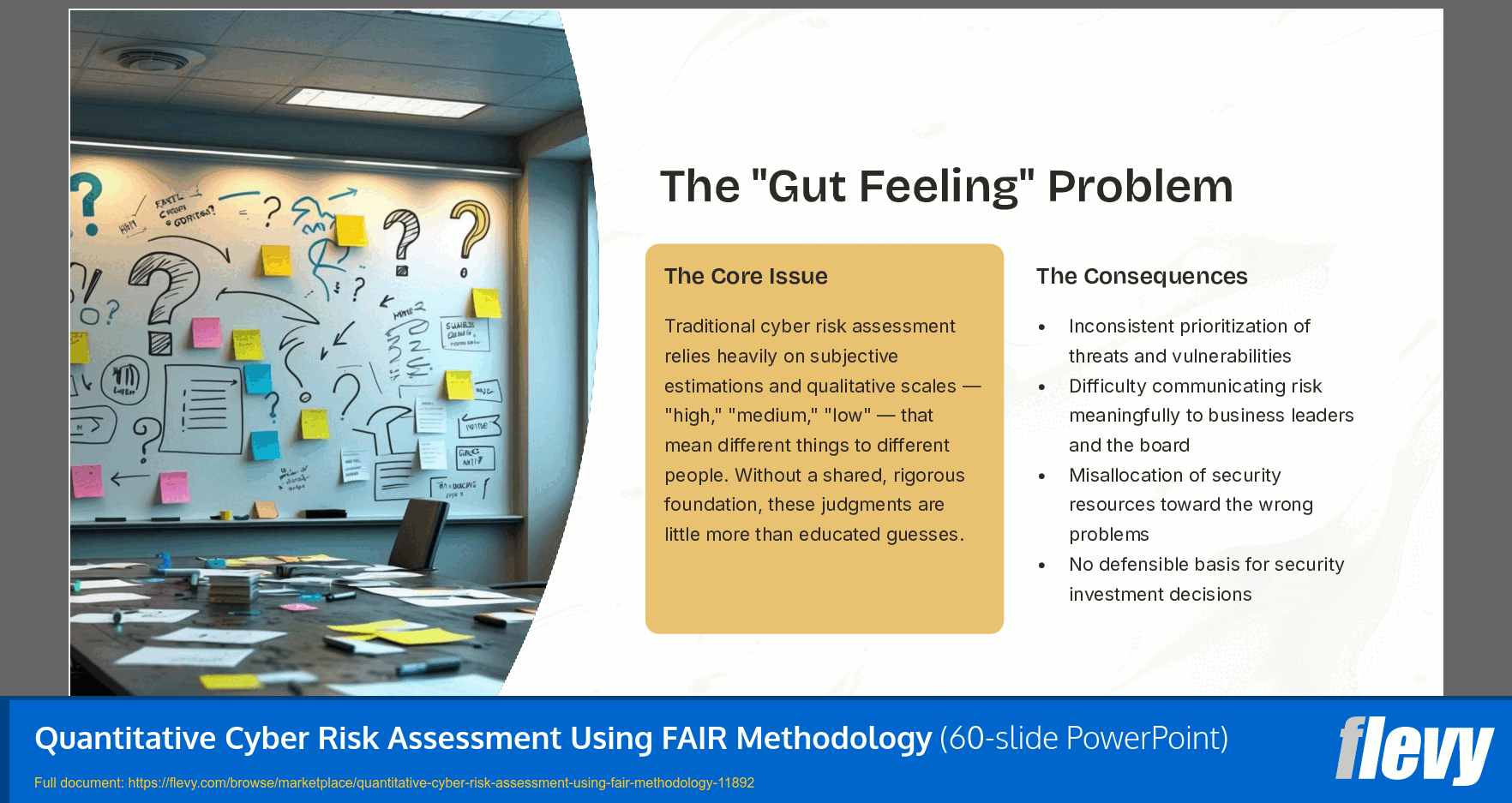
The "Gut Feeling" Problem
Traditional cyber risk assessment often relies on subjective estimations and qualitative scales (e.g., "high," "medium," "low").
This leads to inconsistent prioritization, difficulty in communicating risk to business leaders, and misallocation of resources.
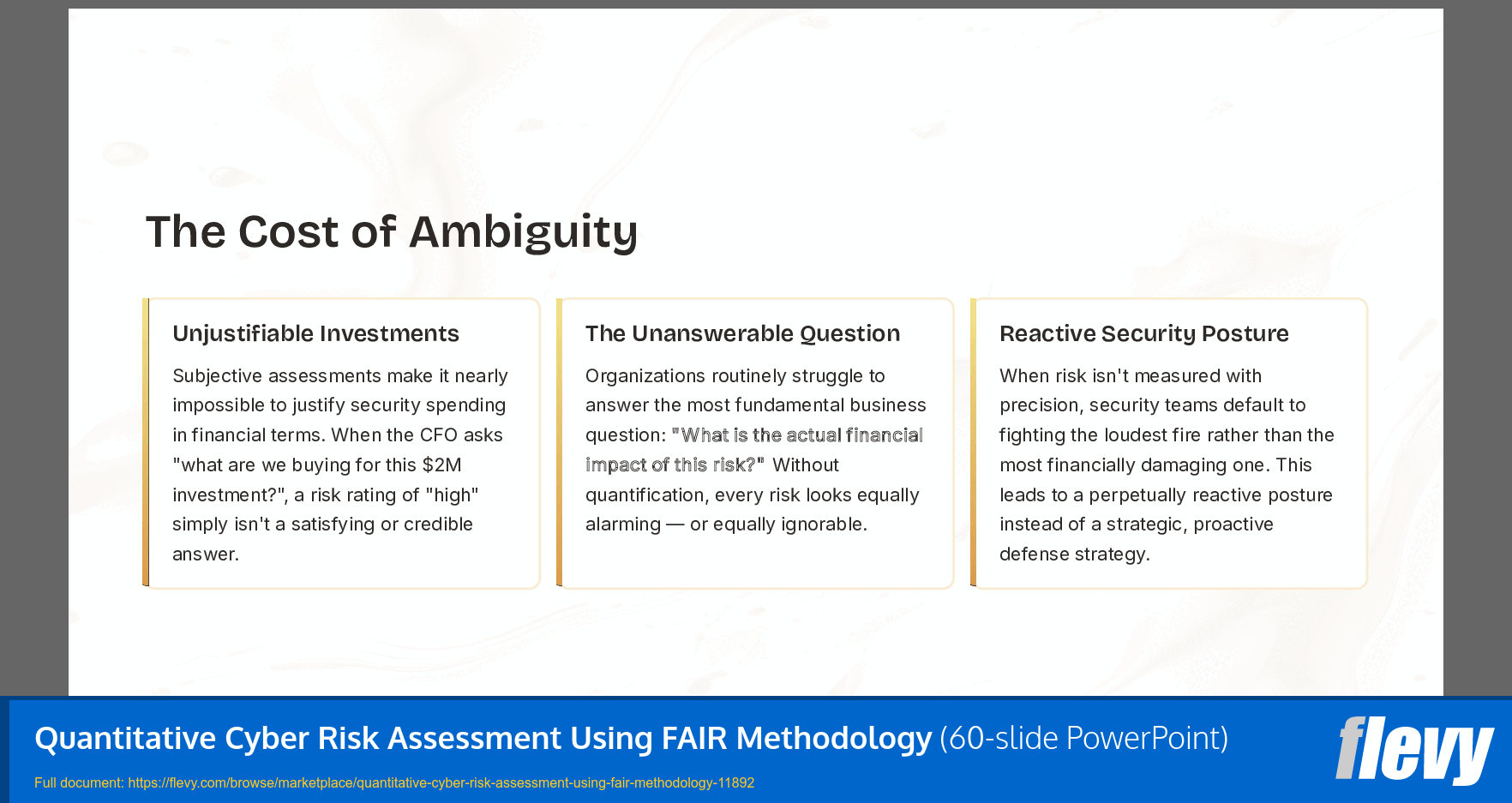
The Cost of Ambiguity
Subjective assessments make it hard to justify security investments in financial terms.
Inability to answer: "What is the actual financial impact of this risk?"
Leads to a reactive rather than proactive security posture.
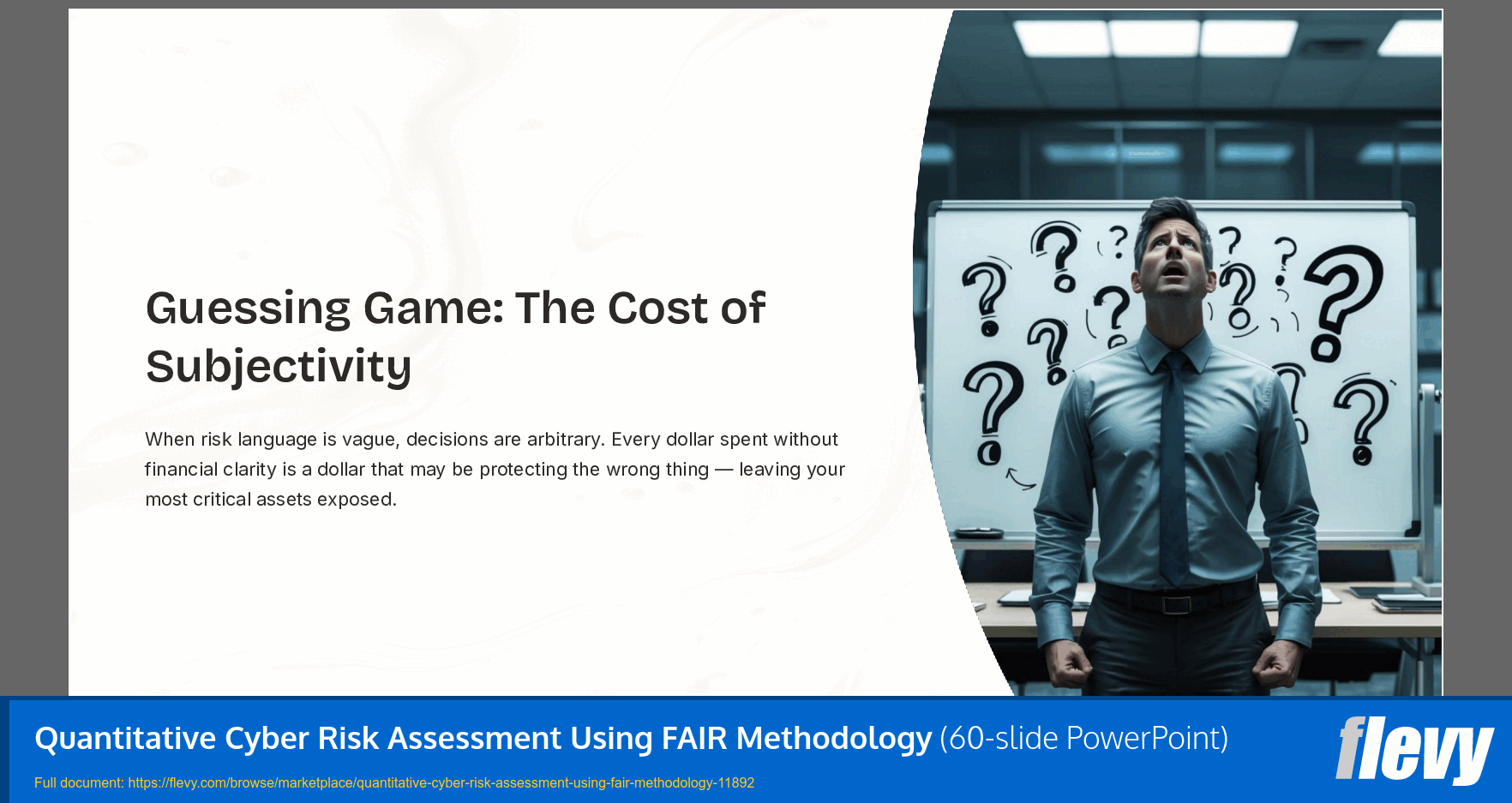
[image] A chaotic whiteboard with many question marks and vague risk labels, text: "Guessing Game: The Cost of Subjectivity"
Chapter 2: Introducing FAIR – A New Paradigm for Risk Quantification
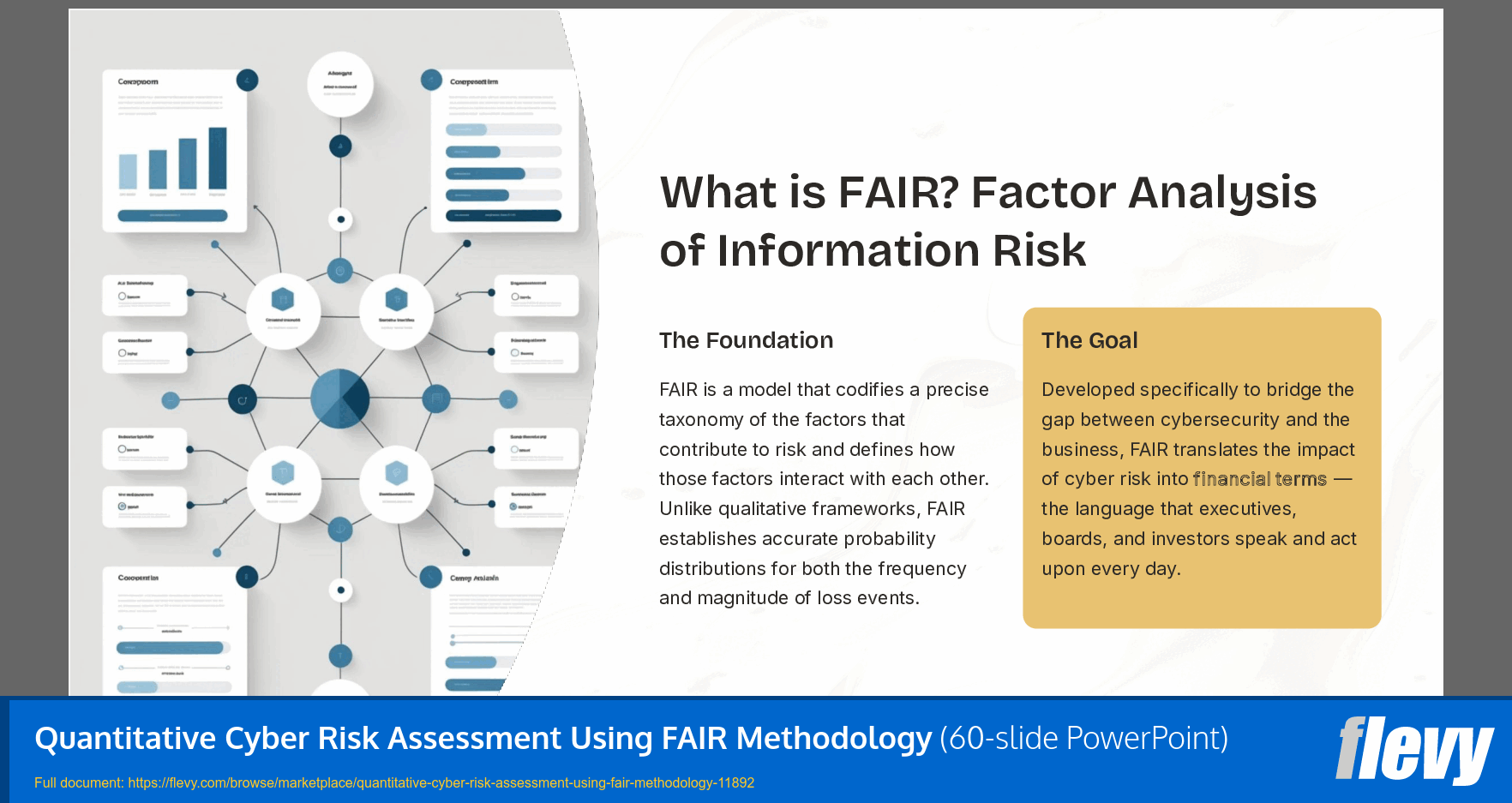
What is FAIR? Factor Analysis of Information Risk
FAIR is a model that codifies a taxonomy of factors contributing to risk and how they affect each other.
It establishes accurate probabilities for the frequency and magnitude of loss events.
Developed to translate the impact of cyber risk into financial terms.
The FAIR Model: Objective Measurement
FAIR provides a structured, data-driven approach to cyber risk.
It moves organizations from random estimation to a more calculated, defensible approach.
Supported by a growing community of risk professionals.
[image] A clear, structured diagram of the FAIR model components, text: "FAIR: From Subjectivity to Objectivity"
Chapter 3: Deconstructing Risk – The Core Components of FAIR
FAIR's Four Primary Components
Threats: Malicious actors or actions that could harm assets.
Assets: Valuable business resources (e.g., PII, platform availability, intellectual property).
Organization: The internal environment and its controls.
External Environment: Factors outside the organization's direct control.
Scenario Identification: The Foundation
The first step is to identify and define specific risk scenarios.
This involves clearly articulating the threat actor, threat vector, and the asset at risk.
Example: "Ransomware attack by a financially motivated cybercriminal targeting customer databases."
[image] Icons representing threats, assets, organization, and external environment, connected by arrows.
Chapter 4: Measuring the Impact – Loss Event Frequency (LEF)
Understanding Loss Event Frequency (LEF)
LEF quantifies how often a loss event is likely to occur.
It's broken down into two key factors:
Threat Event Frequency (TEF): How often the threat actor takes action.
Vulnerability/Access Frequency (VAF): How often the threat actor can successfully access the asset.
Quantifying Frequency: A Probabilistic Approach
FAIR uses statistical methods and subject matter expertise to estimate probabilities.
Instead of "frequent," we use ranges like "1 to 10 times per year."
This provides a more granular and actionable understanding of event likelihood.
[image] A bell curve graph showing probability distribution for event frequency.
Chapter 5: Quantifying the Magnitude – Probable Loss Magnitude (PLM)
Understanding Probable Loss Magnitude (PLM)
PLM quantifies how much loss will occur when an event happens.
It's broken down into two key factors:
Primary Loss: Direct financial impact (e.g., cost of recovery, lost revenue).
Secondary Loss: Indirect financial impact (e.g., reputational damage, regulatory fines).
Deconstructing Loss: Confidentiality, Integrity, Availability (CIA)
FAIR analyzes loss across the CIA triad:
Confidentiality Loss: Unauthorized disclosure of information.
Integrity Loss: Unauthorized or accidental modification or destruction of information.
Availability Loss: Disruption of access to or use of information or systems.
[image] Three distinct icons representing Confidentiality, Integrity, and Availability, with dollar signs overlaid.
Chapter 6: The FAIR Methodology in Action – Step-by-Step
Stage 1: Identify Scenario Components
Clearly define the asset, threat actor, threat event, and the loss categories.
Example: Asset = Customer Database; Threat Actor = Financially Motivated Cybercriminal; Threat Event = Ransomware Attack; Loss Categories = Confidentiality, Availability.
Stage 2: Evaluate Loss Event Frequency (LEF)
Gather data and expert opinion to estimate Threat Event Frequency (TEF) and Vulnerability/Access Frequency (VAF).
Calculate the resulting LEF range.
[image] A flowchart showing the progression from identifying components to calculating LEF.
Stage 3: Evaluate Probable Loss Magnitude (PLM)
Estimate Primary Loss (e.g., incident response costs, downtime) and Secondary Loss (e.g., fines, reputational damage).
Analyze loss across CIA dimensions.
Calculate the resulting PLM range.
Stage 4: Derive and Articulate Risk
Combine LEF and PLM to derive the probable financial loss exposure.
This is typically expressed as a range (e.g., "$100,000 to $1,000,000 annually").
Use Monte Carlo simulations for more robust analysis.
[image] A graph showing the output of a Monte Carlo simulation for risk exposure.
Chapter 7: Beyond the Basics – FAIR Controls Analytics Model (FAIR-CAM)
Understanding Controls: The FAIR-CAM Approach
FAIR-CAM (FAIR Controls Analytics Model) is an extension of FAIR.
It provides a "controls physiology" approach to measure the effect of controls on risk.
Helps understand how controls impact both LEF and PLM.
Types of Controls Analyzed by FAIR-CAM
Loss Event Controls: Directly reduce the frequency or magnitude of a loss event.
Variance Management Controls: Help manage the variability of loss.
Decision Support Controls: Aid in making informed risk decisions.
[image] A diagram illustrating how FAIR-CAM analyzes controls and their impact on risk factors.
Chapter 8: Granular Loss Analysis – FAIR Materiality Assessment Model (FAIR-MAM)
Deep Dive into Loss: The FAIR-MAM Approach
FAIR-MAM (FAIR Materiality Assessment Model) provides a more detailed taxonomy of cyber losses.
It complements FAIR by offering granular analysis of loss magnitude.
Helps in more accurately estimating the financial impact across various loss categories.
Key Loss Categories in FAIR-MAM
Financial Loss (e.g., lost revenue, recovery costs)
Opportunity Loss (e.g., delayed product launch)
Relational Loss (e.g., reputational damage, customer churn)
Strategic Loss (e.g., impact on competitive advantage)
[image] A detailed breakdown of different types of financial and non-financial losses.
Chapter 9: The Power of Quantification – Benefits of Using FAIR
Informed Decision-Making
FAIR enables risk professionals to make calculated and defensible decisions on risk treatment.
Prioritize investments based on quantifiable financial impact.
Improved Communication
Translates complex cyber risks into dollars and cents, resonating with business leaders.
Facilitates consensus-building around risk decisions.
[image] A business executive and a security professional shaking hands over a financial report.
Consistent Measurement and Reporting
Provides a consistent methodology for identifying, measuring, analyzing, and reporting risks.
Enables tracking of risk posture over time.
Strategic Risk Management
Allows for a strategic view of risk, from narrowly scoped scenarios to aggregate organizational risk.
Helps protect the most critical assets by understanding where the company is most likely to be impacted.
[image] A dashboard showing key risk metrics and financial impact projections.
Chapter 10: FAIR Adoption and Community Support
Growing Industry Adoption
FAIR is the leading quantification model for cyber risk.
Adopted by 30% of Fortune 100 companies.
Supported by a growing community of risk professionals and organizations.
Complementary to Existing Frameworks
FAIR complements existing frameworks like ISO, COSO, and NIST.
It provides the missing piece: objective, financial quantification.
[image] Logos of major companies and organizations that have adopted FAIR.
Chapter 11: Implementing FAIR in Your Organization
Key Steps for Implementation
Gain Executive Sponsorship: Essential for resources and buy-in.
Train Your Team: Invest in FAIR training and certification.
Start Small: Begin with a few high-priority risk scenarios.
Gather Data: Leverage internal and external data sources.
Iterate and Refine: Continuously improve your FAIR analysis.
Leveraging Technology
Utilize risk quantification platforms and tools that support FAIR.
These tools can automate data gathering, analysis, and reporting.
[image] A graphic showing a roadmap for FAIR implementation.
Chapter 12: The Future of Cyber Risk Management with FAIR
Moving Beyond Subjectivity
FAIR is driving a fundamental shift in how organizations manage cyber risk.
From reactive, qualitative assessments to proactive, quantitative strategies.
Enhanced Business Alignment
Tightly aligns cybersecurity efforts with business priorities and financial objectives.
Enables risk-informed investment decisions that protect business value.
[image] A visual metaphor of a compass pointing towards "Financial Clarity" and "Business Value."
The FAIR Institute Standards
The FAIR Institute maintains standards like FAIR, FAIR-CAM, and FAIR-MAM.
These standards provide a comprehensive framework for quantifying and managing cyber risk.
Continuous Improvement
The FAIR community is constantly evolving, with new research and best practices emerging.
Staying engaged with the community ensures your methodology remains cutting-edge.
[image] A graphic representing continuous growth and evolution.
Chapter 13: Conclusion – Quantify, Manage, Protect
The FAIR Advantage: Financial Clarity for Cyber Risk
FAIR empowers organizations to understand, measure, and manage cyber risk in financial terms.
It's the key to making defensible, business-aligned cybersecurity decisions and protecting your organization's value.
Got a question about the product? Email us at support@flevy.com or ask the author directly by using the "Ask the Author a Question" form. If you cannot view the preview above this document description, go here to view the large preview instead.
Source: Best Practices in Cyber Security PowerPoint Slides: Quantitative Cyber Risk Assessment Using FAIR Methodology PowerPoint (PPTX) Presentation Slide Deck, Mohamed Alshamey
ABOUT THE AUTHOR

Senior Consultant in Cybersecurity GRC, Data Governance, Cybersecurity, Privacy, and Data Management, with over 20 years of experience in information technology, consulting, training, and technical capacity building. holds a PhD. In AI & Data Privacy, he has a master's degree in cybersecurity and is currently pursuing research focused on data privacy. possesses extensive expertise in ... [read more]
Ask the Author a Question
You must be logged in to contact the author.




























