 Click main image to view in full screen.
Kanban Board: Cybersecurity – Excel XLSX
Excel (XLSX) + supplemental PDF


CYBER SECURITY EXCEL DESCRIPTION
A Kanban Board is a Lean & Agile Project Management tool used to implement Kanban to manage work at a personal or organizational level.
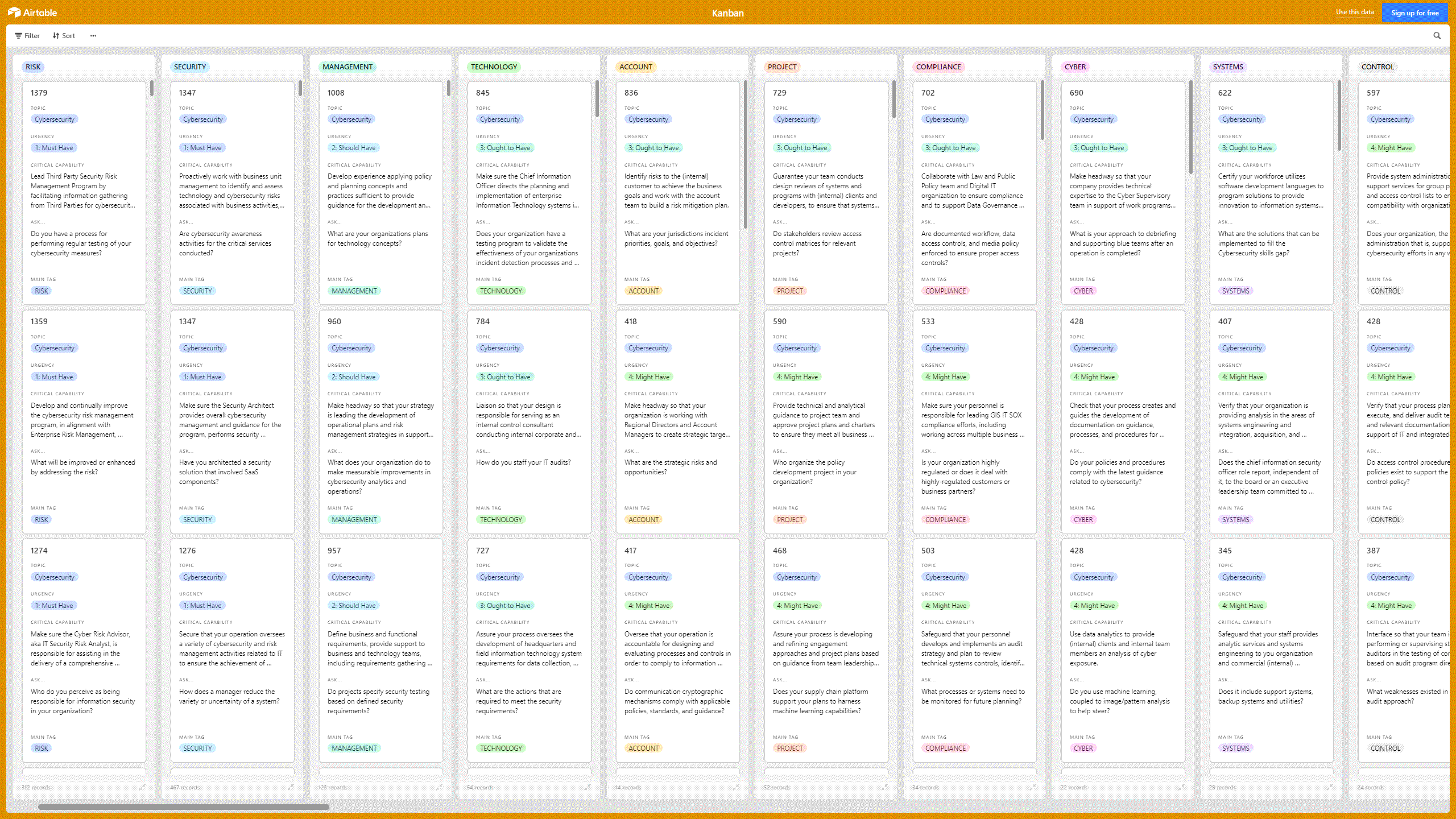
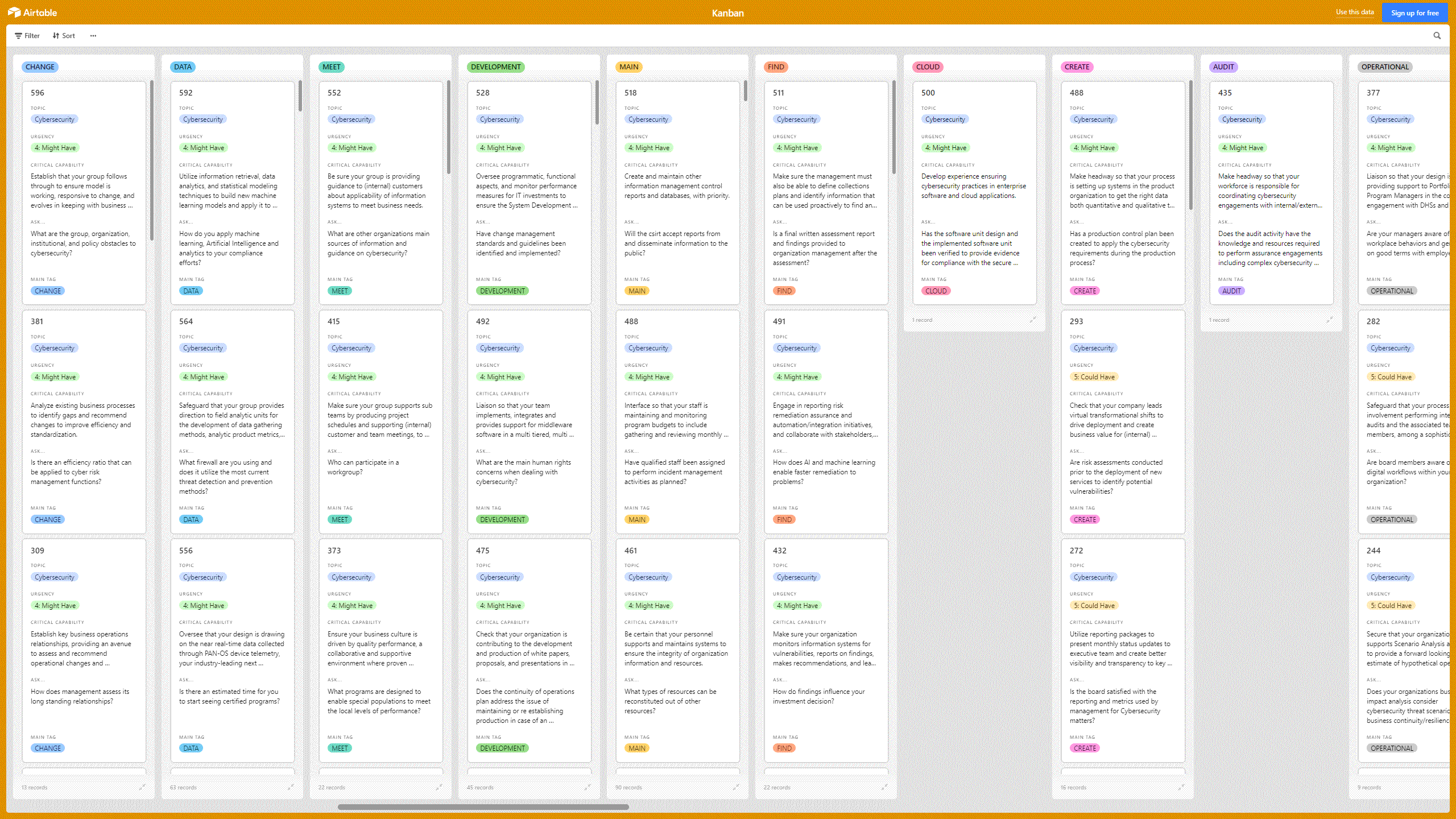
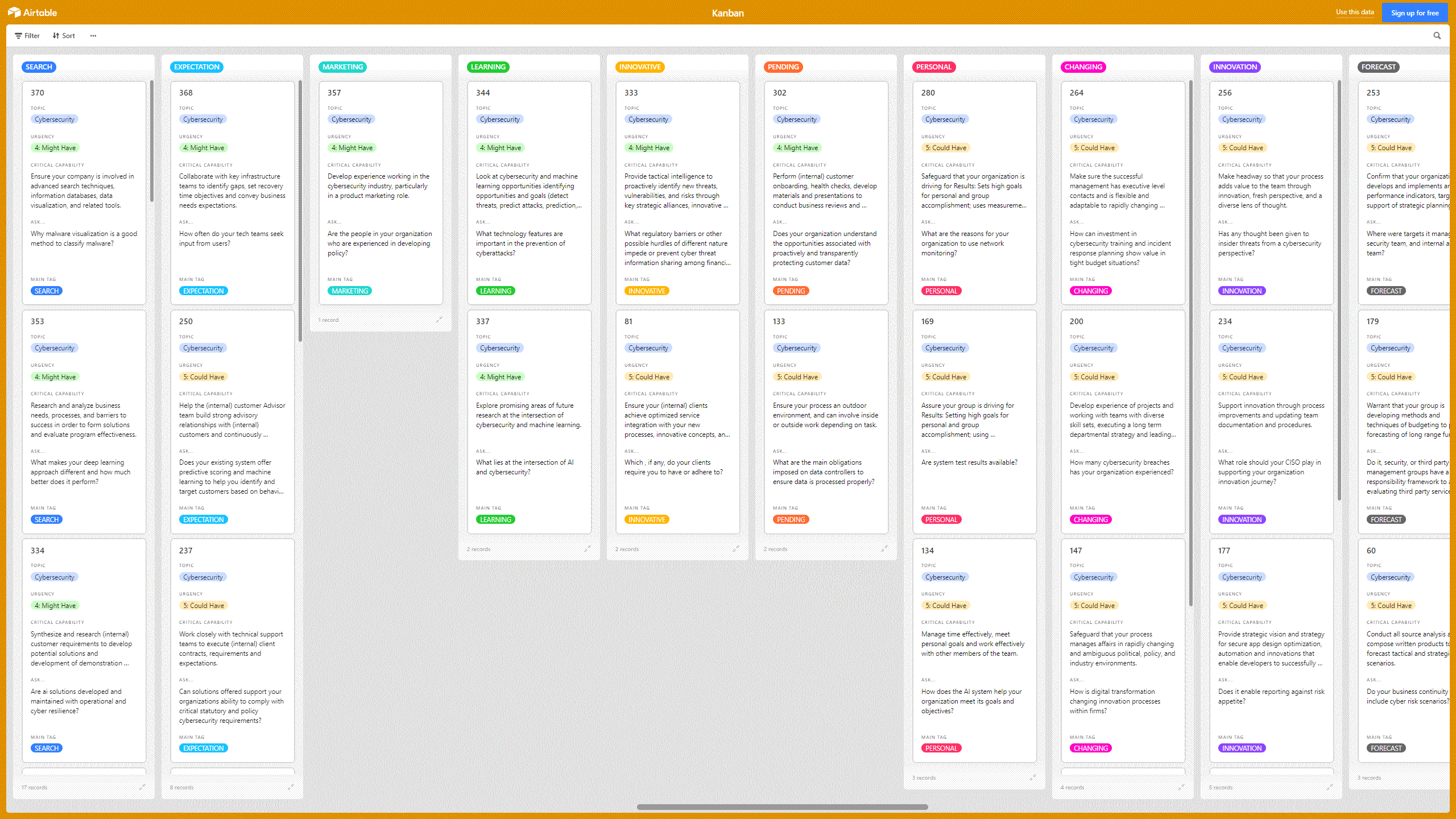
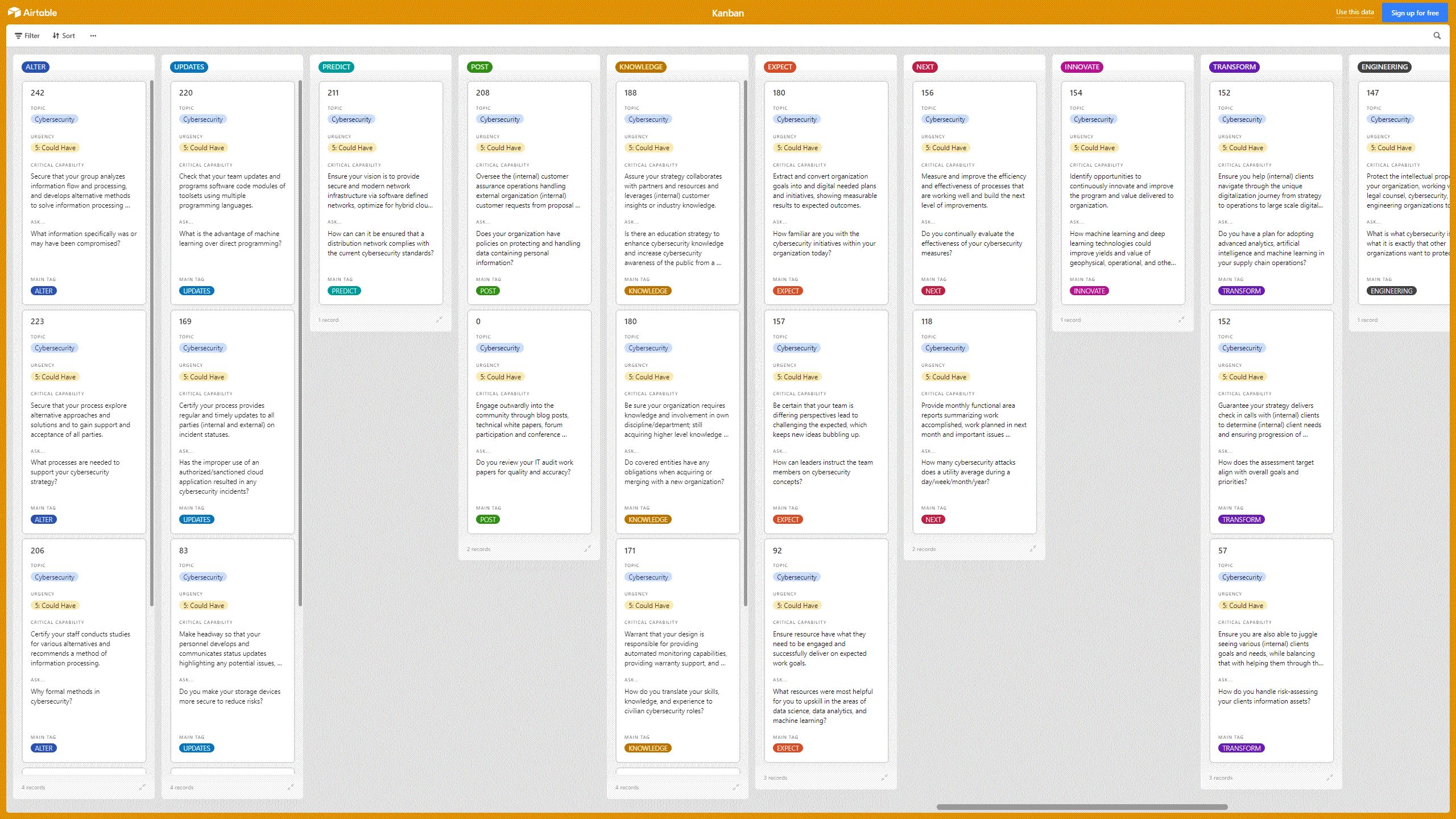
Kanban Boards visually depict work at various stages of a process using cards to represent work items and columns to represent each stage of the process. Cards are moved from left to right to show progress and to help coordinate teams performing the work. A Kanban Board may be divided into horizontal "swimlanes" representing different kinds of work or different teams performing the work.
With this Cybersecurity Kanban, you can lead Third Party Security Risk Management Programs by facilitating information gathering from third parties for Cybersecurity Due Diligence; and performing the subsequent analysis of the materials to determine Cybersecurity risk level.
This Kanban offers the following benefits:
• Ensure the security and cybersecurity of sensitive or privileged data and information and of key assets.
• Leverage the business opportunities of data explosion, analytics and threat intelligence.
• Practically ensure policy makers have a sufficient knowledge base and understanding to meet present and future cybersecurity challenges.
• Prioritize the work of your IT Team or cybersecurity Team in the context of your most important missions, operations, business activities or critical systems.
• Know if your vulnerability risk profile has changed.
• Ensure that machine learning systems will perform as expected with humans in the loop.
• Track who has access to sensitive information.
• Consider the scale issues surrounding machine learning and data sanitization.
• Treat data privacy and security concerns.
• Ensure the security and cybersecurity of sensitive or privileged data and information.
This Kanban Board is downloadable as an Excel file. You will need to import the Excel into Airtable, Monday, Smartsheet, Power BI, or the Kanban visualization tool of your choice.
The above preview is only a partial snapshot of all the data included in the Kanban Excel import. The full document has 1,400+ records.
Got a question about the product? Email us at support@flevy.com or ask the author directly by using the "Ask the Author a Question" form. If you cannot view the preview above this document description, go here to view the large preview instead.
TOPIC FAQ
How does a Kanban board help manage cybersecurity work?
A Kanban board visualizes work using cards for items and columns for process stages, allowing teams to track progress by moving cards left to right. For cybersecurity, this supports coordinating tasks, tracking access, and monitoring remediation work using cards, columns, and swimlanes.What are the core Kanban components I should include for a security program?
Core components are cards (work items), columns (process stages), and optional horizontal swimlanes for different work types or teams. These elements let teams display status and coordinate activities visually and are central to Kanban implementations for security programs.How can Kanban be used for third‑party cybersecurity due diligence?
Use Kanban to capture incoming vendor materials as cards, move them through review, analysis, and risk‑rating stages, and assign follow‑ups. This supports structured third‑party information gathering and analysis to determine cybersecurity risk levels, as described for due diligence workflows.Which platforms accept an Excel Kanban import for visualization?
An Excel‑based Kanban import can be uploaded into multiple visualization and workflow platforms. Common integrations mentioned include Airtable, Monday, Smartsheet, and Power BI, allowing the spreadsheet to become a visual Kanban board in those tools.How can Kanban support machine‑learning and data sanitization tasks in security programs?
Kanban boards can track ML validation, human‑in‑the‑loop checks, and data sanitization activities as distinct cards or swimlanes, helping teams coordinate scale considerations and privacy controls. The Cybersecurity Kanban explicitly cites ML scale and data sanitization as tracked concerns.What should I consider when choosing a Kanban template versus building one from scratch?
Consider time to implement, the need for prebuilt fields or records, and target platform compatibility. A downloadable template like Flevy's Kanban Board: Cybersecurity provides a ready Excel import with structured rows to accelerate setup, including 1,400+ records.How does Kanban help detect changes in vulnerability risk profile?
By representing vulnerabilities as cards and tracking their status and movement across remediation stages, teams can observe shifts in backlog, open items, or stuck cards that signal a changed vulnerability risk profile, enabling continuous monitoring of risk status.What operational benefits do security teams get from Kanban boards?
Security teams gain visual prioritization of tasks, clearer coordination across teams, traceability of who has access to sensitive information, and a framework to prioritize work relative to critical missions or systems—advantages useful for IT and cybersecurity teams.Source: Best Practices in Cyber Security, Kanban, Kanban Board Excel: Kanban Board: Cybersecurity Excel (XLSX) Spreadsheet, Gerard Blokdijk




























