
 Click main image to view in full screen. Unlock all 18 preview images:
Innovative Learning Organization toward Business Growth – PowerPoint PPTX Template
PowerPoint (PPTX) 57 Slides


BENEFITS OF THIS DOWNLOADABLE POWERPOINT DOCUMENT
- Provide a framework of Learning Organization (The Fifth Discipline of Learning Organization)
- Provide : How Organizations That Are Effective & Competitive
- Provide an Innovative Learning Organization Toward Business Growth:
LEARNING ORGANIZATION PPT TEMPLATE DESCRIPTION
Innovative Learning Organization Toward Business Growth
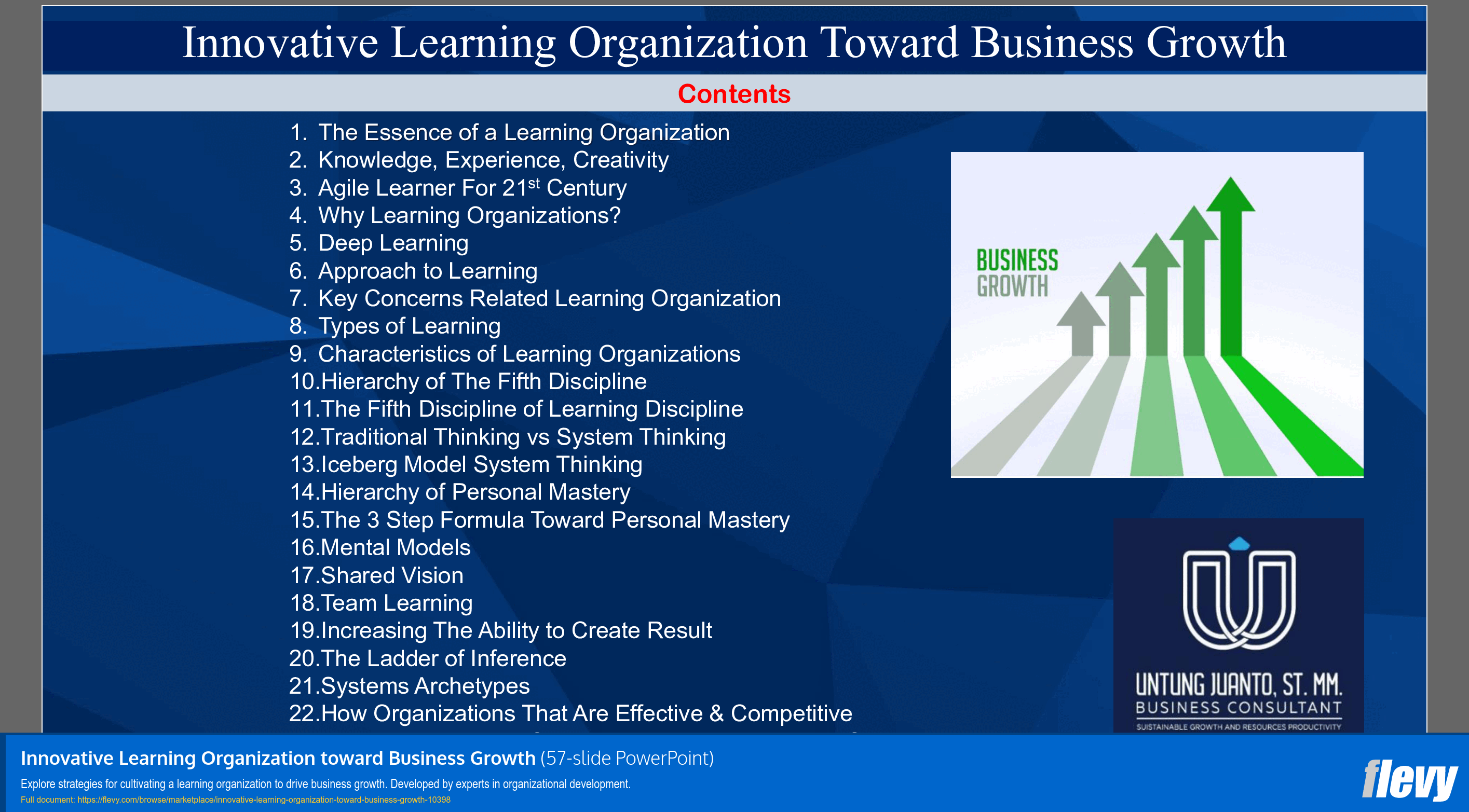
Contents
1. The Essence of a Learning Organization
2. Knowledge, Experience, Creativity
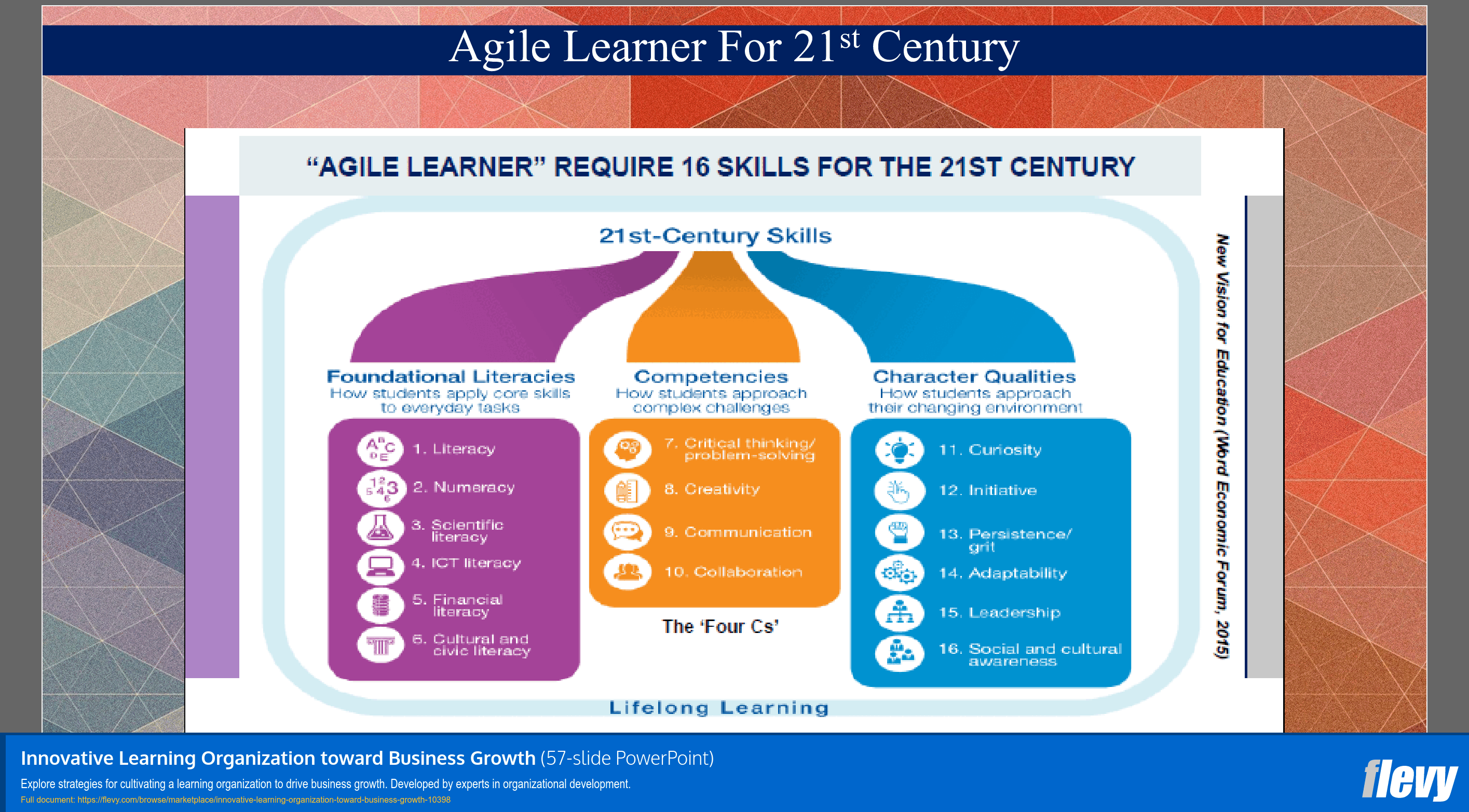
3. Agile Learner For 21st Century
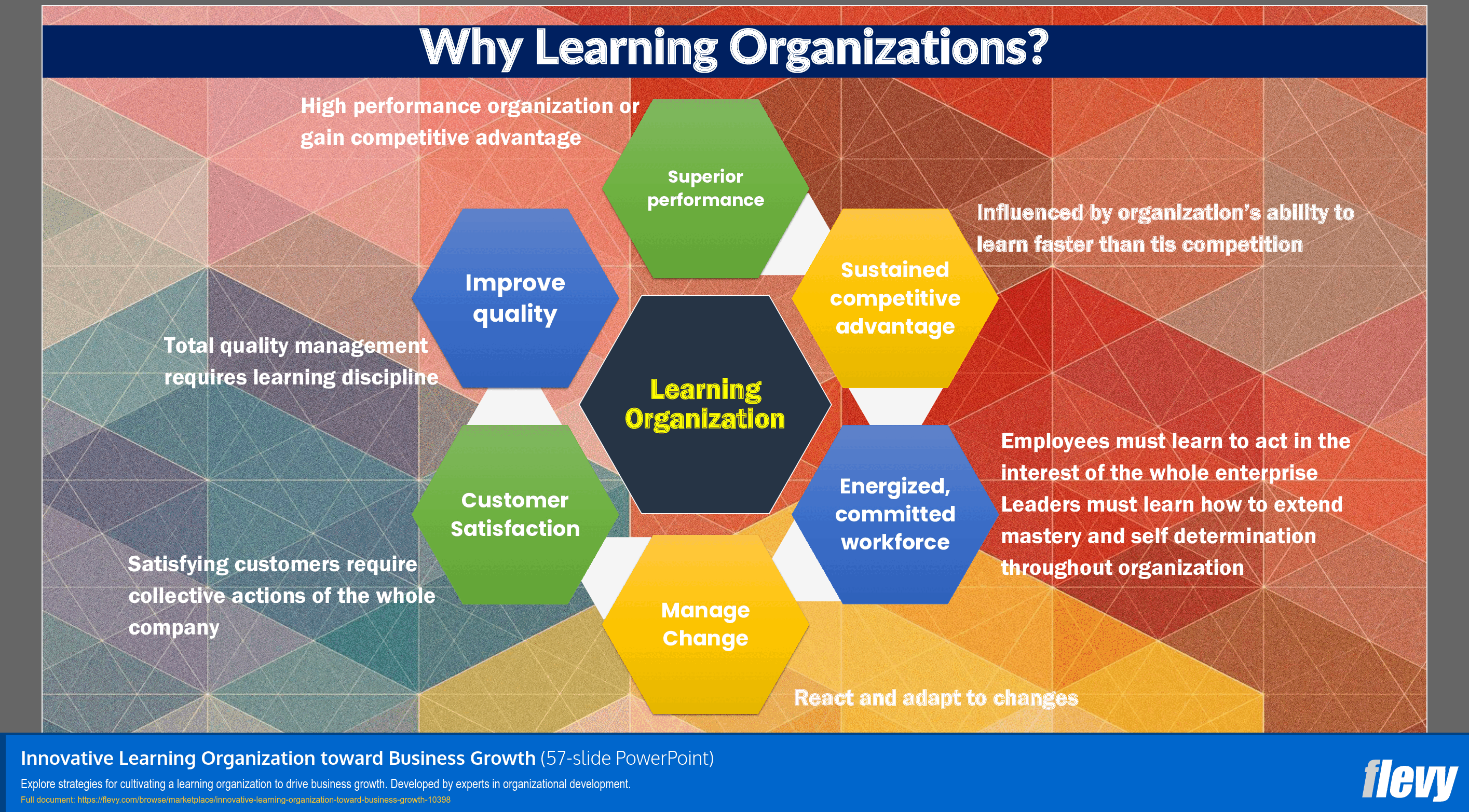
4. Why Learning Organizations?
5. Deep Learning
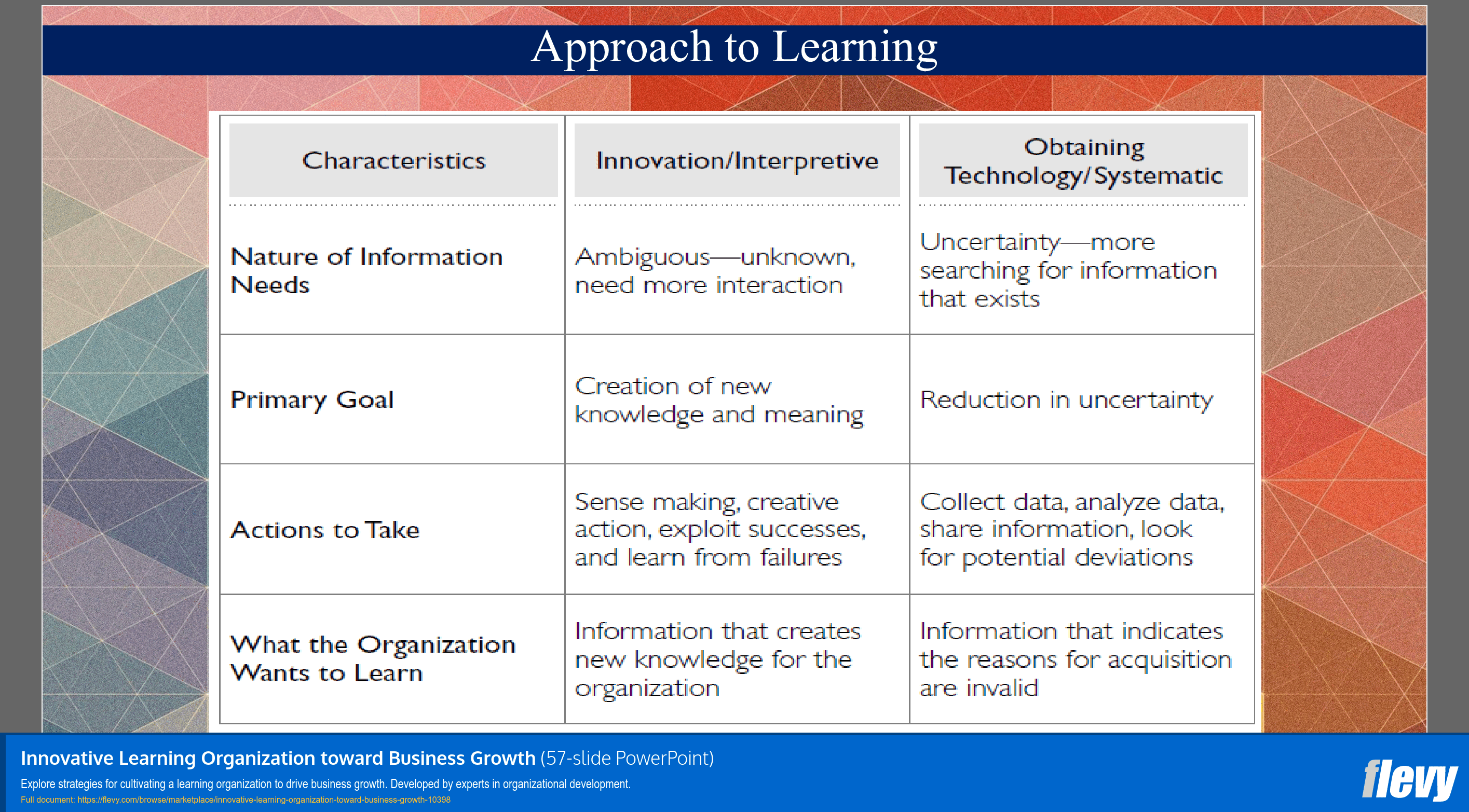
6. Approach to Learning
7. Key Concerns Related Learning Organization
8. Types of Learning
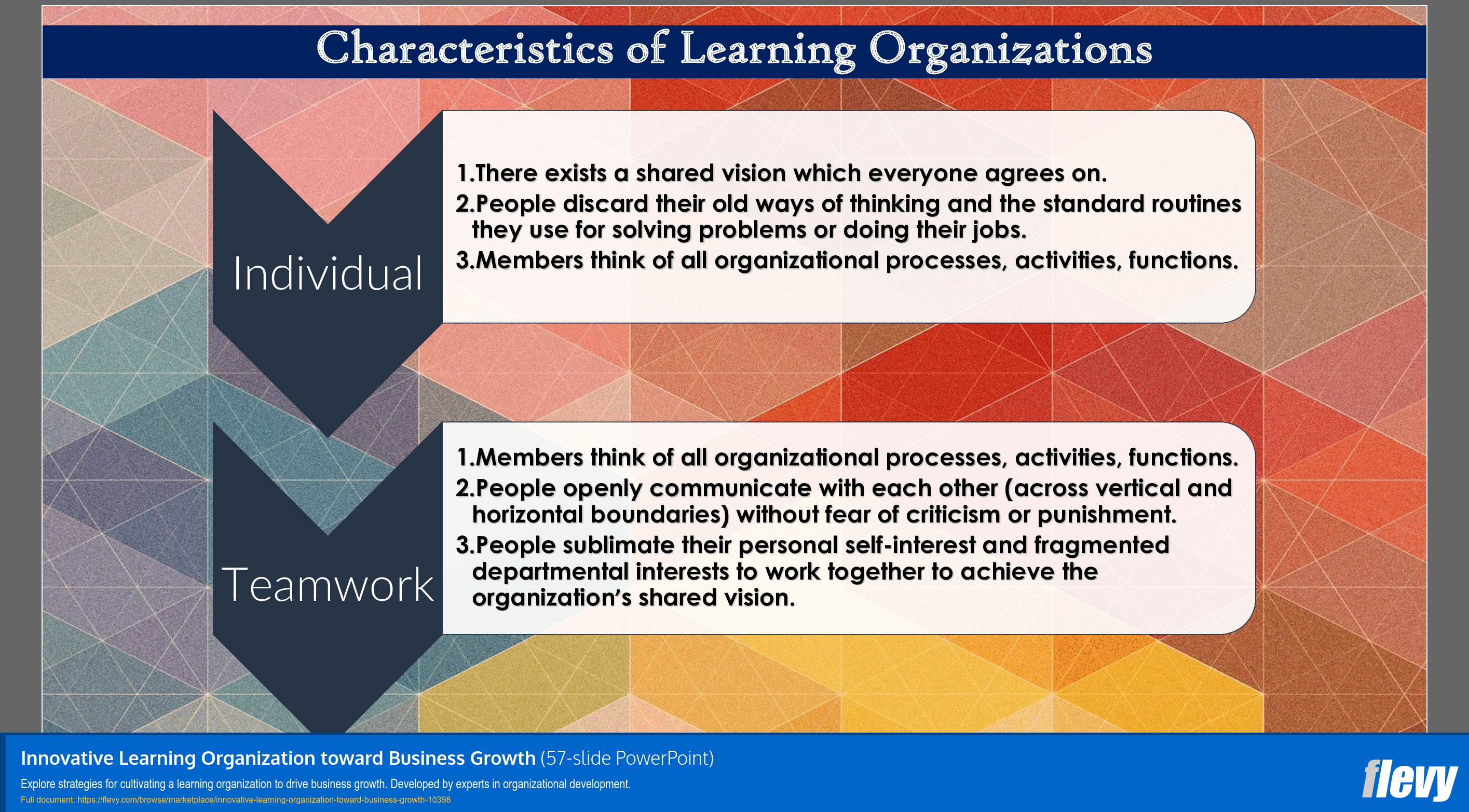
9. Characteristics of Learning Organizations
10. Hierarchy of The Fifth Discipline
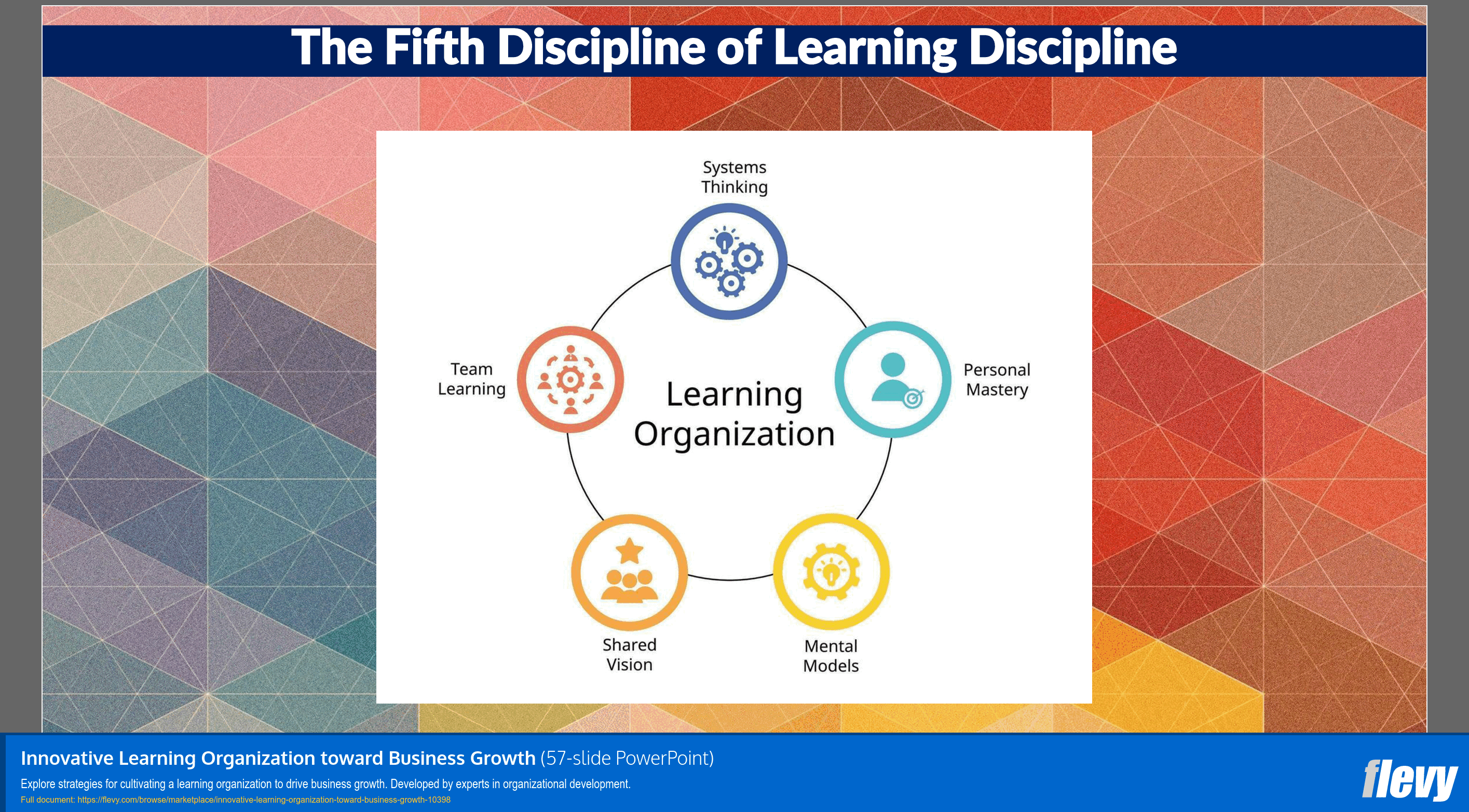
11. The Fifth Discipline of Learning Organization
12. Traditional Thinking vs System Thinking
13. Iceberg Model System Thinking
14. Hierarchy of Personal Mastery
15. The 3 Step Formula Toward Personal Mastery
16. Mental Models
17. Shared Vision
18. Team Learning
19. Increasing The Ability to Create Result
20. The Ladder of Inference
21. Systems Archetypes
22. How Organizations That Are Effective & Competitive
23. Innovative Learning Organization Toward Business Growth:
A learning organization is a dynamic and adaptable entity that values the acquisition, creation, and sharing of knowledge. It goes beyond simply providing training programs and instead focuses on how the organization responds to changes and learns from its experiences.
In the 1990's a book called The fifth discipline by Peter Senge, discussed the process of creating a learning organization. He wrote that as the pace of society and business increase that there would be a real need to increase the capacity of people in the workplace to create a competitive capacity.
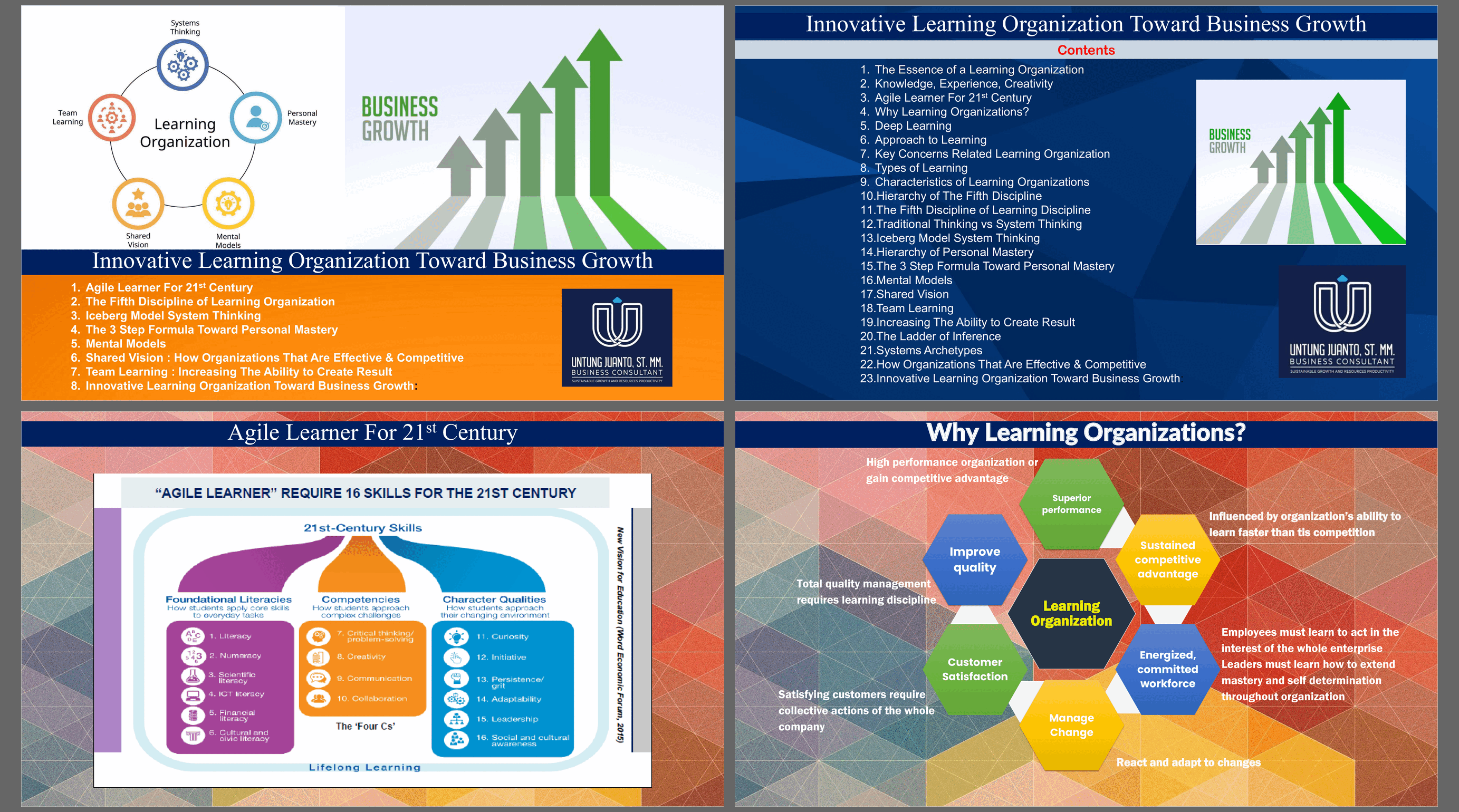
Peter Senge, a leading authority on learning organizations, has identified five key methods for creating a learning organization:
1. Systems thinking.
The idea of the learning organization developed from a body of work called systems thinking. This is a conceptual framework that allows people to study businesses as bounded objects. Learning organizations use this method of thinking when assessing their company and have information systems that measure the performance of the organization as a whole and of its various components. Systems thinking states that all the characteristics must be apparent at once in an organization for it to be a learning organization. If some of these characteristics are missing then the organization will fall short of its goal.
2. Personal mastery.
The commitment by an individual to the process of learning is known as personal mastery. There is a competitive advantage for an organization whose workforce can learn more quickly than the workforce of other organizations. Individual learning is acquired through staff training, development and continuous self-improvement.
3. Mental models.
The assumptions held by individuals and organizations are called mental models. To become a learning organization, these models must be challenged. Individuals tend to espouse theories, which are what they intend to follow, and theories-in-use, which are what they actually do. Similarly, organizations tend to have ‘memories' which preserve certain behaviors, norms and values.
4. Shared vision.
The most successful visions build on the individual visions of the employees at all levels of the organization, thus the creation of a shared vision can be hindered by traditional structures where the company vision is imposed from above. The shared vision is often to succeed against a competitor; however, Senge states that these are transitory goals and suggests that there should also be long-term goals that are intrinsic within the company.
5. Team learning.
The benefit of team or shared learning is that staff grow more quickly and the problem solving capacity of the organization is improved through better access to knowledge and expertise. Learning organizations typically have excellent knowledge management structures, allowing creation, acquisition, dissemination, and implementation of this knowledge in the organization.
Thank you,
UJ Consulting
Got a question about the product? Email us at support@flevy.com or ask the author directly by using the "Ask the Author a Question" form. If you cannot view the preview above this document description, go here to view the large preview instead.
Source: Best Practices in Learning Organization PowerPoint Slides: Innovative Learning Organization toward Business Growth PowerPoint (PPTX) Presentation Slide Deck, UJ Consulting _ Strategy-Insight-Impact
ABOUT THE AUTHOR

UJ Consulting | Strategy • Insight • Impact
UJ Consulting is an executive management consulting and business transformation practice founded by Untung Juanto, ST., MM., a senior executive, consultant, and transformation practitioner with more than 25 years of professional experience across local and multinational companies and diverse industries.
His career progressed from frontline
... [read more]
Ask the Author a Question
You must be logged in to contact the author.




























