 Click main image to view in full screen.
Industrial Localization Paradox™ - Decision Framework – PDF
PDF document 16 Pages


BENEFITS OF THIS DOWNLOADABLE PDF DOCUMENT
- Provides a structured framework for evaluating whether industrial localization policies build competitive domestic capability or create protection-dependent inefficiency.
- Translates complex industrial-policy, trade, investment, and supply-chain dynamics into practical decision criteria for policy and strategy evaluation.
- Enables systematic comparison of localization policy options across cost, scale, technology, connectivity, and long-term global competitiveness.
DECISION MAKING PDF DESCRIPTION
The Industrial Localization Paradox™ – Decision Framework is an executive decision intelligence asset for evaluating how domestic industrial-development policies affect industrial capability, investment, productivity, supply-chain resilience, and long-term global competitiveness.
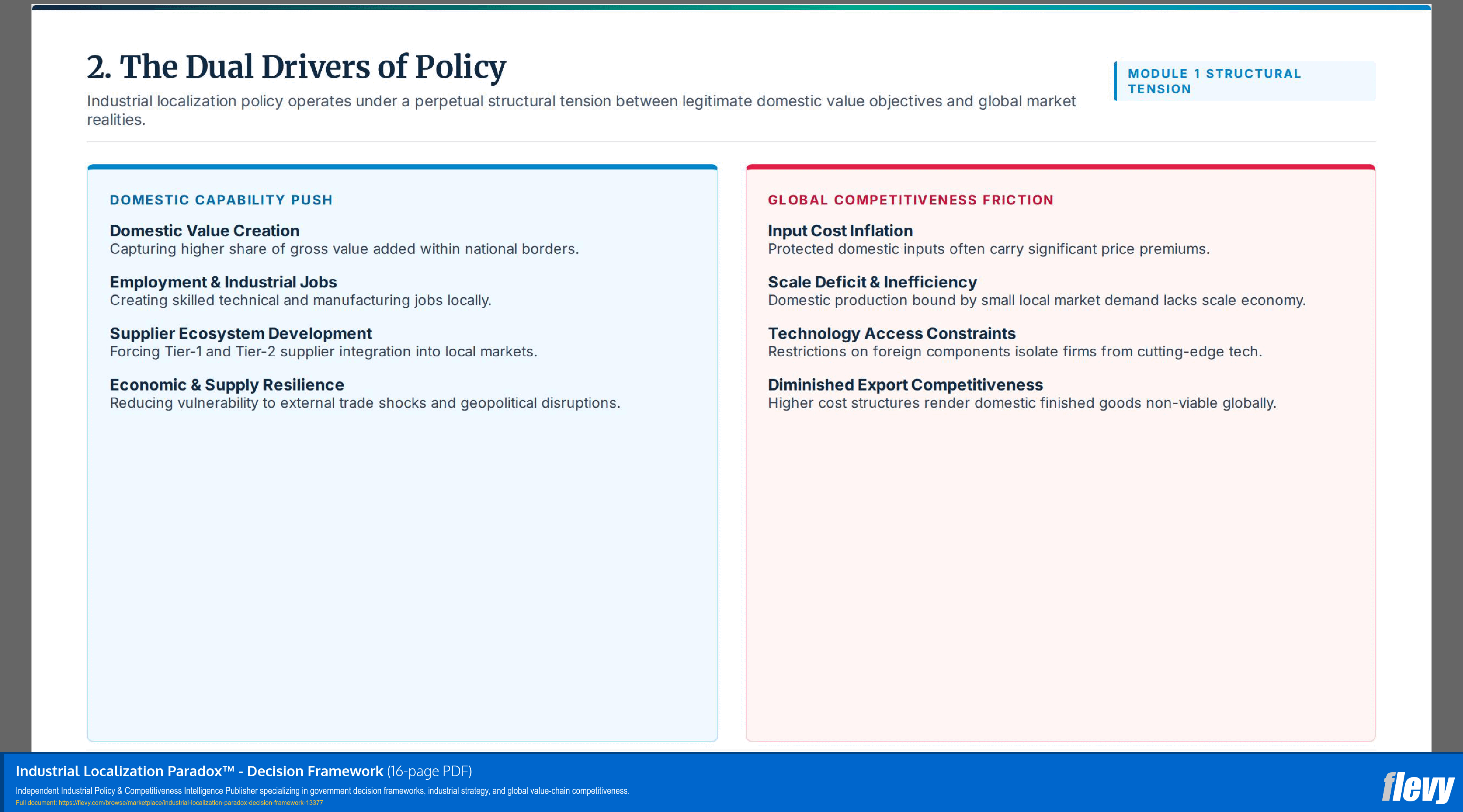
Governments increasingly use local-content requirements, domestic sourcing preferences, tariffs, procurement rules, FDI conditions, subsidies, and downstreaming policies to capture more economic value within national borders. These policies can strengthen domestic capability—but when policy protection advances faster than underlying industrial competitiveness, the same mechanisms can create cost inflation, scale inefficiency, technology-access constraints, and weaker export performance.
This framework reframes localization as an economic optimization problem rather than an ideological choice between protection and free trade.
Inside, you will find:
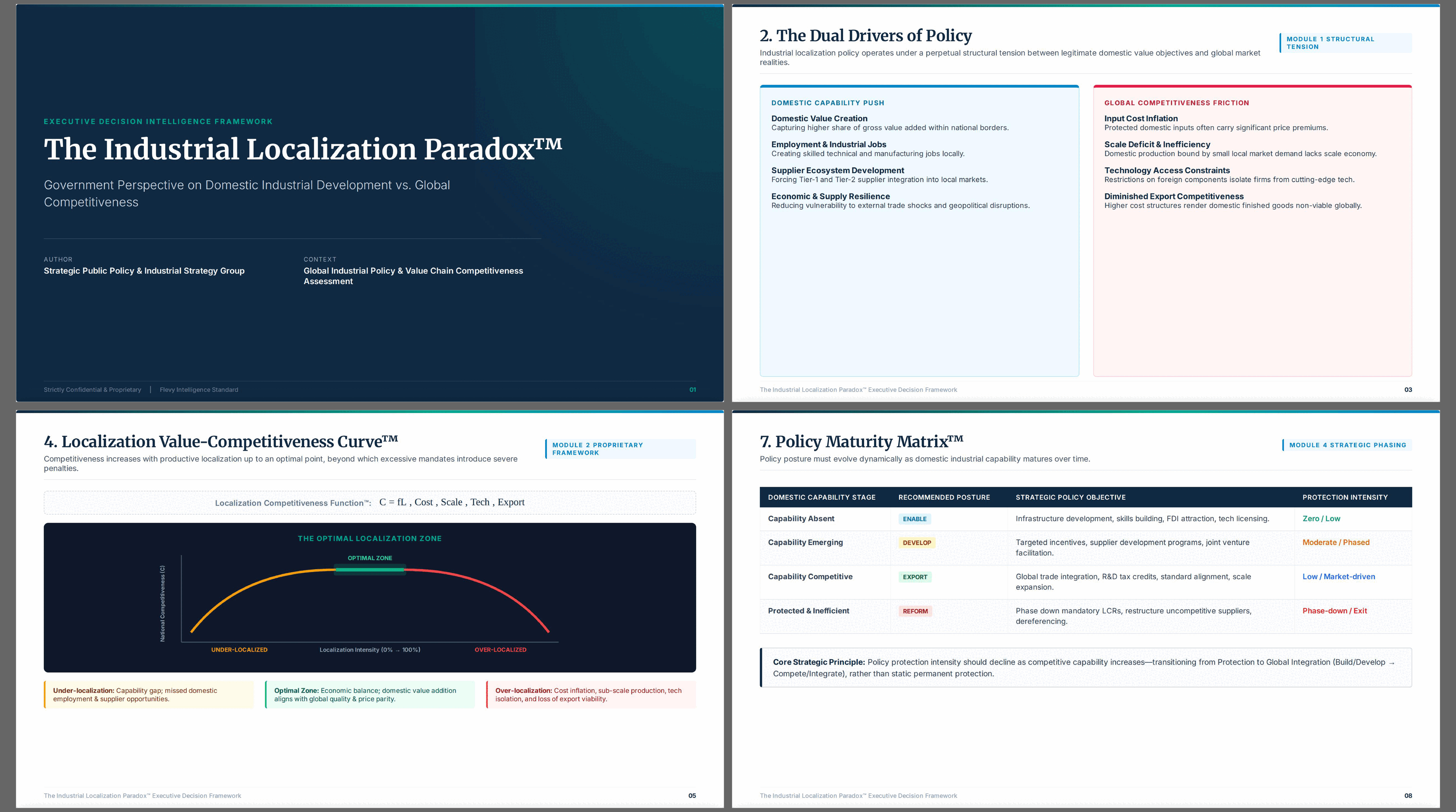
• The Industrial Localization Paradox™ – the central strategic tension between domestic value creation and global competitiveness.
• Policy-to-Competitiveness Chain™ – a six-step causal framework linking government policy decisions to industry adjustment, economic impact, investment response, export viability, and industrial outcomes.
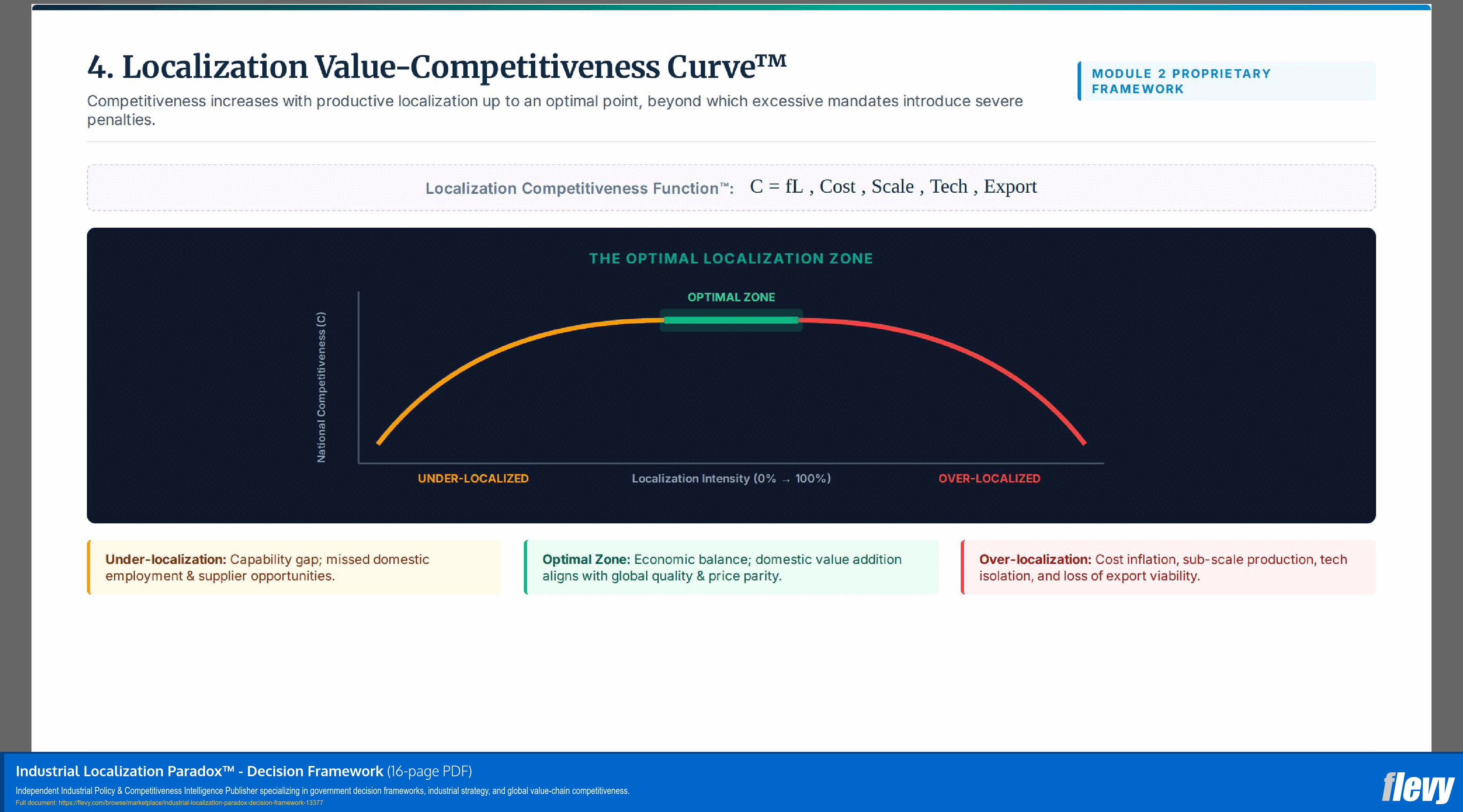
• Localization Value–Competitiveness Curve™ – a conceptual framework for identifying under-localized, optimal, and over-localized conditions.
• Six Diagnostic Dimensions™ – Capability, Cost, Scale, Technology, Connectivity, and Competitiveness for evaluating localization proposals.
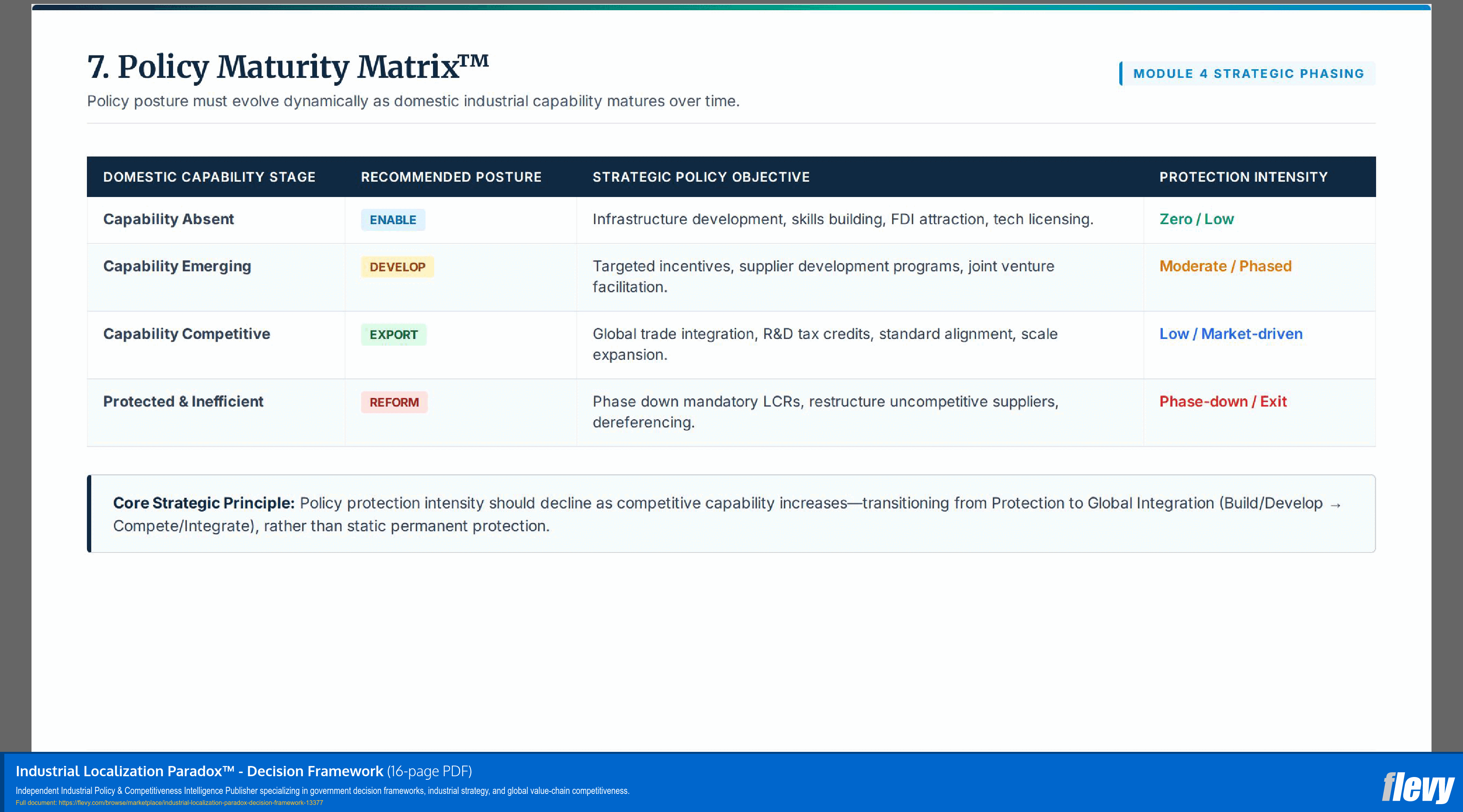
• Policy Maturity Matrix™ – a phased approach for moving from capability enablement and targeted development toward global integration as domestic capability matures.
• Policy Lever Assessment – comparison of enabling, incentive-based, procurement, FDI-conditioning, and mandatory localization instruments according to their distortion risk and competitiveness potential.
• Global Policy Architectures – comparative intelligence across the United States, European Union, India, and Indonesia.
• Indonesia Case Evidence – analysis of the trade-offs between downstreaming, local-content requirements, imported technology inputs, productivity, and global value-chain integration.
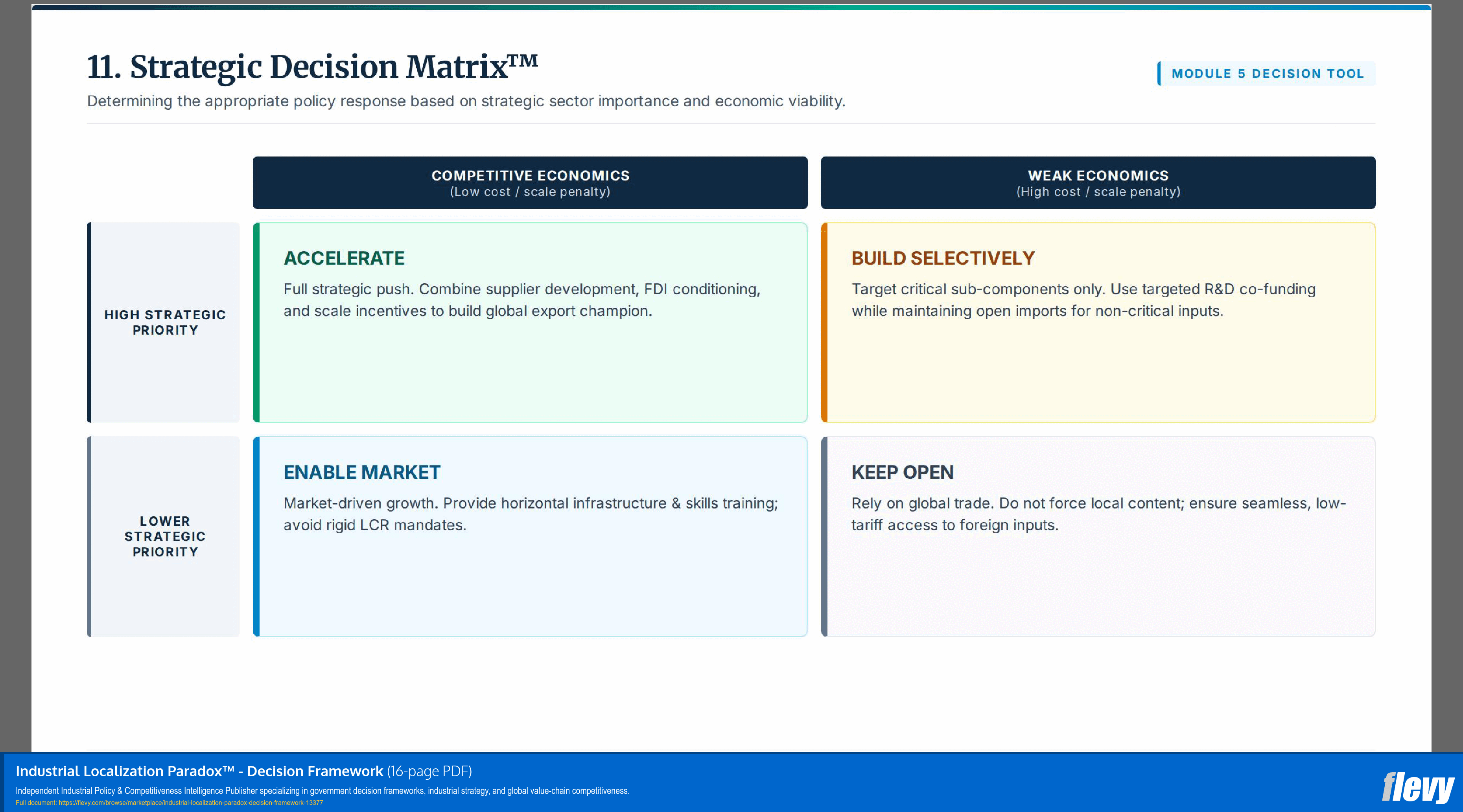
• Strategic Decision Matrix™ – a practical tool for determining whether governments should accelerate, build selectively, enable markets, or keep strategic inputs open.
• Five-Question Policy Stress Test™ – a decision gateway covering domestic capability, cost penalty, technology access, sunset provisions, and sustainable competitiveness.
The framework is designed to help decision-makers distinguish between localization that builds durable industrial capability and localization that creates protection-dependent inefficiency.
Core strategic proposition: industrial policy should not maximize localization. It should maximize competitive domestic capability.
Got a question about the product? Email us at support@flevy.com or ask the author directly by using the "Ask the Author a Question" form. If you cannot view the preview above this document description, go here to view the large preview instead.
Source: Best Practices in Decision Making PDF: Industrial Localization Paradox™ - Decision Framework PDF (PDF) Document, Wisnu Pandega Wardana
ABOUT THE AUTHOR

I am an independent Industrial Intelligence and Strategic Innovation Publisher focused on developing structured business intelligence, innovation frameworks, and opportunity-oriented research for decision-makers.
My work focuses on translating emerging technologies, industrial transformation, sustainability, resource efficiency, and market shifts into structured intelligence assets that
... [read more]
Ask the Author a Question
You must be logged in to contact the author.




























