
 Click main image to view in full screen. Unlock all 10 preview images:
How to Use AI for Competitive Advantage – Word DOCX
Word (DOCX) 52 Pages


BENEFITS OF THIS DOWNLOADABLE WORD DOCUMENT
- Provides a strategic framework for turning AI into measurable business value and sustainable competitive advantage.
- Provides a practical roadmap for redesigning workflows, improving productivity, accelerating growth, and integrating AI into your organization.
- Provides an executive framework for building AI capabilities that drive innovation, strengthen customer experience, and create defensible long-term advantage.
ARTIFICIAL INTELLIGENCE WORD DESCRIPTION
Curated by McKinsey-trained Executives
🚀 HOW TO USE AI FOR COMPETITIVE ADVANTAGE BUSINESS GUIDE – THE EXECUTIVE AI STRATEGY SYSTEM FOR AI-POWERED GROWTH, PRODUCTIVITY, WORKFLOW REDESIGN, CUSTOMER EXPERIENCE, INNOVATION, DATA INTELLIGENCE, AI AGENTS, OPERATIONAL TRANSFORMATION & DEFENSIBLE COMPETITIVE ADVANTAGE
⚡ STOP LETTING YOUR COMPETITORS TURN AI INTO REVENUE, PRODUCTIVITY, SPEED AND MARKET ADVANTAGE WHILE YOUR ORGANIZATION IS STILL STUCK IN AI PILOTS, TOOL EXPERIMENTATION, FRAGMENTED AUTOMATION, DISCONNECTED DATA, UNCHANGED WORKFLOWS & AI STRATEGIES THAT NEVER REACH THE P&L
Most CEOs, executives, business leaders, strategy teams, transformation leaders, innovation executives, operations leaders, technology organizations and enterprise decision-makers are NOT failing with AI because they lack access to artificial intelligence.
They are failing because they lack a STRUCTURED BUSINESS-SYSTEM APPROACH TO AI COMPETITIVE ADVANTAGE.
They have access to powerful AI models.
They have AI tools.
They have employees experimenting with generative AI.
They have pilots.
They have dashboards.
They have AI policies.
They have meetings about AI.
But they often do NOT have the operating model required to turn AI into MEASURABLE ECONOMIC VALUE, REPEATABLE BUSINESS PERFORMANCE, FASTER ORGANIZATIONAL LEARNING & DEFENSIBLE COMPETITIVE ADVANTAGE.
The result?
❌ AI pilots that never scale
❌ AI tools added on top of broken workflows
❌ Productivity improvements that never reach financial results
❌ Valuable proprietary data trapped inside legacy systems
❌ AI investments disconnected from strategic priorities
❌ Technology-led experimentation without business accountability
❌ Weak measurement focused on adoption instead of value
❌ Customer experiences that remain reactive instead of predictive
❌ Innovation programs that move too slowly
❌ AI capabilities competitors can copy within months
❌ Governance processes that either create unacceptable risk or kill experimentation
❌ Organizations investing in models while under-investing in data, workflow redesign and organizational capability
❌ Executive AI strategies with no clear 90-day execution path
THAT IS THE AI COMPETITIVE ADVANTAGE GAP.
And that gap is exactly what this guide is designed to help leadership teams close.
🎯 INTRODUCING: HOW TO USE AI FOR COMPETITIVE ADVANTAGE – THE EXECUTIVE BUSINESS GUIDE TO TURNING ARTIFICIAL INTELLIGENCE INTO GROWTH, PRODUCTIVITY, STRATEGIC DIFFERENTIATION & DURABLE BUSINESS ADVANTAGE
AI is no longer simply a technology decision.
It is increasingly becoming a basis on which companies compete for CUSTOMERS, TALENT, CAPITAL, SPEED, PRODUCTIVITY, INNOVATION & MARKET POSITION.
The guide's central premise is simple:
AI access alone is NOT the competitive advantage.
The advantage comes from what your organization builds around AI:
PROPRIETARY DATA + WORKFLOW INTEGRATION + ORGANIZATIONAL ADOPTION + AI CAPABILITY + SPEED OF LEARNING = THE FOUNDATION FOR AI-ENABLED COMPETITIVE ADVANTAGE.
This is not another generic "AI tools you should try" guide.
This is a STRATEGIC EXECUTIVE FRAMEWORK FOR USING AI TO CHANGE HOW YOUR BUSINESS COMPETES.
🔥 WHAT THIS AI COMPETITIVE ADVANTAGE BUSINESS GUIDE HELPS YOU DO
✅ Identify where AI can create genuine economic value
✅ Prioritize AI investments by value rather than pilot volume
✅ Connect AI strategy directly to revenue, cost, capital, risk and customer outcomes
✅ Identify the workflows that should be completely redesigned around AI
✅ Understand where AI can accelerate revenue growth and customer acquisition
✅ Redesign knowledge work for measurable productivity improvement
✅ Build AI-powered customer experience capabilities
✅ Accelerate innovation and experimentation
✅ Turn proprietary data into a strategic asset
✅ Understand why model access alone rarely creates durable advantage
✅ Design human + AI operating models
✅ Evaluate where AI agents and autonomous workflows can create value
✅ Build layers of competitive defensibility around AI capabilities
✅ Avoid the AI feature trap
✅ Create an organizational learning loop that compounds AI value
✅ Build an AI portfolio instead of a disconnected collection of pilots
✅ Govern AI without unnecessarily killing innovation
✅ Build the talent and organizational capabilities required for AI transformation
✅ Measure AI using operational, financial and strategic metrics
✅ Execute a practical 90-day AI advantage plan
✅ Build a 12–24 month AI advantage roadmap
✅ Keep executive attention focused on durable competitive advantage rather than the latest AI tool
The guide explicitly separates AI adoption from AI-enabled advantage: adoption measures usage, while advantage is about economic outcomes such as revenue growth, cost reduction, capital release, risk reduction and meaningful customer improvement that can persist and resist rapid imitation.
💥 WHY MOST AI STRATEGIES UNDERPERFORM
The problem is rarely simply "we need better AI."
The bigger problem is organizational.
Companies can launch dozens or hundreds of AI pilots and still fail to generate meaningful P&L impact because the underlying workflow was never redesigned, the old manual process was never retired, accountability was never changed, and the metrics remained disconnected from the actual business outcome.
MORE AI PILOTS DO NOT AUTOMATICALLY CREATE MORE COMPETITIVE ADVANTAGE.
More tools do not automatically create more competitive advantage.
More prompts do not automatically create more competitive advantage.
More licenses do not automatically create more competitive advantage.
THE BUSINESS SYSTEM HAS TO CHANGE.
That is the strategic shift this guide is built around.
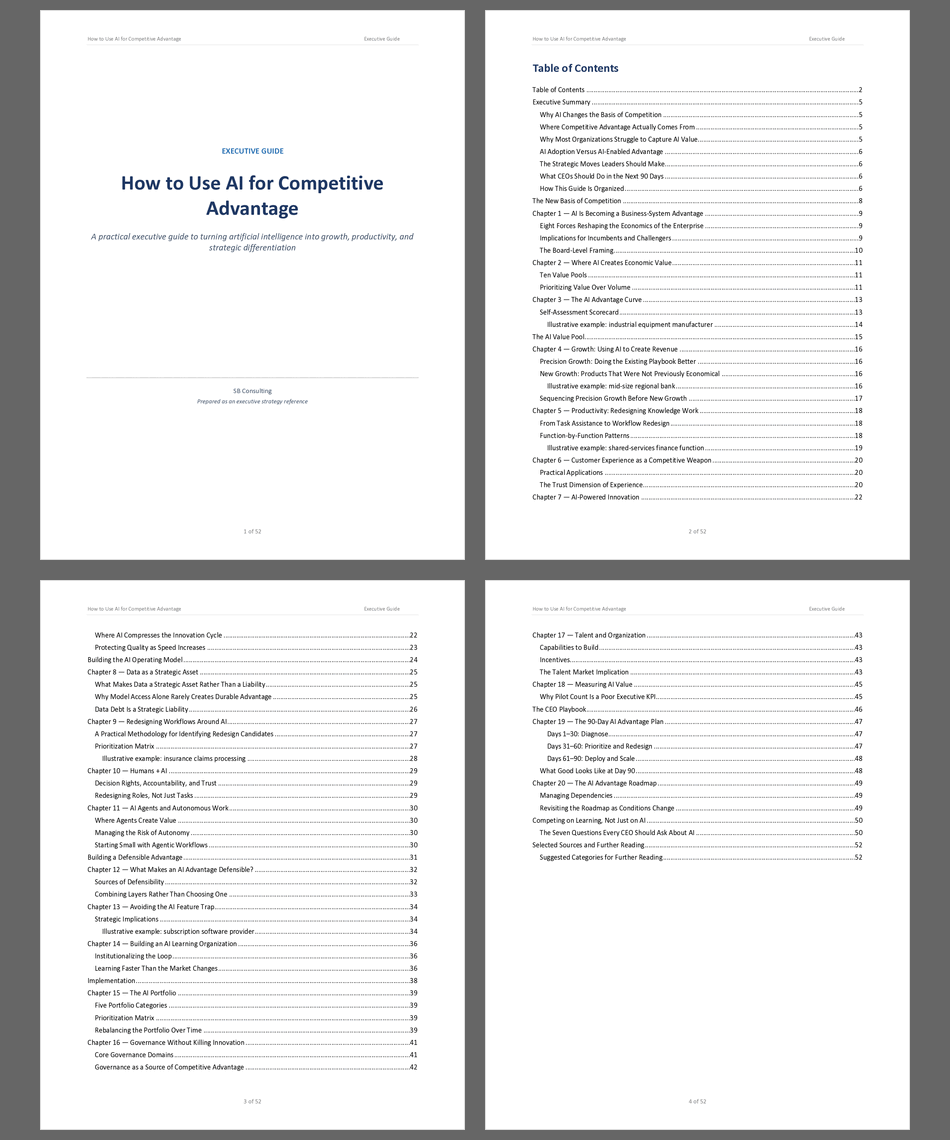
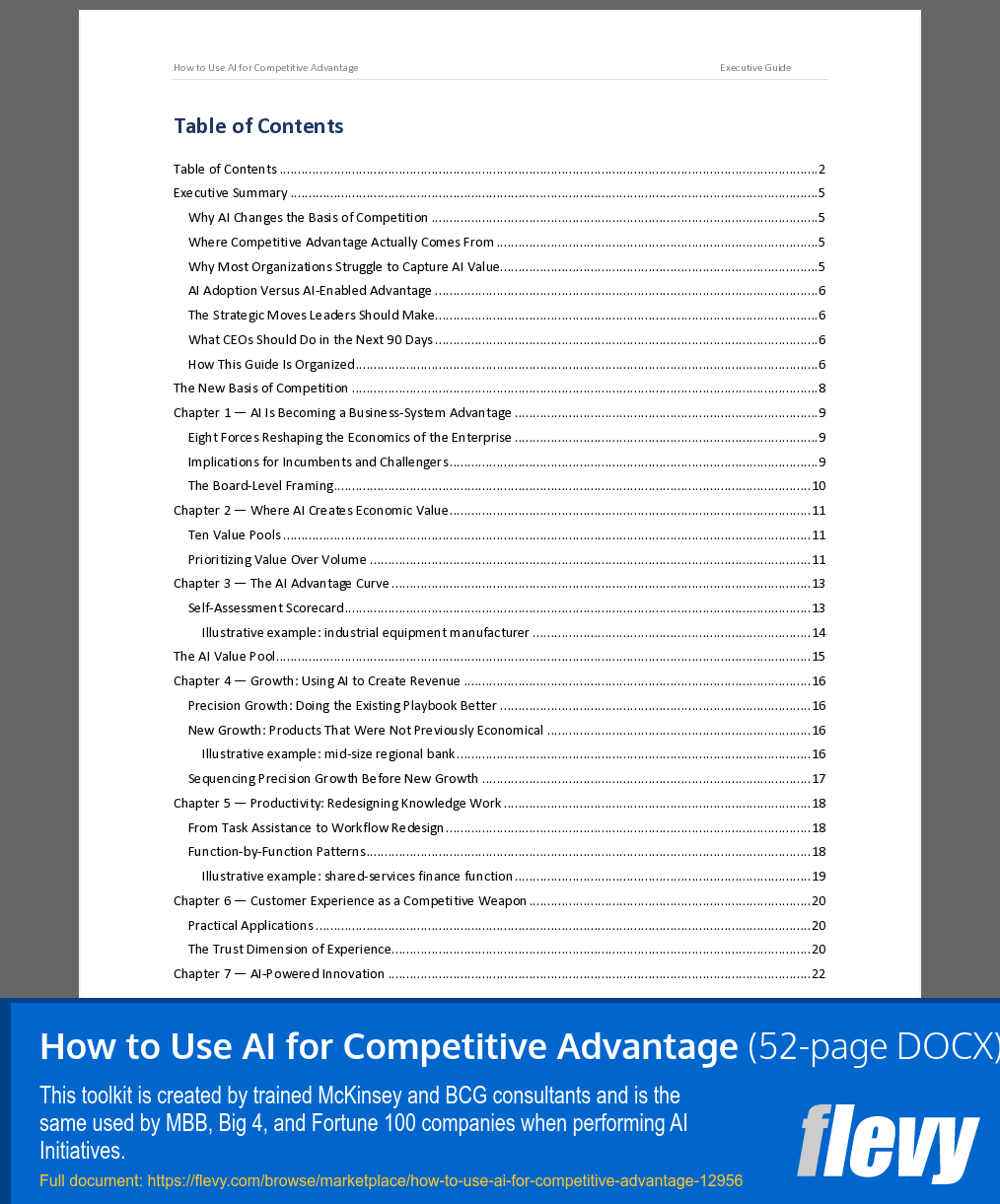
🚀 THE COMPLETE TABLE OF CONTENTS
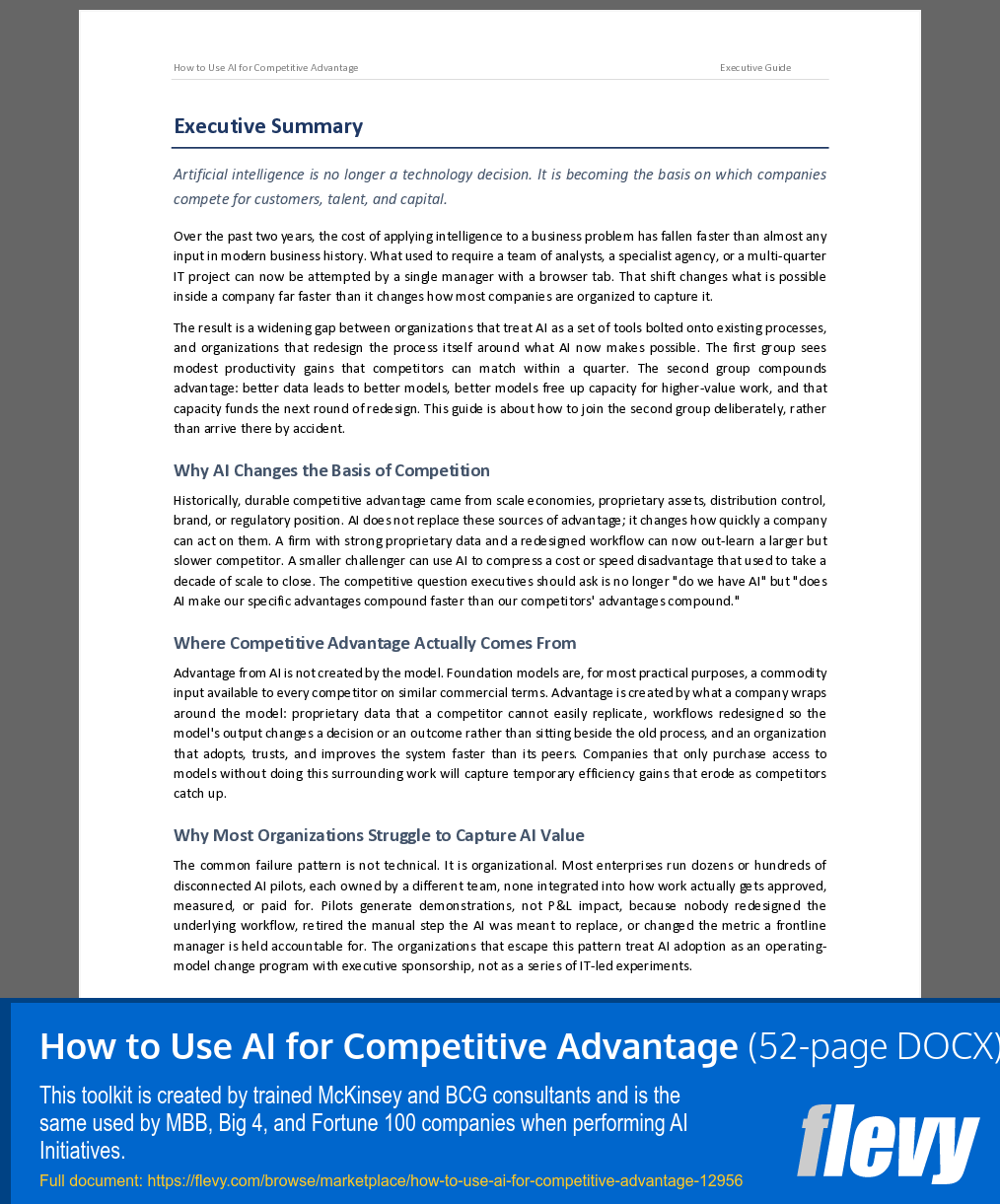
EXECUTIVE SUMMARY
• Why AI Changes the Basis of Competition
• Where Competitive Advantage Actually Comes From
• Why Most Organizations Struggle to Capture AI Value
• AI Adoption Versus AI-Enabled Advantage
• The Strategic Moves Leaders Should Make
• What CEOs Should Do in the Next 90 Days
• How This Guide Is Organized
PART I – THE NEW BASIS OF COMPETITION
CHAPTER 1 – AI IS BECOMING A BUSINESS-SYSTEM ADVANTAGE
• Eight Forces Reshaping the Economics of the Enterprise
• Implications for Incumbents and Challengers
• The Board-Level Framing
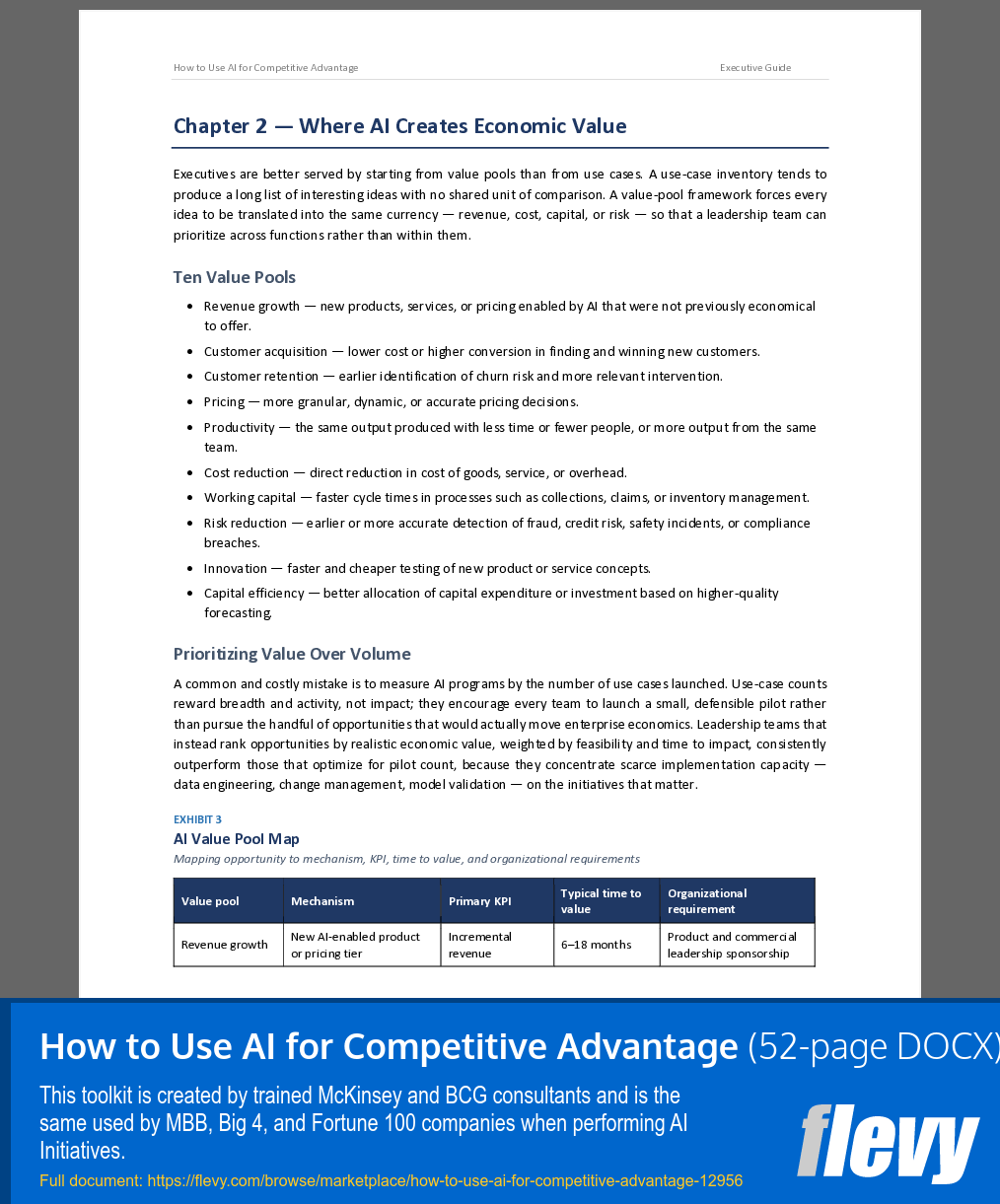
CHAPTER 2 – WHERE AI CREATES ECONOMIC VALUE
• Ten AI Value Pools
• Prioritizing Value Over Volume
• AI Value Pool Mapping
• Economic Prioritization
CHAPTER 3 – THE AI ADVANTAGE CURVE
• AI Maturity
• Self-Assessment Scorecard
• Identifying Organizational Constraints
• Illustrative Industrial Equipment Manufacturer Example
• The AI Value Pool
PART II – THE AI VALUE POOL
CHAPTER 4 – GROWTH: USING AI TO CREATE REVENUE
• Precision Growth
• Hyper-Personalization
• Sales Intelligence
• Lead Prioritization
• Customer Segmentation
• Cross-Selling & Upselling
• Churn Prediction
• Dynamic Offers
• AI-Assisted Sales
• New AI-Enabled Growth
• Sequencing Precision Growth Before New Growth
CHAPTER 5 – PRODUCTIVITY: REDESIGNING KNOWLEDGE WORK
• From Task Assistance to Workflow Redesign
• Workflow Redesign
• Task Decomposition
• Human-in-the-Loop Processes
• AI Agents
• Process Automation
• Decision Support
• Knowledge Retrieval
• Meeting & Communication Workflows
• Function-by-Function Productivity Patterns
CHAPTER 6 – CUSTOMER EXPERIENCE AS A COMPETITIVE WEAPON
• Customer Experience Maturity
• Intelligent Assistance
• Predictive Experience
• Adaptive Relationships
• AI-Powered Service
• Personalization
• Responsiveness
• Customer Intelligence
• Recommendations
• Adaptive Onboarding
• Retention
• Proactive Service
• Trust & AI Experience
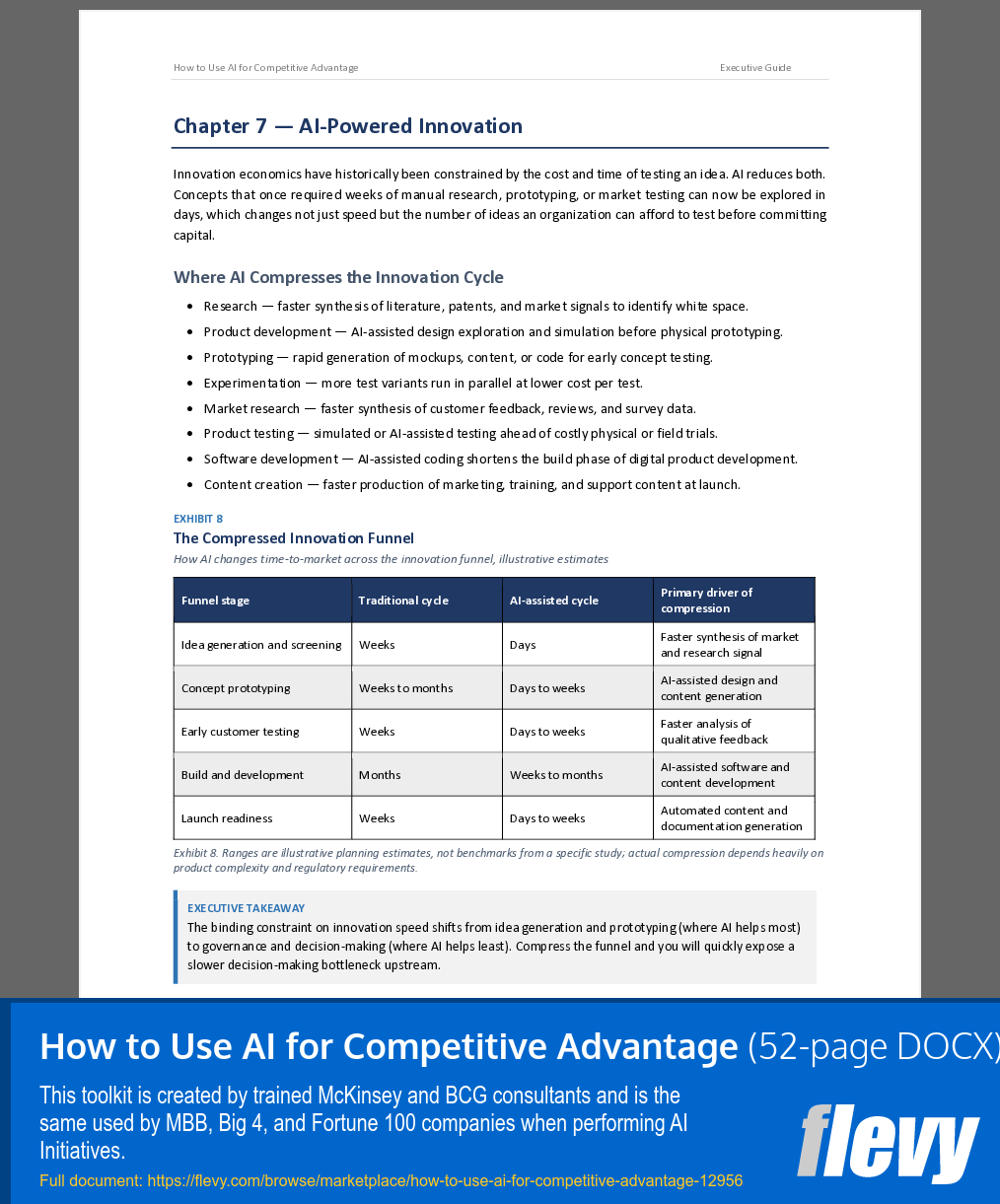
CHAPTER 7 – AI-POWERED INNOVATION
• Where AI Compresses the Innovation Cycle
• Faster Experimentation
• AI-Assisted Concept Development
• Prototyping
• Protecting Quality as Speed Increases
• Building the AI Innovation Operating Model
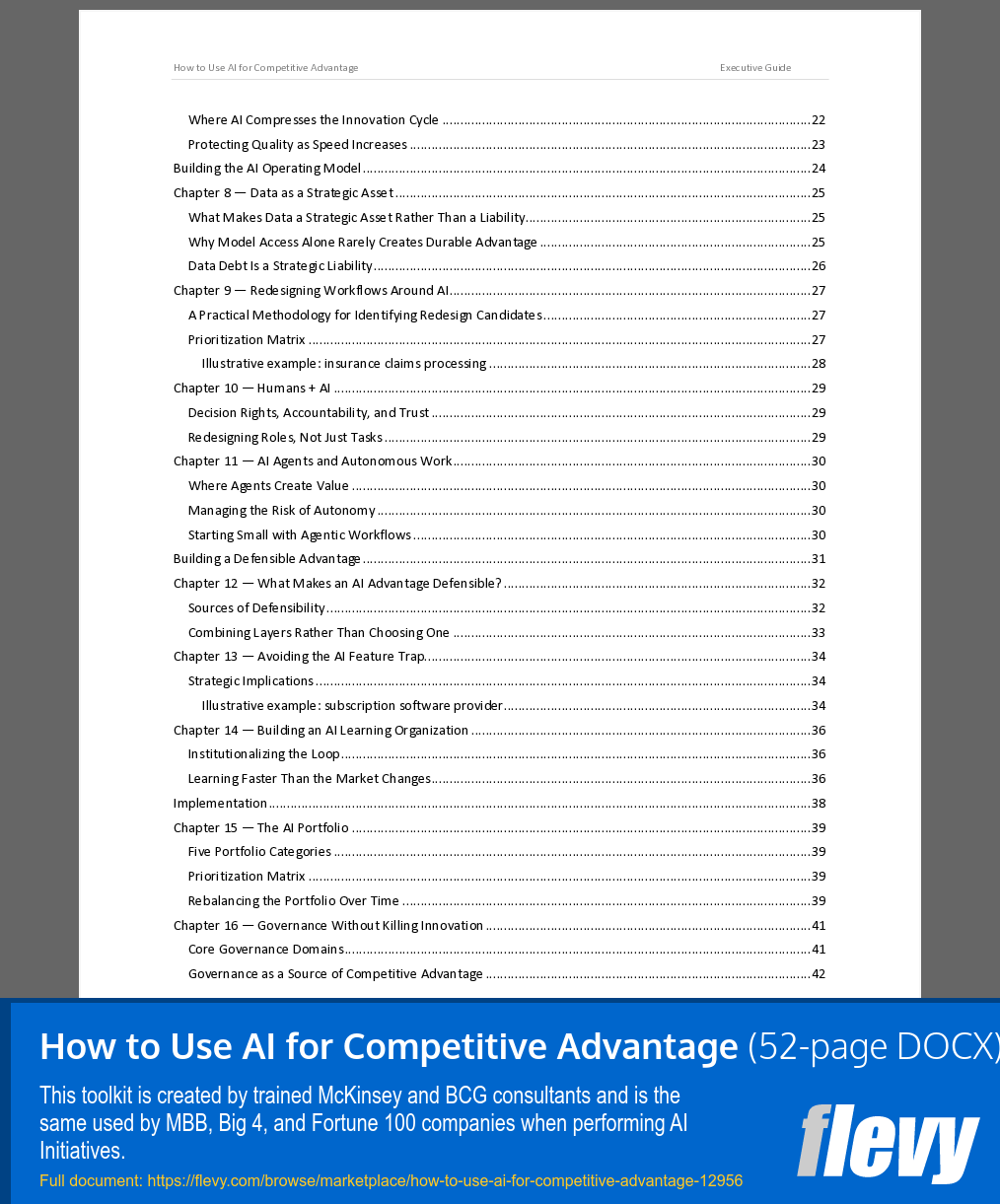
PART III – BUILDING THE AI OPERATING MODEL
CHAPTER 8 – DATA AS A STRATEGIC ASSET
• What Makes Data a Strategic Asset
• Proprietary Data
• Data Readiness
• Why Model Access Alone Rarely Creates Durable Advantage
• Data Debt as a Strategic Liability
• Building the Data Flywheel
CHAPTER 9 – REDESIGNING WORKFLOWS AROUND AI
• Why Workflow Redesign Matters
• AI Workflow Redesign Canvas
• Frequency
• Labor Intensity
• Decision Complexity
• Data Availability
• Variability
• Error Cost
• Automation Potential
• Customer Impact
• Regulatory Risk
• Workflow Prioritization Matrix
CHAPTER 10 – HUMANS + AI
• Decision Rights
• Accountability
• Trust
• Human-in-the-Loop Design
• Redesigning Roles, Not Just Tasks
• AI-Assisted Judgment
• Organizational Adoption
CHAPTER 11 – AI AGENTS AND AUTONOMOUS WORK
• Where AI Agents Create Value
• Agentic Workflows
• Autonomous Work
• Managing the Risk of Autonomy
• Starting Small with Agentic Workflows
• Scaling Agentic Capabilities
PART IV – BUILDING A DEFENSIBLE ADVANTAGE
CHAPTER 12 – WHAT MAKES AN AI ADVANTAGE DEFENSIBLE?
• Sources of Defensibility
• Proprietary Data
• Workflow Integration
• Organizational Learning
• Customer Relationships
• AI Capability
• Combining Layers Rather Than Choosing One
• Building the AI Moat
CHAPTER 13 – AVOIDING THE AI FEATURE TRAP
• Why Standalone AI Features Are Easy to Copy
• Strategic Implications
• AI-Native Operating Models
• Avoiding Short-Lived AI Advantage
• Illustrative Subscription Software Example
CHAPTER 14 – BUILDING AN AI LEARNING ORGANIZATION
• Institutionalizing the Learning Loop
• Test
• Measure
• Learn
• Scale
• Learning Faster Than the Market Changes
• Building Organizational AI Learning Capability
PART V – IMPLEMENTATION
CHAPTER 15 – THE AI PORTFOLIO
• Five Portfolio Categories
• AI Initiative Prioritization
• Portfolio Balancing
• Prioritization Matrix
• Rebalancing the Portfolio Over Time
CHAPTER 16 – GOVERNANCE WITHOUT KILLING INNOVATION
• Responsible AI
• Privacy
• Security
• Intellectual Property
• Model Risk
• Compliance
• Human Oversight
• Auditability
• Vendor Risk
• Risk-Tiered AI Governance
• Governance as a Source of Competitive Advantage
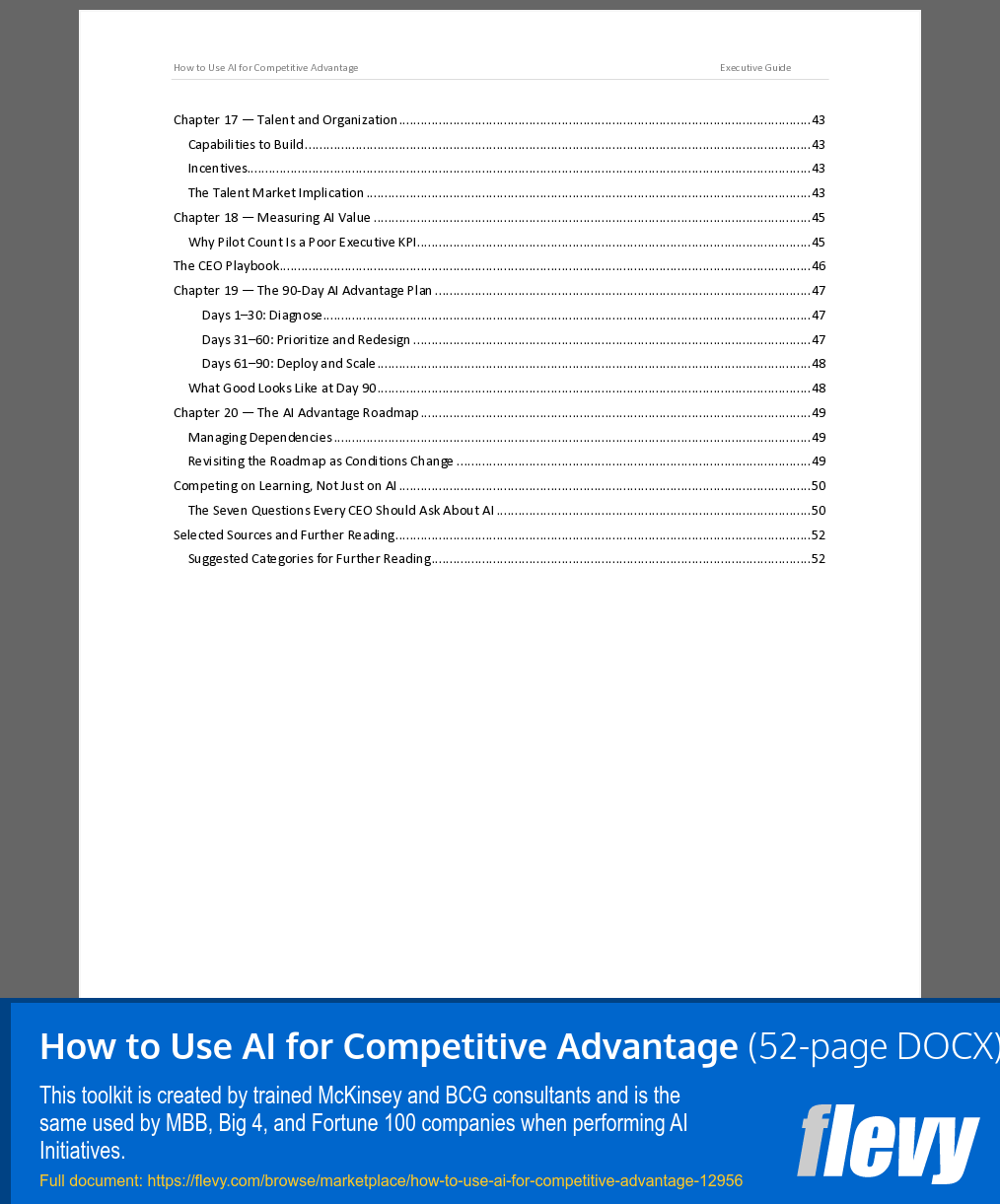
CHAPTER 17 – TALENT AND ORGANIZATION
• AI Literacy
• Leadership Capability
• AI Product Managers
• Domain Experts
• Data Specialists
• Workflow Designers
• Change Leaders
• Reskilling
• Incentive Design
• The Talent Market Implication
CHAPTER 18 – MEASURING AI VALUE
• The AI Value Measurement Framework
• Input Metrics
• Operational Metrics
• Financial Metrics
• Strategic Metrics
• Why Pilot Count Is a Poor Executive KPI
• Executive AI Reporting
PART VI – THE CEO PLAYBOOK
CHAPTER 19 – THE 90-DAY AI ADVANTAGE PLAN
• Days 1–30: Diagnose
• Days 31–60: Prioritize & Redesign
• Days 61–90: Deploy & Scale
• What Good Looks Like at Day 90
CHAPTER 20 – THE AI ADVANTAGE ROADMAP
• Building the 12–24 Month Roadmap
• Managing Dependencies
• Revisiting the Roadmap as Conditions Change
• Scaling AI-Enabled Advantage
CONCLUSION – COMPETING ON LEARNING, NOT JUST ON AI
• The Future of AI Competitive Advantage
• Why Learning Speed Matters
• Building an Operating Model Competitors Cannot Easily Copy
THE SEVEN QUESTIONS EVERY CEO SHOULD ASK ABOUT AI
🎯 THIS GUIDE IS FOR LEADERS WHO ARE DONE ASKING "WHAT AI TOOLS SHOULD WE BUY?"
It is for leaders asking much bigger questions:
Where can AI materially improve our economics?
Which competitive advantages can AI make compound faster?
Which workflows should we completely redesign?
Where does our proprietary data create an advantage?
How do we turn AI productivity into measurable financial value?
How do we build AI capabilities competitors cannot easily copy?
How do we move from AI experimentation to an AI-enabled operating model?
How do we make AI part of how the business actually works?
💎 WHAT MAKES THIS GUIDE DIFFERENT
Most AI content is focused on:
TOOLS. PROMPTS. APPS. FEATURES. AUTOMATION HACKS.
This guide is focused on:
STRATEGY. ECONOMICS. WORKFLOWS. DATA. ORGANIZATION. GOVERNANCE. MEASUREMENT. DEFENSIBILITY. EXECUTION.
That distinction matters.
The guide argues that foundation models are increasingly a commodity input. Durable advantage comes from what the organization builds around those models – including proprietary data, redesigned workflows, organizational adoption and faster learning.
THIS IS THE DIFFERENCE BETWEEN USING AI AND COMPETING WITH AI.
🔥 THE AI COMPETITIVE ADVANTAGE EQUATION
AI CAPABILITY
PROPRIETARY DATA
WORKFLOW INTEGRATION
ORGANIZATIONAL ADOPTION
SPEED OF LEARNING
AI-ENABLED COMPETITIVE ADVANTAGE
The guide uses these five components as an integrated framework because weakness in one component can materially limit the overall advantage.
Don't simply buy more AI capability when your real constraint is workflow integration.
Don't build another AI pilot when your real constraint is proprietary data.
Don't launch another training program when your incentives still reward the old process.
Don't celebrate adoption when the financial results haven't changed.
Diagnose the constraint. Redesign the system. Measure the outcome. Scale what works.
💰 MOVE AI FROM EXPERIMENTATION TO ECONOMIC VALUE
The guide organizes AI opportunity around economic value pools including:
🔥 Revenue Growth
🔥 Customer Acquisition
🔥 Customer Retention
🔥 Pricing
🔥 Productivity
🔥 Cost Reduction
🔥 Working Capital
🔥 Risk Reduction
🔥 Innovation
🔥 Capital Efficiency
This value-pool approach is designed to force AI opportunities into a common economic language rather than allowing organizations to optimize for the number of pilots launched.
BECAUSE PILOT COUNT IS NOT A BUSINESS STRATEGY.
AI TOOL USAGE IS NOT A COMPETITIVE ADVANTAGE.
ACTIVITY IS NOT VALUE.
THE OUTCOME IS WHAT MATTERS.
🚨 STOP MEASURING AI BY HOW MANY PEOPLE ARE USING IT
Start measuring:
REVENUE.
MARGIN.
COST.
CASH FLOW.
CYCLE TIME.
THROUGHPUT.
QUALITY.
CUSTOMER RETENTION.
MARKET SHARE.
INNOVATION SPEED.
COMPETITIVE DIFFERENTIATION.
The guide's AI value framework deliberately separates input, operational, financial and strategic metrics so executives can distinguish AI activity from actual business value and durable competitive position.
🚀 THE 90-DAY AI ADVANTAGE PLAN
Don't spend the next year debating AI strategy.
Start with the first 90 DAYS.
🔥 DAYS 1–30: DIAGNOSE
Identify the highest-value AI opportunities.
Rank the value pools.
Identify proprietary data advantages.
Identify high-frequency, high-labor workflows.
Name executive accountability.
Create the ranked AI opportunity diagnostic.
🔥 DAYS 31–60: PRIORITIZE & REDESIGN
Select the highest-value workflows.
Redesign them from a blank page around AI.
Define where AI should Recommend, Assist, Execute or Escalate.
Fund the required data and governance work.
Retire the manual processes AI is replacing.
🔥 DAYS 61–90: DEPLOY & SCALE
Launch the redesigned workflow.
Measure operational and financial impact.
Create the scaling plan.
Brief leadership and the board on the measured proof point.
Decide whether to SCALE, ITERATE OR STOP.
THAT IS HOW YOU TURN AI STRATEGY INTO AI EXECUTION.
👥 WHO SHOULD USE THIS AI BUSINESS GUIDE?
• CEOs & Founders – Build AI-enabled competitive advantage into the business strategy
• COOs – Redesign operating workflows around AI
• CFOs – Connect AI investment to measurable financial value
• CMOs & CROs – Accelerate AI-powered growth, sales and customer acquisition
• CIOs & CTOs – Build enterprise AI capability aligned with business economics
• Chief Strategy Officers – Identify and defend AI-enabled strategic advantage
• Chief Transformation Officers – Drive AI operating-model transformation
• Innovation Leaders – Accelerate experimentation, prototyping and new growth
• HR & Talent Leaders – Build AI literacy, workflow capability and organizational readiness
• Risk & Compliance Leaders – Build scalable, risk-tiered AI governance
• Business Unit Leaders – Turn AI opportunities into measurable P&L impact
• Consultants & Advisors – Structure executive AI transformation programs
• Board & Executive Teams – Evaluate AI strategy through competitive advantage, value and defensibility
—-
💥 WHAT YOU WILL BE ABLE TO THINK ABOUT DIFFERENTLY AFTER USING THIS GUIDE
Instead of asking:"Which AI tool should we use?"
You start asking: "Which business outcome are we trying to change?"
Instead of: "How many AI pilots do we have?"
You ask: "Which AI initiatives are moving enterprise economics?"
Instead of: "How can we add AI to this process?"
You ask: "If we designed this workflow from scratch around AI, what would we eliminate?"
Instead of: "How do we adopt AI faster?"
You ask: "How do we learn faster than our competitors?"
Instead of: "What can competitors copy?"
You ask: "What can we build that competitors cannot easily replicate?"
🏆 BUILD THE AI ADVANTAGE YOUR COMPETITORS CANNOT EASILY COPY
The guide's conclusion is clear: the winners will not necessarily be the organizations with the most AI.
They will be the organizations that combine AI capability with proprietary knowledge, differentiated data, redesigned workflows, strong customer relationships, faster organizational learning and disciplined execution.
THAT IS THE REAL AI COMPETITIVE ADVANTAGE.
Not another chatbot.
Not another license.
Not another pilot.
Not another AI presentation.
AN AI-ENABLED BUSINESS SYSTEM THAT GETS BETTER, FASTER AND MORE DIFFICULT FOR COMPETITORS TO COPY.
🚀 GET "HOW TO USE AI FOR COMPETITIVE ADVANTAGE" TODAY
STOP TREATING AI AS A TECHNOLOGY PROJECT.
START TREATING AI AS A COMPETITIVE STRATEGY.
STOP COUNTING PILOTS.
START MEASURING VALUE.
STOP ADDING AI TO BROKEN PROCESSES.
START REDESIGNING WORKFLOWS AROUND WHAT AI MAKES POSSIBLE.
STOP CHASING EVERY NEW AI TOOL.
START BUILDING ADVANTAGE THAT COMPOUNDS.
STOP WAITING FOR THE MARKET TO FORCE YOUR HAND.
START BUILDING YOUR AI ADVANTAGE NOW.
🔥 HOW TO USE AI FOR COMPETITIVE ADVANTAGE
THE EXECUTIVE BUSINESS GUIDE TO AI-POWERED GROWTH, PRODUCTIVITY, INNOVATION, WORKFLOW REDESIGN, DATA STRATEGY, AI AGENTS, GOVERNANCE, MEASUREMENT & DEFENSIBLE COMPETITIVE ADVANTAGE.
READ THE GUIDE.
DIAGNOSE YOUR AI OPPORTUNITY.
PRIORITIZE THE VALUE.
REDESIGN THE WORK.
MEASURE THE IMPACT.
BUILD THE ADVANTAGE.
🎯 YOUR AI COMPETITIVE ADVANTAGE STARTS HERE.
GET THE "HOW TO USE AI FOR COMPETITIVE ADVANTAGE" BUSINESS GUIDE TODAY.
Keywords: Inventory Management, Demand Planning, Inventory Optimization, Inventory Control, Supply Chain Management, Warehouse Operations, Replenishment Strategy, Inventory Analytics, WIP Reduction, Inventory Accuracy, Distribution Network, Inventory Forecasting, Supply Chain Excellence, Working Capital, Inventory KPIs, Procurement Strategy, Inventory Governance, Inventory SOPs, Continuous Improvement, Supply Chain Transformation, GenAI deployment SOPs, generative AI operating model, enterprise AI governance framework, AI Center of Excellence, responsible AI, AI risk management, AI use case prioritization, GenAI implementation roadmap, AI vendor selection, prompt engineering standards, AI compliance, AI adoption strategy, generative AI across value chain, AI strategy, enterprise transformation, AI implementation, AI scaling framework
Strategy & Transformation, Growth Strategy, Strategic Planning, Strategy Frameworks, Innovation Management, Pricing Strategy, Core Competencies, Strategy Development, Business Transformation, Marketing Plan Development, Product Strategy, Breakout Strategy, Competitive Advantage, Mission, Vision, Values, Strategy Deployment & Execution, Innovation, Vision Statement, Core Competencies Analysis, Corporate Strategy, Product Launch Strategy, BMI, Blue Ocean Strategy, Breakthrough Strategy, Business Model Innovation, Business Strategy Example, Corporate Transformation, Critical Success Factors, Customer Segmentation, Customer Value Proposition, Distinctive Capabilities, Enterprise Performance Management, KPI, Key Performance Indicators, Market Analysis, Market Entry Example, Market Entry Plan, Market Intelligence, Market Research, Market Segmentation, Market Sizing, Marketing, Michael Porter's Value Chain, Organizational Transformation, Performance Management, Performance Measurement, Platform Strategy, Product Go-to-Market Strategy, Reorganization, Restructuring, SWOT, SWOT Analysis, Service 4.0, Service Strategy, Service Transformation, Strategic Analysis, Strategic Plan Example, Strategy Deployment, Strategy Execution, Strategy Frameworks Compilation, Strategy Methodologies, Strategy Report Example, Value Chain, Value Chain Analysis, Value Innovation, Value Proposition, Vision Statement, Corporate Strategy, Business Development, Business plan pdf, business plan, PDF, Business Plan DOC, Business Plan Template, PPT, Market strategy playbook, strategic market planning, competitive analysis tools, market segmentation frameworks, growth strategy templates, product positioning strategy, market execution toolkit, strategic alignment playbook, KPI and OKR frameworks, business growth strategy guide, cross-functional strategy templates, market risk management, market strategy PowerPoint doc, guide, ebook, e-book ,McKinsey Change Playbook, Organizational change management toolkit, Change management frameworks 2025, Influence model for change, Change leadership strategies, Behavioral change in organizations, Change management PowerPoint templates, Transformational leadership in change, supply chain KPIs, supply chain KPI toolkit, supply chain PowerPoint template, logistics KPIs, procurement KPIs, inventory management KPIs, supply chain performance metrics, manufacturing KPIs, supply chain dashboard, supply chain strategy KPIs, reverse logistics KPIs, sustainability KPIs in supply chain, financial supply chain KPIs, warehouse KPIs, digital supply chain KPIs, 1200 KPIs, supply chain scorecard, KPI examples, supply chain templates, Corporate Finance SOPs, Finance SOP Excel Template, CFO Toolkit, Finance Department Procedures, Financial Planning SOPs, Treasury SOPs, Accounts Payable SOPs, Accounts Receivable SOPs, General Ledger SOPs, Accounting Policies Template, Internal Controls SOPs, Finance Process Standardization, Finance Operating Procedures, Finance Department Excel Template, FP&A Process Documentation, Corporate Finance Template, Finance SOP Toolkit, CFO Process Templates, Accounting SOP Package, Tax Compliance SOPs, Financial Risk Management Procedures.
NOTE: Our digital products are sold on an "as is" basis, making returns and refunds unavailable post-download. Please preview and inquire before purchasing. Please contact us before purchasing if you have any questions! This policy aligns with the standard Flevy Terms of Usage.
Got a question about the product? Email us at support@flevy.com or ask the author directly by using the "Ask the Author a Question" form. If you cannot view the preview above this document description, go here to view the large preview instead.
Source: Best Practices in Artificial Intelligence, Competitive Advantage Word: How to Use AI for Competitive Advantage Word (DOCX) Document, SB Consulting
ABOUT THE AUTHOR

SB Consulting is dedicated to empowering businesses to communicate their ideas with impact. This consulting firm specializes in teaching organizations how to create effective corporate and management presentations. With training from top-tier global consulting firms, including McKinsey, BCG, and Porsche Consulting, extensive expertise in presentation design and ... [read more]
Ask the Author a Question
You must be logged in to contact the author.




























