
Financial Statement Analysis   43-slide PPT PowerPoint presentation slide deck (PPT)
$39.00

Financial Statement Analysis (43-slide PPT PowerPoint presentation slide deck (PPT)) Preview Image
Log in to unlock full preview.
Financial Statement Analysis (43-slide PPT PowerPoint presentation slide deck (PPT)) Preview Image
Arrow   Click main image to view in full screen.

Financial Statement Analysis (PowerPoint PPT Slide Deck)

PowerPoint (PPT) 43 Slides

#2 in Financial Analysis $39.00

Add to Cart


Immediate download
Free lifetime updates

FINANCIAL ANALYSIS PPT DESCRIPTION

Editor Summary Financial Statement Analysis is a 43-slide PowerPoint by PPT Lab that explains the financial statement analysis process and delivers tools for evaluating firm performance. Read more

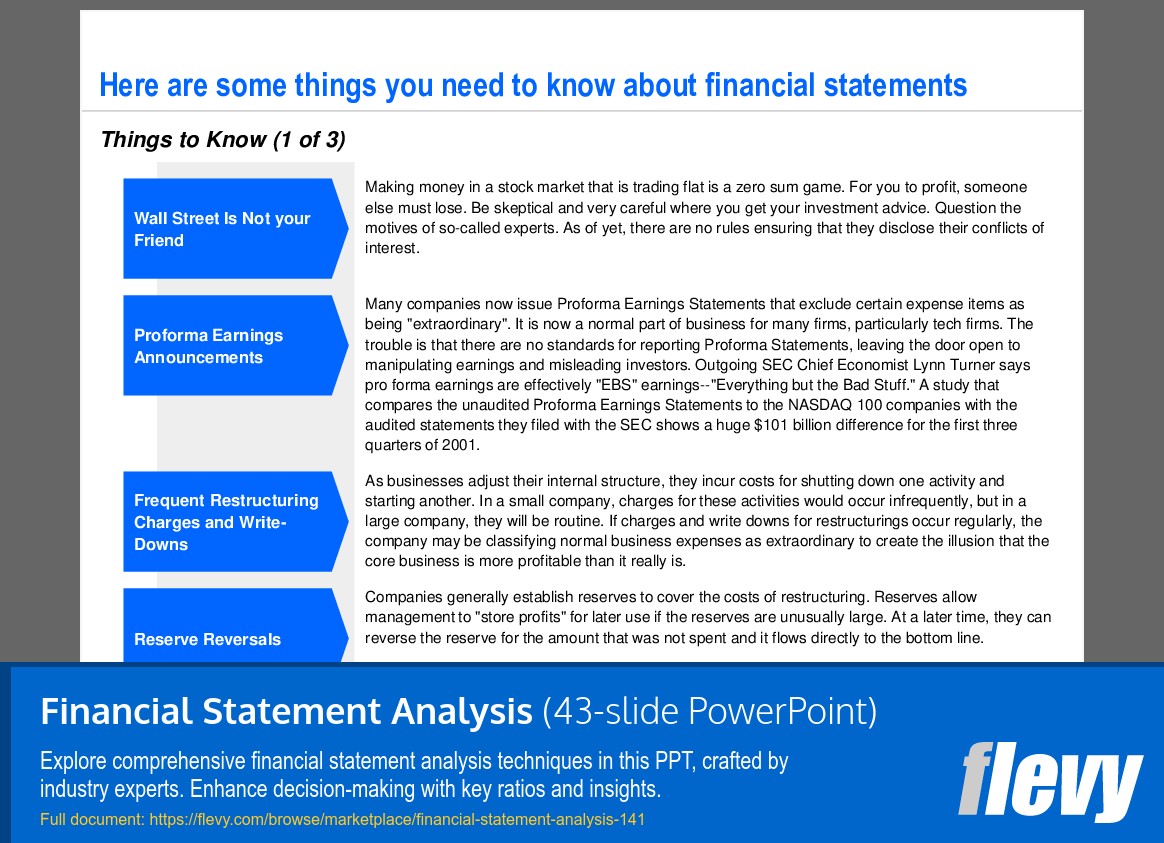
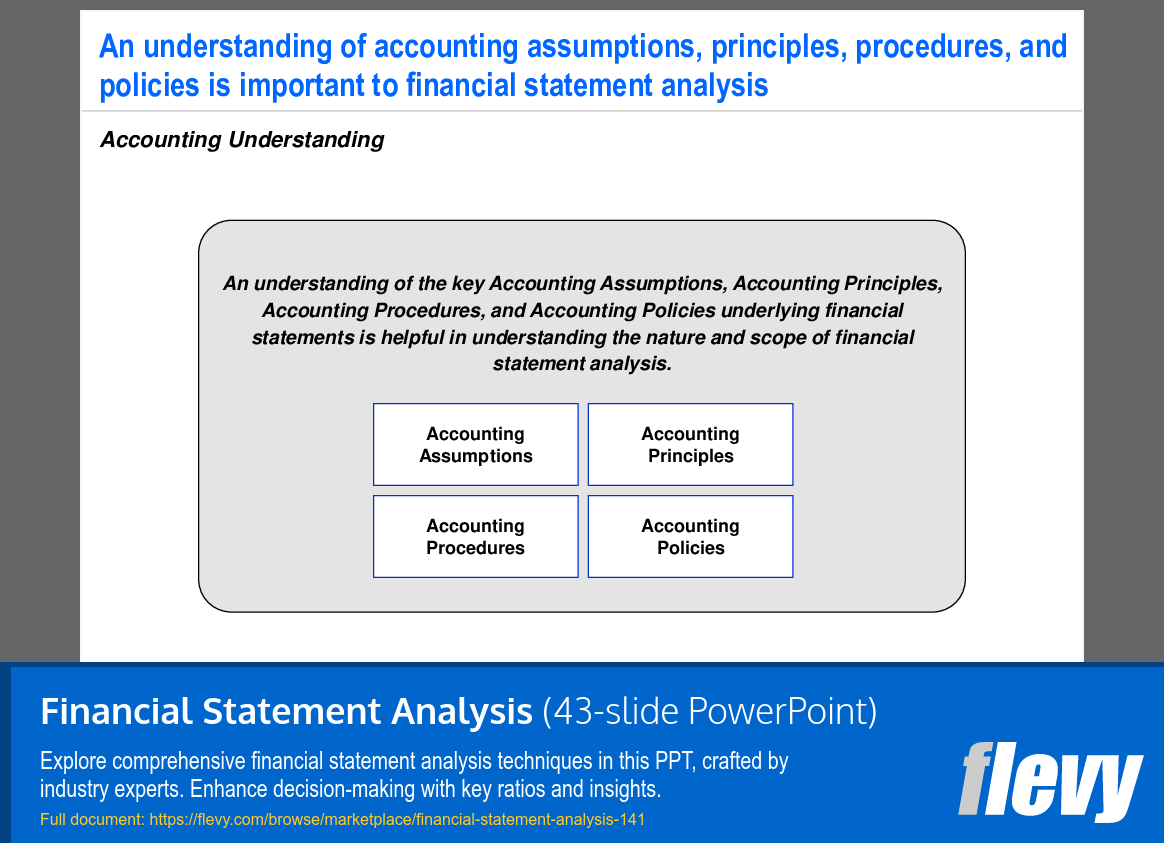
This document explains the financial statement analysis process. Most slides are instructional and covered topics include the financial statement analysis process, financial ratios analysis, accounting information (assumptions, principles, policies, procedures), and others.

Financial statement analysis involves analyzing the firm's financial statements to extract information that can facilitate decision-making. For example, an analysis of the financial statement can reveal:
•  whether the firm will be able to meet its long-term debt commitment,
•  whether the firm is financially distressed,
•  whether the company is using its physical assets efficiently,
•  whether the firm has an optimal financing mix,
•  whether the firm is generating adequate return for its shareholders,
•  whether the firm can sustain its competitive advantage, and so forth.

Performance of a firm can be assessed by computing key ratios and analyzing:
•  How is the firm performing relative to the industry?
•  How is the firm performing relative to the leading firms in their industry?
•  How does the current year performance compare to the previous year(s)?
•  What are the variables driving the key ratios?
•  What are the linkages among the ratios?
•  What do the ratios reveal about the future prospects of the firm for various stakeholders such as shareholders, bondholders, employees, customers, etc.?

Financial analysis is performed by both internal management and external groups. Firms would perform such an analysis in order to evaluate their overall current performance, identify problem/opportunity areas, develop budgets and implement strategies for the future.

External groups (e.g. investors, regulators, lenders, suppliers, customers) also perform financial analysis in deciding whether to invest in a particular firm, whether to extend credit, etc. There are several rating agencies (such as Moody's, Standard & Poors) that routinely perform financial analysis of firms in order to arrive at a composite rating.

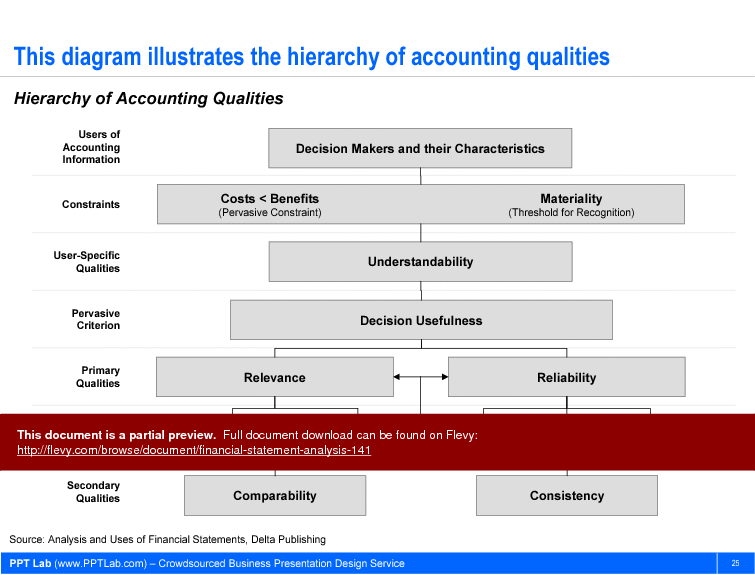
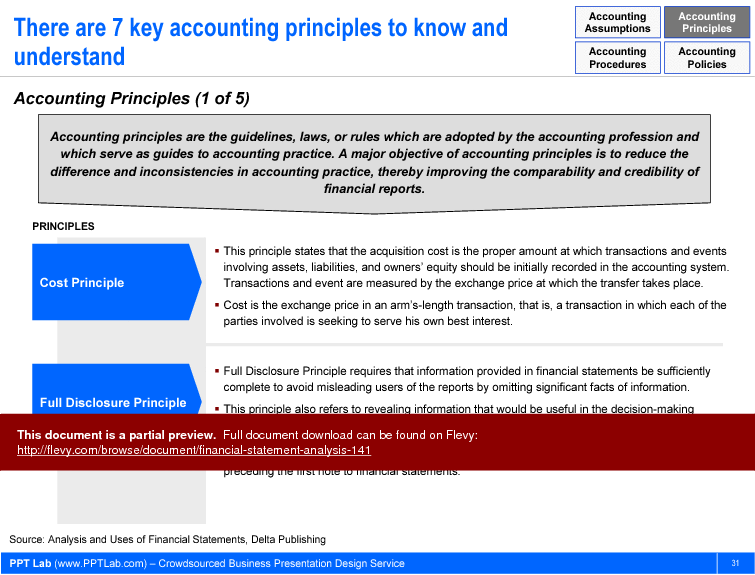
The document also covers the hierarchy of accounting qualities, emphasizing the importance of relevance and reliability in decision-making. Key accounting principles such as the cost principle and the materiality principle are explained in detail to enhance understanding.

Got a question about the product? Email us at support@flevy.com or ask the author directly by using the "Ask the Author a Question" form. If you cannot view the preview above this document description, go here to view the large preview instead.

MARCUS OVERVIEW

This synopsis was written by Marcus [?] based on the analysis of the full 43-slide presentation.


Executive Summary
The Financial Statement Analysis presentation provides a comprehensive overview of the financial statement analysis process, emphasizing the importance of financial ratios and accounting information. This expert template equips users with the knowledge to analyze a firm's financial health, assess its performance relative to industry benchmarks, and make informed decisions. By utilizing this presentation, corporate executives and consultants can effectively interpret financial data, identify trends, and recognize potential issues or opportunities within a company.

Who This Is For and When to Use
•  Financial analysts and accountants responsible for evaluating company performance
•  Corporate executives seeking to understand financial health and strategic positioning
•  Consultants advising clients on financial decision-making and performance improvement
•  Investors analyzing potential investment opportunities or assessing risk

Best-fit moments to use this deck:
•  During quarterly or annual financial reviews to assess company performance
•  In strategic planning sessions to evaluate financial health and resource allocation
•  When preparing for investor presentations or stakeholder meetings

Learning Objectives
•  Define the financial statement analysis process and its significance
•  Analyze financial ratios to assess company performance and industry standing
•  Identify key accounting assumptions, principles, and policies impacting financial statements
•  Evaluate the implications of financial data for decision-making and strategic planning
•  Recognize potential pitfalls in financial analysis and how to avoid them

Table of Contents
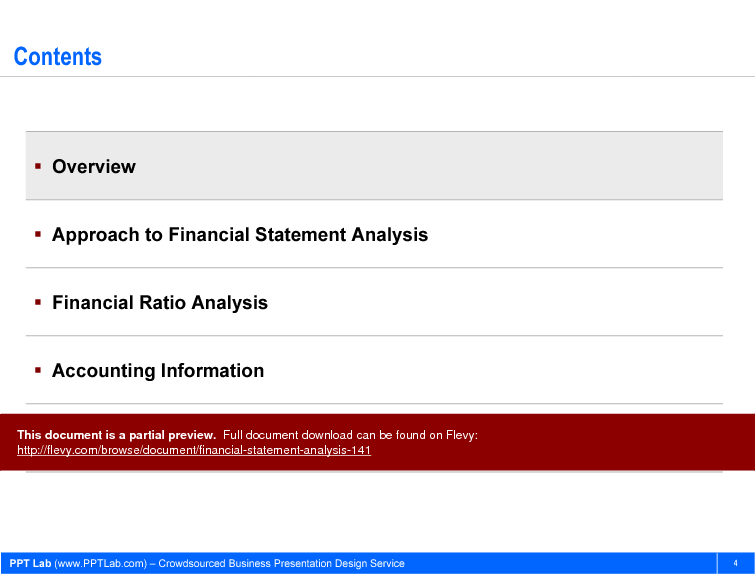
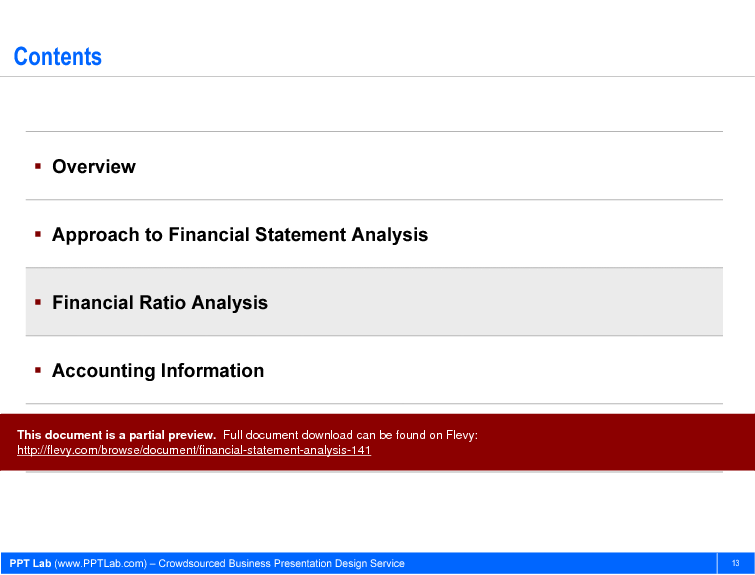
•  Overview (page 4)
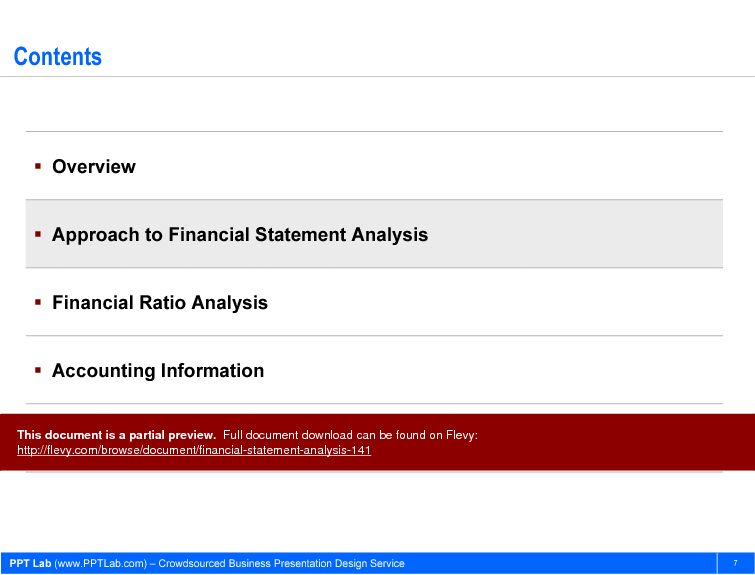
•  Approach to Financial Statement Analysis (page 7)
•  Financial Ratio Analysis (page 13)
•  Accounting Information (page 24)
•  Things to Know (page 38)

Primary Topics Covered
•  Financial Statement Analysis Process - A structured approach to evaluating financial statements to extract meaningful insights for decision-making.
•  Financial Ratios - Key metrics used to assess a company's liquidity, profitability, efficiency, and financial leverage.
•  Accounting Information - Understanding the foundational assumptions, principles, and policies that guide financial reporting.
•  Trends and Comparisons - Analyzing historical performance and comparing it with industry benchmarks to identify strengths and weaknesses.
•  Limitations of Financial Analysis - Recognizing the potential pitfalls and biases in financial statement interpretation.
•  Qualitative Characteristics - Evaluating the relevance, reliability, and understandability of accounting information.

Deliverables, Templates, and Tools
•  Financial statement analysis framework template for systematic evaluation
•  Ratio analysis calculator for liquidity, profitability, and efficiency ratios
•  Guidelines for interpreting financial statements and accounting policies
•  Checklist for identifying key trends and anomalies in financial data
•  Summary of qualitative characteristics of accounting information

Slide Highlights
•  Overview of the financial statement analysis process, detailing each step involved
•  Visual representation of key financial ratios and their significance
•  Comparison charts illustrating industry benchmarks against company performance
•  Diagrams outlining the hierarchy of accounting qualities and their relevance
•  Case studies highlighting common pitfalls in financial analysis

Potential Workshop Agenda
Introduction to Financial Statement Analysis (30 minutes)
•  Overview of the financial statement analysis process
•  Discussion on the importance of financial ratios

Hands-On Financial Ratio Analysis (60 minutes)
•  Interactive session calculating key ratios
•  Group analysis of sample financial statements

Understanding Accounting Information (45 minutes)
•  Overview of accounting assumptions, principles, and policies
•  Case studies on the impact of accounting choices on financial statements

Customization Guidance
•  Adjust the financial ratios and metrics to align with specific industry standards
•  Tailor the case studies and examples to reflect the audience's sector or interests
•  Update the templates with company-specific data for more relevant analysis

Secondary Topics Covered
•  The role of accounting assumptions in financial reporting
•  The impact of accounting policies on financial statement interpretation
•  Common financial analysis pitfalls and how to mitigate them
•  The importance of cash flow analysis in assessing financial health
•  Trends in financial reporting and their implications for analysis

Topic FAQ

What are the core steps in the financial statement analysis process?

Financial statement analysis typically involves collecting financial statements, computing and analyzing key ratios, examining accounting assumptions and policies, performing trend and benchmark comparisons, and interpreting implications for stakeholders. The process also includes identifying limitations or anomalies in the data and reviewing footnotes and qualitative characteristics such as relevance and reliability.

Which categories of financial ratios should I focus on when evaluating performance?

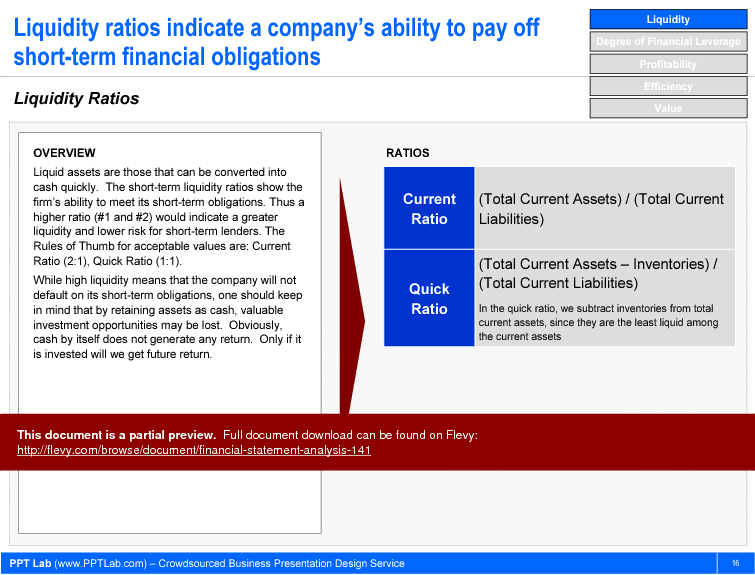
Analysts commonly group ratios into liquidity (short-term obligations), profitability (returns and margins), efficiency (asset utilization), and financial leverage (debt financing). Combined trend analysis and benchmarking against industry peers help reveal performance drivers and risks, focusing on liquidity, profitability, efficiency, and leverage ratios.

How do accounting assumptions and policies change how I read financial statements?

Accounting assumptions and policies—such as cost, matching, conservatism, materiality, and consistency—affect recognition and measurement of revenue, expenses, and assets, which in turn can change reported ratios and trends. Proper analysis reviews those policies and footnotes to understand their impact, for example the materiality principle.

What are common limitations or pitfalls to watch for in financial statement analysis?

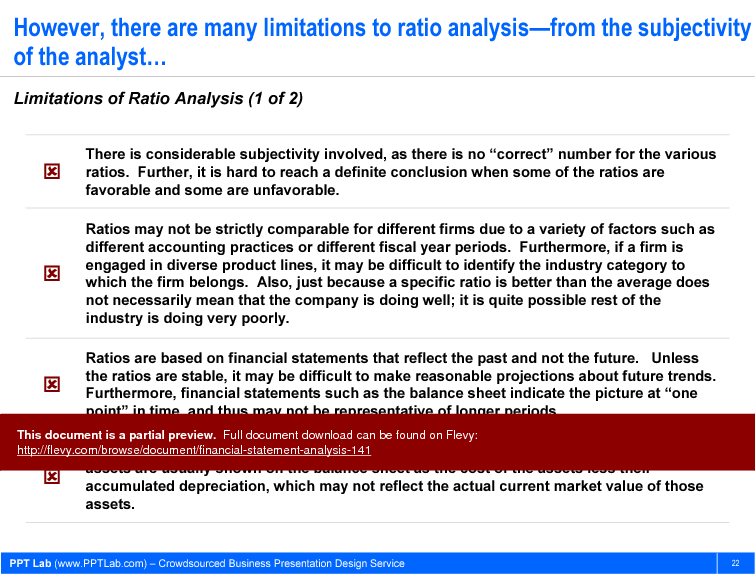
Common pitfalls include overreliance on historical data, inconsistencies in accounting policies across firms, ratio subjectivity, omitted footnote disclosures, and failure to consider cash flows versus accrual earnings. Analysts should corroborate ratio findings with footnotes and trend comparisons to mitigate these limitations.

What features should I prioritize when buying a financial statement analysis template on a tight timeline?

Prioritize ready-to-use ratio calculators, prebuilt slide layouts for presentations, clear interpretation guidelines, and a checklist for trends and anomalies so you can produce board-ready output quickly. For example, a template that includes a ratio analysis calculator and presentation-ready slides in a 43-slide deck can speed delivery.

How do paid financial analysis templates typically save time versus building from scratch?

Paid templates provide prestructured frameworks, calculation tools, interpretation guidance, and sample charts that reduce design and validation time. They often include a ratio analysis calculator, framework template, and checklists that standardize output and save hours compared with manual worksheet setup.

If I need to determine whether a firm can meet long-term debt, what analyses should I run?

Evaluate financial leverage ratios and interest coverage to assess debt-servicing ability, analyze operating and free cash flows to examine actual cash generation, and run trend and benchmark comparisons to see if debt metrics are improving or deteriorating. Complement these with cash flow analysis and leverage ratios.

How can I benchmark my company's performance against industry leaders?

Compute key ratios over multiple periods, compare them to industry averages and leading firms, decompose drivers behind ratio changes, and review qualitative differences in accounting policies that might affect comparability. Use historical trend analysis and industry benchmark charts to identify gaps versus peers.

Document FAQ
These are questions addressed within this presentation.

What is the purpose of financial statement analysis?
Financial statement analysis aims to evaluate a company's financial health, assess performance, and inform decision-making for stakeholders.

How do financial ratios assist in analysis?
Financial ratios provide a quantitative basis for comparing a company's performance against historical data and industry benchmarks, highlighting areas of strength and weakness.

What are the key financial ratios to focus on?
Key financial ratios include liquidity ratios, profitability ratios, efficiency ratios, and financial leverage ratios, each offering insights into different aspects of financial health.

How can I identify trends in financial data?
Trends can be identified by analyzing historical financial statements, calculating ratios over time, and comparing them with industry averages to assess performance changes.

What limitations should I be aware of in financial analysis?
Limitations include the subjectivity of ratios, potential inconsistencies in accounting practices, and the reliance on historical data that may not predict future performance.

Why is understanding accounting principles important?
Understanding accounting principles is crucial for interpreting financial statements accurately and recognizing how different accounting choices can affect reported results.

How can I ensure the reliability of financial data?
Ensure reliability by reviewing the qualitative characteristics of accounting information, such as relevance, reliability, and verifiability, and by scrutinizing footnotes for additional context.

What role do external analysts play in financial analysis?
External analysts evaluate financial statements to provide insights and ratings that inform investors and stakeholders about a company's creditworthiness and profitability.

How can cash flow analysis complement financial statement analysis?
Cash flow analysis provides a clearer picture of a company's liquidity and operational efficiency, highlighting discrepancies between reported earnings and actual cash generation.

What should I look for in footnotes to financial statements?
Footnotes often contain critical information about accounting policies, risk exposures, and potential liabilities that can significantly impact financial analysis.

Glossary
•  Financial Statement Analysis - The process of evaluating a company's financial statements to make informed decisions.
•  Financial Ratios - Metrics used to assess a company's performance and financial health.
•  Liquidity Ratios - Ratios that measure a company's ability to meet short-term obligations.
•  Profitability Ratios - Ratios that assess a company's ability to generate profit relative to revenue or assets.
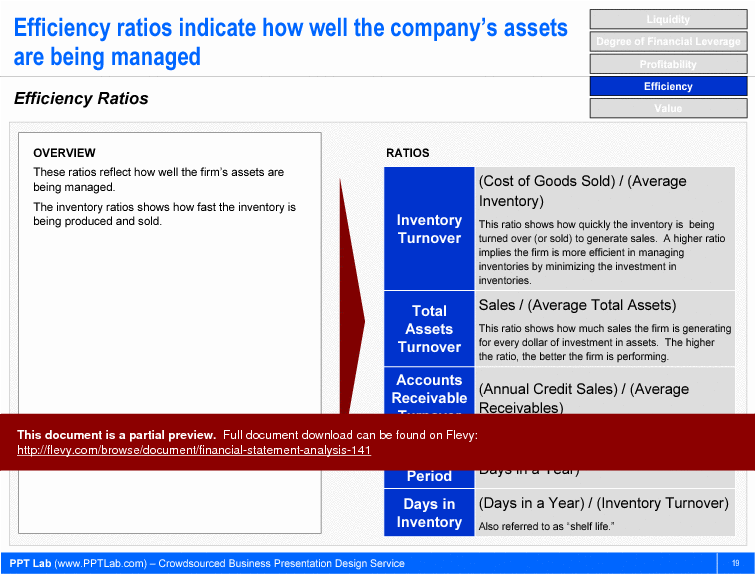
•  Efficiency Ratios - Ratios that evaluate how effectively a company uses its assets to generate sales.
•  Financial Leverage Ratios - Ratios that indicate the extent to which a company uses debt to finance its operations.
•  Accounting Assumptions - Fundamental principles that underlie the preparation of financial statements.
•  Accounting Principles - Guidelines that govern accounting practices and reporting.
•  Qualitative Characteristics - Attributes that enhance the usefulness of financial information.
•  Accrual Basis Accounting - An accounting method where revenue and expenses are recorded when earned or incurred, regardless of cash flow.
•  Cash Basis Accounting - An accounting method that recognizes revenue and expenses only when cash is exchanged.
•  Materiality Principle - The concept that financial information must be relevant and significant enough to influence decision-making.
•  Conservatism Principle - A principle that advises caution in financial reporting, ensuring that potential losses are recognized while gains are not anticipated.
•  Matching Principle - The accounting principle that requires expenses to be matched with the revenues they help generate.
•  Full Disclosure Principle - The requirement that all relevant financial information be disclosed in financial statements.
•  Consistency Principle - The principle that requires companies to use the same accounting methods from period to period.
•  Verifiability - The quality of financial information that ensures it can be confirmed by independent observers.
•  Representational Faithfulness - The degree to which financial information accurately reflects the economic phenomena it purports to represent.
•  Timeliness - The quality of having financial information available to decision-makers before it loses its relevance.
•  Understandability - The quality that makes financial information comprehensible to users.

FINANCIAL ANALYSIS PPT SLIDES

Structured Five-Phase Ratio Analysis Framework

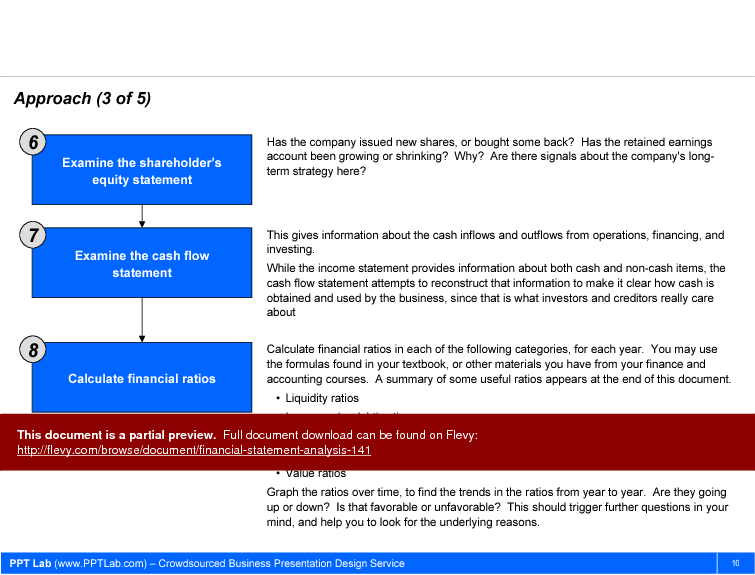
Structured Approach to Financial Statement Analysis

Key Qualitative Characteristics of Accounting Information

Framework for Understanding Accounting Quality Hierarchy

Key Profitability Ratios for Financial Assessment

Key Insights on Financial Statement Transparency

Key Insights from Financial Ratio Analysis

Key Accounting Principles: Materiality and Conservatism

Key Components of Financial Statement Analysis

Source: Best Practices in Financial Analysis PowerPoint Slides: Financial Statement Analysis PowerPoint (PPT) Presentation Slide Deck, PPT Lab


$39.00

Add to Cart
  

ABOUT THE AUTHOR

Author: PPT Lab
Additional documents from author: 24

PPT Lab is a presentation design firm specializing in business frameworks and PowerPoint templates. Our team is comprised of ex-consultants from McKinsey, E&Y, Bearing Point, and boutique consulting firms. We have worked with hundreds of clients globally, ranging from mid-size manufacturing companies to global Fortune 500 conglomerates.

All of our documents are of the ... [read more]

Ask the Author a Question

You must be logged in to contact the author.

Click here to log in Click here register

Did you know?
The average daily rate of a McKinsey consultant is $6,625 (not including expenses). The average price of a Flevy document is $65.


Trusted by over 10,000+ Client Organizations
Since 2012, we have provided business templates to over 10,000 businesses and organizations of all sizes, from startups and small businesses to the Fortune 100, in over 130 countries.
AT&T GE Cisco Intel IBM Coke Dell Toyota HP Nike Samsung Microsoft Astrazeneca JP Morgan KPMG Walgreens Walmart 3M Kaiser Oracle SAP Google E&Y Volvo Bosch Merck Fedex Shell Amgen Eli Lilly Roche AIG Abbott Amazon PwC T-Mobile Broadcom Bayer Pearson Titleist ConEd Pfizer NTT Data Schwab


Read Customer Testimonials

 
"Flevy is our 'go to' resource for management material, at an affordable cost. The Flevy library is comprehensive and the content deep, and typically provides a great foundation for us to further develop and tailor our own service offer."

– Chris McCann, Founder at Resilient.World
 
"I have used FlevyPro for several business applications. It is a great complement to working with expensive consultants. The quality and effectiveness of the tools are of the highest standards."

– Moritz Bernhoerster, Global Sourcing Director at Fortune 500
 
"Last Sunday morning, I was diligently working on an important presentation for a client and found myself in need of additional content and suitable templates for various types of graphics. Flevy.com proved to be a treasure trove for both content and design at a reasonable price, considering the time I "

– M. E., Chief Commercial Officer, International Logistics Service Provider
 
"FlevyPro has been a brilliant resource for me, as an independent growth consultant, to access a vast knowledge bank of presentations to support my work with clients. In terms of RoI, the value I received from the very first presentation I downloaded paid for my subscription many times over! The "

– Roderick Cameron, Founding Partner at SGFE Ltd
 
"I have used Flevy services for a number of years and have never, ever been disappointed. As a matter of fact, David and his team continue, time after time, to impress me with their willingness to assist and in the real sense of the word. I have concluded in fact "

– Roberto Pelliccia, Senior Executive in International Hospitality
 
"I have found Flevy to be an amazing resource and library of useful presentations for lean sigma, change management and so many other topics. This has reduced the time I need to spend on preparing for my performance consultation. The library is easily accessible and updates are regularly provided. A wealth of great information."

– Cynthia Howard RN, PhD, Executive Coach at Ei Leadership
 
"As a small business owner, the resource material available from FlevyPro has proven to be invaluable. The ability to search for material on demand based our project events and client requirements was great for me and proved very beneficial to my clients. Importantly, being able to easily edit and tailor "

– Michael Duff, Managing Director at Change Strategy (UK)
 
"Flevy is now a part of my business routine. I visit Flevy at least 3 times each month.

Flevy has become my preferred learning source, because what it provides is practical, current, and useful in this era where the business world is being rewritten.

In today's environment where there are so "

– Omar Hernán Montes Parra, CEO at Quantum SFE


Customers Also Bought These Documents


Customers Also Like These Documents

Explore Templates on Related Management Topics


Your Recently Viewed Documents
Download our FREE Strategy & Transformation Framework Templates

Download our free compilation of 50+ Strategy & Transformation slides and templates. Frameworks include McKinsey 7-S, Balanced Scorecard, Disruptive Innovation, BCG Curve, and many more.