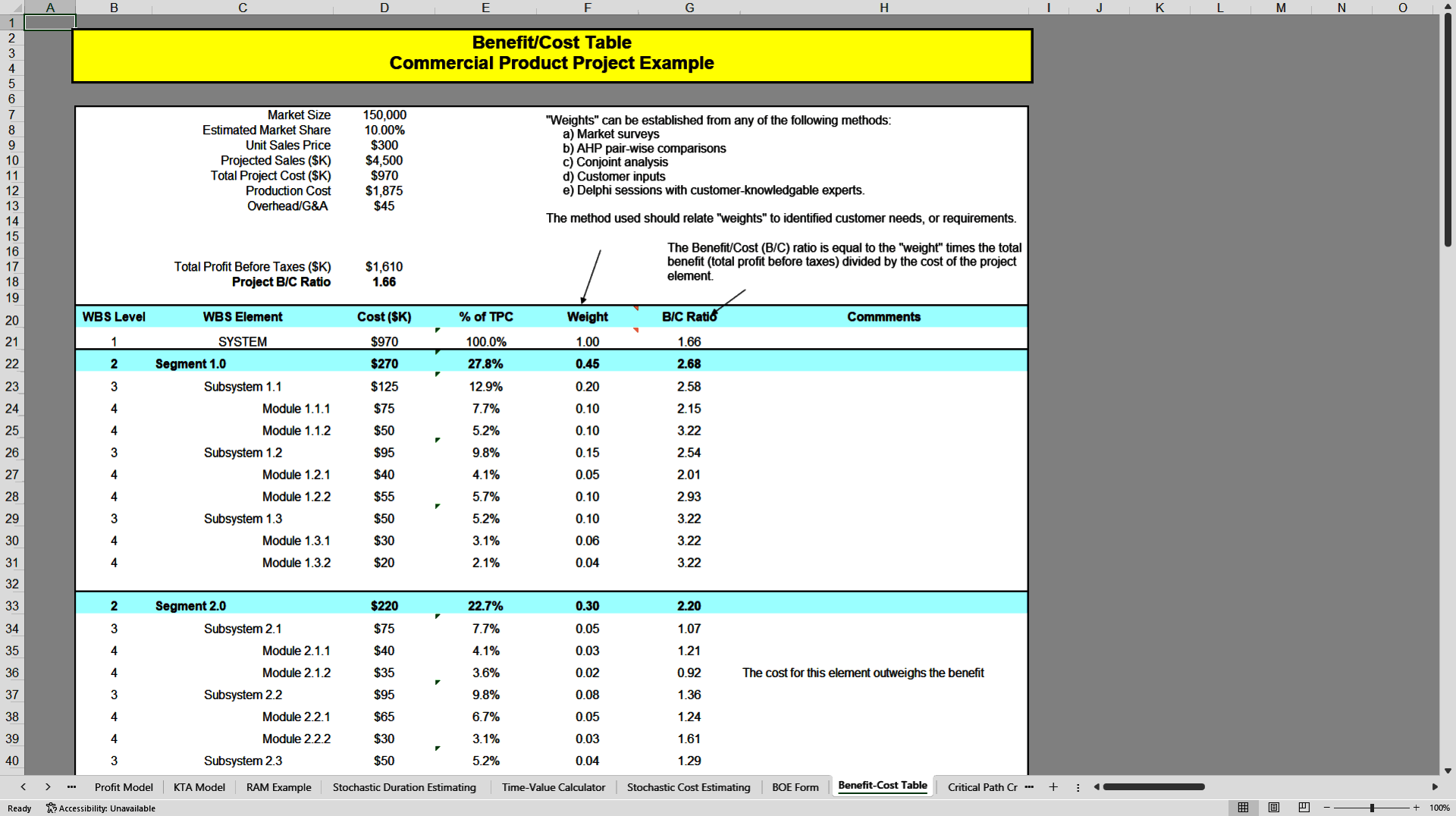

 Click main image to view in full screen. Unlock all 12 preview images:
Earned Value Project Management and Controls Toolkit – Excel XLS
Excel (XLS)


BENEFITS OF THIS DOWNLOADABLE EXCEL DOCUMENT
- Centers project performance management on earned value metrics including planned value, actual cost, earned value, SPI, and CPI for clearer cost and schedule status.
- Strengthens the baseline that earned value depends on through structured cost estimating, schedule crashing analysis, and weighted risk prioritization.
- Supports ongoing project controls with weekly variance tracking, completion-oriented metrics, and practical guidance for sizing controls capacity.
PROJECT MANAGEMENT EXCEL DESCRIPTION
Earned value project management turns cost and schedule status into measurable performance. Many teams still report percent complete and budget spent as separate stories. This toolkit is built so planned value, actual cost, and earned value sit in one structure, with the indices and completion metrics project managers use to run credible performance conversations.
Core earned value capability
The earned value tracking worksheet is designed for cumulative planned value, actual cost, and earned value by period. From those inputs the model supports schedule performance index, cost performance index, and related completion analysis used in project performance management. A companion zone-style weekly view provides a simpler variance lens when a full earned value cycle is not yet required. Together these support status reporting, early warning on cost or schedule drift, and more disciplined estimate-at-completion thinking.
How the supporting tools feed earned value
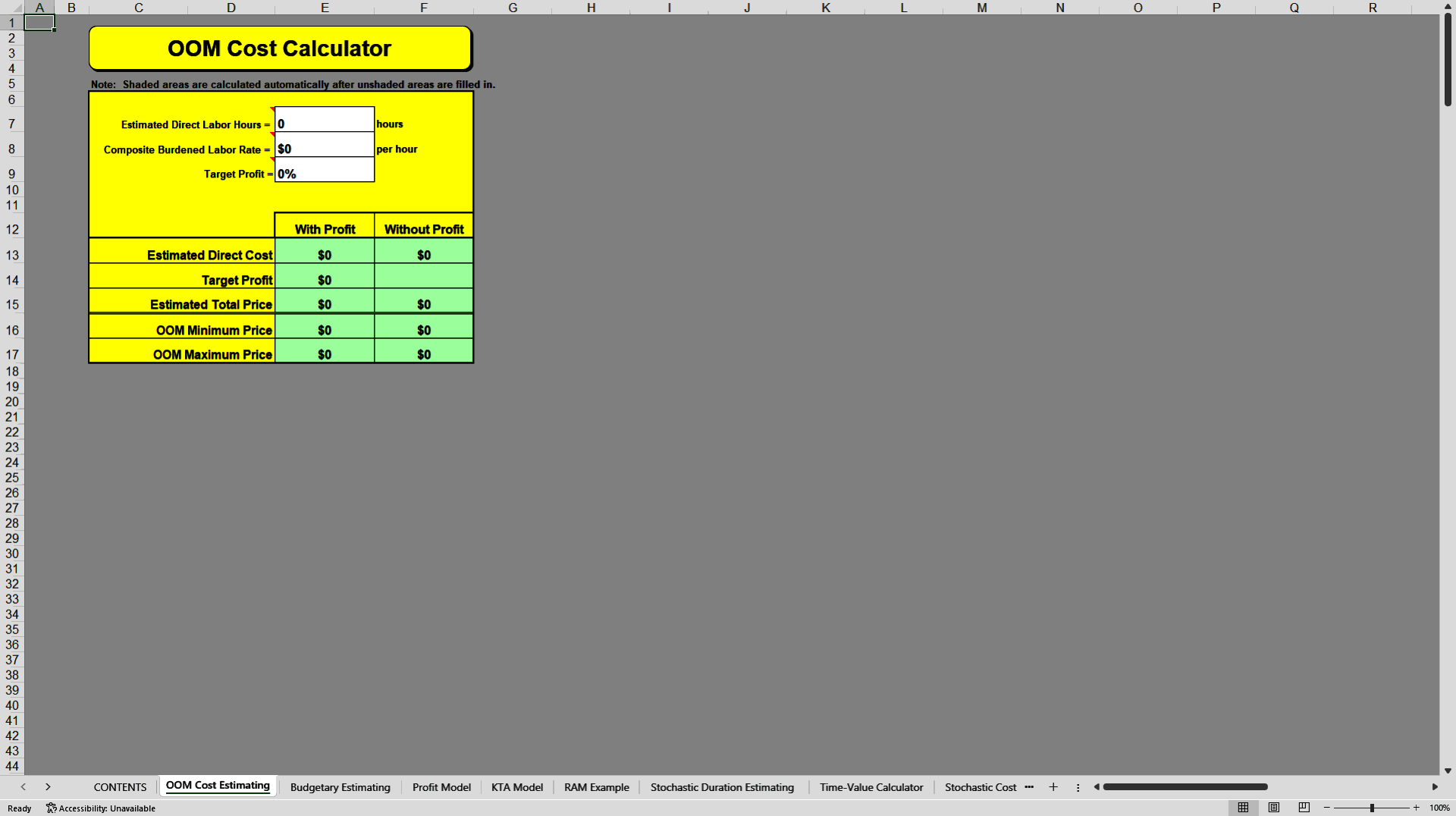
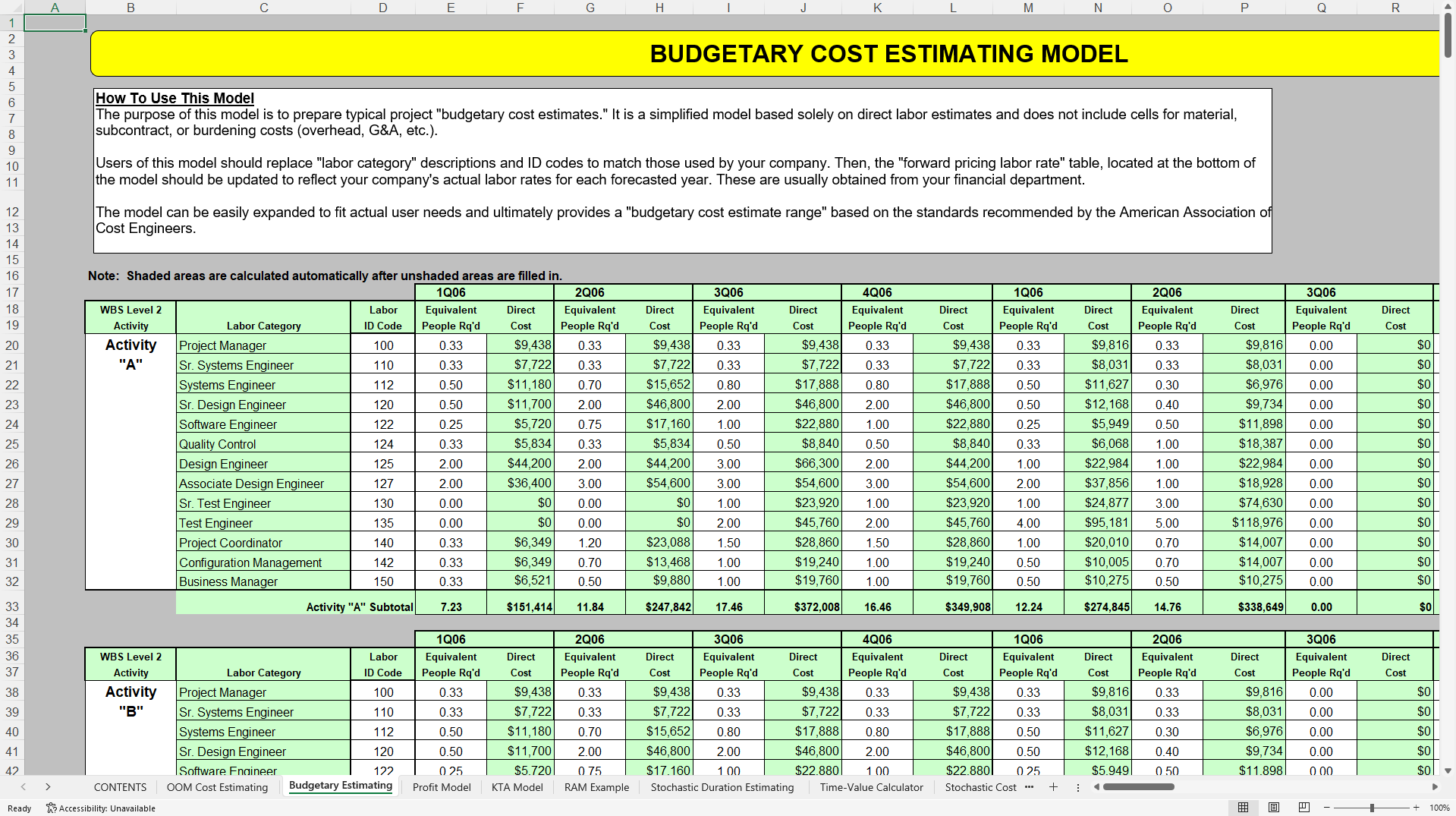
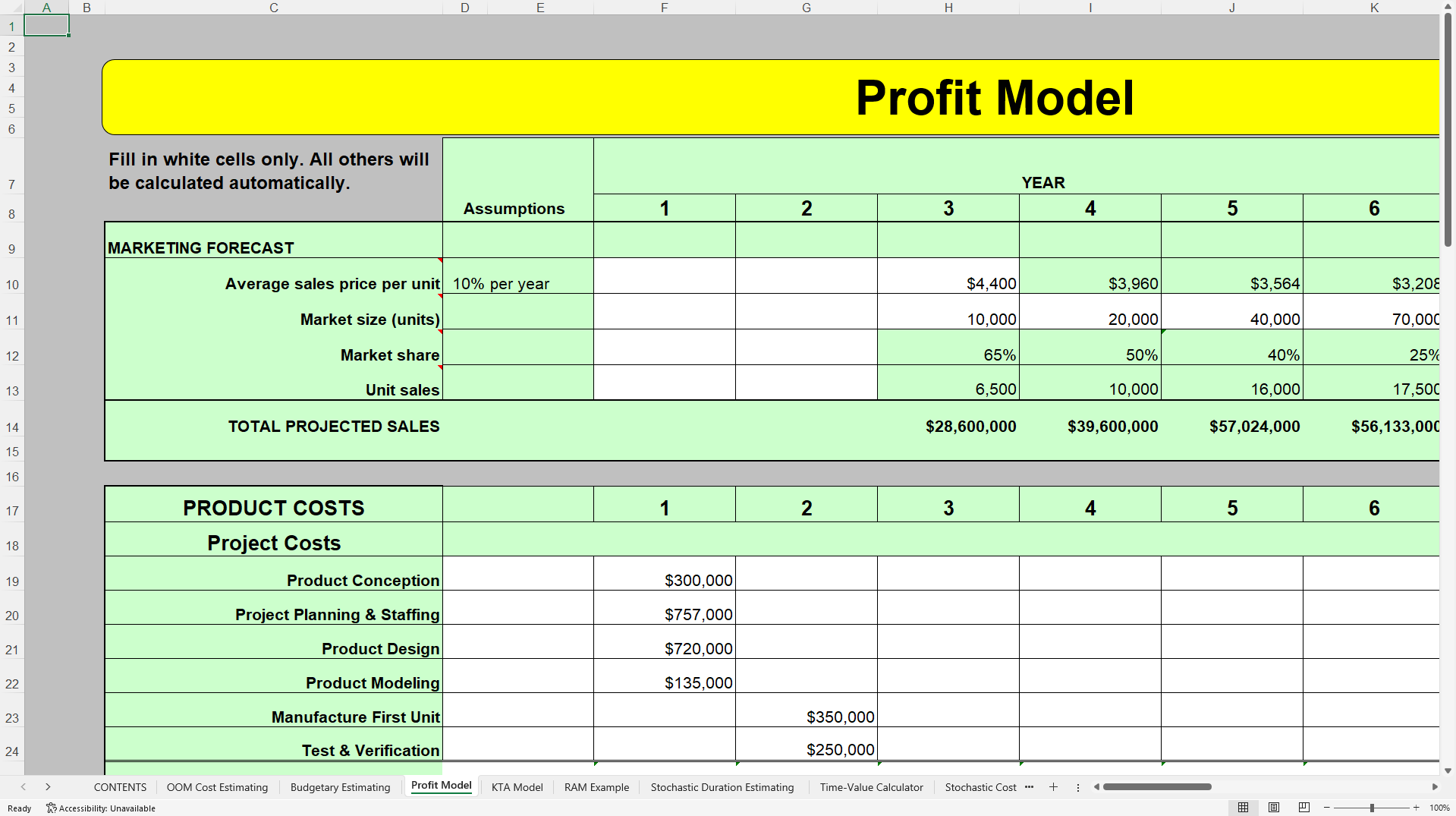
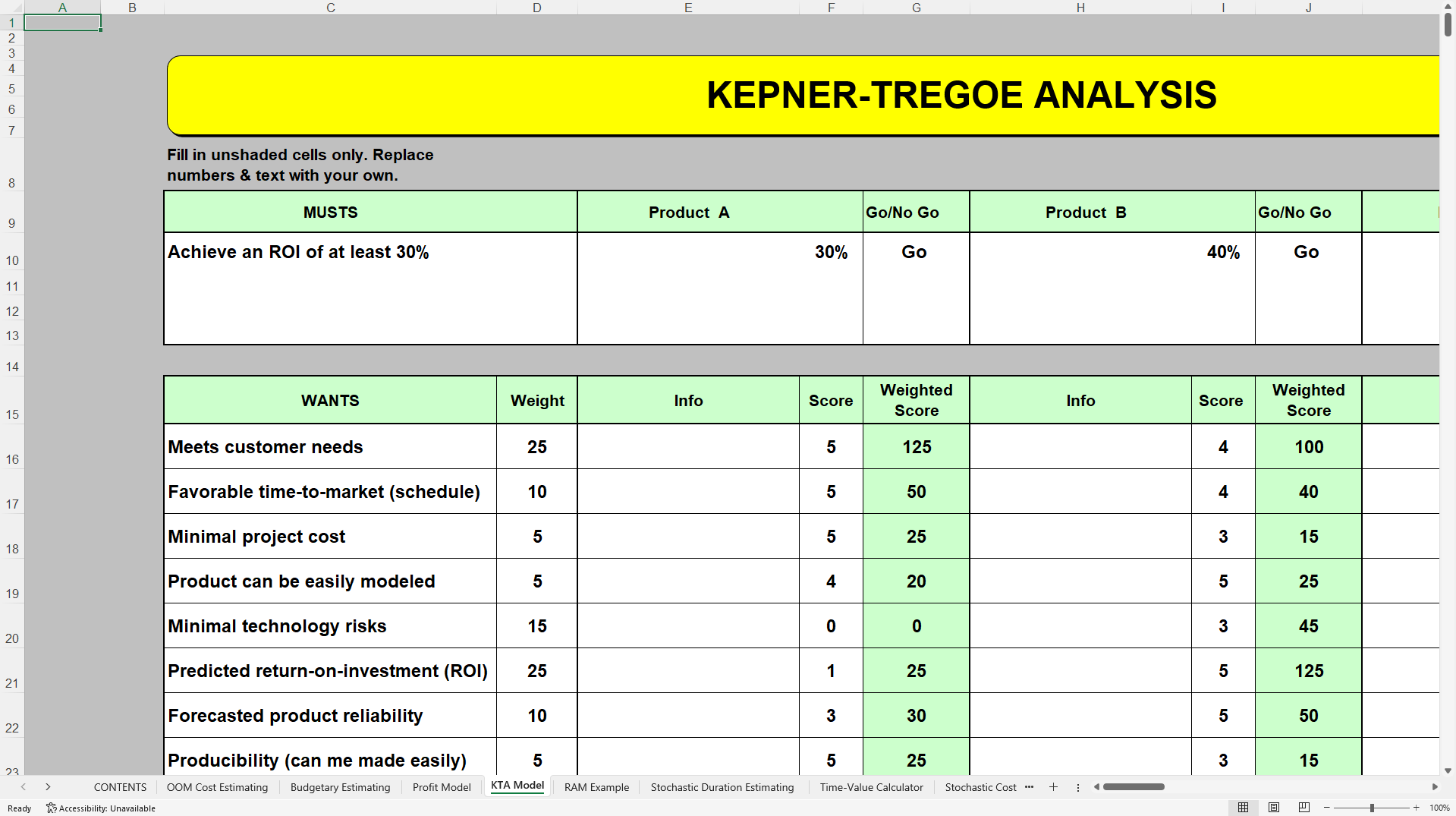
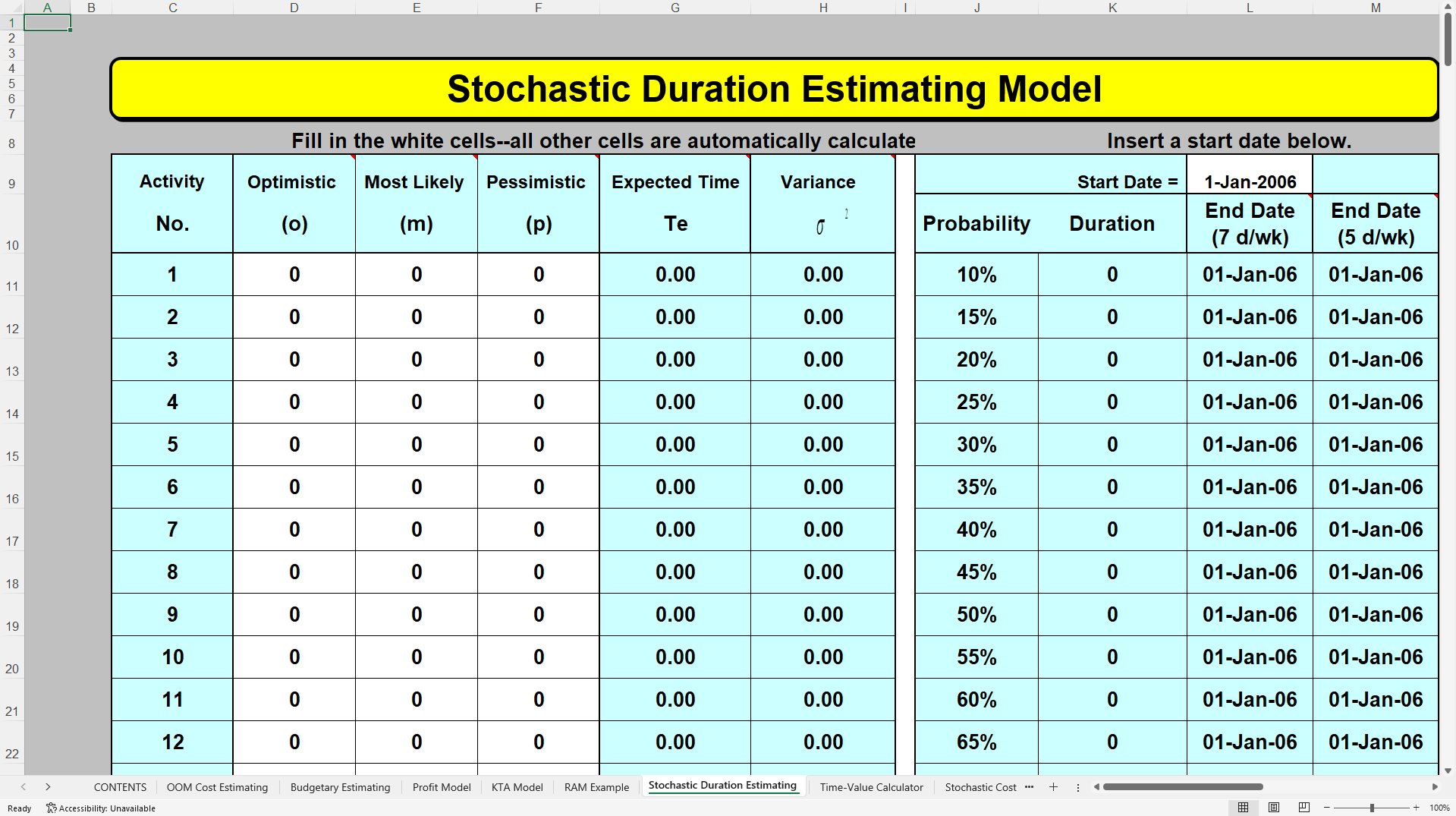
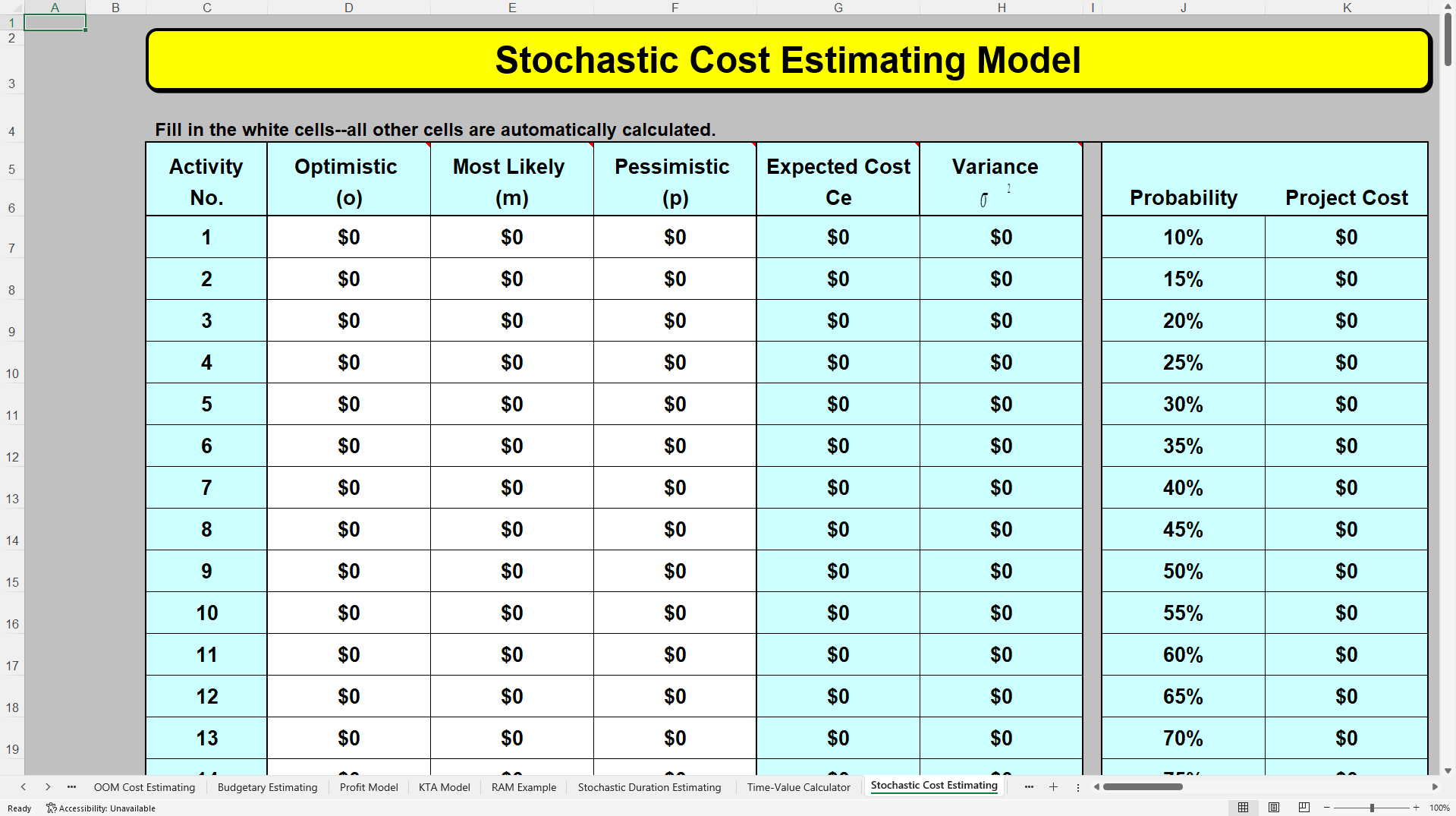
Strong earned value starts with a defensible baseline. Order-of-magnitude and budgetary estimating worksheets help build cost structure before the baseline is locked. A profit model supports commercial framing of price versus cost. Stochastic-oriented duration and cost views help when uncertainty should be acknowledged before commitments are set. Critical path crashing analysis supports schedule trade-off decisions that affect the performance measurement baseline. Weighted risk analysis across technical, schedule, and cost dimensions helps prioritize what can threaten earned value outcomes. Project controls staff sizing and basis-of-estimate style documentation support the operating discipline around the baseline.
Who this is for
This toolkit is for project managers, project controls analysts, PMO staff, and estimators who need earned value project management support without standing up a full enterprise system for every project. It fits engineering, construction, IT, and professional services environments where sponsors expect SPI, CPI, and variance explanations—not only narrative status.
What is included
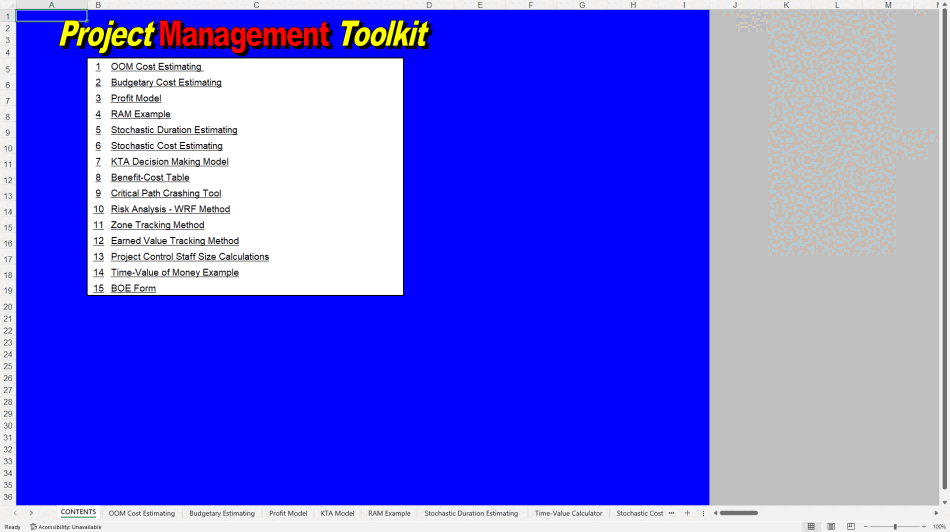
The workbook includes earned value tracking; zone tracking; order-of-magnitude cost estimating; budgetary cost estimating; a profit model; stochastic duration and cost estimating views; critical path crashing; weighted risk factor analysis; benefit-cost and decision support tools; project control staff size calculations; a time-value of money example; and a basis-of-estimate form. Earned value is the performance management center of the toolkit. The remaining tools support baseline quality and control capacity around that center.
How to use it
Enter data only in designated input cells. Leave calculated fields unchanged. Replace sample structures with your WBS, rates, and period plan. Earned value metrics require consistent planned value, actual cost, and earned value inputs; empty periods will show zeros or division messages until those inputs are complete. Use outputs for internal performance management, baseline reviews, and status packs. This toolkit complements scheduling software. It does not replace MS Project, Primavera, or formal cost systems.
Important boundaries
This is an analytical earned value project management toolkit for planning and control support. It is not a certified earned value management system under formal EVMS guidelines, nor a substitute for contractual reporting standards or professional judgment on recovery plans. Apply it to improve consistency and transparency of performance measurement on projects where a practical Excel-based approach is appropriate.
Got a question about the product? Email us at support@flevy.com or ask the author directly by using the "Ask the Author a Question" form. If you cannot view the preview above this document description, go here to view the large preview instead.
Source: Best Practices in Project Management Excel: Earned Value Project Management and Controls Toolkit Excel (XLS) Spreadsheet, MW & Digitelax Consulting
ABOUT THE AUTHOR

Welcome to the official enterprise resource hub of MW & Digitelax Consulting. Directed by a seasoned banking executive, corporate risk consultant, and financial content strategist with over 28 years of institutional leadership experience, our practice delivers deployment-ready frameworks designed to drive enterprise efficiency, enforce regulatory compliance, and eliminate systemic model risk. ... [read more]
Ask the Author a Question
You must be logged in to contact the author.