
This Presentation introduces e-marketing and its benefits and risks. It describes the difference
between e-commerce, e-business and e-marketing; the alternative digital communications
channels, the dangers of sloppy e-marketing; how to present a business case for increasing
your online activities and the benefits – Sell, Serve, Save, Speak and Sizzle.
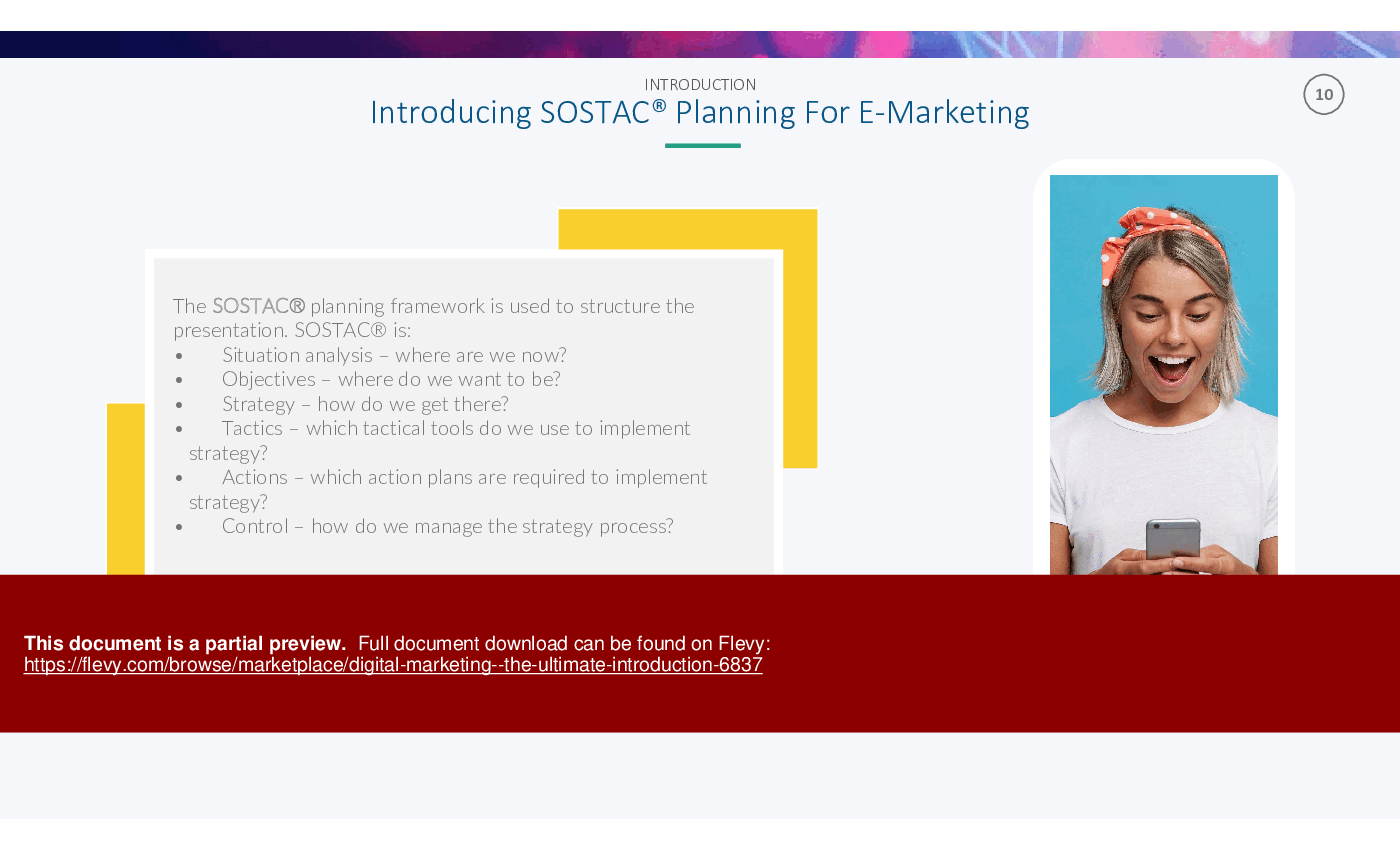
The SOSTAC® planning framework is used to structure the presentation. SOSTAC® is:
Situation analysis – where are we now?
Objectives – where do we want to be?
Strategy – how do we get there?
Tactics – which tactical tools do we use to implement strategy?
Actions – which action plans are required to implement strategy?
Control – how do we manage the strategy process?
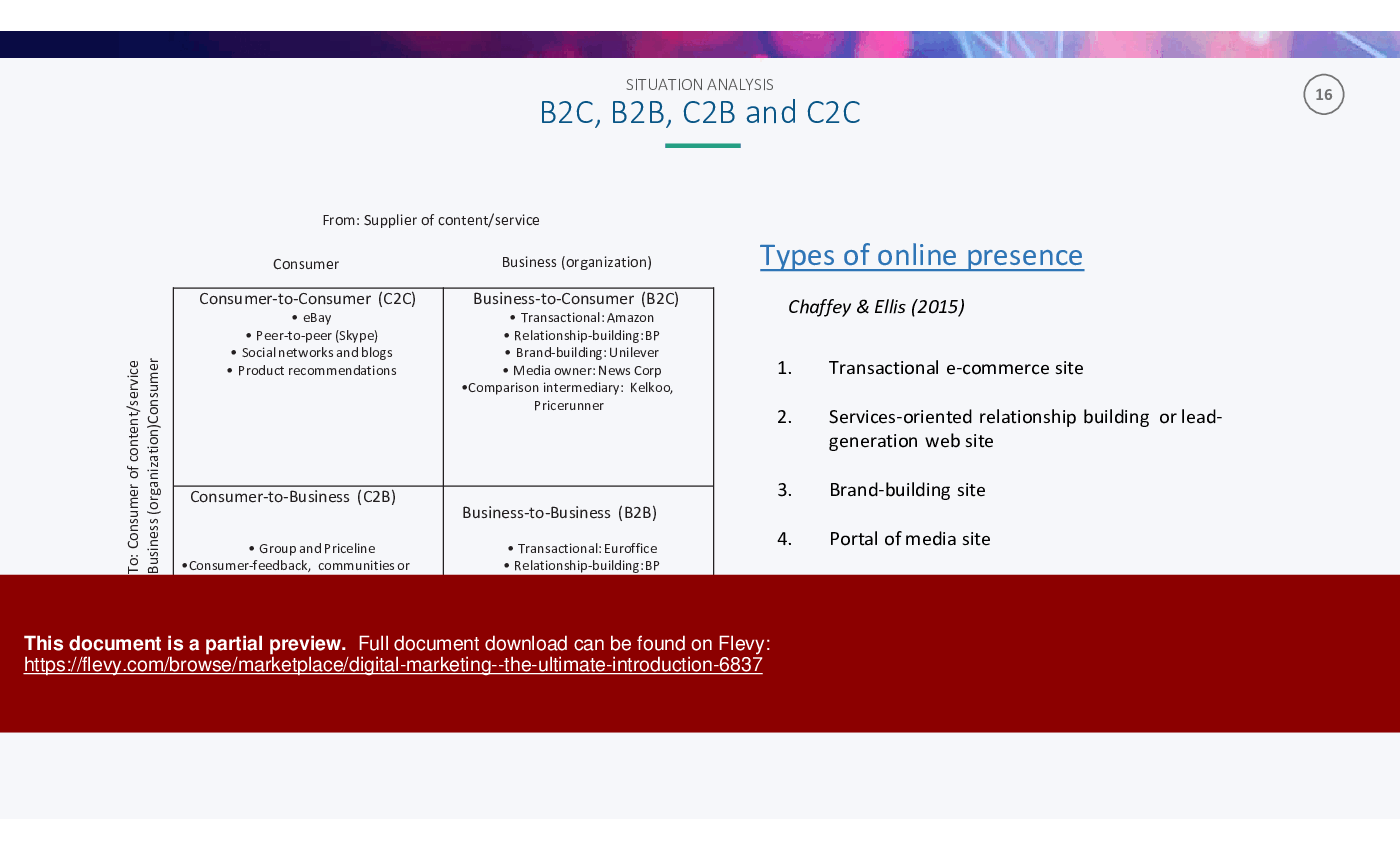
E-marketing involves collaboration between different parties that can be characterized by
four main interactions:
● B2C – business-to-consumer (B2C e-tail is arguably the most talked about)
● B2B – business-to-business (less talked about, but with the most transactions)
● C2C – customer-to-customer interactions (best known as consumer auctions, but can also
be achieved as B2C and B2B social networks or communities)
● C2B – customer-to-business (novel buying models where customers approach the busi-
ness on their own terms or generate content to support the business).
The document is easily customizable and contains many powerful diagrams, ice-breakers, pictures, ... to get the holistic view of key concepts related to Digital Marketing.
This PPT provides a comprehensive overview of digital marketing, emphasizing the importance of integrated planning and execution. It includes detailed frameworks like SOSTAC® and PRACE, offering actionable insights for each stage of the customer journey. The presentation covers key metrics, customer lifetime value, and the significance of multi-channel analytics. It also highlights the role of digital experiences, content marketing, and the necessity of adapting to market scenarios. This resource is essential for executives looking to enhance their digital strategies and optimize ROI.
Got a question about the product? Email us at support@flevy.com or ask the author directly by using the "Ask the Author a Question" form. If you cannot view the preview above this document description, go here to view the large preview instead.
Executive Summary
This presentation titled "Digital Marketing - The Ultimate Introduction" serves as a comprehensive guide to e-marketing, detailing its benefits, risks, and essential strategies. Developed by experts with extensive consulting backgrounds, this PPTX equips corporate executives and marketing professionals with the knowledge to navigate the digital landscape effectively. It covers key concepts such as e-commerce, e-business, and the various digital communication channels available. By utilizing this presentation, users will be able to formulate a robust e-marketing plan that enhances online activities, ultimately driving sales, customer engagement, and brand awareness.
Who This Is For and When to Use
• Marketing executives seeking to enhance their digital strategy
• Business leaders aiming to understand the fundamentals of e-marketing
• Consultants developing e-marketing frameworks for clients
• Training facilitators conducting workshops on digital marketing
• Teams involved in e-commerce and online customer engagement
Best-fit moments to use this deck:
• During strategic planning sessions focused on digital marketing initiatives
• In training workshops aimed at upskilling marketing teams
• For presentations to stakeholders on the importance of e-marketing
• When developing or revising an organization's e-marketing strategy
Learning Objectives
• Describe the development of the electronic market-space
• Outline an approach to developing an e-marketing plan
• Identify the key benefits of e-marketing
• Explain the differences between e-commerce, e-business, and e-marketing
• Analyze the risks associated with sloppy e-marketing
• Present a business case for increasing online activities
Table of Contents
• Introduction to E-Marketing (page 2)
• Outcomes (page 3)
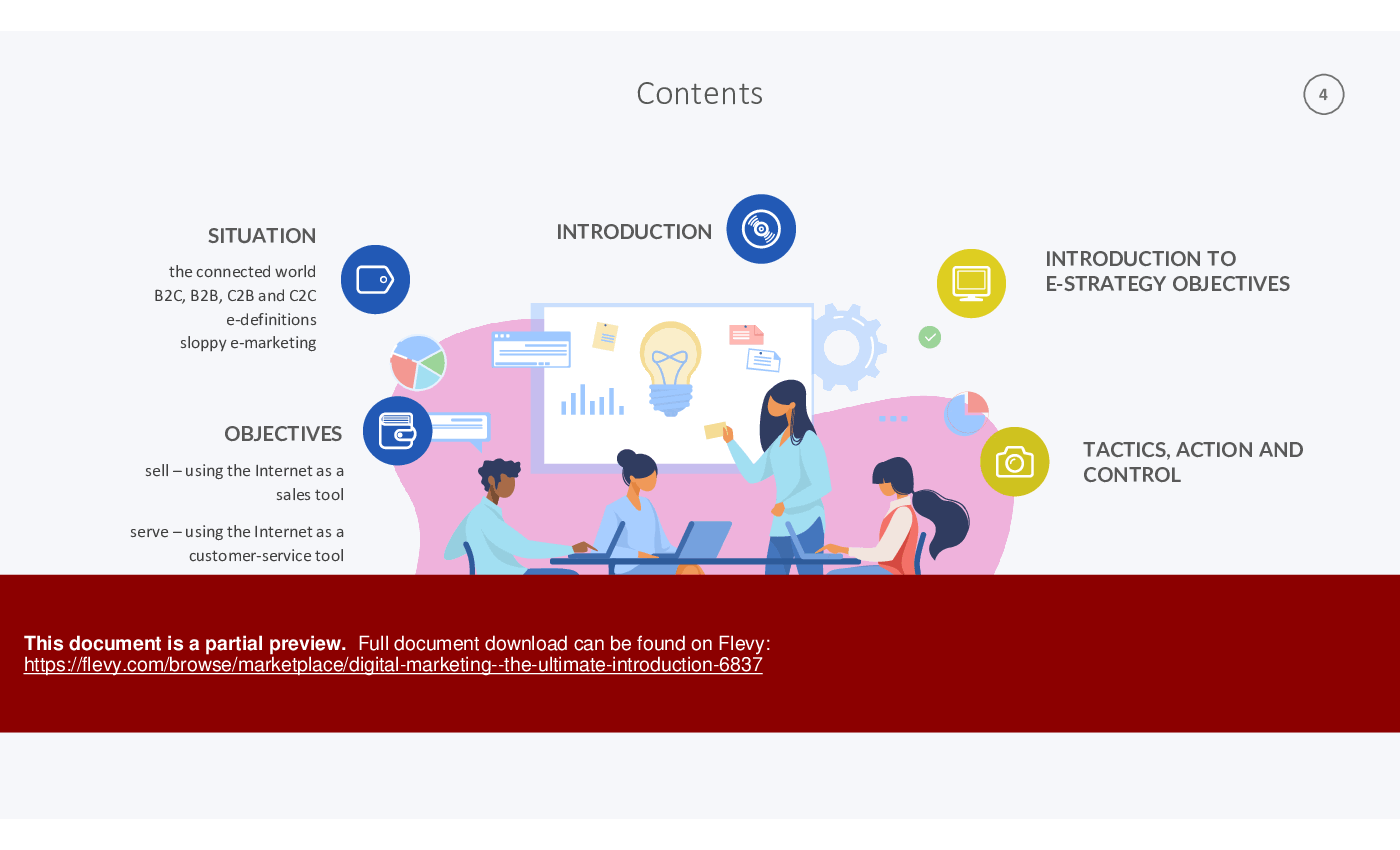
• Situation Analysis (page 12)
• Objectives (page 26)
• Tactics, Action, and Control (page 47)
• Digital Marketing Definitions (page 20)
• Applications of Digital Marketing (page 14)
• Introducing SOSTAC® Planning for E-Marketing (page 9)
Primary Topics Covered
• E-Marketing Overview - An introduction to e-marketing, its definitions, and its significance in today's digital landscape.
• SOSTAC® Framework - A structured approach for developing e-marketing plans, focusing on Situation analysis, Objectives, Strategy, Tactics, Actions, and Control.
• Digital Marketing Benefits - Key advantages of e-marketing, including enhanced customer access, satisfaction, and cost efficiency.
• Customer Engagement Metrics - Metrics to measure online customer engagement and satisfaction.
• Types of Online Presence - Various forms of digital presence including transactional e-commerce, brand-building sites, and social networks.
• 5S Objectives - Framework for setting e-marketing objectives: Sell, Serve, Speak, Save, and Sizzle.
Deliverables, Templates, and Tools
• E-marketing plan template based on the SOSTAC® framework
• Customer journey mapping tools
• Email marketing strategy outline
• Content marketing matrix for effective engagement
• KPI dashboards for measuring performance
• One-page marketing plan template
Slide Highlights
• Overview of the SOSTAC® planning framework
• Visual representation of the 5S objectives
• Infographic on the customer acquisition funnel
• Comparison of different types of online presence
• Summary of digital marketing definitions and applications
Potential Workshop Agenda
Introduction to Digital Marketing (30 minutes)
• Overview of e-marketing and its significance
• Discussion on the evolution of digital marketing
SOSTAC® Framework Workshop (60 minutes)
• Detailed exploration of each component of the SOSTAC® framework
• Group activity to develop a draft e-marketing plan
Metrics and Measurement Session (45 minutes)
• Identifying key performance indicators for digital marketing
• Tools and techniques for measuring customer engagement
Customization Guidance
• Tailor the e-marketing plan template to reflect specific organizational goals and resources
• Adjust the SOSTAC® framework components to align with industry-specific requirements
• Incorporate company branding and messaging into presentation slides
Secondary Topics Covered
• The impact of social media on e-marketing
• Best practices for email marketing campaigns
• The role of SEO in driving online traffic
• Digital advertising strategies and their effectiveness
• Customer service mechanisms in e-business
FAQ
What is e-marketing?
E-marketing refers to the use of digital channels and technologies to promote products and services, enhance customer relationships, and facilitate online transactions.
How does the SOSTAC® framework work?
The SOSTAC® framework provides a structured approach to developing marketing plans by analyzing the current situation, setting objectives, formulating strategies, defining tactics, outlining actions, and establishing control measures.
What are the key benefits of digital marketing?
Digital marketing offers numerous benefits including increased customer access, enhanced engagement, cost savings, and the ability to gather valuable customer insights.
What are the 5S objectives in e-marketing?
The 5S objectives are Sell (increase sales), Serve (enhance customer service), Speak (engage customers), Save (reduce costs), and Sizzle (build brand awareness).
How can I measure online customer engagement?
Online customer engagement can be measured using various metrics such as bounce rate, time spent on site, conversion rates, and customer feedback.
What types of online presence should I consider?
Consider various types of online presence including transactional e-commerce sites, brand-building platforms, and social media channels to effectively reach your target audience.
How can I avoid sloppy e-marketing?
To avoid sloppy e-marketing, ensure that your digital strategies are well-planned, customer-focused, and regularly monitored for effectiveness.
What tools can assist in developing an e-marketing plan?
Tools such as the SOSTAC® framework, customer journey mapping, and KPI dashboards can help in developing and executing an effective e-marketing plan.
Glossary
• E-Marketing - The use of digital channels to promote products and services.
• SOSTAC® - A planning framework for marketing strategies: Situation, Objectives, Strategy, Tactics, Actions, Control.
• 5S Objectives - Framework for e-marketing goals: Sell, Serve, Speak, Save, Sizzle.
• Customer Lifetime Value (CLV) - An estimate of the total revenue a customer will generate during their relationship with a business.
• Customer Acquisition Funnel - The stages a customer goes through from awareness to purchase and advocacy.
• Digital Presence - The various forms of online representation a business can have, including websites and social media profiles.
• SEO - Search Engine Optimization; the practice of optimizing a website to rank higher in search engine results.
• Email Marketing - A digital marketing strategy that uses email to communicate with customers and prospects.
• Content Marketing - A marketing strategy focused on creating and distributing valuable content to attract and engage a target audience.
• Social Media Marketing - The use of social media platforms to promote a product or service.
• KPI - Key Performance Indicator; a measurable value that demonstrates how effectively a company is achieving key business objectives.
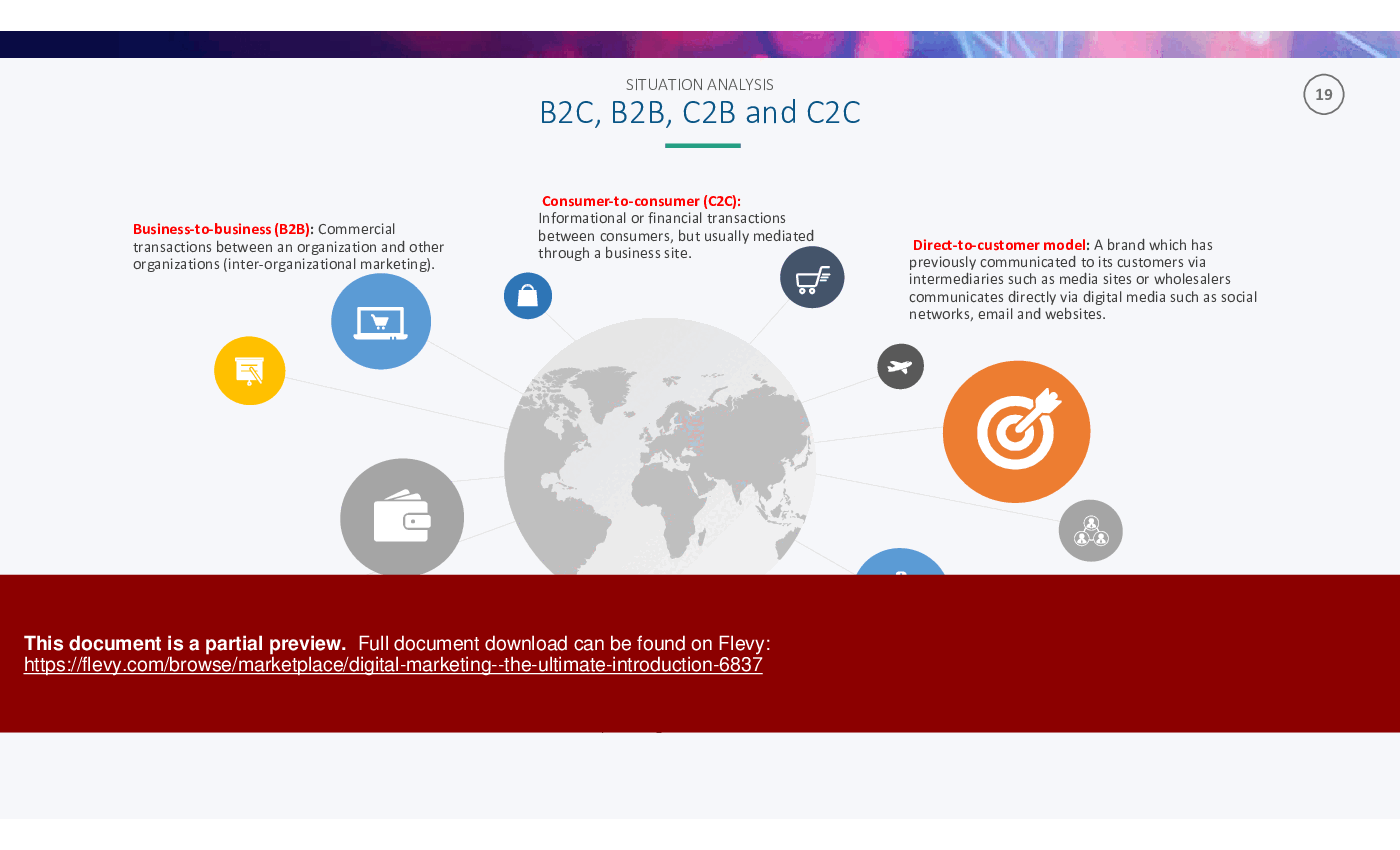
• B2C - Business-to-Consumer; transactions between businesses and individual consumers.
• C2C - Consumer-to-Consumer; transactions between consumers, often facilitated by a third-party platform.
• B2B - Business-to-Business; transactions between businesses.
• E-Commerce - The buying and selling of goods and services over the internet.
Source: Best Practices in Social Media Strategy PowerPoint Slides: Digital Marketing - The Ultimate Introduction PowerPoint (PPTX) Presentation Slide Deck, RadVector Consulting
|
Download our FREE Digital Transformation Templates
Download our free compilation of 50+ Digital Transformation slides and templates. DX concepts covered include Digital Leadership, Digital Maturity, Digital Value Chain, Customer Experience, Customer Journey, RPA, etc. |










