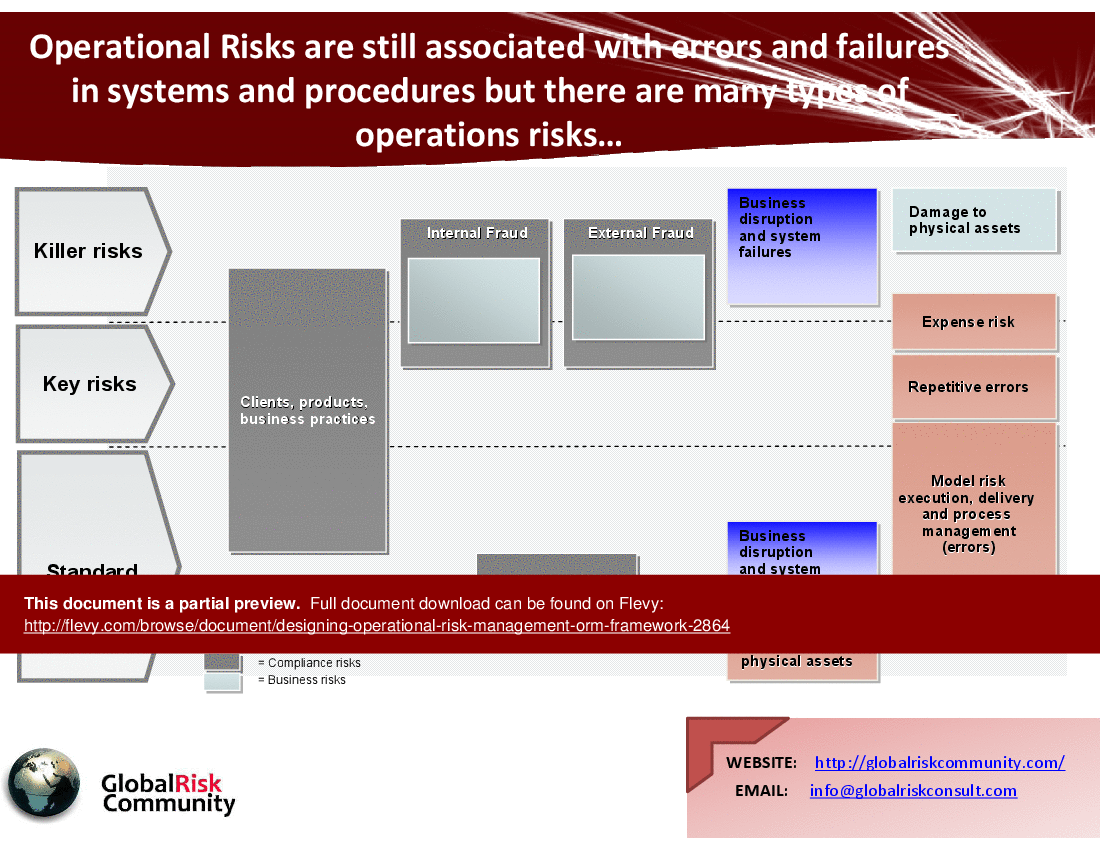
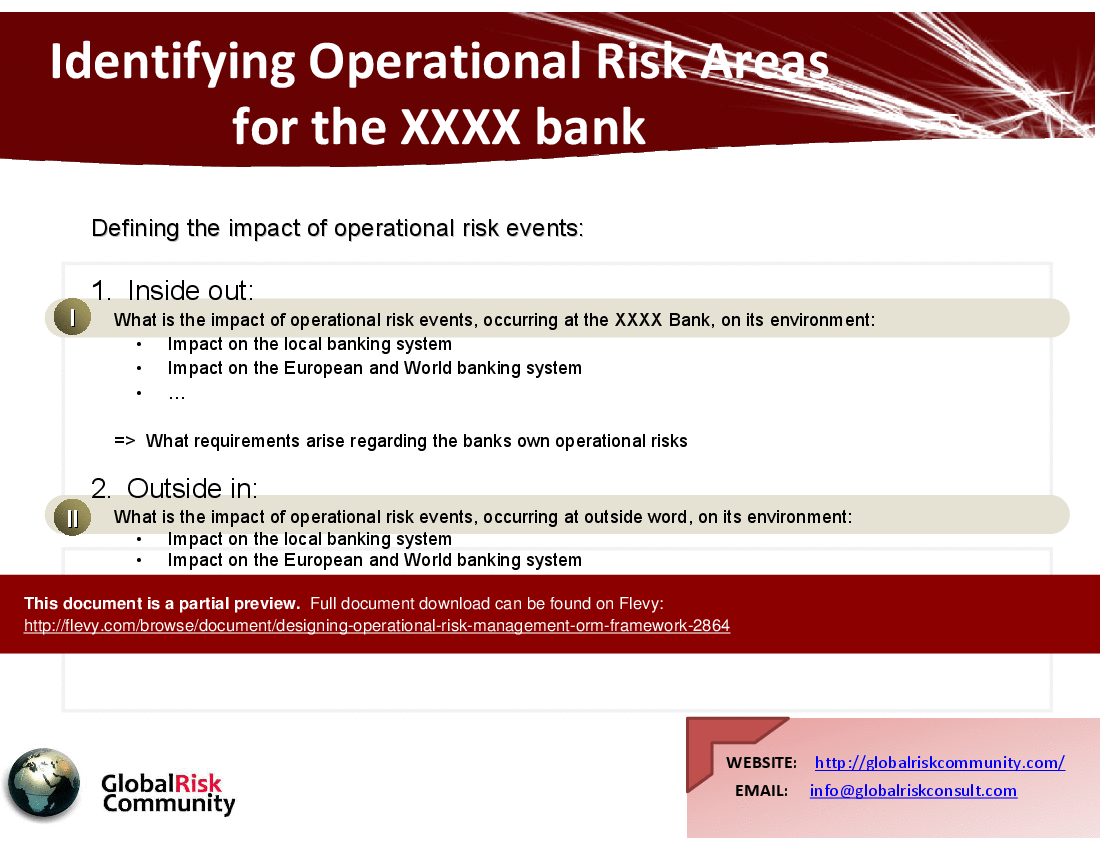

Operational Risk is the risk of loss resulting from inadequate or failed internal processes, people, and systems or from external events. Operational Risk Management (ORM) is the management function of identifying, analyzing, and responding to these operational risks. ORM involves the systematic assessment of potential operational risks, the implementation of controls to mitigate or eliminate those risks, and the continuous monitoring of the effectiveness of those controls.
ORM is an important part of overall Risk Management and helps organizations to identify, evaluate, and prioritize risks in order to make informed decisions about how to allocate resources and implement controls to manage those risks. ORM is applicable to a wide range of organizations and industries, including financial services, healthcare, manufacturing, and government agencies.
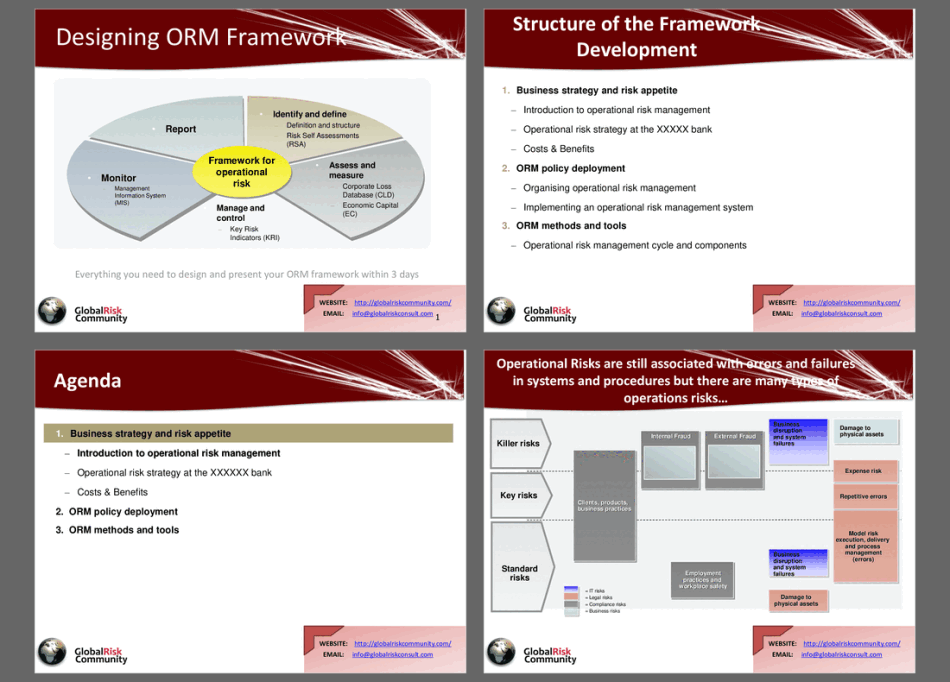
The presentation will show you how to design the Operational Risk Management (ORM) framework, so that you will be able to prepare and present:
• Business strategy and risk appetite
• ORM policy deployment and implementation approaches
• ORM methods and tools
• and more
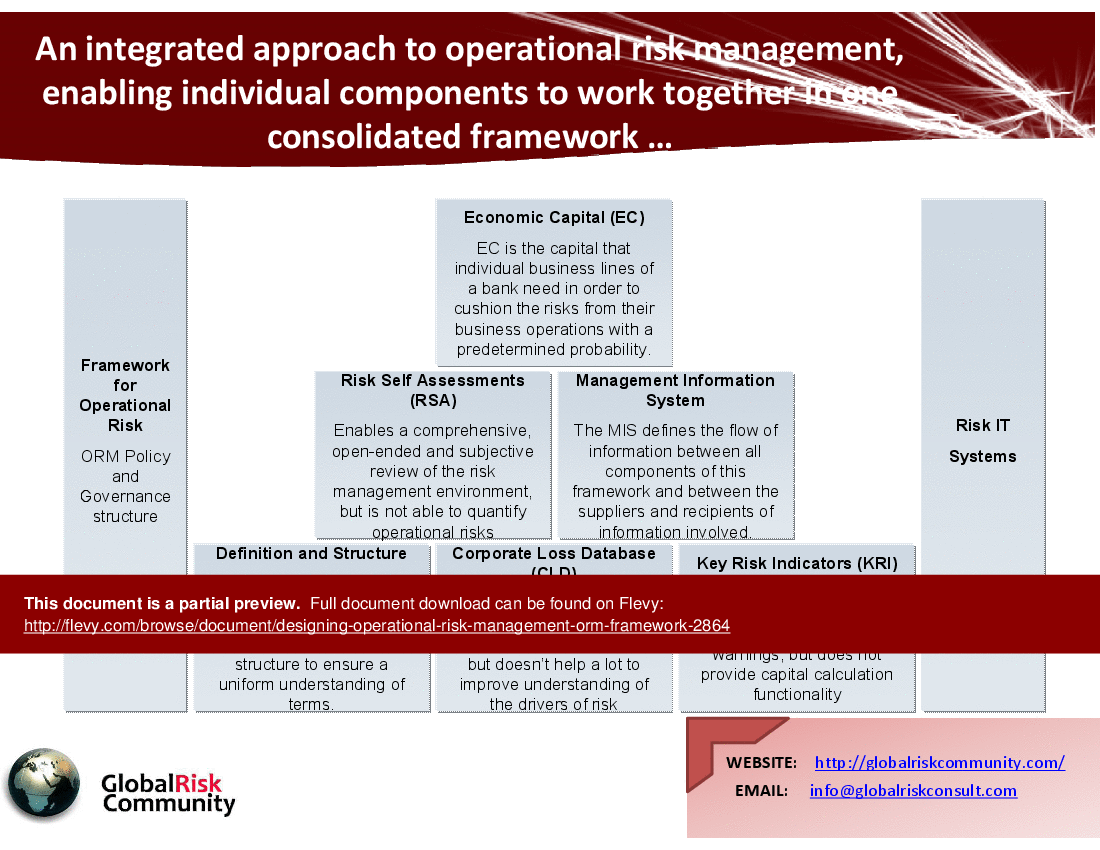
Specific topics covered include structural differences between risk types, Basel II requirements, corporate governance, COSO's ERM framework, continuous ORM cycle, critical success factors, Corporate Loss Database (CLD), key risk indicators, among other topics.
This also includes an accompanying Risk Glossary
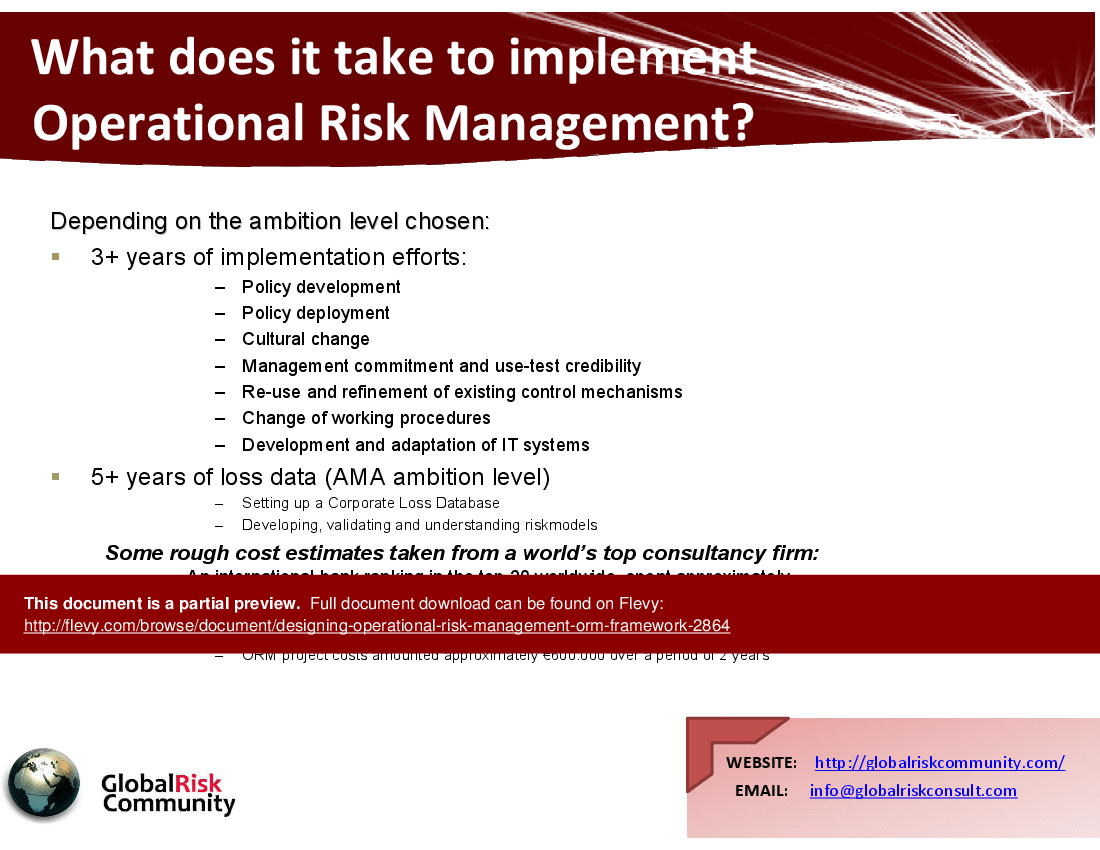
This PPT also delves into the practical aspects of implementing an ORM framework, including detailed project planning and dynamic training modules. It outlines the critical steps for policy development, data loss collection, and the establishment of a Corporate Loss Database (CLD). The presentation emphasizes the importance of continuous assessment and measurement of risks, and the necessity of a robust Management Information System (MIS) for effective risk communication. This resource is indispensable for executives aiming to enhance their organization's risk resilience and ensure compliance with regulatory standards.
Got a question about the product? Email us at support@flevy.com or ask the author directly by using the "Ask the Author a Question" form. If you cannot view the preview above this document description, go here to view the large preview instead.
Executive Summary
This presentation titled "Designing Operational Risk Management (ORM) Framework" offers a comprehensive guide for organizations, particularly banks, to establish and implement an effective ORM framework. Developed by a Global Risk Leader with experience from Citibank, Bank of Tokyo Mitsubishi, and Capgemini, this deck provides actionable insights into ORM policy deployment, risk assessment, and management strategies. The framework aligns with regulatory standards such as SOX, ITIL, and ISO 27001, ensuring compliance while enhancing operational resilience. By utilizing this presentation, organizations can effectively monitor, report, and manage operational risks, ultimately leading to improved decision-making and risk mitigation.
Who This Is For and When to Use
• Risk Management Executives overseeing ORM initiatives
• Compliance Officers ensuring adherence to regulatory standards
• Operational Risk Analysts conducting risk assessments
• Business Continuity Planners developing contingency strategies
• IT Managers responsible for risk-related technology implementations
Best-fit moments to use this deck:
• During the initial stages of ORM framework development
• When assessing and measuring operational risks within the organization
• For training sessions aimed at enhancing ORM awareness among staff
• In workshops focused on implementing ORM policies and tools
Learning Objectives
• Define operational risk and its implications for the organization
• Build a comprehensive ORM framework tailored to specific business needs
• Establish governance structures for effective ORM policy deployment
• Identify and assess key operational risks using structured methodologies
• Implement Key Risk Indicators (KRIs) for proactive risk management
• Develop a Corporate Loss Database (CLD) for tracking historical losses
• Integrate Economic Capital (EC) considerations into risk management practices
• Foster a culture of ORM awareness and continuous improvement
Table of Contents
• Introduction to Operational Risk Management (page 3)
• Governance of Operational Risk (page 5)
• ORM Policy Deployment (page 8)
• ORM Methods and Tools (page 12)
• Risk Self Assessments (RSA) (page 15)
• Corporate Loss Database (CLD) (page 18)
• Key Risk Indicators (KRI) (page 22)
• Economic Capital (EC) (page 25)
• Implementation Steps (page 28)
• Benefits of ORM for Banks (page 30)
Primary Topics Covered
• Operational Risk Definition - Operational risk encompasses the risk of loss resulting from inadequate or failed internal processes, people, systems, or external events.
• Governance Structure - Establishing a governance framework is essential for effective ORM, ensuring accountability and oversight across the organization.
• ORM Policy Deployment - Strategies for organizing and implementing ORM policies to align with business objectives and regulatory requirements.
• Risk Self Assessments (RSA) - A structured approach to evaluating operational risks through qualitative assessments and workshops.
• Corporate Loss Database (CLD) - A systematic collection of internal operational losses to inform risk management decisions and strategies.
• Key Risk Indicators (KRI) - Metrics that provide early warnings about potential risks, enabling proactive management and control.
• Economic Capital (EC) - The capital required to cushion risks from business operations, calculated based on predetermined probabilities.
• Implementation Steps - A detailed roadmap for setting up the ORM framework, including project planning and stakeholder engagement.
Deliverables, Templates, and Tools
• ORM policy template for consistent documentation and communication
• Risk assessment framework for identifying and evaluating operational risks
• Corporate Loss Database (CLD) setup guide for tracking historical losses
• Key Risk Indicator (KRI) development toolkit for monitoring risk exposure
• Economic Capital (EC) calculation model for assessing capital requirements
• ORM awareness training materials for staff engagement and education
Slide Highlights
• Overview of operational risk types and their implications for organizations
• Governance structure slide detailing roles and responsibilities in ORM
• KRI examples showcasing effective metrics for risk monitoring
• Implementation roadmap outlining key steps for ORM framework setup
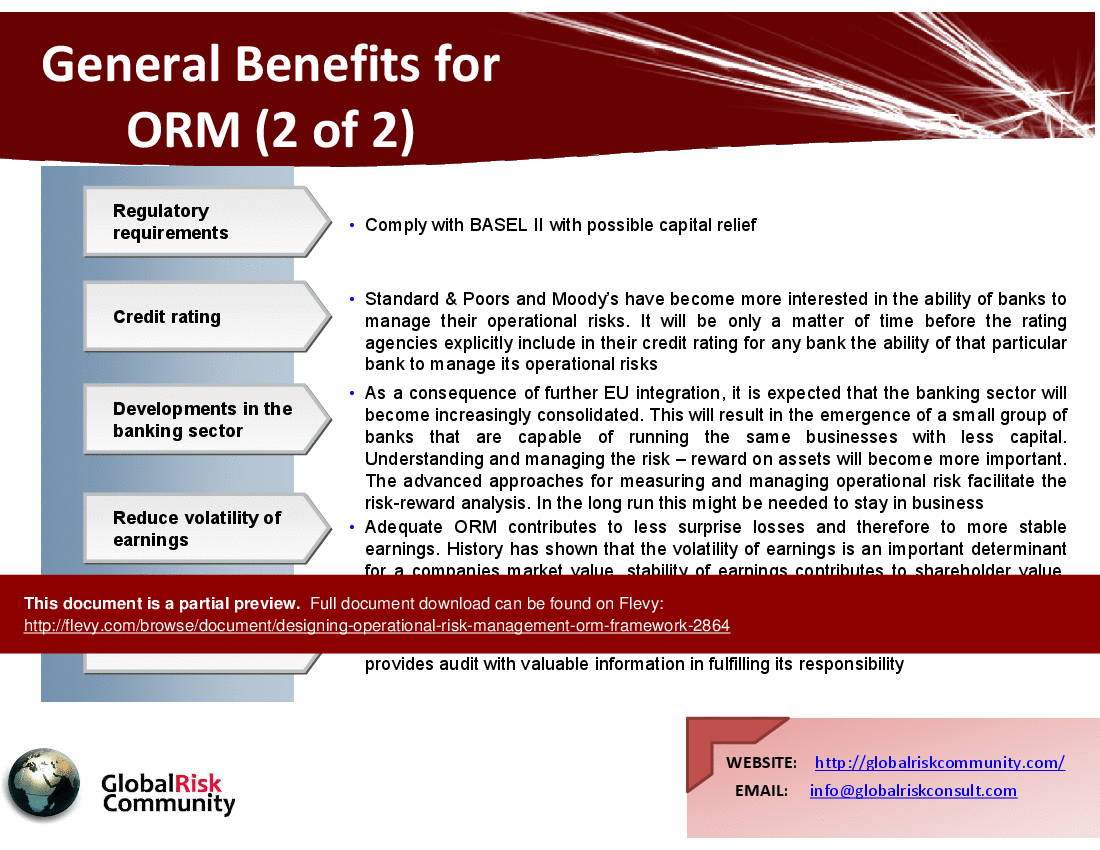
• Benefits of ORM for banks, emphasizing regulatory compliance and risk reduction
Potential Workshop Agenda
ORM Framework Development Workshop (3 hours)
• Introduction to operational risk and its significance
• Group discussion on current ORM practices and challenges
• Hands-on session for developing a Corporate Loss Database
KRI Implementation Session (2 hours)
• Overview of Key Risk Indicators and their importance
• Interactive exercise to identify relevant KRIs for the organization
• Action planning for KRI monitoring and reporting
Customization Guidance
• Tailor the ORM policy template to reflect organizational terminology and structure
• Adjust the risk assessment framework to align with specific business processes
• Incorporate company-specific data into the Corporate Loss Database setup
• Define thresholds and reporting processes for Key Risk Indicators based on organizational needs
Secondary Topics Covered
• Risk appetite and its impact on ORM strategy
• Integration of ORM with corporate governance practices
• Challenges in operational risk management and mitigation strategies
• Regulatory requirements influencing ORM frameworks
Topic FAQ
Document FAQ
These are questions addressed within this presentation.
What is operational risk?
Operational risk is the risk of loss resulting from inadequate or failed internal processes, people, systems, or from external events.
How can we implement an ORM framework?
Implementing an ORM framework involves defining policies, conducting risk assessments, establishing a Corporate Loss Database, and setting up Key Risk Indicators.
What are Key Risk Indicators (KRIs)?
KRIs are metrics that provide early warnings about potential risks, enabling organizations to take proactive measures to mitigate those risks.
Why is a Corporate Loss Database (CLD) important?
A CLD captures historical operational losses, providing valuable insights for risk assessment and management decisions.
How does Economic Capital (EC) relate to ORM?
EC represents the capital needed to cushion risks from business operations, helping organizations manage their financial exposure effectively.
What steps are involved in conducting Risk Self Assessments (RSA)?
RSAs involve qualitative assessments through document analysis, interviews, and workshops to evaluate operational risks across the organization.
How can we ensure compliance with regulatory requirements?
Aligning the ORM framework with regulatory standards such as SOX, ITIL, and ISO 27001 ensures compliance and enhances operational resilience.
What are the benefits of implementing an ORM framework?
Benefits include improved risk management, regulatory compliance, enhanced decision-making, and increased investor trust.
Glossary
• Operational Risk - The risk of loss resulting from inadequate or failed internal processes, people, systems, or external events.
• Key Risk Indicator (KRI) - A metric that provides early warnings about potential risks.
• Corporate Loss Database (CLD) - A systematic collection of internal operational losses.
• Economic Capital (EC) - The capital required to cushion risks from business operations.
• Risk Self Assessment (RSA) - A structured approach to evaluating operational risks.
• Governance Structure - The framework that defines roles and responsibilities in ORM.
• ORM Policy - A documented strategy for managing operational risks.
• Risk Appetite - The level of risk an organization is willing to accept in pursuit of its objectives.
• Regulatory Compliance - Adherence to laws, regulations, and guidelines governing operational risk management.
• Risk Management Cycle - The continuous process of identifying, assessing, managing, and monitoring risks.
• Management Information System (MIS) - A system for managing and reporting information related to operational risks.
• Loss Event - An occurrence that results in a financial loss due to operational risk.
• Risk Mitigation - Strategies and actions taken to reduce the impact of identified risks.
• Stakeholder Engagement - Involving relevant parties in the ORM process to ensure alignment and support.
• Continuous Improvement - Ongoing efforts to enhance ORM practices and frameworks.
• Operational Risk Framework - A structured approach to managing operational risks within an organization.
• Cultural Change - Shifts in organizational behavior and attitudes towards risk management.
• Implementation Plan - A detailed roadmap for executing the ORM framework.
• Training and Awareness - Programs designed to educate staff about ORM practices and responsibilities.
• Performance Measurement - Assessing the effectiveness of ORM initiatives and strategies.
Source: Best Practices in Risk Management, Operational Risk PowerPoint Slides: Designing Operational Risk Management (ORM) Framework PowerPoint (PPT) Presentation Slide Deck, Boris Agranovich
This document is available as part of the following discounted bundle(s):
Save %!
Complete Operational Risk Management (ORM) Package
This bundle contains 6 total documents. See all the documents to the right.
|
Receive our FREE presentation on Operational Excellence
This 50-slide presentation provides a high-level introduction to the 4 Building Blocks of Operational Excellence. Achieving OpEx requires the implementation of a Business Execution System that integrates these 4 building blocks. |










