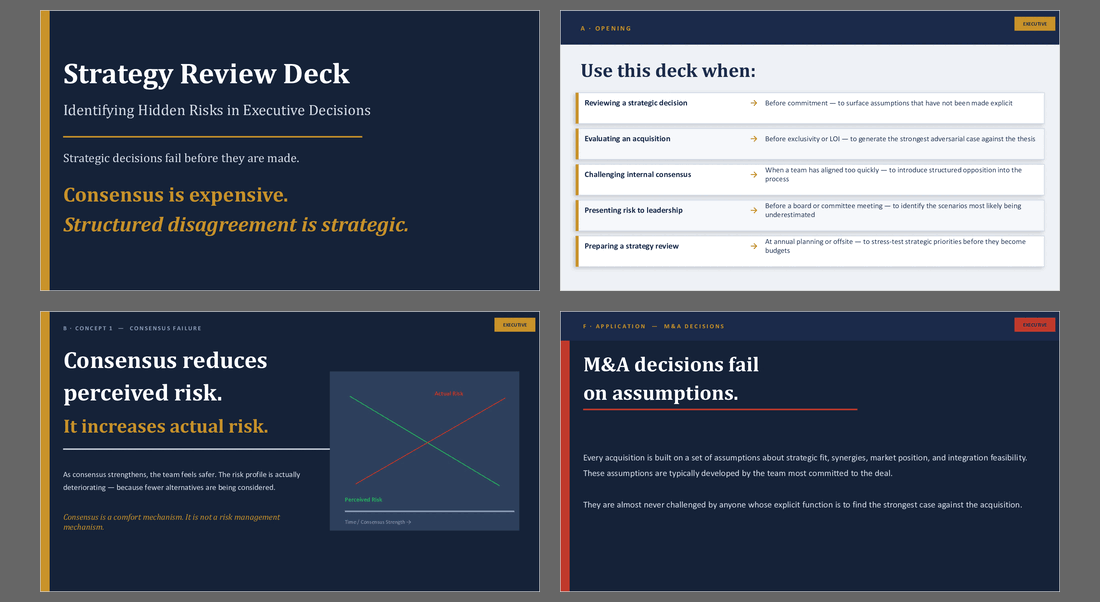
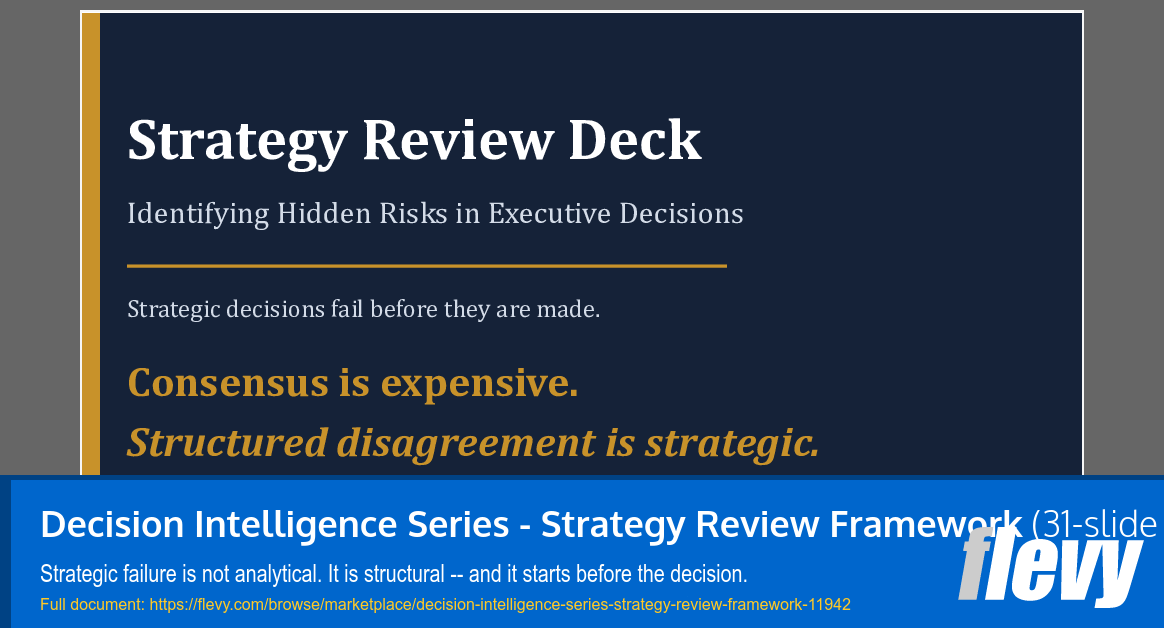
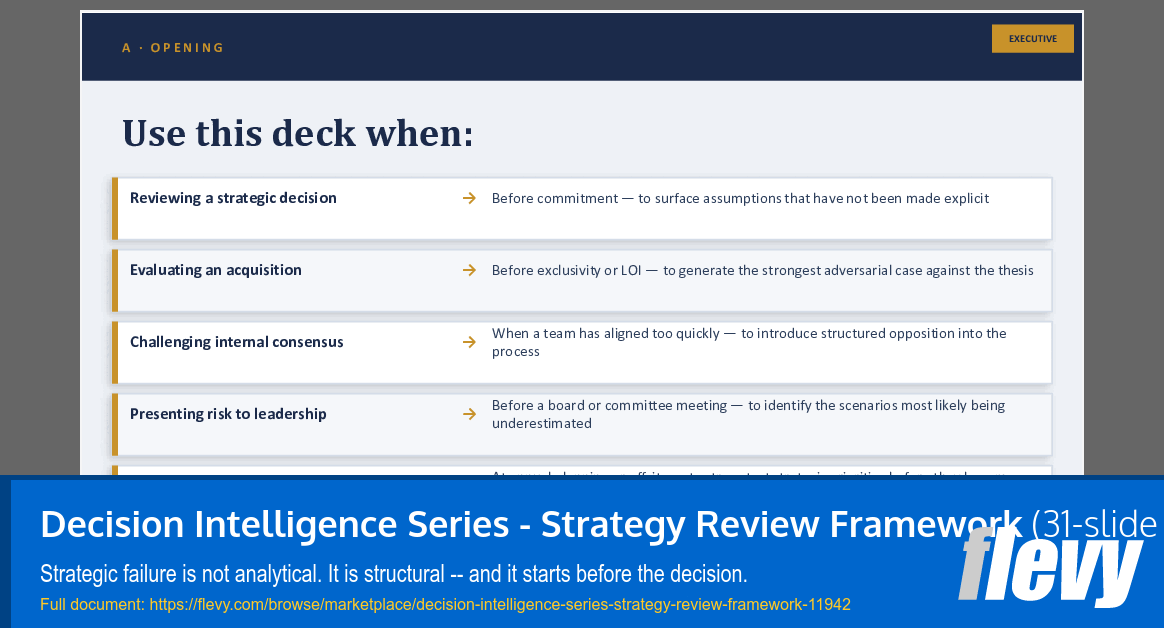
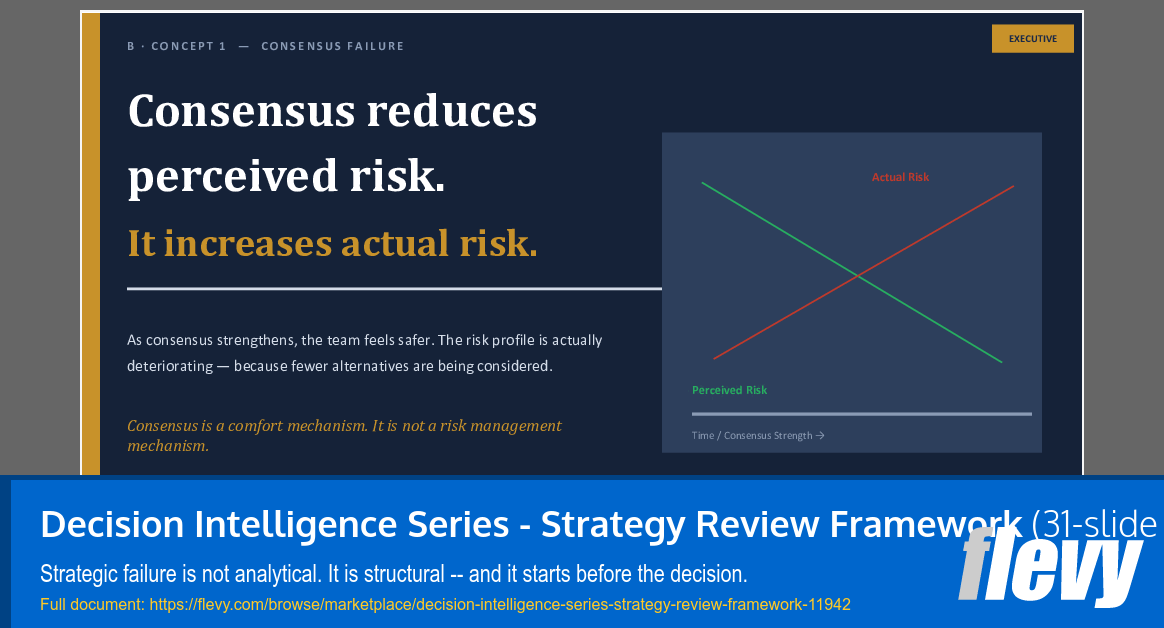
 Click main image to view in full screen.
Decision Intelligence Series - Strategy Review Framework – PowerPoint PPTX Template
PowerPoint (PPTX) 31 Slides


BENEFITS OF THIS DOWNLOADABLE POWERPOINT DOCUMENT
- Provides modular decision frameworks that systematically surface hidden assumptions, generate adversarial counter-theses, and expose narrative gaps -- reducing the risk of consensus-driven strategic error.
- Enables targeted deployment at critical decision points or integration into existing workflows -- without requiring full process redesign, while still supporting a scalable decision architecture.
- Shifts decision-making from analysis quality to structural challenge -- embedding repeatable mechanisms that improve judgment across decisions, teams, and strategic contexts.
DECISION MAKING PPT TEMPLATE DESCRIPTION
Most strategic failures are not execution failures. They are assumption failures.
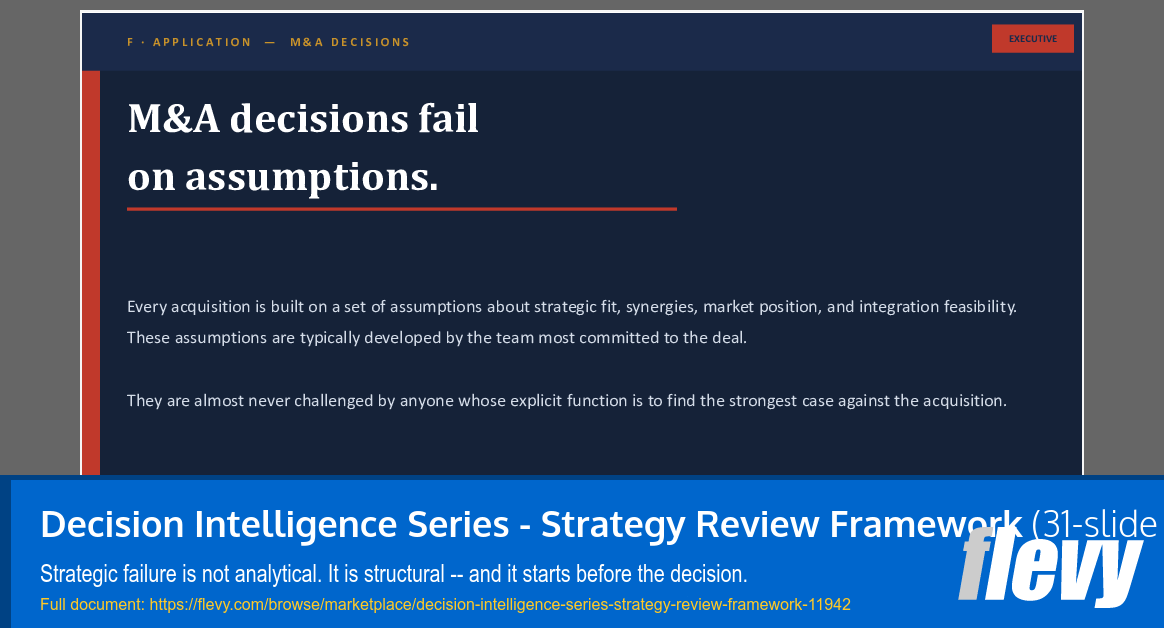
Strategic decisions fail before they are made. Not because the analysis was wrong, but because the assumptions driving the analysis were never made explicit. They were never challenged. And in most organizations, no one is assigned the function of challenging them.
This deck provides a structured framework for surfacing hidden assumptions, introducing adversarial challenge, and improving decision quality before capital, time, or reputation is committed.
The framework addresses three structural problems that occur in virtually every high-stakes decision process.
First: consensus reduces perceived risk while increasing actual risk. As alignment strengthens, fewer alternatives are considered, fewer assumptions are examined, and the decision becomes progressively more fragile.
Second: AI-assisted analysis accelerates consensus rather than challenging it. Tools trained on public data produce fluent, confident summaries of what the market already believes. This makes expensive strategic mistakes more structured, not less likely.
Third: more information does not improve decisions. In high-volume environments, the variables that actually change the decision outcome are buried under dozens of data points with no probability impact.
The deck introduces three core challenge questions. What if we are wrong? What actually matters? What are we not seeing? These are translated into modular challenge frameworks that can be applied independently or combined as a structured decision process.
Each module targets a specific failure mode: assumption exposure, adversarial testing, and signal compression. They can be deployed as standalone interventions at critical decision points. They can also be integrated into a repeatable decision architecture across teams and workflows.
The framework includes structured application models for M&A evaluation, strategic planning, and risk assessment. Each application section provides situation-specific challenge protocols with defined outputs: adversarial briefs, assumption registers, blind spot maps, and compressed signal sets.
This is not a presentation template. It is a working decision tool. It is designed to be used directly in strategy reviews, deal evaluations, investment committee presentations, and board preparation sessions.
The deck contains 30 slides organized across five sections: opening context, consensus failure mechanisms, adversarial thinking principles, decision overload and signal compression, and full application frameworks for M&A, strategy, and risk decisions.
Structured disagreement is not pessimism. It is the most reliable mechanism for improving the quality of decisions before they become irreversible.
Got a question about the product? Email us at support@flevy.com or ask the author directly by using the "Ask the Author a Question" form. If you cannot view the preview above this document description, go here to view the large preview instead.
Source: Best Practices in Decision Making PowerPoint Slides: Decision Intelligence Series - Strategy Review Framework PowerPoint (PPTX) Presentation Slide Deck, Decision Intelligence Architect
ABOUT THE AUTHOR

I work at the intersection of decision intelligence, strategic analysis, and AI-driven thesis stress-testing, with a focus on improving judgment in high-stakes environments.
The emphasis is not domain expertise, but decision quality - challenging assumptions, identifying blind spots, and exposing hidden risks before capital, time, or reputation is committed.
My frameworks are designed for
... [read more]
Ask the Author a Question
You must be logged in to contact the author.




























