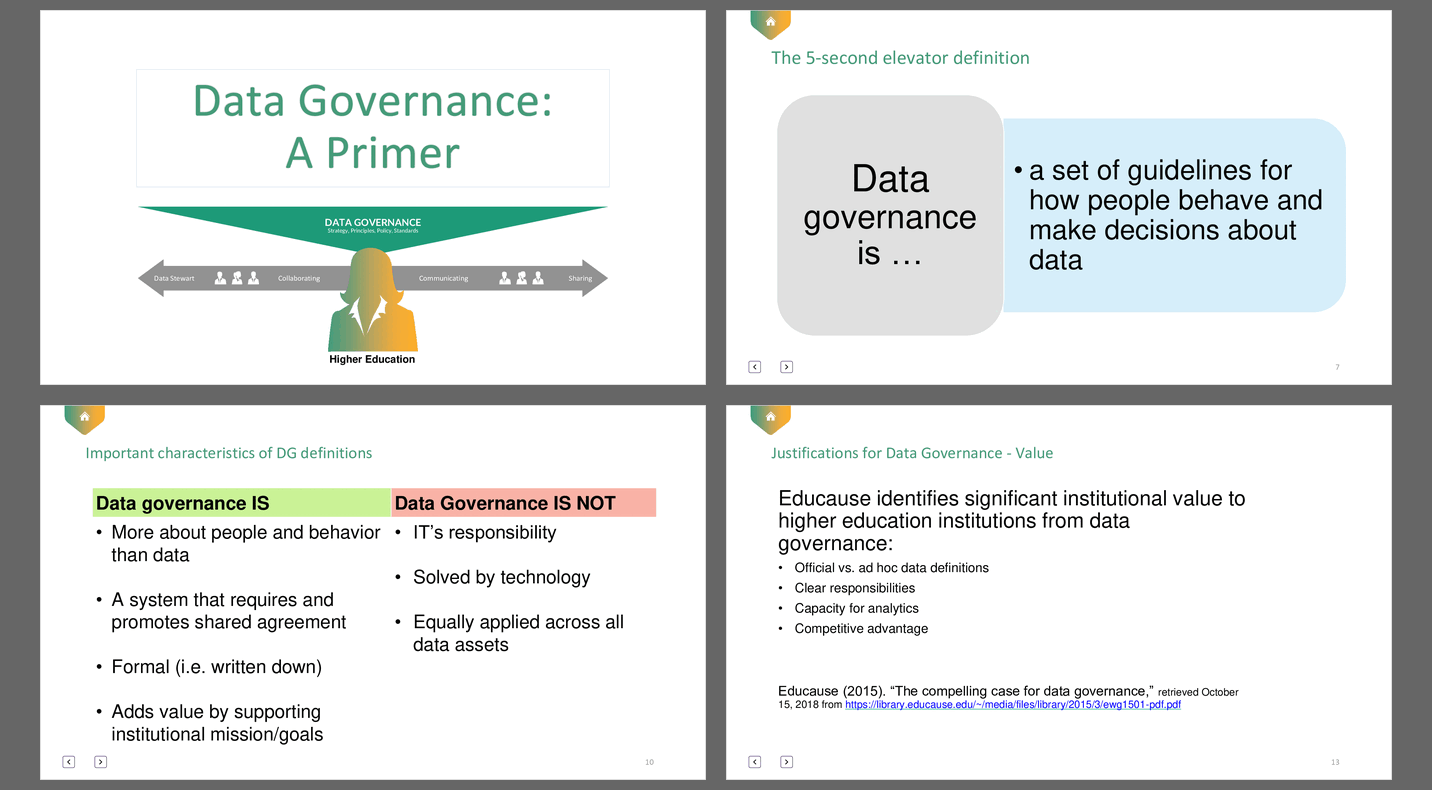

Demystifying Data Governance:
Imagine data governance as the orchestra conductor of the digital age. It's the harmonious execution and enforcement of authority over the management of data and data-related assets. It ensures that every note in the symphony of data is played to perfection.
Deciphering the Code:
In the labyrinth of data, data governance is your compass. It specifies decision rights and crafts an accountability framework that guides behavior in every phase of the data lifecycle. From creation to archiving, it's the vigilant guardian of information.
Crafting a Data Governance Ecosystem:
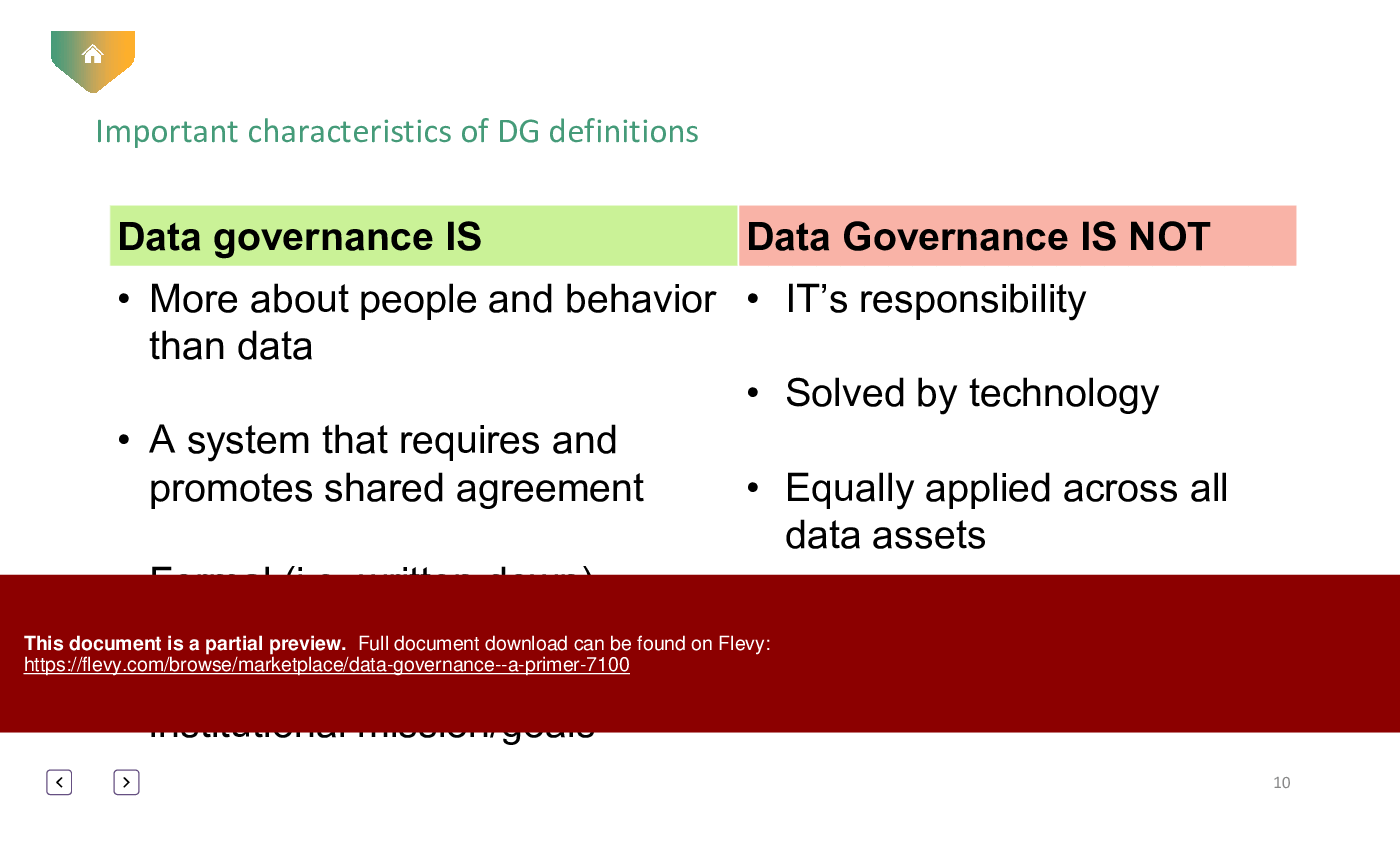
Data governance is more than just a set of rules; it's a complete system. It's a network of decision rights and accountabilities that orchestrates information-related processes. Within this ecosystem, agreed-upon models define who wields power over what information, when, and how.
Charting the Path to Data Governance Success:
Our presentation is your roadmap to understanding data governance. It separates myth from reality, illuminating what data governance is and isn't. It equips you with compelling talking points and sound justifications to persuade senior leadership to invest political, human, and economic capital in data governance.
The Higher Education Connection:
For those in higher education, we delve deep into the structures of data governance systems tailored to your unique needs. We provide an insightful exploration of data governance maturity models, offering guidance on how to assess and enhance data governance within your institution.
Putting People at the Center:
Data governance is ultimately about people. It's about fostering a culture of responsible data management. This presentation is your key to unlocking the full potential of data governance, bridging the gap between data and effective decision-making.
Got a question about the product? Email us at support@flevy.com or ask the author directly by using the "Ask the Author a Question" form. If you cannot view the preview above this document description, go here to view the large preview instead.
Executive Summary
The "Data Governance: A Primer" presentation provides a comprehensive overview of data governance tailored for higher education institutions. It emphasizes the importance of human behavior in data governance, outlining key components such as policies, standards, and accountability frameworks. This resource equips institutional leaders with the knowledge to advocate for data governance initiatives, assess current practices using maturity models, and develop actionable plans to enhance data management and integrity.
Who This Is For and When to Use
• Data Governance Officers and Managers responsible for implementing governance frameworks.
• Senior Leadership teams seeking to understand the value of data governance.
• IT and Data Management professionals involved in data stewardship and quality assurance.
• Change Management practitioners focused on fostering a data-driven culture within institutions.
Best-fit moments to use this deck:
• During strategic planning sessions to align data governance with institutional goals.
• At workshops aimed at building awareness and support for data governance initiatives.
• When assessing current data governance practices and identifying gaps.
Learning Objectives
• Define data governance as a human-centered activity focused on behavior.
• Describe major components of data governance activities.
• Articulate campus-specific challenges and how data governance addresses them.
• Assess campus culture using a data governance maturity model.
• Identify characteristics of effective data governance systems and outline integration strategies.
• Discuss the role of technology in supporting,, but not replacing, data governance.
• Explain change management principles relevant to higher education.
• Construct actionable plans to advance data governance initiatives.
Table of Contents
• Data Governance Concepts and Major Aspects (page 2)
• Justifications for Data Governance (page 12)
• Key Features of Data Governance Systems (page 23)
• Principles and Values of Data Governance (page 24)
• Data Stewardship Definitions (page 38)
• Data Governance Maturity Models (page 47)
• Change Management in Higher Education (page 52)
• Technological Solutions for Data Governance (page 62)
Primary Topics Covered
• Data Governance Definitions - Various definitions highlight the importance of authority and accountability in managing data assets.
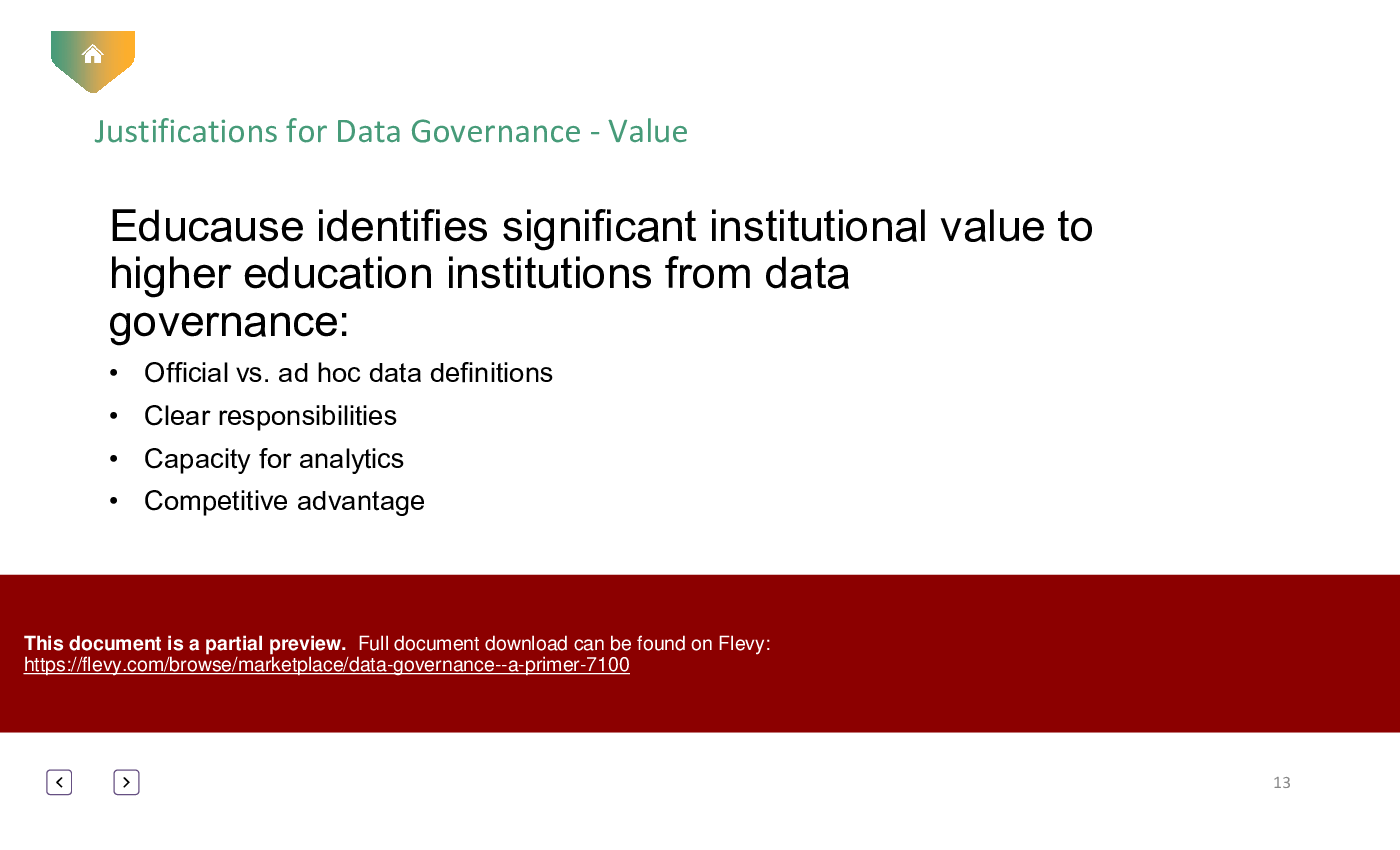
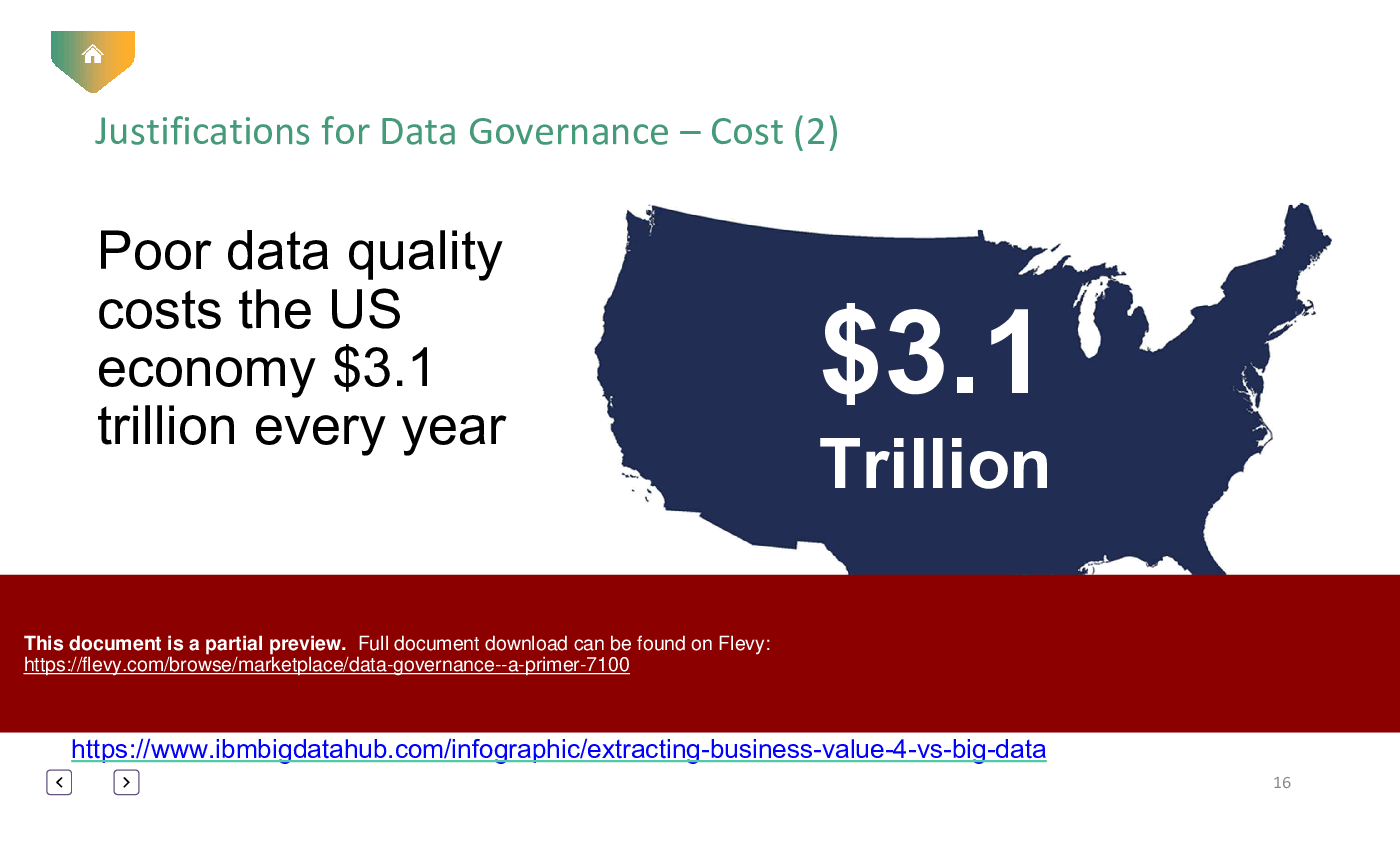
• Justifications for Data Governance - Explains the value, cost, and risk factors that necessitate robust data governance frameworks in higher education.
• Key Features of Data Governance - Outlines essential documents, groups, and individual roles necessary for effective governance.
• Principles and Values - Establishes guiding principles that support the implementation and maintenance of data governance.
• Data Stewardship - Discusses the roles and responsibilities of data stewards in managing data assets.
• Maturity Models - Provides a framework for assessing the current state of data governance and planning for improvements.
• Change Management - Details the elements necessary for successful change management in higher education contexts.
• Technological Solutions - Identifies technology applications that can support data governance efforts.
Deliverables, Templates, and Tools
• Data governance framework template for defining roles and responsibilities.
• Maturity model assessment tool for evaluating current data governance practices.
• Communication plan template for promoting data governance initiatives.
• Data stewardship roles and responsibilities matrix for clarity in governance structures.
• Action plan outline for advancing data governance activities on campus.
• Checklist for assessing technology needs in support of data governance.
Slide Highlights
• Overview of data governance concepts and their relevance to higher education.
• Justifications for data governance emphasizing value, cost, and risk.
• Key features of effective data governance systems and their components.
• Principles and values that guide data governance practices.
• Maturity model for assessing and improving data governance.
Potential Workshop Agenda
Introduction to Data Governance (60 minutes)
• Overview of data governance concepts and importance.
• Discussion on institutional challenges and opportunities.
Data Governance Assessment (90 minutes)
• Conduct a maturity model assessment of current practices.
• Identify gaps and areas for improvement.
Action Planning Session (60 minutes)
• Develop actionable plans to enhance data governance.
• Assign roles and responsibilities for implementation.
Customization Guidance
• Tailor the data governance framework to align with institutional mission and goals.
• Modify the maturity model assessment to reflect specific campus contexts.
• Adapt communication strategies to engage stakeholders effectively.
Secondary Topics Covered
• The role of data governance in enhancing institutional effectiveness.
• The impact of data quality on decision-making processes.
• Strategies for fostering a data-driven culture within institutions.
• The importance of transparency and accountability in data governance.
Topic FAQ
Document FAQ
These are questions addressed within this presentation.
What is data governance?
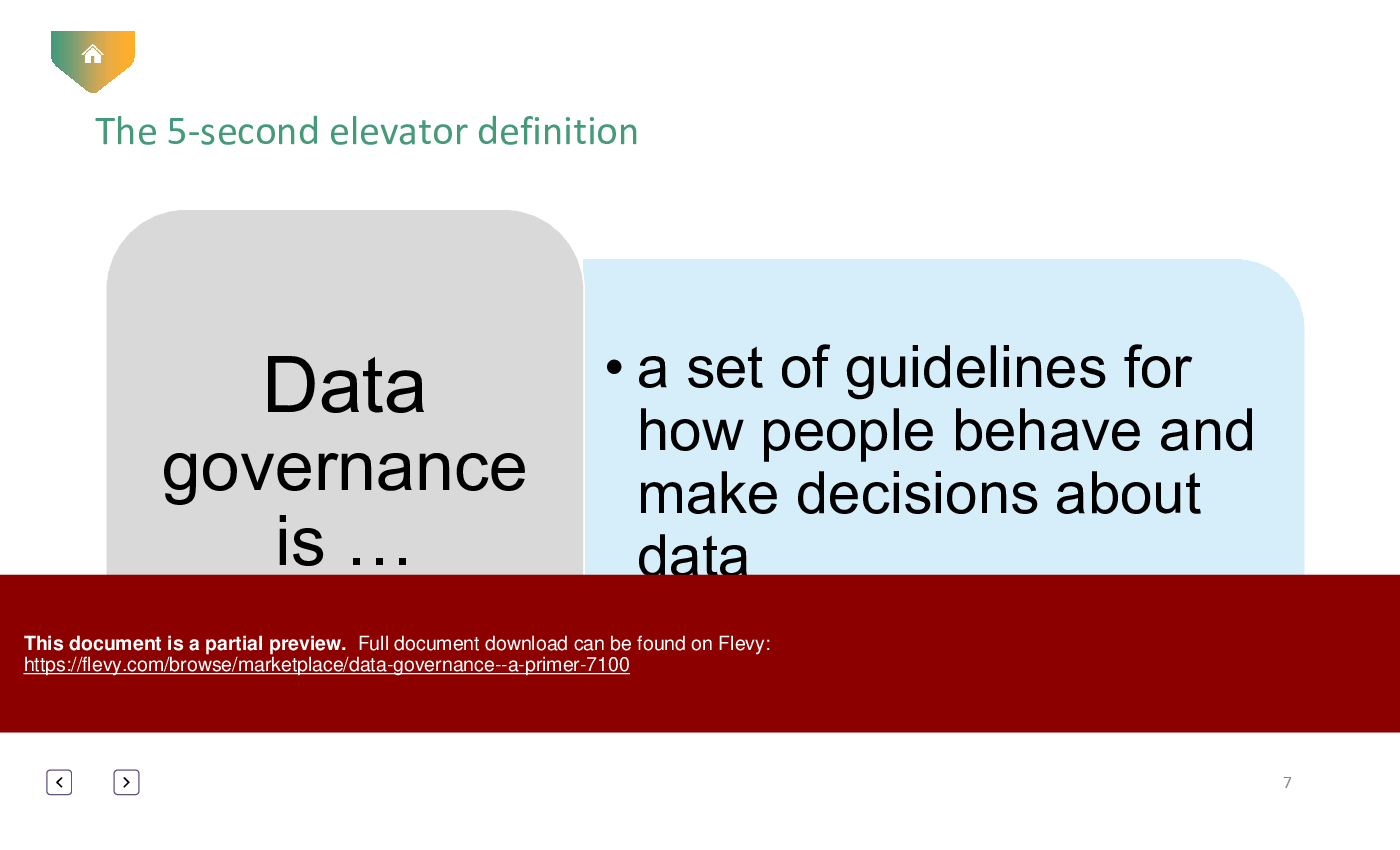
Data governance is the execution and enforcement of authority over the management of data and data-related assets, focusing on decision rights and accountability.
Why is data governance important in higher education?
Data governance enhances institutional effectiveness by ensuring data integrity, promoting clear responsibilities, and enabling analytics for informed decision-making.
How can we assess our current data governance practices?
Utilize a maturity model to evaluate existing practices, identify gaps, and measure progress toward an optimized data governance framework.
What roles do data stewards play?
Data stewards are responsible for overseeing data management, ensuring data quality, and facilitating communication regarding data usage and policies.
How does technology support data governance?
Technology can assist with data dictionary management, data quality analysis, and issue management,, but it cannot replace the need for organizational structures and accountability.
What are the key principles of effective data governance?
Key principles include consistency, quality, accountability, business alignment, and access control to ensure data is treated as a valuable asset.
How can we engage senior leadership in data governance initiatives?
Present clear justifications for data governance that highlight its value, cost savings, and risk mitigation to secure buy-in from senior leaders.
What challenges might we face in implementing data governance?
Challenges may include resistance to change, lack of awareness, and insufficient resources for effective implementation.
Glossary
• Data Governance - The framework for managing data assets, including authority and accountability.
• Data Steward - An individual responsible for managing and overseeing data quality and usage.
• Maturity Model - A tool for assessing the current state of data governance practices.
• Data Quality - The accuracy, completeness, and reliability of data.
• Change Management - The process of managing organizational change to improve data governance.
• Data Dictionary - A centralized repository of data definitions and standards.
• Accountability - The obligation to report on data management practices and outcomes.
• Transparency - The clarity and openness in data governance processes and decisions.
• Stakeholder Engagement - Involving relevant parties in the data governance process to ensure buy-in and support.
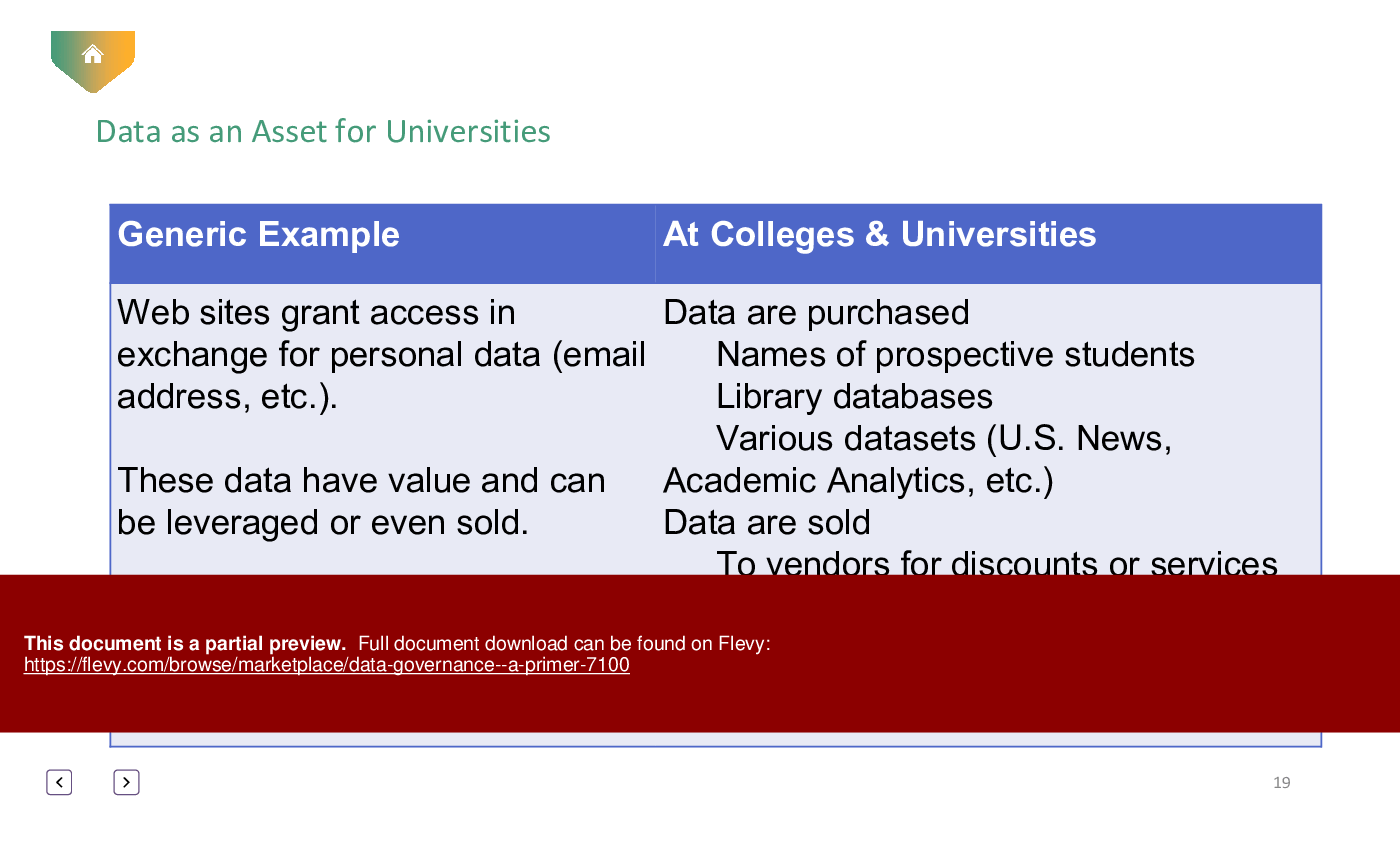
• Data Asset - Any data that holds value for an organization and requires governance.
• Compliance - Adhering to legal and regulatory requirements related to data management.
• Data Integrity - The accuracy and consistency of data throughout its lifecycle.
Source: Best Practices in Data Governance PowerPoint Slides: Data Governance - A Primer PowerPoint (PPTX) Presentation Slide Deck, RadVector Consulting
|
Download our FREE Digital Transformation Templates
Download our free compilation of 50+ Digital Transformation slides and templates. DX concepts covered include Digital Leadership, Digital Maturity, Digital Value Chain, Customer Experience, Customer Journey, RPA, etc. |










