
 Click main image to view in full screen. Unlock all 12 preview images:
Cybersecurity Program Maturity Assessment Model (CPMM) – PowerPoint PPTX Template
PowerPoint (PPTX) 60 Slides


MATURITY MODEL PPT TEMPLATE DESCRIPTION
The Evolution of Cybersecurity Program Maturity Models (CPMMs)
Chapter 1: Understanding Cybersecurity Maturity
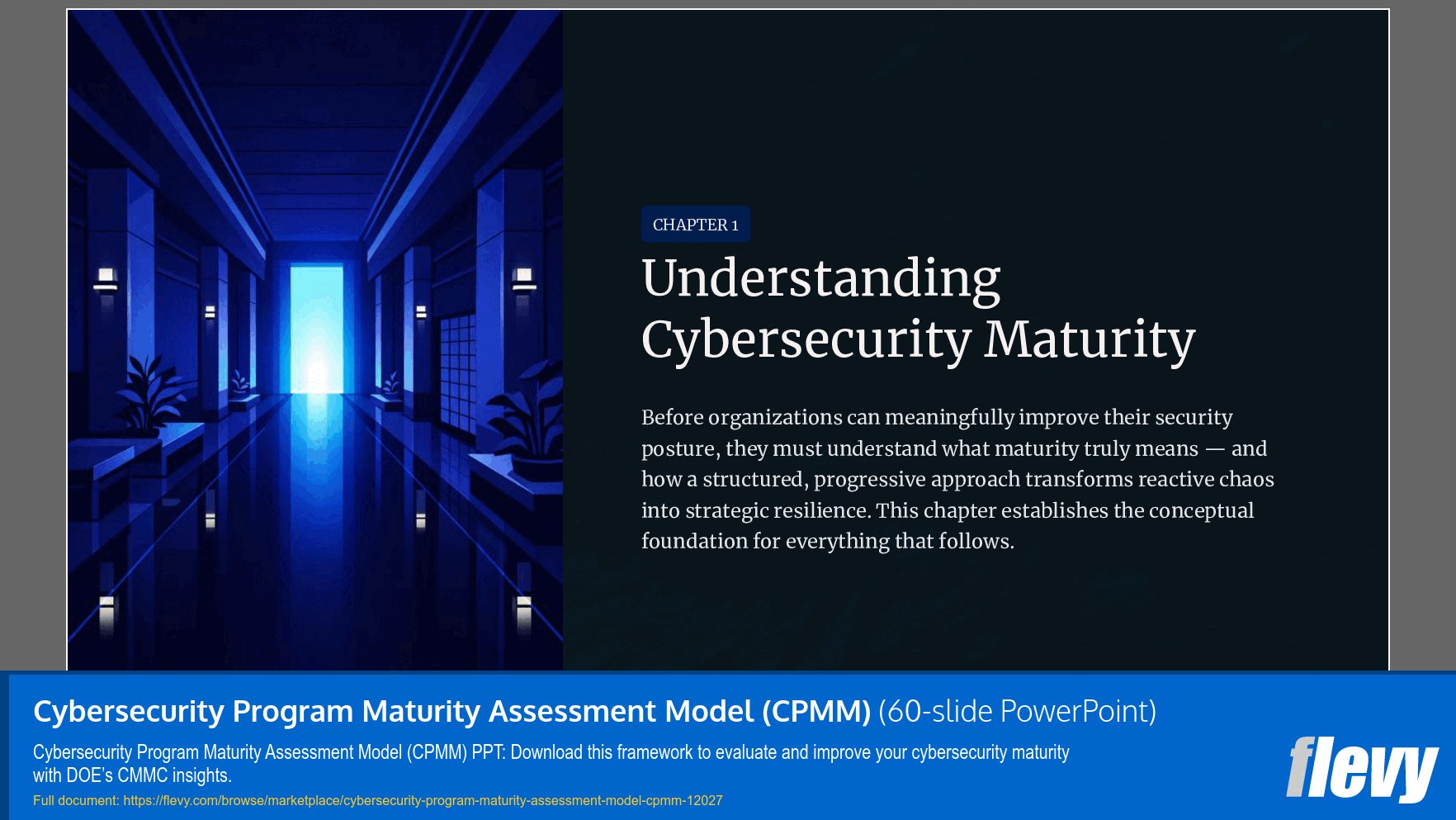
What is Cybersecurity Maturity?
• Moving beyond basic security to a proactive, optimized, and continuously improving posture.
• A measure of an organization's ability to anticipate, withstand, recover from, and adapt to adverse cyber events.
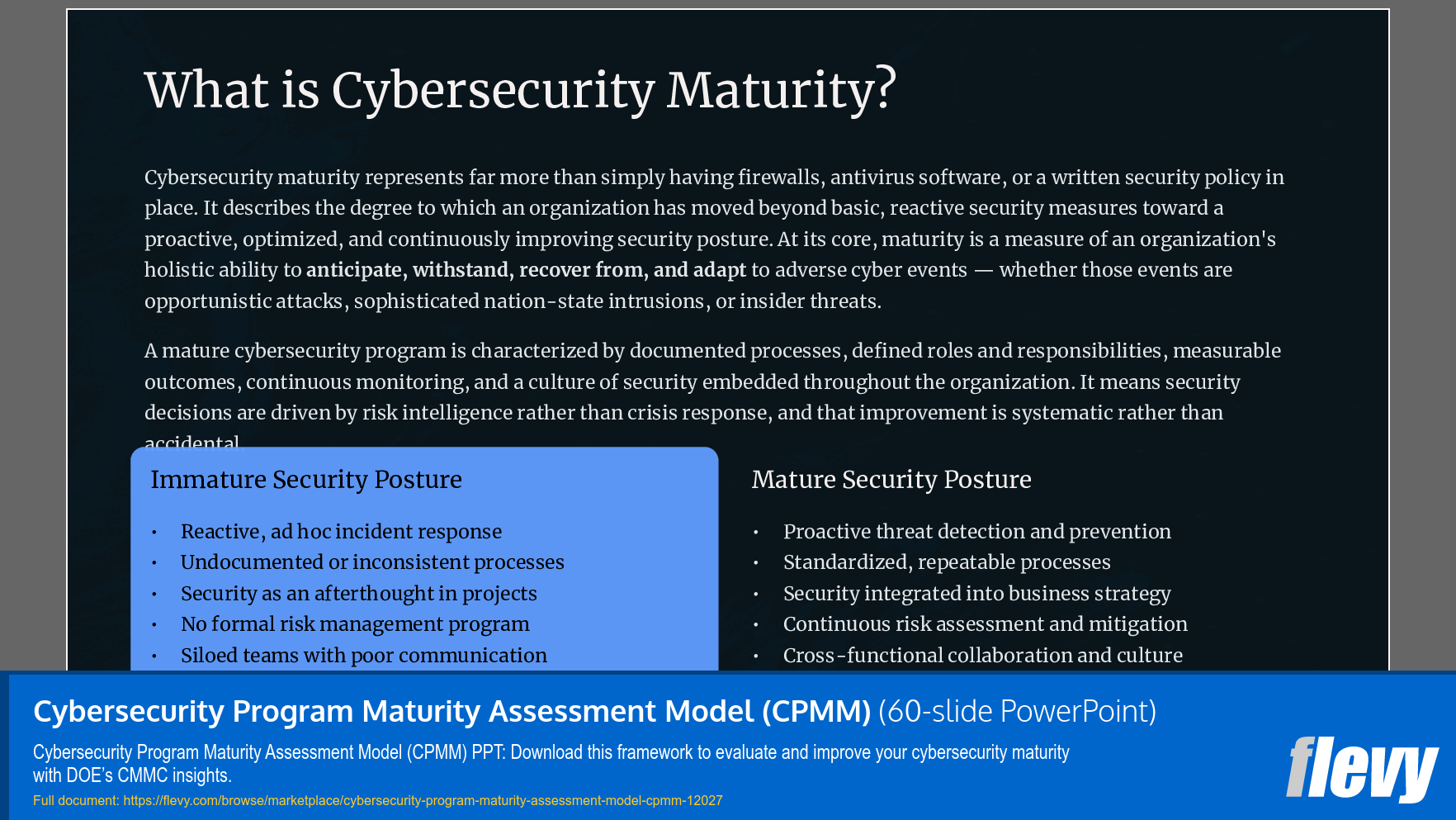
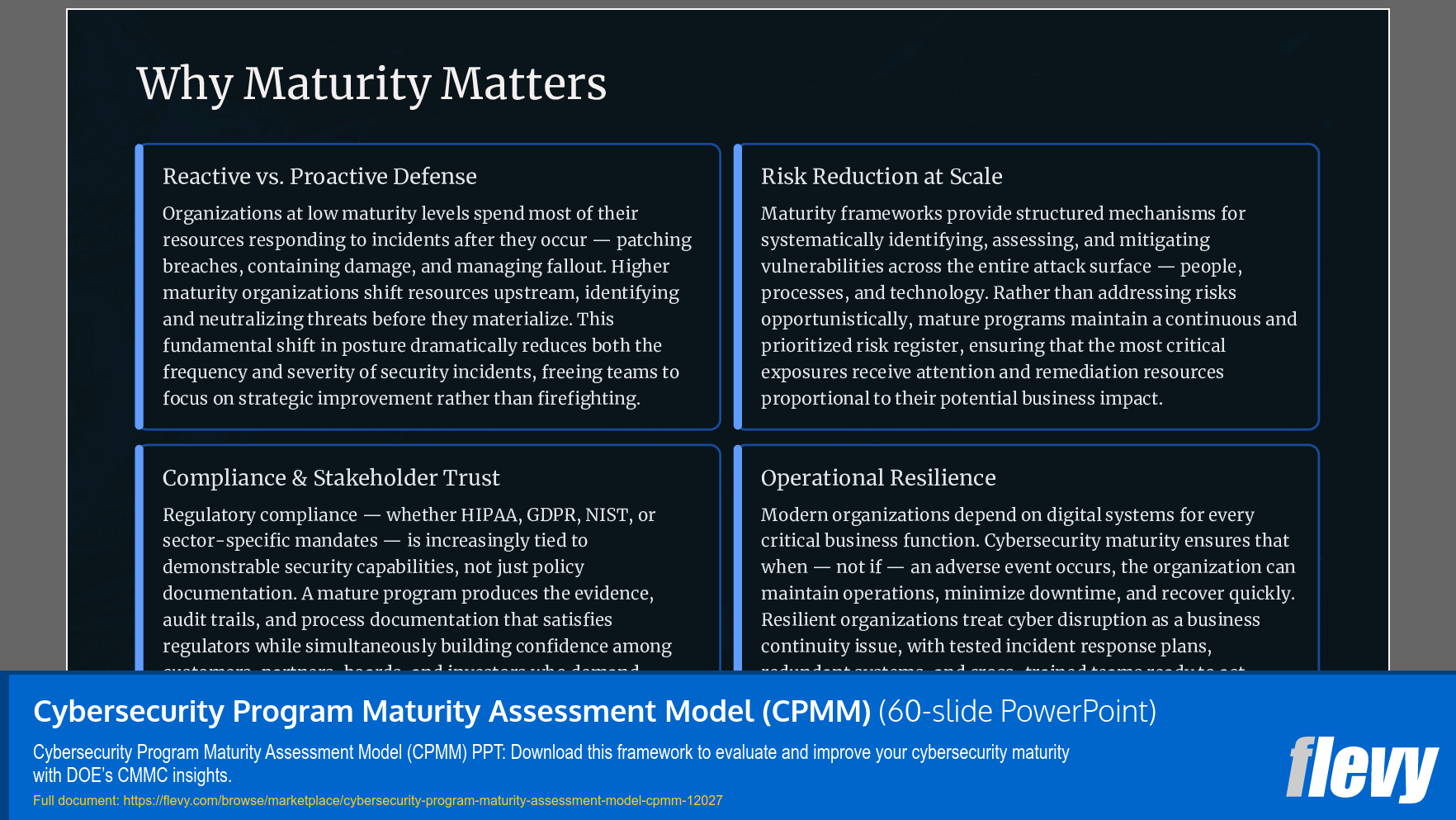
Why Maturity Matters
• Reactive vs. Proactive: From ad hoc responses to strategic defense.
• Risk Reduction: Identifying and mitigating vulnerabilities before they are exploited.
• Compliance & Trust: Meeting regulatory requirements and building stakeholder confidence.
• Operational Resilience: Ensuring business continuity in the face of cyber threats.
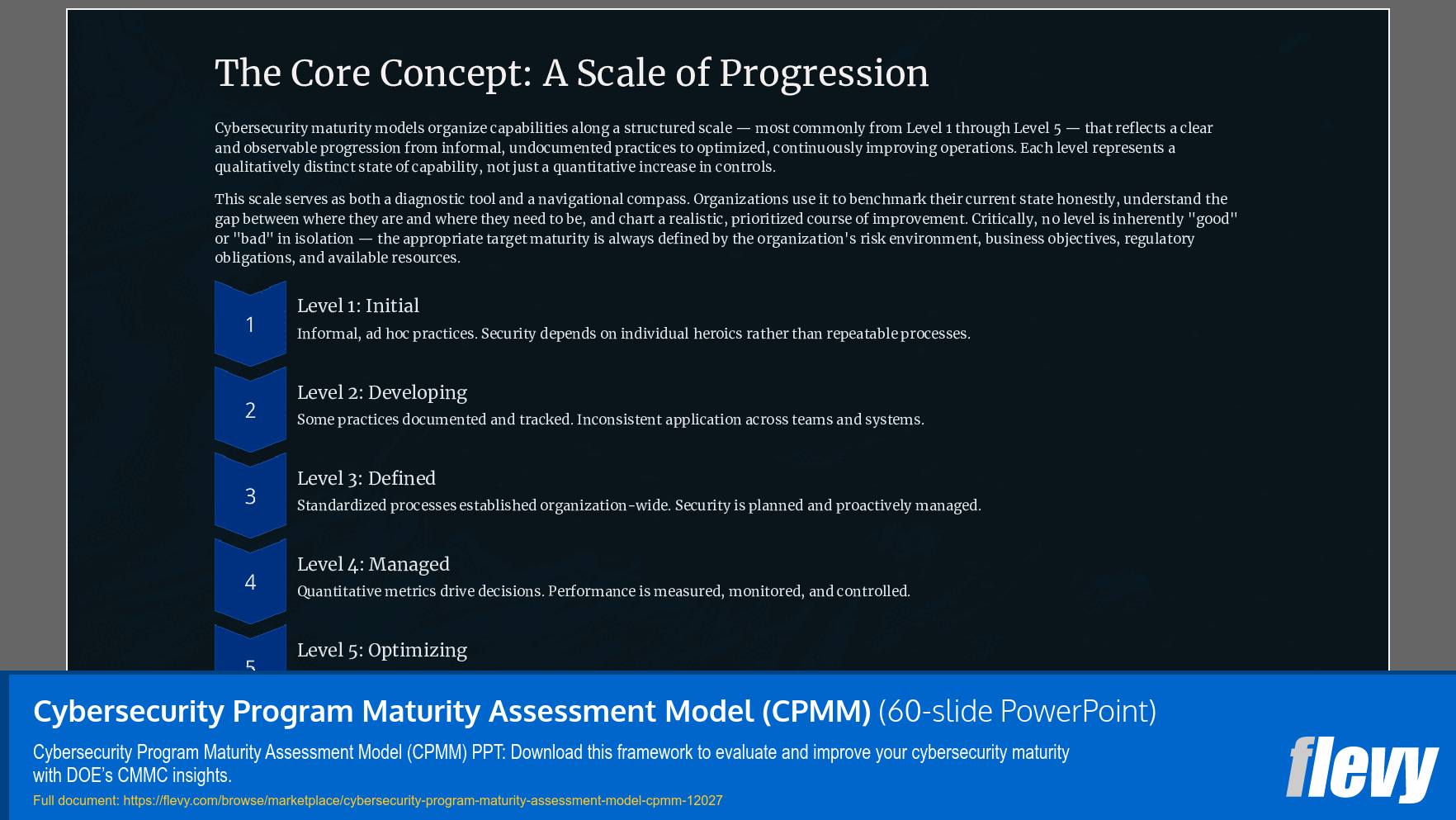
The Core Concept: A Scale of Progression
• Maturity models rate capabilities on a scale, typically 1-5.
• This scale reflects progression from initial, informal practices to optimized, continuously improving operations.
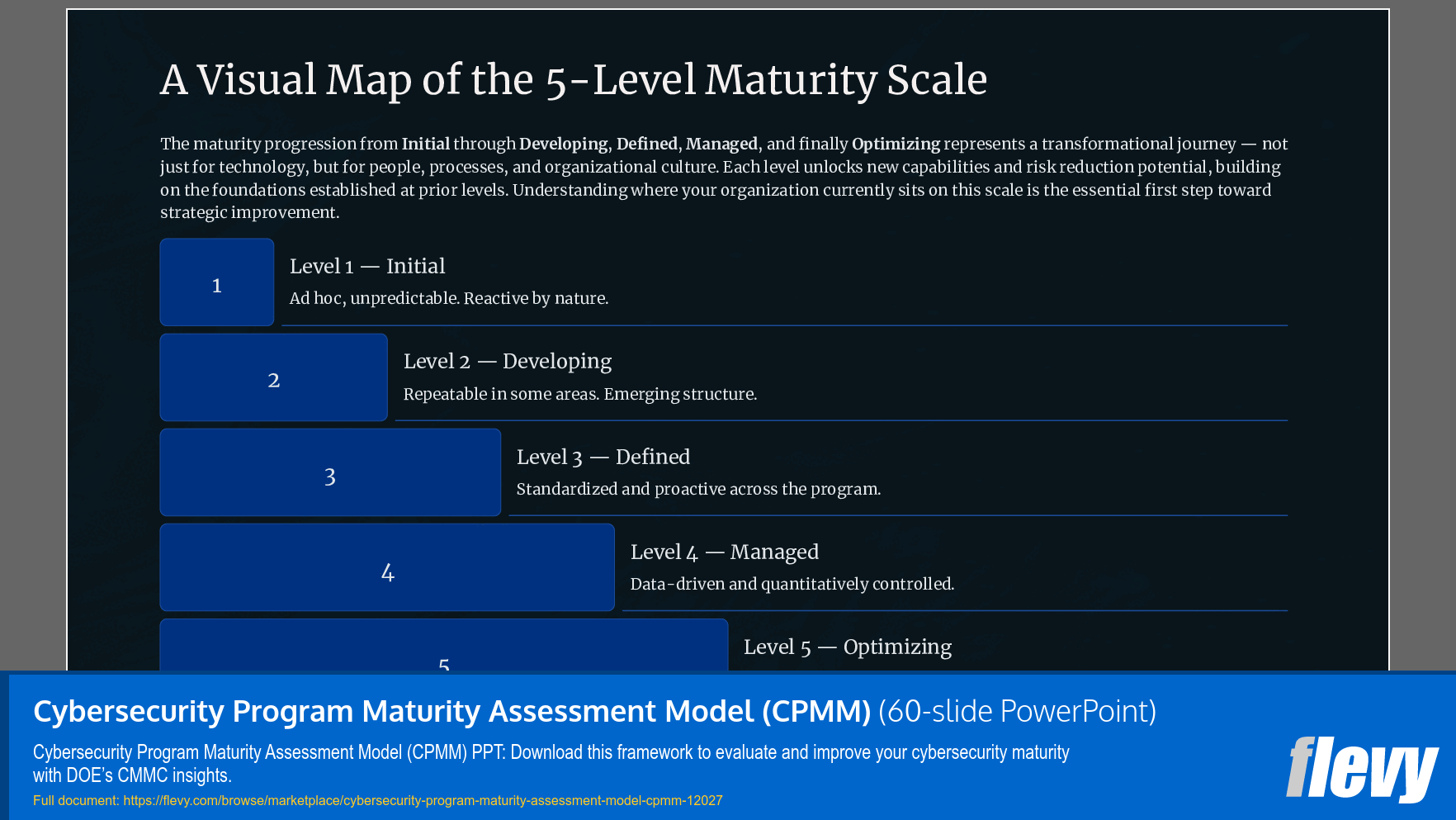
[image] A visual representation of a 5-level maturity scale: Initial, Developing, Defined, Managed, Optimizing.
Chapter 2: Foundational Maturity Models
The Genesis: Capability Maturity Models (CMMs)
• Originating from software engineering (e.g., CMMI).
• Focus on process improvement and predictable outcomes.
• Adapted to cybersecurity to assess and enhance program effectiveness.
Key Components of a Maturity Model
• Levels: Defining distinct stages of maturity.
• Domains/Objectives: Categorizing areas of focus (e.g., governance, technology, people).
• Practices/Controls: Specific actions and capabilities within each domain.
• Appraisal Methods: How maturity is assessed and scored.
• Improvement Roadmaps: Guidance for advancing to higher levels.
[image] A diagram showing the relationship between Levels, Domains, and Practices in a maturity model.
Chapter 3: The Cybersecurity Capability Maturity Model (C2M2)
C2M2: A Model for Critical Infrastructure
• Developed by the U.S. Department of Energy.
• Focuses on improving cybersecurity programs for critical infrastructure organizations.
• Aims to strengthen operational resilience against cyber threats.
C2M2 Version 2.0 (July 2021)
• Intended Scope: Organizations of all sectors, types, and sizes.
• Core Focus: Implementation and management of cybersecurity practices for information, IT, and OT assets.
• Key Objectives:
• Strengthen cybersecurity capabilities.
• Enable effective evaluation and benchmarking.
• Share knowledge and best practices.
• Prioritize actions and investments.
C2M2 Architecture: Domains, Objectives, and Practices
• Domains: Broad areas of cybersecurity focus.
• Objectives: Specific goals within each domain.
• Practices: Detailed actions to achieve objectives.
• Maturity Indicator Levels (MILs): A scale to measure progress.
C2M2 Maturity Indicator Levels (MILs)
• MIL 0: Not Performed
• MIL 1: Performed Informally
• MIL 2: Planned & Tracked
• MIL 3: Well-Defined
• MIL 4: Quantitatively Controlled
• MIL 5: Continuously Improving (Note: Some C2M2 versions may use a 4-level scale, e.g., 0-3)
Using the C2M2 Model
• Step 1: Perform an Evaluation: Assess current capabilities against model practices.
• Step 2: Analyze Identified Gaps: Pinpoint areas needing improvement.
• Step 3: Prioritize and Plan: Develop a roadmap for advancing maturity.
[image] A flowchart illustrating the C2M2 evaluation and improvement process.
Chapter 4: The Cybersecurity Maturity Model Certification (CMMC)
CMMC: Securing the Defense Industrial Base (DIB)
• Developed by the U.S. Department of Defense (DoD).
• Mandates cybersecurity standards for contractors handling sensitive information.
• Aims to protect Controlled Unclassified Information (CUI) and national security.
CMMC Version 2.0 (December 2021)
• Goal: Protect the DIB from cyber threats.
• Impact: Malicious cyber activity cost the U.S. economy billions annually.
• Focus: Safeguarding intellectual property and sensitive information.
CMMC Levels
• Level 1: Basic Cyber Hygiene (Foundational)
• Level 2: Intermediate Cyber Hygiene (Advanced Foundational)
• Level 3: Advanced/Expert Cyber Hygiene (Expert) (Note: CMMC 2.0 streamlined from 5 levels to 3)
CMMC Domains and Practices
• Domains: Broad categories of cybersecurity controls (e.g., Access Control, Incident Response).
• Practices: Specific actions required within each domain.
• Objectives: The desired outcomes of implementing practices.
[image] A visual representation of the CMMC 2.0 levels and their general focus.
CMMC vs. C2M2: Key Differences
• Target Audience: CMMC for DoD contractors; C2M2 for critical infrastructure.
• Mandate: CMMC is a certification requirement; C2M2 is a guidance model.
• Structure: CMMC focuses on specific practices and levels for compliance; C2M2 offers broader domains and objectives for general improvement.
Chapter 5: Other Notable Maturity Models
Cybersecurity & Data Privacy Capability Maturity Model (C|P-CMM)
• Built into the Secure Controls Framework (SCF).
• Objectives:
• Establish program expectations for CISOs/CPOs/CIOs.
• Guide secure practices in project planning.
• Evaluate third-party service providers.
• Perform due diligence for M&A.
• Levels: 6 levels, from "Not Performed" to "Continuously Improving."
Systems Security Engineering Capability Maturity Model (SSE-CMM)
• Influences the C|P-CMM structure.
• Focuses on demonstrating varying levels of maturity for people, processes, and technology at a control level.
Cyber Resilience Capability Maturity Model (CR-CMM)
• Community-driven framework.
• Goal: Enhance an organization's ability to anticipate, withstand, recover from, and adapt to adverse cyber events.
• Domains: Assesses resilience across ten domains.
• Toolkit: Offers a free assessment toolkit.
[image] A collage of logos or icons representing different maturity models (C2M2, CMMC, C|P-CMM, CR-CMM).
Cybersecurity Capacity Maturity Model for Nations (CMM)
• Developed by the Global Cyber Security Capacity Centre (University of Oxford).
• Focuses on assessing and improving national-level cybersecurity capacity.
• Aims to promote innovative cyberspace for well-being, human rights, and prosperity.
Chapter 6: Applying Maturity Models in Practice
The Assessment Process: A Structured Approach
• Introduction & Company Profile: Setting the context.
• Assessment Questions: Evaluating capabilities across domains (governance, technology, processes, people).
• Results & Recommendations: Identifying gaps and defining target maturity.
Common Use Cases for Maturity Assessments
• Security Program Planning: Identifying gaps and prioritizing investments.
• Board Reporting: Presenting security posture to executives.
• Compliance Readiness: Preparing for regulatory audits.
• Benchmarking: Comparing against industry peers.
• Third-Party Risk Management: Evaluating vendor security.
[image] A dashboard showing assessment results with maturity levels and identified gaps.
Identifying Improvement Areas
• Governance: Policies, risk management, compliance, strategic alignment.
• Technology: Network security, endpoint protection, data security, cloud security.
• Processes: Incident response, vulnerability management, change management, access control.
• People: Training, awareness, roles & responsibilities, security culture.
From Assessment to Action: Building a Roadmap
• Define target maturity levels based on business objectives and risk appetite.
• Prioritize initiatives based on impact, feasibility, and cost.
• Implement changes systematically, tracking progress against the roadmap.
[image] A roadmap visualization showing phased improvements towards higher maturity levels.
Chapter 7: The Impact of Cybersecurity Maturity
Real-World Implications: Beyond Compliance
• Reduced Breach Costs: Mature programs significantly lower the financial impact of incidents.
• Enhanced Reputation: Demonstrating strong security builds trust with customers and partners.
• Competitive Advantage: Robust cybersecurity can be a differentiator in the market.
• Business Enablement: Secure environments allow for innovation and digital transformation.
[image] A graph showing the correlation between cybersecurity maturity and reduced breach costs.
Case Study Snippet: A Healthcare Provider's Journey
• Before: Ad hoc security, high vulnerability scores, frequent minor incidents.
• After: Implemented C2M2 framework, achieved Defined maturity, reduced critical vulnerabilities by 60%, and passed HIPAA audits with ease.
Case Study Snippet: A Defense Contractor's Transformation
• Before: Struggled with NIST 800-171 compliance, faced contract risks.
• After: Adopted CMMC framework, achieved Level 2 certification, secured new DoD contracts, and improved overall security posture.
[image] Before/After visual: A chaotic network diagram vs. a clean, segmented, and secure network diagram.
Chapter 8: The Future of Cybersecurity Maturity
Evolving Threats, Evolving Models
• AI and Machine Learning: Impact on threat detection and response automation.
• Cloud Security: Maturity models adapting to hybrid and multi-cloud environments.
• Zero Trust Architectures: Integrating Zero Trust principles into maturity frameworks.
• Supply Chain Security: Increased focus on third-party risk and resilience.
The Role of Automation and AI
• Automating assessments and continuous monitoring.
• AI-driven insights for proactive threat identification.
• Dynamic adjustment of security controls based on real-time threat intelligence.
[image] Futuristic visualization of AI and automation in cybersecurity operations.
Continuous Improvement: The Ultimate Goal
• Maturity is not a destination, but an ongoing journey.
• Adapting to new threats and technologies is paramount.
• The goal is to achieve a state of adaptive, resilient cybersecurity.
Chapter 9: Conclusion and Call to Action
Key Takeaways
• Cybersecurity maturity is essential for modern organizations.
• Various models (C2M2, CMMC, C|P-CMM, CR-CMM) offer structured approaches.
• Assessments provide a roadmap for improvement.
• Investing in maturity yields significant benefits beyond compliance.
Your Next Steps: Elevate Your Cybersecurity Posture
• Assess: Understand your current maturity level.
• Plan: Define your target maturity and roadmap.
• Implement: Prioritize and execute improvement initiatives.
• Measure: Continuously monitor progress and adapt.
[image] A powerful image symbolizing growth, progress, and security (e.g., a rising graph, a shield with a growing plant).
Thank You & Q&A
Appendix: Glossary of Terms
Appendix: Further Reading & Resources
Appendix: CMMC Domains Overview
Appendix: C2M2 Domains Overview
Appendix: CR-CMM Domains Overview
Appendix: C|P-CMM Levels Explained
Appendix: Common Maturity Scales Compared
Got a question about the product? Email us at support@flevy.com or ask the author directly by using the "Ask the Author a Question" form. If you cannot view the preview above this document description, go here to view the large preview instead.
Source: Best Practices in Maturity Model, Cyber Security PowerPoint Slides: Cybersecurity Program Maturity Assessment Model (CPMM) PowerPoint (PPTX) Presentation Slide Deck, Mohamed Alshamey
ABOUT THE AUTHOR

Senior Consultant in Cybersecurity GRC, Data Governance, Cybersecurity, Privacy, and Data Management, with over 20 years of experience in information technology, consulting, training, and technical capacity building. holds a PhD. In AI & Data Privacy, he has a master's degree in cybersecurity and is currently pursuing research focused on data privacy. possesses extensive expertise in ... [read more]
Ask the Author a Question
You must be logged in to contact the author.




























