 Click main image to view in full screen.
Cybersecurity Incident Response Standard Operating Procedure – Word DOCX
Word (DOCX) 10 Pages


BENEFITS OF THIS DOWNLOADABLE WORD DOCUMENT
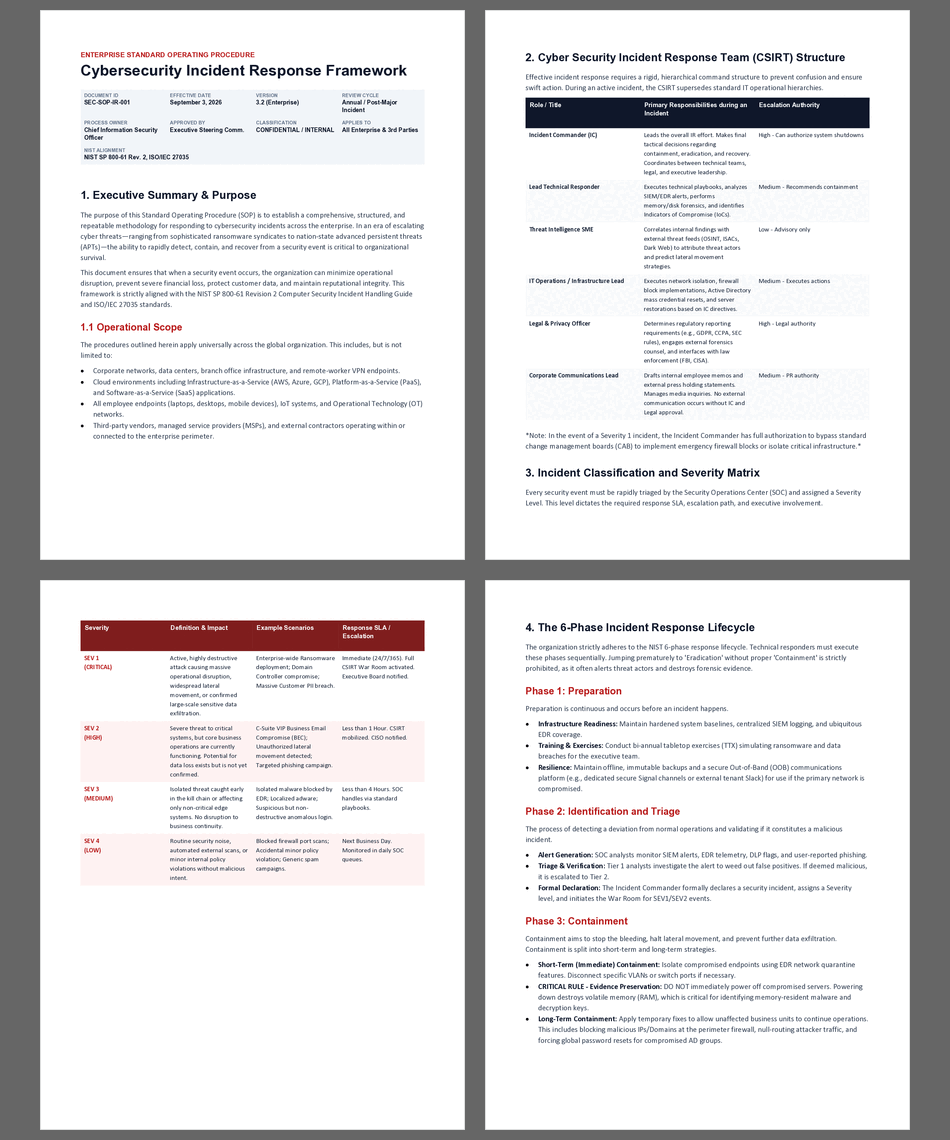
- Provides a structured framework for detecting, containing, investigating, and recovering from cybersecurity incidents across the enterprise.
- Establishes standardized procedures for CSIRT coordination, digital forensics, evidence preservation, regulatory reporting, and threat-specific incident response.
- Enables organizations to strengthen cyber resilience, reduce incident impact, accelerate recovery, and improve cybersecurity response through measurable KPIs and lessons learned.
CYBER SECURITY WORD DESCRIPTION
Curated by McKinsey-trained Executives
🚨 ENTERPRISE CYBERSECURITY INCIDENT RESPONSE SOP – THE COMPLETE FRAMEWORK FOR CYBER INCIDENT DETECTION, TRIAGE, CONTAINMENT, FORENSICS, RECOVERY & REGULATORY RESPONSE
⚡ STOP LETTING CYBERSECURITY INCIDENTS BECOME OPERATIONAL, FINANCIAL, LEGAL OR REPUTATIONAL DISASTERS.
Ransomware. Data breaches. Business Email Compromise. Credential theft. Insider threats. Lateral movement. APTs. Cloud compromise. DDoS attacks. Sensitive data exfiltration.
Every minute of delayed incident response increases enterprise risk.
🔥 INTRODUCING: THE ENTERPRISE CYBERSECURITY INCIDENT RESPONSE FRAMEWORK
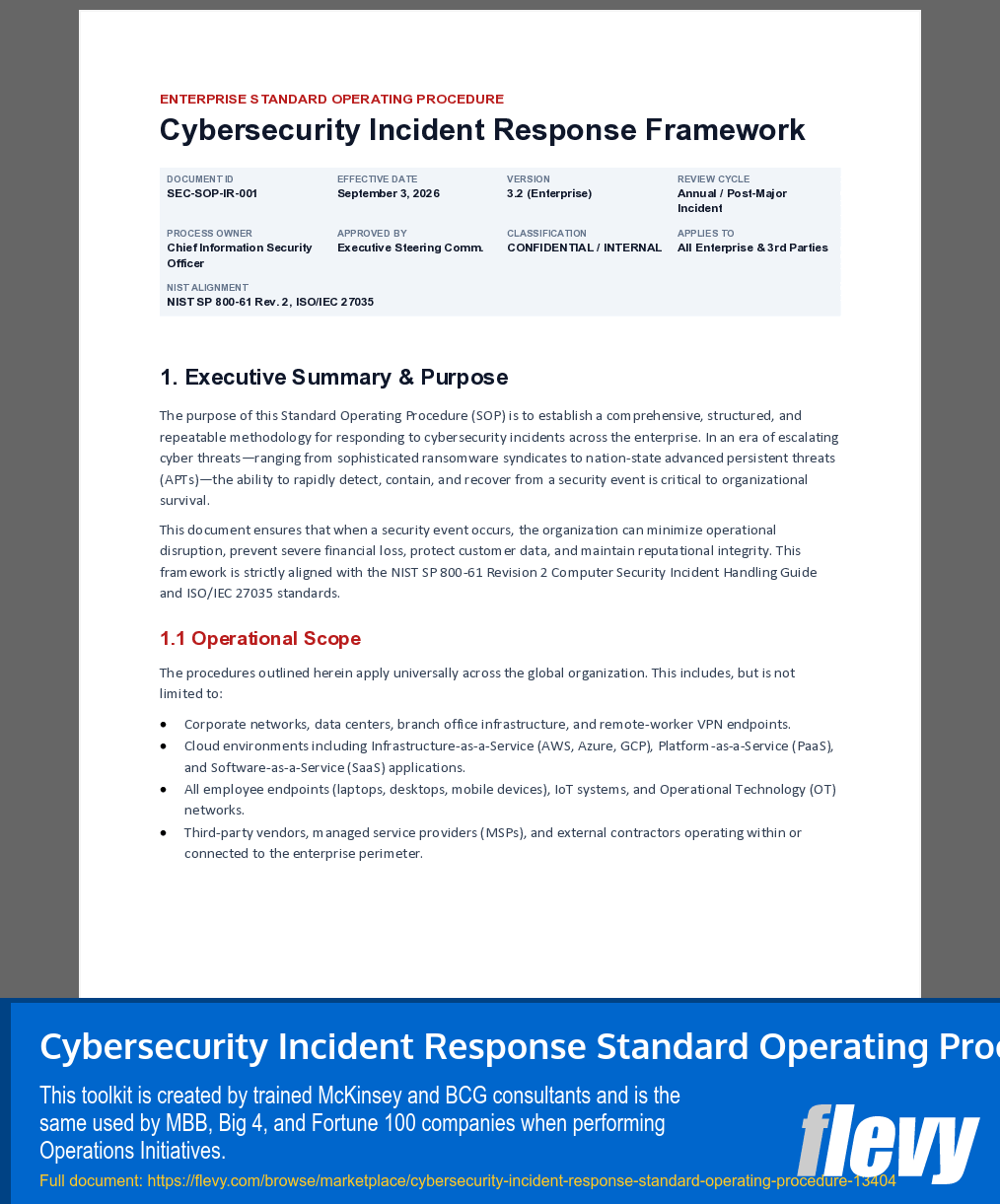
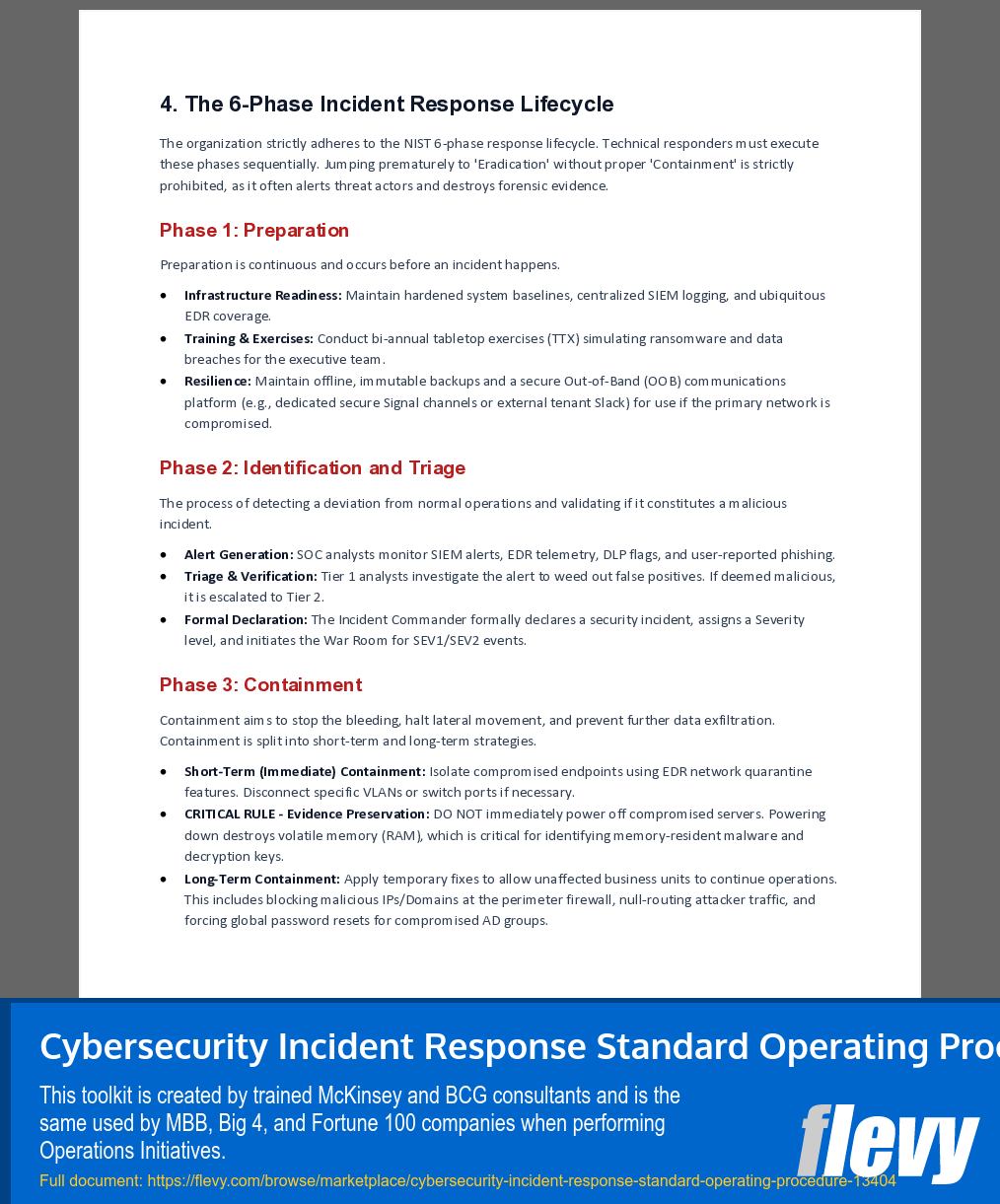
A complete, structured and repeatable Cybersecurity Incident Response SOP designed to help organizations detect, investigate, contain, eradicate and recover from cybersecurity incidents.
PREPARE → IDENTIFY → TRIAGE → CONTAIN → ERADICATE → RECOVER → LEARN
Built around the NIST SP 800-61 Rev. 2 incident handling lifecycle and aligned with ISO/IEC 27035 principles.
Designed for enterprises that need a standardized approach to Cyber Incident Response, Security Operations, Digital Forensics, Incident Management, Data Breach Response, Ransomware Response and Cybersecurity Governance.
🚨 THE ENTERPRISE CYBER INCIDENT RESPONSE FRAMEWORK
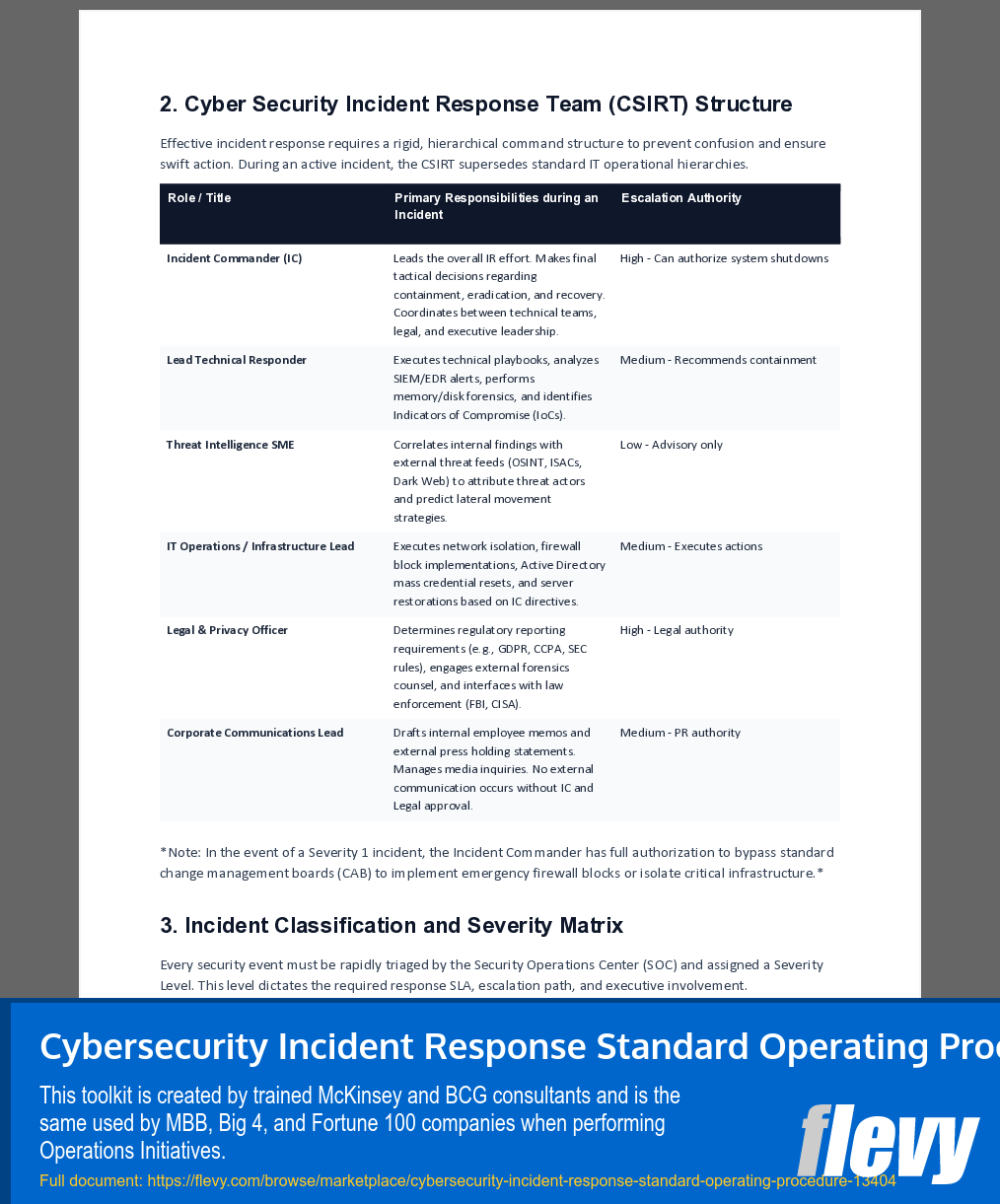
1. INCIDENT RESPONSE GOVERNANCE & CSIRT COMMAND
Establish a clear incident command structure before a major cyberattack occurs.
Define responsibilities for:
Incident Commander • Technical Responders • Threat Intelligence • IT Operations • Legal & Privacy • Corporate Communications
Establish escalation authority, executive notification procedures and emergency decision-making protocols.
For critical incidents, empower the Incident Commander to execute emergency containment actions without waiting for normal change-management cycles.
NO CONFUSION. NO DELAY. NO UNCONTROLLED RESPONSE.
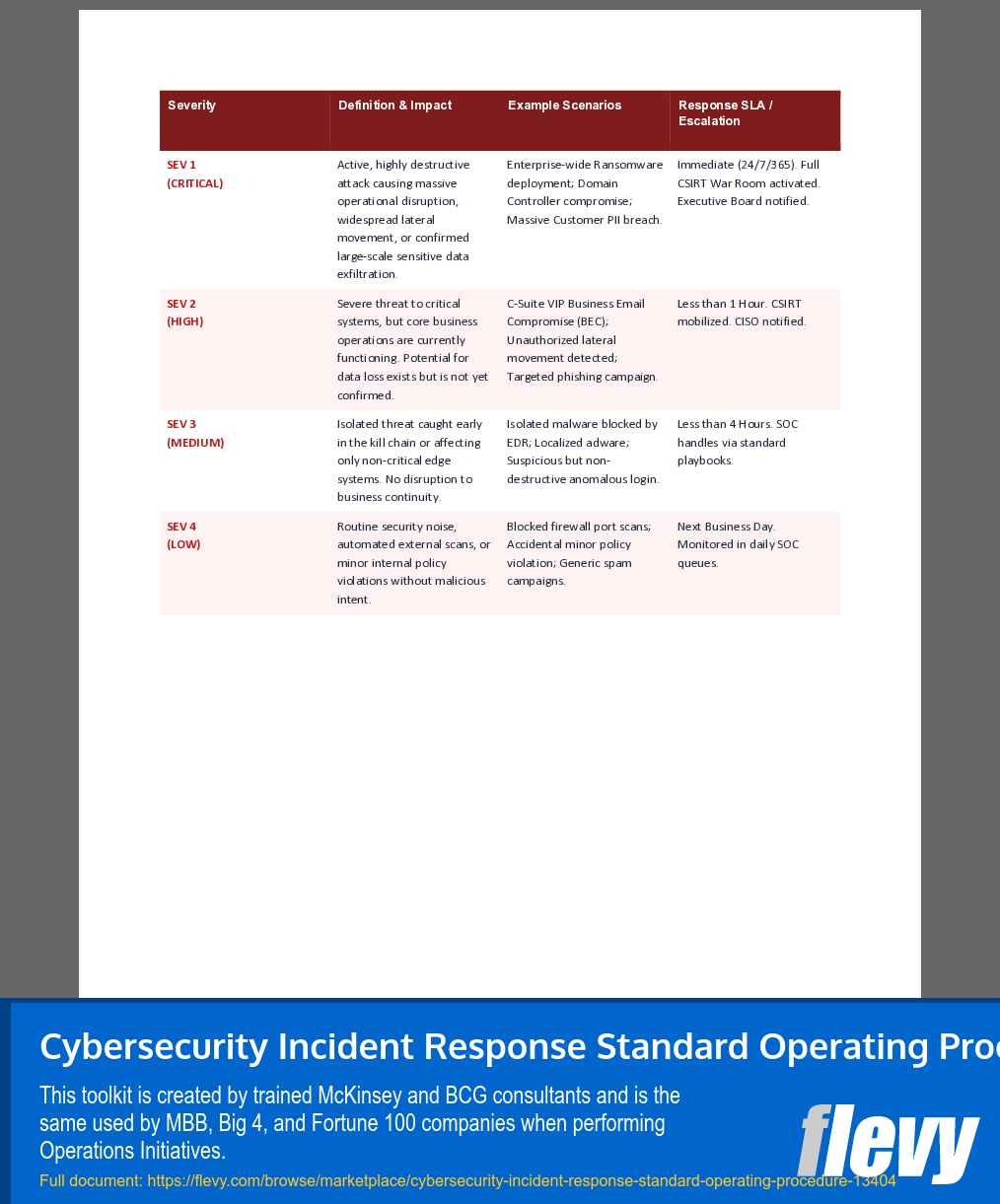
2. CYBERSECURITY INCIDENT CLASSIFICATION & SEVERITY
Not every alert requires the same response.
Standardize cybersecurity incident severity using a structured SEV 1–SEV 4 classification model.
Cover:
🔴 SEV 1 – CRITICAL
Enterprise ransomware • Domain Controller compromise • Major data breach • Widespread lateral movement
🟠 SEV 2 – HIGH
Executive BEC • Unauthorized lateral movement • Targeted phishing • Critical-system compromise
🟡 SEV 3 – MEDIUM
Localized malware • Suspicious authentication • Isolated endpoint compromise
🟢 SEV 4 – LOW
Automated scans • Spam • Minor policy violations • Routine security noise
Define response SLAs, escalation requirements and executive involvement for every severity level.
3. SECURITY EVENT DETECTION, IDENTIFICATION & TRIAGE
Turn security alerts into structured incident decisions.
Integrate:
SIEM • EDR • DLP • SOC Monitoring • User Reports • Threat Intelligence • Authentication Logs • Network Telemetry
Standardize:
Alert → Investigation → Verification → Classification → Escalation → Incident Declaration
Reduce false positives while accelerating the identification of genuine cybersecurity threats.
4. CYBER INCIDENT CONTAINMENT
STOP THE ATTACK BEFORE IT SPREADS.
The framework establishes short-term and long-term containment procedures for compromised environments.
Cover:
Endpoint network isolation
VLAN and switch-port isolation
Firewall blocking
Malicious IP/domain blocking
Network segmentation
Null-routing
Credential resets
Active Directory containment
Lateral movement prevention
Data exfiltration disruption
And critically:
PRESERVE FORENSIC EVIDENCE BEFORE DESTROYING VOLATILE DATA.
5. DIGITAL FORENSICS & EVIDENCE PRESERVATION
When cybersecurity incidents become litigation, regulatory or law-enforcement matters, evidence must be handled defensibly.
Establish procedures for:
Volatile Memory Capture • Disk Imaging • SIEM Evidence • Cryptographic Hashing • Evidence Storage • Chain of Custody
Document:
WHO → WHAT → WHEN → WHERE → WHY
Protect forensic evidence using secure, encrypted and access-controlled storage.
Create a defensible evidence trail for regulatory investigations, litigation, insurance claims and law-enforcement engagement.
6. INCIDENT ERADICATION & THREAT REMOVAL
CONTAINMENT IS NOT RECOVERY.
Once the threat is controlled, systematically eliminate attacker persistence.
Conduct enterprise-wide IoC Sweeps covering:
File Hashes • Malicious IPs • C2 Domains • Registry Keys • Scheduled Tasks • Rogue Accounts • Backdoors • Email Forwarding Rules
Remove malicious artifacts, disable unauthorized access and remediate the vulnerability that enabled the initial compromise.
FIND THE ROOT CAUSE. REMOVE THE ATTACKER. CLOSE THE GAP.
7. CYBERSECURITY INCIDENT RECOVERY
Return critical business services to operation without reintroducing the threat.
Standardize:
System Rebuilds • Gold Images • Immutable Backups • Backup Validation • Data Restoration • Application Testing • Business Sign-Off
Severely compromised systems should be rebuilt from known-good configurations rather than simply "cleaned."
Recovered assets receive enhanced security monitoring to identify potential reinfection or attacker persistence.
8. DATA BREACH COMMUNICATION & REGULATORY RESPONSE
A cyber incident can quickly become a legal, privacy and regulatory crisis.
Establish controlled communication procedures for:
GDPR • SEC Cybersecurity Disclosure • HIPAA • Privacy Authorities • Law Enforcement • Customers • Employees • Media
Move incident communications to an independent Out-of-Band (OOB) communications platform when enterprise systems may be compromised.
Control information distribution through Need-to-Know principles.
Ensure external communications are coordinated through Legal, Privacy, Incident Command and Corporate Communications.
9. THREAT-SPECIFIC CYBERSECURITY PLAYBOOKS
One incident response process does not fit every attack.
Integrate specialized playbooks for:
🔥 Ransomware & Double Extortion
📧 Business Email Compromise (BEC)
👤 Malicious Insider Threat
🌐 Distributed Denial of Service (DDoS)
Each playbook provides attack-specific procedures that connect directly to the enterprise incident response framework.
🔥 CORE CYBERSECURITY INCIDENT RESPONSE CAPABILITIES
Cybersecurity Incident Response • Incident Response Management • CSIRT • SOC Operations • Security Incident Management • Cyber Incident Detection • Incident Triage • Incident Classification • Incident Containment • Threat Eradication • Cyber Recovery • Digital Forensics • Evidence Preservation • Chain of Custody • Ransomware Response • Data Breach Response • BEC Response • Insider Threat Response • DDoS Response • Threat Intelligence • IoC Analysis • SIEM • EDR • Active Directory Security • Network Security • Cloud Incident Response • Data Privacy • Regulatory Reporting • Cybersecurity Compliance • Out-of-Band Communications • Incident Documentation • Root Cause Analysis • Lessons Learned
📊 MEASURE INCIDENT RESPONSE PERFORMANCE
Don't just respond to incidents.
MEASURE THE RESPONSE.
Track enterprise cybersecurity KPIs including:
Mean Time to Detect (MTTD)
Mean Time to Respond (MTTR)
False Positive Rate
Backup Restoration Success Rate
Incident escalation performance
Recovery performance
Incident closure timelines
Use measurable performance indicators to continuously improve the organization's cyber resilience.
👥 BUILT FOR
CISOs • CIOs • CTOs • CEOs • SOC Leaders • Security Operations Teams • CSIRT Teams • Incident Response Teams • Cybersecurity Managers • IT Directors • Infrastructure Leaders • Threat Intelligence Teams • Digital Forensics Teams • Legal Teams • Privacy Officers • Compliance Teams • Risk Managers • Corporate Communications • Business Continuity Teams • IT Operations • Managed Security Service Providers (MSSPs)
🚨 DON'T WAIT FOR THE RANSOMWARE TO START BUILDING YOUR RESPONSE PLAN.
PREPARE THE CSIRT.
DEFINE THE ESCALATION.
DETECT THE THREAT.
CONTAIN THE ATTACK.
PRESERVE THE EVIDENCE.
ERADICATE THE ADVERSARY.
RESTORE THE BUSINESS.
LEARN FROM THE INCIDENT.
🚀 DOWNLOAD THE COMPLETE ENTERPRISE CYBERSECURITY INCIDENT RESPONSE SOP MANUAL
Build a standardized, repeatable, auditable and enterprise-ready cybersecurity incident response operation covering the complete incident lifecycle – from preparation and detection through containment, digital forensics, eradication, recovery, regulatory response and lessons learned.
CYBERSECURITY INCIDENT RESPONSE ISN'T JUST AN IT FUNCTION – IT'S AN ENTERPRISE RESILIENCE FUNCTION.
When the breach happens, every second matters.
DON'T IMPROVISE. DON'T DELAY. DON'T LOSE EVIDENCE.
🔥 STANDARDIZE YOUR INCIDENT RESPONSE.
🔥 ACCELERATE CYBER INCIDENT CONTAINMENT.
🔥 STRENGTHEN DIGITAL FORENSICS & EVIDENCE HANDLING.
🔥 PROTECT CRITICAL SYSTEMS AND DATA.
🔥 BUILD A FASTER, MORE DISCIPLINED CYBER RESPONSE OPERATION.
GET THE COMPLETE ENTERPRISE CYBERSECURITY INCIDENT RESPONSE SOP TODAY.
Keywords: Inventory Management, Demand Planning, Inventory Optimization, Inventory Control, Supply Chain Management, Warehouse Operations, Replenishment Strategy, Inventory Analytics, WIP Reduction, Inventory Accuracy, Distribution Network, Inventory Forecasting, Supply Chain Excellence, Working Capital, Inventory KPIs, Procurement Strategy, Inventory Governance, Inventory SOPs, Continuous Improvement, Supply Chain Transformation, GenAI deployment SOPs, generative AI operating model, enterprise AI governance framework, AI Center of Excellence, responsible AI, AI risk management, AI use case prioritization, GenAI implementation roadmap, AI vendor selection, prompt engineering standards, AI compliance, AI adoption strategy, generative AI across value chain, AI strategy, enterprise transformation, AI implementation, AI scaling framework
Strategy & Transformation, Growth Strategy, Strategic Planning, Strategy Frameworks, Innovation Management, Pricing Strategy, Core Competencies, Strategy Development, Business Transformation, Marketing Plan Development, Product Strategy, Breakout Strategy, Competitive Advantage, Mission, Vision, Values, Strategy Deployment & Execution, Innovation, Vision Statement, Core Competencies Analysis, Corporate Strategy, Product Launch Strategy, BMI, Blue Ocean Strategy, Breakthrough Strategy, Business Model Innovation, Business Strategy Example, Corporate Transformation, Critical Success Factors, Customer Segmentation, Customer Value Proposition, Distinctive Capabilities, Enterprise Performance Management, KPI, Key Performance Indicators, Market Analysis, Market Entry Example, Market Entry Plan, Market Intelligence, Market Research, Market Segmentation, Market Sizing, Marketing, Michael Porter's Value Chain, Organizational Transformation, Performance Management, Performance Measurement, Platform Strategy, Product Go-to-Market Strategy, Reorganization, Restructuring, SWOT, SWOT Analysis, Service 4.0, Service Strategy, Service Transformation, Strategic Analysis, Strategic Plan Example, Strategy Deployment, Strategy Execution, Strategy Frameworks Compilation, Strategy Methodologies, Strategy Report Example, Value Chain, Value Chain Analysis, Value Innovation, Value Proposition, Vision Statement, Corporate Strategy, Business Development, Business plan pdf, business plan, PDF, Business Plan DOC, Business Plan Template, PPT, Market strategy playbook, strategic market planning, competitive analysis tools, market segmentation frameworks, growth strategy templates, product positioning strategy, market execution toolkit, strategic alignment playbook, KPI and OKR frameworks, business growth strategy guide, cross-functional strategy templates, market risk management, market strategy PowerPoint doc, guide, ebook, e-book ,McKinsey Change Playbook, Organizational change management toolkit, Change management frameworks 2025, Influence model for change, Change leadership strategies, Behavioral change in organizations, Change management PowerPoint templates, Transformational leadership in change, supply chain KPIs, supply chain KPI toolkit, supply chain PowerPoint template, logistics KPIs, procurement KPIs, inventory management KPIs, supply chain performance metrics, manufacturing KPIs, supply chain dashboard, supply chain strategy KPIs, reverse logistics KPIs, sustainability KPIs in supply chain, financial supply chain KPIs, warehouse KPIs, digital supply chain KPIs, 1200 KPIs, supply chain scorecard, KPI examples, supply chain templates, Corporate Finance SOPs, Finance SOP Excel Template, CFO Toolkit, Finance Department Procedures, Financial Planning SOPs, Treasury SOPs, Accounts Payable SOPs, Accounts Receivable SOPs, General Ledger SOPs, Accounting Policies Template, Internal Controls SOPs, Finance Process Standardization, Finance Operating Procedures, Finance Department Excel Template, FP&A Process Documentation, Corporate Finance Template, Finance SOP Toolkit, CFO Process Templates, Accounting SOP Package, Tax Compliance SOPs, Financial Risk Management Procedures.
NOTE: Our digital products are sold on an "as is" basis, making returns and refunds unavailable post-download. Please preview and inquire before purchasing. Please contact us before purchasing if you have any questions! This policy aligns with the standard Flevy Terms of Usage.
Got a question about the product? Email us at support@flevy.com or ask the author directly by using the "Ask the Author a Question" form. If you cannot view the preview above this document description, go here to view the large preview instead.
Source: Best Practices in Cyber Security, Incident Management Word: Cybersecurity Incident Response Standard Operating Procedure Word (DOCX) Document, SB Consulting
ABOUT THE AUTHOR

SB Consulting is dedicated to empowering businesses to communicate their ideas with impact. This consulting firm specializes in teaching organizations how to create effective corporate and management presentations. With training from top-tier global consulting firms, including McKinsey, BCG, and Porsche Consulting, extensive expertise in presentation design and ... [read more]
Ask the Author a Question
You must be logged in to contact the author.




























