
This presentation is created by former McKinsey, BCG, Deloitte, EY, and Capgemini consultants. It teaches a practical consulting framework actively used by tier-1 consulting firms.
Editor Summary
Competitive Comparison Analysis is a 26-slide PowerPoint deck developed by LearnPPT Consulting and created by former consultants from McKinsey, Bain, BCG, Deloitte, EY, and Capgemini.
Read moreIt provides a Competitive Comparison Framework and 6 deliverables: Competitive Comparison Framework template, SWOT analysis template, financial performance analysis model, market performance assessment tool, cost analysis framework, and capabilities assessment guide. Targeted at corporate strategists, product managers, financial analysts, and marketing teams, it is used for competitor benchmarking to inform strategy, market entry, quarterly reviews, and product development, and is available on Flevy with immediate digital download.
Use this deck when an organization needs a structured, repeatable method to compare competitors across financial, market, cost, capability, and strategy dimensions—for example during strategic planning, market entry, or product development decisions.
Corporate strategists modeling competitor profitability and market share to inform a market entry decision.
Product managers mapping competitor product portfolios to identify feature gaps and differentiation opportunities.
Financial analysts benchmarking revenue growth and profitability trends to support investment cases.
Marketing teams testing competitor positioning and pricing to refine messaging and targeting.
The multi-dimensional, hypothesis-driven assessment of financials, market performance, costs, capabilities, and strategies reflects the analytical approach used at McKinsey, Bain, and BCG.
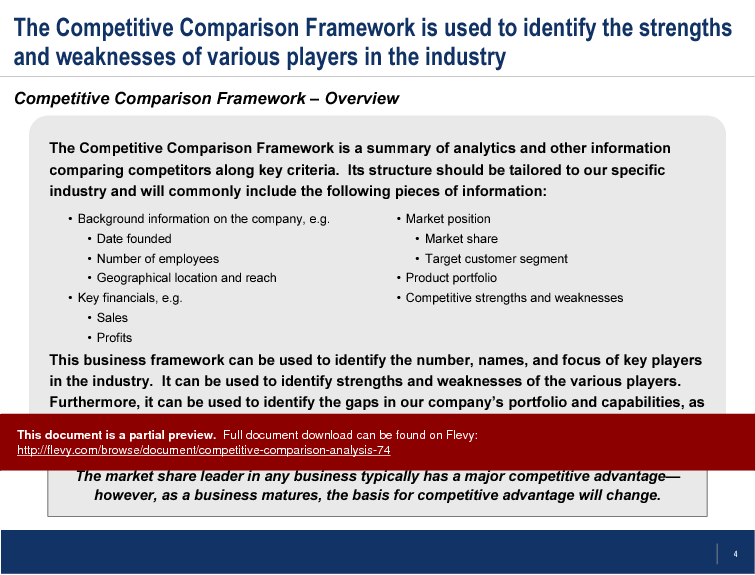
The Competitive Comparison Framework is a summary of analytics and other information comparing competitors along key criteria. Its structure should be tailored to our specific industry and will commonly include the following pieces of information:
• Background information on the company
• Key financials
• Market position
• Product portfolio
• Competitive strengths and weaknesses
This business framework can be used to identify the number, names, and focus of key players in the industry. It can be used to identify strengths and weaknesses of the various players. Furthermore, it can be used to identify the gaps in our company’s portfolio and capabilities, as well as the relative strength of our company.
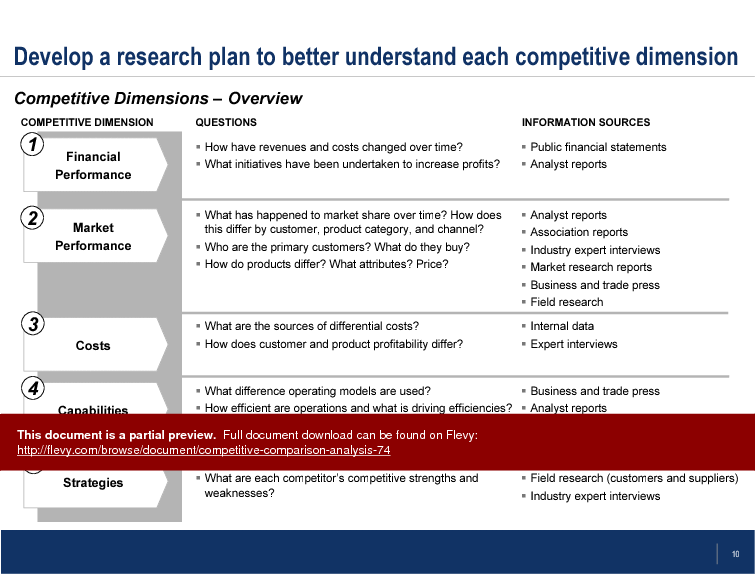
The Competitive Comparison Analysis document delves into the critical dimensions of financial performance, market performance, costs, capabilities, and strategies. It provides a comprehensive approach to dissecting each competitor's strengths and weaknesses. The analysis covers essential questions such as how revenues and costs have evolved, the primary customer segments, and the efficiency of different operating models. This granular level of detail equips executives with the insights needed to make informed strategic decisions.
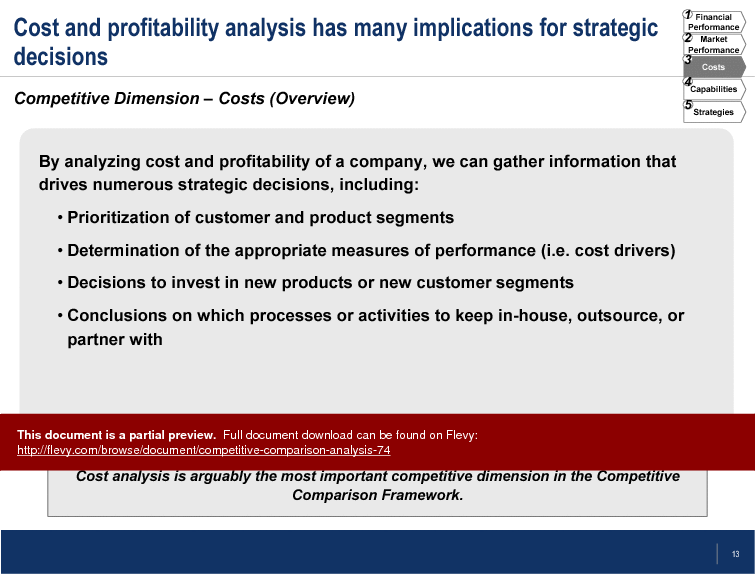
The document emphasizes the importance of cost and profitability analysis, highlighting its impact on strategic decisions. By understanding cost drivers and allocation methods, companies can prioritize customer and product segments, determine performance measures, and decide on investment in new products or customer segments. The analysis also guides decisions on which processes to keep in-house or outsource, ensuring optimal resource allocation.
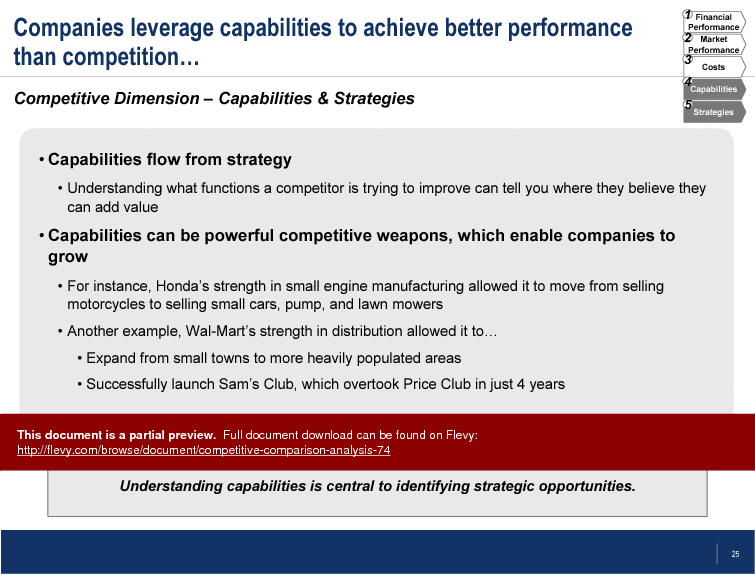
Capabilities and strategies are explored as powerful competitive weapons. The document illustrates how understanding competitors' strategic functions can reveal opportunities for value addition. Real-world examples, such as Honda's diversification from small engines to a broader product range and Walmart's expansion strategy, demonstrate how leveraging capabilities can drive growth. This focus on capabilities is central to identifying strategic opportunities and achieving superior performance in the market.
Got a question about the product? Email us at support@flevy.com or ask the author directly by using the "Ask the Author a Question" form. If you cannot view the preview above this document description, go here to view the large preview instead.
MARCUS OVERVIEW
This synopsis was written by Marcus [?] based on the analysis of the full 26-slide presentation.
Executive Summary
The Competitive Comparison Analysis presentation is a consulting-grade framework designed to help organizations systematically evaluate their competitive landscape. Created by former consultants from top-tier firms like McKinsey, Bain, and BCG, this presentation provides a structured approach to identifying strengths and weaknesses among competitors. Users will be equipped to analyze financial performance, market positioning, cost structures, capabilities, and strategies, enabling them to make informed strategic decisions and identify gaps in their own offerings.
Who This Is For and When to Use
• Corporate strategists and business development teams analyzing market dynamics
• Product managers seeking to understand competitive positioning and differentiation
• Financial analysts evaluating competitor performance and market trends
• Marketing teams aiming to refine messaging based on competitor insights
Best-fit moments to use this deck:
• During strategic planning sessions to inform decision-making
• When entering new markets to assess competitive threats
• In quarterly reviews to evaluate performance against competitors
• For product development discussions to identify gaps and opportunities
Learning Objectives
• Define the competitive landscape using the Competitive Comparison Framework
• Analyze key competitive dimensions, including financial and market performance
• Identify strengths and weaknesses of competitors through systematic evaluation
• Develop actionable insights to inform strategic planning and execution
• Assess cost structures and profitability to drive informed decision-making
• Recognize opportunities for leveraging core capabilities against competitors
• Competitive Comparison Framework - A structured approach to analyze competitors, focusing on strengths and weaknesses across multiple dimensions.
• Benefits and Limitations - Highlights the advantages of the framework while addressing potential challenges in data interpretation.
• Key Competitive Questions - Essential inquiries to guide strategic analysis and decision-making regarding competitors.
• Competitor Identification - Methods for identifying both current and potential competitors in the market.
• Financial Performance - Evaluation of competitors' financial metrics, including revenue growth and profitability.
• Market Performance - Analysis of market share, pricing strategies, and growth trends among competitors.
• Costs - Examination of cost structures and profitability, providing insights into strategic decision-making.
• Capabilities - Assessment of core capabilities that differentiate competitors and drive competitive advantage.
• Strategies - Overview of strategic approaches competitors may adopt to enhance market positioning.
Deliverables, Templates, and Tools
• Competitive Comparison Framework template for systematic analysis
• SWOT analysis template to evaluate strengths, weaknesses, opportunities, and threats
• Financial performance analysis model for competitor benchmarking
• Market performance assessment tool for tracking competitor dynamics
• Cost analysis framework to evaluate profitability and cost drivers
• Capabilities assessment guide to identify core competencies
Slide Highlights
• Overview slide detailing the structure and purpose of the Competitive Comparison Framework
• Benefits and Limitations slide summarizing key insights for effective analysis
• Key Competitive Questions slide outlining essential inquiries for strategic evaluation
• Competitor Identification slide showcasing methods for recognizing market players
• Financial Performance slide illustrating key metrics for competitor analysis
Potential Workshop Agenda
Competitive Analysis Overview (60 minutes)
• Introduce the Competitive Comparison Framework and its applications
• Discuss the importance of understanding competitive dynamics
• Review key competitive questions to guide analysis
Financial and Market Performance Analysis (90 minutes)
• Dive into financial performance metrics and market share analysis
• Conduct group exercises to evaluate competitors based on provided frameworks
• Present findings and insights from group discussions
Cost and Capability Assessment (60 minutes)
• Analyze cost structures and profitability of key competitors
• Identify core capabilities that drive competitive advantage
• Discuss strategic implications based on assessment outcomes
Customization Guidance
• Tailor the Competitive Comparison Framework to specific industry contexts
• Adjust financial metrics and performance indicators based on available data
• Incorporate company-specific terminology and branding into the presentation
• Modify competitor identification criteria to align with strategic objectives
Secondary Topics Covered
• Market segmentation and targeting strategies
• Trends in competitive responses and industry shifts
• Long-term implications of competitive positioning
• Integration of competitive insights into strategic planning
Topic FAQ
What are the core dimensions to include in a competitive comparison analysis?
A competitive comparison should examine financial performance, market performance, costs, capabilities, and strategies. These dimensions capture revenue and profitability trends, market share and pricing, cost structures and drivers, core competencies, and strategic positioning, providing a multi-dimensional view across 5 dimensions.
How can I identify which companies to include as competitors in my analysis?
Use industry analysts, market research, and sales or customer interviews to identify current and potential competitors. The Competitive Comparison Analysis deck includes a Competitor Identification slide and guidance on methods to compile a competitor universe and prioritize players for deeper benchmarking.
Which financial metrics are most relevant when benchmarking competitors?
Relevant financial metrics include revenue growth and profitability measures, as well as cost drivers that affect margins. These metrics help assess financial health and operational efficiency and are specifically covered in the deck’s Financial Performance slide with emphasis on revenue growth and profitability.
What features should I look for when choosing a competitive comparison template?
Look for templates that include a structured framework, SWOT analysis, financial benchmarking models, market performance tools, cost analysis guidance, and a capabilities assessment. Flevy’s Competitive Comparison Analysis provides those deliverables, including a SWOT template and a financial performance analysis model.
How much time should I plan for a workshop using a competitive comparison framework?
The product’s suggested workshop agenda totals about 210 minutes: a 60-minute Competitive Analysis Overview, a 90-minute Financial and Market Performance session with group exercises, and a 60-minute Cost and Capability Assessment segment, suitable for a half- to full-day working session.
I’m evaluating a new market—what sequence of analysis does the framework recommend?
Start with competitor identification, then assess market performance and pricing dynamics, evaluate financial and cost structures to gauge profitability, and finish with capabilities and strategy analysis to identify gaps or threats. Flevy’s Competitive Comparison Analysis maps this sequence across Competitor Identification, Market Performance, and Costs slides.
How frequently should a competitive comparison be updated to remain useful?
Regular assessments are recommended, particularly aligned with strategic planning cycles or when entering new markets or launching products. Updating during each strategic planning cycle ensures competitor benchmarks and insights remain current and actionable within those planning cadences.
What practical value do paid competitive analysis templates provide for a strategy team?
Paid templates supply a repeatable structure, pre-built financial and market tools, and guidance on benefits/limitations and customization, reducing setup time and improving consistency. They typically include deliverables such as a Competitive Comparison Framework, SWOT template, and a financial performance model.
Document FAQ
These are questions addressed within this presentation.
What is the purpose of the Competitive Comparison Framework?
The framework is designed to systematically evaluate competitors, identifying their strengths and weaknesses to inform strategic decision-making.
How can I identify competitors using this framework?
Utilize resources such as industry analysts, sales interviews, and market research to identify both current and potential competitors.
What are the key dimensions analyzed in the Competitive Comparison Framework?
The framework evaluates financial performance, market performance, costs, capabilities, and strategies of competitors.
How does the framework address limitations in competitive analysis?
It highlights the complexity of data interpretation and emphasizes the need for clear communication of insights derived from the analysis.
Can this framework be customized for specific industries?
Yes, the framework can be tailored to fit the unique characteristics and competitive dynamics of different industries.
What types of deliverables can be produced using this framework?
Users can create templates for competitive analysis, financial performance reports, and capability assessments.
How often should this analysis be conducted?
Regular assessments are recommended, particularly during strategic planning cycles or when entering new markets.
What are the benefits of using the Competitive Comparison Framework?
It provides a structured approach to capture vital data on competitors, guiding strategic decisions and identifying gaps in the market.
Glossary
• Competitive Comparison Framework - A structured method for analyzing competitors' strengths and weaknesses.
• SWOT Analysis - A strategic planning tool used to identify strengths, weaknesses, opportunities, and threats.
• Market Share - The percentage of an industry or market's total sales that is earned by a particular company.
• Cost Structure - The types and proportions of costs incurred by a business in its operations.
• Core Capabilities - The unique strengths and resources that give a company competitive advantage.
• Profitability - The ability of a company to generate income relative to revenue, assets, or equity.
• Financial Performance - Metrics used to assess a company's financial health and operational efficiency.
• Market Performance - Evaluation of a company's position in the market relative to competitors.
• Cost Drivers - Factors that cause costs to increase or decrease in a business.
• Competitive Strategy - The long-term plan of action designed to gain a competitive advantage.
• Value Chain - The full range of activities that businesses engage in to bring a product or service to market.
• Market Dynamics - The forces that impact the supply and demand of goods and services in a market.
• Strategic Planning - The process of defining a company's direction and making decisions on allocating resources to pursue this direction.
• Benchmarking - The practice of comparing business processes and performance metrics to industry bests and best practices.
• Market Segmentation - The process of dividing a market into distinct groups of buyers with different needs or behaviors.
• Business Model - A company's plan for how it will generate revenues and make a profit.
• Competitive Advantage - A condition or circumstance that puts a company in a favorable or superior business position.
• Market Positioning - The process of establishing the image or identity of a brand or product in a consumer's mind relative to competitors.
• Customer Profitability - The profit generated from a customer after accounting for the costs associated with serving them.
• Operational Efficiency - The ability to deliver products or services in the most cost-effective manner without compromising quality.
• Market Trends - Patterns or tendencies in the market that indicate the direction in which it is moving.
This PPT slide focuses on Competitor Financial Analysis, structured around 3 components: Current Performance, Historical Trends, and Ratio Analysis. Current Performance evaluates key financial metrics, including common size measures and growth rates, providing a snapshot of competitors' financial standings. Historical Trends analyze time series data to identify patterns in financial health and strategic decisions over time. Ratio Analysis examines profitability measures, productivity measures, and market measures, offering a comprehensive evaluation of operational efficiency and market positioning. This framework aids organizations in making informed strategic decisions based on financial performance metrics.
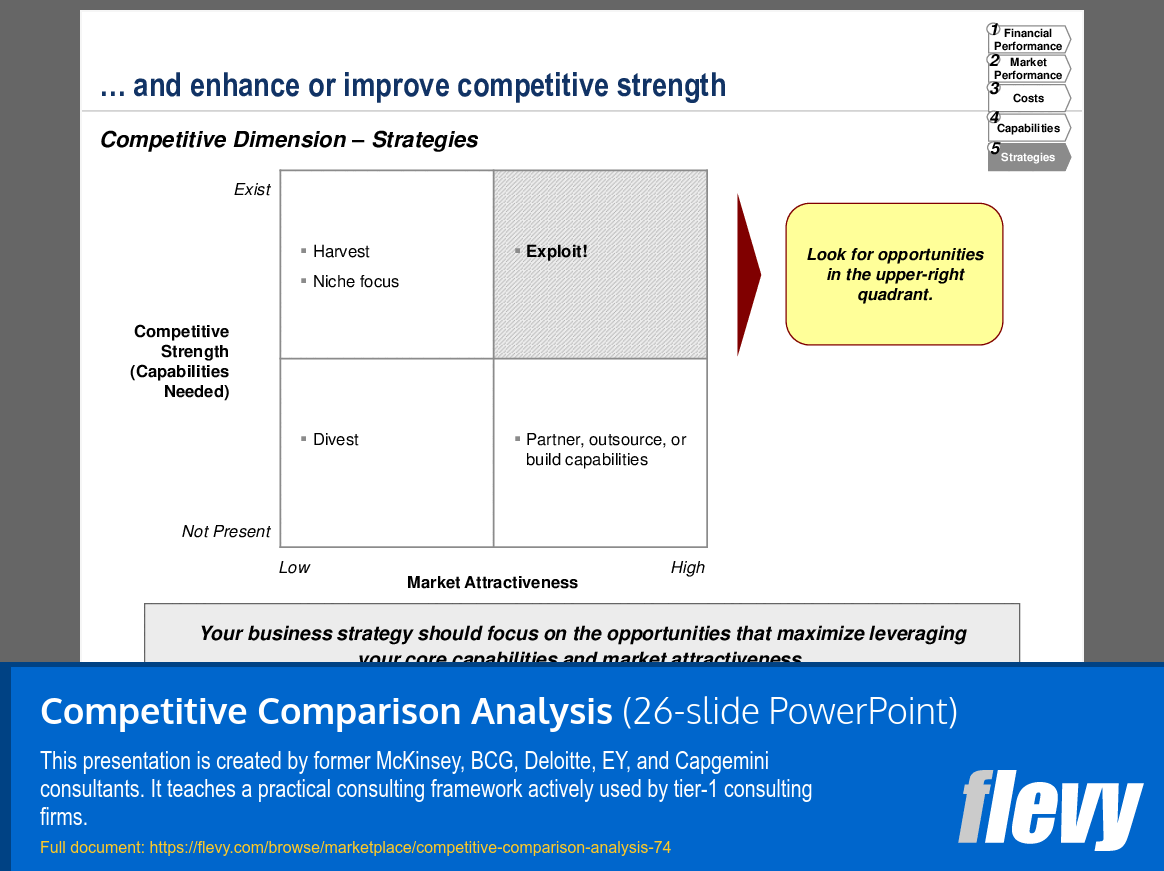
This PPT slide presents a strategic framework for assessing competitive positioning based on Competitive Strength and Market Attractiveness, structured as a matrix with 4 quadrants. The upper-right quadrant, "Exploit!", targets organizations with high competitive strength and market attractiveness, encouraging them to leverage capabilities to maximize opportunities. The upper-left quadrant suggests a "Harvest" or "Niche focus" strategy for firms with existing capabilities, but low market attractiveness, advocating a conservative approach. The lower-left quadrant, "Divest," is for organizations lacking both competitive strength and market attractiveness, recommending market exit or reduced investment. The lower-right quadrant advises firms to "Partner, outsource, or build capabilities" to enhance strengths in a promising market. This framework guides executives in aligning strategies with core capabilities and market conditions for informed resource allocation and strategic direction.
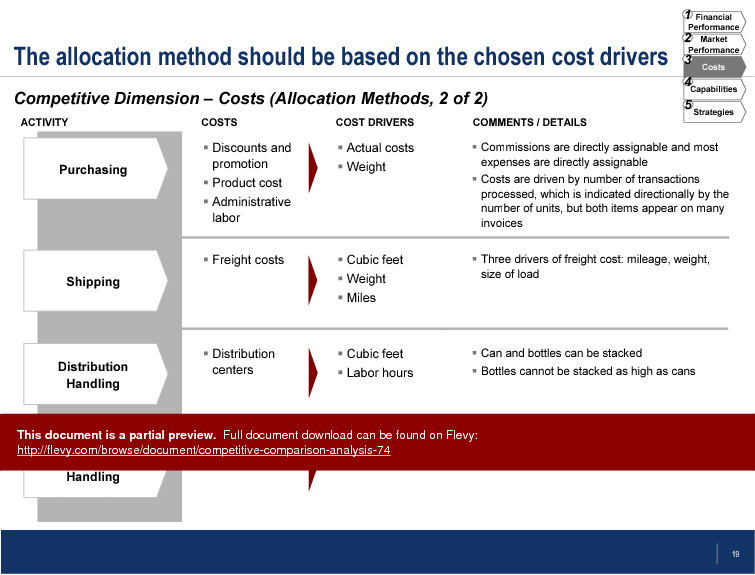
This PPT slide focuses on developing allocation methods to determine profitability by product and customer. It emphasizes 2 dimensions: Product Profitability and Customer Profitability, each requiring distinct tracking strategies. For Product Profitability, costs are tracked by individual products, including direct labor and materials, with indirect costs allocated based on direct labor or machine hours. Identifying assignable components and reflecting underlying cost drivers is essential. Customer Profitability is tracked by customer segments, similarly involving direct costs and systematic allocation of indirect costs. This dual focus enables organizations to gain insights into financial performance, informing resource allocation and strategic initiatives.

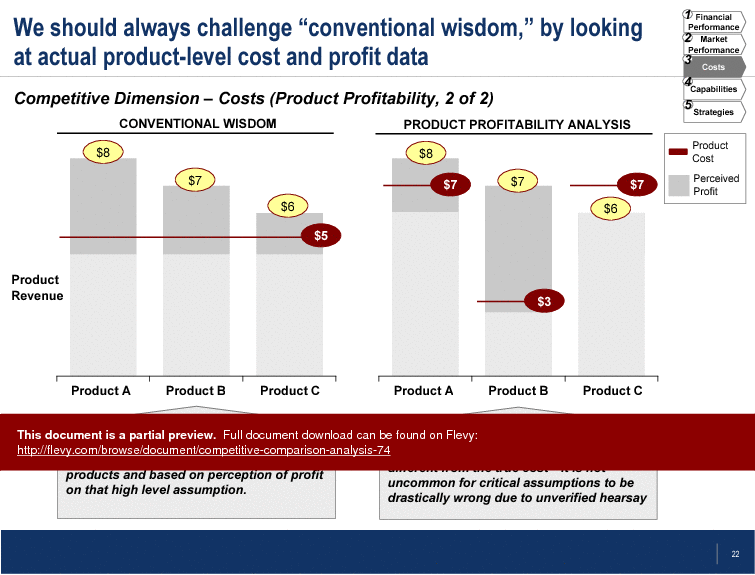
This PPT slide critically examines product profitability assumptions for 3 products: A, B, and C. The "Conventional Wisdom" section illustrates perceived revenues with a uniform cost of $5, leading to misleading profit margin conclusions. In contrast, the "Product Profitability Analysis" reveals actual costs and profits, highlighting significant discrepancies. For instance, Product A has a revenue of $8, but its profit differs from conventional assumptions. Product B, with a revenue of $7, shows a lower profit of $3, emphasizing the need to understand true costs. This analysis warns against decisions based on oversimplified perceptions, advocating for deeper product-level data examination to optimize product portfolios and enhance profitability.
This PPT slide outlines methodologies for evaluating organizational cost structures, categorized into Financial Accounting, Functional Accounts, Traditional Manufacturing Cost Accounts, and Activity Based Costing. Financial Accounting focuses on cost of goods sold (COGS), including beginning inventory, purchases, manufacturing costs, salaries, interest expenses, insurance, and depreciation. Functional Accounts assess costs across business functions such as marketing, production, engineering, finance, and personnel, providing insights into resource allocation. Traditional Manufacturing Cost Accounts differentiate between direct and indirect costs, highlighting fixed and variable expenses, direct materials, wages, and overhead for manufacturing efficiency. Activity Based Costing allocates costs based on specific activities like logistics and support services, enhancing transparency and identifying potential cost savings.
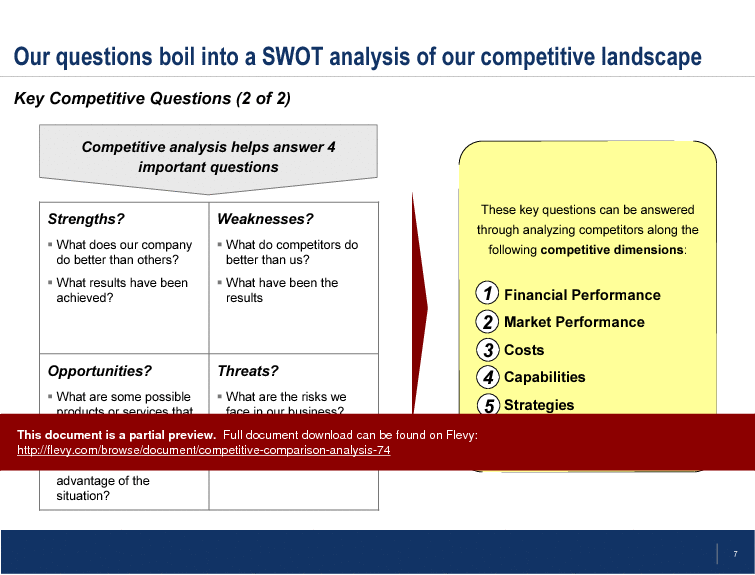
This PPT slide presents a SWOT analysis framework for competitive evaluation, focusing on 4 key categories: strengths, weaknesses, opportunities, and threats. The strengths section encourages organizations to identify core competencies and tangible results compared to competitors. The weaknesses segment prompts critical assessment of competitor advantages and performance gaps. Opportunities highlight potential market offerings and the importance of proactive strategies to capitalize on emerging trends. The threats section addresses external risks and the need for robust contingency plans. The analysis is grounded in 5 key dimensions: financial performance, market performance, costs, capabilities, and strategies, ensuring a comprehensive evaluation for strategic decision-making.
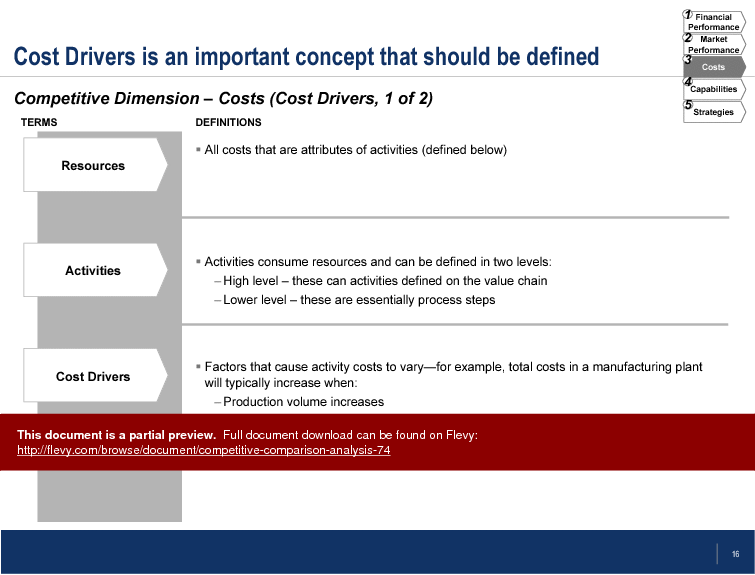
This PPT slide defines cost drivers, crucial for understanding how costs relate to organizational activities. "Resources" are tied to activities, which are categorized into high-level value chain activities and lower-level specific process steps. Cost drivers influence activity costs, with total manufacturing costs rising due to increased production volume, product variety, and additional shifts. These insights are essential for decision-makers managing costs while scaling operations or diversifying product lines. Understanding these cost dynamics enables organizations to optimize resource allocation and enhance operational performance.
Source: Best Practices in Competitive Analysis PowerPoint Slides: Competitive Comparison Analysis PowerPoint (PPT) Presentation Slide Deck, LearnPPT Consulting
This presentation is created by former McKinsey, BCG, Deloitte, EY, and Capgemini consultants. It teaches a practical consulting framework actively used by tier-1 consulting firms.
We are a team of management consultants trained by top tier global consulting firms (including McKinsey, BCG, Deloitte, EY, Capgemini) with a collective experience of several decades. We specialize in business frameworks based on real-life consulting engagements.
We have served 100s of clients that range from Fortune 500 companies to tech startups to
... [read more] $1B+ private companies.
Utilize our consulting frameworks to apply structured thinking & analysis to address your business challenges, uncover strategic insights, and implement workable solutions. Our PowerPoint presentations follow traditional consulting slide design formats, starting with a clear slide headline. Easily customize and repurpose our slides for your own business presentations.
Beyond business frameworks & methodologies, we also offer PowerPoint templates and other business templates. Our templates are professionally designed and have been used in thousands of deliverables & work products across hundreds of clients.
The average daily rate of a McKinsey consultant is $6,625 (not including expenses). The average price of a Flevy document is $65.
Trusted by over 10,000+ Client Organizations
Since 2012, we have provided business templates to over 10,000 businesses and organizations of all sizes, from startups and small businesses to the Fortune 100, in over 130 countries.
"As a niche strategic consulting firm, Flevy and FlevyPro frameworks and documents are an on-going reference to help us structure our findings and recommendations to our clients as well as improve their clarity, strength, and visual power. For us, it is an invaluable resource to increase our impact and value."
– David Coloma, Consulting Area Manager at Cynertia Consulting
"Flevy.com has proven to be an invaluable resource library to our Independent Management Consultancy, supporting and enabling us to better serve our enterprise clients.
The value derived from our [FlevyPro] subscription in terms of the business it has helped to gain far exceeds the investment made, making a subscription a no-brainer for any growing consultancy – or in-house strategy team."
– Dean Carlton, Chief Transformation Officer, Global Village Transformations Pty Ltd.
"Flevy is our 'go to' resource for management material, at an affordable cost. The Flevy library is comprehensive and the content deep, and typically provides a great foundation for us to further develop and tailor our own service offer."
– Chris McCann, Founder at Resilient.World
"I like your product. I'm frequently designing PowerPoint presentations for my company and your product has given me so many great ideas on the use of charts, layouts, tools, and frameworks. I really think the templates are a valuable asset to the job."
– Roberto Fuentes Martinez, Senior Executive Director at Technology Transformation Advisory
"As an Independent Management Consultant, I find Flevy to add great value as a source of best practices, templates and information on new trends. Flevy has matured and the quality and quantity of the library is excellent. Lastly the price charged is reasonable, creating a win-win value for
the customer, Flevy and the various authors. This is truly a service that benefits the consulting industry and associated clients. Thanks for providing this service.
"
– Jim Schoen, Principal at FRC Group
"I have used Flevy services for a number of years and have never, ever been disappointed. As a matter of fact, David and his team continue, time after time, to impress me with their willingness to assist and in the real sense of the word. I have concluded in fact
that it is not at all just a repository of documents/resources but, in the way that David and his team manage the firm, it is like dealing with consultants always ready to assist, advise and direct you to what you really need, and they always get it right.
I am an international hospitality accomplished senior executive who has worked and lived during the past 35 years in 23 countries in 5 continents and I can humbly say that I know what customer service is, trust me.
Aside from the great and professional service that Flevy's team provide, their wide variety of material is of utmost great quality, professionally put together and most current.
Well done Flevy, keep up the great work and I look forward to continue working with you in the future and to recommend you to a variety of colleagues around the world.
"
– Roberto Pelliccia, Senior Executive in International Hospitality
"Flevy is now a part of my business routine. I visit Flevy at least 3 times each month.
Flevy has become my preferred learning source, because what it provides is practical, current, and useful in this era where the business world is being rewritten.
many challenges and there is the need to make the right decisions in a short time, with so much scattered information, we are fortunate to have Flevy. Flevy investigates, selects, and puts at our disposal the best of the best to help us be successful in our work.
"
– Omar Hernán Montes Parra, CEO at Quantum SFE
"My FlevyPro subscription provides me with the most popular frameworks and decks in demand in today’s market. They not only augment my existing consulting and coaching offerings and delivery, but also keep me abreast of the latest trends, inspire new products and service offerings for my practice, and educate me
Download our free compilation of 50+ Strategy & Transformation slides and templates. Frameworks include McKinsey 7-S, Balanced Scorecard, Disruptive Innovation, BCG Curve, and many more.