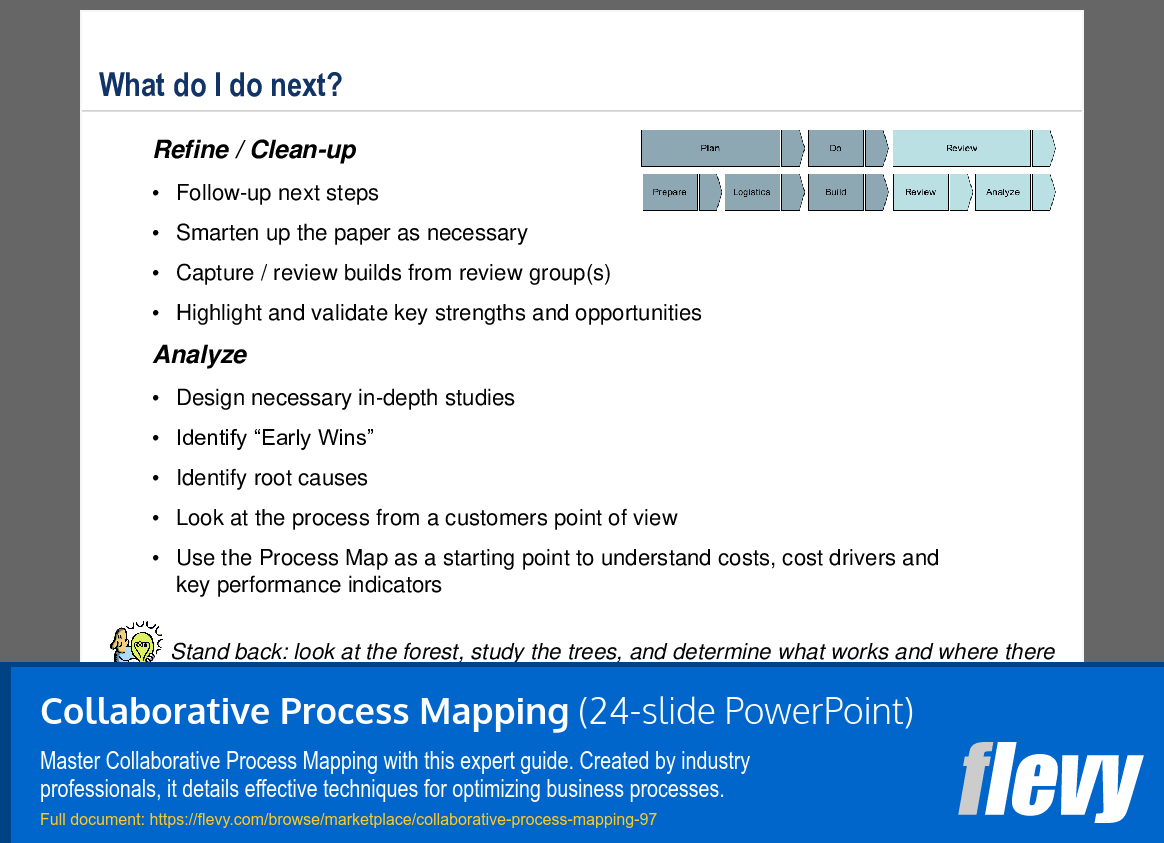
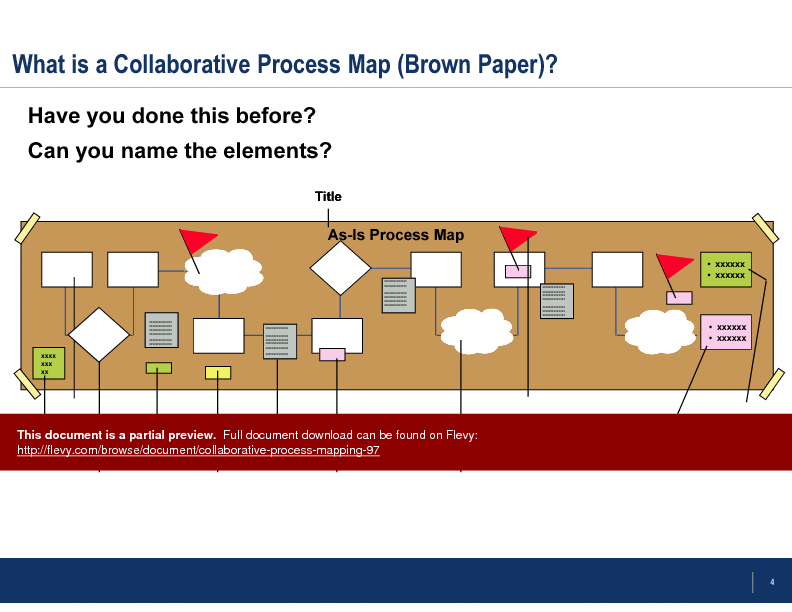
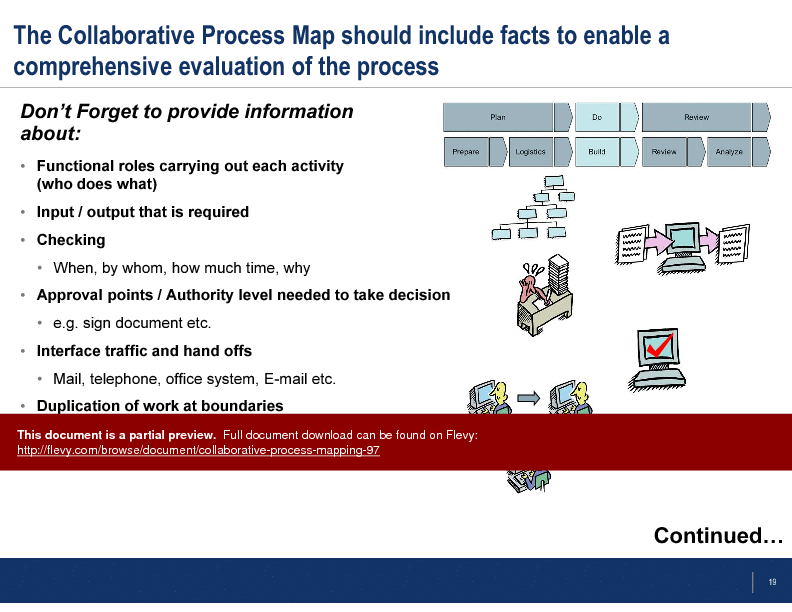

The presentation teaches the Collaborative Process Mapping technique. The Collaborative Process Map is a logical representation of an entire business process flow, detailing the actual steps taken, applicable interfaces, decision points, and information flows
Collaborative Process Mapping is a hands-on approach that involves all key stakeholders in the process. This document provides a step-by-step guide to creating an As-Is Process Map using brown paper and post-its. The visual representation helps in identifying bottlenecks, redundancies, and inefficiencies in your current processes. It’s a practical tool for fostering team collaboration and gaining a holistic view of your operations.
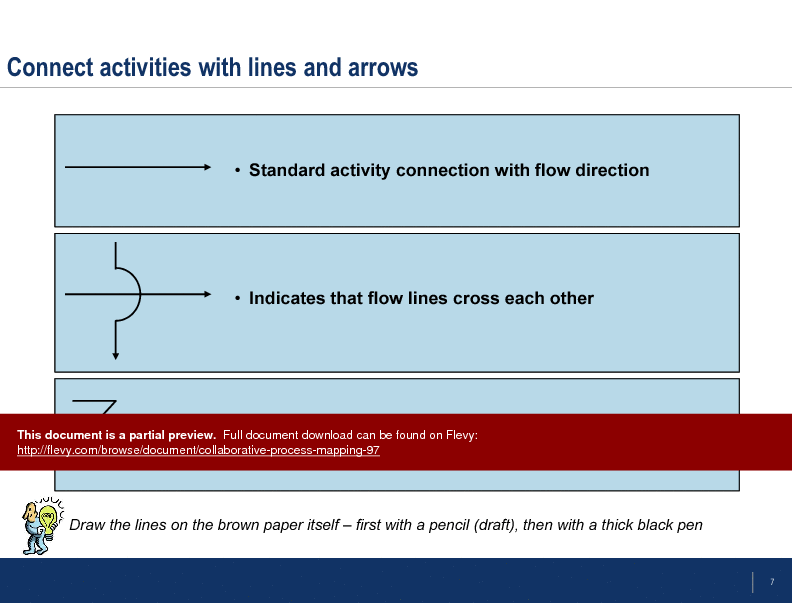
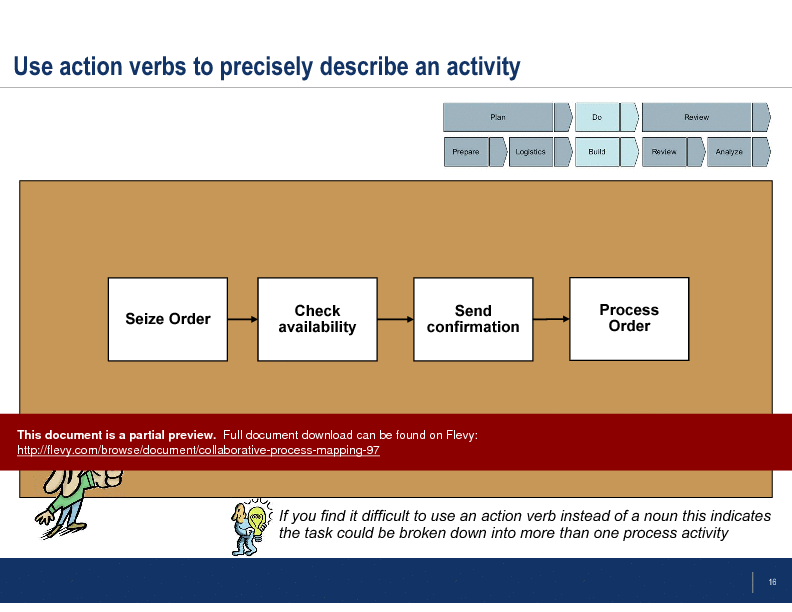
The guide emphasizes the importance of connecting activities with lines and arrows, ensuring clarity in the flow of tasks. Standard activity connections and flow lines crossing each other are clearly illustrated, making it easier to understand complex processes. The document also advises on the use of action verbs to describe activities precisely, enhancing the accuracy of the process map.
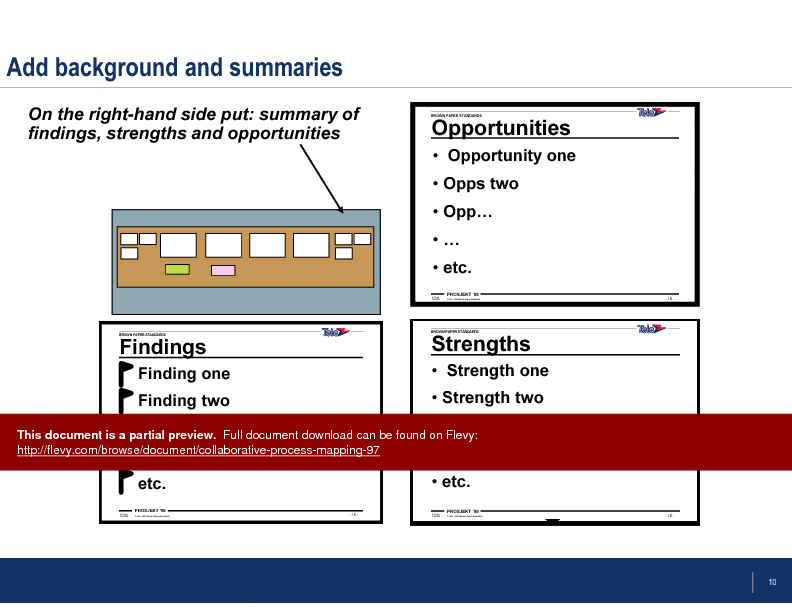
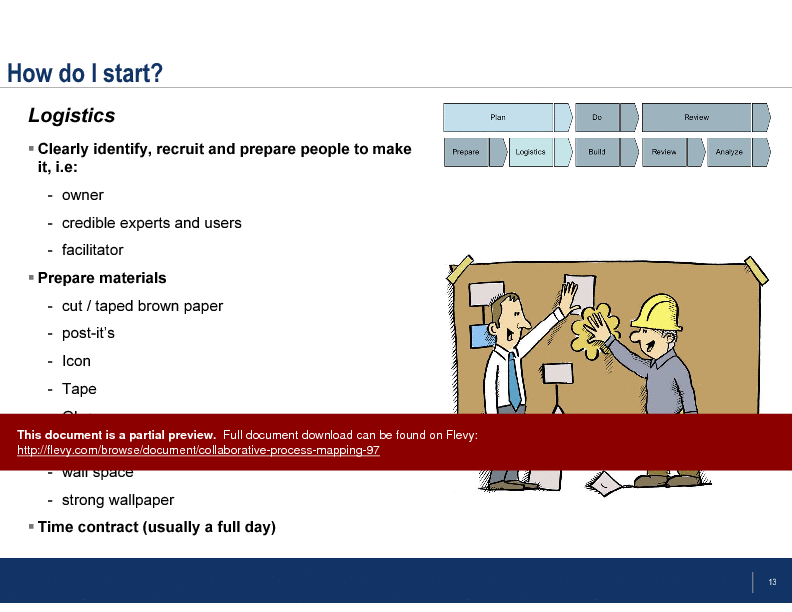
Summarizing findings, strengths, and opportunities on the right-hand side of the map provides a quick reference for decision-makers. This approach ensures that all critical insights are captured and easily accessible. The document outlines the logistics of preparing for a collaborative process mapping session, including identifying key participants and gathering necessary materials.
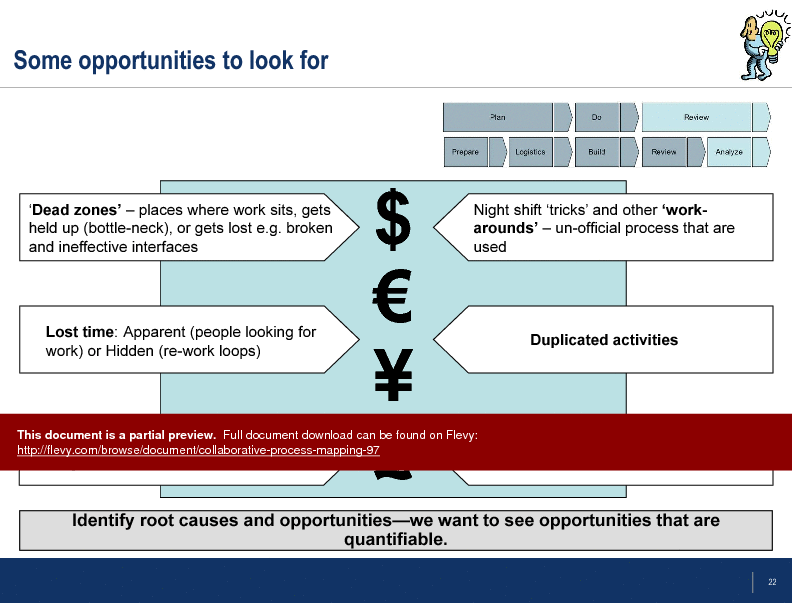
The presentation also highlights common opportunities for improvement, such as dead zones, lost time, and duplicated activities. By identifying these areas, organizations can streamline their processes and improve efficiency. This document is an essential resource for any business looking to optimize its operations through collaborative process mapping.
Got a question about the product? Email us at support@flevy.com or ask the author directly by using the "Ask the Author a Question" form. If you cannot view the preview above this document description, go here to view the large preview instead.
Executive Summary
The Collaborative Process Mapping presentation is a consulting-grade resource designed to help organizations visualize and improve their business processes. This expert guide, reflecting McKinsey, Bain, or BCG-quality standards (not affiliated), provides a structured approach to mapping processes collaboratively. Users will learn to identify strengths and opportunities for improvement, quantify resource requirements, and engage stakeholders effectively. By mastering these techniques, executives and consultants can drive meaningful change within their organizations.
Who This Is For and When to Use
• Business process analysts seeking to enhance process efficiency
• Project managers leading process improvement initiatives
• Integration leaders aiming to align cross-functional teams
• Consultants facilitating workshops on process optimization
Best-fit moments to use this deck:
• During process improvement workshops to visualize current workflows
• When preparing for change management initiatives
• To engage stakeholders in identifying process inefficiencies
Learning Objectives
• Define Collaborative Process Mapping and its significance in process improvement
• Build a comprehensive Collaborative Process Map using brown paper techniques
• Identify and quantify strengths and opportunities within existing processes
• Analyze process flows to uncover inefficiencies and bottlenecks
• Engage stakeholders effectively throughout the mapping process
• Develop actionable insights for process optimization
Table of Contents
• Introduction to Collaborative Process Mapping (page 2)
• Elements of Collaborative Process Mapping (page 3)
• Building the Process Map (page 11)
• Describing Process Activities (page 15)
• Identifying Opportunities and Strengths (page 22)
• Construction Guidelines (page 23)
• Summary and Next Steps (page 24)
Primary Topics Covered
• Collaborative Process Mapping - A method for visualizing business processes to identify strengths and opportunities for improvement.
• Brown Paper Technique - A low-tech, high-touch approach to mapping processes that engages stakeholders in real-time.
• Process Flow Analysis - Techniques for analyzing the flow of activities, decision points, and information exchanges within a process.
• Stakeholder Engagement - Strategies for involving a broad cross-section of employees in the mapping process to gather insights.
• Opportunity Identification - Methods for flagging areas of improvement and quantifying potential benefits.
• Action Verb Usage - Guidelines for describing activities using clear and concise action verbs to enhance clarity.
Deliverables, Templates, and Tools
• Collaborative Process Map template for visualizing process flows
• Brown paper mapping materials checklist (post-its, markers, tape)
• Stakeholder sign-in sheet for workshop participation
• Opportunity flagging system to highlight strengths and areas for improvement
• Process activity description guidelines to ensure clarity and precision
• Summary panel template for findings and recommendations
Slide Highlights
• Overview of Collaborative Process Mapping and its benefits
• Visual examples of the brown paper technique in action
• Guidelines for identifying and quantifying process strengths and opportunities
• Step-by-step instructions for building a Collaborative Process Map
• Tips for engaging stakeholders and capturing their insights
Potential Workshop Agenda
Collaborative Process Mapping Workshop (Full Day)
• Introduction and Objectives (30 minutes)
• Overview of Process Mapping Techniques (1 hour)
• Hands-on Brown Paper Mapping Session (3 hours)
• Group Review and Feedback Session (1 hour)
• Identifying Opportunities and Next Steps (1 hour)
Customization Guidance
• Tailor the process map to reflect specific organizational terminology and workflows
• Adjust the scope of the mapping session to focus on particular business units or processes
• Incorporate organizational goals and metrics to align mapping outcomes with strategic objectives
Secondary Topics Covered
• Process hierarchy and activity levels for effective mapping
• Techniques for analyzing decision points and interface traffic
• Methods for quantifying process performance metrics
• Strategies for addressing process bottlenecks and inefficiencies
• Best practices for facilitating collaborative workshops
FAQ
What is Collaborative Process Mapping?
Collaborative Process Mapping is a visual technique used to represent business processes, helping teams identify strengths, opportunities, and areas for improvement.
How do I start a Collaborative Process Mapping session?
Begin by clarifying the objective and scope of the mapping session, identifying the process to model, and preparing the necessary materials and participants.
What materials do I need for a brown paper mapping session?
Essential materials include brown paper, post-its, markers, tape, and a sign-in sheet for participants.
How do I identify opportunities for improvement during the mapping process?
Use flags to highlight areas of improvement, engage participants in discussions about challenges, and quantify potential benefits.
What are the key elements of a Collaborative Process Map?
Key elements include tasks, decisions, strengths, opportunities, and links to other processes.
How can I ensure stakeholder engagement during the mapping session?
Encourage participation by inviting a diverse group of employees, facilitating open discussions, and capturing their insights throughout the session.
What should I do after creating the Collaborative Process Map?
Review the map with stakeholders, identify key findings, and develop actionable next steps for process improvement.
How do I quantify the benefits of process improvements?
Estimate potential savings, efficiency gains, and resource reductions based on identified opportunities and improvements.
What are common pitfalls to avoid during Collaborative Process Mapping?
Avoid making assumptions about the process, resist value judgments during mapping, and ensure continuity by having consistent participants throughout the session.
Glossary
• Collaborative Process Mapping - A technique for visualizing and improving business processes through stakeholder engagement.
• Brown Paper Technique - A low-tech method for mapping processes that emphasizes collaboration.
• Process Flow - The sequence of activities and decisions in a business process.
• Stakeholder Engagement - Involving relevant parties in the mapping process to gather insights and foster collaboration.
• Opportunity Flagging - The practice of highlighting areas for improvement within a process map.
• Action Verb - A verb used to describe a task or activity clearly and concisely.
• Decision Point - A juncture in a process where a choice must be made, often requiring a yes/no answer.
• Interface Traffic - The flow of information and interactions between different processes or systems.

• Process Hierarchy - The structured levels of processes from mega processes to specific activities.
• Bottleneck - A point in a process where the flow is restricted, causing delays.
• Stakeholder - An individual or group with an interest in the outcome of a process.
• Quantifiable Benefits - Measurable improvements resulting from process optimization efforts.
Source: Best Practices in Process Maps PowerPoint Slides: Collaborative Process Mapping PowerPoint (PPT) Presentation Slide Deck, Process Consulting
|
Receive our FREE presentation on Operational Excellence
This 50-slide presentation provides a high-level introduction to the 4 Building Blocks of Operational Excellence. Achieving OpEx requires the implementation of a Business Execution System that integrates these 4 building blocks. |