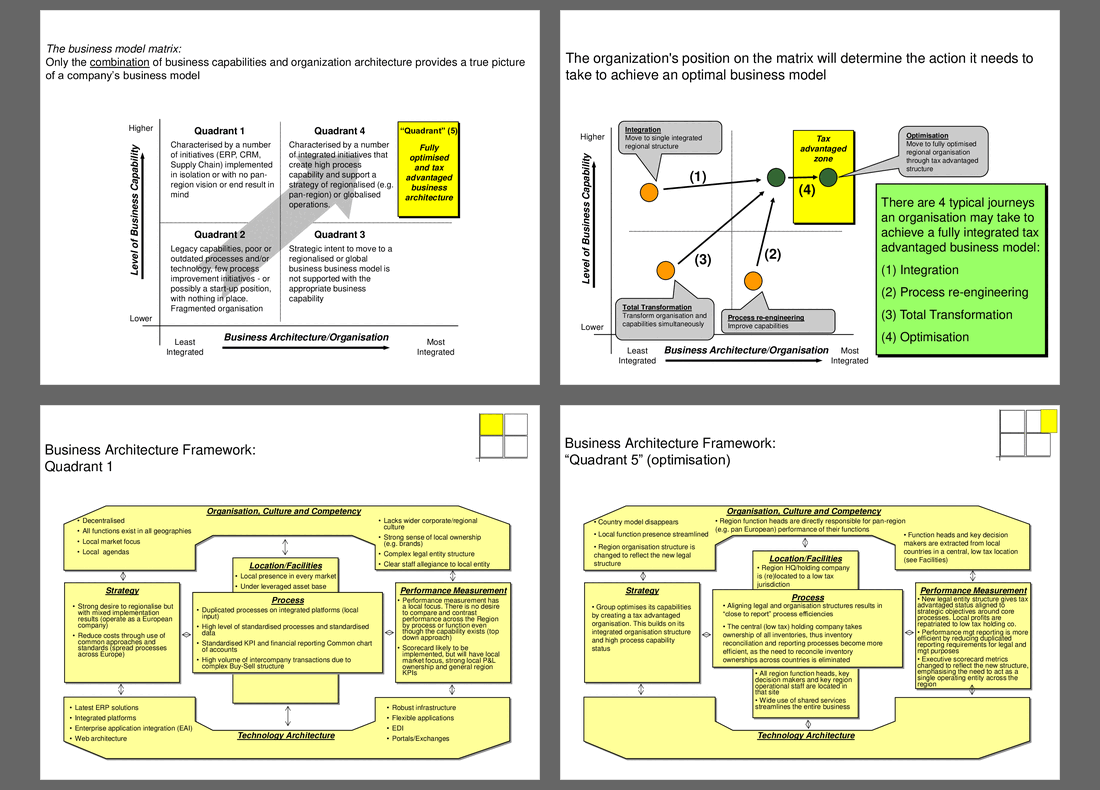
The business model matrix: Only the combination of business capabilities and organization architecture provides a true picture of a company's business model.
The organization's position on the matrix will determine the action it needs to take to achieve an optimal business model. This document introduces the five quot;quadrant" capability blueprints.
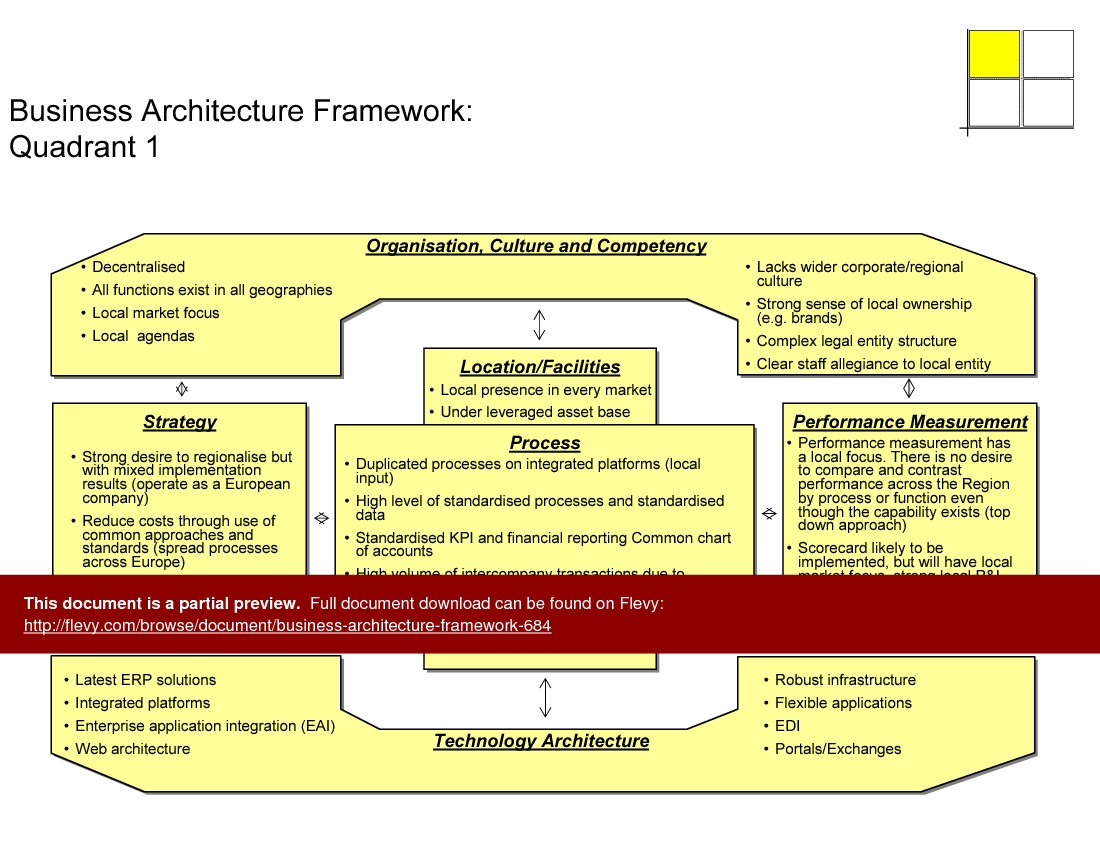
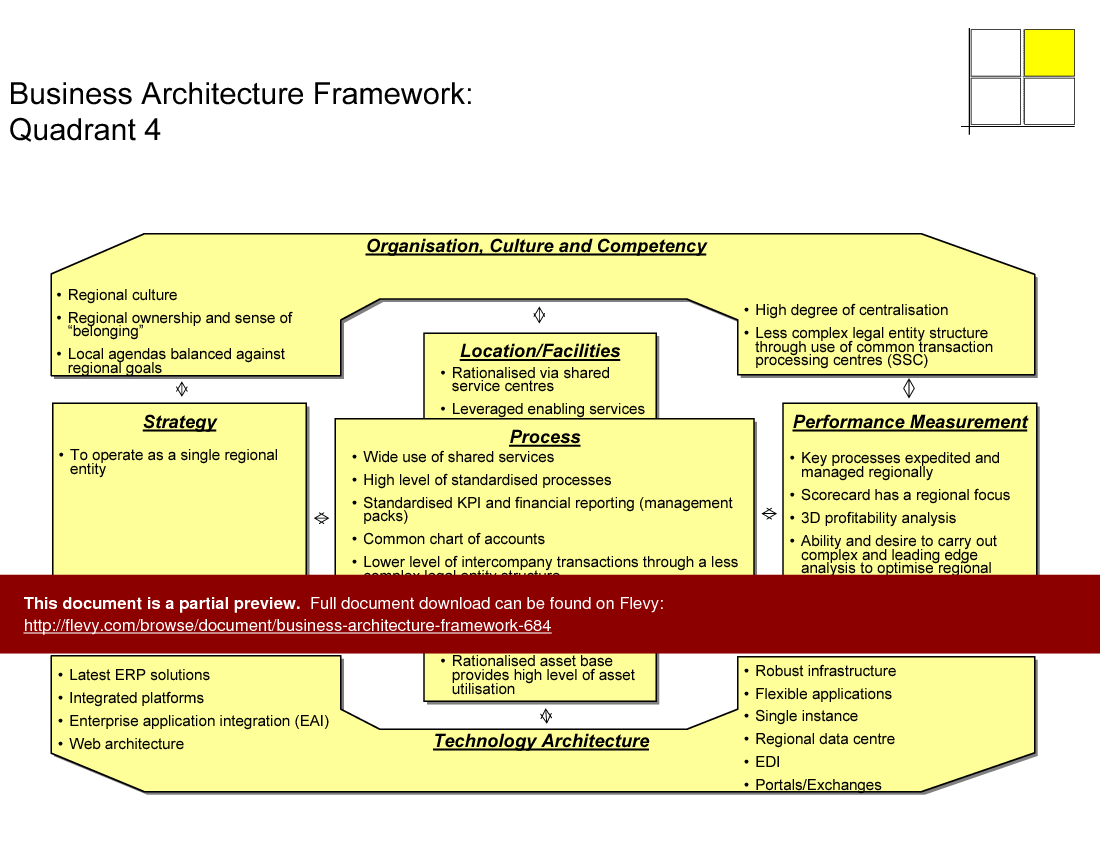
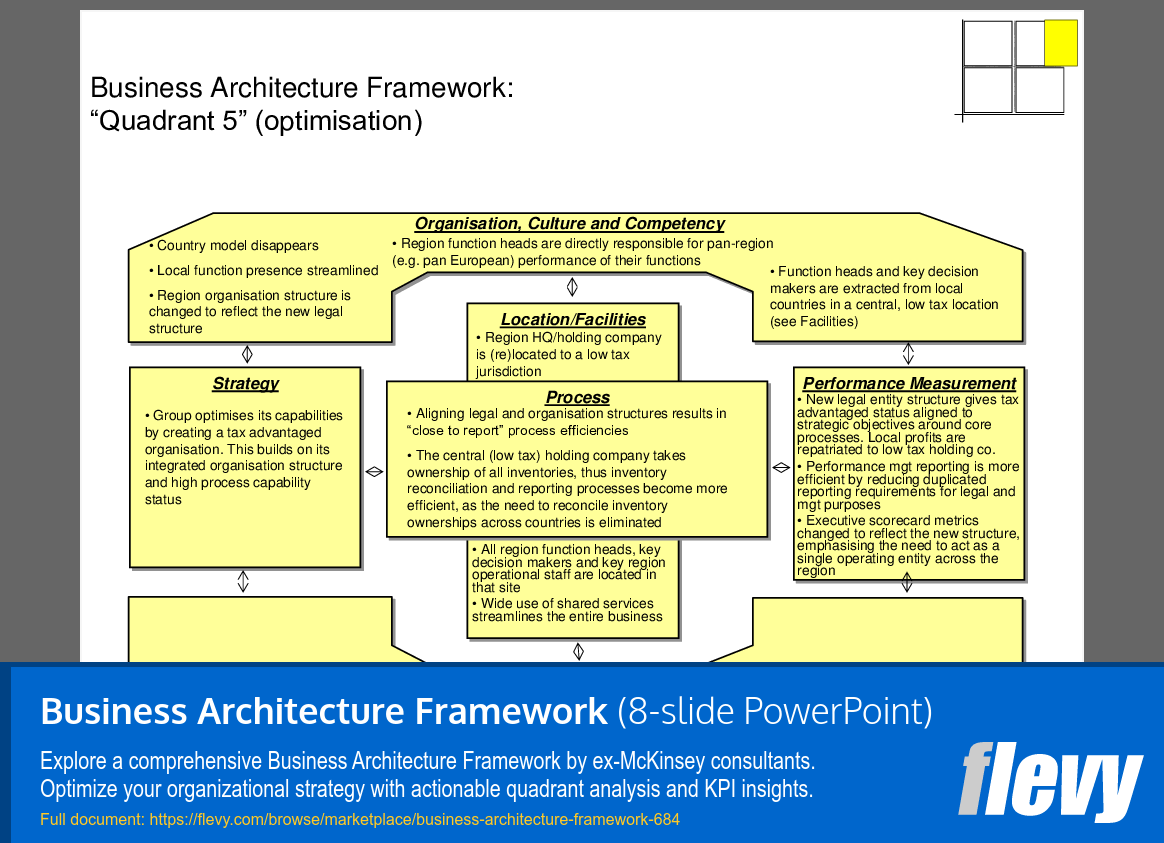
This framework provides a comprehensive analysis of organizational culture and competency, highlighting the importance of decentralization and local market focus. It delves into the intricacies of location and facilities, emphasizing the need for local presence and the challenges of under-leveraged asset bases. The document also examines process optimization, stressing the significance of standardized KPI and financial reporting, while addressing the issues of duplicated processes and high transaction volumes.
Performance measurement is another critical area covered, with a focus on local performance metrics and the lack of regional comparison. The framework underscores the necessity of a robust infrastructure and flexible applications, essential for supporting integrated platforms and enterprise application integration (EAI). It also touches on the importance of web architecture in modern business environments.
Quadrant analysis is a key feature of this document, providing actionable insights into different organizational strategies. For instance, Quadrant 1 emphasizes regionalization with mixed results, while Quadrant 4 advocates for operating as a single regional entity. Each quadrant offers a unique blueprint for aligning business capabilities with organizational goals.
This document is an invaluable resource for C-level executives aiming to optimize their business architecture. It offers a detailed roadmap for achieving a balanced and efficient organizational structure, tailored to the specific needs and challenges of different business environments.
Got a question about the product? Email us at support@flevy.com or ask the author directly by using the "Ask the Author a Question" form. If you cannot view the preview above this document description, go here to view the large preview instead.
Executive Summary
The Business Architecture Framework presentation provides a structured approach to understanding and optimizing organizational capabilities through a detailed matrix. Developed by ex-McKinsey consultants, this framework enables corporate executives and consultants to assess their organization's position within a five-quadrant model, facilitating strategic planning and decision-making. Users will learn to identify their current business capabilities and architecture, allowing them to implement targeted initiatives for improvement, such as integration, process re-engineering, and total transformation.
Who This Is For and When to Use
• Corporate executives seeking to enhance organizational strategy and performance
• Integration leaders managing cross-functional initiatives and transformations
• Consultants advising organizations on operational efficiency and capability optimization
• Business analysts focused on performance measurement and improvement strategies
Best-fit moments to use this deck:
• During strategic planning sessions to assess current capabilities and identify gaps
• In workshops aimed at aligning teams on business architecture and integration strategies
• When evaluating potential initiatives for process improvement and organizational transformation
Learning Objectives
• Define the 5 quadrants of the Business Architecture Framework and their implications
• Assess an organization's current position within the matrix to identify improvement areas
• Develop actionable strategies for integration and optimization based on quadrant analysis
• Establish performance measurement metrics aligned with organizational goals
• Create a roadmap for implementing process re-engineering initiatives
• Foster alignment across teams on strategic objectives and operational capabilities
Table of Contents
• Introduction to the Business Architecture Framework (page 1)
• Overview of the Five Quadrants (page 2)
• Quadrant 1: Fragmented Organization (page 4)
• Quadrant 2: Decentralized Operations (page 5)
• Quadrant 3: Mixed Implementation Results (page 6)
• Quadrant 4: Regional Integration (page 7)
• Quadrant 5: Optimization Strategies (page 8)
Primary Topics Covered
• Business Model Matrix - A visual representation that combines business capabilities and organizational architecture to assess a company's business model.
• Quadrant Analysis - A framework that categorizes organizations into 5 quadrants based on their level of integration and business capability.
• Integration Strategies - Approaches for moving towards a single integrated regional structure to enhance operational efficiency.
• Process Re-engineering - Techniques for improving existing capabilities and processes to better align with strategic goals.
• Total Transformation - A comprehensive approach to simultaneously transform organizational capabilities and architecture.
• Performance Measurement - Metrics and standards for evaluating organizational performance across different regions and functions.
Deliverables, Templates, and Tools
• Business capability assessment template for identifying current organizational strengths and weaknesses
• Quadrant positioning tool to visualize and analyze organizational placement within the framework
• Performance measurement scorecard template for tracking KPIs and operational metrics
• Integration roadmap template outlining steps for achieving a fully optimized business model
• Process re-engineering checklist to guide teams through improvement initiatives
• Workshop facilitation guide for conducting effective sessions on business architecture
Slide Highlights
• Overview slide detailing the 5 quadrants and their characteristics
• Quadrant 1 slide illustrating the fragmented organization and its challenges
• Quadrant 4 slide showcasing strategies for regional integration and performance optimization
• Visual representation of the business model matrix linking capabilities and architecture
• Performance measurement framework slide highlighting key metrics and reporting standards
Potential Workshop Agenda
Introduction to Business Architecture (30 minutes)
• Overview of the framework and its significance
• Discussion on the 5 quadrants and their implications
Quadrant Analysis Breakout (60 minutes)
• Group activity to assess current organizational positioning
• Identify strengths and weaknesses based on quadrant characteristics
Strategy Development Session (90 minutes)
• Collaborative brainstorming on integration and optimization strategies
• Establish actionable next steps and assign responsibilities
Customization Guidance
• Tailor the quadrant analysis to reflect specific organizational contexts and regional considerations
• Adjust performance metrics to align with unique business objectives and industry standards
• Incorporate organizational terminology and frameworks to enhance relevance and engagement
Secondary Topics Covered
• Legacy systems and their impact on organizational performance
• The role of technology architecture in enabling business capabilities
• Cultural considerations in implementing change initiatives
• Challenges associated with decentralized operations and local agendas
Topic FAQ
Document FAQ
These are questions addressed within this presentation.
What is the purpose of the Business Architecture Framework?
The framework provides a structured approach to assess and optimize organizational capabilities, helping businesses identify their current position and develop targeted strategies for improvement.
How can organizations determine their quadrant placement?
Organizations can assess their quadrant placement by evaluating their level of integration and business capabilities against the characteristics outlined in the framework.
What are the typical journeys an organization may take to achieve optimization?
Organizations typically pursue integration, process re-engineering, total transformation, or optimization to enhance their business architecture and capabilities.
How does performance measurement fit into the framework?
Performance measurement is integral to the framework, providing metrics and standards for evaluating organizational performance and aligning it with strategic goals.
What tools are available to assist with implementing the framework?
The framework includes templates for capability assessments, quadrant positioning, performance measurement scorecards, and integration roadmaps to guide organizations through the implementation process.
Can the framework be customized for specific industries?
Yes, the framework is adaptable and can be customized to reflect the unique contexts, terminology, and challenges of different industries.
What role does technology play in business architecture?
Technology architecture is crucial in enabling business capabilities, supporting integration efforts, and facilitating efficient processes across the organization.
How can organizations ensure alignment across teams during implementation?
Regular workshops and collaborative sessions can foster alignment, ensuring that all teams understand strategic objectives and their roles in achieving them.
Glossary
• Business Architecture - The structure of an organization’s capabilities and processes.
• Quadrant - A section of the matrix representing a specific level of business capability and integration.
• Integration - The process of combining various functions and processes into a cohesive whole.
• Process Re-engineering - The analysis and redesign of workflows and processes for improvement.
• Performance Measurement - The evaluation of an organization's performance against established metrics.
• Optimization - The act of making the best or most effective use of resources or processes.
• Decentralized Operations - A structure where functions operate independently across different regions.
• Regional Integration - The alignment of operations and processes across a specific geographic area.
• Legacy Systems - Outdated technology systems that may hinder operational efficiency.
• KPI - Key Performance Indicator, a measurable value that demonstrates how effectively an organization is achieving key objectives.
• Shared Services - Centralized services that support multiple business units or functions.
• Tax Advantage - A legal structure or strategy that minimizes tax liabilities.
• Enterprise Application Integration (EAI) - The use of software and services to enable the integration of different applications.
• Web Architecture - The structure and design of web-based applications and services.
• Standardized Processes - Consistent procedures and practices across an organization.
• Complex Buy-Sell Structure - A complicated arrangement of transactions between entities within an organization.
• Performance Management - The process of ensuring that goals are consistently being met in an effective and efficient manner.
• Organizational Culture - The values, beliefs, and behaviors that shape how work gets done within an organization.
• Legal Entity Structure - The organization of different legal entities within a business.
• Centralized Structure - An organizational model where decision-making is concentrated at the top levels.
• Operational Efficiency - The ability to deliver products or services in the most cost-effective manner without compromising quality.
Source: Best Practices in Strategic Analysis, Business Architecture PowerPoint Slides: Business Architecture Framework PowerPoint (PPT) Presentation Slide Deck, Documents & Files
|
Download our FREE Strategy & Transformation Framework Templates
Download our free compilation of 50+ Strategy & Transformation slides and templates. Frameworks include McKinsey 7-S, Balanced Scorecard, Disruptive Innovation, BCG Curve, and many more. |










