
BCG Matrix - Your Portfolio Planning Model   69-slide PPT PowerPoint presentation slide deck (PPTX)
$45.00

BCG Matrix - Your Portfolio Planning Model (69-slide PPT PowerPoint presentation slide deck (PPTX)) Preview Image
Log in to unlock full preview.
BCG Matrix - Your Portfolio Planning Model (69-slide PPT PowerPoint presentation slide deck (PPTX)) Preview Image
Arrow   Click main image to view in full screen.

BCG Matrix - Your Portfolio Planning Model (PowerPoint PPTX Slide Deck)

PowerPoint (PPTX) 69 Slides

$45.00
Developed by a team of security experts with global consulting experience at McKinsey, Deloitte, and Capgemini.
Add to Cart


Immediate download
Fully editable PowerPoint
Free lifetime updates

BCG GROWTH-SHARE MATRIX PPT DESCRIPTION

Editor Summary BCG Matrix - Your Portfolio Planning Model is a 69-slide PowerPoint (PPTX) presentation by RadVector Consulting that explains the BCG growth-share matrix and includes deliverables such as a BCG Matrix template, implementation checklist, case study examples, guidelines for analyzing historical sales and growth data, a competitor market-share comparison framework, and quadrant-based strategic recommendations. Read more

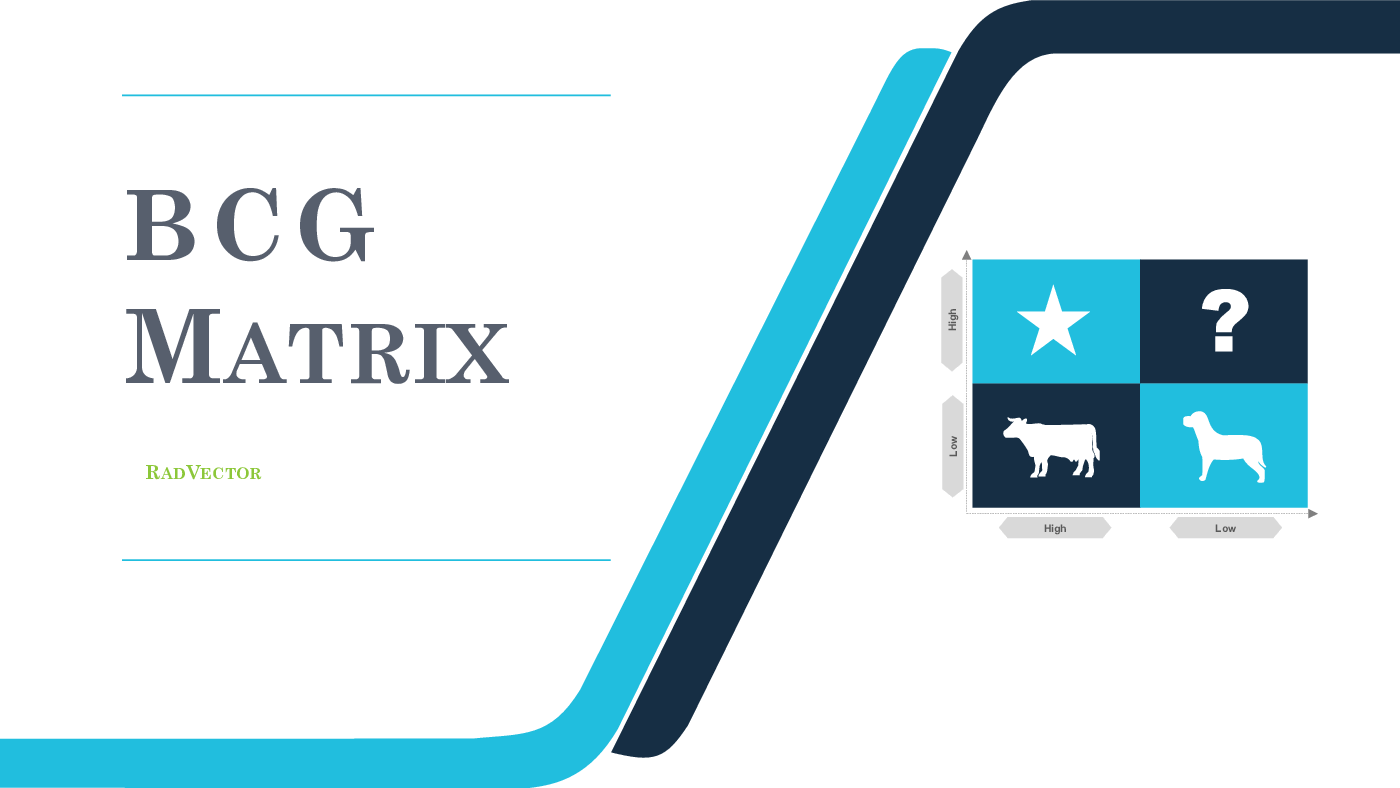
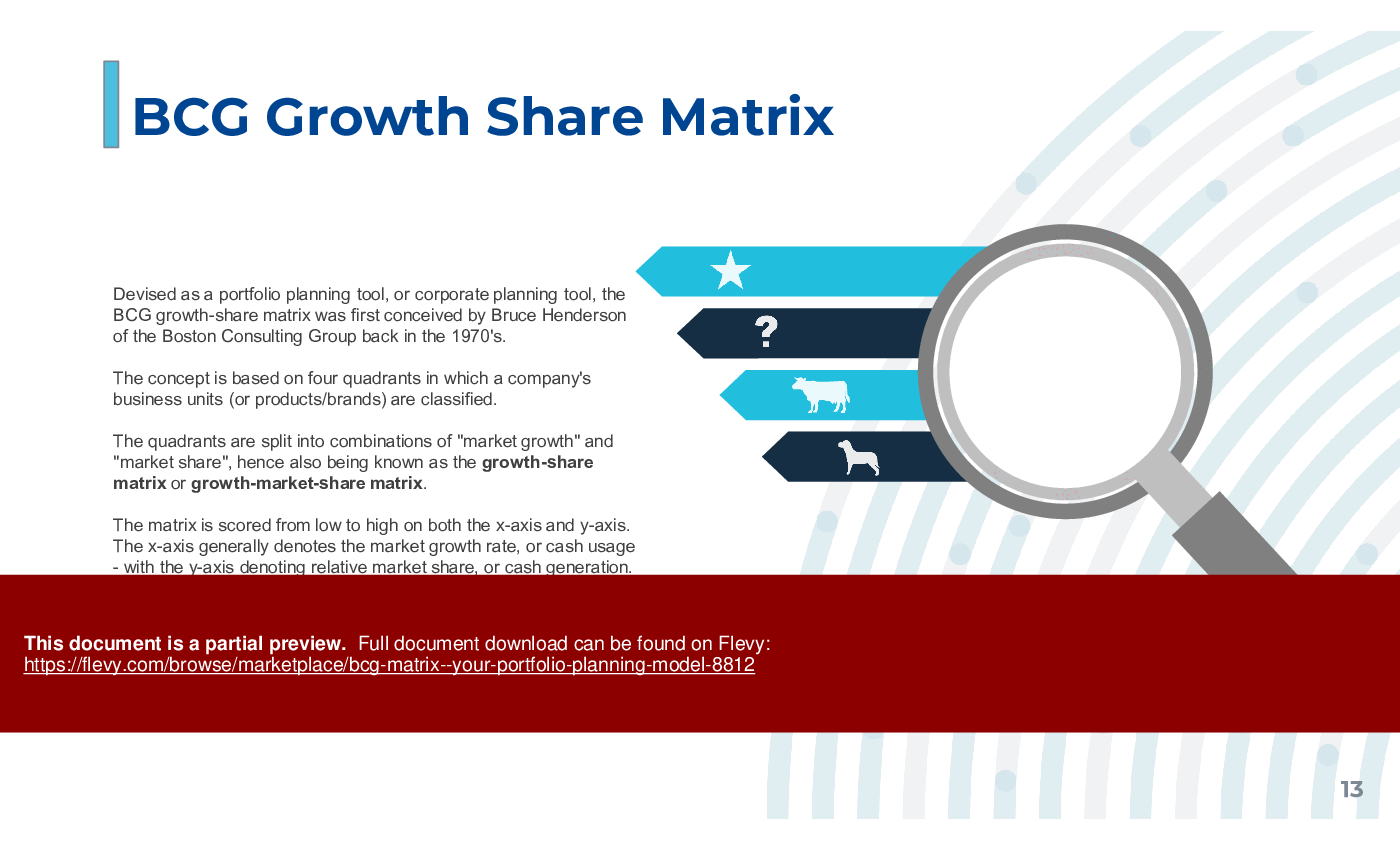
The Boston Consulting Group (BCG) Matrix, also known as the Growth-Share Matrix, is a strategic tool developed by BCG founder Bruce Henderson in the early 1970s. This framework helps businesses analyze their product portfolios and make informed decisions about investment and resource allocation. The BCG Matrix classifies products into four categories based on two dimensions: market growth rate and relative market share.

Four Quadrants of the BCG Matrix

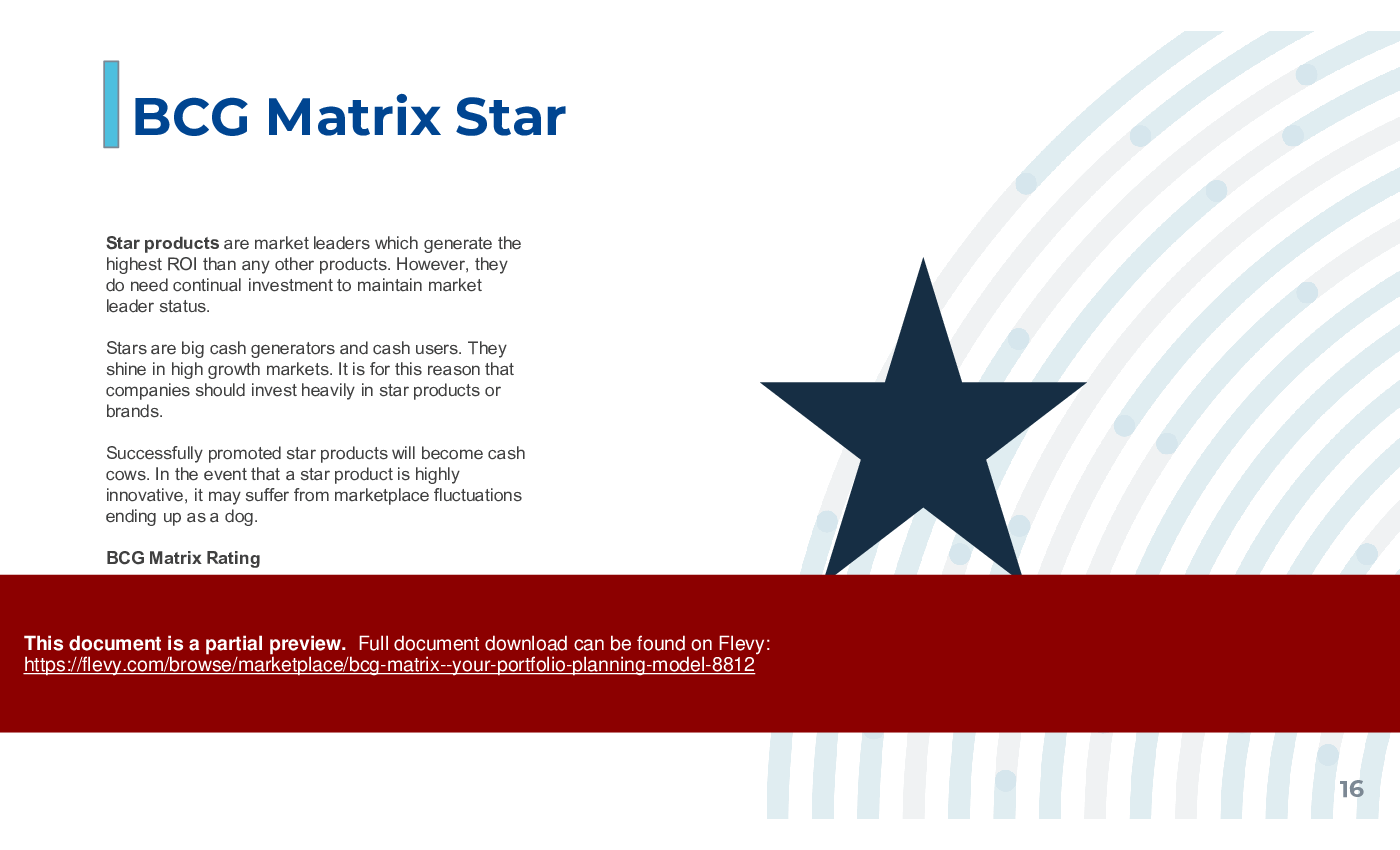
1. Stars: These products have high market share in a fast-growing industry. They are often leaders in their markets and require significant investment to maintain or grow their position. Stars have the potential to become Cash Cows as the market matures and growth slows down.

2. Cash Cows: Products in this quadrant have a high market share in a slow-growing industry. They generate consistent cash flow with minimal investment, providing the financial resources needed to support other business units. Cash Cows are typically mature products with a strong customer base.

3. Question Marks: These products operate in high-growth markets but have a low market share. They require significant investment to increase market share but come with high uncertainty regarding their potential for success. Management must decide whether to invest heavily to turn Question Marks into Stars or divest them if they do not show promise.

4. Dogs: Products in this category have low market share in low-growth markets. They typically generate low returns and consume more resources than they provide. Companies often consider divesting Dogs to free up resources for more promising opportunities.

Strategic Implications

The BCG Matrix provides a visual representation that helps companies prioritize their product portfolios. By understanding which products are Stars, Cash Cows, Question Marks, or Dogs, businesses can make strategic decisions about where to invest, divest, or allocate resources. This analysis helps ensure that the company's investments are aligned with market opportunities and long-term strategic goals.

Limitations and Adaptations

While the BCG Matrix offers valuable insights, it has limitations. It oversimplifies complex market dynamics and does not consider external factors like competitive actions or technological changes. However, it remains a foundational tool in strategic planning, often used in conjunction with other analyses to provide a more comprehensive view of a company's strategic options.

The BCG Matrix is a classic strategic framework that continues to help companies manage their product portfolios effectively. By categorizing products based on market growth and market share, businesses can allocate resources more efficiently and make strategic decisions that drive long-term success.

Got a question about the product? Email us at support@flevy.com or ask the author directly by using the "Ask the Author a Question" form. If you cannot view the preview above this document description, go here to view the large preview instead.

MARCUS OVERVIEW

This synopsis was written by Marcus [?] based on the analysis of the full 69-slide presentation.


Executive Summary
The BCG Matrix - Your Portfolio Planning Model (PPTX) is a strategic tool developed by Bruce Henderson of the Boston Consulting Group in the early 1970s. This presentation provides a comprehensive overview of the BCG growth-share matrix, a framework that classifies business units or products based on their market growth rate and relative market share. By utilizing this model, corporate executives and consultants can effectively assess their product portfolio, identify investment opportunities, and make informed decisions regarding resource allocation. Download this ready-to-use business template to enhance your strategic planning efforts.

Who This Is For and When to Use
•  Corporate executives responsible for strategic planning and portfolio management
•  Marketing leaders seeking to optimize product investments
•  Business consultants advising clients on portfolio strategy
•  Product managers aiming to evaluate product performance

Best-fit moments to use this deck:
•  During strategic planning sessions to assess product performance
•  When evaluating investment opportunities in high-growth markets
•  For portfolio reviews to identify underperforming products
•  In workshops focused on resource allocation and strategic decision-making

Learning Objectives
•  Define the BCG Matrix and its relevance in portfolio management
•  Analyze market growth rates and relative market shares of products
•  Classify products into the 4 BCG Matrix quadrants: Stars, Cash Cows, Question Marks, and Dogs
•  Develop strategic recommendations based on BCG Matrix analysis
•  Identify investment priorities for product development and marketing
•  Utilize the BCG Matrix to enhance long-term profitability

Table of Contents
•  Introduction to the BCG Matrix (page 3)
•  Understanding Market Share and Growth (page 4)
•  The BCG Growth-Share Matrix Overview (page 9)
•  Quadrant Analysis: Stars, Cash Cows, Question Marks, Dogs (page 10)
•  Strategic Implications of Each Quadrant (page 15)
•  BCG Matrix in Marketing Strategy (page 24)
•  Case Studies: BCG Matrix for Major Brands (page 25)
•  Checklist for BCG Matrix Application (page 40)
•  Conclusion and Next Steps (page 41)

Primary Topics Covered
•  BCG Matrix Definition - The BCG Matrix is a strategic tool used to evaluate a company's product portfolio by classifying products based on market growth and market share.
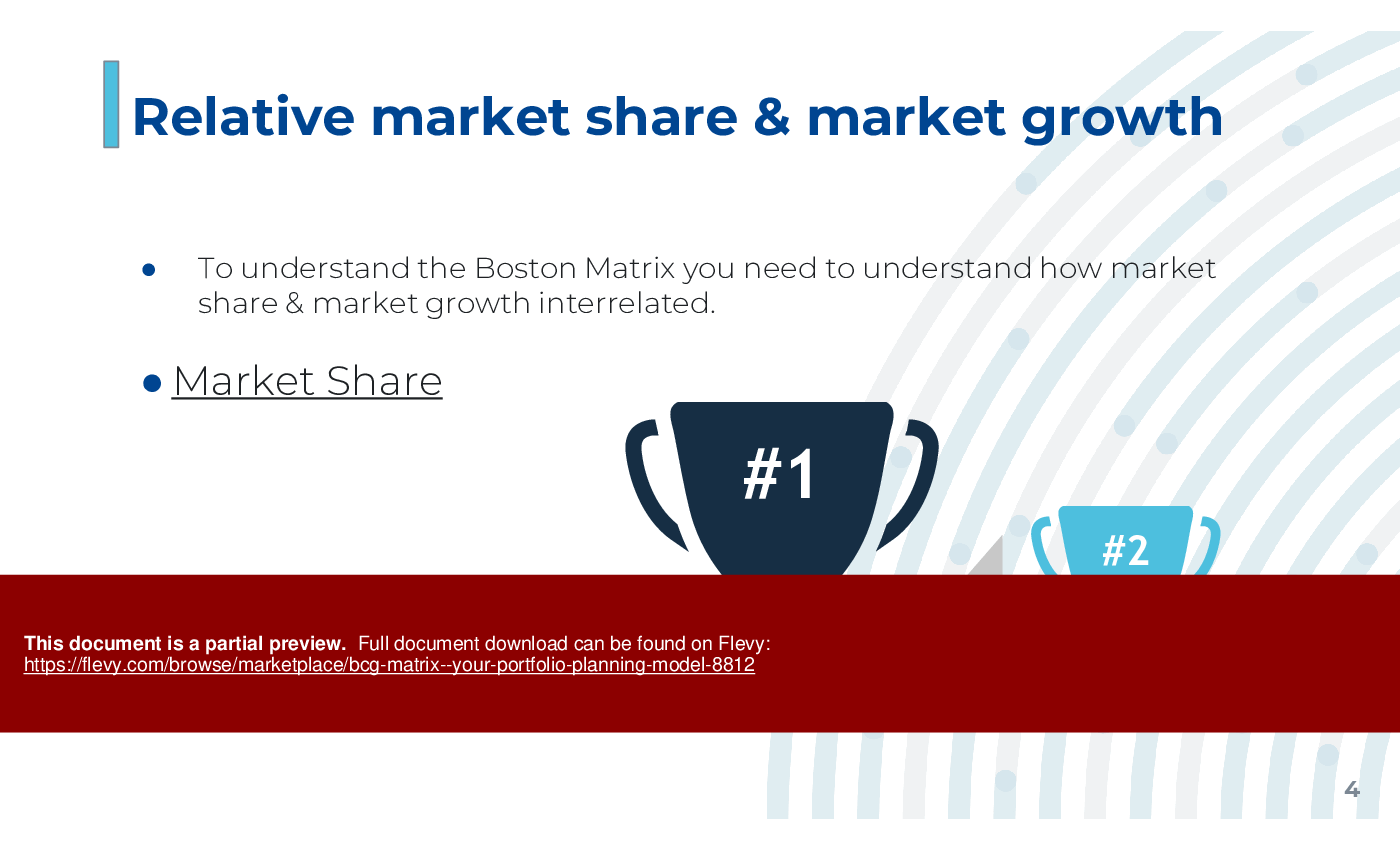
•  Market Share and Growth Analysis - Understanding how market share and growth rates interrelate is crucial for effective portfolio management.
•  Quadrant Classifications - The matrix categorizes products into 4 quadrants: Stars, Cash Cows, Question Marks, and Dogs, each requiring different strategic approaches.
•  Investment Strategies - The BCG Matrix helps determine where to allocate resources for maximum return on investment, focusing on high-growth opportunities.
•  Marketing Implications - The matrix informs marketing strategies by identifying which products to promote and which to phase out.
•  Case Studies - Real-world examples illustrate the application of the BCG Matrix for major brands like Apple, Coca-Cola, and Samsung.

Deliverables, Templates, and Tools
•  BCG Matrix template for product classification
•  Checklist for implementing the BCG Matrix in strategic planning
•  Case study examples for practical application
•  Guidelines for analyzing historical sales and growth data
•  Framework for comparing products to competitors' market share
•  Strategic recommendations based on quadrant analysis

Slide Highlights
•  Overview of the BCG Matrix and its historical context
•  Detailed explanation of each quadrant with strategic implications
•  Visual representation of product classifications for major brands
•  Checklist for applying the BCG Matrix in real-world scenarios
•  Summary of the benefits and limitations of the BCG Matrix

Potential Workshop Agenda
Introduction to the BCG Matrix (30 minutes)
•  Overview of the BCG Matrix and its significance
•  Discussion on market share and growth metrics

Quadrant Analysis and Classification (60 minutes)
•  Group activity to classify products into the BCG Matrix
•  Presentation of findings and strategic implications

Investment Strategy Development (45 minutes)
•  Identify investment priorities based on quadrant analysis
•  Develop actionable recommendations for resource allocation

Conclusion and Next Steps (15 minutes)
•  Recap of key takeaways
•  Outline next steps for implementing the BCG Matrix

Customization Guidance
•  Tailor the BCG Matrix template to reflect your specific product categories and market conditions
•  Update case studies with relevant data from your organization
•  Adjust the checklist to align with your strategic planning processes
•  Incorporate company-specific terminology and metrics for clarity

Secondary Topics Covered
•  Limitations of the BCG Matrix in strategic planning
•  Alternative portfolio analysis models for comparison
•  The role of market dynamics in product classification
•  Integration of the BCG Matrix with other strategic frameworks
•  Best practices for presenting BCG Matrix findings to stakeholders

Topic FAQ

What are the 4 quadrants of the BCG Matrix and what does each represent?

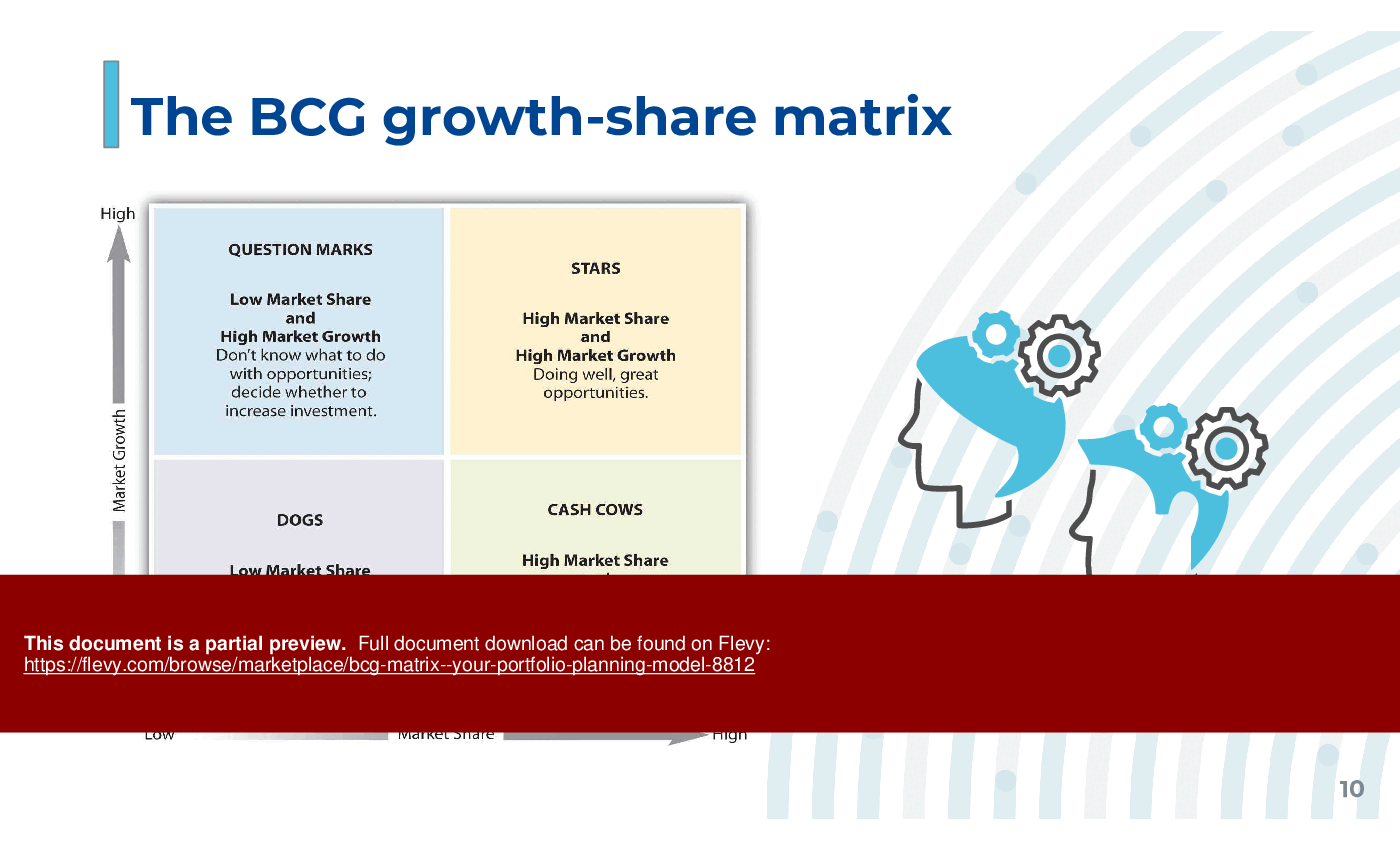
The BCG Matrix classifies products into 4 quadrants: Stars (high market share, high growth), Cash Cows (high share, low growth), Question Marks (low share, high growth), and Dogs (low share, low growth). Each quadrant implies different resource and investment priorities based on market growth and relative share, covering 4 quadrants.

How should I measure market growth rate and relative market share for a BCG analysis?

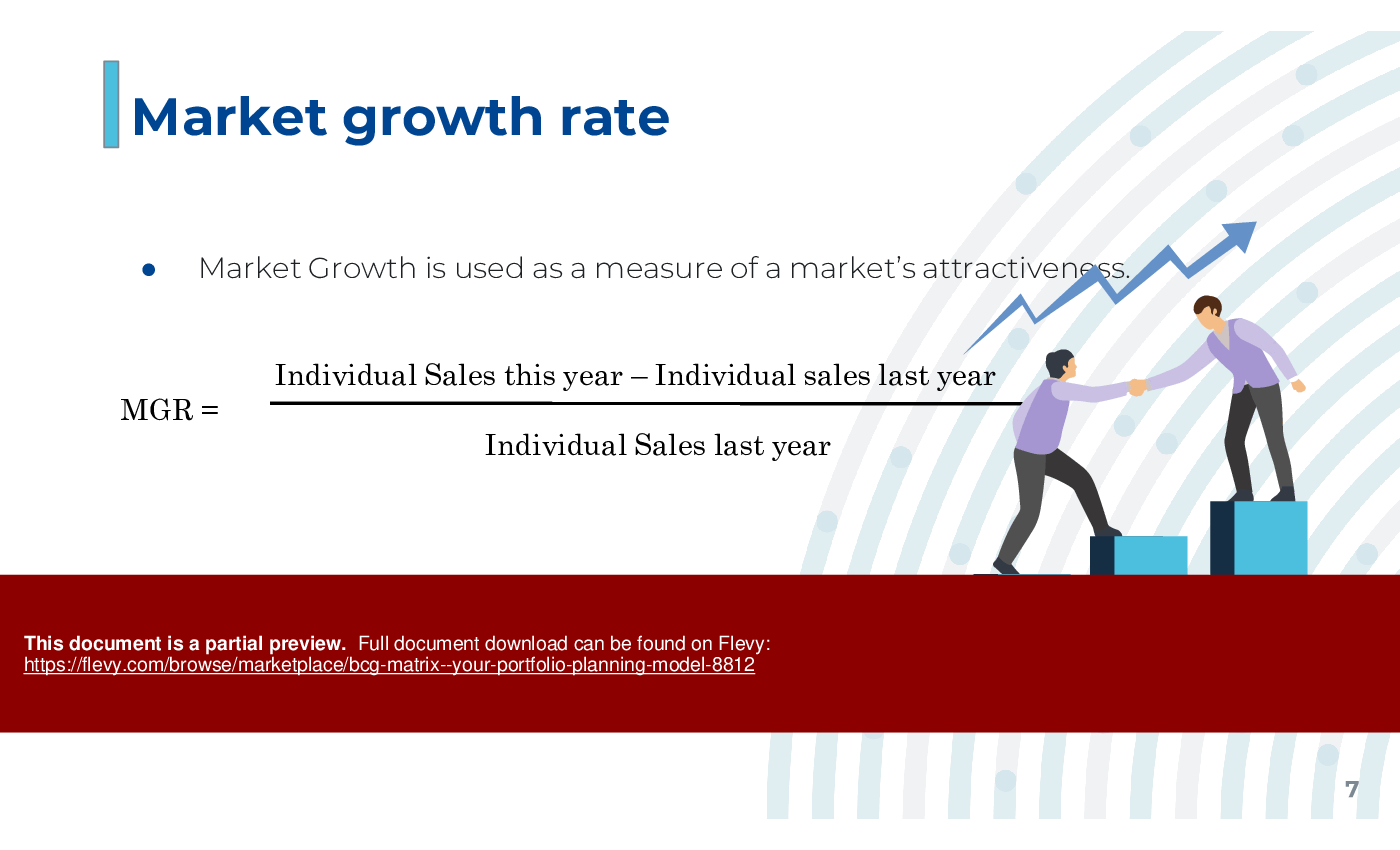
Measure market growth rate using historical sales growth for the relevant market segment and calculate relative market share by comparing a product’s sales to the largest competitor. The template and deliverables include guidelines for analyzing historical sales and growth data and a framework for competitor market-share comparison.

When is the BCG Matrix most useful for portfolio decision-making?

The BCG Matrix is useful during strategic planning sessions, when evaluating investment opportunities in high-growth markets, in scheduled portfolio reviews to spot underperforming products, and in workshops focused on resource allocation and strategic prioritization, such as the scenarios listed in the product’s use-case guidance.

What are the main limitations of using the BCG Matrix for strategy?

The BCG Matrix simplifies portfolio analysis to 2 dimensions—market growth rate and relative market share—which can overlook competitive actions, technological change, and other market dynamics. Users should supplement it with additional analyses to address factors beyond the 2 core dimensions.

What should I look for when choosing a BCG Matrix template or toolkit?

Look for a template that supports product classification, provides a step-by-step checklist for implementation, offers case-study examples, and includes guidelines for analyzing sales and competitor share. Flevy's BCG Matrix - Your Portfolio Planning Model lists a BCG Matrix template, checklist, case studies, and analysis guidelines.

How much time and team effort is typically required to run a BCG Matrix workshop?

A practical workshop agenda in the material allocates about 150 minutes total: 30 minutes for introduction, 60 minutes for quadrant analysis and classification, 45 minutes for investment strategy development, and 15 minutes for conclusion—so plan for a 2.5-hour session with a cross-functional team.

How can marketing teams use the BCG Matrix to allocate budgets across products?

Marketing teams can use quadrant assignments to direct spend: prioritize promotion and growth investment for Stars, maintain efficiency for Cash Cows, selectively invest in promising Question Marks, and consider scaling back or divesting Dogs. The approach maps marketing actions to Stars, Cash Cows, Question Marks, and Dogs.

I need to compare market share consistently across multiple brands—what approach should I use?

Use consistent definitions of market boundaries, normalize historical sales data across brands, and apply a competitor comparison framework to calculate relative market share. The deliverables include a framework for comparing products to competitors' market share and guidelines for analyzing historical sales and growth data.

Document FAQ
These are questions addressed within this presentation.

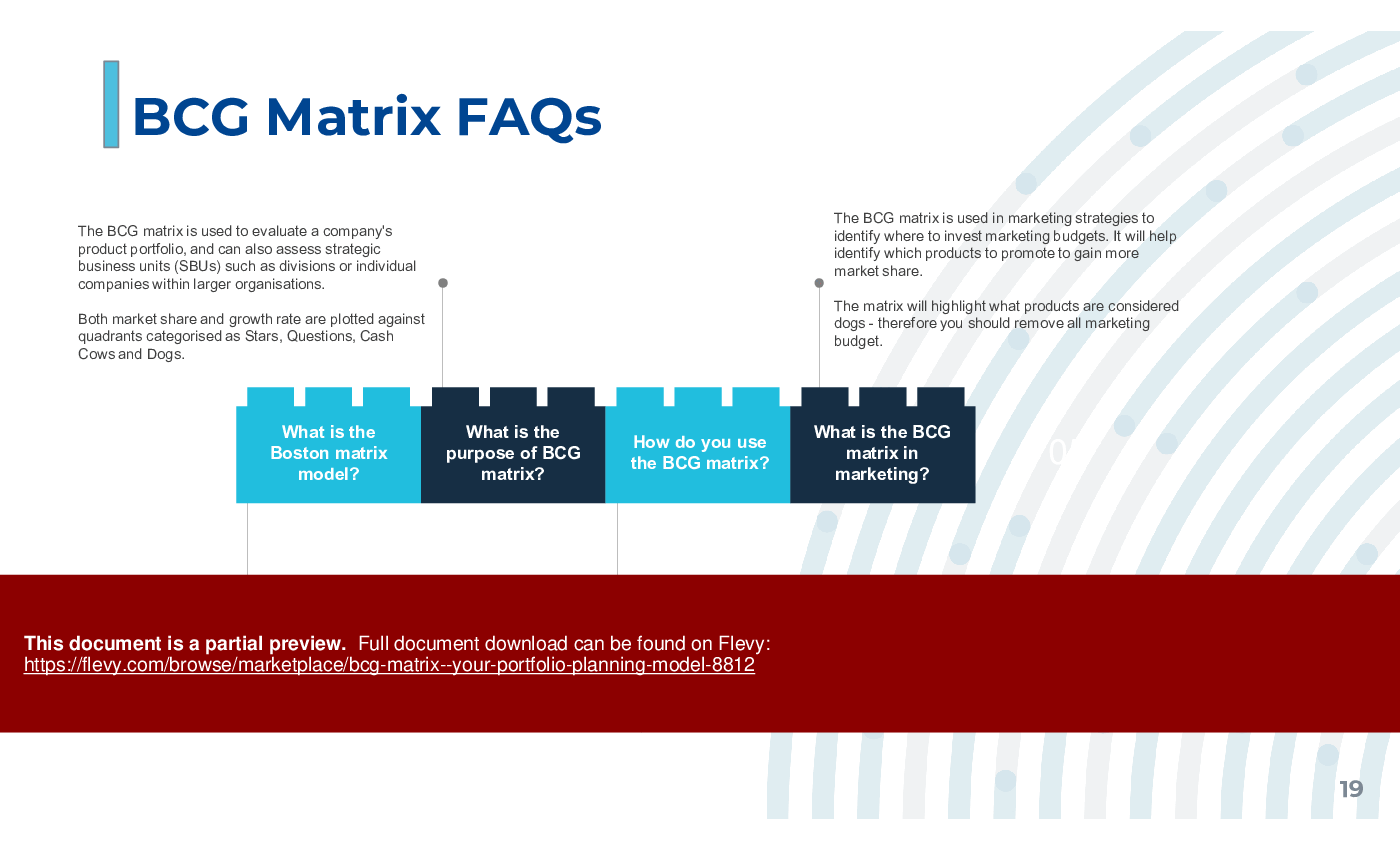
What is the BCG Matrix model?
The BCG Matrix is a strategic planning tool that helps companies analyze their portfolio of products or business units based on market growth and relative market share.

What is the purpose of the BCG Matrix?
The BCG Matrix assists in identifying which products to invest in, which to divest, and how to allocate resources effectively for maximum profitability.

How do you use the BCG Matrix?
To use the BCG Matrix, evaluate your products based on their market share and growth rate, then classify them into one of the 4 quadrants to inform strategic decisions.

What are the quadrants of the BCG Matrix?
The quadrants are Stars (high growth, high share), Cash Cows (low growth, high share), Question Marks (high growth, low share), and Dogs (low growth, low share).

How can the BCG Matrix inform marketing strategies?
The BCG Matrix helps identify which products to promote for growth and which to phase out, allowing for more effective marketing budget allocation.

What are the limitations of the BCG Matrix?
The BCG Matrix relies on only 2 dimensions (market share and growth rate), which may oversimplify complex market dynamics and product performance.

How can I apply the BCG Matrix to my business?
Start by downloading the BCG Matrix template, identifying your products, analyzing sales and growth data, and classifying them into the appropriate quadrants.

What are some examples of companies using the BCG Matrix?
Major brands like Apple, Coca-Cola, and Samsung have successfully utilized the BCG Matrix to evaluate their product portfolios and make strategic decisions.

Glossary
•  BCG Matrix - A strategic tool for portfolio analysis based on market growth and share.
•  Stars - Products with high market share and high growth potential.
•  Cash Cows - Products with high market share, but low growth potential.
•  Question Marks - Products with low market share in high-growth markets.
•  Dogs - Products with low market share and low growth potential.
•  Market Share - The percentage of total sales in a market attributed to a company.
•  Market Growth Rate - The rate at which a market's sales are increasing.
•  Portfolio Management - The process of managing a company's collection of products or business units.
•  Investment Strategy - A plan for allocating resources to maximize returns.
•  Strategic Planning - The process of defining a company's direction and making decisions on allocating resources.
•  Resource Allocation - The distribution of resources among various projects or business units.
•  SBU (Strategic Business Unit) - A division or unit within a company that operates independently and has its own strategy.
•  Competitive Analysis - The assessment of competitors' strengths and weaknesses in the market.
•  Market Dynamics - The forces that impact the supply and demand of products in a market.
•  Portfolio Analysis - The evaluation of a company's product portfolio to inform strategic decisions.
•  ROI (Return on Investment) - A measure of the profitability of an investment.
•  Strategic Recommendations - Suggested actions based on analysis to achieve business objectives.
•  Growth Strategy - A plan to increase a company's market share or revenue.
•  Market Penetration - The strategy of increasing sales of existing products in existing markets.
•  Product Development - The process of creating new products for existing markets.
•  Market Development - The strategy of entering new markets with existing products.
•  Diversification - The strategy of entering new markets with new products.

Source: Best Practices in BCG Growth-Share Matrix PowerPoint Slides: BCG Matrix - Your Portfolio Planning Model PowerPoint (PPTX) Presentation Slide Deck, RadVector Consulting


$45.00
Developed by a team of security experts with global consulting experience at McKinsey, Deloitte, and Capgemini.
Add to Cart
  

ABOUT THE AUTHOR

Additional documents from author: 183

We are a group of aviation experts & specialists (PhDs, Engineers, Pilots, Navigators, ...), leaders in helping organizations to transform their business performance using Methodologies and Principles of Lean, Agile, Six Sigma, and Innovation.

Ask the Author a Question

You must be logged in to contact the author.

Click here to log in Click here register

Did you know?
The average daily rate of a McKinsey consultant is $6,625 (not including expenses). The average price of a Flevy document is $65.


Trusted by over 10,000+ Client Organizations
Since 2012, we have provided business templates to over 10,000 businesses and organizations of all sizes, from startups and small businesses to the Fortune 100, in over 130 countries.
AT&T GE Cisco Intel IBM Coke Dell Toyota HP Nike Samsung Microsoft Astrazeneca JP Morgan KPMG Walgreens Walmart 3M Kaiser Oracle SAP Google E&Y Volvo Bosch Merck Fedex Shell Amgen Eli Lilly Roche AIG Abbott Amazon PwC T-Mobile Broadcom Bayer Pearson Titleist ConEd Pfizer NTT Data Schwab


Read Customer Testimonials

 
"I have used FlevyPro for several business applications. It is a great complement to working with expensive consultants. The quality and effectiveness of the tools are of the highest standards."

– Moritz Bernhoerster, Global Sourcing Director at Fortune 500
 
"Last Sunday morning, I was diligently working on an important presentation for a client and found myself in need of additional content and suitable templates for various types of graphics. Flevy.com proved to be a treasure trove for both content and design at a reasonable price, considering the time I "

– M. E., Chief Commercial Officer, International Logistics Service Provider
 
"[Flevy] produces some great work that has been/continues to be of immense help not only to myself, but as I seek to provide professional services to my clients, it gives me a large "tool box" of resources that are critical to provide them with the quality of service and outcomes they are expecting."

– Royston Knowles, Executive with 50+ Years of Board Level Experience
 
"Flevy is now a part of my business routine. I visit Flevy at least 3 times each month.

Flevy has become my preferred learning source, because what it provides is practical, current, and useful in this era where the business world is being rewritten.

In today's environment where there are so "

– Omar Hernán Montes Parra, CEO at Quantum SFE
 
"As a consultant requiring up to date and professional material that will be of value and use to my clients, I find Flevy a very reliable resource.

The variety and quality of material available through Flevy offers a very useful and commanding source for information. Using Flevy saves me time, enhances my expertise and ends up being a good decision."

– Dennis Gershowitz, Principal at DG Associates
 
"As a young consulting firm, requests for input from clients vary and it's sometimes impossible to provide expert solutions across a broad spectrum of requirements. That was before I discovered Flevy.com.

Through subscription to this invaluable site of a plethora of topics that are key and crucial to consulting, I "

– Nishi Singh, Strategist and MD at NSP Consultants
 
"FlevyPro provides business frameworks from many of the global giants in management consulting that allow you to provide best in class solutions for your clients."

– David Harris, Managing Director at Futures Strategy

 
"One of the great discoveries that I have made for my business is the Flevy library of training materials.

As a Lean Transformation Expert, I am always making presentations to clients on a variety of topics: Training, Transformation, Total Productive Maintenance, Culture, Coaching, Tools, Leadership Behavior, etc. Flevy "

– Ed Kemmerling, Senior Lean Transformation Expert at PMG


Customers Also Like These Documents

Explore Related Management Topics


Your Recently Viewed Documents
Download our FREE Strategy & Transformation Framework Templates

Download our free compilation of 50+ Strategy & Transformation slides and templates. Frameworks include McKinsey 7-S, Balanced Scorecard, Disruptive Innovation, BCG Curve, and many more.








