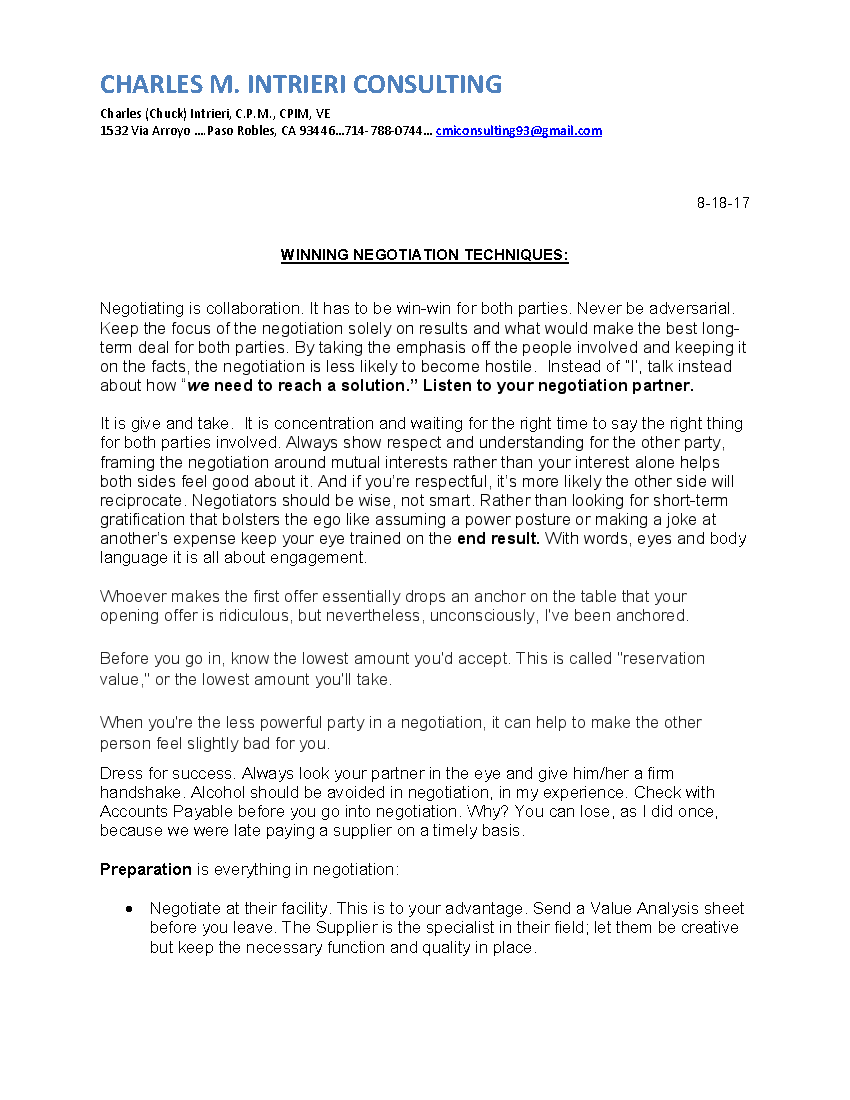
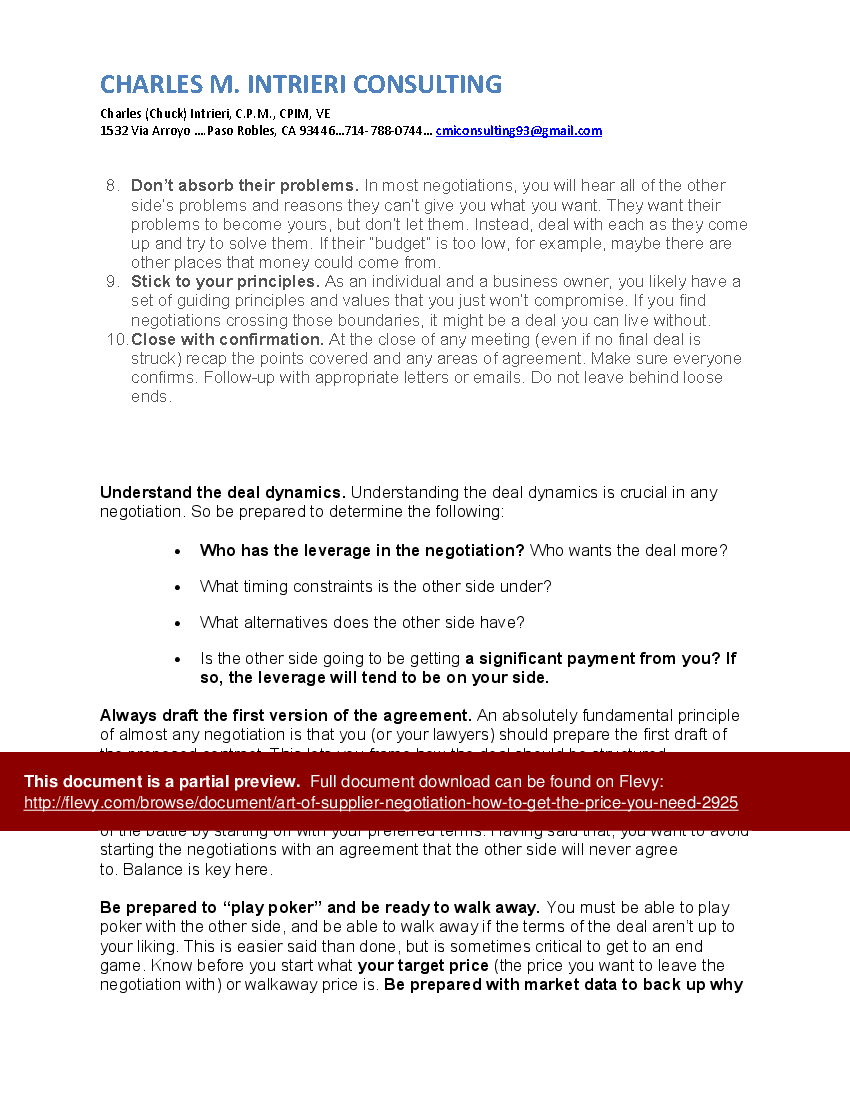
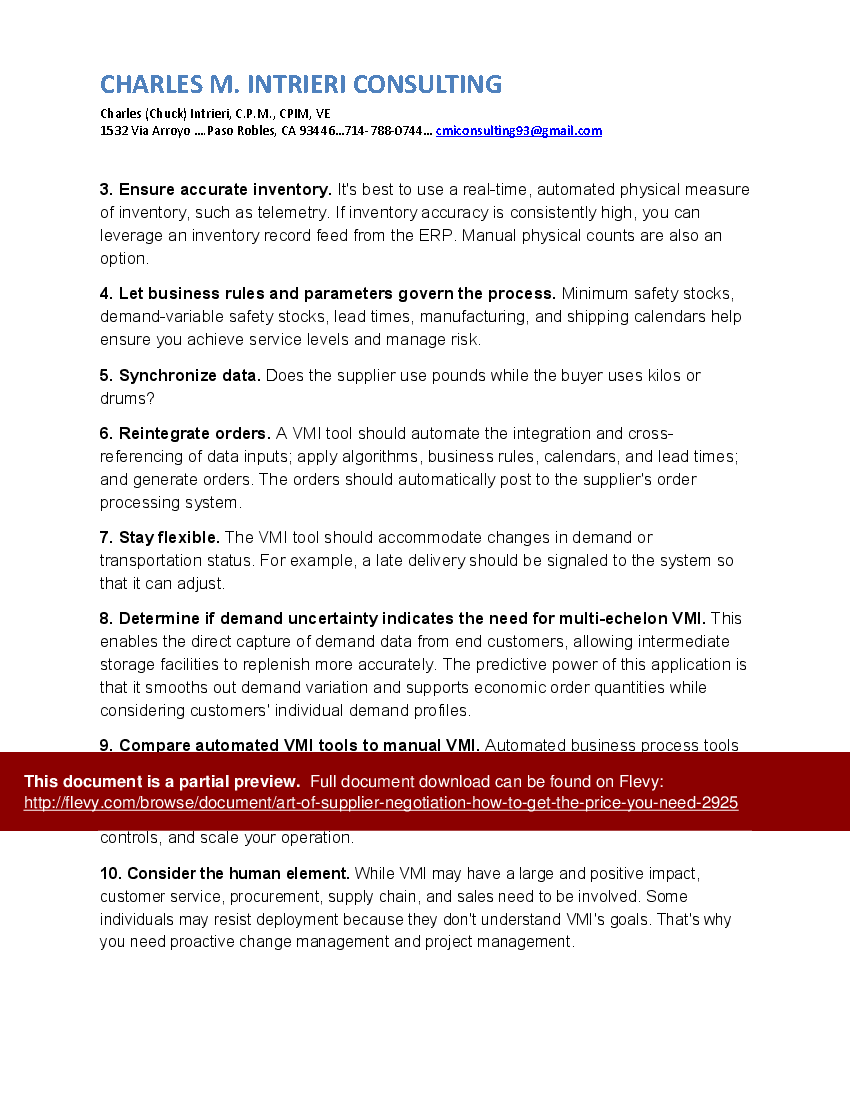
Every time you negotiate, you have to make choices that affect whether you achieve a successful outcome for your business. To get the best outcomes, you need to understand the steps involved in the negotiation process.
While many negotiations are straightforward, some will be among the hardest challenges you face. Your success will depend on planning and preparation. Always approach negotiations with a clear set of strategies, messages and tactics that can guide you from planning to closing.
Topics covered include:
• Definition of Negotiation
• What works and doesn't work
• Key points to winning the negotiation
• Know the cost of what you buy to get the best negotiation results
• Tools you can use: Value Analysis, Supplier Day Conference, and Vendor Managed Inventory (VMI)
• Ten negotiation techniques
• International Negotiations
Got a question about the product? Email us at support@flevy.com or ask the author directly by using the "Ask the Author a Question" form. If you cannot view the preview above this document description, go here to view the large preview instead.
Executive Summary
The "Art of Supplier Negotiation: How to Get the Price You Need" document serves as a comprehensive guide for professionals seeking to enhance their negotiation skills with suppliers. This resource outlines proven strategies and techniques aimed at achieving favorable pricing while fostering collaborative relationships. By focusing on mutual interests and employing tools such as Value Analysis and Vendor Managed Inventory (VMI), users will be equipped to navigate negotiations effectively, ensuring long-term benefits for both parties involved.
Who This Is For and When to Use
• Procurement Managers looking to optimize supplier relationships
• Supply Chain Professionals aiming to reduce costs and improve efficiency
• Business Executives responsible for strategic sourcing decisions
• Consultants advising clients on negotiation tactics and supplier management
Best-fit moments to use this deck:
• Prior to supplier negotiations to prepare and strategize
• During supplier conferences to enhance collaborative discussions
• When implementing VMI to streamline inventory management
Learning Objectives
• Define effective negotiation strategies that prioritize win-win outcomes
• Build a comprehensive negotiation plan that includes preparation and follow-up
• Establish a framework for Value Analysis to assess supplier offerings
• Identify key negotiation techniques that enhance communication and collaboration
• Develop skills to manage supplier relationships post-negotiation
• Recognize the importance of cultural sensitivity in international negotiations
Table of Contents
• Introduction to Negotiation Techniques (page 1)
• Key Principles of Negotiation (page 2)
• Value Analysis in Negotiation (page 3)
• Supplier Day Conference Overview (page 5)
• Vendor Managed Inventory (VMI) Explained (page 6)
• International Negotiation Considerations (page 8)
Primary Topics Covered
• Negotiation Techniques - Effective negotiation hinges on collaboration and mutual respect, focusing on long-term results rather than adversarial tactics.
• Value Analysis - A structured approach to evaluate the function and cost of products, ensuring quality is not compromised while seeking cost reductions.
• Supplier Day Conference - A strategic event designed to enhance supplier relationships through presentations, facility tours, and one-on-one brainstorming sessions.
• Vendor Managed Inventory (VMI) - A collaborative inventory management approach where suppliers manage stock levels, optimizing efficiency and reducing stock-outs.
• Cultural Sensitivity in Negotiation - Understanding and respecting cultural differences is crucial for successful international negotiations, enhancing rapport and trust.
• Preparation and Follow-Up - Emphasizing the importance of thorough preparation and effective follow-up to solidify agreements and maintain relationships.
Deliverables, Templates, and Tools
• Value Analysis template for assessing supplier offerings
• Supplier Day Conference agenda template for structured supplier interactions
• VMI implementation guide to streamline inventory processes
• Negotiation preparation checklist to ensure readiness
• Follow-up letter template to reinforce agreements post-negotiation
Slide Highlights
• Overview of key negotiation techniques emphasizing collaboration
• Value Analysis framework detailing cost breakdown and function assessment
• Supplier Day Conference structure highlighting collaborative opportunities
• VMI benefits and implementation strategies for improved inventory management
• Cultural considerations slide for effective international negotiation practices
Potential Workshop Agenda
Negotiation Techniques Workshop (90 minutes)
• Discuss key negotiation principles and techniques
• Role-play scenarios to practice negotiation strategies
• Review case studies of successful supplier negotiations
Value Analysis Session (60 minutes)
• Introduce the Value Analysis framework
• Work in groups to analyze a sample product
• Present findings and discuss cost-saving opportunities
Supplier Day Conference Planning (90 minutes)
• Outline objectives and structure for the conference
• Assign roles and responsibilities for team members
• Develop a timeline for pre-conference preparations
Customization Guidance
• Tailor the Value Analysis template to fit specific product categories
• Adjust the Supplier Day Conference agenda based on supplier availability and needs
• Incorporate company-specific metrics and terminology into negotiation strategies
Secondary Topics Covered
• Techniques for managing supplier relationships post-negotiation
• Strategies for addressing price increases and justifications
• Best practices for conducting effective one-on-one supplier meetings
• Importance of commitment and follow-through in negotiations
• Methods for handling cultural differences in negotiation settings
Topic FAQ
Document FAQ
These are questions addressed within this presentation.
What is the primary goal of supplier negotiation?
The primary goal is to achieve a win-win outcome that benefits both parties, focusing on long-term relationships rather than short-term gains.
How can Value Analysis improve negotiations?
Value Analysis helps assess the function and cost of products, enabling negotiators to identify areas for cost reduction while maintaining quality.
What is Vendor Managed Inventory (VMI)?
VMI allows suppliers to manage inventory levels based on customer demand, optimizing stock levels and reducing the risk of stock-outs.
Why is preparation important in negotiations?
Preparation ensures clarity on objectives, strengthens negotiation positions, and enhances the likelihood of achieving desired outcomes.
How can cultural sensitivity impact negotiations?
Understanding cultural differences fosters trust and rapport, which are essential for successful negotiations, especially in international contexts.
What are some effective negotiation techniques?
Key techniques include active listening, timing, and focusing on mutual interests rather than personal ego.
How should I follow up after a negotiation?
Follow up with a thank-you letter or email summarizing key points and confirming agreements to reinforce the relationship.
What should I do if a supplier is unwilling to lower their price?
Consider proposing a larger order quantity with flexible terms or explore alternative materials to achieve cost savings without compromising quality.
Glossary
• Negotiation - A dialogue between 2 or more parties aimed at reaching a mutually beneficial agreement.
• Value Analysis - A systematic approach to improving the value of a product by assessing its functions and costs.
• Vendor Managed Inventory (VMI) - A supply chain initiative where the supplier manages inventory levels based on customer demand.
• Supplier Day Conference - An organized event for suppliers to present their capabilities and collaborate with customers.
• Cultural Sensitivity - Awareness and respect for cultural differences that can impact negotiation dynamics.
• Reservation Value - The lowest acceptable offer a negotiator is willing to accept.
• Commitment - A mutual agreement to uphold the terms of a negotiation or contract.
• Ego - An individual's sense of self-importance, which can hinder effective negotiation.
• Timing - The strategic use of timing in negotiations to optimize outcomes.
• Follow-Up - The process of reinforcing agreements and maintaining relationships post-negotiation.
• Collaboration - Working together towards a common goal, essential in negotiations.
• Leverage - The advantage one party has over another in a negotiation context.
Source: Best Practices in Supplier Management Word: Art of Supplier Negotiation: How to Get the Price You Need Word (DOCX) Document, Charles M. Intrieri Consulting
|
Receive our FREE presentation on Operational Excellence
This 50-slide presentation provides a high-level introduction to the 4 Building Blocks of Operational Excellence. Achieving OpEx requires the implementation of a Business Execution System that integrates these 4 building blocks. |










