Best Practices and Common Pitfalls Associated with Suppliers Involvement in NPD   13-page PDF document
$20.00

Best Practices and Common Pitfalls Associated with Suppliers Involvement in NPD (13-page PDF document) Preview Image
Flevy is the marketplace for business best practices.
Best Practices and Common Pitfalls Associated with Suppliers Involvement in NPD (13-page PDF document) Preview Image
Arrow   Click main image to view in full screen.

Best Practices and Common Pitfalls Associated with Suppliers Involvement in NPD (PDF)

PDF document 13 Pages

$20.00

Add to Cart


Immediate download
Editable with PDF editor
Free lifetime updates

SUPPLIER MANAGEMENT PDF DESCRIPTION

Editor Summary Best Practices and Common Pitfalls Associated with Suppliers Involvement in NPD is a 13-page PDF article by Innovation Management with authorship from Dr. Read more

Involving suppliers in new product development provides organizations with a range of benefits, including shorter development time, better quality products, and lower cost of development. In this new in-depth article Dr Sanda Berar delves deeper into some of the best practices and the most common pitfalls associated with suppliers' involvement in NPD.

ABOUT THE AUTHOR:

Dr. Sanda Berar has over 15 years of experience in high-tech industry and holds a PhD in Economics and an MSc in Computer Engineering. She is presently with Nokia in Helsinki, heading the software department in a product unit. Previously, Sanda had worked in several high-tech companies in Romania. Between 1994-2000, she was a lecturer at Babes-Bolyai University, Romania. She also holds an honoree research fellow title with the University of Aberdeen, Business School, where she is involved in studies related to NPD.

Got a question about the product? Email us at support@flevy.com or ask the author directly by using the "Ask the Author a Question" form. If you cannot view the preview above this document description, go here to view the large preview instead.

MARCUS OVERVIEW

This synopsis was written by Marcus [?] based on the analysis of the full 13-slide presentation.


Executive Summary
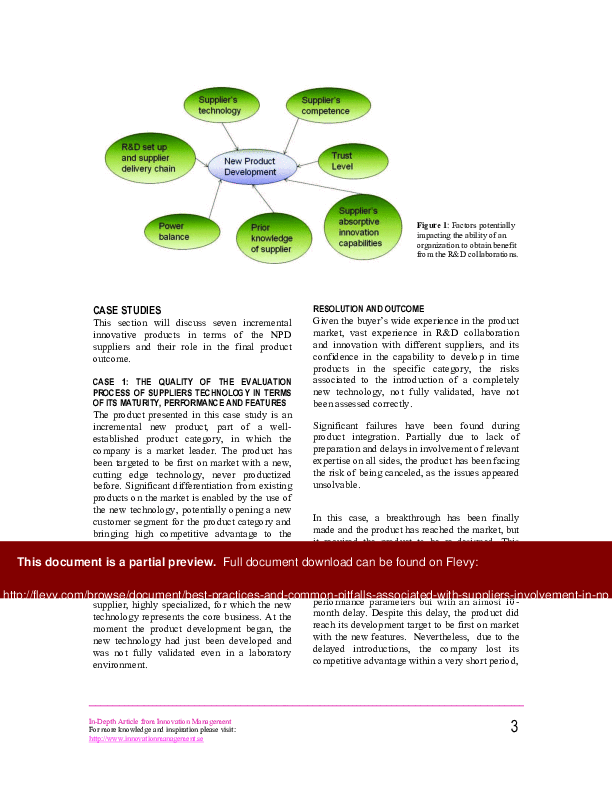
Involving suppliers in new product development (NPD) offers organizations numerous advantages, including shorter development times, improved product quality, and reduced costs. This article explores best practices and common pitfalls associated with supplier involvement in NPD, drawing on 7 case studies from the telecom industry. The discussion highlights critical factors influencing project success, such as the evaluation of supplier technology, competence assessment, trust levels, and the complexity of supplier delivery chains. Understanding these factors is essential for organizations to effectively manage supplier relationships and enhance NPD outcomes.

Who This Is For and When to Use
•  R&D Managers overseeing new product development initiatives
•  Product Development Teams engaged in supplier collaboration
•  Procurement Specialists responsible for supplier selection
•  Innovation Leaders focused on integrating external technologies

Best-fit moments to use this deck:
•  During project kickoff meetings to align on supplier roles
•  In strategy sessions aimed at improving NPD processes
•  When assessing supplier performance post-project completion

Learning Objectives
•  Define the role of suppliers in enhancing NPD outcomes
•  Identify best practices for evaluating supplier technology and competence
•  Establish trust-building strategies in supplier relationships
•  Analyze the impact of supplier delivery chain complexity on NPD
•  Develop frameworks for effective supplier collaboration
•  Recognize common pitfalls in supplier involvement and how to mitigate them

Table of Contents
•  Executive Summary (page 1)
•  Introduction to Supplier Involvement in NPD (page 2)
•  Case Studies Overview (page 3)
•  Evaluation of Supplier Technology (page 4)
•  Assessing Supplier Competence (page 5)
•  Trust and Its Impact on NPD (page 6)
•  Knowledge of Supplier Capabilities (page 7)
•  Complexity of Supplier Delivery Chain (page 8)
•  Buyer-Supplier Power Dynamics (page 9)
•  Conclusion and Recommendations (page 10)

Primary Topics Covered
•  Supplier Technology Evaluation - Assessing the maturity and performance of supplier technologies is crucial for aligning them with product requirements.
•  Supplier Competence Assessment - Evaluating the technical skills and capabilities of suppliers ensures they meet project demands effectively.
•  Trust in Supplier Relationships - High levels of trust facilitate open communication and problem-solving, essential for successful NPD.
•  Prior Knowledge of Suppliers - Understanding a supplier's past performance can mitigate risks associated with new collaborations.
•  Complexity of R&D Set-Up - Managing multiple suppliers and their interdependencies is vital for maintaining project timelines and quality.
•  Power Balance in Buyer-Supplier Relationships - Recognizing the dynamics of power can influence negotiation outcomes and project success.

Deliverables, Templates, and Tools
•  Supplier evaluation framework template for assessing technology and competence
•  Trust-building workshop guide for enhancing supplier relationships
•  Risk assessment checklist for NPD projects involving multiple suppliers
•  Communication plan template for managing supplier interactions
•  Project timeline template that incorporates supplier delivery schedules
•  Performance tracking dashboard for monitoring supplier contributions

Slide Highlights
•  Overview of supplier involvement benefits in NPD
•  Case study insights illustrating successful supplier collaborations
•  Visual representation of the supplier delivery chain complexities
•  Framework for assessing supplier technology maturity
•  Trust-building strategies and their impact on project outcomes

Potential Workshop Agenda
Supplier Evaluation Workshop (90 minutes)
•  Introduce supplier evaluation criteria and frameworks
•  Discuss case studies highlighting successful evaluations
•  Breakout sessions to assess current suppliers

Trust-Building Session (60 minutes)
•  Explore the importance of trust in supplier relationships
•  Identify trust-building strategies applicable to current projects
•  Role-playing exercises to practice trust-building techniques

Complexity Management Discussion (75 minutes)
•  Analyze challenges posed by complex supplier networks
•  Develop strategies for simplifying R&D set-ups
•  Share best practices for managing geographically dispersed teams

Customization Guidance
•  Tailor the supplier evaluation framework to specific project requirements
•  Adjust trust-building strategies based on existing supplier relationships
•  Modify communication plans to reflect organizational culture and practices

Secondary Topics Covered
•  The role of open innovation in supplier collaboration
•  Strategies for managing supplier performance post-project
•  The impact of market dynamics on supplier selection
•  Best practices for integrating new technologies from suppliers
•  Lessons learned from failed supplier collaborations

Topic FAQ

What factors most influence successful supplier involvement in NPD projects?

Successful supplier involvement depends on technical alignment (supplier technology maturity), supplier competence (skills and past performance), mutual trust, prior knowledge of the supplier, the complexity of the supplier delivery chain, and buyer-supplier power dynamics, with emphasis on supplier technology evaluation, competence assessment, and trust.

How can organizations assess the maturity of a supplier’s technology before engagement?

Organizations should compare supplier technology performance and maturity against product requirements, use structured evaluation criteria, and review past deployments; the article provides a supplier technology evaluation framework template to operationalize these checks and alignment activities.

What practical steps improve trust between buyers and suppliers in NPD?

Practical steps include regular informal interactions, clear communication of expectations, collaborative problem-solving, role-playing or workshop exercises to build rapport, and documented trust-building activities; the deliverables include a trust-building workshop guide to structure these sessions.

What should I prioritize when choosing a package of templates for supplier-involved NPD?

Prioritize templates that cover supplier evaluation, competence checks, risk assessment, communication planning, schedule integration, and performance tracking; Best Practices and Common Pitfalls Associated with Suppliers Involvement in NPD bundles these tools, including a supplier evaluation framework template.

How can I justify the cost of purchasing supplier-involvement templates to stakeholders?

The main justification is reducing setup time and standardizing assessments across projects by reusing ready-made tools—evaluation frameworks, workshop guides, risk checklists, and communication plans—thereby focusing team effort on decisions rather than tool creation; for example, a risk assessment checklist is included.

Which approaches help manage complexity when multiple geographically dispersed suppliers are involved?

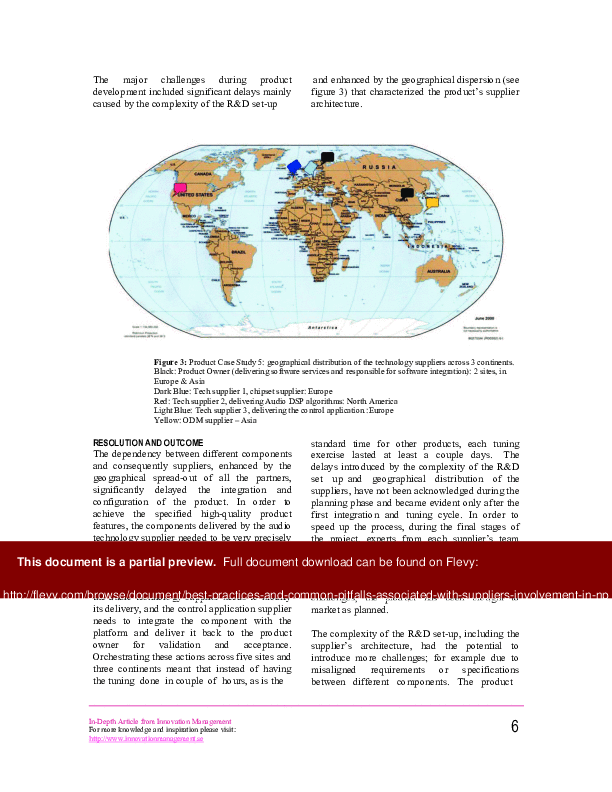
Approaches include clear project planning that maps supplier interdependencies, a communication plan aligned to time zones and handoffs, regular performance tracking, and simplifying R&D set-ups; the article addresses delivery-chain complexity and supplies a project timeline template and performance-tracking dashboard.

After a failed supplier collaboration, what diagnostic steps should we take to prevent recurrence?

Conduct a structured post-mortem that assesses whether supplier competence, technology fit, trust levels, prior knowledge, or delivery-chain complexity caused issues; apply a formal supplier evaluation and a risk-assessment checklist to inform future selection and mitigation measures.

How does adopting open innovation change how we involve suppliers in NPD?

Open innovation expands the pool of external partners and increases the need for rigorous capability assessments, integration plans, and governance to manage IP and delivery risks; the article discusses the role of open innovation and provides tools such as the supplier evaluation framework to assess external partners.

Document FAQ
These are questions addressed within this presentation.

What are the key benefits of involving suppliers in NPD?
Involving suppliers can lead to shorter development times, improved quality, and reduced costs, ultimately enhancing competitive advantage.

How can organizations assess supplier capabilities effectively?
Organizations should implement structured evaluation frameworks that consider technical skills, past performance, and alignment with project requirements.

What role does trust play in supplier relationships?
Trust fosters open communication and collaboration, enabling quicker problem-solving and more effective project execution.

How can companies manage the complexity of multiple suppliers?
Effective project planning, clear communication, and regular performance assessments can help manage the complexities associated with multiple suppliers.

What are common pitfalls in supplier involvement?
Common pitfalls include inadequate evaluation of supplier capabilities, lack of trust, and poor communication, which can lead to project delays and failures.

How important is prior knowledge of suppliers?
Prior knowledge can significantly reduce risks by providing insights into a supplier's capabilities and potential challenges in collaboration.

What strategies can enhance supplier relationships?
Strategies include regular informal interactions, clear communication of expectations, and collaborative problem-solving approaches.

How can organizations ensure successful NPD outcomes with suppliers?
Organizations should focus on thorough evaluations, building trust, and maintaining clear communication throughout the development process.

Glossary
•  NPD (New Product Development) - The process of bringing a new product to market.
•  Supplier Evaluation - The assessment of a supplier's capabilities and technologies.
•  Trust - The confidence in a supplier's reliability and integrity.
•  R&D (Research and Development) - The department responsible for innovation and product development.
•  Power Balance - The dynamics of influence between buyers and suppliers.
•  Open Innovation - A collaborative approach to innovation involving external partners.
•  Competence Assessment - Evaluating the skills and capabilities of suppliers.
•  Delivery Chain Complexity - The intricacies involved in managing multiple suppliers and their interdependencies.
•  Performance Tracking - Monitoring supplier contributions to ensure project success.
•  Communication Plan - A strategy for managing interactions with suppliers.
•  Risk Assessment - Identifying potential challenges in supplier collaborations.
•  Supplier Relationship Management - The systematic approach to managing supplier interactions and performance.

Source: Best Practices in Supplier Management PDF: Best Practices and Common Pitfalls Associated with Suppliers Involvement in NPD PDF (PDF) Document, Innovation Management


$20.00

Add to Cart
  

ABOUT THE AUTHOR

Additional documents from author: 16

The official Flevy account for Innovation Management, the world's leading platform for cutting-edge innovation management content, best practice and online training programs.

Peruse and purchase our premium content on innovation management.

Ask the Author a Question

You must be logged in to contact the author.

Click here to log in Click here register

Did you know?
The average daily rate of a McKinsey consultant is $6,625 (not including expenses). The average price of a Flevy document is $65.


Trusted by over 10,000+ Client Organizations
Since 2012, we have provided business templates to over 10,000 businesses and organizations of all sizes, from startups and small businesses to the Fortune 100, in over 130 countries.
AT&T GE Cisco Intel IBM Coke Dell Toyota HP Nike Samsung Microsoft Astrazeneca JP Morgan KPMG Walgreens Walmart 3M Kaiser Oracle SAP Google E&Y Volvo Bosch Merck Fedex Shell Amgen Eli Lilly Roche AIG Abbott Amazon PwC T-Mobile Broadcom Bayer Pearson Titleist ConEd Pfizer NTT Data Schwab


Read Customer Testimonials

 
"[Flevy] produces some great work that has been/continues to be of immense help not only to myself, but as I seek to provide professional services to my clients, it gives me a large "tool box" of resources that are critical to provide them with the quality of service and outcomes they are expecting."

– Royston Knowles, Executive with 50+ Years of Board Level Experience
 
"I have used Flevy services for a number of years and have never, ever been disappointed. As a matter of fact, David and his team continue, time after time, to impress me with their willingness to assist and in the real sense of the word. I have concluded in fact "

– Roberto Pelliccia, Senior Executive in International Hospitality
 
"If you are looking for great resources to save time with your business presentations, Flevy is truly a value-added resource. Flevy has done all the work for you and we will continue to utilize Flevy as a source to extract up-to-date information and data for our virtual and onsite presentations!"

– Debbi Saffo, President at The NiKhar Group
 
"Flevy is now a part of my business routine. I visit Flevy at least 3 times each month.

Flevy has become my preferred learning source, because what it provides is practical, current, and useful in this era where the business world is being rewritten.

In today's environment where there are so "

– Omar Hernán Montes Parra, CEO at Quantum SFE
 
"As a niche strategic consulting firm, Flevy and FlevyPro frameworks and documents are an on-going reference to help us structure our findings and recommendations to our clients as well as improve their clarity, strength, and visual power. For us, it is an invaluable resource to increase our impact and value."

– David Coloma, Consulting Area Manager at Cynertia Consulting
 
"Flevy.com has proven to be an invaluable resource library to our Independent Management Consultancy, supporting and enabling us to better serve our enterprise clients.

The value derived from our [FlevyPro] subscription in terms of the business it has helped to gain far exceeds the investment made, making a subscription a no-brainer for any growing consultancy – or in-house strategy team."

– Dean Carlton, Chief Transformation Officer, Global Village Transformations Pty Ltd.
 
"Flevy is our 'go to' resource for management material, at an affordable cost. The Flevy library is comprehensive and the content deep, and typically provides a great foundation for us to further develop and tailor our own service offer."

– Chris McCann, Founder at Resilient.World
 
"I have used FlevyPro for several business applications. It is a great complement to working with expensive consultants. The quality and effectiveness of the tools are of the highest standards."

– Moritz Bernhoerster, Global Sourcing Director at Fortune 500


Customers Also Bought These Documents


Customers Also Like These Documents

Explore Templates on Related Management Topics


Your Recently Viewed Documents
Receive our FREE presentation on Operational Excellence

This 50-slide presentation provides a high-level introduction to the 4 Building Blocks of Operational Excellence. Achieving OpEx requires the implementation of a Business Execution System that integrates these 4 building blocks.