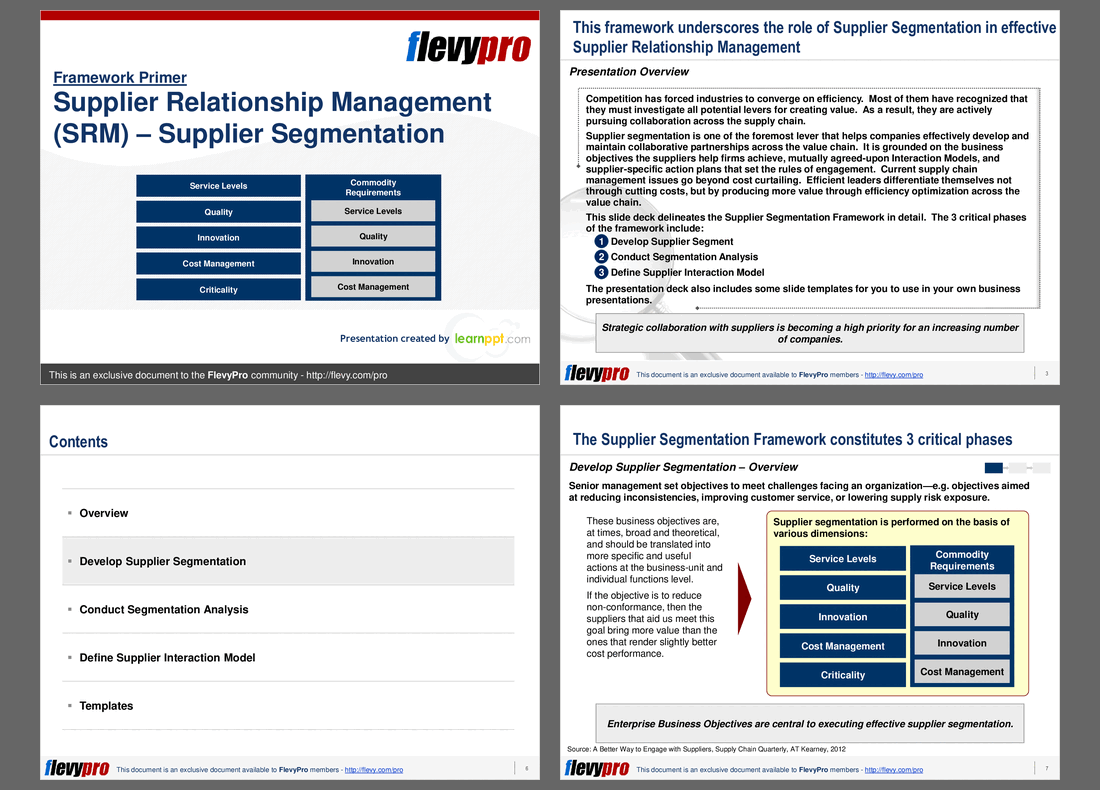

Competition has forced industries to converge on efficiency. Most of them have recognized that they must investigate all potential levers for creating value. As a result, they are actively pursuing collaboration across the supply chain.
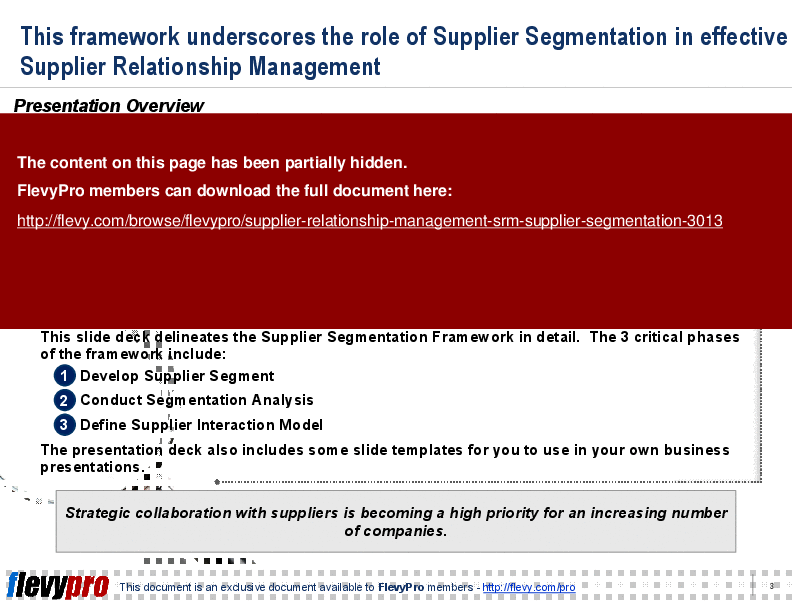
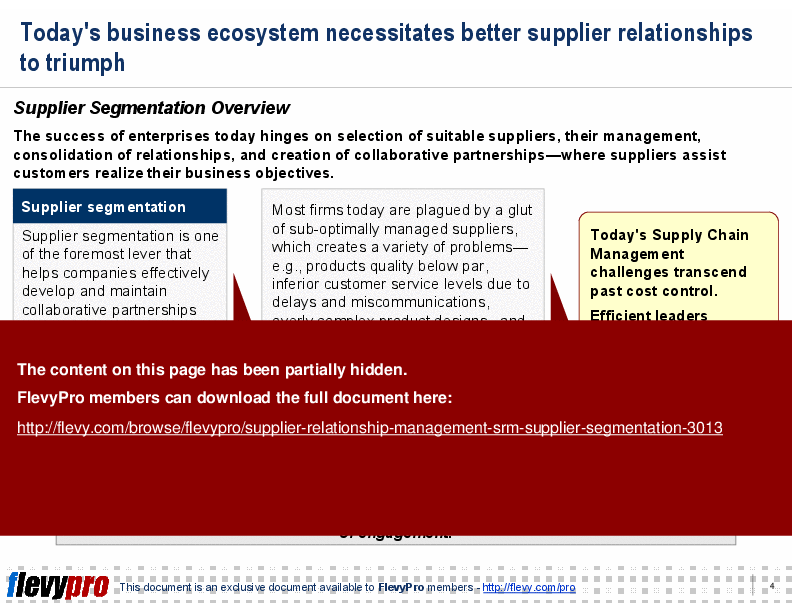
Supplier segmentation is one of the foremost lever that helps companies effectively develop and maintain collaborative partnerships across the value chain. It is grounded on the business objectives the suppliers help firms achieve, mutually agreed-upon Interaction Models, and supplier-specific action plans that set the rules of engagement. Current supply chain management issues go beyond cost curtailing. Efficient leaders differentiate themselves not through cutting costs, but by producing more value through efficiency optimization across the value chain. Strategic collaboration with suppliers is becoming a high priority for an increasing number of companies.
This slide deck delineates the Supplier Segmentation Framework in detail. The 3 critical phases of the framework include:
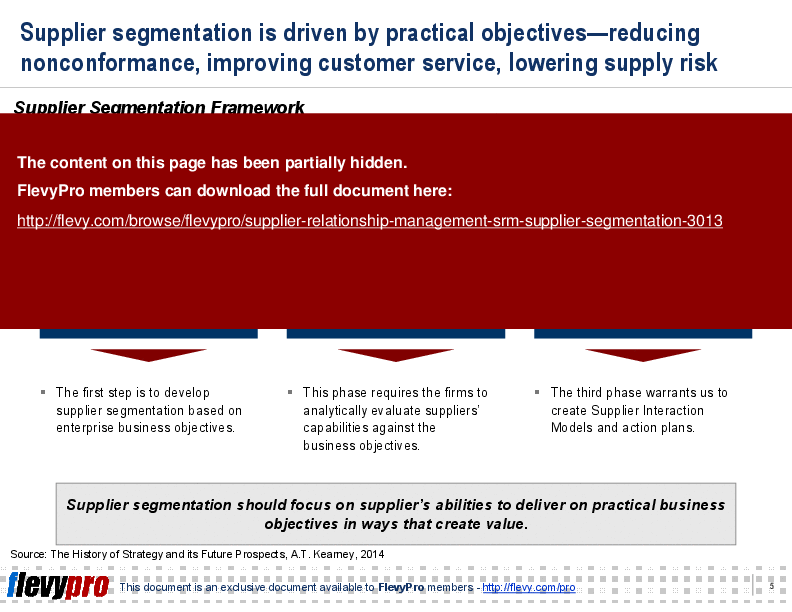
1. Develop Supplier Segment
2. Conduct Segmentation Analysis
3. Define Supplier Interaction Model
The presentation deck also includes some slide templates for you to use in your own business presentations.
This PPT provides a comprehensive overview of the Supplier Segmentation Framework, emphasizing the importance of aligning supplier capabilities with enterprise business objectives. The segmentation process is meticulously detailed, ensuring that firms can identify and leverage the most strategic suppliers to enhance value creation and mitigate risks. By analyzing both internal and external factors, the framework allows for a robust evaluation of supplier performance, ensuring that only the most capable partners are engaged.
The presentation also includes actionable templates and examples to facilitate the implementation of the segmentation strategy. These tools are designed to help businesses streamline their supplier management processes, improve collaboration, and drive innovation. With a focus on practical objectives such as reducing nonconformance and improving customer service, this document is an essential resource for any organization looking to optimize its supplier relationships and achieve sustainable competitive advantage.
Got a question about this document? Email us at flevypro@flevy.com.
Executive Summary
The Supplier Relationship Management (SRM) - Supplier Segmentation presentation provides a structured framework for organizations to enhance supplier collaboration and optimize relationships. Developed by experts from top consulting firms, this presentation outlines a systematic approach to supplier segmentation, focusing on aligning supplier capabilities with business objectives. By implementing this framework, organizations can effectively manage supplier interactions, reduce risks, and improve overall supply chain efficiency.
Who This Is For and When to Use
• Supply Chain Managers responsible for supplier performance and relationship management
• Procurement Leaders focused on optimizing supplier selection and engagement
• Operations Executives seeking to enhance collaboration across the supply chain
• Consultants advising organizations on supplier management strategies
Best-fit moments to use this deck:
• During supplier evaluation and selection processes
• When developing strategies for supplier engagement and collaboration
• In workshops aimed at improving supply chain efficiency and risk management
• For training sessions on supplier relationship management best practices
Learning Objectives
• Define the Supplier Segmentation Framework and its importance in SRM
• Develop effective supplier segmentation based on business objectives
• Conduct comprehensive segmentation analysis to evaluate supplier capabilities
• Establish Supplier Interaction Models to enhance collaboration
• Create actionable plans for managing supplier relationships
• Identify key metrics for measuring supplier performance and value creation
Table of Contents
• Overview (page 3)
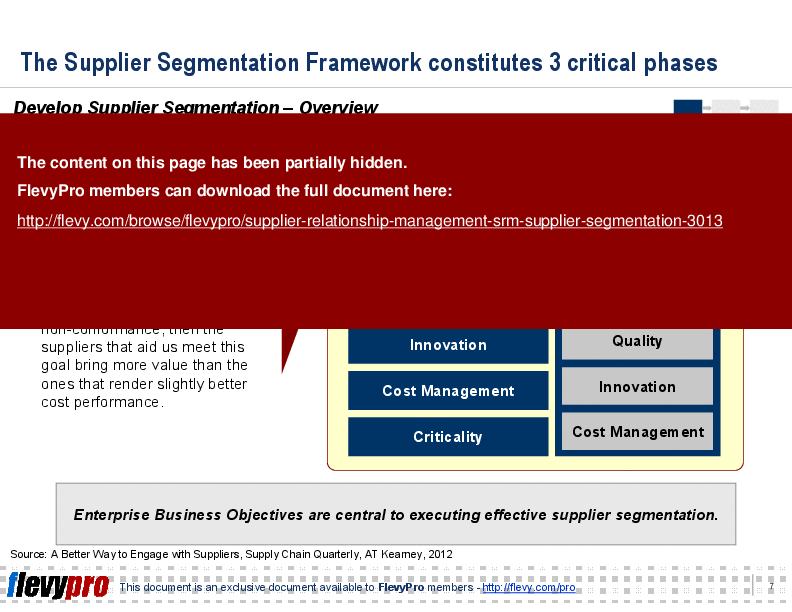
• Develop Supplier Segmentation (page 7)
• Conduct Segmentation Analysis (page 9)
• Define Supplier Interaction Model (page 14)
• Templates (page 19)
Primary Topics Covered
• Supplier Segmentation Framework - A structured approach to categorize suppliers based on their ability to meet specific business objectives, facilitating targeted management strategies.
• Develop Supplier Segmentation - The initial phase focuses on aligning supplier segmentation with enterprise business objectives to enhance value creation.
• Conduct Segmentation Analysis - This phase involves analyzing both internal and external factors to evaluate supplier performance and capabilities effectively.
• Define Supplier Interaction Model - Establishes clear expectations and guidelines for supplier engagement, fostering collaborative partnerships.
• Interaction Principles - Guidelines that define how critical activities are managed within supplier relationships, ensuring alignment with business goals.
• Supplier Segment Profiles - Detailed descriptions of various supplier categories, helping organizations tailor their management strategies accordingly.
Deliverables, Templates, and Tools
• Supplier Segmentation Framework template for structured analysis
• Action plan templates for developing Supplier Interaction Models
• Performance metrics templates to track supplier effectiveness
• Guidelines for conducting segmentation analysis
• Interaction Principles framework for managing supplier relationships
• Supplier segment profiles for categorizing and managing suppliers
Slide Highlights
• Overview of the Supplier Segmentation Framework and its critical phases
• Visual representation of the Supplier Interaction Model and its components
• Examples of supplier segment profiles illustrating different capabilities
• Interaction Principles that guide supplier management strategies
• Templates for practical application in supplier segmentation and analysis
Potential Workshop Agenda
Supplier Segmentation Overview (60 minutes)
• Introduction to Supplier Segmentation Framework
• Discussion on aligning segmentation with business objectives
• Overview of segmentation analysis techniques
Supplier Interaction Model Development (90 minutes)
• Workshop on defining Supplier Interaction Models
• Group activity to create action plans for supplier engagement
• Review of Interaction Principles and their application
Performance Measurement and Continuous Improvement (60 minutes)
• Identifying key performance metrics for suppliers
• Strategies for ongoing supplier relationship management
• Discussion on best practices for supplier collaboration
Customization Guidance
• Tailor the Supplier Segmentation Framework to align with specific business objectives and industry requirements
• Adjust the Supplier Interaction Model based on supplier capabilities and market conditions
• Modify performance metrics to reflect organizational goals and supplier expectations
• Incorporate company-specific terminology and processes into templates and action plans
Secondary Topics Covered
• Risk management strategies in supplier relationships
• Techniques for enhancing supplier collaboration and innovation
• Best practices for evaluating supplier performance
• The role of technology in supplier relationship management
• Strategies for managing supplier diversity and sustainability
Topic FAQ
Document FAQ
These are questions addressed within this presentation.
What is Supplier Segmentation?
Supplier segmentation is the process of categorizing suppliers based on their ability to meet specific business objectives, enabling targeted management and collaboration strategies.
Why is Supplier Segmentation important?
Effective supplier segmentation helps organizations optimize supplier relationships, reduce risks, and enhance overall supply chain efficiency by aligning supplier capabilities with business goals.
How do I conduct a Segmentation Analysis?
A segmentation analysis involves evaluating both internal and external factors, analyzing supplier capabilities, and clustering suppliers based on their performance against strategic priorities.
What is a Supplier Interaction Model?
A Supplier Interaction Model defines the expectations and guidelines for engagement between an organization and its suppliers, outlining roles, responsibilities, and communication protocols.
How can I measure supplier performance?
Supplier performance can be measured using key metrics such as delivery reliability, quality of goods/services, cost efficiency, and innovation contributions.
What are Interaction Principles?
Interaction Principles are guidelines that dictate how supplier relationships are managed, focusing on areas such as performance management, value capture, and supplier engagement.
Can the framework be customized for different industries?
Yes, the Supplier Segmentation Framework can be tailored to fit the unique needs and objectives of various industries, ensuring relevance and effectiveness.
How often should supplier segmentation be reviewed?
Supplier segmentation should be reviewed regularly, ideally annually or bi-annually, to ensure alignment with changing business objectives and market conditions.
What tools can assist in Supplier Segmentation?
Tools such as data analytics software, performance management systems, and collaboration platforms can enhance the effectiveness of supplier segmentation and management.
Glossary
• Supplier Segmentation - The categorization of suppliers based on their capabilities and alignment with business objectives.
• Supplier Interaction Model - A framework defining engagement expectations between an organization and its suppliers.
• Segmentation Analysis - The process of evaluating supplier performance and capabilities to inform management strategies.
• Interaction Principles - Guidelines that govern how supplier relationships are managed and assessed.
• Performance Metrics - Quantitative measures used to evaluate supplier effectiveness and contribution to business objectives.
• Collaboration - The act of working together with suppliers to achieve mutual goals and enhance value creation.
• Risk Management - Strategies implemented to mitigate potential risks associated with supplier relationships.
• Value Capture - The process of identifying and realizing benefits from supplier partnerships.
• Supplier Profile - A detailed description of a supplier's capabilities, strengths, and strategic fit with the organization.
• Cost Management - Strategies aimed at controlling and reducing costs associated with supplier relationships.
• Innovation - The introduction of new ideas or methods to improve supplier performance and collaboration.
• Service Levels - The expected standards of service provided by suppliers, often measured against agreed-upon metrics.
• Criticality - The importance of a supplier to the organization based on their contribution to business objectives.
• Commodity Requirements - The specific needs and standards that suppliers must meet regarding the products or services they provide.
• Quality - The degree to which a supplier's products or services meet established standards and expectations.
• Dependability - The reliability of a supplier in consistently delivering quality products or services on time.
• Supplier Diversity - The inclusion of a variety of suppliers in the supply chain to promote equity and innovation.
• Sustainability - Practices aimed at ensuring that supplier relationships are environmentally and socially responsible.
• Collaboration Platforms - Tools and technologies that facilitate communication and cooperation between organizations and their suppliers.
Source: Best Practices in Supply Chain Management, Supplier Relationship Management PowerPoint Slides: Supplier Relationship Management (SRM) - Supplier Segmentation PowerPoint (PPT) Presentation Slide Deck, LearnPPT Consulting
Did you need more documents?
Consider a FlevyPro subscription from $39/month. View plans here.
For $10.00 more, you can download this document plus 2 more FlevyPro documents. That's just $13 each.
|
Receive our FREE presentation on Operational Excellence
This 50-slide presentation provides a high-level introduction to the 4 Building Blocks of Operational Excellence. Achieving OpEx requires the implementation of a Business Execution System that integrates these 4 building blocks. |