
 Click main image to view in full screen. Unlock all 11 preview images:
Agile Talent Acquisition Strategy – PowerPoint PPTX Template
PowerPoint (PPTX) 33 Slides FlevyPro Document


AGILE PPT TEMPLATE DESCRIPTION
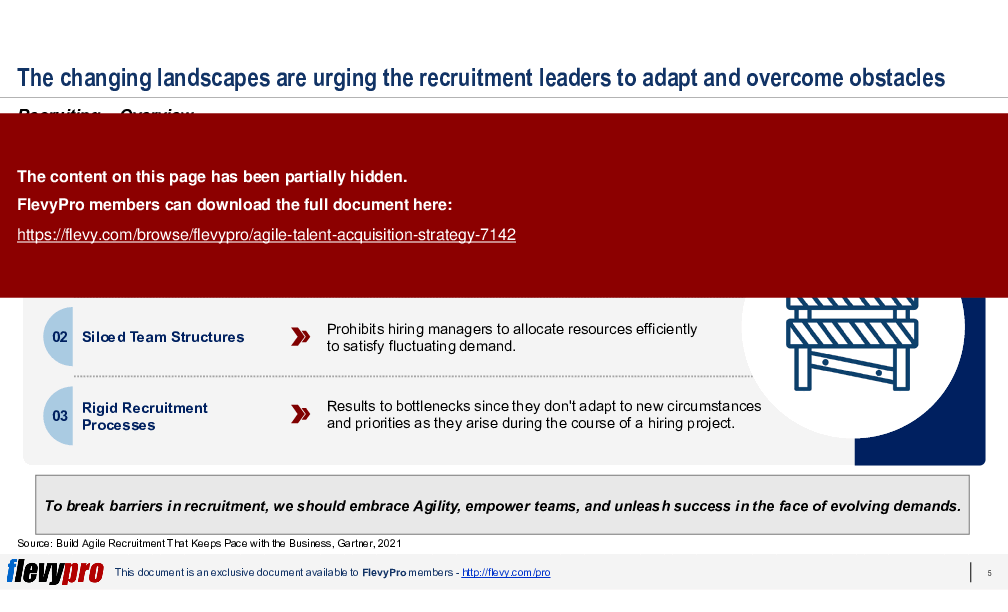
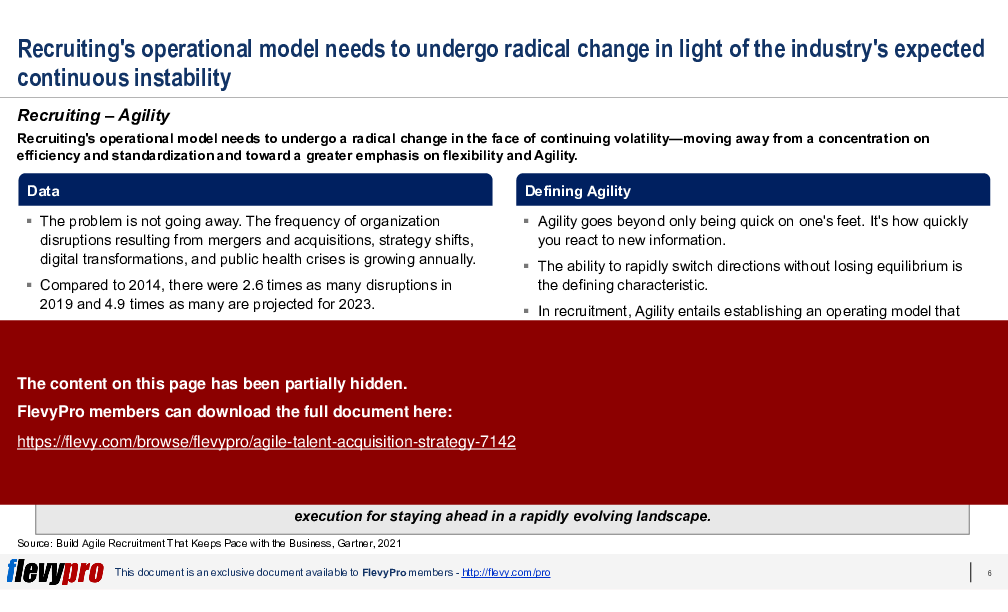
Recruitment is facing an unprecedented challenge as organizations undergo rapid Transformations. Despite the recognition that the credibility of the function relies on its capacity to swiftly adapt to evolving organization needs, recruiting is currently struggling to keep up with the pace. With an extremely dynamic organization, recruiting leaders are required to adopt a more flexible operating model.
To recruit the high-quality talent needed today, Agility is no longer just nice to have. It's a make-or-break capability for recruiting.
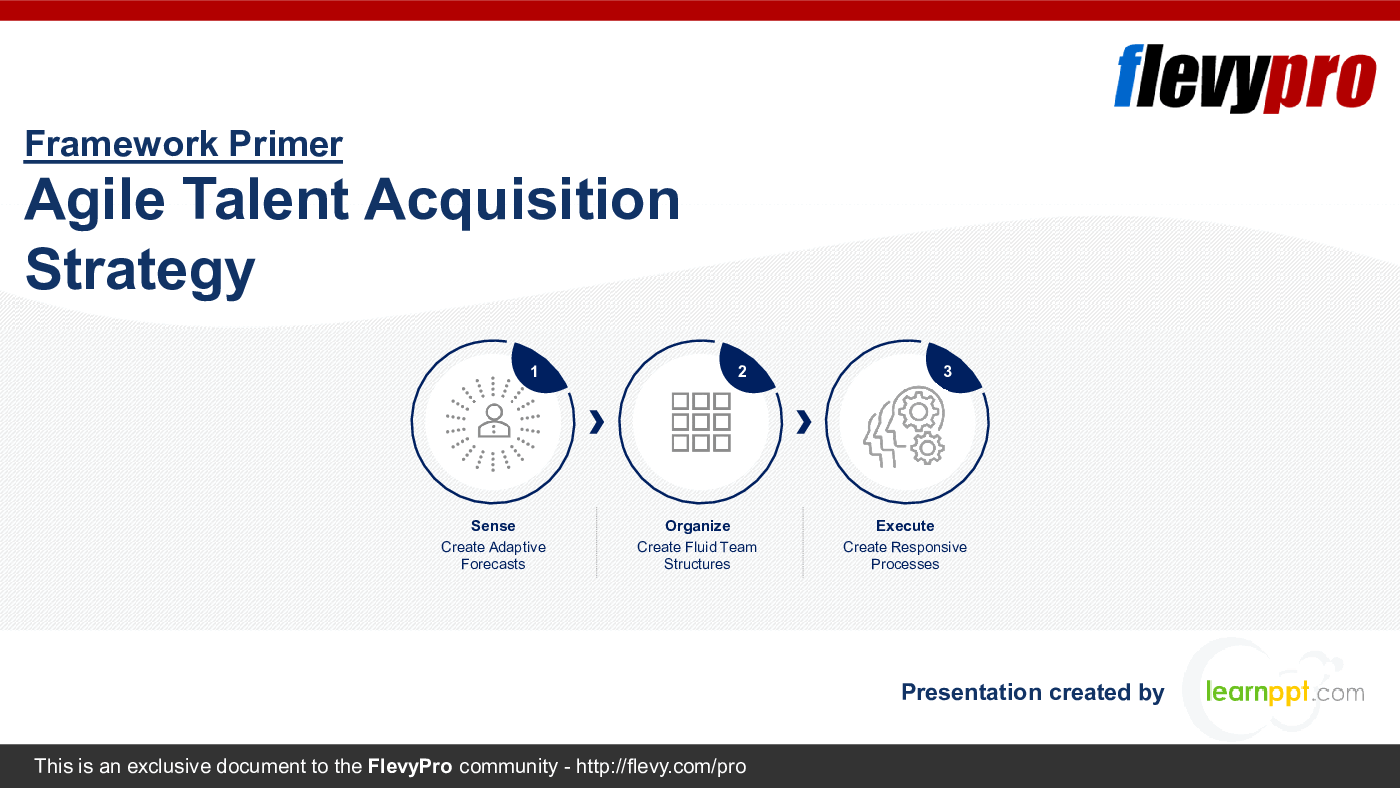
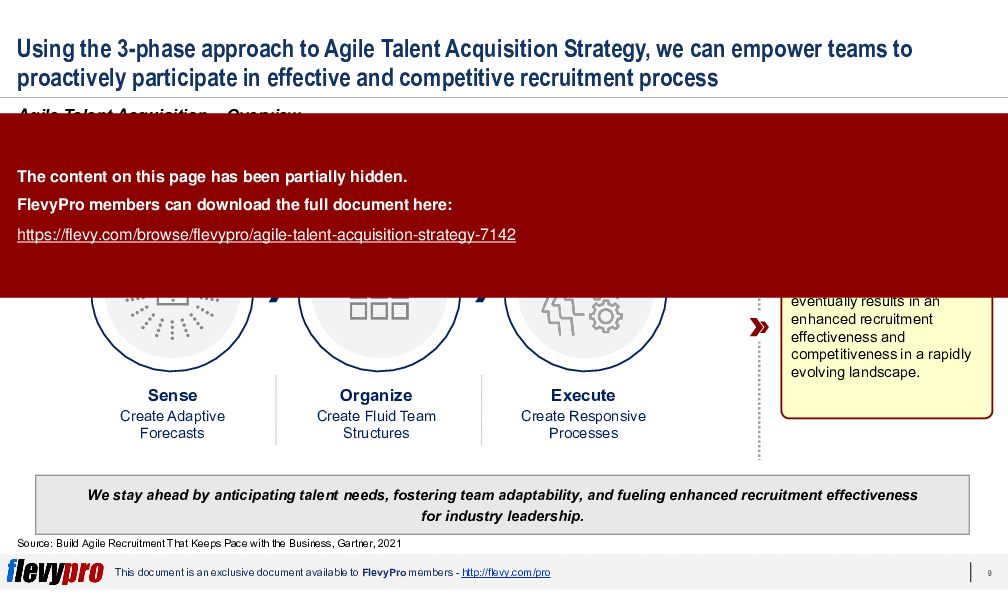
By employing this 3-phase process, recruiting leaders can develop Agile processes that would allow breakthrough on designing Agile processes that are more responsive to the evolving organization requirements. This PowerPoint presentation breaks down this 3-phase process to Agile Talent Acquisition Strategy in detail:
1. Sense – Create Adaptive Forecasts
The recruiting function has persistently struggled with a lack of visibility into hiring demand. Recent surveys showed 1/4 of the recruiting executives indicate that visibility of the organization's hiring needs for the year was high.
2. Organize – Create Fluid Team Structures
Creating fluid teams emphasizes the importance of flexible and adaptable team structures within an organizational setting. It aims to optimize collaboration and productivity by creating teams that can quickly and efficiently respond to evolving challenges, opportunities, and changing work dynamics.
3. Execute – Create Responsive Processes
The execution of a design responsive process involves implementing a methodology that adapts to the ever-evolving needs and preferences of users, ensuring the creation of effective and user-centered designs.
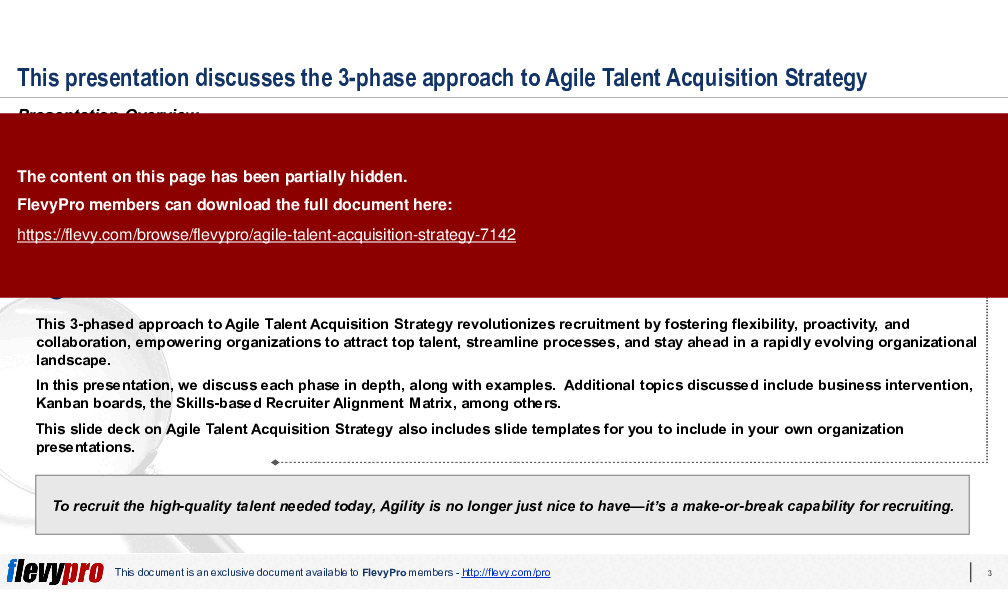
This 3-phased approach to Agile Talent Acquisition Strategy revolutionizes recruitment by fostering flexibility, proactivity, and collaboration, empowering organizations to attract top talent, streamline processes, and stay ahead in a rapidly evolving organizational landscape.
In this PowerPoint presentation, we discuss each phase in depth, along with examples. Additional topics discussed include business intervention, Kanban boards, the Skills-based Recruiter Alignment Matrix, among others.
This slide deck on Agile Talent Acquisition Strategy also includes slide templates for you to include in your own organization presentations.
This presentation equips C-level executives with actionable insights to transform their talent acquisition approach. By leveraging the outlined Agile framework, organizations can enhance their responsiveness to market shifts and internal demands, ensuring they attract and retain top talent effectively.
Got a question about this document? Email us at flevypro@flevy.com.
PRESENTATION DEEP DIVE ANALYSIS
This deep-dive analysis was generated from the full 33-slide PowerPoint presentation.
Executive Summary
The Agile Talent Acquisition Strategy presentation offers a comprehensive framework designed to enhance recruitment processes through agility. This document outlines a three-phase approach: Sense, Organize, and Execute, which empowers organizations to adapt to rapidly changing hiring demands. By implementing this strategy, recruitment leaders can proactively forecast talent needs, create flexible team structures, and establish responsive processes that streamline hiring efforts. The presentation also includes templates and examples to facilitate immediate application within organizations.
Who This Is For and When to Use
• Recruitment leaders seeking to modernize their hiring processes
• HR teams looking to improve collaboration and responsiveness
• Organizational change managers focused on adapting to evolving talent needs
• Executives aiming to enhance overall recruitment effectiveness
Best-fit moments to use this deck:
• During strategic planning sessions for recruitment initiatives
• When implementing new hiring frameworks or processes
• For training sessions on agile recruitment methodologies
Learning Objectives
• Define the 3 phases of the Agile Talent Acquisition Strategy
• Build adaptive forecasts to anticipate hiring needs
• Create fluid team structures that enhance collaboration
• Establish responsive processes that adapt to changing demands
• Implement tools such as Kanban boards for effective task management
• Foster a culture of agility within recruitment teams
Table of Contents
• Overview (page 3)
• Recruiting (page 5)
• Agile Talent Acquisition (page 9)
• Sense (page 12)
• Organize (page 15)
• Execute (page 18)
• Slide Design Structure & Templates (page 21)
Primary Topics Covered
• Agile Talent Acquisition Overview - This section introduces the Agile Talent Acquisition framework, emphasizing the need for flexibility and proactivity in recruitment.
• Three-Phase Approach - The framework is structured into 3 phases: Sense, Organize, and Execute, each designed to enhance recruitment agility.
• Sense Phase - Focuses on creating adaptive forecasts to identify emerging demand shifts in hiring needs.
• Organize Phase - Emphasizes the importance of fluid team structures that can quickly respond to changing recruitment demands.
• Execute Phase - Details the implementation of responsive processes that adapt to evolving organizational needs.
• Business Intervention Examples - Provides case studies, such as Commonwealth Bank, illustrating effective agile recruitment practices.
Deliverables, Templates, and Tools
• Adaptive forecasting templates for predicting hiring needs
• Fluid team structure models to enhance collaboration
• Kanban boards for tracking recruitment tasks and progress
• Skills-based Recruiter Alignment Matrix to optimize team capabilities
• Slide templates for presenting agile recruitment strategies
• Best practice guidelines for implementing agile methodologies
Slide Highlights
• Overview of the Agile Talent Acquisition Strategy framework
• Visual representation of the three-phase approach
• Case study on Commonwealth Bank's business intervention for demand shifts
• Skills-based Recruiter Alignment Matrix showcasing team reallocation
• Kanban board example used in agile recruitment processes
Potential Workshop Agenda
Agile Recruitment Strategy Introduction (60 minutes)
• Overview of the Agile Talent Acquisition framework
• Discussion on the importance of agility in recruitment
• Review of case studies and best practices
Phase Deep Dive Sessions (90 minutes each)
• Sense Phase: Techniques for adaptive forecasting
• Organize Phase: Building fluid team structures
• Execute Phase: Implementing responsive processes
Customization Guidance
• Tailor the adaptive forecasting templates to reflect your organization's specific hiring metrics and goals
• Adjust team structures based on your organization's unique talent segments and business units
• Modify the Kanban board to align with your recruitment processes and workflows
Secondary Topics Covered
• Challenges in traditional recruitment processes
• The impact of organizational changes on hiring demands
• Strategies for overcoming recruitment bottlenecks
• The role of technology in enhancing recruitment agility
Topic FAQ
What are the main phases of an agile talent acquisition approach?
An agile talent acquisition approach is structured into 3 phases: Sense (create adaptive forecasts to detect hiring demand shifts), Organize (design fluid team structures to reallocate recruiter capacity), and Execute (implement responsive processes for hiring workflows). The framework is organized around these 3 phases.How does adaptive forecasting work in agile recruitment?
Adaptive forecasting centers on improving visibility into future hiring needs by using current data and scenario signals to anticipate demand shifts. It helps recruitment teams prioritize roles and resource allocation proactively. The presentation provides adaptive forecasting templates to operationalize this practice.How can Kanban boards be applied to recruitment workflows?
Kanban boards are used to visualize candidate flow, manage work-in-progress limits, and track task progress across stages of sourcing and hiring. They improve team coordination and transparency for recruiters and hiring managers. The slide deck includes a Kanban board example for recruitment tracking.What should I look for when choosing an agile recruitment toolkit?
Look for tools enabling demand visibility, flexible team design, and workflow management: adaptive forecasting templates, fluid team-structure models, Kanban boards, skills-alignment matrices, case studies, and slide templates. Flevy’s Agile Talent Acquisition Strategy lists these core elements and accompanying customization guidance.How long should a team budget to run workshops adopting agile recruitment practices?
The suggested workshop agenda includes a 60-minute introduction followed by 3 phase deep-dives at 90 minutes each, which totals 330 minutes; many teams split this across multiple sessions. The document’s recommended structure is 60 minutes for intro and 90 minutes per phase.We completed a merger—how can agile talent acquisition help with new hiring demands?
Agile recruiting improves visibility into changing demand (Sense), enables rapid redeployment of recruiter capacity via fluid teams (Organize), and implements responsive processes for faster hiring (Execute). These actions address common post-merger issues like delayed demand information and siloed structures across the 3 phases.Can small HR teams implement agile recruitment with limited resources?
Yes; the framework is designed to be tailored. Small teams can adapt the provided templates, modify Kanban boards to fit workflow complexity, and scale fluid team structures to available capacity. The presentation includes customization guidance and templates such as adaptive forecasting templates and fluid team structure models.Are the slide templates and tools ready to use or do they require heavy customization?
The slide deck provides ready-to-use templates alongside explicit customization guidance so teams can tailor forecasting metrics, team structures, and Kanban workflows to their context. Users are advised to adapt the materials to their hiring metrics, with slide templates and adaptive forecasting templates supplied in the pack.Document FAQ
These are questions addressed within this presentation.
What is the Agile Talent Acquisition Strategy?
The Agile Talent Acquisition Strategy is a framework designed to improve recruitment processes through flexibility and responsiveness to changing hiring demands.
How does the Sense phase work?
The Sense phase focuses on creating adaptive forecasts to identify shifts in hiring needs, allowing organizations to adjust their recruitment strategies proactively.
What tools are included in this presentation?
The presentation includes templates for adaptive forecasting, team structures, and Kanban boards to facilitate agile recruitment practices.
Can this framework be customized for different organizations?
Yes, the framework is designed to be flexible and can be tailored to meet the specific needs and structures of different organizations.
What are the benefits of using agile recruitment practices?
Agile recruitment practices enhance responsiveness, improve collaboration, and streamline hiring processes, ultimately leading to better talent acquisition outcomes.
How can organizations implement this strategy?
Organizations can implement this strategy by adopting the three-phase approach, utilizing the provided templates, and fostering a culture of agility within their recruitment teams.
What challenges does agile recruitment address?
Agile recruitment addresses challenges such as delayed access to demand information, siloed team structures, and rigid recruitment processes that hinder adaptability.
What is the role of technology in agile recruitment?
Technology plays a crucial role in enabling agile recruitment by providing tools for tracking progress, facilitating communication, and enhancing collaboration among teams.
Glossary
• Agile Recruitment - A flexible and responsive approach to talent acquisition that adapts to changing organizational needs.
• Kanban Board - A visual management tool used to track tasks and workflow in recruitment processes.
• Adaptive Forecasting - The practice of anticipating hiring needs based on current and projected organizational demands.
• Fluid Team Structures - Organizational arrangements that allow for quick reallocation of resources based on changing recruitment needs.
• Skills-based Recruiter Alignment Matrix - A framework for aligning recruiters with specific skill sets and business needs.
• Business Intervention - Actions taken to address discrepancies between hiring forecasts and actual recruitment needs.
• Recruitment Bottlenecks - Delays in the hiring process caused by inflexible procedures or lack of communication.
• Talent Acquisition Strategy - A comprehensive plan outlining how an organization will attract and retain talent.
• Organizational Change - Adjustments in company structure or strategy that impact recruitment needs.
• Proactive Planning - Anticipating future hiring needs and preparing accordingly.
• Recruitment Agility - The ability of recruitment teams to respond quickly and effectively to changing demands.
• Siloed Structures - Organizational divisions that limit collaboration and flexibility in recruitment efforts.
AGILE PPT TEMPLATES
Source: Agile Talent Acquisition Strategy PowerPoint (PPTX) Presentation Slide Deck, LearnPPT Consulting
Did you need more documents?
Consider a FlevyPro subscription from $39/month. View plans here.
For $10.00 more, you can download this document plus 2 more FlevyPro documents. That's just $13 each.




























