
BENEFITS OF THIS POWERPOINT DOCUMENT
- Based on a real project, succesfully completed to time and budget
- No need to re-invent the wheel
- Fully customisable, add, delete, amend as required to suit project scale and circumstance
PPT DESCRIPTION
Editor Summary
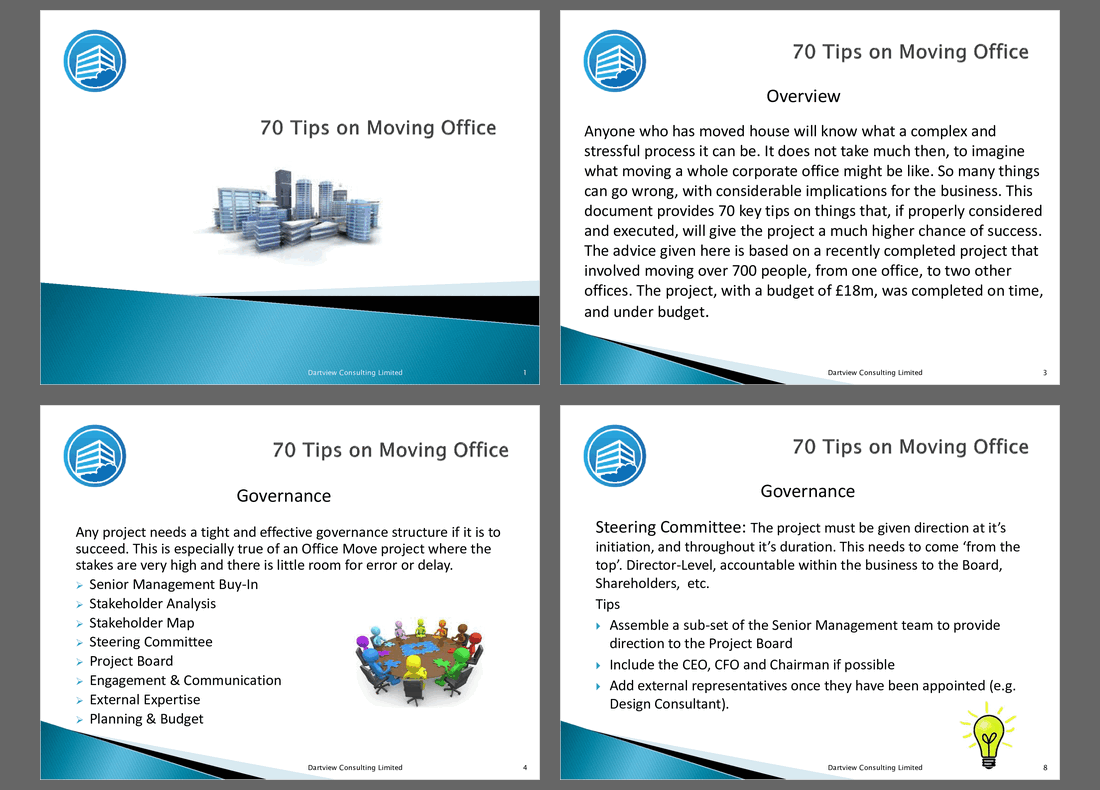
70 Tips on Moving Office is an 85-slide PowerPoint by Dartview Consulting that documents lessons from a real relocation project that moved over 700 employees on an £18 million budget.
Read more
The deck provides 70 practical tips across 12 sections (Governance, Office Selection, Staff Considerations, Property, Design & Fit-Out, Furniture, Technology, Logistics, Contingency, Communications, Appendix) and includes 6 templates/tools (Stakeholder Matrix, Office Selection Matrix, Communications Strategy template, Budget Checklist, Risk Register, Employee Working Party Involvement Areas). Sold as a digital download on Flevy with immediate digital download.
Use this deck when an organization is planning or executing an office relocation — whether initiating site selection, standing up project governance, preparing fit-out and tech, or managing move logistics and staff engagement.
Corporate executives approving project scope and budget alignment, and establishing senior-management governance.
Project managers building the project team, developing timelines, and maintaining the Risk Register.
Facilities managers coordinating fit-out contractors, furniture procurement, and move logistics.
HR leaders forming an Employee Working Group and running communications to protect retention and morale.
The structure — governance, site evaluation, design/fit-out, logistics, contingency, and communications — mirrors standard project-management and stakeholder-driven consulting methodology.
Based on a real project, 85 slides, containing 70 tips on how to successfully plan and execute an Office Move project. Topics covered include: Governance, Stakeholder Engagement, Office Selection, Staff Considerations, Property Considerations, Design & Fit-Out, Furniture, Technology, Logistics, Risk & Contingency, Communications
Got a question about the product? Email us at support@flevy.com or ask the author directly by using the "Ask the Author a Question" form. If you cannot view the preview above this document description, go here to view the large preview instead.
MARCUS OVERVIEW
This synopsis was written by Marcus
[?] based on the analysis of the full 85-slide presentation.
Executive Summary
The "70 Tips on Moving Office" presentation provides a comprehensive guide for corporate executives and project managers overseeing office relocations. Drawing from a successful project that moved over 700 employees within a budget of £18 million, this deck outlines critical considerations and actionable strategies to ensure a smooth transition. By following these tips, stakeholders can minimize risks, enhance employee engagement, and achieve operational continuity during the move.
Who This Is For and When to Use
• Corporate Executives overseeing office relocations
• Project Managers tasked with executing office moves
• Facilities Managers coordinating logistics and fit-out
• HR Leaders focused on staff engagement and retention
Best-fit moments to use this deck:
• During the initial planning phase of an office move
• When assembling a project team and governance structure
• To engage stakeholders and communicate progress throughout the project
• At key milestones to ensure alignment and accountability
Learning Objectives
• Define the governance structure necessary for a successful office move
• Identify and engage key stakeholders throughout the relocation process
• Develop a comprehensive office selection matrix based on organizational needs
• Establish effective communication strategies to keep staff informed and engaged
• Plan for logistics, technology, and fit-out requirements in the new office
• Implement contingency plans to address potential risks during the move
Table of Contents
• Overview (page 3)
• Governance (page 4)
• Office Selection (page 12)
• Staff Considerations (page 20)
• Property Considerations (page 27)
• Design & Fit-Out (page 32)
• Furniture (page 43)
• Technology (page 49)
• Logistics (page 57)
• Contingency Planning (page 64)
• Communications & Engagement (page 69)
• Appendix (page 77)
Primary Topics Covered
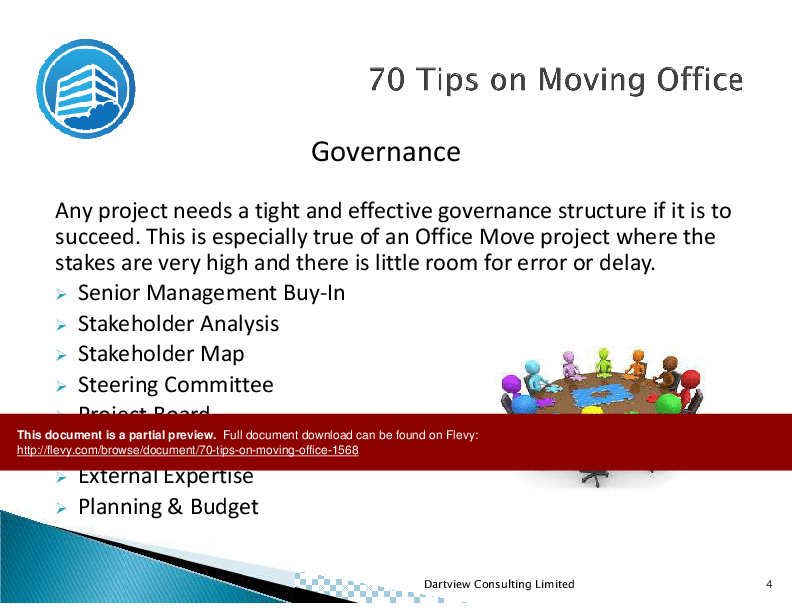
• Governance - Establishing a robust governance structure is essential for project success, including senior management buy-in and stakeholder engagement.
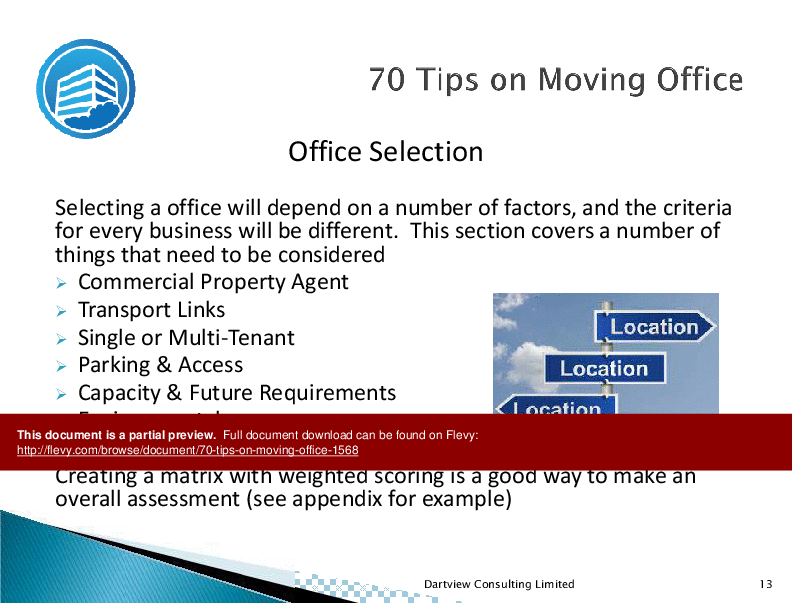
• Office Selection - Key factors in selecting a new office include transport links, capacity, environmental considerations, and local amenities.
• Staff Considerations - Engaging staff early and addressing retention concerns are critical for maintaining morale and productivity during the transition.
• Property Considerations - Legal requirements, planning permissions, and surveys are vital to ensure compliance and mitigate risks.
• Design & Fit-Out - Collaborating with design professionals to balance aesthetics and functionality is crucial for creating an effective workspace.
• Logistics - Detailed logistical planning is necessary for a smooth move, including packing, transportation, and timing.
Deliverables, Templates, and Tools
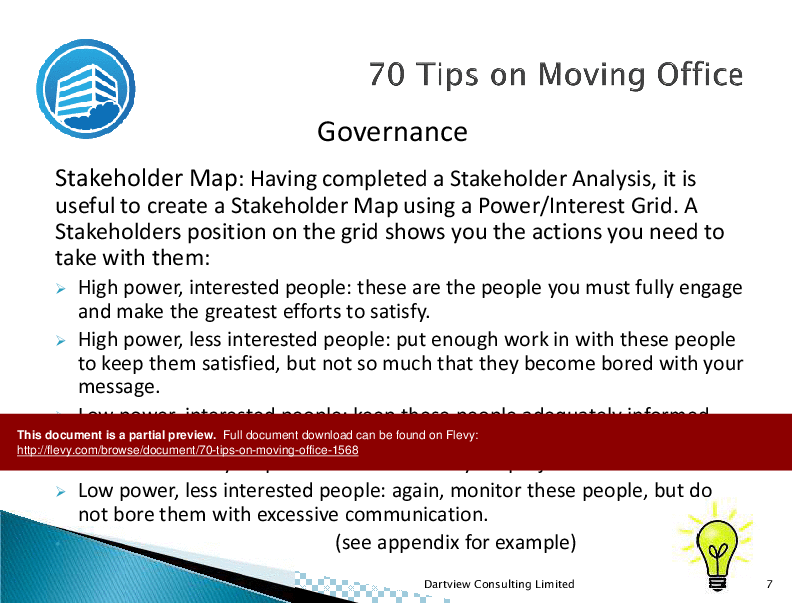
• Stakeholder Matrix for identifying and managing key stakeholders
• Office Selection Matrix to evaluate potential locations
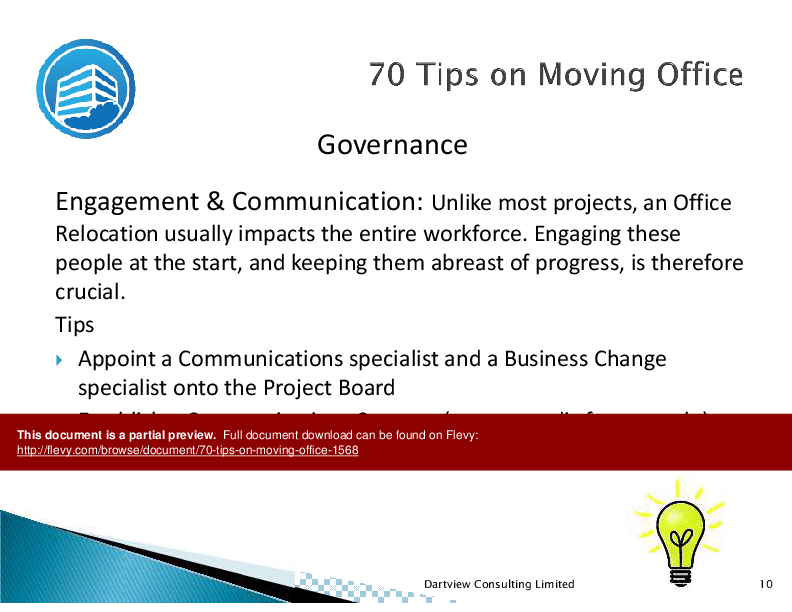
• Communications Strategy template for keeping staff informed
• Budget Checklist for tracking relocation expenses
• Risk Register for identifying and mitigating potential issues
• Employee Working Party Involvement Areas to ensure staff engagement
Slide Highlights
• Overview of the complexities involved in moving a corporate office
• Governance structure emphasizing the importance of senior management buy-in
• Office selection criteria that weigh various factors for decision-making
• Staff engagement strategies to foster participation and reduce resistance
• Contingency planning framework to prepare for unforeseen challenges
Potential Workshop Agenda
Kick-off Meeting (60 minutes)
• Introduce project team and governance structure
• Review project objectives and timelines
• Identify key stakeholders and their roles
Stakeholder Engagement Session (90 minutes)
• Conduct stakeholder analysis and mapping
• Discuss communication strategies and engagement plans
• Gather feedback on initial office selection criteria
Logistics Planning Workshop (120 minutes)
• Outline logistical requirements for the move
• Assign responsibilities for packing and transportation
• Develop a timeline for key activities leading up to the move
Customization Guidance
• Tailor the governance structure to align with your organization’s hierarchy and culture
• Adjust the office selection criteria based on specific business needs and employee feedback
• Modify communication strategies to fit the preferences of your workforce
• Incorporate unique logistical considerations based on the new office location
Secondary Topics Covered
• Risk management strategies for office relocations
• Best practices for engaging external specialists and consultants
• Considerations for technology integration in the new office
• Employee wellness and health & safety during the move
• Environmental sustainability practices in office design
Topic FAQ
What are the main phases or sections to cover in an office relocation project?
Office relocations typically progress through governance and stakeholder setup, office selection, staff considerations, property due diligence, design and fit-out, furniture and technology planning, logistics and move execution, contingency planning, and communications. The referenced deck organizes these into 12 sections, starting with Governance and ending with an Appendix.
How should we structure governance to keep an office move on track?
Effective governance includes senior management buy-in, a clear decision-making hierarchy, named project leads, and stakeholder engagement mechanisms. Tools that help enforce that structure include role definitions and stakeholder mapping; the 70 Tips on Moving Office highlights establishing senior buy-in and using a Stakeholder Matrix.
How does a RACI matrix help during an office move?
A RACI matrix clarifies who is Responsible, Accountable, Consulted, and Informed for each task, reducing overlaps and decision delays during complex activities like fit-out, technology rollout, and move-day logistics. The product glossary defines the RACI matrix as a roles-and-responsibilities tool and recommends its use for project accountability.
What should I look for when buying an office-move toolkit or slide deck?
Buyers should check whether the resource is based on real project experience, includes practical templates (stakeholder, selection, communications), covers governance through execution, and offers tools for risk and budget control. 70 Tips on Moving Office cites a real relocation experience and includes templates such as an Office Selection Matrix and Risk Register.
Are template slide decks useful compared with hiring external consultants for a move?
Slide decks provide documented checklists, templates, and worked examples that can be reused across projects; they capture lessons learned without necessarily replacing specialist services. 70 Tips on Moving Office consolidates real-project learnings and templates from a relocation that moved over 700 employees into an 85-slide deck.

We’re merging 2 teams into one new office—what should be the first priority?
Prioritize governance and stakeholder engagement to align objectives, manage expectations, and mitigate retention risks. Early actions include establishing senior sponsorship, forming an Employee Working Group to gather feedback, and setting communication rhythms to maintain morale and clarity, such as an Employee Working Group.

What practical steps should we take to assess a candidate office for suitability and compliance?
Conduct thorough surveys for structural condition and compliance, verify planning permission and legal requirements, evaluate transport links, capacity, and local amenities, and involve design consultants to test fit-out feasibility; these assessments are grouped under Property Considerations and recommend using formal surveys.
How can a small project team manage risks and contingencies during a move?
Maintain a living Risk Register to capture likely issues, assign owners for each risk, develop contingency plans for critical items (technology, logistics, space readiness), and appoint a focal risk manager to track mitigations and escalation. The deck provides a Risk Register template to support that work.
Document FAQ
These are questions addressed within this presentation.
What are the key components of a successful office move?
A successful office move requires a well-defined governance structure, stakeholder engagement, thorough planning for logistics and technology, and effective communication with staff.
How can we ensure staff are engaged during the relocation process?
Engage staff early by forming an Employee Working Group, conducting regular briefings, and soliciting their input on key decisions.
What should we consider when selecting a new office location?
Consider transport links, local amenities, capacity for future growth, and environmental factors when evaluating potential office spaces.
How do we handle potential risks during the move?
Establish a Risk Register to identify potential issues, develop contingency plans, and appoint a focal point for risk management.
What role does senior management play in the office relocation?
Senior management provides essential support, ensures alignment with business objectives, and helps secure necessary resources for the project.
What is the importance of a communications strategy?
A communications strategy keeps all stakeholders informed, reduces uncertainty, and fosters a sense of involvement among employees throughout the relocation process.
How can we assess the condition of the new office space?
Conduct thorough surveys to check for structural integrity, compliance with regulations, and suitability for your business needs.
What are the best practices for logistics planning?
Engage a professional removals company, establish clear responsibilities, and develop a detailed timeline for packing and transportation.
Glossary
•
Governance - The framework for decision-making and accountability in a project.
•
Stakeholder - An individual or group with an interest in the project's outcome.
•
Contingency Plan - A strategy developed to address potential risks or unforeseen events.
•
Fit-Out - The process of making an interior space suitable for occupation.
•
RACI Matrix - A tool for defining roles and responsibilities in a project.
•
Employee Working Group - A team of employees representing various departments to provide input during the relocation process.
•
Office Selection Matrix - A tool for evaluating potential office locations based on weighted criteria.
•
Risk Register - A document that identifies potential risks and outlines mitigation strategies.
•
Communications Strategy - A plan for how information will be shared with stakeholders throughout the project.
•
Logistics - The planning and execution of the movement of goods and services.
•
Environmental Considerations - Factors related to sustainability and ecological impact in office selection and design.
•
Technology Integration - The process of implementing technology solutions in the new office space.
•
Health & Safety - Regulations and practices to ensure the well-being of employees during the move.
•
Design Consultant - A professional who provides expertise in the design and layout of office spaces.
•
Commercial Property Agent - A specialist who assists in finding suitable office locations.
•
Fit-Out Contractor - A company responsible for the physical alterations and improvements to the new office space.
•
Surveys - Assessments conducted to evaluate the condition and suitability of a property.
•
Planning Permission - Legal authorization required for certain changes to a property.
•
Local Amenities - Facilities and services available in the vicinity of the new office location.
•
Transport Links - Connections to public transportation and major roadways near the office.
Source: 70 Tips on Moving Office PowerPoint (PPTX) Presentation Slide Deck, Dartview Consulting








