
This presentation is developed by former McKinsey, BCG, Deloitte, EY, and Capgemini consultants. It is used by leading global strategy consulting firms for internal training and client project delivery.
Editor Summary
A 35-slide PowerPoint presentation, Strategy Development Methodology presents a three-phase approach to strategy development (Set Strategic Guidelines; Define Strategic Intent; Execution Design) and is developed by LearnPPT Consulting with authorship attributed to former McKinsey, BCG, Deloitte, EY, and Capgemini consultants.
Read moreIncludes a strategic intent framework, execution design templates, strategic-audit tools, market-attractiveness guidelines, and roadmap templates. Target users are corporate executives, strategy consultants, business unit leaders, and project managers. Sold as a digital download on Flevy with immediate digital download.
Use this presentation when an organization needs to clarify strategic intent, assess market battlefields, and design execution plans — for example during strategic planning cycles, capability assessments, or focused strategy workshops.
Corporate executives running strategic planning sessions to define objectives, core competencies, and KPIs.
Strategy consultants conducting market-battlefield assessments and translating findings into strategic initiatives.
Business unit leaders aligning departmental plans via resource allocation and execution-design adjustments.
Project managers building roadmaps and detailed execution plans for strategic initiatives.
The three-phase, hierarchical approach with explicit activities and deliverables mirrors the structured sequencing used in McKinsey, Bain, and BCG-style engagements.
This PowerPoint presentation is a detailed guide to Strategy Development, covering strategy concepts from military strategists (e.g. Sun Tzu's Art of War) to modern day Strategy Development thought leaders (Mintzberg and Bower).
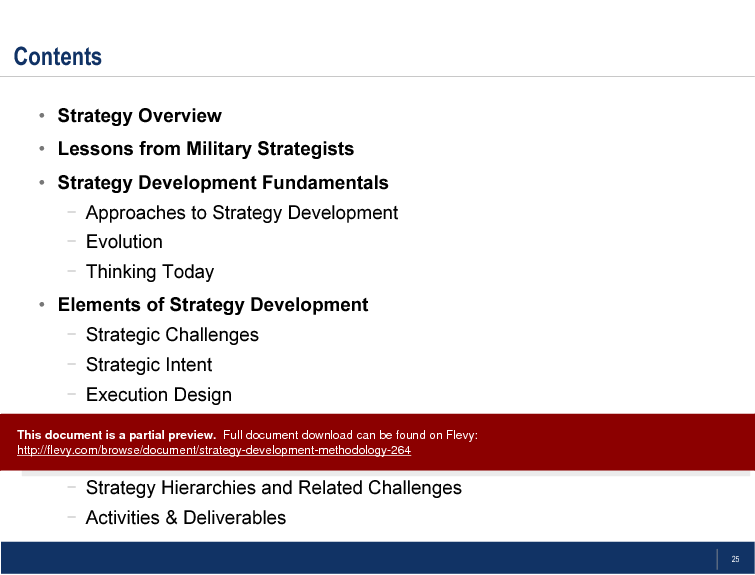
This Strategy Development methodology PPT presentation is divided into 5 sections:
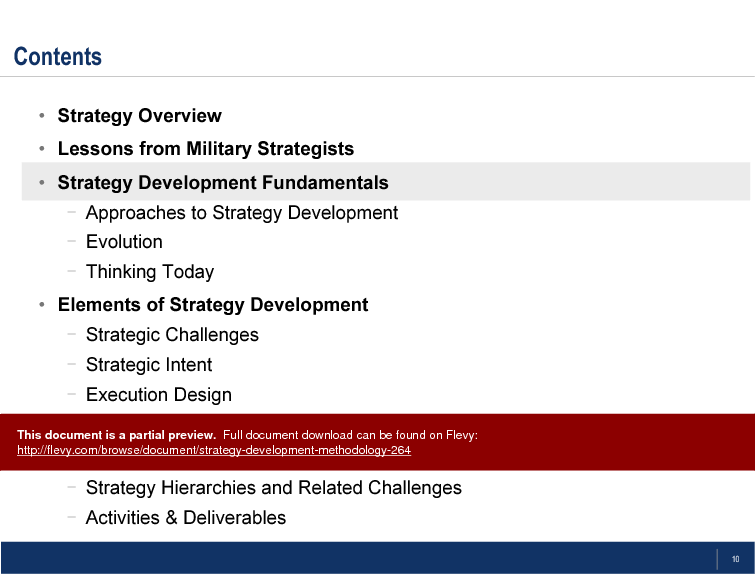
• Strategy Overview – This section discusses framing strategic challenges and and the primary objectives of Strategy.
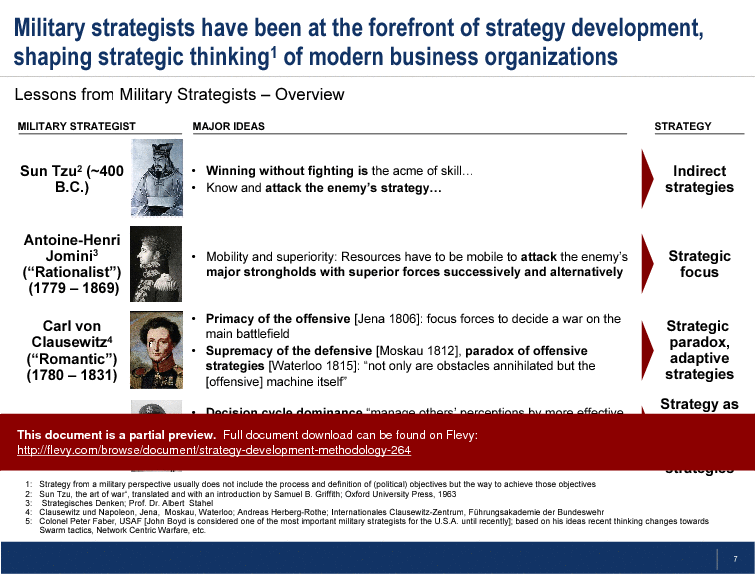
• Lessons from Military Strategists – Discusses major strategic ideas from Sun Tzu, Antoine-Henri Jomini, Carl von Clausewitz, and John Boyd; with deeper discussion on Sun Tzu's The Art of War.
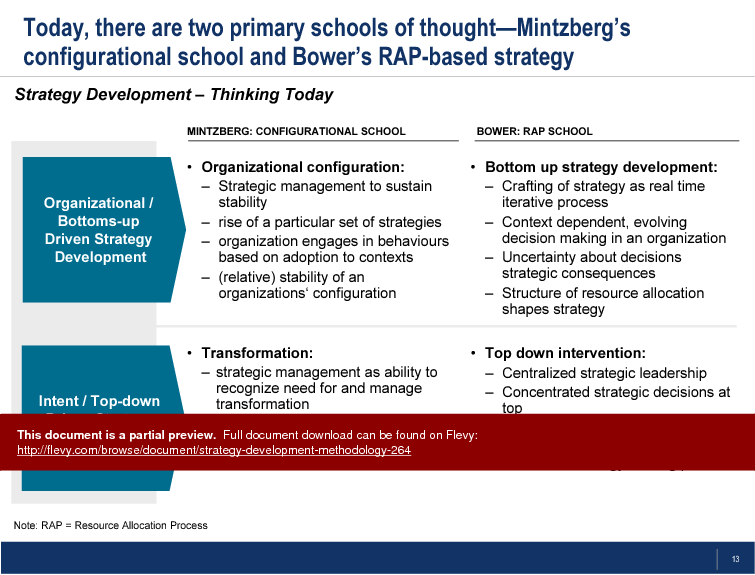
• Strategy Development Fundamentals – This section discusses approach to strategic challenges, the 5-phase evolution of Strategy Development methodologies & philosophies (from Financial Planning in the 50s to Long-term Planning in the 60s to Strategic Planning in the 70s to Strategic Renewal in the 80s to Strategic Management in the 90s). It then dives into a deeper analysis of today's modern Strategy Development thinking (Mintzberg's Configurational School, Bower's Resource Allocation Process [RAP] School) and Organizational / Bottoms-up Driven vs. Intent / Top-down Driven Strategy Methodology.

• Elements of Strategy Development – This section breaks down all the various elements of Strategic Intent (Battlefields, Objectives, and Core Competencies) and Strategy Execution Design (Strategic Initiatives, Strategy Planning & Budgeting, Organizational Context). It also discusses the ambiguity of Strategy Development as well as maps Strategy Development initiatives to the elements of Strategy Development.
• Strategy Development Approach – This final section pulls everything together and introduces a 9-box Strategy Development framework that captures how Strategy should be applied with varying emphasis at each hierarchical level of the organization. It also breaks down a 3-phase approach to Strategy Development, including hierarchical challenges, key activities, and deliverables:
Numerous Strategy Development methods and concepts are discussed in this comprehensive presentation. As this is a fully editable PowerPoint presentation, you can also adapt the slides as templates for your own presentations on Strategy Development. This PPT was developed and used by leading global strategy consulting firms.
This presentation emphasizes the importance of framing strategic challenges and understanding the current situation to achieve desired future states. It also highlights the role of execution design in supporting strategic intent.
Got a question about the product? Email us at support@flevy.com or ask the author directly by using the "Ask the Author a Question" form. If you cannot view the preview above this document description, go here to view the large preview instead.
MARCUS OVERVIEW
This synopsis was written by Marcus [?] based on the analysis of the full 35-slide presentation.
Executive Summary
This Strategy Development Methodology presentation offers a comprehensive guide to crafting effective business strategies, drawing insights from both historical military strategists and contemporary thought leaders like Mintzberg and Bower. Structured in a McKinsey, Bain, or BCG-quality format (consulting-grade; not affiliated), this presentation outlines a three-phase approach to strategy development. It equips corporate executives and consultants with the tools to define strategic intent, set objectives, and design execution plans that align with organizational goals. By utilizing this framework, users will enhance their strategic planning capabilities and drive successful outcomes.
Who This Is For and When to Use
• Corporate executives responsible for strategic planning and execution
• Strategy consultants guiding organizations through strategic transformations
• Business unit leaders tasked with aligning departmental strategies with corporate objectives
• Project managers overseeing strategic initiatives and execution design
Best-fit moments to use this deck:
• During strategic planning sessions to establish clear objectives and execution plans
• When assessing organizational capabilities and aligning them with strategic intent
• In workshops aimed at refining strategic initiatives and addressing execution challenges
Learning Objectives
• Define strategic intent and articulate the core competencies required for success
• Set measurable objectives that align with stakeholder expectations
• Identify relevant market battlefields and assess their attractiveness
• Design execution plans that effectively translate strategic intent into action
• Analyze strategic challenges and develop initiatives to overcome them
• Evaluate organizational structures and resource allocation to support strategy execution
Table of Contents
• Strategy Overview (page 3)
• Lessons from Military Strategists (page 6)
• Strategy Development Fundamentals (page 10)
• Elements of Strategy Development (page 17)
• Strategy Development Approach (page 25)
Primary Topics Covered
• Strategy Overview - An introduction to the fundamental concepts of strategy development and its significance in achieving organizational goals.
• Lessons from Military Strategists - Insights from historical figures like Sun Tzu and Clausewitz that inform modern strategic thinking.
• Strategy Development Fundamentals - A breakdown of various approaches to strategy development, including historical evolution and contemporary practices.
• Elements of Strategy Development - Key components such as strategic challenges, intent, execution design, and initiatives necessary for effective strategy formulation.
• Strategy Development Approach - A structured methodology detailing the hierarchical challenges and specific activities and deliverables involved in strategy development.
Deliverables, Templates, and Tools
• Strategic intent framework to define objectives and core competencies
• Execution design templates for aligning organizational context with strategic initiatives
• Guidelines for assessing market attractiveness and competitive positioning
• Tools for conducting strategic audits and identifying key success factors
• Roadmap development templates for visualizing strategic initiatives and timelines
Slide Highlights
• Overview of strategic challenges and how to frame them effectively
• Insights from military strategists and their application to business strategy
• Detailed breakdown of the three-phase strategy development approach
• Visual representations of strategic intent and execution design elements
• Key activities and deliverables associated with each phase of strategy development
Potential Workshop Agenda
Kickoff Session (60 minutes)
• Introduce the strategy development framework and its importance
• Discuss the current strategic landscape and organizational challenges
Strategic Intent Workshop (90 minutes)
• Define strategic objectives and core competencies
• Identify relevant market battlefields and assess their attractiveness
Execution Design Session (120 minutes)
• Develop execution plans that align with strategic intent
• Discuss resource allocation and organizational context adjustments
Customization Guidance
• Tailor the strategic intent framework to reflect specific organizational goals and stakeholder requirements
• Adjust execution design elements to fit the unique context of the organization
• Incorporate relevant KPIs to measure progress against strategic objectives
Secondary Topics Covered
• Historical evolution of strategy development practices
• Comparative analysis of top-down vs. bottom-up strategy development approaches
• The role of strategic audits in refining organizational strategies
• Techniques for managing strategic initiatives and ensuring alignment with corporate goals
Topic FAQ
What are the main phases of a strategy development process I should follow?
A commonly referenced structure is the three-phase approach outlined in this methodology: Set Strategic Guidelines, Define Strategic Intent, and Execution Design. Each phase includes hierarchical challenges, key activities, and deliverables to move from strategic framing to implementation across 3 phases.
What elements should I include when defining strategic intent for a business unit?
Defining strategic intent should cover the target market battlefields, measurable objectives, and the core competencies required to compete. Flevy's Strategy Development Methodology provides a strategic intent framework and templates to capture battlefields, objectives, and core competencies as concrete elements.
How can lessons from military strategists be applied to corporate strategy work?
Military strategists such as Sun Tzu, Clausewitz, Jomini, and Boyd illustrate concepts like indirect approaches, understanding competitive dynamics, and framing challenges. Translating those ideas helps with situational understanding and competitive positioning, as discussed using Sun Tzu and Clausewitz in the presentation.
What is a strategic audit and how does it support strategy formulation?
A strategic audit is a comprehensive assessment of an organization’s strategic position and performance, identifying strengths, weaknesses, and key success factors. The product includes tools and templates to perform such audits and to map audit findings to strategic initiatives and priorities as an explicit deliverable.
How should I choose a strategy PPT for a short, facilitated workshop on a tight timeline?
Choose a deck that includes ready-made workshop agendas, focused templates for strategic intent and execution design, and clear visual deliverables to keep sessions time-boxed. Flevy's Strategy Development Methodology includes a sample agenda with a 60-minute kickoff, 90-minute strategic intent, and 120-minute execution session.
What determines the cost‑to‑value of strategy PowerPoint templates for in-house use?
Value is driven by the pedigree of the methodology, the number and relevance of included templates (e.g., strategic intent and execution design), customization guidance, and practical artifacts like roadmaps. One concrete attribute to compare is slide count; this offering is a 35-slide PowerPoint.
How can I align a business-unit strategy with corporate objectives using a toolkit?
Start by mapping corporate objectives to unit-level strategic intent, assess capability gaps via a strategic audit, and design initiatives with resource-allocation and execution templates to close gaps. Flevy's Strategy Development Methodology supplies execution design templates and roadmap development templates to support that alignment.
After a merger, what framework helps prioritize strategic initiatives across combined organizations?
Prioritization benefits from assessing market attractiveness, capability fit, and strategic challenges, then mapping initiatives to organizational levels. A 9-box Strategy Development framework that varies emphasis by hierarchical level helps prioritize and assign responsibilities, as described in the methodology.
Document FAQ
These are questions addressed within this presentation.
What is the primary focus of this strategy development methodology?
The methodology emphasizes defining strategic intent, setting clear objectives, and designing execution plans that align with organizational capabilities and market conditions.
How can this presentation be applied in a corporate setting?
It can be utilized in strategic planning sessions, workshops, and initiatives aimed at refining and executing business strategies effectively.
What are the key phases of the strategy development approach?
The approach consists of 3 phases: setting strategic guidelines, defining strategic intent, and executing the design.
How does the methodology incorporate lessons from military strategists?
It draws parallels between military strategy principles and business strategy, emphasizing the importance of indirect approaches and understanding competitive dynamics.
What types of strategic challenges does this methodology address?
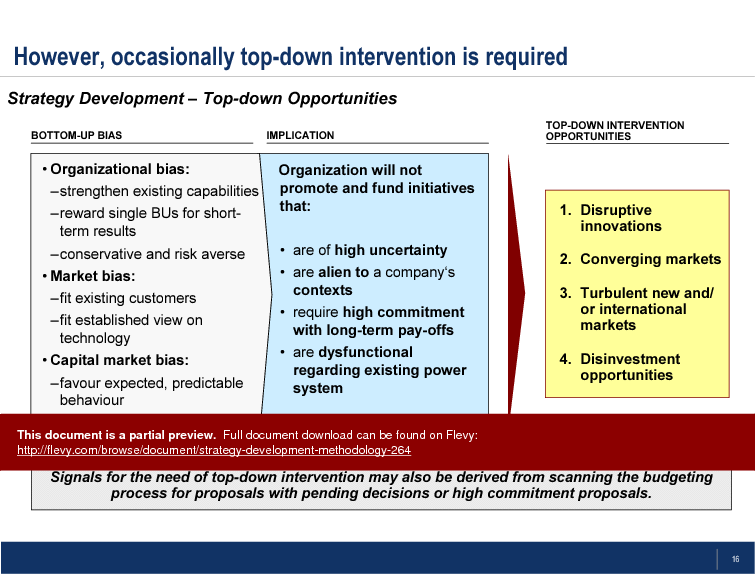
It addresses ambiguity in strategic intent, alignment of execution context, and the need for top-down intervention in complex environments.
What deliverables can I expect from using this framework?
Users can expect templates for strategic intent, execution design, and a roadmap for implementing strategic initiatives.
How can I customize the framework for my organization?
Customization can be achieved by aligning the strategic intent framework with specific organizational goals, stakeholder needs, and relevant KPIs.
What tools are included in this presentation?
The presentation includes templates for strategic audits, execution design, and roadmap development to facilitate effective strategy formulation and execution.
Glossary
• Strategic Intent - The overarching goals and objectives that guide an organization's strategy.
• Core Competencies - The unique strengths and capabilities that provide competitive advantage.
• Execution Design - The framework for implementing strategic initiatives and aligning organizational resources.
• Market Battlefield - The competitive landscape where an organization seeks to achieve its objectives.
• Strategic Audit - A comprehensive assessment of an organization's strategic position and performance.
• Key Performance Indicators (KPIs) - Metrics used to measure the success of strategic initiatives.
• Resource Allocation - The process of distributing resources to align with strategic priorities.
• Strategic Challenges - Obstacles that organizations face in achieving their strategic goals.
• Stakeholder Requirements - The expectations and needs of individuals or groups with an interest in the organization's success.
• Value Proposition - The unique value that an organization offers to its customers.
• Competitive Positioning - The strategy used to differentiate an organization from its competitors.
• Strategic Initiatives - Specific projects or actions taken to achieve strategic objectives.
• Organizational Context - The internal and external factors that influence an organization's strategy.
• Ambiguity in Strategy - Uncertainty surrounding strategic intent or execution design that can affect decision-making.
• Balanced Scorecard - A performance management tool that translates strategic objectives into measurable outcomes.
• Vision Engineering - The process of defining and articulating a clear vision for the organization's future.
• Transformation Roadmap - A strategic plan outlining the steps required to achieve significant organizational change.
• Business Model Innovation - The process of developing new ways to create, deliver, and capture value.
• Growth Scenario Planning - A strategic approach to forecasting and preparing for potential growth opportunities.
• Intrapreneurship - The practice of fostering entrepreneurial behavior within an established organization.
This PPT slide presents Bower's framework for strategy development, focusing on resource allocation as central to strategic planning. Key components include "Strategic intent," which defines overarching goals; "Organizational context," encompassing governance structures and performance measures that influence decision-making; and "Market context," addressing customer demands and technological advancements affecting revenue. The "Capital market context" highlights the influence of capital providers on financial considerations in strategy. Central to the framework is "Resource allocation," a bottom-up approach for selecting projects aligned with strategic intent. The "Operating System" ensures internal processes support strategy execution. The interplay of these elements culminates in the "Realized strategy," reflecting actual outcomes of strategic planning efforts.
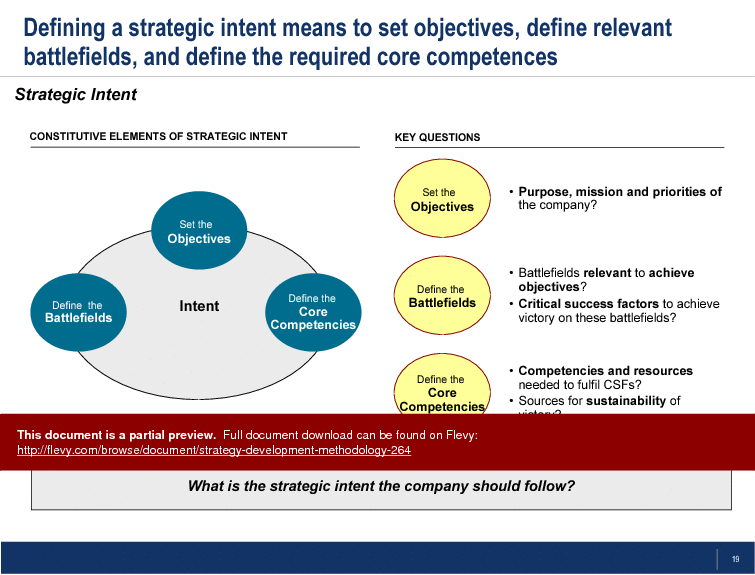
This PPT slide outlines the critical components of defining strategic intent, centered around the concept of "Intent." The 3 main areas are Objectives, Battlefields, and Core Competencies.
"Objectives" focuses on setting clear goals, including shareholder and stakeholder requirements, and emphasizes the importance of key performance indicators (KPIs) for tracking measurable outcomes.
"Battlefields" addresses market attractiveness relative to objectives, highlighting the need to understand market dynamics, potential market positions, and competitors' ambitions, positioning, and capabilities.
"Core Competencies" examines internal strengths necessary to deliver on the value proposition, stressing the importance of understanding strengths, weaknesses, and the protectability of competencies for sustaining competitive advantage.
This framework guides organizations in making informed strategic decisions by balancing internal capabilities with external market conditions.
The evolution of strategic development in the corporate sector since the 1950s encompasses 5 distinct phases.
Phase 1 (1950s) focuses on Financial Planning with the theme "Meet the budget," emphasizing financial control and budget planning.
Phase 2 (1960s) shifts to Long-term Planning, centered on "Forecast the future," introducing growth planning, resource allocation, SWOT analysis, and the Ansoff Matrix.
Phase 3 (1970s) marks the emergence of Strategic Planning, characterized by "Think strategically to beat competition," introducing frameworks like the BCG Matrix for market position assessment.
Phase 4 (1980s) emphasizes Strategy Renewal with "Strategy as positioning," incorporating Michael E. Porter's Five Forces and the Value Chain for competitive insights.
Phase 5 (1990s to present) focuses on Strategic Management, encapsulated by "Integrate strategic planning and implementation," highlighting core competencies and frameworks like the Balanced Scorecard for aligning strategic objectives with operational execution.
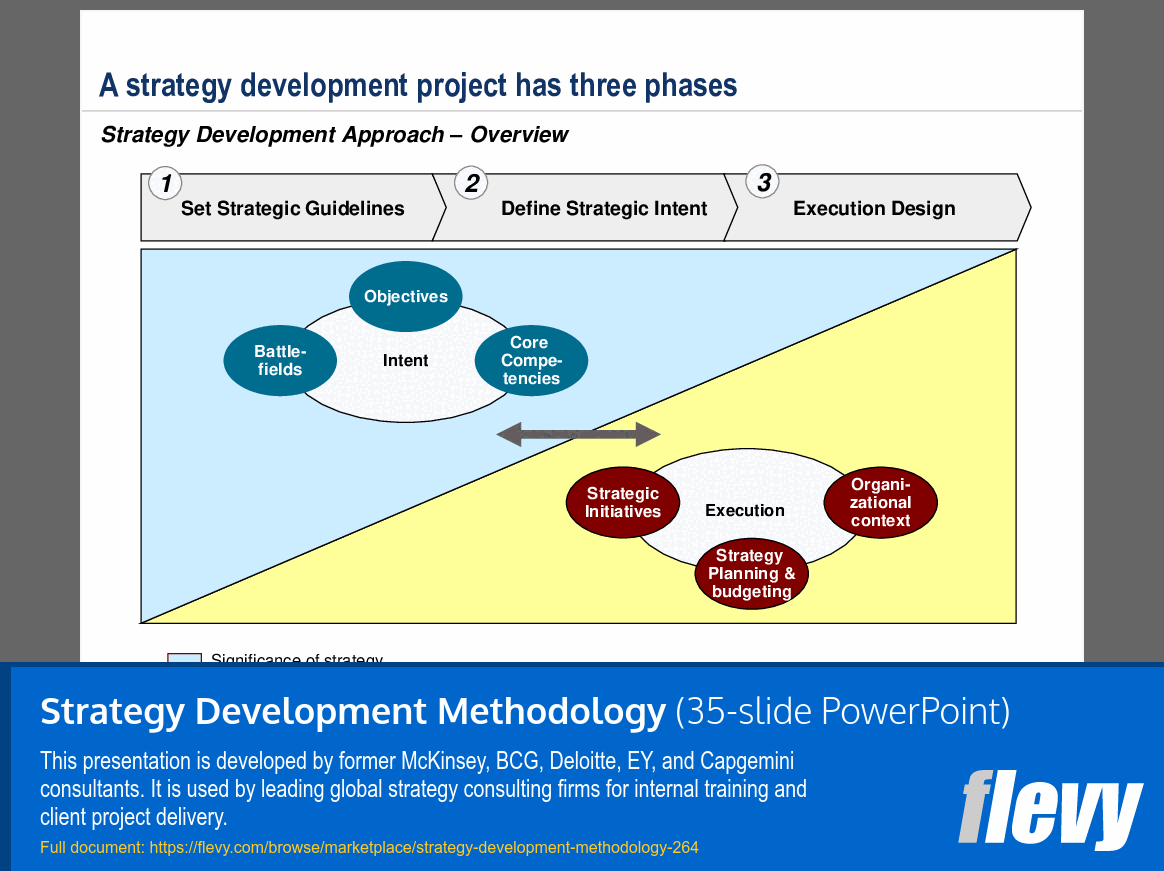
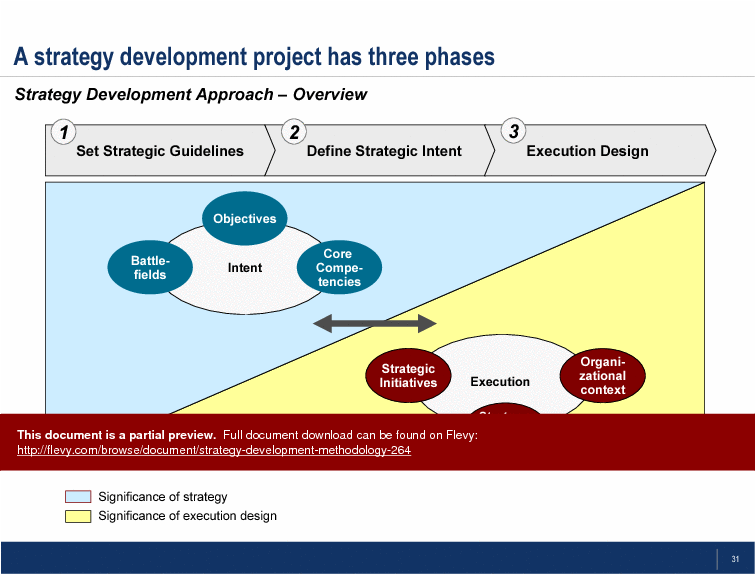
A strategy development project consists of 3 phases: "Set Strategic Guidelines," "Define Strategic Intent," and "Execution Design." The first phase establishes foundational parameters, identifying key battlefields and aligning objectives with the company's vision. The second phase maps core competencies against these objectives, clarifying the relationship between capabilities and strategic goals. The final phase outlines strategic initiatives and actionable steps for effective implementation, incorporating strategy planning and budgeting to allocate resources appropriately. Successful execution depends on understanding the internal and external environments. This structured approach creates a cohesive framework that enhances strategic capabilities and improves overall effectiveness.
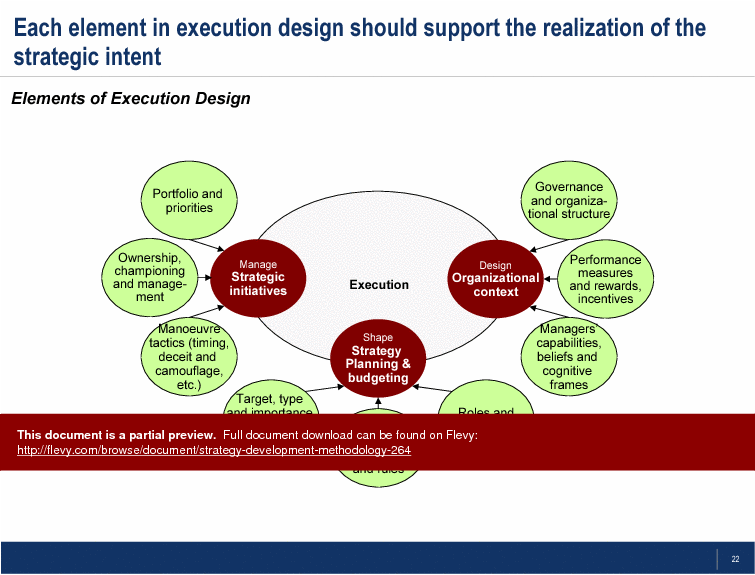
This PPT slide outlines critical components of execution design essential for realizing strategic intent. Central to this framework is "Execution," which requires effective management of "Strategic Initiatives" through ownership and leadership. "Maneuver tactics" emphasize agility and adaptability in execution. "Shape Strategy Planning & Budgeting" highlights structured planning processes, defining targets and prioritizing initiatives through systematic mechanisms. The "Design Organizational Context" element focuses on governance, organizational structure, and performance measures, ensuring alignment with strategic vision. The roles and capabilities of managers are crucial for successful execution. This holistic approach integrates strategic initiatives, planning, and organizational context to translate strategic intent into tangible outcomes.
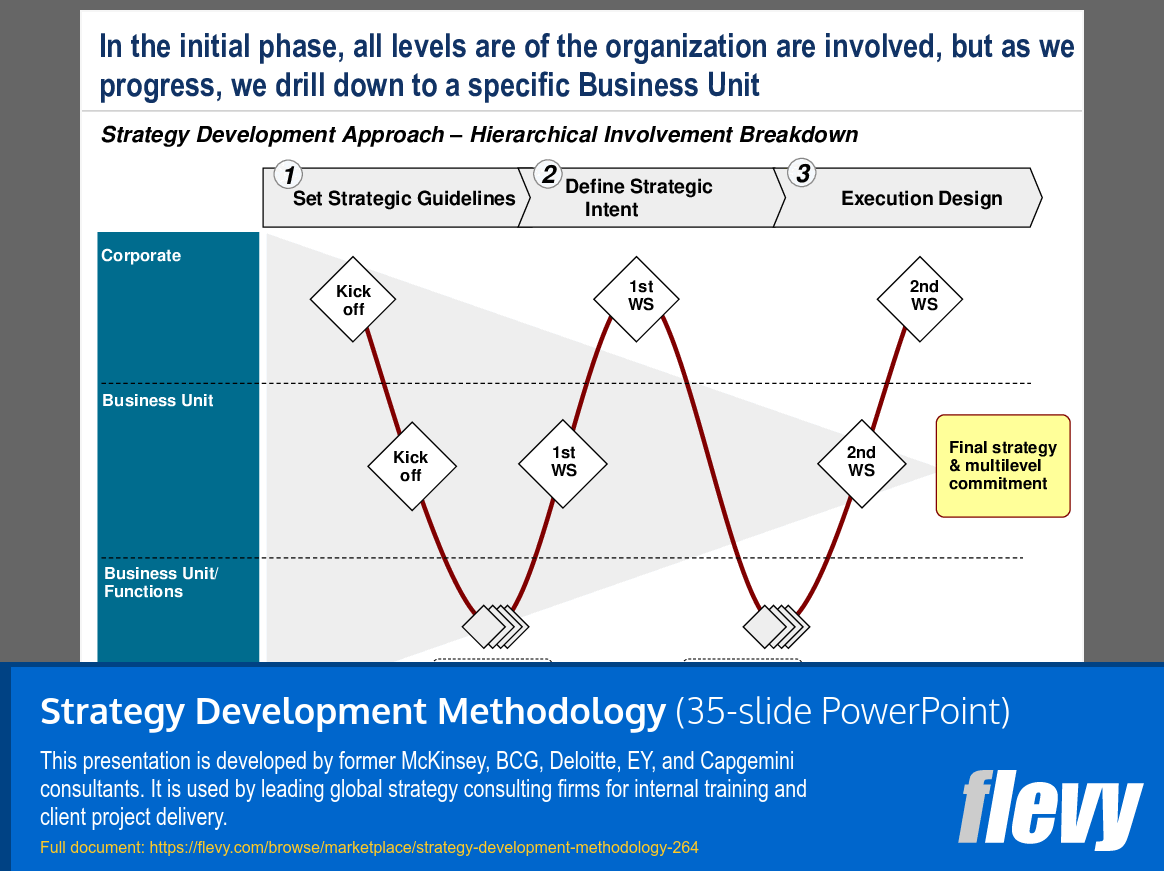
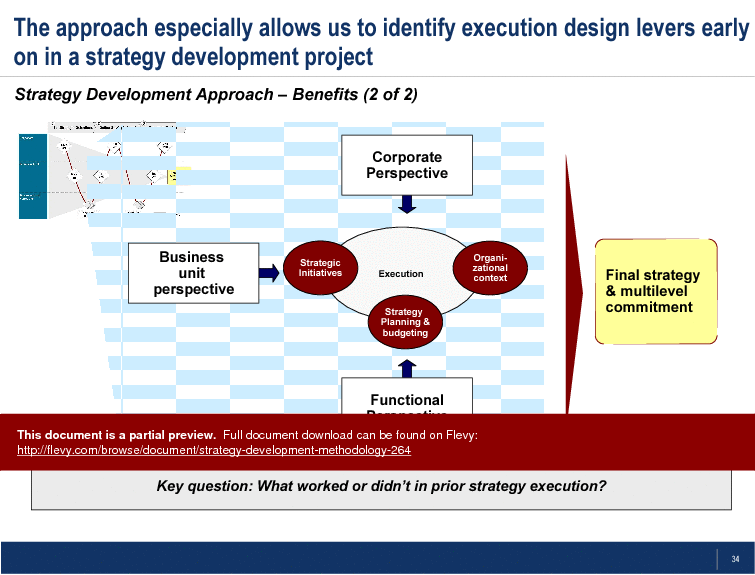
This PPT slide outlines a structured approach to strategy development, emphasizing hierarchical involvement across organizational levels. At the corporate level, strategic guidelines are established, fostering alignment and understanding of the strategic direction. The business unit level focuses on defining strategic intent through workshops (WS) that promote iterative engagement and feedback loops for refining objectives. The execution design phase culminates in a comprehensive strategy that reflects input from all levels, resulting in a "final strategy & multilevel commitment" that ensures the strategy is actionable and supported organization-wide. This methodology enhances strategic planning processes and alignment across units.
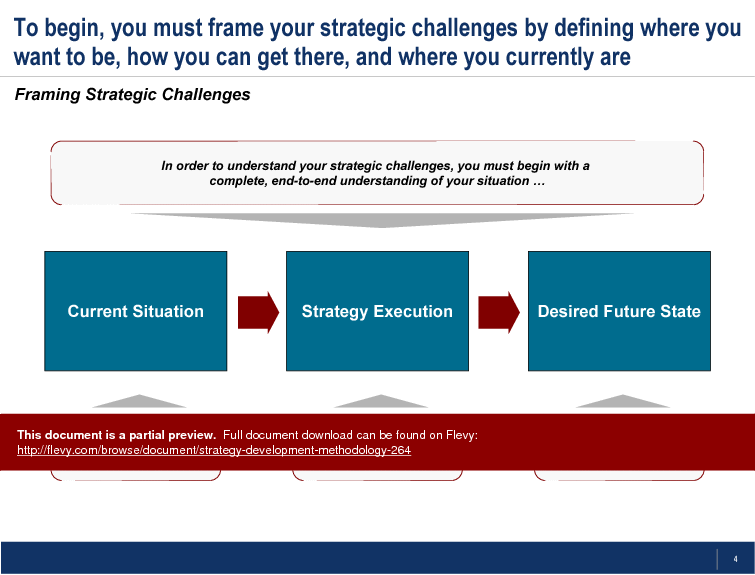
This PPT slide introduces a framework for addressing strategic challenges in organizations, focusing on 3 key components: Current Situation, Strategy Execution, and Desired Future State. The "Current Situation" box prompts leaders to assess existing circumstances with the question, “Where are you coming from?” The "Strategy Execution" phase outlines necessary actions to transition from the current state to future aspirations, asking, “How do you get to where you want?” Finally, the "Desired Future State" box invites executives to define their vision with the question, “Where do you want to be?” This structured approach aids in identifying gaps and aligning stakeholders in the strategic planning process.
This PPT slide presents a framework for addressing strategic challenges, categorizing approaches into 3 methodologies: Thinking First, Seeing First, and Acting First. The Thinking First approach is suited for easier challenges, involving a linear process of defining the problem, diagnosing it, designing options, and making decisions. Seeing First is for more complex challenges, emphasizing preparatory steps like idea incubation and insights verification. The Acting First approach addresses the most complex challenges, advocating trial-and-error actions without extensive prior analysis, recognizing that immediate action can lead to learning in uncertain environments. Tailoring these strategies to the complexity of challenges enhances effective strategy development.
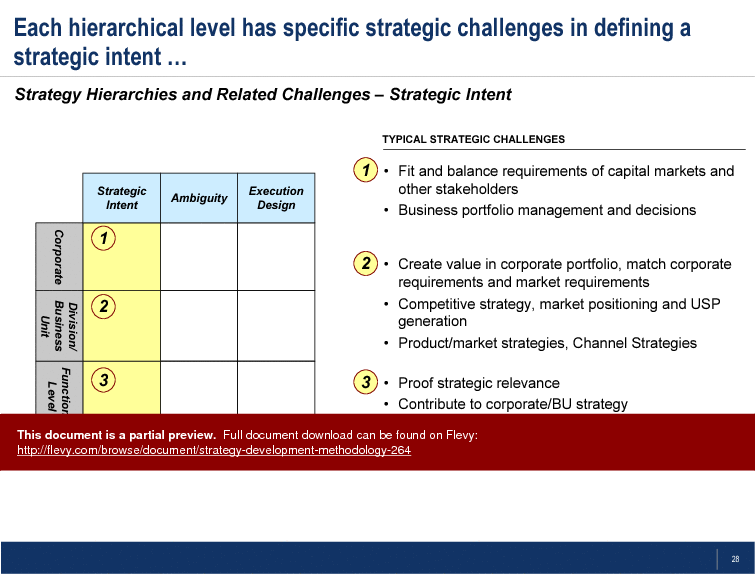
This PPT slide outlines a framework for addressing strategic challenges within organizations, emphasizing the hierarchy of strategy from corporate to functional levels. Strategic challenges are categorized into 3 areas: Strategic Intent, Ambiguity, and Execution Design. Organizations must clearly define objectives under Strategic Intent, identify uncertainties in Ambiguity, and operationalize strategies in Execution Design. A circular diagram links these concepts to practical actions like setting objectives and managing strategic initiatives, highlighting the interconnectedness of intent, execution, and ambiguity. This structured approach ensures alignment across all organizational levels to effectively tackle potential obstacles in strategy formulation and execution.
This PPT slide outlines a structured approach to strategy development, focusing on key components: setting objectives, defining battlefields, identifying core competencies, and managing strategic initiatives. It emphasizes the need for alignment between corporate-level strategic objectives and adaptations at divisional levels. Understanding market dynamics and competitive positioning is crucial for effective strategy formulation. Organizations must navigate ambiguity in strategic planning, with execution being critical to align initiatives with defined objectives. The design of the organizational context influences strategy implementation across functions such as HR, finance, marketing, and R&D. This framework enhances strategic planning processes and improves execution at all levels.
This PPT slide outlines 4 primary objectives of strategic planning. The first objective is value creation, emphasizing the importance of a strong value proposition for stakeholders, including customers and shareholders. The second objective focuses on winning, which involves outperforming competitors and achieving market leadership. The third objective highlights selectivity and resource allocation, indicating that effective strategies require prioritization of assets for maximum impact. The fourth objective stresses the need for speed and flexibility, reflecting the necessity for business transformation in a rapidly changing environment. A robust strategy encompasses these dimensions for long-term success.
Source: Best Practices in Strategy Development, Henry Mintzberg, Chief Strategy Officer PowerPoint Slides: Strategy Development Methodology PowerPoint (PPT) Presentation Slide Deck, LearnPPT Consulting
This presentation is developed by former McKinsey, BCG, Deloitte, EY, and Capgemini consultants. It is used by leading global strategy consulting firms for internal training and client project delivery.
We are a team of management consultants trained by top tier global consulting firms (including McKinsey, BCG, Deloitte, EY, Capgemini) with a collective experience of several decades. We specialize in business frameworks based on real-life consulting engagements.
We have served 100s of clients that range from Fortune 500 companies to tech startups to
... [read more] $1B+ private companies.
Utilize our consulting frameworks to apply structured thinking & analysis to address your business challenges, uncover strategic insights, and implement workable solutions. Our PowerPoint presentations follow traditional consulting slide design formats, starting with a clear slide headline. Easily customize and repurpose our slides for your own business presentations.
Beyond business frameworks & methodologies, we also offer PowerPoint templates and other business templates. Our templates are professionally designed and have been used in thousands of deliverables & work products across hundreds of clients.
Since 2012, we have provided business templates to over 10,000 businesses and organizations of all sizes, from startups and small businesses to the Fortune 100, in over 130 countries.
"As a consultant requiring up to date and professional material that will be of value and use to my clients, I find Flevy a very reliable resource.
The variety and quality of material available through Flevy offers a very useful and commanding source for information. Using Flevy saves me time, enhances my expertise and ends up being a good decision."
– Dennis Gershowitz, Principal at DG Associates
"Flevy is our 'go to' resource for management material, at an affordable cost. The Flevy library is comprehensive and the content deep, and typically provides a great foundation for us to further develop and tailor our own service offer."
– Chris McCann, Founder at Resilient.World
"Flevy.com has proven to be an invaluable resource library to our Independent Management Consultancy, supporting and enabling us to better serve our enterprise clients.
The value derived from our [FlevyPro] subscription in terms of the business it has helped to gain far exceeds the investment made, making a subscription a no-brainer for any growing consultancy – or in-house strategy team."
– Dean Carlton, Chief Transformation Officer, Global Village Transformations Pty Ltd.
"I have found Flevy to be an amazing resource and library of useful presentations for lean sigma, change management and so many other topics. This has reduced the time I need to spend on preparing for my performance consultation. The library is easily accessible and updates are regularly provided. A wealth of great information."
– Cynthia Howard RN, PhD, Executive Coach at Ei Leadership
"One of the great discoveries that I have made for my business is the Flevy library of training materials.
As a Lean Transformation Expert, I am always making presentations to clients on a variety of topics: Training, Transformation, Total Productive Maintenance, Culture, Coaching, Tools, Leadership Behavior, etc. Flevy
It is well worth the money to purchase these presentations. Sure, I have the knowledge and information to make my point. It is another thing to create a presentation that captures what I want to say. Flevy has saved me countless hours of preparation time that is much better spent with implementation that will actually save money for my clients.
"
– Ed Kemmerling, Senior Lean Transformation Expert at PMG
"FlevyPro has been a brilliant resource for me, as an independent growth consultant, to access a vast knowledge bank of presentations to support my work with clients. In terms of RoI, the value I received from the very first presentation I downloaded paid for my subscription many times over! The
quality of the decks available allows me to punch way above my weight – it's like having the resources of a Big 4 consultancy at your fingertips at a microscopic fraction of the overhead.
"
– Roderick Cameron, Founding Partner at SGFE Ltd
"As a consulting firm, we had been creating subject matter training materials for our people and found the excellent materials on Flevy, which saved us 100's of hours of re-creating what already exists on the Flevy materials we purchased."
– Michael Evans, Managing Director at Newport LLC
"I have used Flevy services for a number of years and have never, ever been disappointed. As a matter of fact, David and his team continue, time after time, to impress me with their willingness to assist and in the real sense of the word. I have concluded in fact
that it is not at all just a repository of documents/resources but, in the way that David and his team manage the firm, it is like dealing with consultants always ready to assist, advise and direct you to what you really need, and they always get it right.
I am an international hospitality accomplished senior executive who has worked and lived during the past 35 years in 23 countries in 5 continents and I can humbly say that I know what customer service is, trust me.
Aside from the great and professional service that Flevy's team provide, their wide variety of material is of utmost great quality, professionally put together and most current.
Well done Flevy, keep up the great work and I look forward to continue working with you in the future and to recommend you to a variety of colleagues around the world.
"
– Roberto Pelliccia, Senior Executive in International Hospitality
Save with Bundles
This document is available as part of the following discounted bundle(s):
Download our free compilation of 50+ Strategy & Transformation slides and templates. Frameworks include McKinsey 7-S, Balanced Scorecard, Disruptive Innovation, BCG Curve, and many more.