
This framework is developed by a team of former McKinsey and Big 4 consultants. The presentation follows the headline-body-bumper slide format used by global consulting firms.
Explore the Value Creation Framework, crafted by ex-McKinsey & Big 4 consultants. Enhance RTSR and bridge VBM gaps with actionable insights and templates. Value Creation Framework Primer is a 28-slide PPT PowerPoint presentation slide deck (PPT) available for immediate download upon purchase.
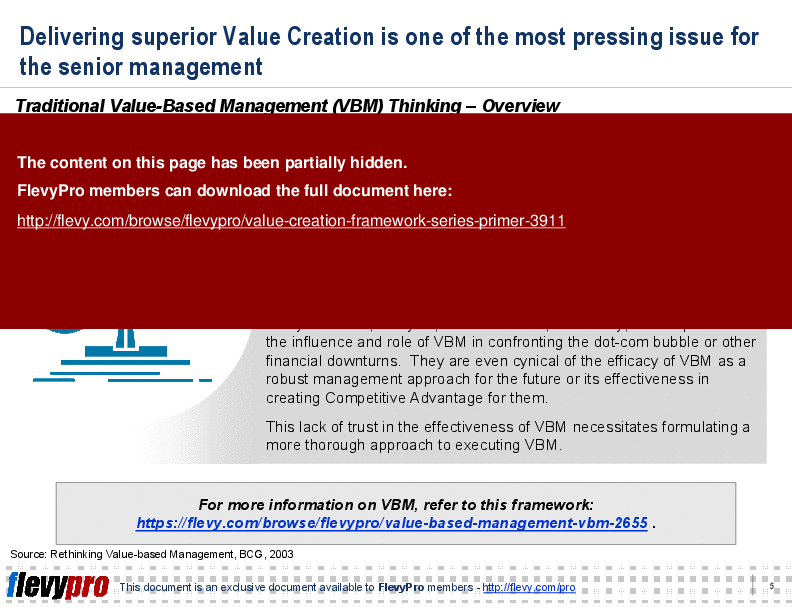
Delivering superior Value Creation is one of the most pressing issue for the senior management. Since the early 1990s, Value-Based Management (VBM) has been viewed traditionally as a tool to help investors evaluate firms and let the executives analyze business performance and shareholder value.
However, VBM thinking has a number of challenges, e.g. an inadequate link between VBM practices and capital markets realities. A new methodology called the Value Creation Framework addresses these challenges to traditional VBM.
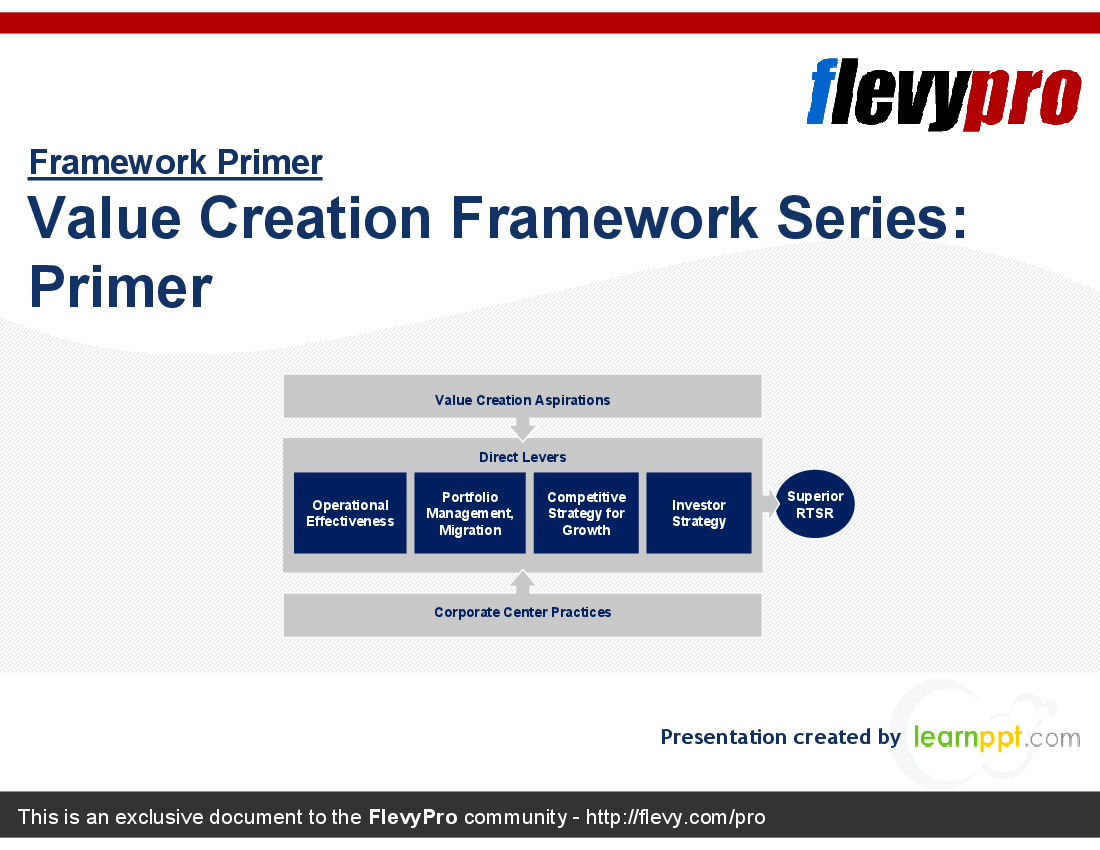
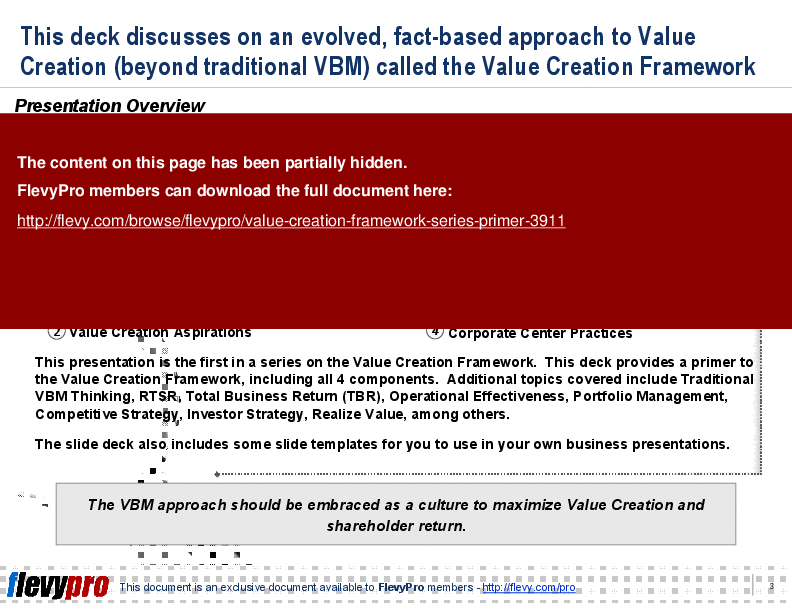
The Value Creation Framework is comprised of 4 core components:
1. Superior Relative Total Shareholder Return (RTSR)
2. Value Creation Aspirations
3. 4 Direct Levers of Value Creation
4. Corporate Center Practices
This presentation is the first in a series on the Value Creation Framework. This deck provides a primer to the Value Creation Framework, including all 4 components. Additional topics covered include Traditional VBM Thinking, RTSR, Total Business Return (TBR), Operational Effectiveness, Portfolio Management, Competitive Strategy, Investor Strategy, Realize Value, among others.
The slide deck also includes some slide templates for you to use in your own business presentations.
This presentation delves into the intricacies of the Value Creation Framework, emphasizing the need for senior management to adopt a holistic approach. The deck breaks down the framework into actionable components, providing a clear roadmap for achieving superior Relative Total Shareholder Return (RTSR). The content is tailored to address the common pitfalls of traditional Value-Based Management (VBM) and offers practical solutions to bridge the gap between VBM practices and capital market realities.
The Value Creation Framework necessitates a strategic alignment of corporate goals, operational effectiveness, and investor strategies. It underscores the importance of setting quantifiable RTSR targets and cascading these aspirations throughout the organization. The presentation also includes templates to facilitate the implementation of the framework, ensuring that executives can seamlessly integrate these practices into their business operations. This PPT is an essential resource for leaders aiming to drive sustainable value creation and enhance shareholder returns.
This PPT slide evaluates traditional Value Based Management (VBM) against evolved principles that align better with investor expectations. It identifies 3 primary levers of value creation: a focus on earning a Total Shareholder Return (TSR) greater than average, improving intrinsic value through metrics like Net Present Value (NPV) and Economic Value Added (EVA), and recognizing that stock markets are not entirely efficient. The evolved principles advocate for managing both intrinsic and realized value, ensuring NPV is presented attractively to investors, and treating investors like customers to understand the investor mix's implications for value management. This nuanced approach optimizes value creation and aligns business strategies with market expectations.
This PPT slide outlines 2 critical decisions for leadership after establishing a Relative Total Shareholder Return (RTSR) aspiration. The first decision is whether to de-average the RTSR target, allowing distinct targets for different business units based on their circumstances. For instance, a struggling unit might have a target of 12% while a successful unit could aim for 20%. This decision is influenced by company culture and management philosophy.
The second decision involves selecting internal measures to quantify each unit's contribution to the RTSR goal, with the Total Business Return (TBR) metric recommended for capturing capital gains and dividend yields. TBR is calculated using growth in Earnings Before Interest, Tax, Depreciation, and Amortization (EBITDA), a key driver for assessing capital gains. This framework promotes tailored targets and measurement systems that reflect the unique dynamics of various business segments.
This PPT slide emphasizes the importance of setting realistic and strategic goals for Total Shareholder Return (TSR) over varying timeframes. The probability of a top performer surpassing competitors in the following year is 25%, which drops to 12% for maintaining outperformance over 3 consecutive years. Firms should prioritize cumulative value creation goals over 3, 5, or 10 years, acknowledging market volatility. To rank in the top quartile of the S&P 500 over 5 years, a firm needs a compound average TSR of 16%. This statistic serves as a benchmark for organizations aiming to align corporate objectives with market conditions and competitive dynamics. A strategic, long-term view is essential for achieving superior performance.
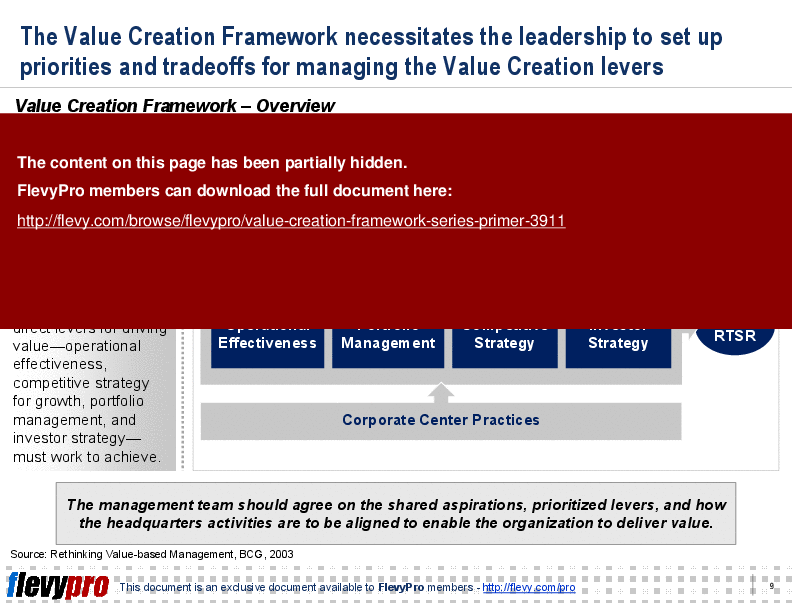
This PPT slide outlines a Value Creation Framework emphasizing leadership's role in establishing clear priorities and trade-offs among value creation levers. Central to the framework are "Value Creation Aspirations," guiding principles supported by 4 levers: Operational Effectiveness, Portfolio Management, Competitive Strategy, and Investor Strategy. Each lever is essential for driving value and must integrate effectively to meet organizational goals. Additionally, "Corporate Center Practices" refer to governance structures that facilitate the execution of the value creation agenda, highlighting the need for strategic alignment and robust operational practices. Management teams are called to agree on shared aspirations and prioritize these levers to synchronize headquarters activities and achieve value creation objectives.
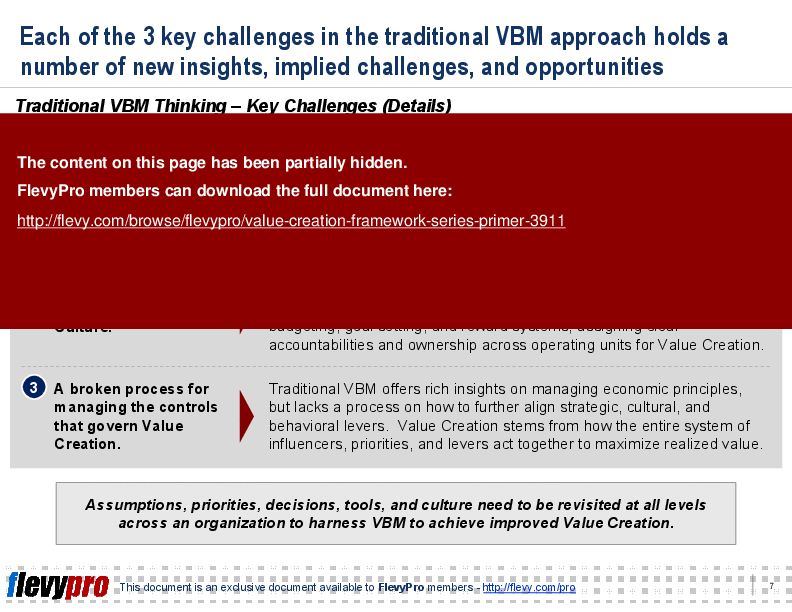
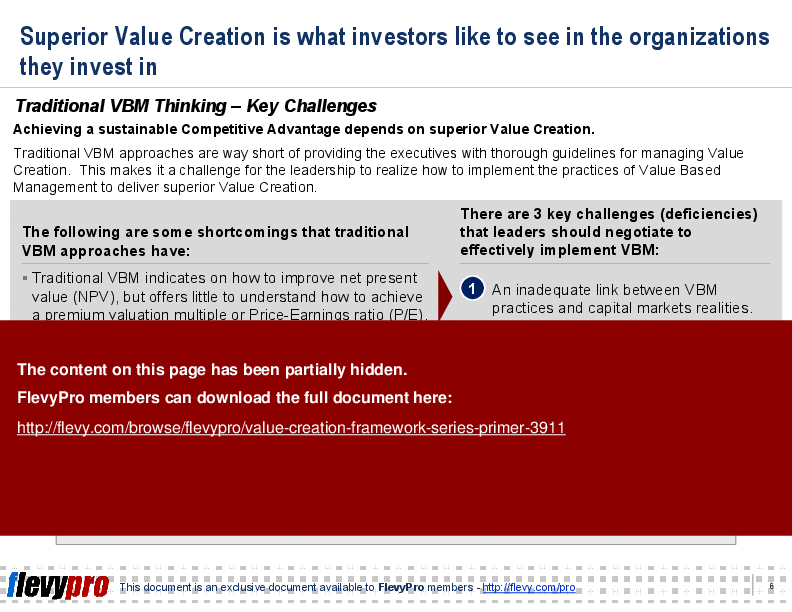
This PPT slide addresses the limitations of traditional Value-Based Management (VBM) in effective value creation. Traditional VBM focuses on improving net present value (NPV), but fails to guide executives on achieving higher valuation multiples like Price-Earnings ratios. Three primary challenges hinder VBM implementation: inadequate connection between VBM practices and capital market realities, lack of alignment with organizational culture, and ineffective management processes for value creation oversight. Bridging these gaps is essential for aligning organizational efforts with investor expectations and refining value creation strategies in a dynamic business environment.
Source: Best Practices in Corporate Culture, Value Creation, Shareholder Value, Value Based Management PowerPoint Slides: Value Creation Framework Series: Primer PowerPoint (PPT) Presentation Slide Deck, LearnPPT Consulting
This framework is developed by a team of former McKinsey and Big 4 consultants. The presentation follows the headline-body-bumper slide format used by global consulting firms.
For $10.00 more, you can download this document plus 2 more FlevyPro documents. That's just $13 each.
ABOUT FLEVYPRO
This document is part of the FlevyPro Library, a curated knowledge base of documents for our FlevyPro subscribers.

FlevyPro is a subscription service for on-demand business frameworks and analysis tools. FlevyPro subscribers receive access to an exclusive library of curated business documents—business framework primers, presentation templates, Lean Six Sigma tools, and more—among other exclusive benefits.
Since 2012, we have provided business templates to over 10,000 businesses and organizations of all sizes, from startups and small businesses to the Fortune 100, in over 130 countries.
"The wide selection of frameworks is very useful to me as an independent consultant. In fact, it rivals what I had at my disposal at Big 4 Consulting firms in terms of efficacy and organization."
– Julia T., Consulting Firm Owner (Former Manager at Deloitte and Capgemini)
"As a consulting firm, we had been creating subject matter training materials for our people and found the excellent materials on Flevy, which saved us 100's of hours of re-creating what already exists on the Flevy materials we purchased."
– Michael Evans, Managing Director at Newport LLC
"As a niche strategic consulting firm, Flevy and FlevyPro frameworks and documents are an on-going reference to help us structure our findings and recommendations to our clients as well as improve their clarity, strength, and visual power. For us, it is an invaluable resource to increase our impact and value."
– David Coloma, Consulting Area Manager at Cynertia Consulting
"As a consultant requiring up to date and professional material that will be of value and use to my clients, I find Flevy a very reliable resource.
The variety and quality of material available through Flevy offers a very useful and commanding source for information. Using Flevy saves me time, enhances my expertise and ends up being a good decision."
– Dennis Gershowitz, Principal at DG Associates
"I have found Flevy to be an amazing resource and library of useful presentations for lean sigma, change management and so many other topics. This has reduced the time I need to spend on preparing for my performance consultation. The library is easily accessible and updates are regularly provided. A wealth of great information."
– Cynthia Howard RN, PhD, Executive Coach at Ei Leadership
"I have used FlevyPro for several business applications. It is a great complement to working with expensive consultants. The quality and effectiveness of the tools are of the highest standards."
– Moritz Bernhoerster, Global Sourcing Director at Fortune 500
"I like your product. I'm frequently designing PowerPoint presentations for my company and your product has given me so many great ideas on the use of charts, layouts, tools, and frameworks. I really think the templates are a valuable asset to the job."
– Roberto Fuentes Martinez, Senior Executive Director at Technology Transformation Advisory
"My FlevyPro subscription provides me with the most popular frameworks and decks in demand in today’s market. They not only augment my existing consulting and coaching offerings and delivery, but also keep me abreast of the latest trends, inspire new products and service offerings for my practice, and educate me
Download our free compilation of 50+ Strategy & Transformation slides and templates. Frameworks include McKinsey 7-S, Balanced Scorecard, Disruptive Innovation, BCG Curve, and many more.