
Workplace Productivity Primer   26-slide PPT PowerPoint presentation slide deck (PPTX)
$29.00

Workplace Productivity Primer (26-slide PPT PowerPoint presentation slide deck (PPTX)) Preview Image
Log in to unlock full preview.
Workplace Productivity Primer (26-slide PPT PowerPoint presentation slide deck (PPTX)) Preview Image
Arrow   Click main image to view in full screen.

Workplace Productivity Primer (PowerPoint PPTX Slide Deck)

PowerPoint (PPTX) 26 Slides FlevyPro Document

$29.00
FlevyPro price: FREE (included in subscription)
This framework is developed by a team of former McKinsey and Big 4 consultants. The presentation follows the headline-body-bumper slide format used by global consulting firms.
Add to Cart


Immediate download
Free lifetime updates

VISUAL WORKPLACE PPT DESCRIPTION

Editor Summary Workplace Productivity Primer is a 26-slide PowerPoint (PPTX) presentation that introduces 4 key productivity practices (end with next steps, capture commitments, dedicate time to work modes, say "no") and includes GTD-based personal productivity guidance. Read more

A company can have a team of skilled, talented, and educated professionals where each team member has relevant training and experience, a good attitude, and a solid work ethic. Members of the team get along well with each other. When you put all these together, you get to achieve results. The team gets to deliver high quality projects on time and to spec.

However, the problem is the pieces do not always fall into place. One teammate promises to deliver and then doesn't. Deadlines are forgotten, meetings are being missed, and important communications being misplaced. We even lose track of our to-dos. As a result, when one person fumbles, the whole team scrambles. This leads to failed projects, frustrated teammates, and financial losses.

People come to the workplace with various skillsets and backgrounds. They know how to navigate application, develop programs, oversee communications, manage resources, devise strategies, or lead people. Yet, only a few are well verse in workflow management or even had formal training on it. Yet, nobody gets a degree in productivity.

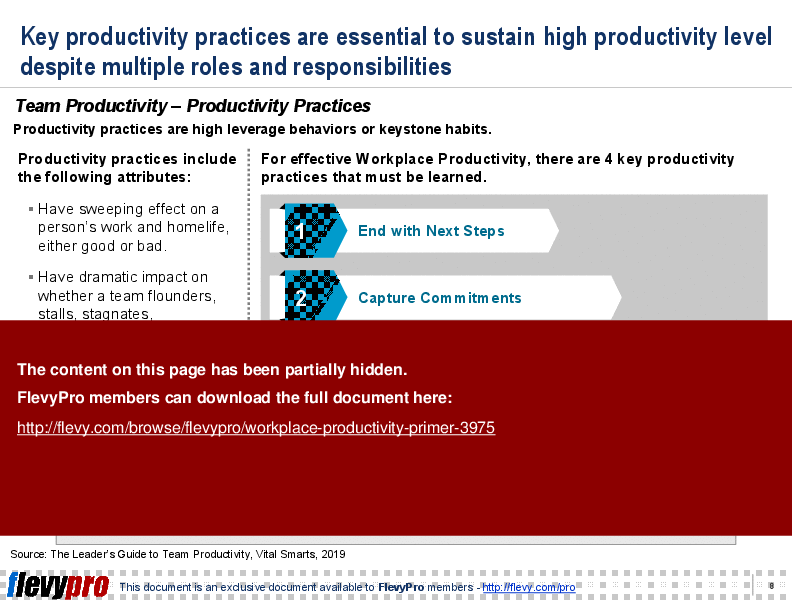
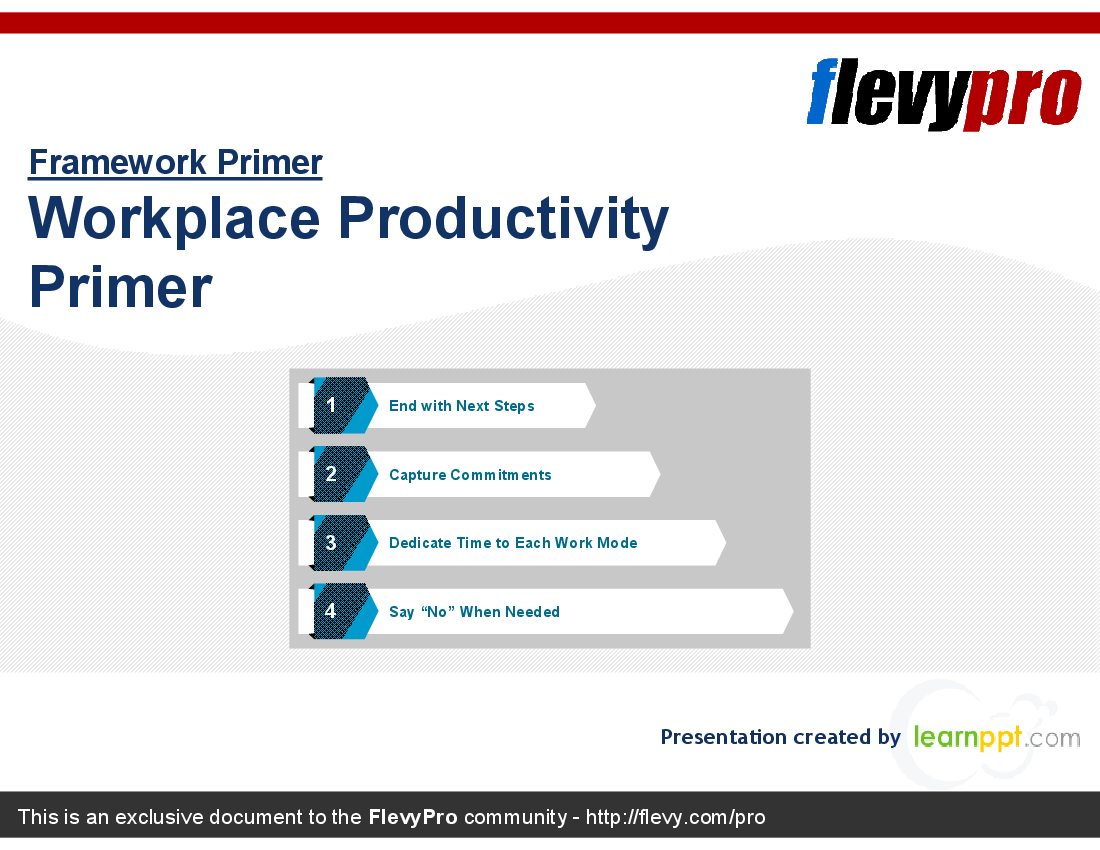
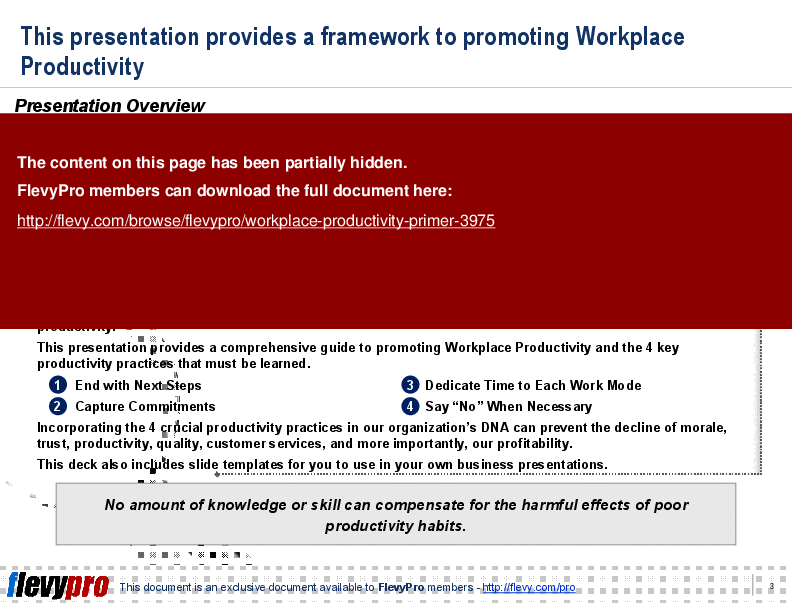
This presentation provides a comprehensive guide to promoting Workplace Productivity and the 4 key productivity practices that must be learned.

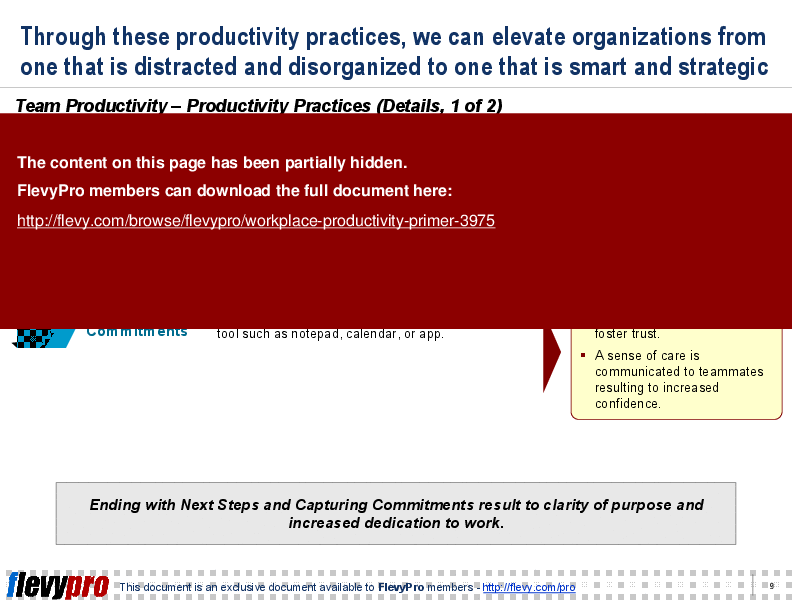
1. End with Next Steps
2. Capture Commitments
3. Dedicate Time to Each Work Mode
4. Say "No" When Necessary

Incorporating the 4 crucial productivity practices in our organization's DNA can prevent the decline of morale, trust, productivity, quality, customer services, and more importantly, our profitability. No amount of knowledge or skill can compensate for the harmful effects of poor productivity habits.

This deck also includes slide templates for you to use in your own business presentations.

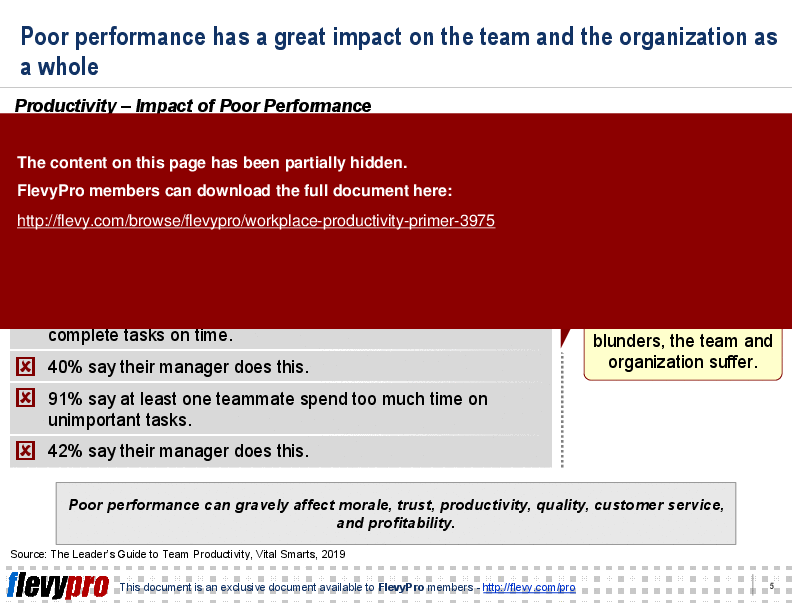
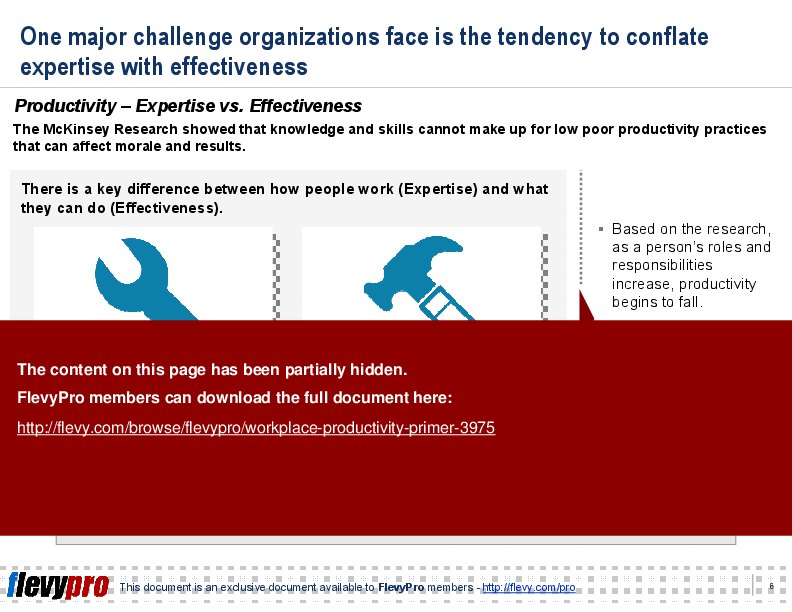
This presentation delves into the impact of poor performance on team dynamics and organizational outcomes. It also highlights the critical distinction between expertise and effectiveness, emphasizing the need for targeted productivity practices.

Got a question about this document? Email us at flevypro@flevy.com.

MARCUS OVERVIEW

This synopsis was written by Marcus [?] based on the analysis of the full 26-slide presentation.


Executive Summary
The Workplace Productivity Primer is a comprehensive presentation designed to enhance workplace efficiency through proven strategies. It addresses common productivity challenges faced by teams and individuals, emphasizing the importance of effective practices in achieving high-quality outcomes. This deck introduces 4 key productivity practices: ending with next steps, capturing commitments, dedicating time to each work mode, and knowing when to say "no." By integrating these practices, organizations can foster a culture of accountability and focus, ultimately leading to improved performance and profitability.

Who This Is For and When to Use
•  Corporate executives seeking to enhance team productivity and efficiency
•  Team leaders responsible for managing workflow and project deliverables
•  HR professionals focused on employee engagement and performance improvement
•  Consultants advising organizations on productivity strategies

Best-fit moments to use this deck:
•  During team workshops aimed at improving productivity practices
•  In training sessions for new employees on effective work habits
•  When assessing current productivity challenges and implementing solutions

Learning Objectives
•  Define key productivity practices that enhance workplace efficiency
•  Build a framework for capturing commitments and ensuring accountability
•  Establish a clear process for prioritizing tasks and managing time effectively
•  Identify strategies for maintaining focus and reducing distractions
•  Implement techniques for fostering a culture of open communication and collaboration
•  Review personal productivity habits to align with organizational goals

Table of Contents
•  Overview (page 3)
•  Productivity (page 4)
•  Team Productivity (page 8)
•  Personal Productivity (page 11)
•  Templates (page 19)

Primary Topics Covered
•  Overview of Workplace Productivity - An introduction to the significance of productivity in achieving organizational goals and the common pitfalls that hinder performance.
•  Impact of Poor Performance - Insights into how individual productivity affects team dynamics and overall organizational success, supported by statistical data.
•  Key Productivity Practices - A detailed exploration of 4 essential practices: ending with next steps, capturing commitments, dedicating time to each work mode, and saying "no" when necessary.
•  Personal Productivity Strategies - An examination of the Get Things Done (GTD) approach, outlining 5 practices that distinguish top performers from their peers.
•  Templates for Implementation - Practical templates to facilitate the application of productivity practices within teams and organizations.

Deliverables, Templates, and Tools
•  Template for capturing commitments to ensure accountability
•  Framework for defining next steps in project management
•  Time management template for organizing tasks by work mode
•  Personal productivity assessment tools based on the GTD approach
•  Slide templates for presenting productivity strategies in meetings

Slide Highlights
•  Visual representation of the impact of poor performance on team productivity
•  Framework for the 4 key productivity practices with actionable insights
•  Comparative analysis of communication and productivity practices between top and average performers
•  Overview of the GTD approach with a focus on personal productivity practices

Potential Workshop Agenda
Introduction to Workplace Productivity (30 minutes)
•  Overview of productivity challenges and objectives
•  Discussion of the importance of effective practices

Key Productivity Practices (60 minutes)
•  Deep dive into the 4 essential practices
•  Group activities to identify current challenges and solutions

Personal Productivity Strategies (45 minutes)
•  Introduction to the GTD approach
•  Individual assessments and goal setting

Customization Guidance
•  Tailor the commitment capture template to align with specific team projects and objectives
•  Adjust the time management framework to reflect the unique work modes of your organization
•  Incorporate organizational terminology and metrics into the presentation for relevance

Secondary Topics Covered
•  The relationship between communication and productivity
•  The role of leadership in fostering a productive work environment
•  Techniques for managing distractions and enhancing focus
•  Strategies for continuous improvement in productivity practices

Topic FAQ

What are the most impactful everyday productivity practices teams can adopt?

Commonly recommended practices focus on clarity and accountability: end meetings with defined next steps, capture individual commitments in a shared place, schedule dedicated blocks for different work modes, and teach people to decline low-value requests. The presentation highlights these 4 key practices.

How does the Get Things Done (GTD) method improve individual productivity?

GTD helps individuals capture everything that needs attention, clarify next actions, organize tasks by context or priority, engage efficiently, and review progress regularly. The deck links GTD to personal productivity and outlines 5 practices that distinguish top performers, emphasizing regular review and capture of tasks.

Which templates are most useful when implementing productivity practices across a team?

Practical templates speed adoption: a commitment-capture sheet to record owners, a next-steps framework for meetings, a time-management template aligned to work modes, personal productivity assessment tools based on GTD, and slide templates for internal presentations — 5 templates in total.

What should I look for when buying a workplace productivity presentation for team training?

Prioritize decks that define a small set of concrete practices, include reusable templates, offer a workshop agenda, and provide personal assessment tools. Flevy’s Workplace Productivity Primer includes a suggested workshop agenda, GTD-based assessment, and slide and implementation templates in a 26-slide deck.

How do I structure a short team workshop to improve productivity?

A practical agenda starts with a 30-minute overview of productivity challenges, a 60-minute deep dive into core practices with group activities to capture current gaps, then a 45-minute personal productivity session with GTD assessments and goal-setting. Use timeboxed sessions and templates for action capture.

How can I measure the impact of poor performance and improvements after an intervention?

Measure baseline and post-intervention metrics tied to team outputs: deadlines met, task completion rates, rework levels, customer service indicators, and employee engagement. The deck discusses the impact of poor performance on team dynamics and recommends tracking relevant performance metrics.

What guidance exists for customizing productivity templates to our organization?

Customize by aligning the commitment-capture fields to your project roles, adapting the time-management framework to your organization’s specific work modes, and inserting organizational terminology and metrics into slide templates. The presentation includes guidance on tailoring the commitment capture and time templates.

Are productivity templates worth purchasing for a small team, and what value should I expect?

Templates reduce setup time, create consistent meeting-to-action handoffs, and standardize personal assessments, which helps small teams adopt new habits faster. Look for commitment-capture, next-steps, time-management, and GTD assessment templates; the primer provides these 5 implementation tools.

Document FAQ
These are questions addressed within this presentation.

What are the key productivity practices outlined in this presentation?
The presentation highlights 4 key practices: ending with next steps, capturing commitments, dedicating time to each work mode, and saying "no" when necessary.

How can these practices improve team performance?
By implementing these practices, teams can enhance accountability, streamline workflows, and reduce distractions, leading to improved project outcomes.

What is the GTD approach mentioned in the presentation?
The GTD (Get Things Done) approach is a productivity methodology that emphasizes capturing tasks, clarifying actions, organizing priorities, engaging effectively, and reviewing progress regularly.

How can I customize the templates provided in this deck?
Templates can be tailored to fit specific projects by incorporating relevant terminology, metrics, and organizational goals.

What resources are available for further learning on productivity?
Additional resources include the FlevyPro library, which offers a variety of frameworks and templates related to productivity and business management.

Glossary
•  Productivity - The efficiency of productive effort measured in terms of output per unit of input.
•  GTD (Get Things Done) - A time management method that helps individuals organize tasks and prioritize effectively.
•  Commitment Capture - The process of recording tasks and responsibilities to ensure accountability.
•  Work Mode - Different types of work activities, such as defined tasks, predefined tasks, and undefined tasks.
•  Team Dynamics - The behavioral relationships between members of a team that affect performance.
•  Performance Metrics - Standards used to measure the efficiency and effectiveness of actions or processes.
•  Accountability - The obligation of an individual or team to account for their activities and accept responsibility for them.
•  Focus - The ability to concentrate on specific tasks without distractions.
•  Collaboration - Working together with others to achieve a common goal.
•  Time Management - The process of planning and exercising conscious control over the amount of time spent on specific activities.
•  Communication Practices - Behaviors and strategies used to convey information effectively within a team.
•  Keystone Habits - Small changes or habits that can lead to larger transformations in behavior and performance.
•  Employee Satisfaction - A measure of how happy or content employees are with their jobs and work environment.
•  Organizational Goals - The objectives that an organization aims to achieve in a specific timeframe.
•  Workplace Culture - The shared values, beliefs, and behaviors that shape how work gets done within an organization.
•  Continuous Improvement - Ongoing efforts to enhance products, services, or processes.
•  Task Prioritization - The process of determining the order in which tasks should be completed based on their importance and urgency.
•  Feedback Loop - A system that allows for the continuous evaluation and improvement of processes based on performance outcomes.
•  Engagement - The emotional commitment an employee has to their organization and its goals.
•  Morale - The overall mood or attitude of a group, particularly in a work environment.

VISUAL WORKPLACE PPT SLIDES

Strategic Engagement for Enhanced Personal Productivity

Enhancing Productivity through Task Clarification

Distinguishing Between Expertise and Effectiveness in Productivity

Essential Practices for Enhanced Personal Productivity

Essential Practices for Sustaining Team Productivity

Source: Best Practices in Employee Productivity PowerPoint Slides: Workplace Productivity Primer PowerPoint (PPTX) Presentation Slide Deck, LearnPPT Consulting


$29.00
FlevyPro price: FREE (included in subscription)
This framework is developed by a team of former McKinsey and Big 4 consultants. The presentation follows the headline-body-bumper slide format used by global consulting firms.
Add to Cart
  

Did you need more documents?

Consider a FlevyPro subscription from $39/month. View plans here.

For $10.00 more, you can download this document plus 2 more FlevyPro documents. That's just $13 each.

ABOUT FLEVYPRO

This document is part of the FlevyPro Library, a curated knowledge base of documents for our FlevyPro subscribers.

FlevyPro is a subscription service for on-demand business frameworks and analysis tools. FlevyPro subscribers receive access to an exclusive library of curated business documents—business framework primers, presentation templates, Lean Six Sigma tools, and more—among other exclusive benefits.

Click here to learn more about FlevyPro and its benefits.

Did you know?
The average daily rate of a McKinsey consultant is $6,625 (not including expenses). The average price of a Flevy document is $65.


Trusted by over 10,000+ Client Organizations
Since 2012, we have provided business templates to over 10,000 businesses and organizations of all sizes, from startups and small businesses to the Fortune 100, in over 130 countries.
AT&T GE Cisco Intel IBM Coke Dell Toyota HP Nike Samsung Microsoft Astrazeneca JP Morgan KPMG Walgreens Walmart 3M Kaiser Oracle SAP Google E&Y Volvo Bosch Merck Fedex Shell Amgen Eli Lilly Roche AIG Abbott Amazon PwC T-Mobile Broadcom Bayer Pearson Titleist ConEd Pfizer NTT Data Schwab


Read Customer Testimonials

 
"I have found Flevy to be an amazing resource and library of useful presentations for lean sigma, change management and so many other topics. This has reduced the time I need to spend on preparing for my performance consultation. The library is easily accessible and updates are regularly provided. A wealth of great information."

– Cynthia Howard RN, PhD, Executive Coach at Ei Leadership
 
"Last Sunday morning, I was diligently working on an important presentation for a client and found myself in need of additional content and suitable templates for various types of graphics. Flevy.com proved to be a treasure trove for both content and design at a reasonable price, considering the time I "

– M. E., Chief Commercial Officer, International Logistics Service Provider
 
"FlevyPro has been a brilliant resource for me, as an independent growth consultant, to access a vast knowledge bank of presentations to support my work with clients. In terms of RoI, the value I received from the very first presentation I downloaded paid for my subscription many times over! The "

– Roderick Cameron, Founding Partner at SGFE Ltd
 
"Flevy is now a part of my business routine. I visit Flevy at least 3 times each month.

Flevy has become my preferred learning source, because what it provides is practical, current, and useful in this era where the business world is being rewritten.

In today's environment where there are so "

– Omar Hernán Montes Parra, CEO at Quantum SFE
 
"As a young consulting firm, requests for input from clients vary and it's sometimes impossible to provide expert solutions across a broad spectrum of requirements. That was before I discovered Flevy.com.

Through subscription to this invaluable site of a plethora of topics that are key and crucial to consulting, I "

– Nishi Singh, Strategist and MD at NSP Consultants
 
"As a consulting firm, we had been creating subject matter training materials for our people and found the excellent materials on Flevy, which saved us 100's of hours of re-creating what already exists on the Flevy materials we purchased."

– Michael Evans, Managing Director at Newport LLC
 
"The wide selection of frameworks is very useful to me as an independent consultant. In fact, it rivals what I had at my disposal at Big 4 Consulting firms in terms of efficacy and organization."

– Julia T., Consulting Firm Owner (Former Manager at Deloitte and Capgemini)
 
"I like your product. I'm frequently designing PowerPoint presentations for my company and your product has given me so many great ideas on the use of charts, layouts, tools, and frameworks. I really think the templates are a valuable asset to the job."

– Roberto Fuentes Martinez, Senior Executive Director at Technology Transformation Advisory


Customers Also Bought These Documents


Customers Also Like These Documents

Explore Templates on Related Management Topics


Your Recently Viewed Documents
Receive our FREE presentation on Operational Excellence

This 50-slide presentation provides a high-level introduction to the 4 Building Blocks of Operational Excellence. Achieving OpEx requires the implementation of a Business Execution System that integrates these 4 building blocks.