
Editor Summary
Unlocking Value through Acquisition is a 19-slide PowerPoint by PPT Lab that outlines a 3-step process to capture M&A value: find the right target, embed effective post-merger integration (PMI) capability, and communicate candidly with shareholders.
Read moreThe deck includes a Market Environment Map, Deal Assessment Process, discussion of One-time vs. Active Buyers (noting active buyers tend to outperform one-time acquirers), and presentation templates for shareholder communication. Targeted at CEOs evaluating or executing acquisitions. Sold as a digital download on Flevy with immediate download.
Use this deck when an organization is pursuing growth through acquisition, entering a new market, or needs to address recurring deal failures tied to poor preparation, weak integration capability, or bad timing.
CEOs evaluating an acquisition: run disciplined target screening and assess strategic fit using the Deal Assessment Process.
Corporate development / M&A directors: structure a target search and apply a Market Environment Map to shortlist viable targets.
PMI/integration leads: design or scale in-house PMI capability and compare One-time versus Active Buyer approaches during planning.
CFOs or investor relations leads: prepare candid shareholder communication materials explaining deal rationale and integration plan.
The 3-step methodology—rigorous target selection, embedding PMI capability, and structured shareholder communication—aligns with standard M&A consulting practices focused on due diligence and integration planning.
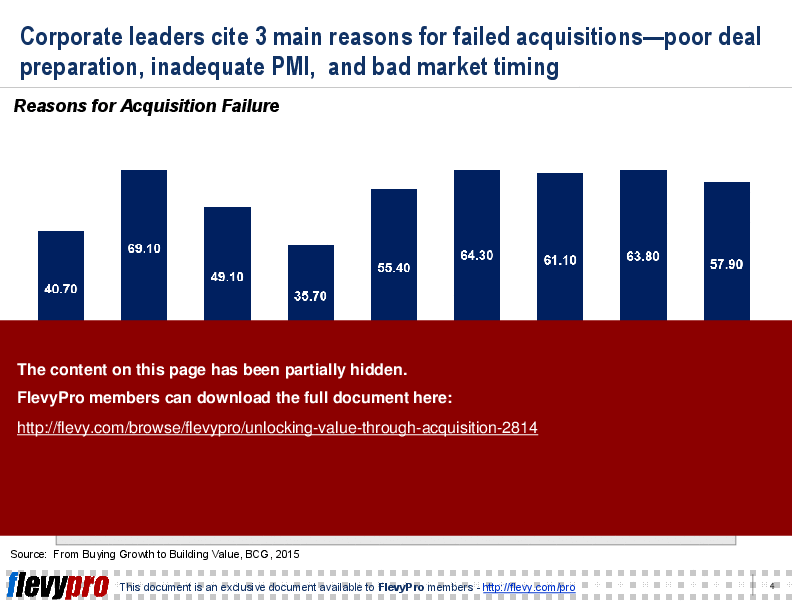
There are several attractive reasons why companies follow acquisition strategies, including increased market power or so they can enter a new sector or market. However as is often the case, there is a catch to acquiring one's way to growth. Research says up to 90% of acquisitions fail (Business Review Europe, 2015).
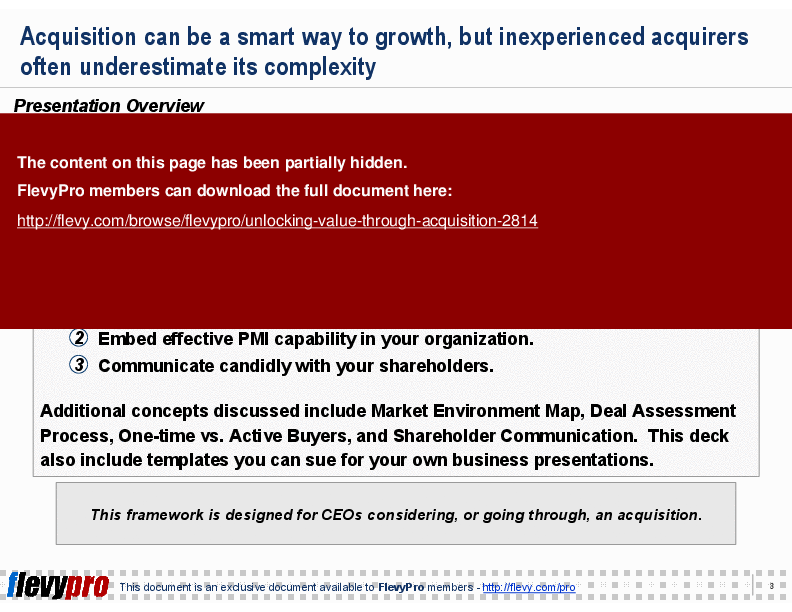
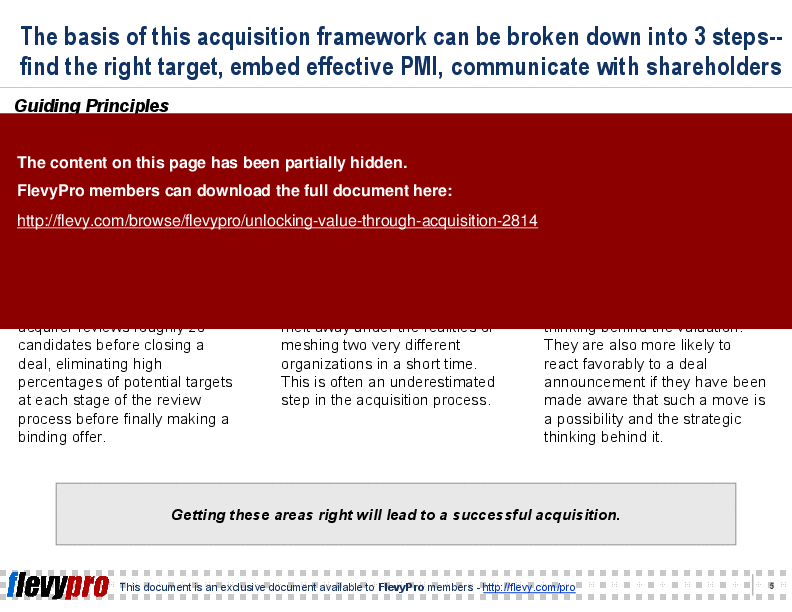
This presentation reviews the key reasons for acquisition failure and outlines a 3-step process to unlocking the value from your acquisition:
1. Find the right target.
2. Embed effective PMI capability in your organization.
3. Communicate candidly with your shareholders.
Additional concepts discussed include Market Environment Map, Deal Assessment Process, One-time vs. Active Buyers, and Shareholder Communication. This framework is designed for CEOs considering, or going through, an acquisition.
This deck also include templates you can sue for your own business presentations.
Unlocking Value through Acquisition delves into the intricacies of successful M&A strategies, emphasizing the importance of rigorous target selection and effective post-merger integration (PMI). Corporate leaders often cite poor deal preparation, inadequate PMI, and bad market timing as the primary reasons for acquisition failures. This presentation provides a detailed analysis of these pitfalls and offers actionable insights to mitigate them.
The PPT highlights the necessity of a disciplined analytical approach in the target selection process. It underscores the importance of not taking shortcuts and embedding the target search process within your organization. This ensures a thorough evaluation of potential targets, increasing the likelihood of a successful acquisition. The framework also includes a Market Environment Map to help assess the viability of acquisitions in different market conditions.
Active buyers, with their established PMI capabilities, tend to outperform one-time acquirers. This presentation outlines the differences between these two types of acquirers and provides strategies for building PMI capability in-house. By following the principles and guidelines provided, CEOs can enhance their acquisition strategies, leading to higher shareholder returns and sustainable growth.
What are the most common reasons acquisitions fail and how often does that happen?
Research cited in the product overview attributes most acquisition failures to poor deal preparation, inadequate post-merger integration (PMI), and bad market timing. The overview references a statistic that as many as 90% of acquisitions fail, highlighting the need to address preparation, integration, and timing as primary risks with that up-to-90% failure rate.
What core steps should a CEO follow to unlock value from an acquisition?
The overview recommends a 3-step process: find the right target, embed effective PMI capability within the organization, and communicate candidly with shareholders. Each step emphasizes disciplined analysis and organizational capability building, forming the 3-step process described in Flevy's Unlocking Value through Acquisition.
How important is building in-house PMI capability versus relying on external advisers?
The overview notes that active buyers with established PMI capabilities tend to outperform one-time acquirers, implying that embedding PMI capability in-house improves execution and value capture. The guidance stresses building internal PMI capability as a strategic differentiator between active and one-time buyers.

How can a Market Environment Map be used in M&A decision making?
A Market Environment Map helps assess acquisition viability across different market conditions by mapping competitive dynamics, growth drivers, and timing considerations. The deck lists the Market Environment Map as a tool to inform target selection and deal timing decisions, referencing that map as a decision tool.
What should I look for when choosing an acquisition framework or toolkit to support deal work?
Look for tools that enforce disciplined target screening, incorporate market-environment assessment, provide a deal assessment process, and address PMI capability and shareholder communication. The product overview identifies a Market Environment Map and Deal Assessment Process templates as useful components, which are included in Flevy's Unlocking Value through Acquisition.
How can I decide whether to pursue targets aggressively or wait for better market timing?
The overview emphasizes assessing market conditions via a Market Environment Map and avoiding shortcuts in target search. It recommends disciplined analytical evaluation tied to timing considerations, using structured market mapping and deal assessment to inform when to pursue targets, including use of the Market Environment Map.
I’m a CEO about to start a target search—what practical checklist items should I include?
The overview suggests ensuring a disciplined target search embedded in the organization, applying a Deal Assessment Process to evaluate strategic fit, assessing market conditions with a Market Environment Map, and planning PMI capability and shareholder communication upfront. The recommended checklist aligns with the deck’s 3-step approach.
We’ve closed a deal, but integration is stalling—what immediate actions improve success?
The overview advises prioritizing the embedding of effective PMI capability, reallocating resources to integration tasks, and communicating candidly with shareholders about progress and challenges. Emphasizing structured PMI practices and clear shareholder communication are the immediate corrective actions highlighted in the presentation.
This PPT slide outlines 5 essential principles for target selection in mergers and acquisitions (M&A). The first principle emphasizes understanding industry dynamics and market trends over the next 5 to 10 years to inform decisions. The second principle stresses the necessity of a clear M&A strategy and conducting a portfolio analysis to identify growth businesses. The third principle advocates for a systematic approach to evaluate potential targets, ensuring alignment with strategic goals and focusing on quantifiable value creation. The fourth principle warns against shortcuts, highlighting the need for a rigorous analytical approach to assess targets thoroughly. Finally, the fifth principle underscores embedding the target search process within the organization as an ongoing effort, establishing a permanent screening process for future acquisitions.
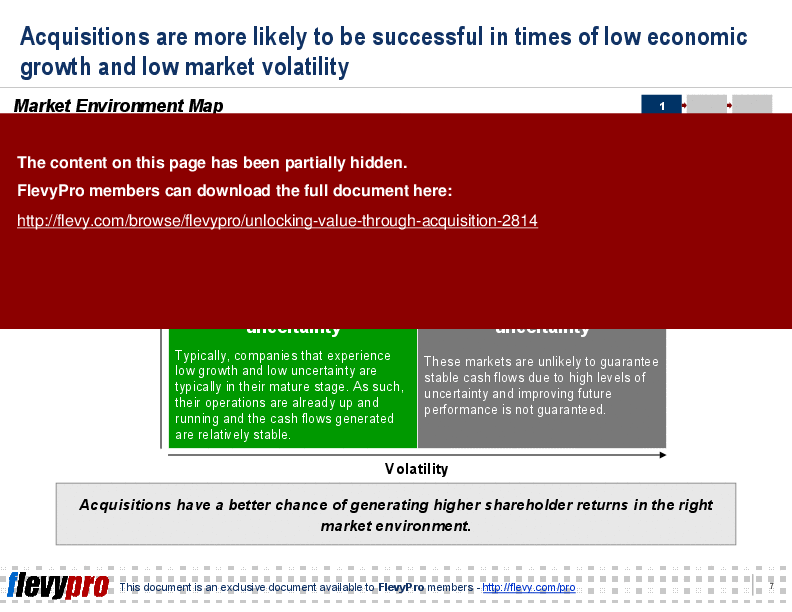
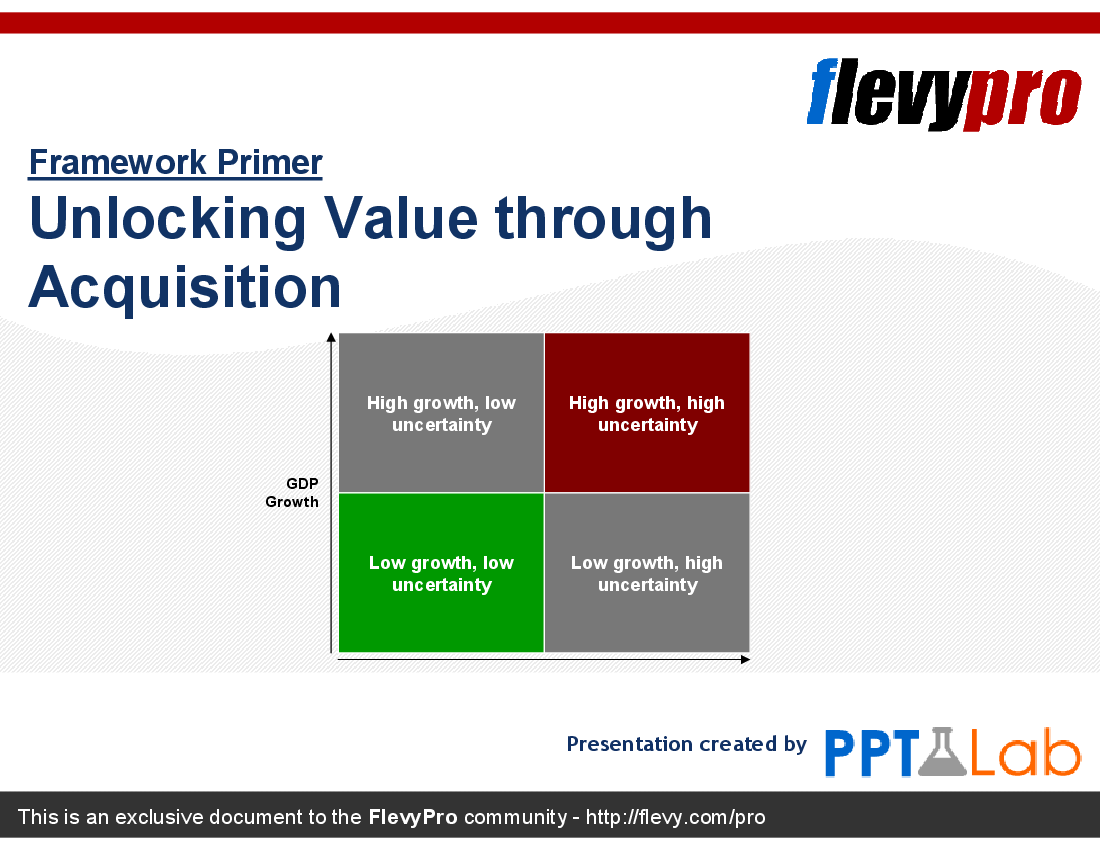
The Market Environment Map categorizes business environments based on GDP growth and volatility into 4 quadrants. The top-left quadrant, "High growth, low uncertainty," represents nascent businesses with rapid growth, but unpredictable cash flows, complicating valuations and deterring acquirers. The top-right quadrant, "High growth, high uncertainty," highlights markets with growth and significant unpredictability, making cash flow forecasting challenging and acquisition strategies risky. The bottom-left quadrant, "Low growth, low uncertainty," pertains to mature companies with stable cash flows, suggesting a safer acquisition environment. The bottom-right quadrant, "Low growth, high uncertainty," indicates markets with volatile performance and uncertain cash flows, increasing acquisition risks. Acquisitions are more likely to succeed in environments characterized by low economic growth and low market volatility.
This PPT slide analyzes total shareholder return (TSR) over 5 years, comparing companies that engage in acquisitions versus those relying on organic growth. Companies with one acquisition yield an average TSR of 2% in the first year post-acquisition, with only 43% achieving positive returns, highlighting integration challenges for one-time acquirers. In contrast, firms completing 2 to 5 acquisitions achieve an average one-year TSR of 6%, demonstrating superior integration and value realization. Acquisitive companies outperform organic growth firms by 4.2 percentage points (p.p.) in TSR, while experienced acquirers generate an additional 5.5 p.p. This data suggests that repeated acquisition engagement enhances integration capabilities, encouraging one-time acquirers to adopt successful methodologies of active buyers.
This PPT slide outlines the deal assessment process, starting with 100 screened deal opportunities for potential acquisitions. This initial evaluation phase is crucial for narrowing options. The number of opportunities decreases to 40, indicating a rigorous filtering mechanism for promising deals. A detailed review further narrows the selection to 28 opportunities, assessing strategic fit, financial metrics, and potential synergies. The due diligence phase reduces opportunities to 14, involving comprehensive examination of operations, financials, and legal standing. Following due diligence, the binding offer stage sees a drop to 8 opportunities, with only a fraction deemed worthy of formal offers. Ultimately, 5 deals are closed, highlighting the selectivity of the process. A disciplined deal assessment is essential for informed acquisition decisions.
Source: Best Practices in Acquisition, PMI PowerPoint Slides: Unlocking Value through Acquisition PowerPoint (PPT) Presentation Slide Deck, PPT Lab
This document is part of the FlevyPro Library, a curated knowledge base of documents for our FlevyPro subscribers.
FlevyPro is a subscription service for on-demand business frameworks and analysis tools. FlevyPro subscribers receive access to an exclusive library of curated business documents—business framework primers, presentation templates, Lean Six Sigma tools, and more—among other exclusive benefits.
The average daily rate of a McKinsey consultant is $6,625 (not including expenses). The average price of a Flevy document is $65.
Trusted by over 10,000+ Client Organizations
Since 2012, we have provided business templates to over 10,000 businesses and organizations of all sizes, from startups and small businesses to the Fortune 100, in over 130 countries.
"The wide selection of frameworks is very useful to me as an independent consultant. In fact, it rivals what I had at my disposal at Big 4 Consulting firms in terms of efficacy and organization."
– Julia T., Consulting Firm Owner (Former Manager at Deloitte and Capgemini)
"If you are looking for great resources to save time with your business presentations, Flevy is truly a value-added resource. Flevy has done all the work for you and we will continue to utilize Flevy as a source to extract up-to-date information and data for our virtual and onsite presentations!"
– Debbi Saffo, President at The NiKhar Group
"FlevyPro has been a brilliant resource for me, as an independent growth consultant, to access a vast knowledge bank of presentations to support my work with clients. In terms of RoI, the value I received from the very first presentation I downloaded paid for my subscription many times over! The

quality of the decks available allows me to punch way above my weight – it's like having the resources of a Big 4 consultancy at your fingertips at a microscopic fraction of the overhead.
"
– Roderick Cameron, Founding Partner at SGFE Ltd
"I have found Flevy to be an amazing resource and library of useful presentations for lean sigma, change management and so many other topics. This has reduced the time I need to spend on preparing for my performance consultation. The library is easily accessible and updates are regularly provided. A wealth of great information."
– Cynthia Howard RN, PhD, Executive Coach at Ei Leadership
"Flevy is our 'go to' resource for management material, at an affordable cost. The Flevy library is comprehensive and the content deep, and typically provides a great foundation for us to further develop and tailor our own service offer."
– Chris McCann, Founder at Resilient.World
"Flevy.com has proven to be an invaluable resource library to our Independent Management Consultancy, supporting and enabling us to better serve our enterprise clients.
The value derived from our [FlevyPro] subscription in terms of the business it has helped to gain far exceeds the investment made, making a subscription a no-brainer for any growing consultancy – or in-house strategy team."
– Dean Carlton, Chief Transformation Officer, Global Village Transformations Pty Ltd.
"FlevyPro provides business frameworks from many of the global giants in management consulting that allow you to provide best in class solutions for your clients."
– David Harris, Managing Director at Futures Strategy
"Flevy is now a part of my business routine. I visit Flevy at least 3 times each month.
Flevy has become my preferred learning source, because what it provides is practical, current, and useful in this era where the business world is being rewritten.
many challenges and there is the need to make the right decisions in a short time, with so much scattered information, we are fortunate to have Flevy. Flevy investigates, selects, and puts at our disposal the best of the best to help us be successful in our work.
Download our free compilation of 50+ Strategy & Transformation slides and templates. Frameworks include McKinsey 7-S, Balanced Scorecard, Disruptive Innovation, BCG Curve, and many more.