
Target Costing   23-slide PPT PowerPoint presentation slide deck (PPTX)
$29.00

Target Costing (23-slide PPT PowerPoint presentation slide deck (PPTX)) Preview Image
Log in to unlock full preview.
Target Costing (23-slide PPT PowerPoint presentation slide deck (PPTX)) Preview Image
Arrow   Click main image to view in full screen.

Target Costing (PowerPoint PPTX Slide Deck)

PowerPoint (PPTX) 23 Slides FlevyPro Document

Top 1,000 Best Practice $29.00
FlevyPro price: FREE (included in subscription)
This framework is developed by a team of former McKinsey and Big 4 consultants. The presentation follows the headline-body-bumper slide format used by global consulting firms.
Add to Cart


Immediate download
Free lifetime updates

COST REDUCTION ASSESSMENT PPT DESCRIPTION

Editor Summary 23-slide PowerPoint presentation on Target Costing that provides a proactive cost planning and reduction framework developed by an ex-McKinsey consultant, covering 3 methodology phases: Market-Driven Target Costing, Product-Level Target Costing, and Component-Level Target Costing. Read more

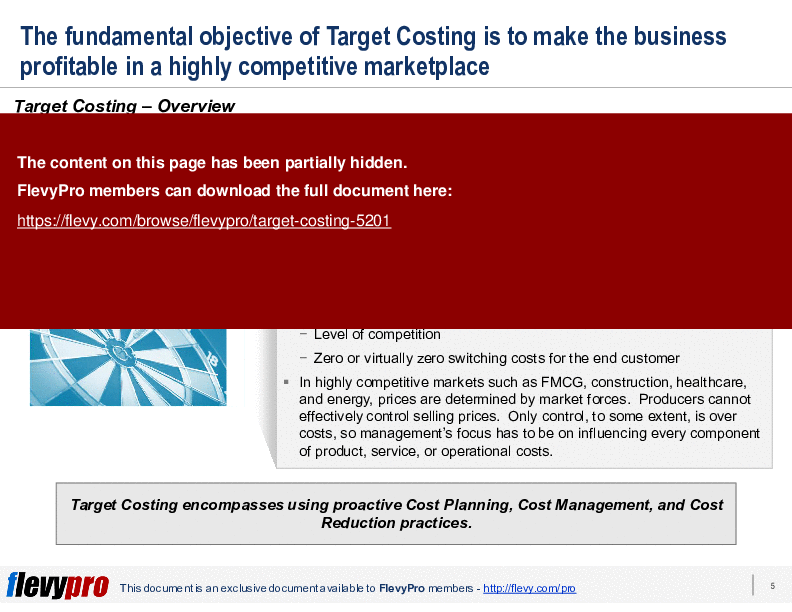
Target Costing is a proactive Cost Planning, Cost Management, and Cost Reduction practice. Costs are planned and managed out of a product and business early in product life-cycle, rather than during the later stages.

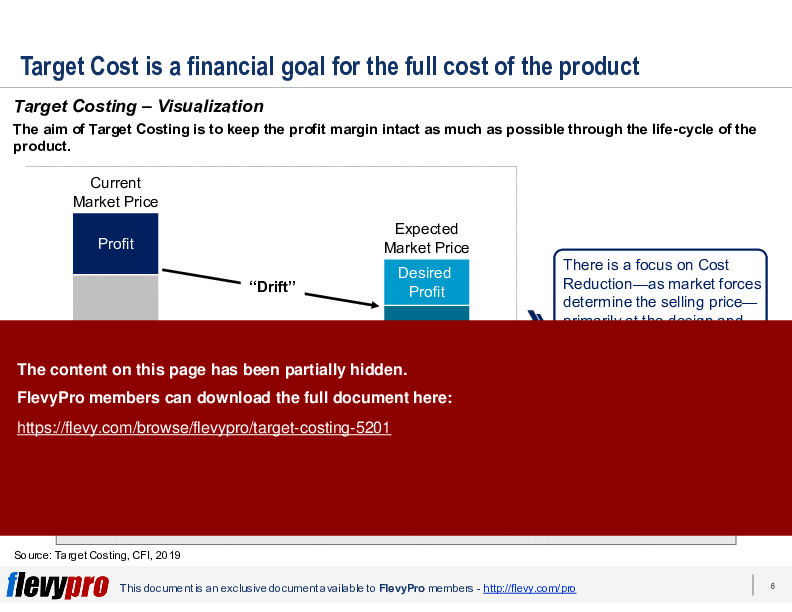
Target Costing is an organized process to determine the cost at which a proposed product must be developed so as to generate profits at the product's anticipated selling price in future.

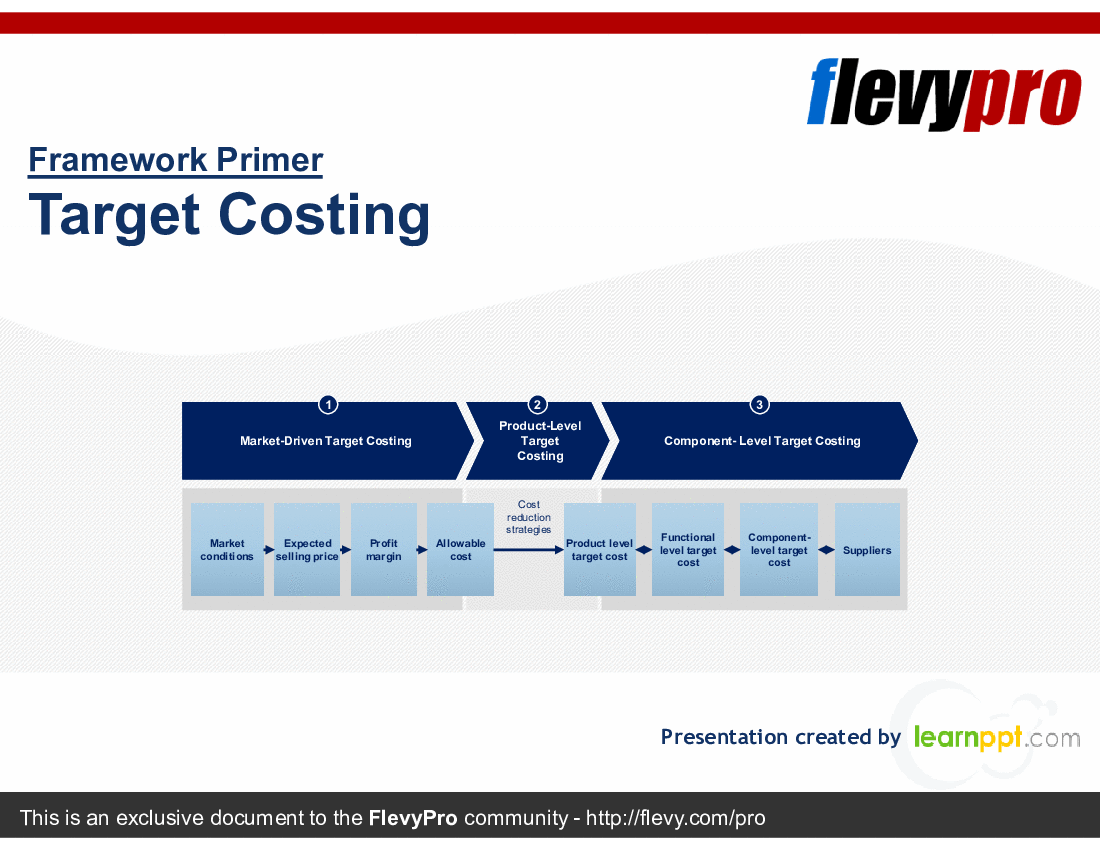
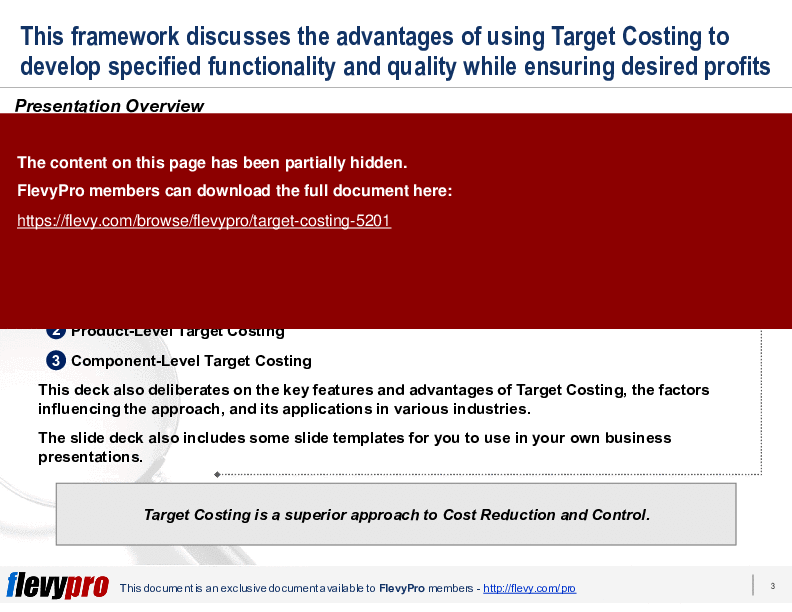
This presentation provides a detailed overview of the Target Costing Process and its 3 key phases:

1. Market-Driven Target Costing
2. Product-Level Target Costing
3. Component-Level Target Costing

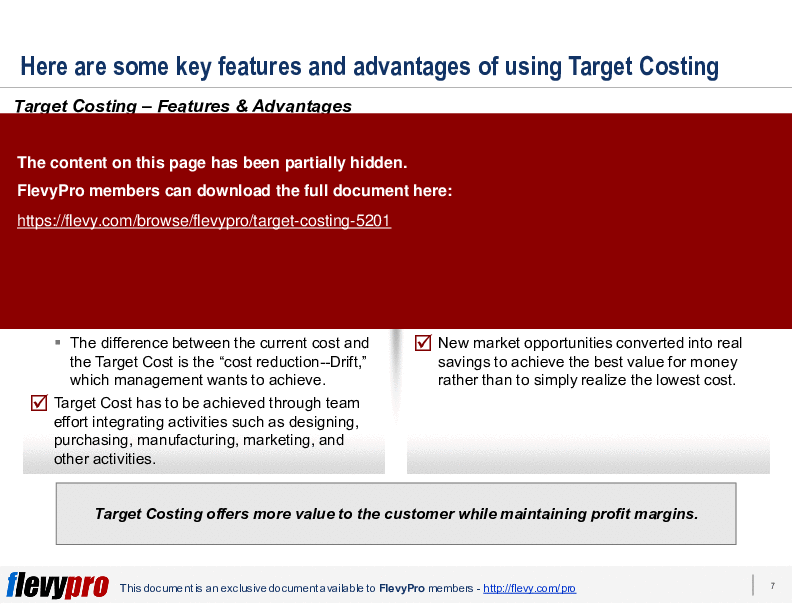
This deck also deliberates on the key features and advantages of Target Costing, the factors influencing the approach, and its applications in various industries. Target Costing is a superior approach to Cost Reduction and Control.

The slide deck also includes some slide templates for you to use in your own business presentations.

Target Costing is essential for maintaining profitability in a competitive marketplace. This framework emphasizes the importance of setting cost targets early in the product development process to ensure that the final product meets market demands while achieving desired profit margins. By focusing on cost management from the outset, companies can better control expenses and optimize resource allocation.

This presentation also highlights the role of cross-functional teams in achieving target costs. Integrating activities such as design, procurement, and manufacturing ensures that all aspects of the product lifecycle are aligned with cost objectives. The included templates provide practical tools for implementing Target Costing in your organization, making it easier to apply these principles and drive cost efficiency.

Got a question about this document? Email us at flevypro@flevy.com.

MARCUS OVERVIEW

This synopsis was written by Marcus [?] based on the analysis of the full 23-slide presentation.


Executive Summary
This presentation on Target Costing provides a comprehensive framework for implementing effective cost management strategies in product development. Designed by an ex-McKinsey consultant, it outlines a proactive approach to cost planning and reduction, emphasizing the importance of establishing target costs early in the product lifecycle. By leveraging market-driven insights, this deck equips corporate executives and consultants with the tools to enhance profitability while maintaining product quality and functionality.

Who This Is For and When to Use
•  Product Managers responsible for cost management in product development.
•  Financial Analysts focused on profitability and cost reduction strategies.
•  Operations Managers seeking to streamline production costs.
•  Strategy Consultants advising clients on competitive pricing and cost management.

Best-fit moments to use this deck:
•  During the initial phases of product development to set cost expectations.
•  In strategic planning sessions focused on profitability and market positioning.
•  For training sessions on cost management techniques and frameworks.

Learning Objectives
•  Define the principles of Target Costing and its relevance in competitive markets.
•  Establish product-level and component-level target costs based on market analysis.
•  Implement cost reduction strategies through cross-functional collaboration.
•  Analyze market conditions to determine allowable costs and profit margins.
•  Utilize templates for effective communication of cost management strategies.
•  Evaluate industry examples to apply Target Costing in various contexts.

Table of Contents
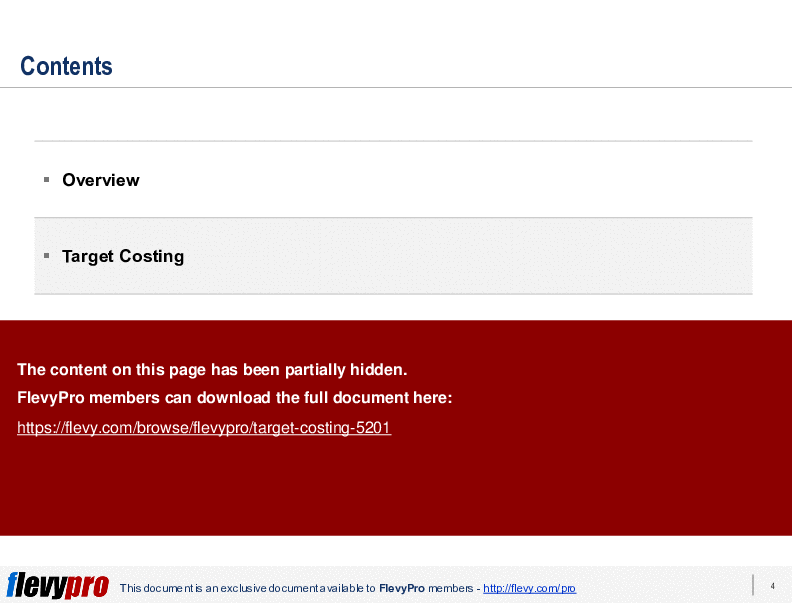
•  Overview (page 3)
•  Target Costing (page 5)
•  Target Costing Process (page 9)
•  Industry Examples (page 16)
•  Templates (page 19)

Primary Topics Covered
•  Market-Driven Target Costing - Focuses on analyzing market conditions to establish selling prices and allowable costs, ensuring alignment with profit margins.
•  Product-Level Target Costing - Involves setting achievable target costs based on product design and manufacturing capabilities, emphasizing cost discipline.
•  Component-Level Target Costing - Centers on supplier relationships and cost history to determine component-level target costs, ensuring effective cost management across the supply chain.
•  Cost Reduction Strategies - Discusses methods such as Value Engineering and Design for Manufacture and Assembly to achieve target costs.
•  Industry Applications - Highlights how Target Costing is utilized in manufacturing, energy, healthcare, and construction sectors to enhance profitability.
•  Templates for Implementation - Provides practical templates for applying Target Costing principles in real-world scenarios.

Deliverables, Templates, and Tools
•  Market analysis template for determining allowable costs.
•  Product-level target cost framework for setting achievable cost goals.
•  Component-level cost estimation tools for supplier evaluation.
•  Value Engineering checklist for identifying cost reduction opportunities.
•  Presentation templates for communicating cost management strategies.
•  Case studies illustrating successful implementation of Target Costing.

Slide Highlights
•  Overview of the Target Costing process with visual flowcharts.
•  Key features and advantages of Target Costing presented in a clear format.
•  Industry examples demonstrating practical applications of Target Costing.
•  Templates for market-driven target costing and product-level costing strategies.

Potential Workshop Agenda
Introduction to Target Costing (30 minutes)
•  Overview of Target Costing principles and objectives.
•  Discussion on market conditions and their impact on costing strategies.

Cost Reduction Strategies Workshop (60 minutes)
•  Interactive session on Value Engineering and Design for Manufacture.
•  Group activities to identify cost-saving opportunities in product design.

Industry Applications and Case Studies (45 minutes)
•  Review of successful Target Costing implementations across industries.
•  Q&A session to address specific challenges faced by participants.

Customization Guidance
•  Adapt market analysis templates to reflect specific industry conditions and competitive landscapes.
•  Modify product-level target cost frameworks to align with organizational goals and capabilities.
•  Tailor component-level costing strategies based on supplier relationships and historical cost data.

Secondary Topics Covered
•  The role of cross-functional teams in achieving target costs.
•  The impact of market forces on pricing and cost management.
•  Techniques for effective supplier negotiation and relationship management.
•  The importance of continuous improvement in cost management practices.

Topic FAQ

What is Target Costing and how does it determine allowable cost?

Target Costing is a proactive cost management approach that sets a product’s allowable cost based on anticipated selling price less desired profit margin. It plans costs early in the product lifecycle so development stays within that allowable cost, using market analysis to set the initial selling price and profit assumptions.

What are the key phases of the Target Costing process?

The Target Costing process consists of 3 key phases: Market-Driven Target Costing (set selling price and allowable cost), Product-Level Target Costing (translate allowable cost into product design targets), and Component-Level Target Costing (assign costs to individual components), totaling 3 phases.

How do Value Engineering and DFMA support cost reduction in Target Costing?

Value Engineering and Design for Manufacture and Assembly (DFMA) are cited cost-reduction techniques used to lower product and component costs while preserving function. They are applied during product and component design stages to identify simplification and cost-saving opportunities using the provided Value Engineering checklist and DFMA guidance.

What should I look for when buying a Target Costing toolkit?

Seek toolkits that include market analysis templates to derive allowable costs, product-level target cost frameworks, component-level estimation tools for supplier evaluation, and cost-reduction checklists such as Value Engineering and DFMA; these practical items are included in Flevy’s Target Costing materials.

What kinds of templates and tools are typically included in paid Target Costing decks?

Paid decks commonly provide ready templates to accelerate implementation; Flevy’s Target Costing includes a market analysis template, a product-level target cost framework, component-level cost estimation tools, a Value Engineering checklist, and presentation templates for stakeholder communication.

I’ve done market research—how should I start setting target costs for a new product?

Begin with Market-Driven Target Costing: use market research to set a target selling price, calculate the allowable cost by subtracting the desired profit margin, then translate that into product- and component-level targets using the deck’s product-level framework and templates.

How should procurement and suppliers be involved in Component-Level Target Costing?

Engage suppliers early to gather cost history and enable component-level cost estimation; use supplier evaluation and negotiation informed by component-level cost estimation tools to allocate target costs across parts during the Component-Level Target Costing phase.

How can I structure a workshop to teach Target Costing to cross-functional teams?

Use a short, modular agenda: a 30-minute introduction to principles and market impact, a 60-minute interactive Value Engineering/DFMA session for cost-reduction practice, followed by a 45-minute industry case study and Q&A—mirroring the workshop agenda in the deck.

Document FAQ
These are questions addressed within this presentation.

What is Target Costing?
Target Costing is a proactive approach to cost management that determines the allowable cost of a product based on its anticipated selling price and desired profit margin.

How does Target Costing differ from traditional cost management?
Unlike traditional methods that focus on cost reduction after production, Target Costing emphasizes cost planning and management early in the product lifecycle.

What are the key phases of the Target Costing process?
The process consists of Market-Driven Target Costing, Product-Level Target Costing, and Component-Level Target Costing.

How can I implement Target Costing in my organization?
Utilize the provided templates and frameworks to analyze market conditions, set target costs, and engage cross-functional teams in cost management efforts.

What industries benefit most from Target Costing?
Target Costing is widely applicable across manufacturing, energy, healthcare, and construction sectors, where competitive pricing is essential.

What tools are available for cost reduction?
Tools such as Value Engineering and Design for Manufacture and Assembly are effective for achieving target cost reductions.

How do I determine the allowable cost of a product?
Calculate the allowable cost by subtracting the desired profit margin from the target selling price.

What role do suppliers play in Component-Level Target Costing?
Suppliers are critical in determining component costs and achieving target costs through effective negotiation and collaboration.

Glossary
•  Target Costing - A proactive cost management approach to determine the allowable cost of a product.
•  Allowable Cost - The maximum cost that can be incurred to achieve the desired profit margin.
•  Value Engineering - A method to improve product functionality while reducing costs.
•  Design for Manufacture and Assembly (DFMA) - A design approach that simplifies product structure to reduce manufacturing costs.
•  Market Analysis - The process of evaluating market conditions to inform pricing and cost strategies.
•  Profit Margin - The difference between the selling price and the cost of a product, expressed as a percentage of the selling price.
•  Component-Level Target Costing - The phase of Target Costing focused on determining costs for individual components of a product.
•  Cross-Functional Team - A group composed of members from different departments working together towards a common goal.
•  Supplier Relations - The management of relationships with suppliers to ensure cost-effective sourcing and collaboration.
•  Cost Reduction Strategies - Techniques employed to lower production costs while maintaining quality and functionality.
•  Market-Driven Target Costing - A phase that focuses on setting prices based on market conditions and competition.
•  Product-Level Target Costing - The phase that translates allowable costs into achievable target costs for product design.

COST REDUCTION ASSESSMENT PPT SLIDES

Key Features and Benefits of Target Costing

Product-Level Target Costing: Key Steps and Strategies

Comprehensive Overview of Target Costing Phases

Strategic Framework for Target Costing Implementation

Strategies for Effective Target Costing Implementation

Source: Best Practices in Cost Reduction, Cost Management, Cost Analysis PowerPoint Slides: Target Costing PowerPoint (PPTX) Presentation Slide Deck, LearnPPT Consulting


$29.00
FlevyPro price: FREE (included in subscription)
This framework is developed by a team of former McKinsey and Big 4 consultants. The presentation follows the headline-body-bumper slide format used by global consulting firms.
Add to Cart
  

Did you need more documents?

Consider a FlevyPro subscription from $39/month. View plans here.

For $10.00 more, you can download this document plus 2 more FlevyPro documents. That's just $13 each.

ABOUT FLEVYPRO

This document is part of the FlevyPro Library, a curated knowledge base of documents for our FlevyPro subscribers.

FlevyPro is a subscription service for on-demand business frameworks and analysis tools. FlevyPro subscribers receive access to an exclusive library of curated business documents—business framework primers, presentation templates, Lean Six Sigma tools, and more—among other exclusive benefits.

Click here to learn more about FlevyPro and its benefits.

Did you know?
The average daily rate of a McKinsey consultant is $6,625 (not including expenses). The average price of a Flevy document is $65.


Trusted by over 10,000+ Client Organizations
Since 2012, we have provided business templates to over 10,000 businesses and organizations of all sizes, from startups and small businesses to the Fortune 100, in over 130 countries.
AT&T GE Cisco Intel IBM Coke Dell Toyota HP Nike Samsung Microsoft Astrazeneca JP Morgan KPMG Walgreens Walmart 3M Kaiser Oracle SAP Google E&Y Volvo Bosch Merck Fedex Shell Amgen Eli Lilly Roche AIG Abbott Amazon PwC T-Mobile Broadcom Bayer Pearson Titleist ConEd Pfizer NTT Data Schwab


Read Customer Testimonials

 
"I have used Flevy services for a number of years and have never, ever been disappointed. As a matter of fact, David and his team continue, time after time, to impress me with their willingness to assist and in the real sense of the word. I have concluded in fact "

– Roberto Pelliccia, Senior Executive in International Hospitality
 
"FlevyPro has been a brilliant resource for me, as an independent growth consultant, to access a vast knowledge bank of presentations to support my work with clients. In terms of RoI, the value I received from the very first presentation I downloaded paid for my subscription many times over! The "

– Roderick Cameron, Founding Partner at SGFE Ltd
 
"FlevyPro provides business frameworks from many of the global giants in management consulting that allow you to provide best in class solutions for your clients."

– David Harris, Managing Director at Futures Strategy
 
"Last Sunday morning, I was diligently working on an important presentation for a client and found myself in need of additional content and suitable templates for various types of graphics. Flevy.com proved to be a treasure trove for both content and design at a reasonable price, considering the time I "

– M. E., Chief Commercial Officer, International Logistics Service Provider
 
"As a niche strategic consulting firm, Flevy and FlevyPro frameworks and documents are an on-going reference to help us structure our findings and recommendations to our clients as well as improve their clarity, strength, and visual power. For us, it is an invaluable resource to increase our impact and value."

– David Coloma, Consulting Area Manager at Cynertia Consulting
 
"[Flevy] produces some great work that has been/continues to be of immense help not only to myself, but as I seek to provide professional services to my clients, it gives me a large "tool box" of resources that are critical to provide them with the quality of service and outcomes they are expecting."

– Royston Knowles, Executive with 50+ Years of Board Level Experience
 
"My FlevyPro subscription provides me with the most popular frameworks and decks in demand in today’s market. They not only augment my existing consulting and coaching offerings and delivery, but also keep me abreast of the latest trends, inspire new products and service offerings for my practice, and educate me "

– Bill Branson, Founder at Strategic Business Architects
 
"One of the great discoveries that I have made for my business is the Flevy library of training materials.

As a Lean Transformation Expert, I am always making presentations to clients on a variety of topics: Training, Transformation, Total Productive Maintenance, Culture, Coaching, Tools, Leadership Behavior, etc. Flevy "

– Ed Kemmerling, Senior Lean Transformation Expert at PMG


Customers Also Bought These Documents


Customers Also Like These Documents

Explore Templates on Related Management Topics


Your Recently Viewed Documents
Receive our FREE presentation on Operational Excellence

This 50-slide presentation provides a high-level introduction to the 4 Building Blocks of Operational Excellence. Achieving OpEx requires the implementation of a Business Execution System that integrates these 4 building blocks.