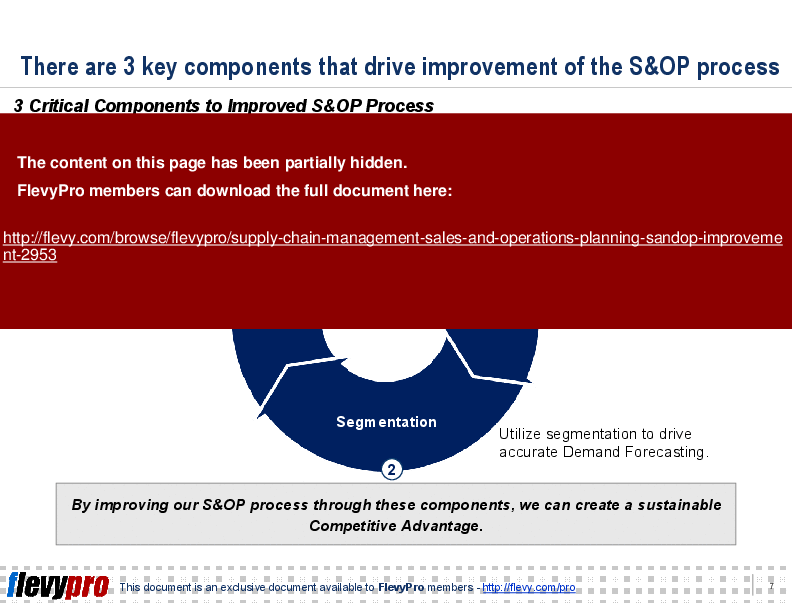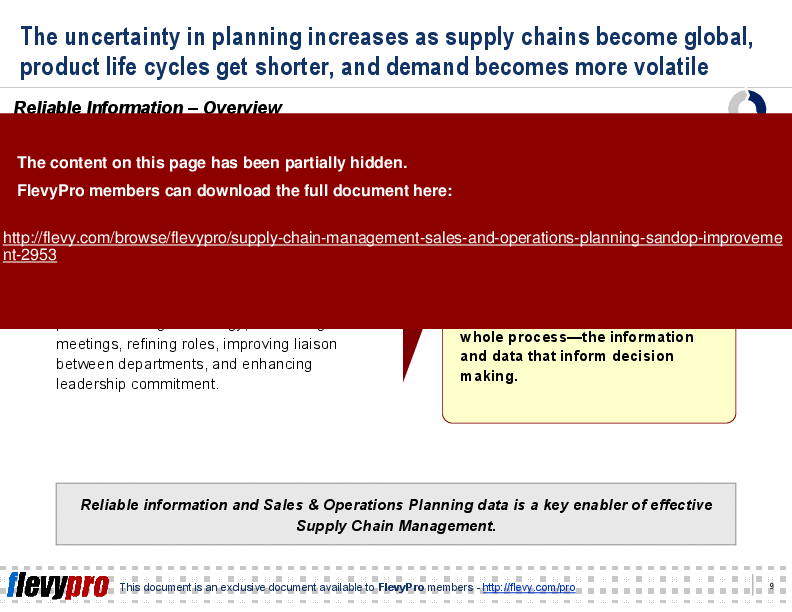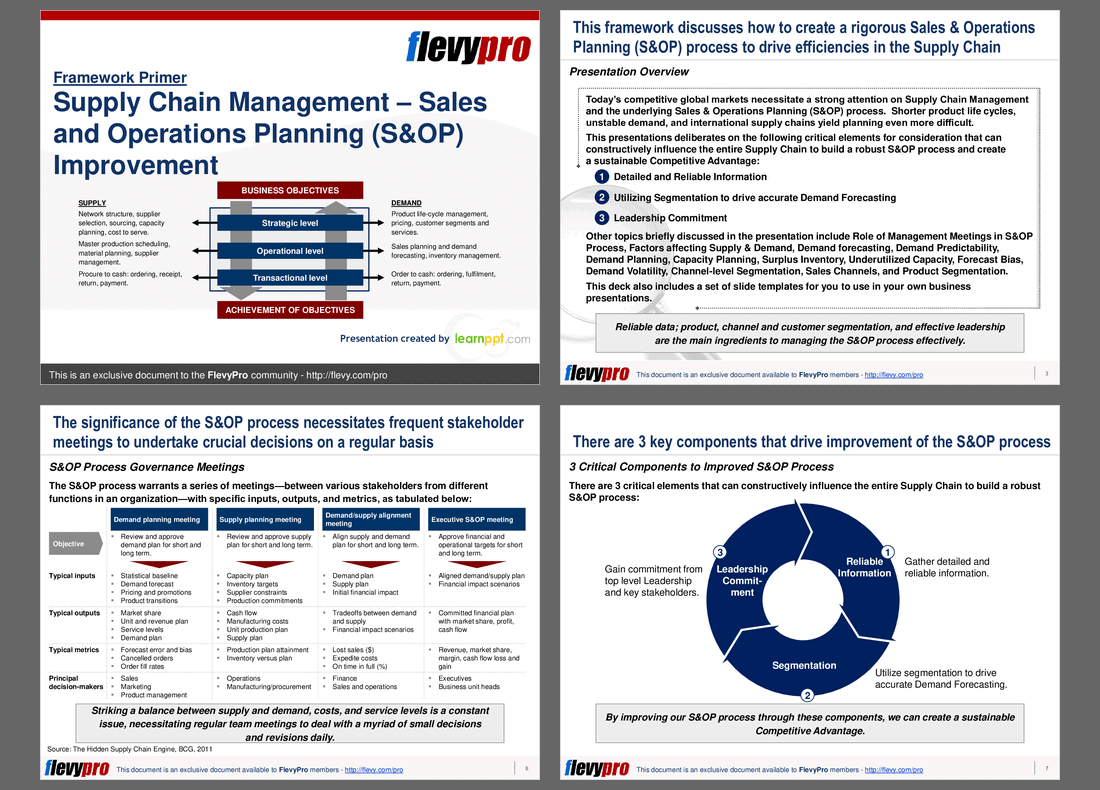
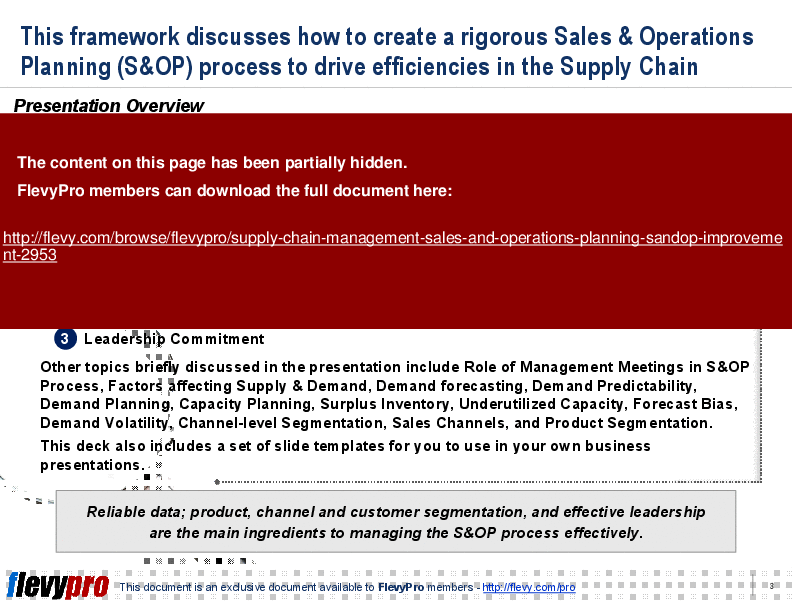
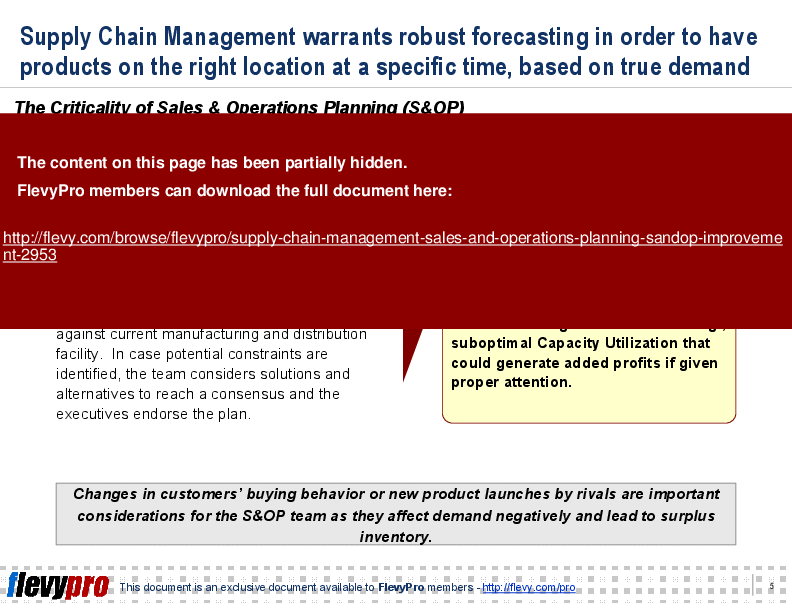
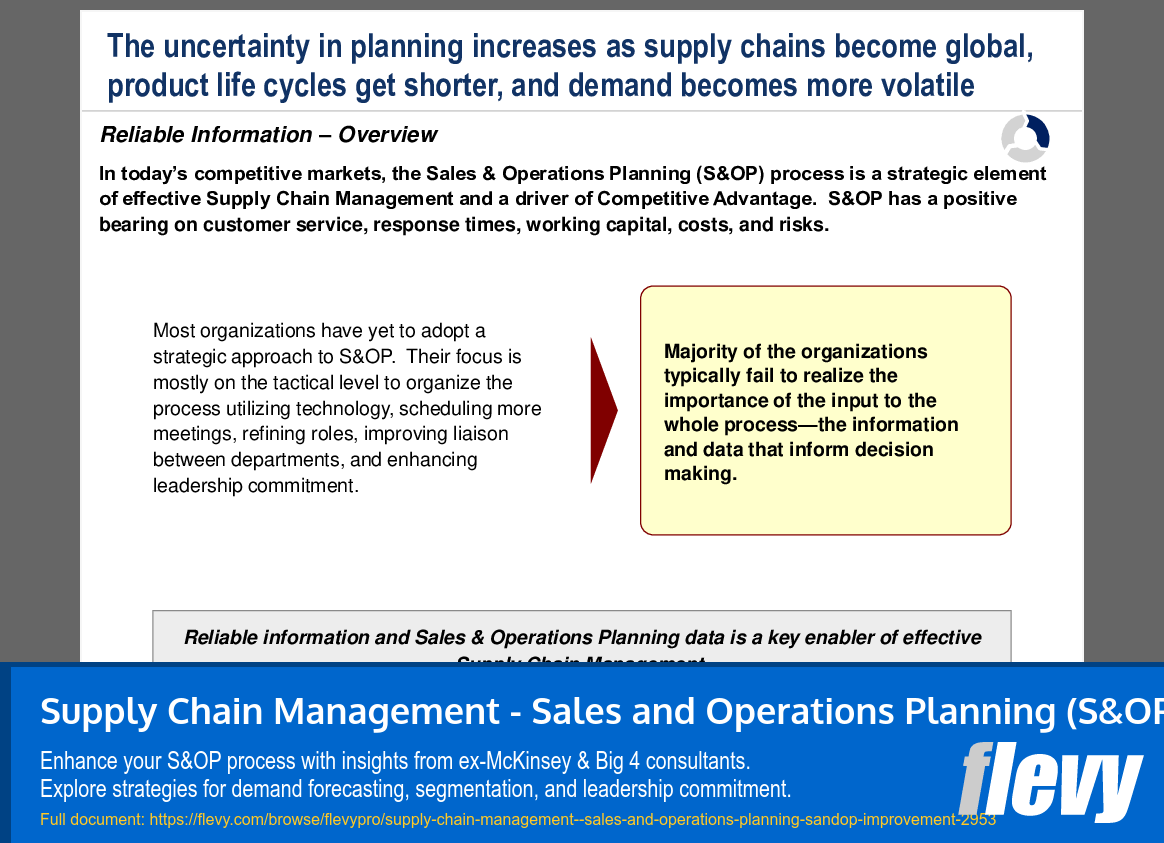

Today's competitive global markets necessitate a strong attention on Supply Chain Management and the underlying Sales & Operations Planning (S&OP) process. Shorter product life cycles, unstable demand, and international supply chains yield planning even more difficult.
This presentations deliberates on the following critical elements for consideration that can constructively influence the entire Supply Chain to build a robust S&OP process and create a sustainable Competitive Advantage:
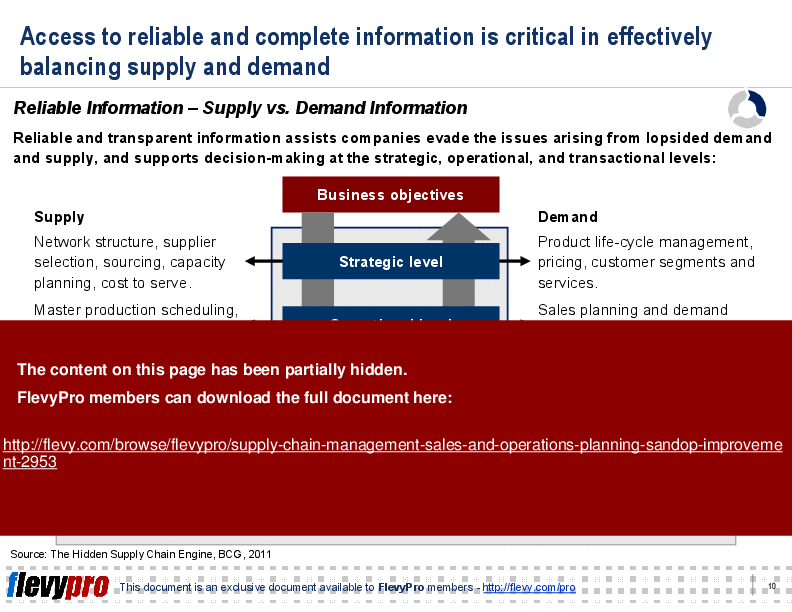
1. Detailed and Reliable Information
2. Utilizing Segmentation to drive accurate Demand Forecasting
3. Leadership Commitment
Other topics briefly discussed in the presentation include Role of Management Meetings in S&OP Process, Factors affecting Supply & Demand, Demand forecasting, Demand Predictability, Demand Planning, Capacity Planning, Surplus Inventory, Underutilized Capacity, Forecast Bias, Demand Volatility, Channel-level Segmentation, Sales Channels, and Product Segmentation.
This deck also includes a set of slide templates for you to use in your own business presentations.
This presentation provides a comprehensive framework for enhancing the Sales & Operations Planning (S&OP) process, emphasizing the importance of reliable information, segmentation, and leadership commitment. The deck outlines practical steps for implementing segmentation to prioritize S&OP activities, investments, and focus, ensuring that demand patterns are accurately forecasted and managed.
The PPT also highlights the critical role of stakeholder meetings in the S&OP process, detailing the necessary inputs, outputs, and metrics for effective governance. By leveraging these insights, organizations can achieve a more synchronized supply chain, mitigate risks associated with demand volatility, and ultimately drive a sustainable competitive advantage.
Got a question about this document? Email us at flevypro@flevy.com.
Executive Summary
The Supply Chain Management - Sales and Operations Planning (S&OP) Improvement presentation provides a structured approach to enhance the S&OP process, a critical component for optimizing supply chain efficiency. This deck outlines the importance of reliable data, effective segmentation, and strong leadership commitment in driving successful S&OP initiatives. Users will gain insights into balancing supply and demand, improving forecasting accuracy, and aligning organizational goals to enhance operational performance. The presentation includes ready-to-use templates to facilitate immediate application in business settings.
Who This Is For and When to Use
• Supply Chain Managers focused on optimizing inventory and production processes
• Operations Executives responsible for aligning supply and demand strategies
• Sales Leaders aiming to improve forecasting and customer satisfaction
• Business Analysts tasked with data analysis and demand planning
• Consultants assisting organizations in enhancing their S&OP processes
Best-fit moments to use this deck:
• During strategic planning sessions to align S&OP goals with business objectives
• When implementing new S&OP frameworks or processes within an organization
• For training sessions aimed at improving cross-departmental collaboration in S&OP
• To facilitate stakeholder meetings focused on demand forecasting and supply planning
Learning Objectives
• Define the S&OP process and its significance in supply chain management
• Build a reliable information framework to support demand forecasting
• Establish effective segmentation strategies for products and customers
• Identify leadership roles and responsibilities in the S&OP process
• Develop actionable templates for S&OP meetings and decision-making
• Enhance collaboration between sales, operations, and supply chain teams
Table of Contents
• Overview (page 3)
• Reliable Information (page 9)
• Segmentation (page 15)
• Leadership Commitment (page 19)
• Templates (page 23)
Primary Topics Covered
• Reliable Information - Emphasizes the necessity of accurate data for effective S&OP, impacting customer service and operational efficiency.
• Segmentation - Discusses the importance of segmenting products and customers to improve demand forecasting and inventory management.
• Leadership Commitment - Highlights the role of executive involvement in fostering alignment and driving the S&OP process forward.
• S&OP Governance Meetings - Outlines the structure and purpose of regular meetings to ensure alignment across departments.
• Demand Planning - Focuses on strategies for accurate demand forecasting to mitigate risks of surplus inventory and stockouts.
• Capacity Planning - Addresses the need for effective resource allocation to meet demand without overextending capabilities.
Deliverables, Templates, and Tools
• S&OP meeting agenda template for structured discussions
• Demand forecasting template to capture and analyze sales data
• Segmentation analysis tool for categorizing products based on demand patterns
• Leadership commitment framework to outline roles and responsibilities
• Capacity planning worksheet to align production capabilities with demand forecasts
• Risk assessment template for identifying potential supply chain disruptions
Slide Highlights
• Overview of the S&OP process and its critical components
• Visual representation of the relationship between supply and demand
• Framework for reliable information and its impact on decision-making
• Segmentation strategies illustrated through product demand patterns
• Leadership commitment strategies for enhancing interdepartmental collaboration
Potential Workshop Agenda
S&OP Process Overview (60 minutes)
• Introduce the S&OP framework and its importance
• Discuss the role of reliable information in decision-making
• Review segmentation strategies for effective demand forecasting
Leadership Commitment Session (45 minutes)
• Identify key leadership roles in the S&OP process
• Discuss strategies for fostering collaboration between departments
• Develop action plans for improving interdepartmental relationships
Segmentation and Demand Planning Workshop (90 minutes)
• Analyze product demand patterns and segmentation strategies
• Create actionable demand forecasting plans
• Discuss capacity planning and resource allocation strategies
Customization Guidance
• Tailor the templates to reflect specific organizational structures and processes
• Adjust the segmentation criteria based on unique product lines and customer profiles
• Incorporate company-specific metrics and KPIs into the governance meetings
• Modify the agenda items to align with current business priorities and challenges
Secondary Topics Covered
• Factors affecting supply and demand in the marketplace
• The significance of regular S&OP meetings for decision-making
• Techniques for improving demand predictability and inventory management
• The impact of leadership behaviors on S&OP effectiveness
• Strategies for addressing forecast bias and improving accuracy
Topic FAQ
Document FAQ
These are questions addressed within this presentation.
What is the S&OP process?
The S&OP process is a systematic approach to aligning supply and demand within an organization, ensuring that resources are allocated efficiently to meet customer needs.
Why is reliable information critical in S&OP?
Reliable information enables organizations to make informed decisions, reducing the risk of stockouts and excess inventory while improving customer satisfaction.
How can segmentation improve demand forecasting?
Segmentation allows organizations to categorize products and customers based on demand patterns, leading to more accurate forecasts and better inventory management.
What role does leadership play in S&OP?
Leadership commitment is essential for fostering collaboration between departments, ensuring alignment on goals, and driving the S&OP process forward.
How often should S&OP meetings be held?
Regular S&OP meetings should be scheduled to review demand forecasts, supply plans, and operational performance, typically on a monthly or quarterly basis.
What are the key components of an effective S&OP meeting?
Effective S&OP meetings should include clear agendas, participation from key stakeholders, and a focus on aligning supply and demand strategies.
How can organizations address forecast bias?
Organizations can address forecast bias by improving communication between sales and operations teams and implementing metrics to encourage accurate forecasting.
What tools can assist in the S&OP process?
Tools such as demand forecasting templates, segmentation analysis tools, and capacity planning worksheets can enhance the effectiveness of the S&OP process.
Glossary
• S&OP - Sales and Operations Planning, a process for aligning supply and demand.
• Demand Forecasting - The process of estimating future customer demand.
• Segmentation - The categorization of products or customers based on specific criteria.
• Leadership Commitment - The involvement of executives in driving S&OP initiatives.
• Capacity Planning - The process of determining production capacity needed to meet demand.
• Governance Meetings - Regular meetings to align supply and demand strategies.
• Forecast Bias - The tendency to overestimate or underestimate future demand.
• Inventory Management - The process of overseeing and controlling inventory levels.
• Supply Chain - The network of organizations involved in producing and delivering products.
• Customer Satisfaction - The measure of how products and services meet customer expectations.
• Operational Efficiency - The ability to deliver products and services effectively and efficiently.
• Risk Assessment - The process of identifying and analyzing potential risks in the supply chain.
Source: Best Practices in Supply Chain Management, Sales & Operations Planning, S&OP PowerPoint Slides: Supply Chain Management - Sales and Operations Planning (S&OP) Improvement PowerPoint (PPT) Presentation Slide Deck, LearnPPT Consulting
Did you need more documents?
Consider a FlevyPro subscription from $39/month. View plans here.
For $10.00 more, you can download this document plus 2 more FlevyPro documents. That's just $13 each.
|
Receive our FREE presentation on Operational Excellence
This 50-slide presentation provides a high-level introduction to the 4 Building Blocks of Operational Excellence. Achieving OpEx requires the implementation of a Business Execution System that integrates these 4 building blocks. |