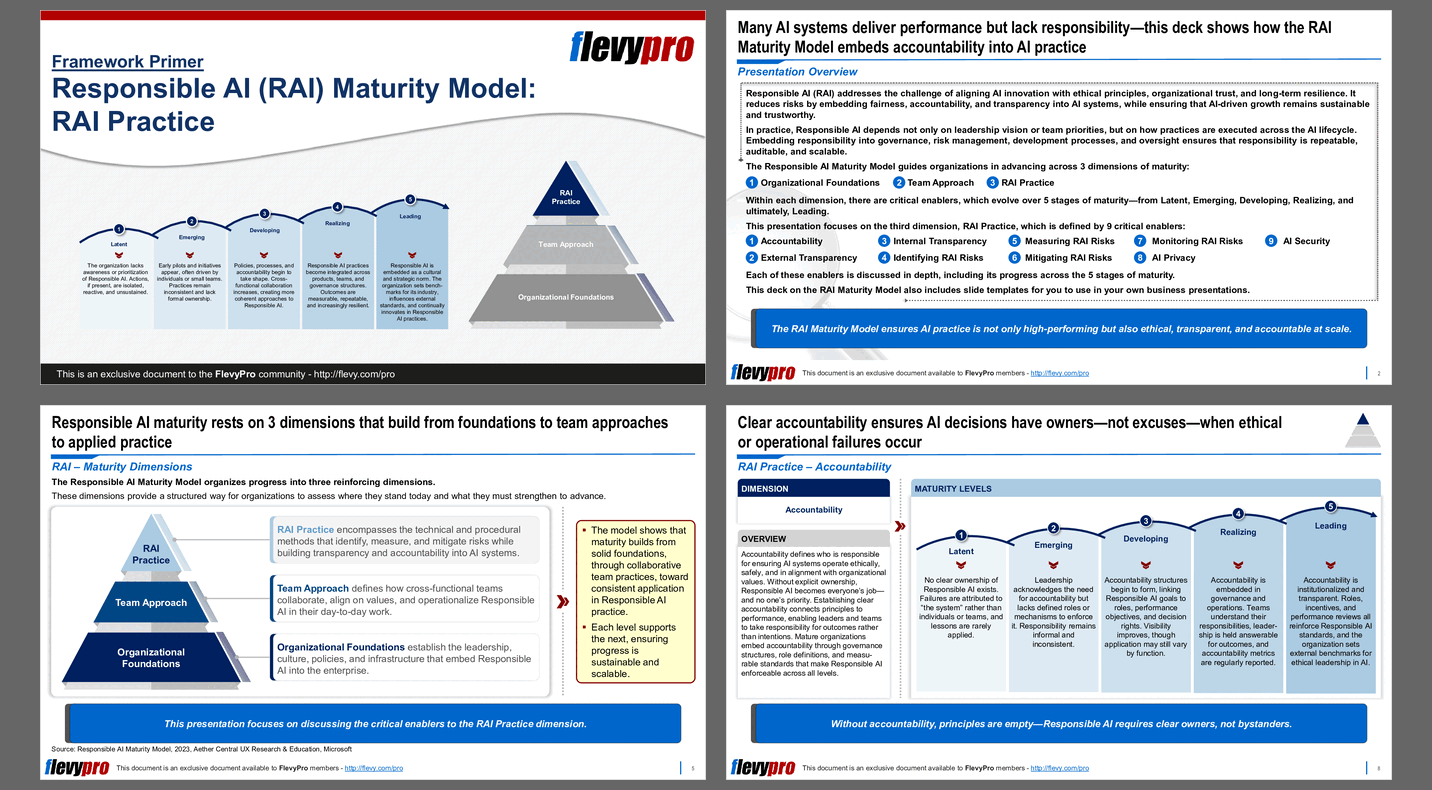
This framework is developed by a team of former McKinsey and Big 4 consultants. The presentation follows the headline-body-bumper slide format used by global consulting firms.
This product (Responsible AI [RAI] Maturity Model: RAI Practice) is a 30-slide PPT PowerPoint presentation slide deck (PPTX), which you can download immediately upon purchase.
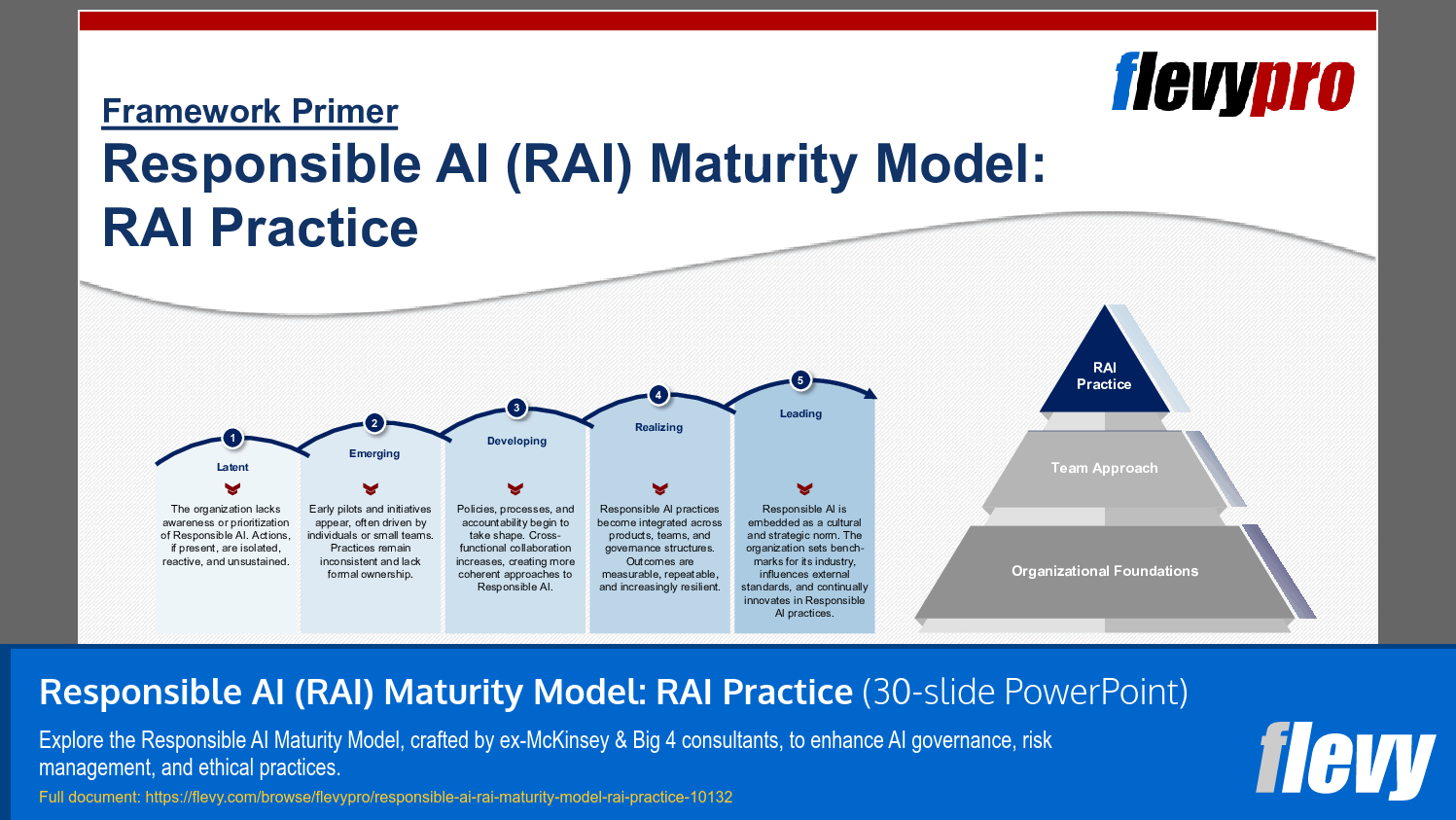
Responsible AI (RAI) addresses the challenge of aligning AI innovation with ethical principles, organizational trust, and long-term resilience. It reduces risks by embedding fairness, accountability, and transparency into AI systems, while ensuring that AI-driven growth remains sustainable and trustworthy.
In practice, Responsible AI depends not only on leadership vision or team priorities, but on how practices are executed across the AI lifecycle. Embedding responsibility into governance, risk management, development processes, and oversight ensures that responsibility is repeatable, auditable, and scalable.
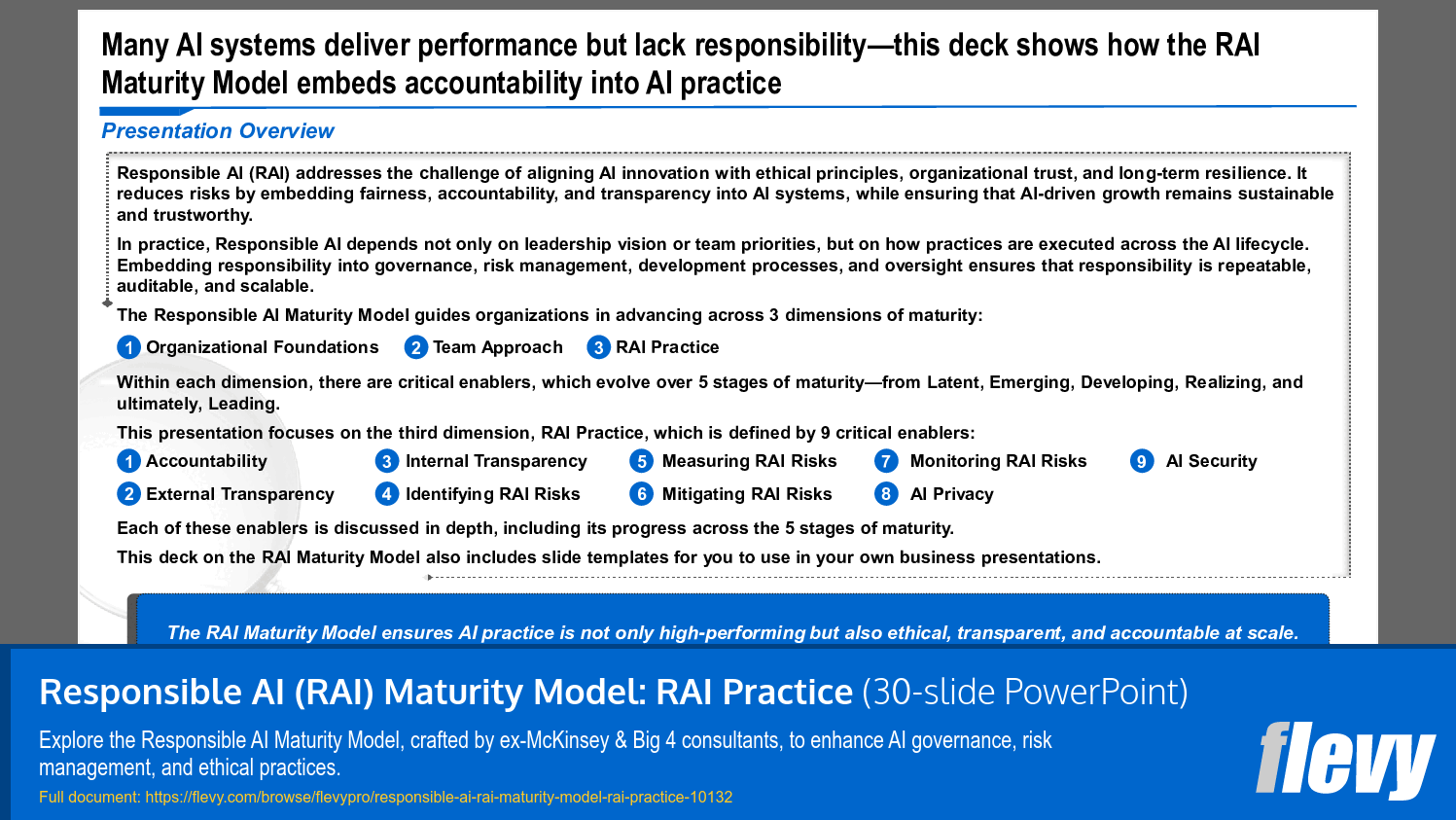
The Responsible AI Maturity Model guides organizations in advancing across 3 dimensions of maturity:
1. Organizational Foundations
2. Team Approach
3. RAI Practice
Within each dimension, there are critical enablers, which evolve over 5 stages of maturity—from Latent, Emerging, Developing, Realizing, and ultimately, Leading.
This presentation focuses on the third dimension, RAI Practice, which is defined by 9 critical enablers:
1. Accountability
2. External Transparency
3. Internal Transparency
4. Identifying RAI Risks
5. Measuring RAI Risks
6. Mitigating RAI Risks
7. Monitoring RAI Risks
8. AI Privacy
9. AI Security
Each of these enablers is discussed in depth, including its progress across the 5 stages of maturity.
This deck on the RAI Maturity Model also includes slide templates for you to use in your own business presentations.
Source: Best Practices in Maturity Model, Artificial Intelligence PowerPoint Slides: Responsible AI (RAI) Maturity Model: RAI Practice PowerPoint (PPTX) Presentation Slide Deck, LearnPPT Consulting
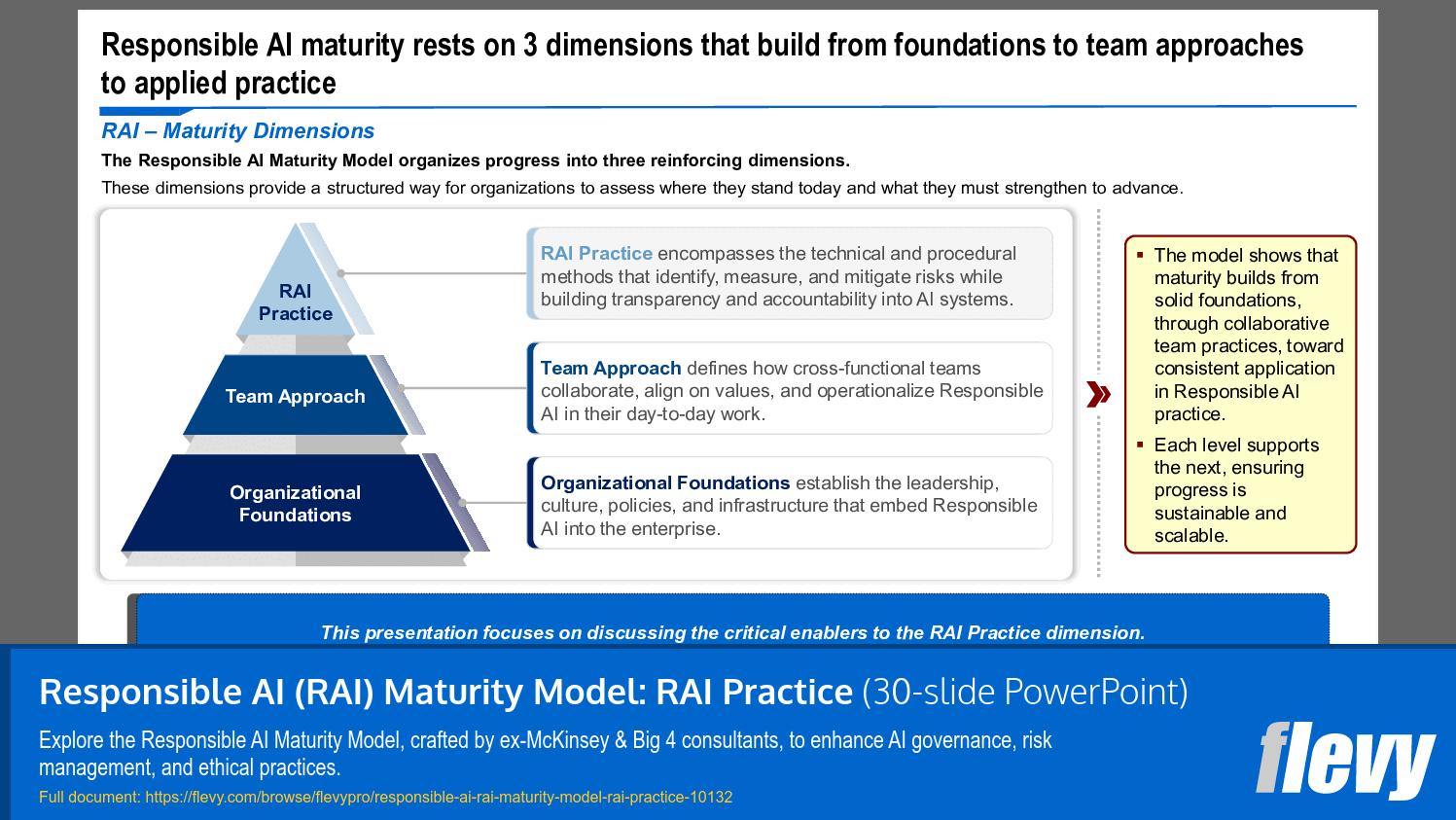
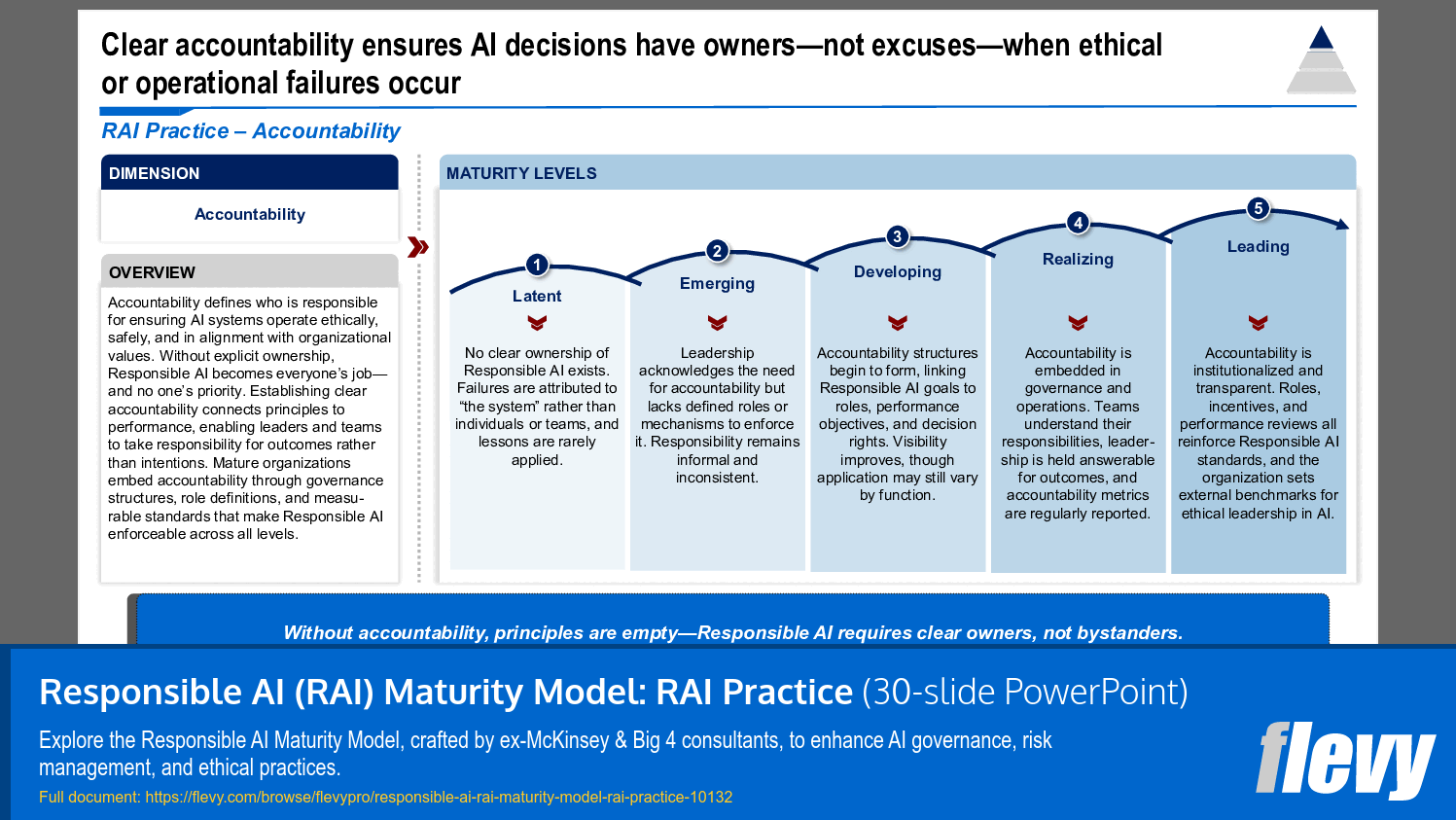
This PPT slide emphasizes the importance of clear accountability in AI decision-making processes. It presents a maturity model with 5 levels, from latent to leading, illustrating how organizations evolve in their responsibility frameworks. The key message is that responsibility must be explicitly assigned, not left to chance or vague notions, especially when ethical or operational failures occur.
The overview explains that accountability involves defining who is responsible for AI systems, ensuring these systems operate ethically and align with organizational values. Without clear ownership, AI becomes a shared responsibility that can lead to inconsistent practices and unclear consequences. The model shows progression from no clear ownership at the latent level to full transparency and institutionalized responsibility at the leading stage. Each level describes the maturity of accountability structures, from informal leadership acknowledgment to formalized, organization-wide standards.
The visual component of the slide highlights that organizations must move beyond ad hoc responsibility to embed accountability into governance, roles, and performance metrics. The narrative stresses that responsibility is a core element of trustworthy AI, and organizations need to establish explicit roles, incentives, and benchmarks. The slide ultimately advocates for a structured approach to accountability, linking it directly to ethical AI practices and organizational integrity. This is crucial for managing risks and maintaining stakeholder trust as AI systems become more integral to business operations.
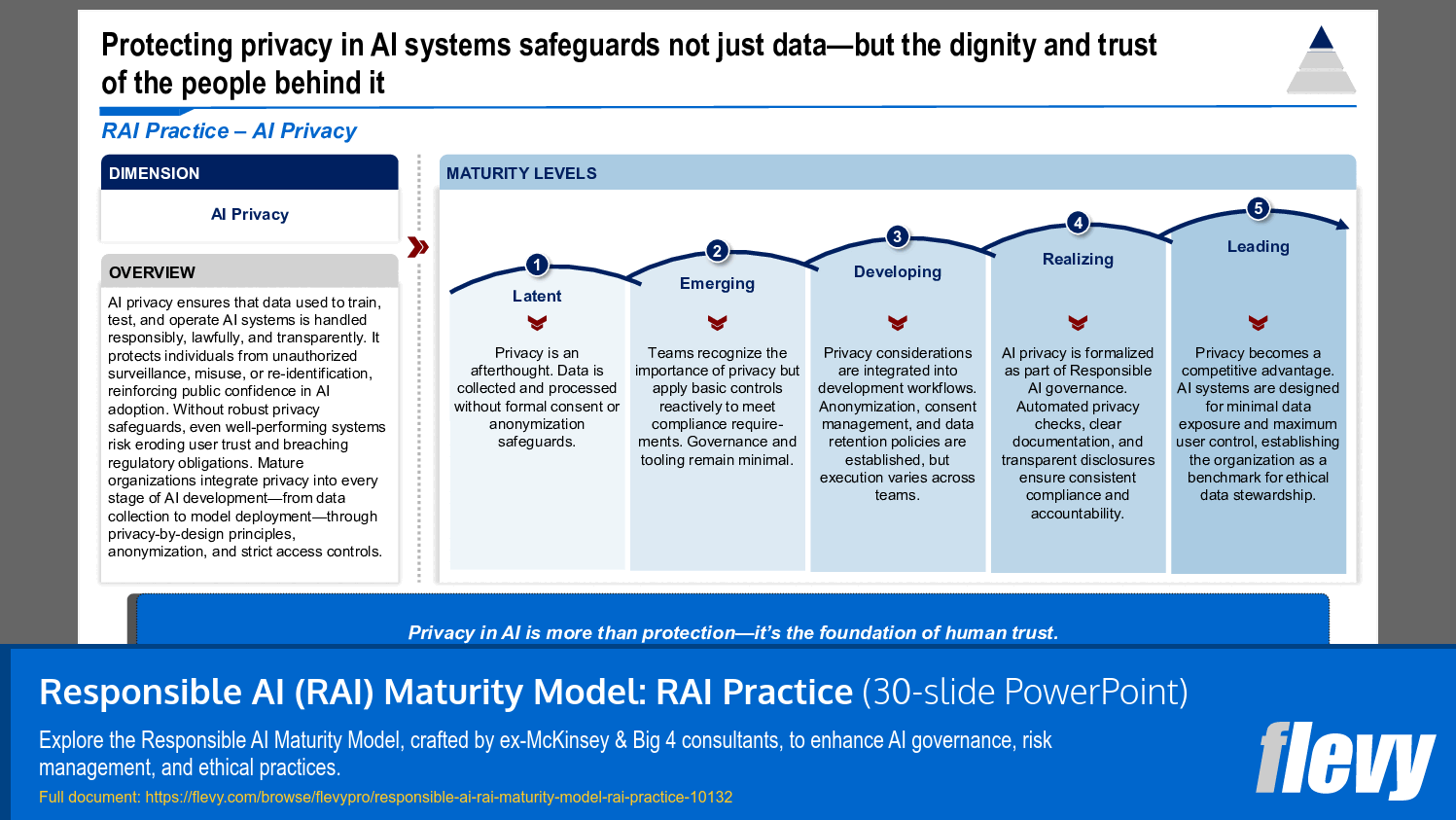
This PPT slide presents a framework for understanding how AI systems can safeguard privacy while maintaining the dignity and trust of the individuals involved. It emphasizes that protecting privacy in AI extends beyond data security, focusing on ethical considerations and trustworthiness. The overview explains that responsible AI privacy practices ensure data used for training, testing, and operation is handled lawfully and transparently, which is crucial for public confidence. Without robust safeguards, AI systems risk eroding trust and breaching regulatory standards. The content underscores that organizations should embed privacy into every stage of AI development, from data collection to deployment, through principles like privacy-by-design, anonymization, and strict access controls.
The framework is structured around 5 maturity levels, from latent to leading. The initial level, latent, involves basic data collection without formal consent or anonymization. As organizations progress to emerging and developing stages, they recognize privacy's importance and incorporate basic controls, such as anonymization, into workflows. Realizing and leading levels demonstrate more sophisticated practices, including formalized privacy as part of responsible AI governance, transparent disclosures, and establishing ethical benchmarks. The slide indicates that mature AI systems treat privacy as a competitive advantage, designed to minimize data exposure and maximize user control, thus reinforcing organizational trustworthiness.
Overall, the slide offers a clear progression model for organizations aiming to elevate their AI privacy practices. It stresses that privacy is integral to responsible AI, not just a compliance requirement. The emphasis on trust and dignity highlights that safeguarding human interests is fundamental to sustainable AI deployment. For decision-makers, this model provides a roadmap for assessing current maturity and guiding investments in privacy-enhancing measures that align with ethical standards and stakeholder expectations.
This framework is developed by a team of former McKinsey and Big 4 consultants. The presentation follows the headline-body-bumper slide format used by global consulting firms.
For $10.00 more, you can download this document plus 2 more FlevyPro documents. That's just $13 each.
ABOUT FLEVYPRO
This document is part of the FlevyPro Library, a curated knowledge base of documents for our FlevyPro subscribers.

FlevyPro is a subscription service for on-demand business frameworks and analysis tools. FlevyPro subscribers receive access to an exclusive library of curated business documents—business framework primers, presentation templates, Lean Six Sigma tools, and more—among other exclusive benefits.
The average daily rate of a McKinsey consultant is $6,625 (not including expenses). The average price of a Flevy document is $65.
Trusted by over 10,000+ Client Organizations
Since 2012, we have provided best practices to over 10,000 businesses and organizations of all sizes, from startups and small businesses to the Fortune 100, in over 130 countries.
Read Customer Testimonials
"Last Sunday morning, I was diligently working on an important presentation for a client and found myself in need of additional content and suitable templates for various types of graphics. Flevy.com proved to be a treasure trove for both content and design at a reasonable price, considering the time I
saved. I encountered a download issue during the ordering process. However, a quick email to Flevy's support team, even on a Sunday (!!!), resulted in assistance within less than an hour, allowing me to download the content I needed. Fantastic job, Flevy! I give 5 stars for both content/price and customer service. Thank you!
"
– M. E., Chief Commercial Officer, International Logistics Service Provider
"FlevyPro has been a brilliant resource for me, as an independent growth consultant, to access a vast knowledge bank of presentations to support my work with clients. In terms of RoI, the value I received from the very first presentation I downloaded paid for my subscription many times over! The
quality of the decks available allows me to punch way above my weight – it's like having the resources of a Big 4 consultancy at your fingertips at a microscopic fraction of the overhead.
"
– Roderick Cameron, Founding Partner at SGFE Ltd
"As a consulting firm, we had been creating subject matter training materials for our people and found the excellent materials on Flevy, which saved us 100's of hours of re-creating what already exists on the Flevy materials we purchased."
– Michael Evans, Managing Director at Newport LLC
"One of the great discoveries that I have made for my business is the Flevy library of training materials.
As a Lean Transformation Expert, I am always making presentations to clients on a variety of topics: Training, Transformation, Total Productive Maintenance, Culture, Coaching, Tools, Leadership Behavior, etc. Flevy
It is well worth the money to purchase these presentations. Sure, I have the knowledge and information to make my point. It is another thing to create a presentation that captures what I want to say. Flevy has saved me countless hours of preparation time that is much better spent with implementation that will actually save money for my clients.
"
– Ed Kemmerling, Senior Lean Transformation Expert at PMG
"I have found Flevy to be an amazing resource and library of useful presentations for lean sigma, change management and so many other topics. This has reduced the time I need to spend on preparing for my performance consultation. The library is easily accessible and updates are regularly provided. A wealth of great information."
– Cynthia Howard RN, PhD, Executive Coach at Ei Leadership
"As a niche strategic consulting firm, Flevy and FlevyPro frameworks and documents are an on-going reference to help us structure our findings and recommendations to our clients as well as improve their clarity, strength, and visual power. For us, it is an invaluable resource to increase our impact and value."
– David Coloma, Consulting Area Manager at Cynertia Consulting
"The wide selection of frameworks is very useful to me as an independent consultant. In fact, it rivals what I had at my disposal at Big 4 Consulting firms in terms of efficacy and organization."
– Julia T., Consulting Firm Owner (Former Manager at Deloitte and Capgemini)
"I am extremely grateful for the proactiveness and eagerness to help and I would gladly recommend the Flevy team if you are looking for data and toolkits to help you work through business solutions."
Download our FREE Digital Transformation Templates
Download our free compilation of 50+ Digital Transformation slides and templates. DX concepts covered include Digital Leadership, Digital Maturity, Digital Value Chain, Customer Experience, Customer Journey, RPA, etc.









