
This framework is developed by a team of former McKinsey and Big 4 consultants. The presentation follows the headline-body-bumper slide format used by global consulting firms.
Purchasing Chessboard PPT: Explore 64 proven methods to reduce costs and boost supplier value. Download this procurement framework to optimize your sourcing strategy. Purchasing Chessboard is a 24-slide PPT PowerPoint presentation slide deck (PPT) available for immediate download upon purchase.
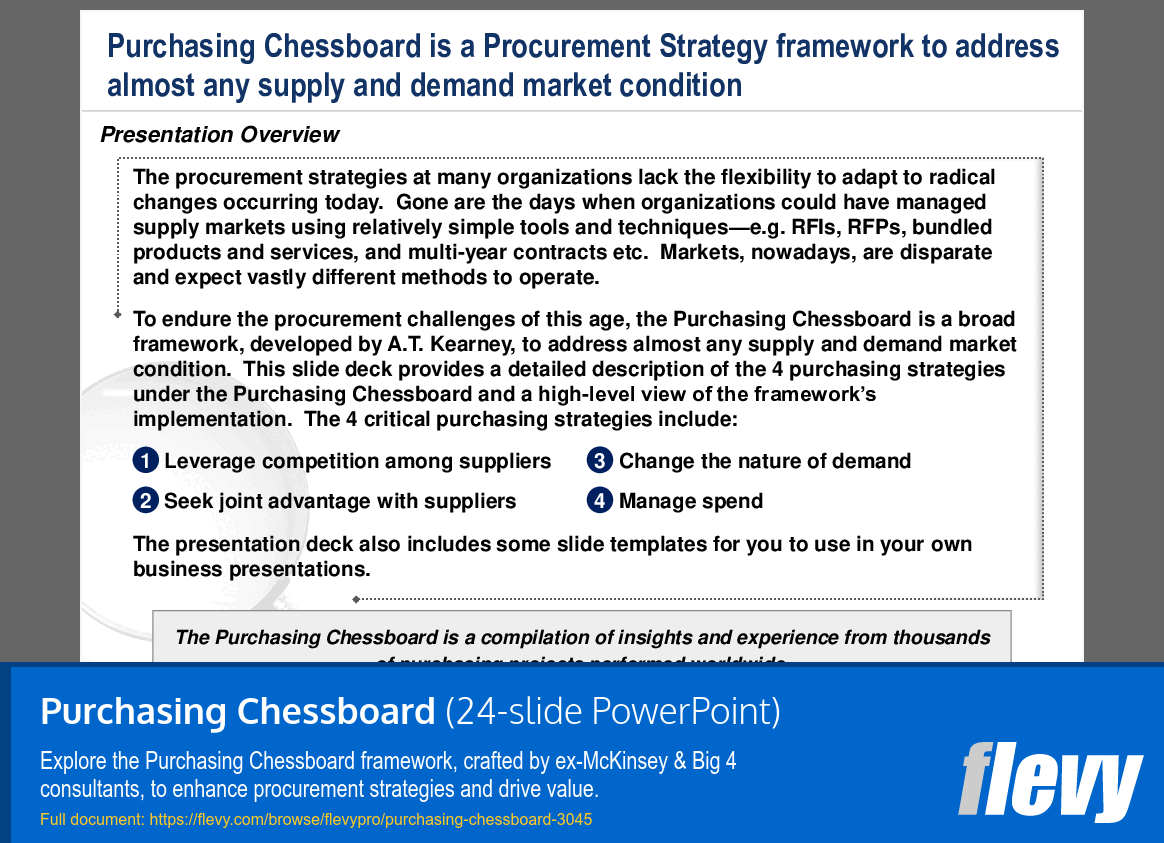
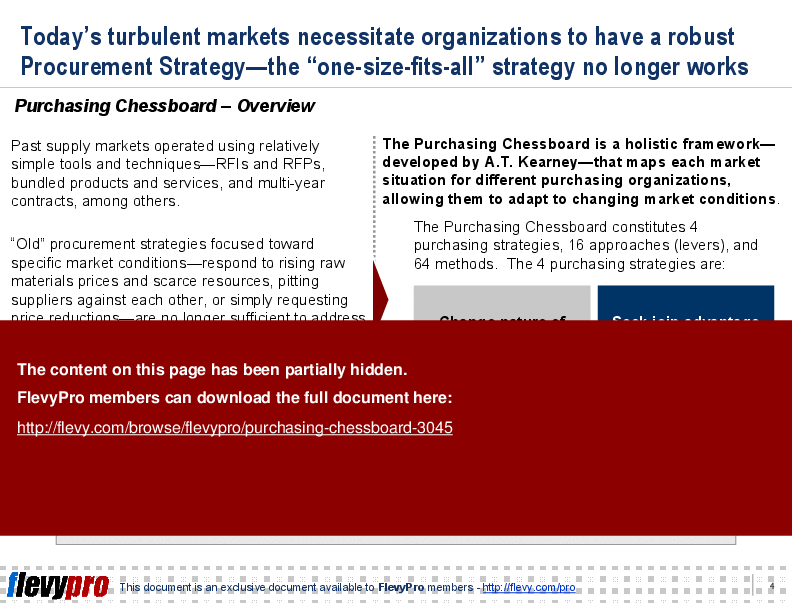
The procurement strategies at many organizations lack the flexibility to adapt to radical changes occurring today. Gone are the days when organizations could have managed supply markets using relatively simple tools and techniques—e.g. RFIs, RFPs, bundled products and services, and multi-year contracts etc. Markets, nowadays, are disparate and expect vastly different methods to operate.
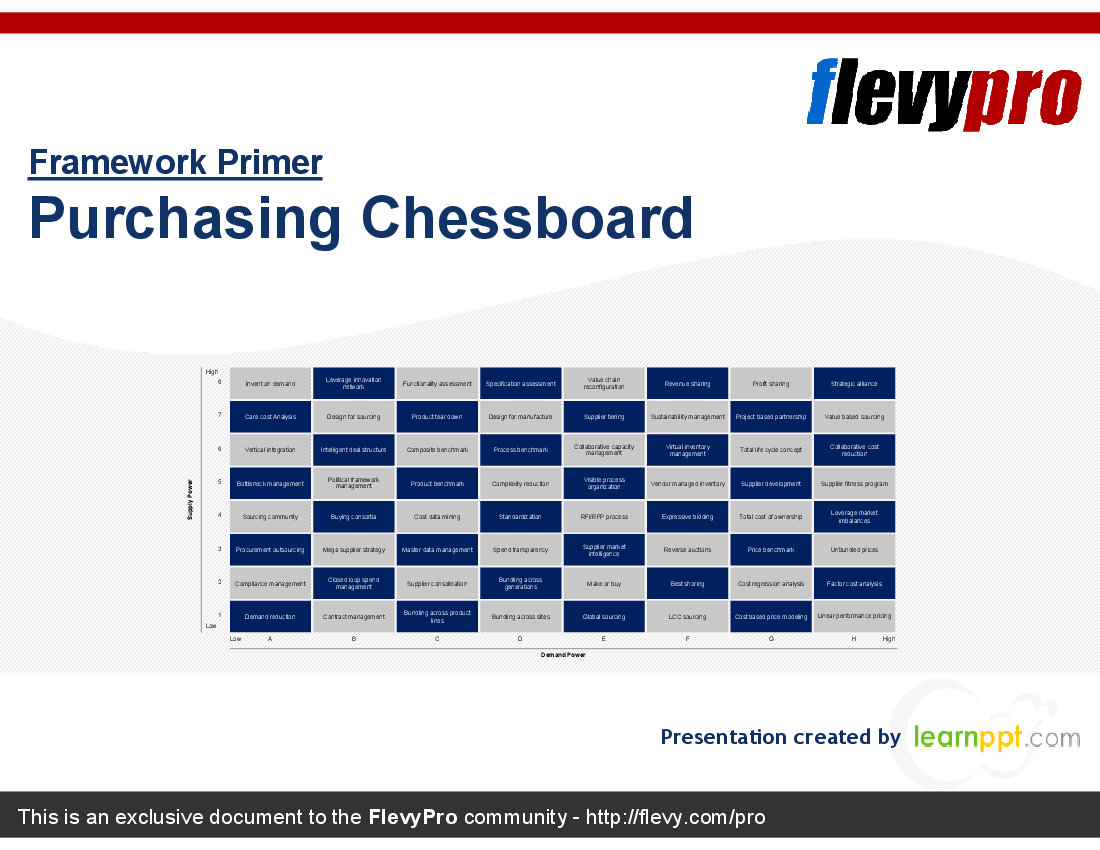
To endure the procurement challenges of this age, the Purchasing Chessboard is a broad framework, developed by A.T. Kearney, to address almost any supply and demand market condition. The Purchasing Chessboard is a compilation of insights and experience from thousands of purchasing projects performed worldwide.
This slide deck provides a detailed description of the 4 purchasing strategies under the Purchasing Chessboard and a high-level view of the frameworkâs implementation. The 4 critical purchasing strategies include:
1. Leverage competition among suppliers
2. Seek joint advantage with suppliers
3. Change the nature of demand
4. Manage spend
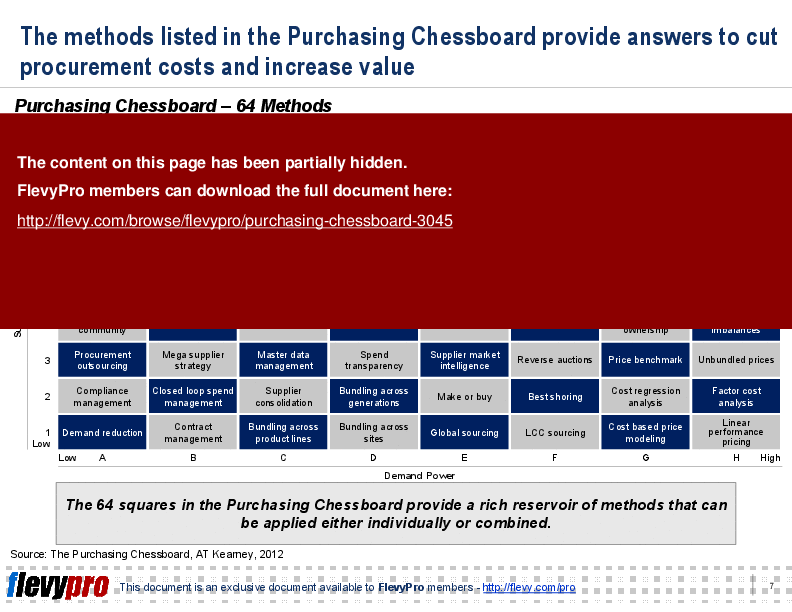
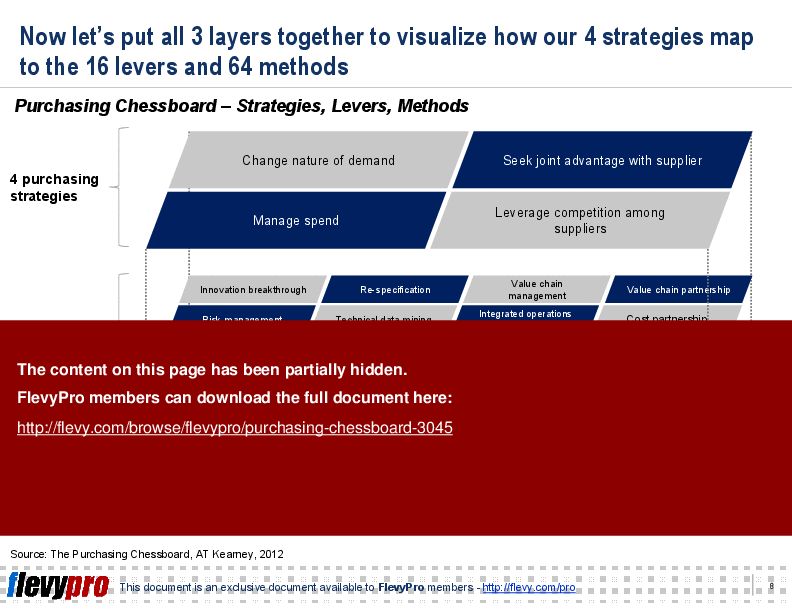
Within the Purchasing Chessboard framework, we further break down the 4 purchasing strategies into 16 levers and further into 64 methods. All the 64 standalone methods in the Purchasing Chessboard present a unique differentiating tactic to work with suppliers to reduce costs and increase value. Each method maps to a specific lever, which maps to a specific strategy.
The presentation deck also includes some slide templates for you to use in your own business presentations.
This comprehensive presentation also delves into the practical implementation of the Purchasing Chessboard, offering a 5-step approach to effectively categorize and apply strategies. It emphasizes the importance of cross-functional team involvement and continuous strategy adjustment to align with market dynamics. The PPT includes detailed templates to facilitate your own procurement strategy development and execution, ensuring you have the tools needed to drive cost reduction and value creation in your supply chain operations.
This PPT slide outlines a five-step implementation process for the Purchasing Chessboard, a strategic tool for enhancing purchasing effectiveness. The first step involves identifying and defining relevant purchasing categories, establishing focus areas. The second step applies tailored purchasing strategies to these categories, aligning actions with organizational goals. The third step reviews the competencies of the purchasing function, assessing current capabilities and identifying gaps for effective category management. The fourth step emphasizes involving cross-functional team members to leverage diverse expertise for informed decision-making. Finally, the process requires updating categories on the Purchasing Chessboard and adjusting strategies, ensuring relevance and effectiveness in a changing environment. This structured approach provides a roadmap for optimizing purchasing strategies.
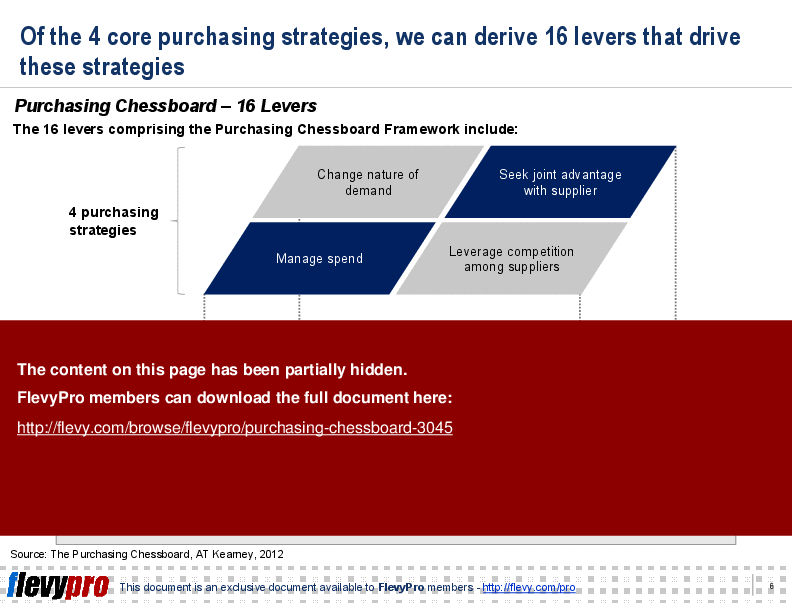
The Purchasing Chessboard framework enhances procurement strategies through 16 levers derived from 4 core strategies: "Change nature of demand," "Manage spend," "Seek joint advantage with supplier," and "Leverage competition among suppliers." Under "Manage spend," levers like "Innovation breakthrough," "Risk management," and "Demand management" optimize expenditure and resource allocation. "Seek joint advantage with supplier" focuses on collaboration, featuring levers such as "Value chain management" and "Cost partnership" to foster partnerships that improve efficiencies and cost savings. "Leverage competition among suppliers" drives down costs with levers like "Tendering" and "Supplier pricing review," emphasizing competitive bidding and regular pricing assessments. This structured approach aids procurement professionals in navigating complex purchasing decisions, highlighting strategic thinking and collaboration for operational efficiencies.
The Purchasing Chessboard framework integrates 3 layers: strategies, levers, and methods. The top layer outlines 4 primary purchasing strategies: changing demand, managing spend, seeking joint advantages with suppliers, and leveraging supplier competition. The second layer features 16 levers that operationalize these strategies, such as innovation breakthrough and risk management under managing spend. The third layer presents 64 methods for executing these levers, including cost analysis and compliance management for risk management, and volume bundling for demand management. This hierarchical structure illustrates the interconnection between strategies, levers, and methods, enabling procurement teams to refine strategies and enhance operational efficiency.
The "Purchasing Chessboard" framework addresses buyer-supplier dynamics when both parties possess equal market power, emphasizing that equal power alone does not guarantee sustainable cost or value benefits. The goal is to cultivate collaborative partnerships that enhance the value chain through joint management and integrated operations planning. Key procurement levers include Value Chain Management, Value Chain Partnership, Integrated Operations Planning, and Cost Partnership. Specific methods like Value Chain Reconfiguration, Supplier Tiering, Profit Sharing, and Strategic Alliance are highlighted to drive efficiency in supplier relationships. These frameworks facilitate alignment of operational strategies and cost structures, fostering synergy and innovation for cost optimization and shared benefits, ultimately leading to long-term strategic alliances.
This PPT slide presents a framework for Smart Spend Management within strategic procurement, particularly beneficial in low-demand, low-supply markets like maintenance, repair, and operations. It leverages 4 key procurement levers: Co-sourcing, Demand Management, Commercial Data Mining, and Volume Bundling. Co-sourcing enhances sourcing effectiveness through collaboration, while Demand Management controls demand via compliance and contract management. Commercial Data Mining extracts insights from procurement data, and Volume Bundling consolidates purchases for better pricing. The slide outlines 16 methods under these levers, including Compliance Management and Supplier Consolidation, emphasizing data-driven approaches like Cost Data Mining and Spend Transparency to optimize procurement strategies and reduce costs while increasing value.
The Purchasing Chessboard framework outlines 64 methods to enhance procurement strategies, categorized by their effectiveness in reducing costs and increasing value. The vertical axis represents supply power (low to high), while the horizontal axis indicates demand power (low to high). Methods like "Invent on demand" and "Leverage innovation network" are positioned at the high supply and demand power intersection, emphasizing proactive sourcing through innovation and supplier collaboration. In contrast, "Demand reduction" and "Contract management" focus on traditional, reactive strategies in lower grid sections. These methods can be applied individually or in combination, allowing organizations to tailor procurement strategies to specific market conditions and supplier relationships. The Purchasing Chessboard serves as a guide for optimizing procurement processes, enabling significant cost savings and enhanced supplier collaboration.
Source: Best Practices in Procurement, Strategic Sourcing, Sourcing Strategy PowerPoint Slides: Purchasing Chessboard PowerPoint (PPT) Presentation Slide Deck, LearnPPT Consulting
This framework is developed by a team of former McKinsey and Big 4 consultants. The presentation follows the headline-body-bumper slide format used by global consulting firms.
For $10.00 more, you can download this document plus 2 more FlevyPro documents. That's just $13 each.
ABOUT FLEVYPRO
This document is part of the FlevyPro Library, a curated knowledge base of documents for our FlevyPro subscribers.

FlevyPro is a subscription service for on-demand business frameworks and analysis tools. FlevyPro subscribers receive access to an exclusive library of curated business documents—business framework primers, presentation templates, Lean Six Sigma tools, and more—among other exclusive benefits.
The average daily rate of a McKinsey consultant is $6,625 (not including expenses). The average price of a Flevy document is $65.
Trusted by over 10,000+ Client Organizations
Since 2012, we have provided business templates to over 10,000 businesses and organizations of all sizes, from startups and small businesses to the Fortune 100, in over 130 countries.
"I like your product. I'm frequently designing PowerPoint presentations for my company and your product has given me so many great ideas on the use of charts, layouts, tools, and frameworks. I really think the templates are a valuable asset to the job."
– Roberto Fuentes Martinez, Senior Executive Director at Technology Transformation Advisory
"FlevyPro provides business frameworks from many of the global giants in management consulting that allow you to provide best in class solutions for your clients."
– David Harris, Managing Director at Futures Strategy
"As a young consulting firm, requests for input from clients vary and it's sometimes impossible to provide expert solutions across a broad spectrum of requirements. That was before I discovered Flevy.com.
Through subscription to this invaluable site of a plethora of topics that are key and crucial to consulting, I
have been able to exceed expectations and deliver quality advice and solutions to my clients. The quality and expertise of the authors are exemplary and gives me great confidence to use as part of my service offerings.
I highly recommend this company for any consultant wanting to apply international best practice standards in their service offerings.
"
– Nishi Singh, Strategist and MD at NSP Consultants
"As a consulting firm, we had been creating subject matter training materials for our people and found the excellent materials on Flevy, which saved us 100's of hours of re-creating what already exists on the Flevy materials we purchased."
– Michael Evans, Managing Director at Newport LLC
"If you are looking for great resources to save time with your business presentations, Flevy is truly a value-added resource. Flevy has done all the work for you and we will continue to utilize Flevy as a source to extract up-to-date information and data for our virtual and onsite presentations!"
– Debbi Saffo, President at The NiKhar Group
"Flevy.com has proven to be an invaluable resource library to our Independent Management Consultancy, supporting and enabling us to better serve our enterprise clients.
The value derived from our [FlevyPro] subscription in terms of the business it has helped to gain far exceeds the investment made, making a subscription a no-brainer for any growing consultancy – or in-house strategy team."
– Dean Carlton, Chief Transformation Officer, Global Village Transformations Pty Ltd.
"Flevy is our 'go to' resource for management material, at an affordable cost. The Flevy library is comprehensive and the content deep, and typically provides a great foundation for us to further develop and tailor our own service offer."
– Chris McCann, Founder at Resilient.World
"FlevyPro has been a brilliant resource for me, as an independent growth consultant, to access a vast knowledge bank of presentations to support my work with clients. In terms of RoI, the value I received from the very first presentation I downloaded paid for my subscription many times over! The
quality of the decks available allows me to punch way above my weight â it's like having the resources of a Big 4 consultancy at your fingertips at a microscopic fraction of the overhead.
Receive our FREE presentation on Operational Excellence
This 50-slide presentation provides a high-level introduction to the 4 Building Blocks of Operational Excellence. Achieving OpEx requires the implementation of a Business Execution System that integrates these 4 building blocks.