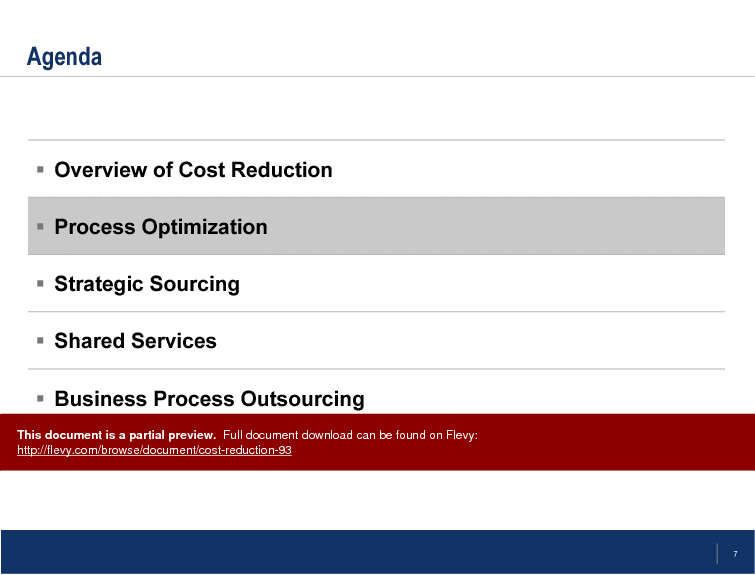

This document discusses various cost reduction methodologies and concepts, including the following: Process Optimization, Strategic Sourcing, Shared Services, Business Process Outsourcing.
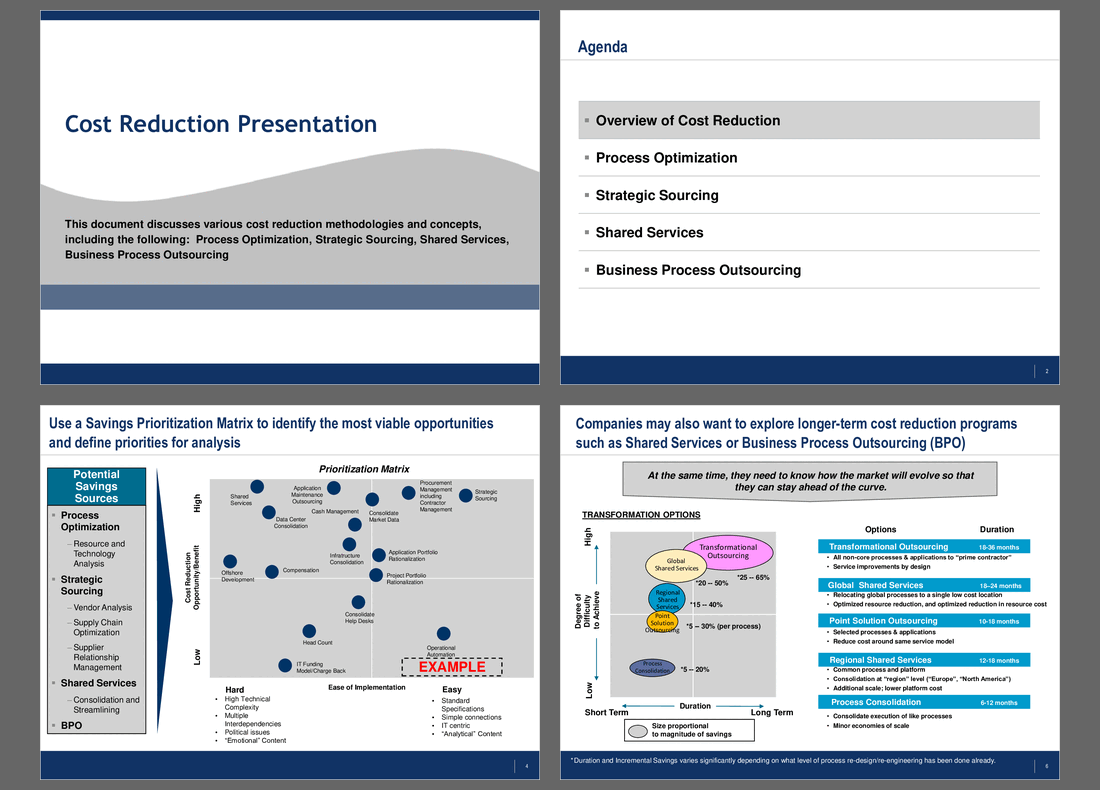
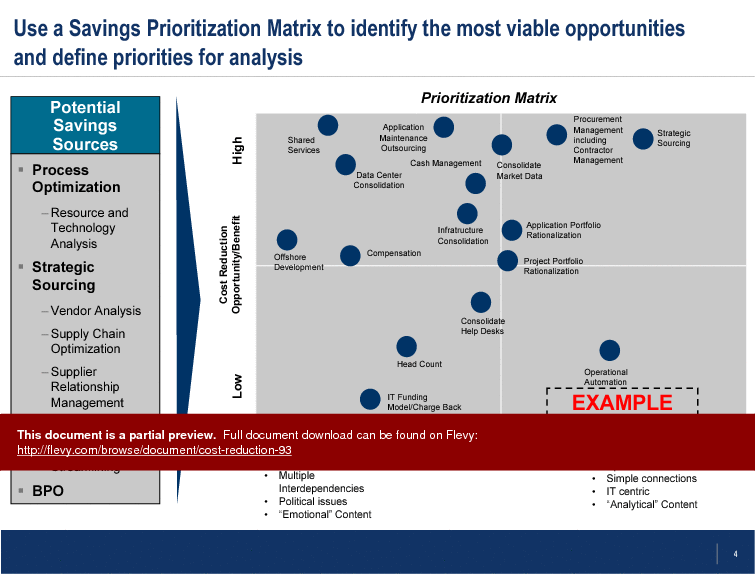
This comprehensive guide delves into the intricacies of cost reduction, providing a robust framework for identifying and prioritizing savings opportunities. The Savings Prioritization Matrix is a key tool illustrated within, enabling executives to pinpoint high-impact areas such as Application Maintenance Outsourcing and Data Center Consolidation. This matrix helps in aligning cost reduction initiatives with strategic business goals, ensuring that efforts are both effective and sustainable.
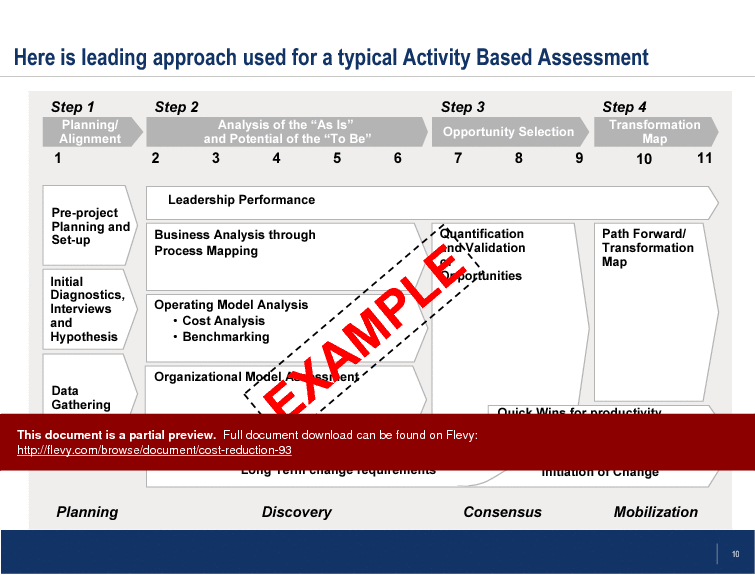
The document also outlines a meticulous Activity Based Assessment approach, breaking down the process into four critical steps: Planning/Alignment, Analysis of the "As Is" and "To Be" states, Opportunity Selection, and Transformation Mapping. Each step is designed to provide a clear pathway from initial diagnostics to actionable transformation plans. This structured methodology ensures that all potential savings are thoroughly evaluated and validated before implementation, minimizing risks and maximizing returns.
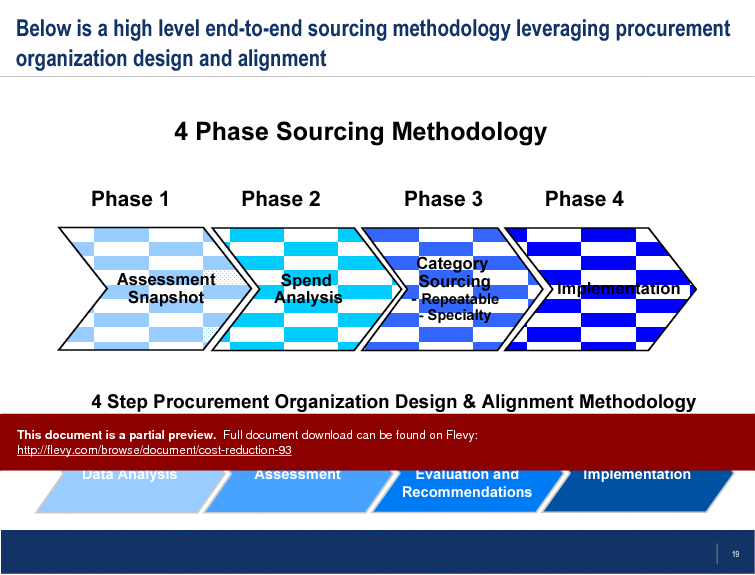
In addition, the guide covers an end-to-end sourcing methodology, segmented into four phases: Assessment Snapshot, Spend Analysis, Category Sourcing, and Implementation. This phased approach ensures a comprehensive evaluation of procurement practices, aligning them with organizational goals. By leveraging this methodology, companies can achieve significant cost reductions while maintaining or even enhancing service quality. This document is an essential resource for any executive looking to drive cost efficiency and operational excellence.
Got a question about the product? Email us at support@flevy.com or ask the author directly by using the "Ask the Author a Question" form. If you cannot view the preview above this document description, go here to view the large preview instead.
Executive Summary
This Cost Reduction Methodologies presentation provides a comprehensive exploration of various strategies aimed at optimizing costs within organizations. Developed by an ex-McKinsey and EY consultant, this actionable PowerPoint deck covers essential methodologies such as Process Optimization, Strategic Sourcing, Shared Services, and Business Process Outsourcing (BPO). Executives and consultants will gain insights into how to effectively implement these strategies to achieve significant cost savings and improve operational efficiency. By leveraging these methodologies, organizations can navigate economic challenges and enhance their bottom line.
Who This Is For and When to Use
• Corporate executives focused on cost management and operational efficiency
• Integration leaders responsible for implementing cost reduction strategies
• Consultants advising organizations on financial optimization
• Finance teams tasked with tracking and managing expenditures
Best-fit moments to use this deck:
• During strategic planning sessions aimed at cost reduction
• When evaluating vendor contracts and procurement strategies
• In workshops focused on process improvement and operational efficiency
• For training sessions on cost management methodologies
Learning Objectives
• Define key cost reduction methodologies and their applications
• Build a framework for assessing current cost structures
• Establish a prioritization matrix for identifying cost-saving opportunities
• Implement strategic sourcing techniques to optimize vendor relationships
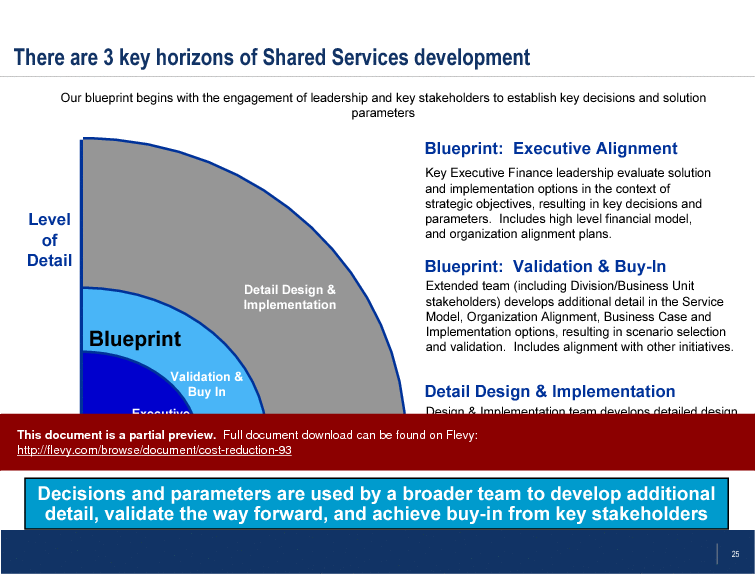
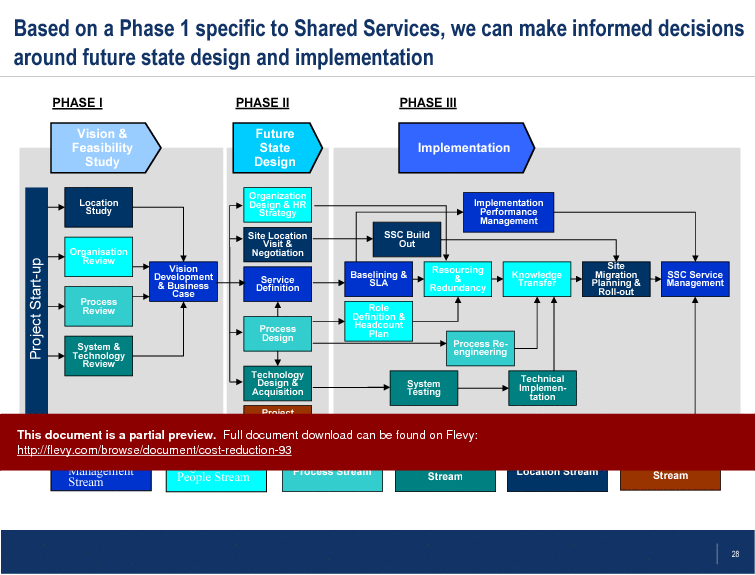
• Develop a roadmap for transitioning to shared services models
• Analyze the impact of BPO on operational efficiency and cost savings
Table of Contents
• Overview of Cost Reduction (page 1)
• Process Optimization (page 8)
• Strategic Sourcing (page 17)
• Shared Services (page 23)
• Business Process Outsourcing (page 30)
Primary Topics Covered
• Cost Reduction Drivers - Identifies external factors necessitating cost reduction, including market competition and rising production costs.
• Process Optimization - Focuses on measuring and improving the financial performance of activities and resources to enhance productivity.
• Strategic Sourcing - Discusses methodologies for vendor analysis and supply chain optimization to achieve cost savings.
• Shared Services - Explores the consolidation of services to reduce overhead and improve service levels across business units.
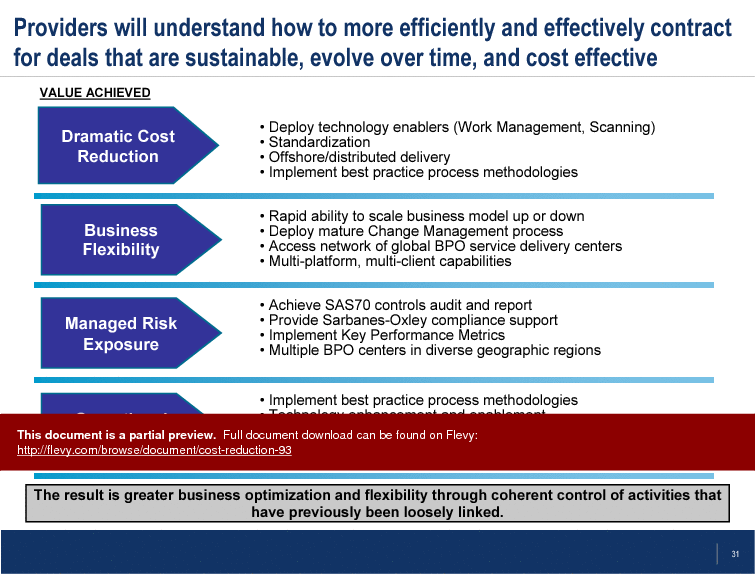
• Business Process Outsourcing - Examines the benefits of outsourcing non-core functions to specialized third-party providers for cost efficiency.
• Savings Prioritization Matrix - A tool for identifying and prioritizing viable cost reduction opportunities based on ease of implementation and potential savings.
Deliverables, Templates, and Tools
• Savings Prioritization Matrix template for assessing cost reduction opportunities
• Process Optimization assessment framework for evaluating current operations
• Strategic Sourcing framework for vendor analysis and relationship management
• Shared Services implementation roadmap for transitioning to a centralized service model
• BPO evaluation checklist for assessing outsourcing opportunities
• Transformation Roadmap template for planning and tracking cost reduction initiatives
Slide Highlights
• Overview of cost reduction strategies and their significance in today’s economic climate
• Detailed Savings Realization Matrix showcasing potential cost-saving strategies
• Visual representation of the Process Optimization framework and its components
• Key elements of a successful Strategic Sourcing program highlighted in a concise format
• Comparative analysis of Shared Services models and their organizational benefits
Potential Workshop Agenda
Cost Reduction Strategy Overview (60 minutes)
• Introduce key cost reduction methodologies
• Discuss external drivers for cost reduction
• Review case studies of successful implementations
Process Optimization Deep Dive (90 minutes)
• Analyze current processes and identify inefficiencies
• Develop a prioritization matrix for optimization initiatives
• Establish metrics for measuring success
Strategic Sourcing and Shared Services Workshop (120 minutes)
• Explore vendor analysis techniques and relationship management
• Discuss the benefits of consolidating services into Shared Services
• Create a roadmap for implementation and tracking progress
Customization Guidance
• Tailor the Savings Prioritization Matrix to reflect specific organizational needs and priorities
• Adjust the Process Optimization framework to align with existing operational structures
• Incorporate company-specific terminology and metrics into the Strategic Sourcing and Shared Services sections
• Modify the BPO evaluation checklist to fit the unique requirements of your organization
Secondary Topics Covered
• The role of technology in enabling cost reduction strategies
• Risk management considerations in outsourcing and shared services
• Change management strategies for successful implementation of cost reduction initiatives
• Benchmarking against industry standards for continuous improvement
Topic FAQ
Document FAQ
These are questions addressed within this presentation.
What are the key drivers for implementing cost reduction strategies?
External drivers include increased market competition, rising production costs, and pressure from investors to meet financial targets.
How can organizations prioritize cost reduction opportunities?
Using a Savings Prioritization Matrix helps organizations assess potential savings against ease of implementation, allowing for informed decision-making.
What is the significance of Process Optimization in cost reduction?
Process Optimization focuses on improving the efficiency and effectiveness of operations, leading to reduced overhead and increased productivity.
How does Strategic Sourcing contribute to cost savings?
Strategic Sourcing enables organizations to analyze vendor relationships and optimize procurement processes, resulting in lower costs and improved service levels.
What are the benefits of transitioning to Shared Services?
Shared Services can reduce duplication of efforts, lower overhead costs, and enhance service delivery across business units.
What role does Business Process Outsourcing play in cost reduction?
BPO allows organizations to leverage specialized expertise and technology from third-party providers, leading to significant cost efficiencies.
How can organizations measure the success of cost reduction initiatives?
Establishing clear metrics and KPIs during the planning phase allows organizations to track progress and assess the impact of implemented strategies.
What are common challenges faced during the implementation of cost reduction strategies?
Challenges include resistance to change, lack of stakeholder buy-in, and difficulties in aligning processes across different business units.
Glossary
• Cost Reduction - Strategies aimed at lowering expenses while maintaining or improving quality.
• Process Optimization - The practice of improving processes to enhance efficiency and reduce costs.
• Strategic Sourcing - A procurement process that seeks to optimize supplier relationships and reduce costs.
• Shared Services - A model for consolidating business functions to improve efficiency and reduce costs.
• Business Process Outsourcing (BPO) - The practice of contracting third-party service providers to handle non-core business functions.
• Savings Prioritization Matrix - A tool for assessing and prioritizing cost-saving opportunities based on potential impact and feasibility.
• Transformation Roadmap - A strategic plan outlining the steps and milestones for implementing cost reduction initiatives.
• Key Performance Indicators (KPIs) - Metrics used to evaluate the success of an organization in achieving its objectives.
• Vendor Analysis - The process of assessing and evaluating suppliers to optimize procurement strategies.
• Change Management - The approach to transitioning individuals, teams, and organizations to a desired future state.
• Risk Management - The identification, assessment, and prioritization of risks followed by coordinated efforts to minimize, monitor, and control the impact of unfortunate events.
• Benchmarking - The practice of comparing business processes and performance metrics to industry bests or best practices from other companies.
• Economies of Scale - Cost advantages that a business obtains due to the scale of operation, with cost per unit of output generally decreasing with increasing scale.
• Service Level Agreement (SLA) - A contract that defines the level of service expected from a service provider.
• Operational Efficiency - The ability to deliver products or services in the most cost-effective manner without compromising quality.
• Continuous Improvement - Ongoing efforts to improve products, services, or processes.
• Vendor Relationship Management - The process of managing and optimizing relationships with suppliers to enhance performance and reduce costs.
• Cost-Benefit Analysis - A systematic approach to estimating the strengths and weaknesses of alternatives used to determine options that provide the best approach to achieving benefits while preserving savings.
• Financial Provisioning - The process of setting aside funds for future expenses or obligations.
• Data Management - The practice of collecting, keeping, and using data securely, efficiently, and cost-effectively.
Source: Best Practices in Cost Reduction Assessment, Procurement Strategy PowerPoint Slides: Cost Reduction Methodologies PowerPoint (PPT) Presentation Slide Deck, marcus
|
Receive our FREE presentation on Operational Excellence
This 50-slide presentation provides a high-level introduction to the 4 Building Blocks of Operational Excellence. Achieving OpEx requires the implementation of a Business Execution System that integrates these 4 building blocks. |