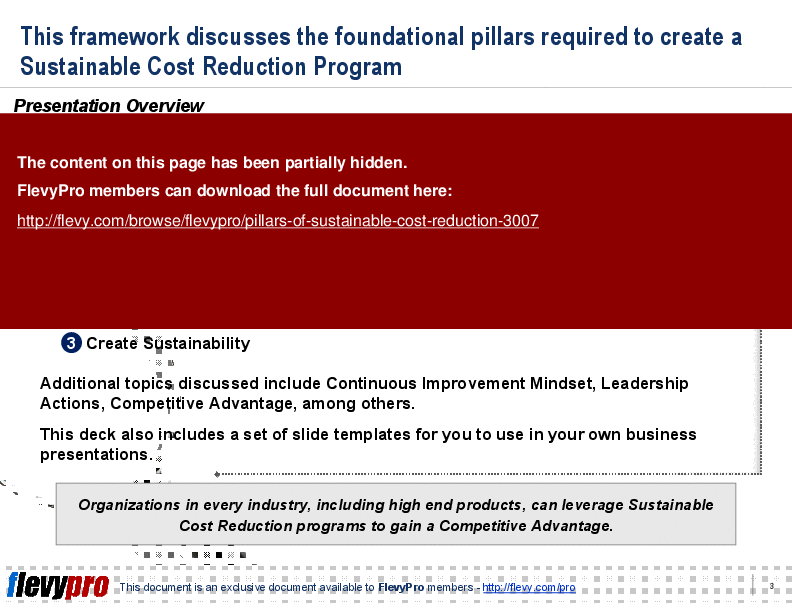
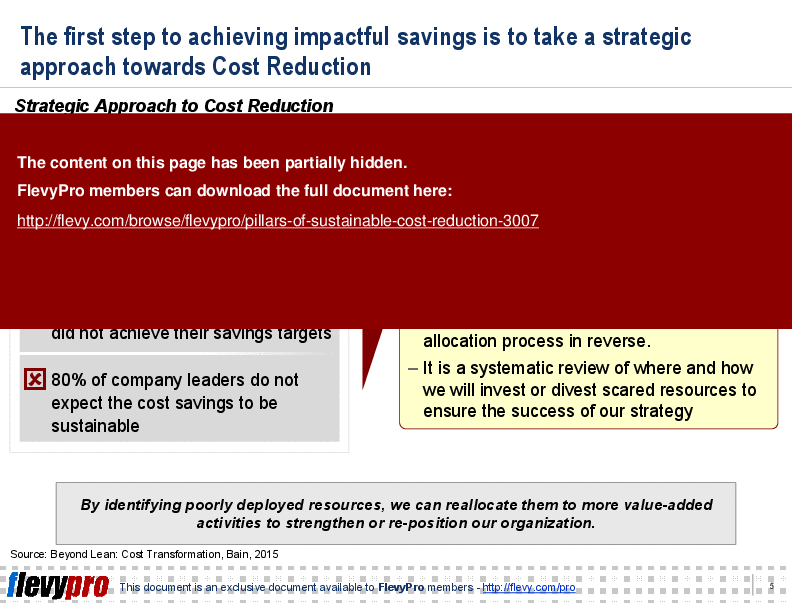

For most organizations, Cost Reduction efforts don't produce meaningful or lasting results. This is because they do not take a strategic approach to Cost Reduction. This framework first clarifies the meaning, rationale, and importance of the strategic approach to Cost Reduction.
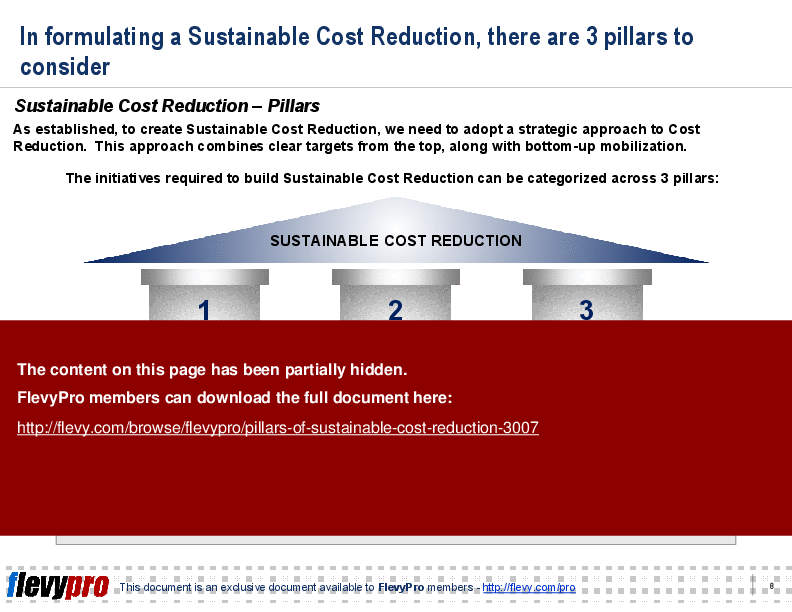
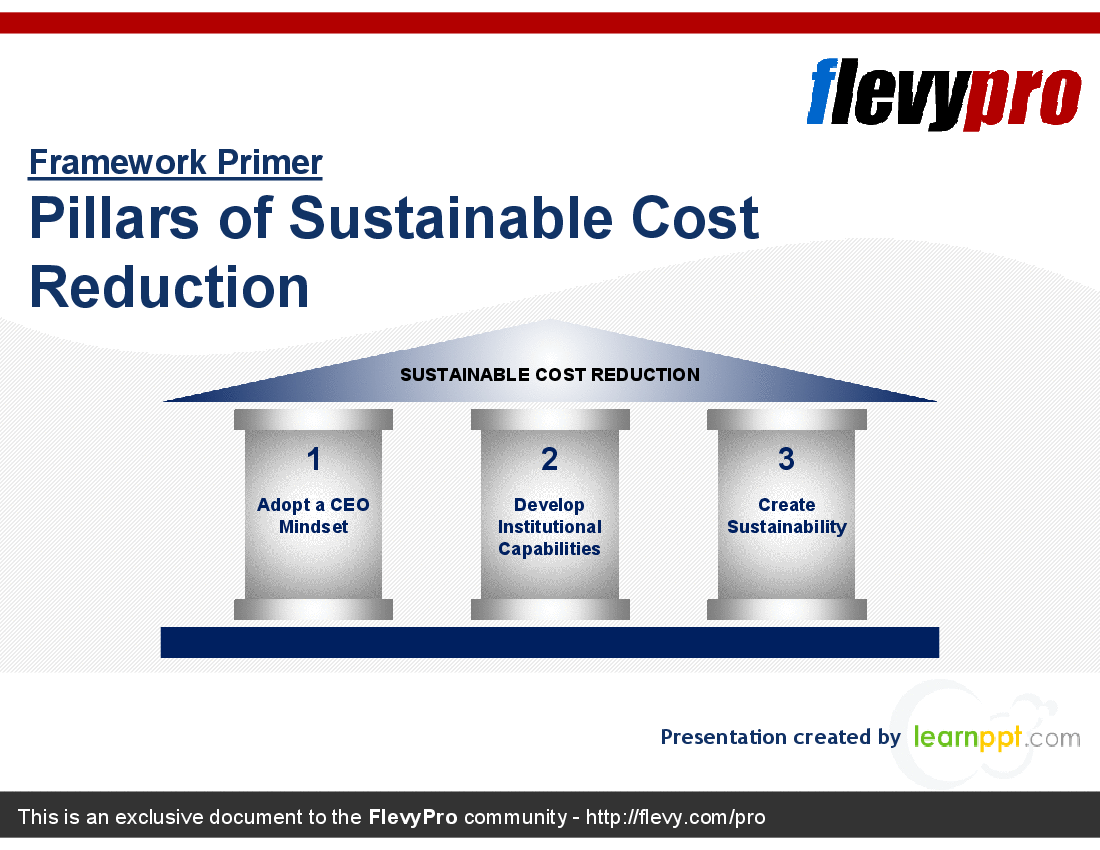
Then, we delve into the 3 pillars to developing a Sustainable Cost Reduction Program:
1. Adopt a CEO Mindset
2. Develop Institutional Capabilities
3. Create Sustainability
Organizations in every industry, including high end products, can leverage Sustainable Cost Reduction programs to gain a Competitive Advantage.
Additional topics discussed include Continuous Improvement Mindset, Leadership Actions, Competitive Advantage, among others.
This deck also includes a set of slide templates for you to use in your own business presentations.
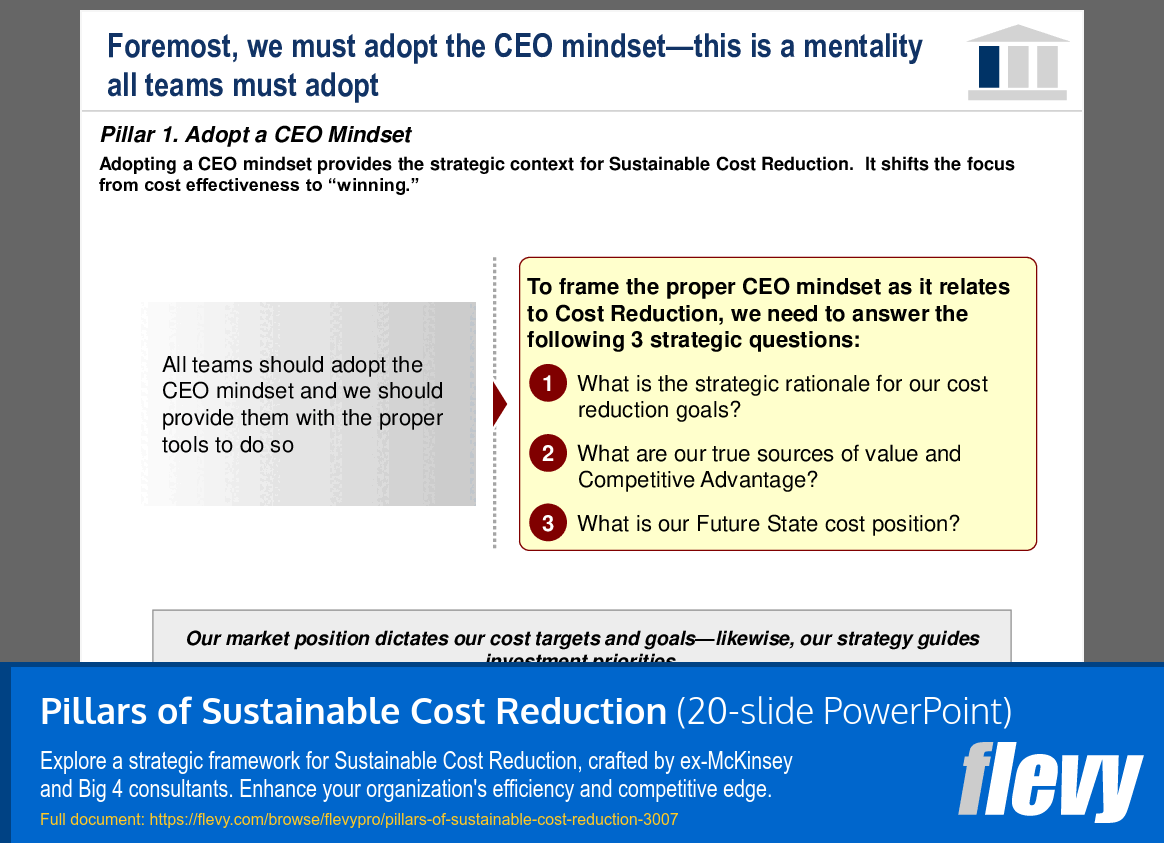
This comprehensive presentation outlines the critical steps necessary for achieving Sustainable Cost Reduction. It emphasizes the importance of adopting a CEO mindset, which involves viewing cost reduction as a strategic initiative rather than a mere operational task. This mindset shift is essential for aligning cost reduction with long-term business goals and ensuring that all team members are equipped with the necessary tools and perspectives.
The PPT also highlights the need to develop institutional capabilities, focusing on cross-functional teams, accountability, and a horizontal view of the organization. These capabilities are crucial for implementing an effective cost reduction program that is both sustainable and impactful. By fostering collaboration and ensuring clear decision rights, organizations can drive meaningful change and maintain cost efficiencies over time.
Creating sustainability is the final pillar, which involves adopting a Continuous Improvement mindset. This approach ensures that cost reduction efforts are not just one-time initiatives, but are ingrained in the organization's culture. By continuously identifying and eliminating inefficiencies, companies can maintain their competitive edge and achieve lasting financial benefits. The presentation includes practical templates and actionable insights, making it a valuable resource for any organization looking to implement a robust cost reduction strategy.
Got a question about this document? Email us at flevypro@flevy.com.
Executive Summary
The "Pillars of Sustainable Cost Reduction" presentation provides a strategic framework designed to help organizations implement effective and lasting cost reduction initiatives. Developed by experienced consultants, this framework emphasizes the importance of a strategic approach to cost reduction, moving beyond conventional methods that yield only short-term savings. By adopting a CEO mindset, developing institutional capabilities, and fostering a culture of sustainability, organizations can achieve significant and sustainable cost reductions that enhance their overall competitiveness.
Who This Is For and When to Use
• Corporate executives focused on strategic cost management
• Integration leaders overseeing operational efficiency
• Finance teams responsible for budgeting and cost tracking
• Change management professionals driving organizational transformation
• Consultants advising on cost reduction strategies
Best-fit moments to use this deck:
• During strategic planning sessions to align cost reduction goals with overall business strategy
• When launching new cost reduction initiatives to ensure a structured approach
• In workshops aimed at fostering a culture of continuous improvement within teams
• For training sessions on effective cost management practices
Learning Objectives
• Define the strategic rationale for cost reduction initiatives
• Build a comprehensive framework for sustainable cost reduction
• Establish institutional capabilities that support ongoing cost management
• Create a culture of continuous improvement across the organization
• Identify key performance indicators (KPIs) for tracking cost reduction success
• Develop actionable plans that integrate cost reduction into the budgeting process
Table of Contents
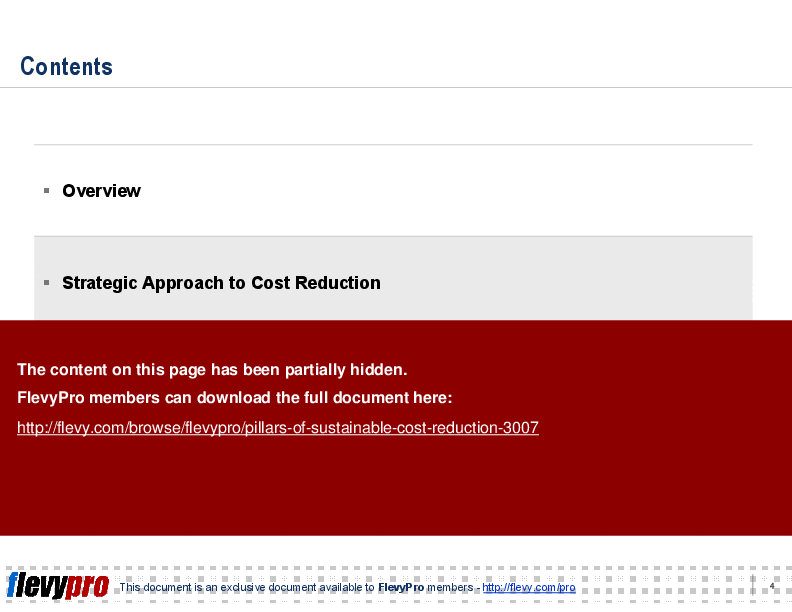
• Overview (page 3)
• Strategic Approach to Cost Reduction (page 5)
• Pillars of Sustainable Cost Reduction (page 8)
• Templates (page 15)
Primary Topics Covered
• Strategic Approach - Emphasizes the need for a systematic review of resource allocation to achieve sustainable cost reductions.
• CEO Mindset - Encourages all teams to adopt a mindset focused on strategic goals rather than mere cost-cutting.
• Institutional Capabilities - Identifies 3 essential capabilities: cross-functional teams, accountability, and a horizontal view of cost savings.
• Continuous Improvement - Stresses the importance of embedding a culture of continuous improvement within the organization.
• Leadership Actions - Outlines 4 key actions for leaders to foster a cost-containment mindset.
• Key Questions for Viability - Provides a checklist to evaluate the effectiveness of the cost reduction program.
Deliverables, Templates, and Tools
• Framework for Sustainable Cost Reduction
• CEO Mindset Assessment Template
• Institutional Capabilities Development Plan
• Continuous Improvement Culture Checklist
• Leadership Action Plan Template
• Cost Reduction Program Evaluation Tool
Slide Highlights
• Overview of the strategic approach to cost reduction, highlighting common pitfalls.
• Visual representation of the 3 pillars of sustainable cost reduction.
• Key questions for assessing the viability of cost reduction initiatives.
• Actionable steps for leadership to foster a culture of cost containment.
Potential Workshop Agenda
Introduction to Sustainable Cost Reduction (30 minutes)
• Overview of the framework and its importance
• Discussion on the strategic approach to cost reduction
Pillar Deep Dive (60 minutes)
• Exploration of the CEO mindset and its implications
• Development of institutional capabilities through cross-functional teams
Creating a Culture of Continuous Improvement (45 minutes)
• Identifying strategies to embed continuous improvement in daily operations
• Action planning for leadership to support cost containment
Customization Guidance
• Tailor the CEO mindset framework to align with your organization's strategic goals.
• Adapt the institutional capabilities section to reflect your current organizational structure.
• Modify the continuous improvement checklist to include specific methodologies relevant to your industry.
Secondary Topics Covered
• Competitive advantage through sustainable cost reduction
• Leadership roles in driving cost management initiatives
• The impact of organizational culture on cost reduction success
Topic FAQ
Document FAQ
These are questions addressed within this presentation.
What is the CEO mindset in the context of cost reduction?
The CEO mindset shifts the focus from mere cost-cutting to strategic value creation, aligning cost reduction efforts with overall business goals.
How can cross-functional teams enhance cost reduction efforts?
Cross-functional teams provide diverse perspectives and insights, enabling organizations to identify breakthrough ideas and drive more impactful cost savings.
What are the key actions leaders should take to promote a cost-containment culture?
Leaders should adopt clear rules, align incentives with performance, lead by example, and maintain patience and discipline in implementing cost reduction strategies.
How do we measure the success of our cost reduction initiatives?
Success can be measured through established KPIs, regular evaluations of cost savings, and assessing the sustainability of implemented changes.
What role does continuous improvement play in cost reduction?
Continuous improvement ensures that cost reduction efforts are not one-time initiatives, but part of the organization's ongoing operational strategy.
How can we ensure that cost reduction efforts are sustainable?
Embedding cost reduction into the organizational culture and making it a part of the budgeting process are essential for sustainability.
What are the common pitfalls in cost reduction initiatives?
Common pitfalls include a lack of strategic alignment, insufficient leadership support, and failure to engage employees at all levels.
How can we involve employees in the cost reduction process?
Encouraging employee input through cross-functional teams and providing tools for idea generation can significantly enhance engagement and effectiveness.
Glossary
• Sustainable Cost Reduction - A strategic approach to reducing costs while maintaining or enhancing value.
• CEO Mindset - A strategic perspective focused on long-term goals and value creation rather than short-term savings.
• Institutional Capabilities - The essential skills and structures needed to implement effective cost reduction programs.
• Continuous Improvement - An ongoing effort to improve products, services, or processes over time.
• Key Performance Indicators (KPIs) - Metrics used to evaluate the success of an organization in achieving its objectives.
• Cross-Functional Teams - Groups composed of members from different departments working together towards a common goal.
• Accountability - The obligation of individuals to report on their actions and decisions.
• Horizontal View - A perspective that looks across the organization for cost-saving opportunities rather than within individual business units.
• Leadership Actions - Specific steps taken by leaders to foster a culture of cost containment and improvement.
• Competitive Advantage - A condition that allows an organization to perform better than its competitors.
• Cost Containment - Strategies aimed at controlling or reducing expenses without sacrificing quality.
• Resource Allocation - The process of distributing available resources among various projects or business units.
• Budgeting Process - The method by which an organization plans its financial resources for a specific period.
• Organizational Culture - The values, beliefs, and behaviors that shape how work gets done within an organization.
• Performance Evaluation - The process of assessing an employee's or organization's performance against set objectives.
• Strategic Goals - Long-term objectives that guide an organization's direction and decision-making.
• Cost Reduction Initiatives - Specific actions taken to decrease expenses while maintaining or improving quality.
• Employee Engagement - The level of commitment and involvement an employee has towards their organization and its values.
• Value Creation - The process of enhancing the worth of a product, service, or organization.
• Operational Strategy - A plan outlining how an organization will achieve its goals through efficient resource management.
Source: Best Practices in Cost Reduction, Cost Management PowerPoint Slides: Pillars of Sustainable Cost Reduction PowerPoint (PPT) Presentation Slide Deck, LearnPPT Consulting
Did you need more documents?
Consider a FlevyPro subscription from $39/month. View plans here.
For $10.00 more, you can download this document plus 2 more FlevyPro documents. That's just $13 each.
|
Receive our FREE presentation on Operational Excellence
This 50-slide presentation provides a high-level introduction to the 4 Building Blocks of Operational Excellence. Achieving OpEx requires the implementation of a Business Execution System that integrates these 4 building blocks. |