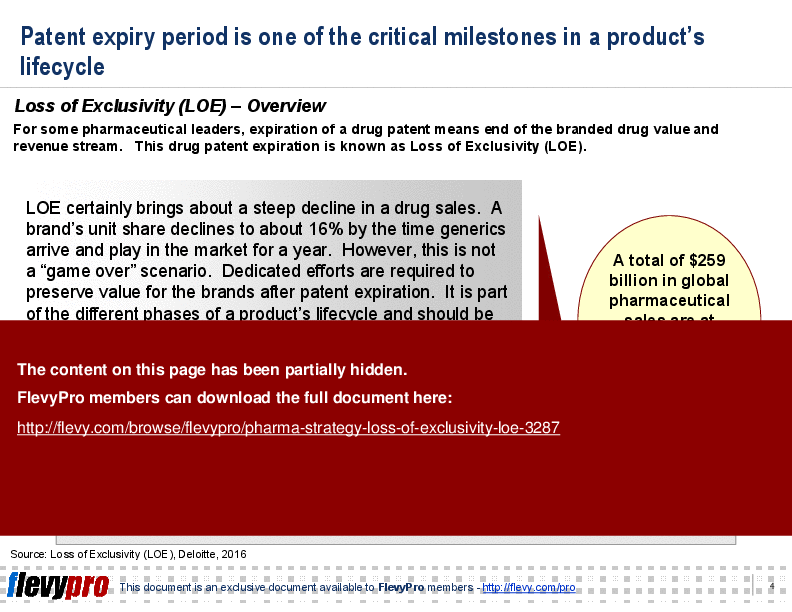

Expiration of a drug patent means end of the branded drug value and revenue stream for a majority of pharmaceutical firms. This loss of exclusivity (LOE) puts to risk a huge amount of money in global pharmaceutical sales.
LOE certainly brings about a steep decline in a drug sales. A brand's unit share declines to about 16% by the time generics arrive and play in the market for a year. However, this is not a "game over" scenario.
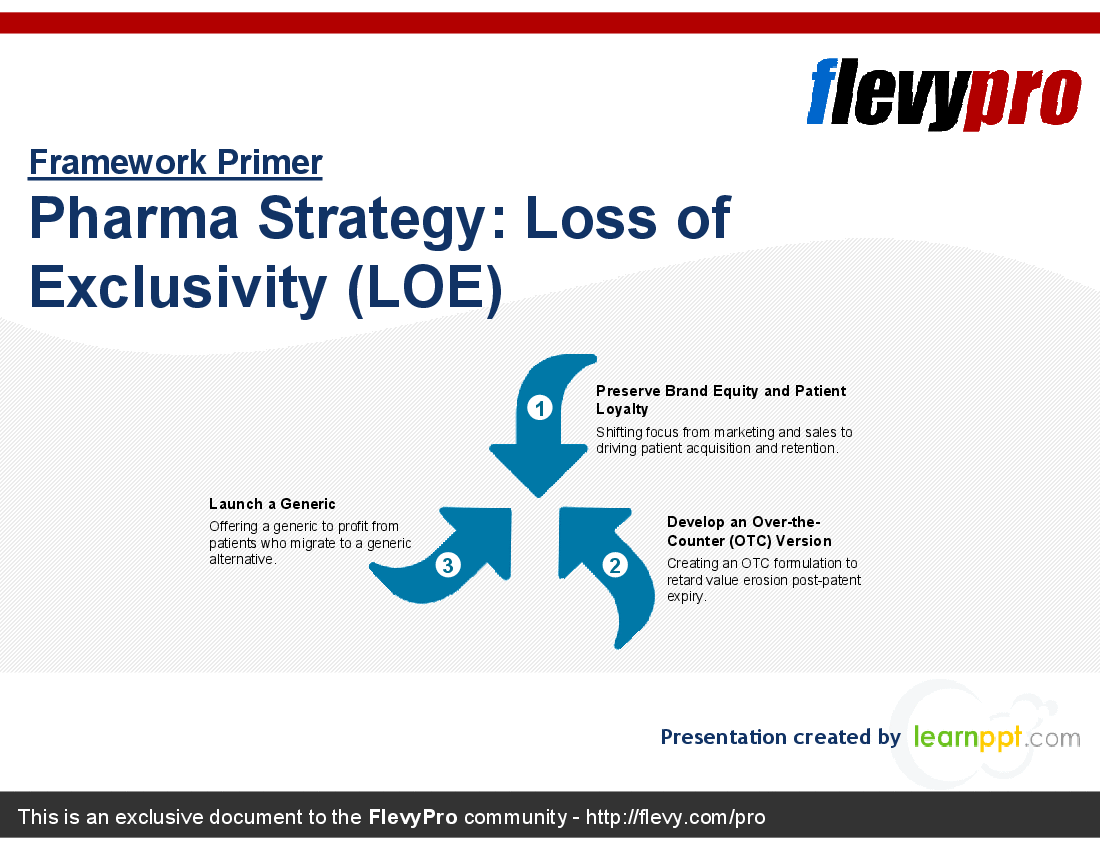
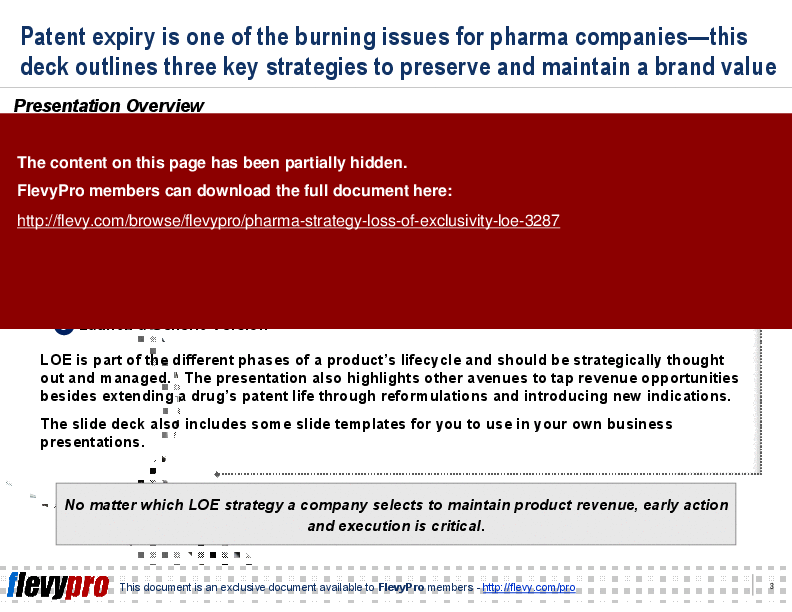
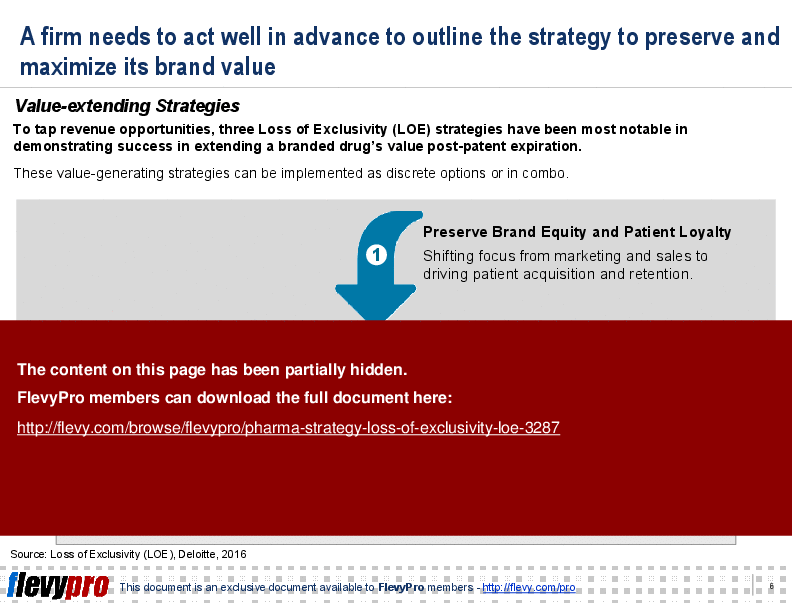
This deck discusses 3 key strategies to preserve value for the brands after patent expiration:
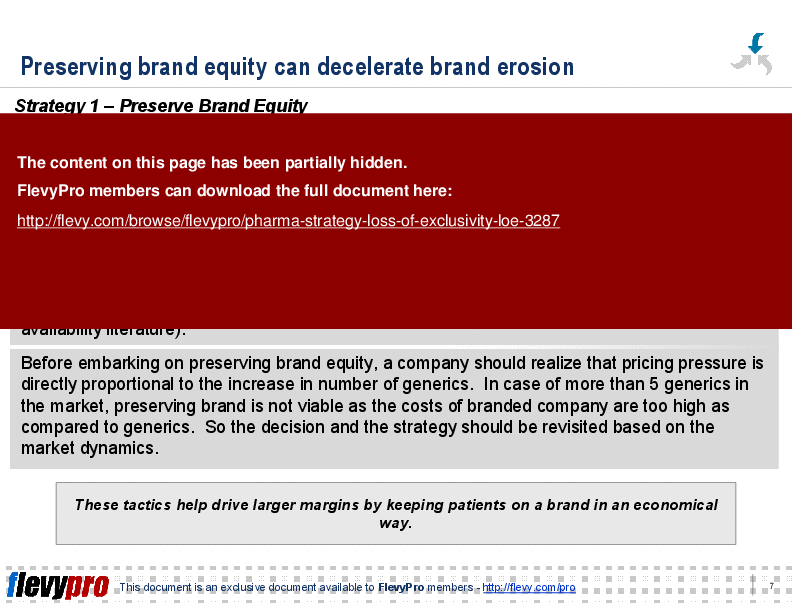
1. Preserve Brand Equity and Patient Loyalty
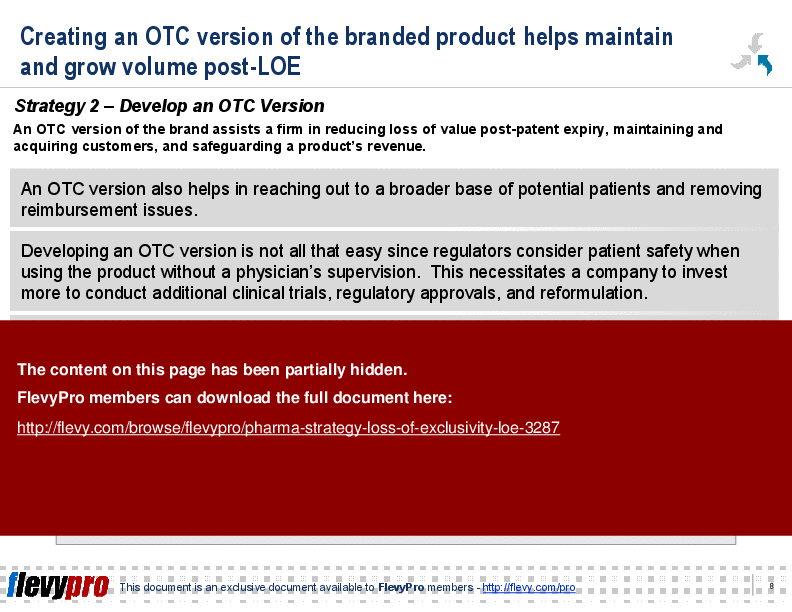
2. Develop an Over-the-Counter (OTC) Version
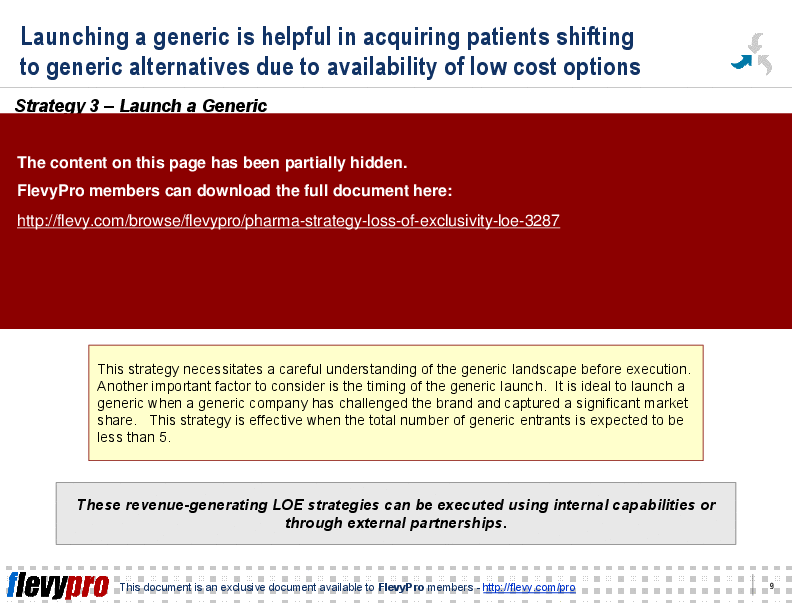
3. Launch a Generic Version
No matter which LOE strategy a company selects to maintain product revenue, early action and execution is critical.
LOE is part of the different phases of a product's lifecycle and should be strategically thought out and managed. The presentation also highlights other avenues to tap revenue opportunities besides extending a drug's patent life through reformulations and introducing new indications.
The slide deck also includes some slide templates for you to use in your own business presentations.
The PPT provides a comprehensive guide on managing the critical phase of Loss of Exclusivity (LOE) in the pharmaceutical industry. It emphasizes the importance of early planning and execution to mitigate the impact on revenue streams. The strategies outlined are not just theoretical, but are backed by practical templates and checklists to facilitate implementation.
The presentation also delves into the nuances of brand affinity and market dynamics, offering insights into how these factors influence the choice of LOE strategy. It includes a detailed timeline for planning and executing LOE strategies, ensuring that companies can navigate this challenging phase with precision and foresight. This resource is indispensable for pharmaceutical executives aiming to sustain brand value and revenue post-patent expiry.
Got a question about this document? Email us at flevypro@flevy.com.
Executive Summary
The "Pharma Strategy: Loss of Exclusivity (LOE)" presentation provides a strategic framework for pharmaceutical companies to navigate the critical period surrounding patent expirations. It outlines essential strategies to preserve brand value and revenue streams, focusing on proactive measures that can be taken well before the LOE date. By implementing tactics such as developing over-the-counter (OTC) versions, launching generics, and preserving brand equity, companies can mitigate the financial impact of patent expirations. This presentation is an invaluable resource for executives seeking to maximize product value and maintain competitive positioning in the market.
Who This Is For and When to Use
• Pharmaceutical executives responsible for brand management and strategy
• Marketing and sales teams focused on patient acquisition and retention
• Product managers involved in lifecycle management and LOE planning
• Business development professionals exploring new market opportunities
Best-fit moments to use this deck:
• During strategic planning sessions focused on LOE management
• When developing marketing strategies for products nearing patent expiration
• In workshops aimed at aligning cross-functional teams on LOE strategies
• For training sessions on best practices in pharmaceutical brand management
Learning Objectives
• Define Loss of Exclusivity (LOE) and its implications for pharmaceutical brands
• Build a comprehensive LOE strategy that includes OTC development and generic launches
• Establish metrics for measuring brand equity and patient loyalty during LOE
• Identify key market dynamics that influence LOE strategy effectiveness
• Create actionable plans for preserving brand value post-patent expiration
• Develop templates for tracking LOE management initiatives and outcomes
Table of Contents
• Overview (page 1)
• Value-extending Strategies (page 6)
• LOE Management (page 11)
• LOE Planning and Execution (page 15)
• Templates (page 19)
Primary Topics Covered
• Overview of LOE - Discusses the significance of patent expiration and its impact on pharmaceutical sales, emphasizing the need for strategic planning.
• Value-extending Strategies - Outlines 3 key strategies: preserving brand equity, developing OTC versions, and launching generics to maintain revenue.
• LOE Management - Introduces the Brand Affinity checklist to guide strategic decision-making and assess customer engagement.
• LOE Planning and Execution - Details a timeline for effective LOE strategy implementation, highlighting pre-LOE, peri-LOE, and post-LOE phases.
• Templates - Provides practical templates for organizations to use in their LOE planning and execution efforts.
Deliverables, Templates, and Tools
• Brand Affinity checklist template for assessing customer engagement
• LOE planning timeline template to guide execution phases
• Strategy development templates for OTC and generic product launches
• Marketing program templates to enhance patient retention and acquisition
• Performance tracking templates for monitoring LOE strategy effectiveness
Slide Highlights
• Overview slide detailing the significance of LOE in the pharmaceutical lifecycle
• Value-extending strategies slide outlining the 3 main tactics for preserving brand value
• Brand Affinity checklist slide that assists in evaluating customer loyalty and engagement
• LOE planning timeline slide that breaks down the execution phases into actionable steps
• Template slides for practical application of strategies discussed in the presentation
Potential Workshop Agenda
LOE Strategy Development Session (90 minutes)
• Review the implications of LOE on brand value and revenue
• Discuss the 3 key strategies for managing LOE
• Break into teams to develop specific action plans for each strategy
Brand Affinity Assessment Workshop (60 minutes)
• Introduce the Brand Affinity checklist and its importance
• Analyze current brand performance using the checklist
• Identify areas for improvement and develop targeted strategies
Customization Guidance
• Tailor the LOE planning timeline to reflect specific product patent expiration dates
• Adjust the Brand Affinity checklist to align with specific therapeutic areas and market conditions
• Incorporate company-specific metrics for tracking the success of LOE strategies
• Modify templates to fit organizational branding and communication standards
Secondary Topics Covered
• Market dynamics influencing LOE strategy effectiveness
• The role of patient education in maintaining brand loyalty
• Regulatory considerations for developing OTC products
• Financial implications of launching generics versus preserving branded products
Topic FAQ
Document FAQ
These are questions addressed within this presentation.
What is Loss of Exclusivity (LOE)?
LOE refers to the expiration of a drug patent, which typically leads to a significant decline in sales as generic alternatives enter the market.
What strategies can be employed to mitigate the impact of LOE?
Key strategies include preserving brand equity, developing OTC versions, and launching generics to capture market share.
How can companies assess their brand affinity?
Using the Brand Affinity checklist, companies can evaluate customer engagement and comfort with their brand, guiding strategic decisions.
When should companies start planning for LOE?
It is recommended to begin planning at least 2 years prior to the anticipated patent expiry date to ensure effective execution of strategies.
What are the phases of LOE planning and execution?
The LOE planning process is divided into 3 phases: pre-LOE, peri-LOE, and post-LOE, each with specific activities and focus areas.
How can companies track the effectiveness of their LOE strategies?
By utilizing performance tracking templates, companies can monitor key metrics and assess the success of their LOE initiatives.
What is the significance of developing an OTC version?
Creating an OTC version can help maintain and grow volume post-LOE by reaching a broader patient base and addressing reimbursement issues.
What factors influence the decision to launch a generic?
Market dynamics, including the number of competing generics and the brand's current market share, play a critical role in deciding when to launch a generic.
Glossary
• Loss of Exclusivity (LOE) - The period when a drug patent expires, leading to potential revenue decline.
• Brand Affinity - The level of customer engagement and loyalty to a brand.
• Over-the-Counter (OTC) - Products available for purchase without a prescription, often developed to retain market share post-LOE.
• Generic - A non-branded version of a drug that is typically sold at a lower price.
• Patient Acquisition - Strategies aimed at attracting new patients to a brand or product.
• Patient Retention - Efforts to keep existing patients loyal to a brand, especially during LOE.
• Market Dynamics - The factors that influence the competitive landscape and market behavior.
• Performance Tracking - The process of monitoring and evaluating the effectiveness of strategies and initiatives.
• Template - A pre-designed format or framework used to streamline planning and execution processes.
• Lifecycle Management - The strategic approach to managing a product throughout its lifecycle, from development to LOE.
• Revenue Stream - The income generated from sales of a product or service.
• Strategic Planning - The process of defining an organization's direction and making decisions on allocating resources to pursue this direction.
Source: Best Practices in Pharma Industry PowerPoint Slides: Pharma Strategy: Loss of Exclusivity (LOE) PowerPoint (PPT) Presentation Slide Deck, LearnPPT Consulting
Did you need more documents?
Consider a FlevyPro subscription from $39/month. View plans here.
For $10.00 more, you can download this document plus 2 more FlevyPro documents. That's just $13 each.
|
Download our FREE Strategy & Transformation Framework Templates
Download our free compilation of 50+ Strategy & Transformation slides and templates. Frameworks include McKinsey 7-S, Balanced Scorecard, Disruptive Innovation, BCG Curve, and many more. |