
This framework is developed by a team of former McKinsey and Big 4 consultants. The presentation follows the headline-body-bumper slide format used by global consulting firms.
Outcome-Driven Innovation (ODI) PPT: Learn the ODI framework, full form, and how to prioritize growth initiatives. Download this actionable business innovation template now. Outcome-Driven Innovation (ODI) is a 35-slide PPT PowerPoint presentation slide deck (PPTX) available for immediate download upon purchase.
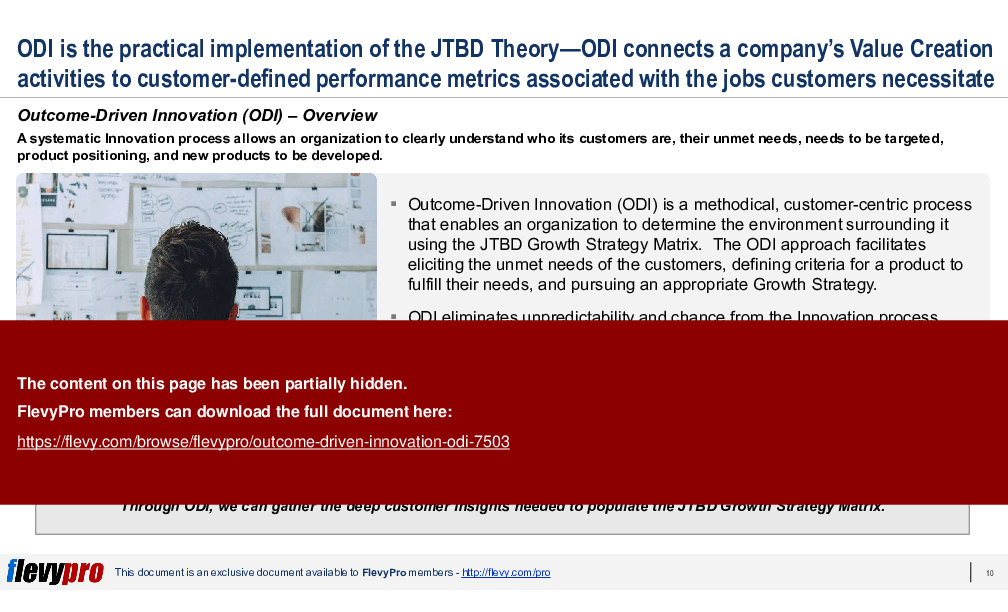
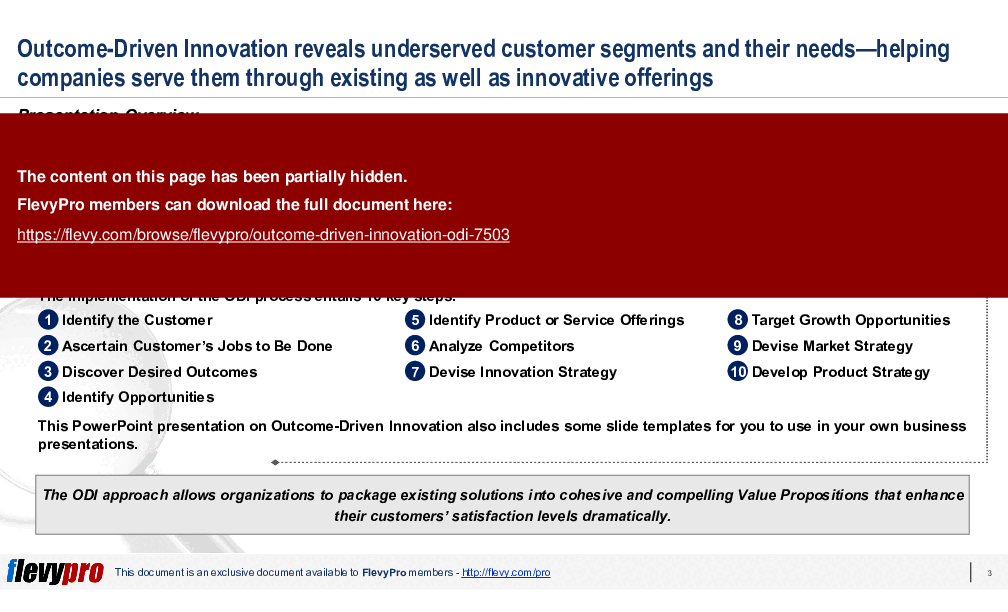
A systematic Innovation process allows an organization to clearly understand who its customers are, their unmet needs, needs to be targeted, product positioning, and new products to be developed.
This presentation highlights the Outcome-Driven Innovation (ODI) approach. ODI is a methodical, customer-centric process that enables an organization to determine the environment surrounding it using the JTBD Growth Strategy Matrix. The ODI process facilitates in eliciting the unmet needs of the customers, criteria for a product to fulfill their needs, and pursue an appropriate Growth Strategy.
ODI eliminates unpredictability and chance from the Innovation process. Moreover, the ODI approach allows organizations to package existing solutions into cohesive and compelling Value Propositions that enhance their customers' satisfaction levels dramatically.
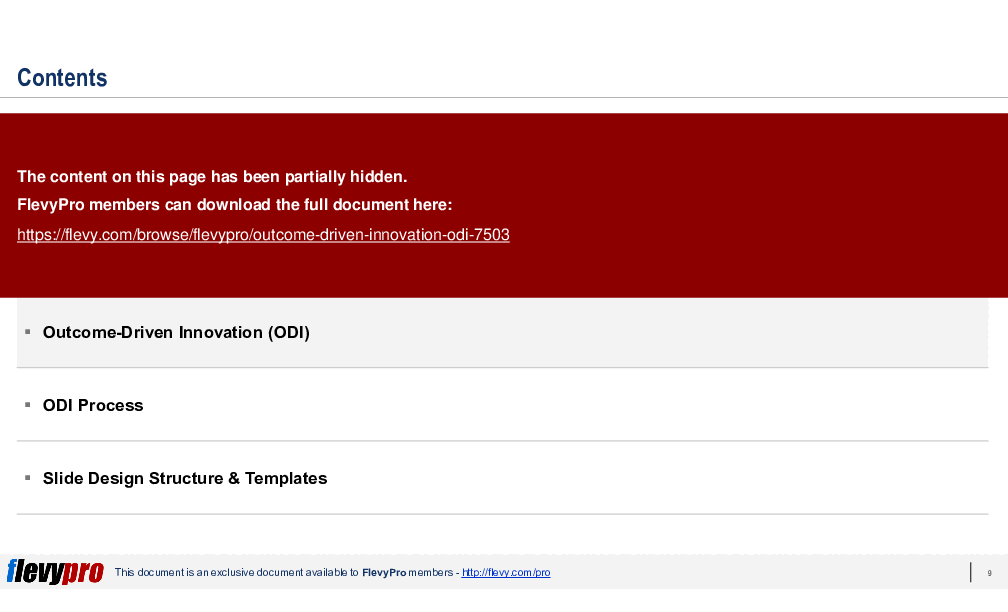
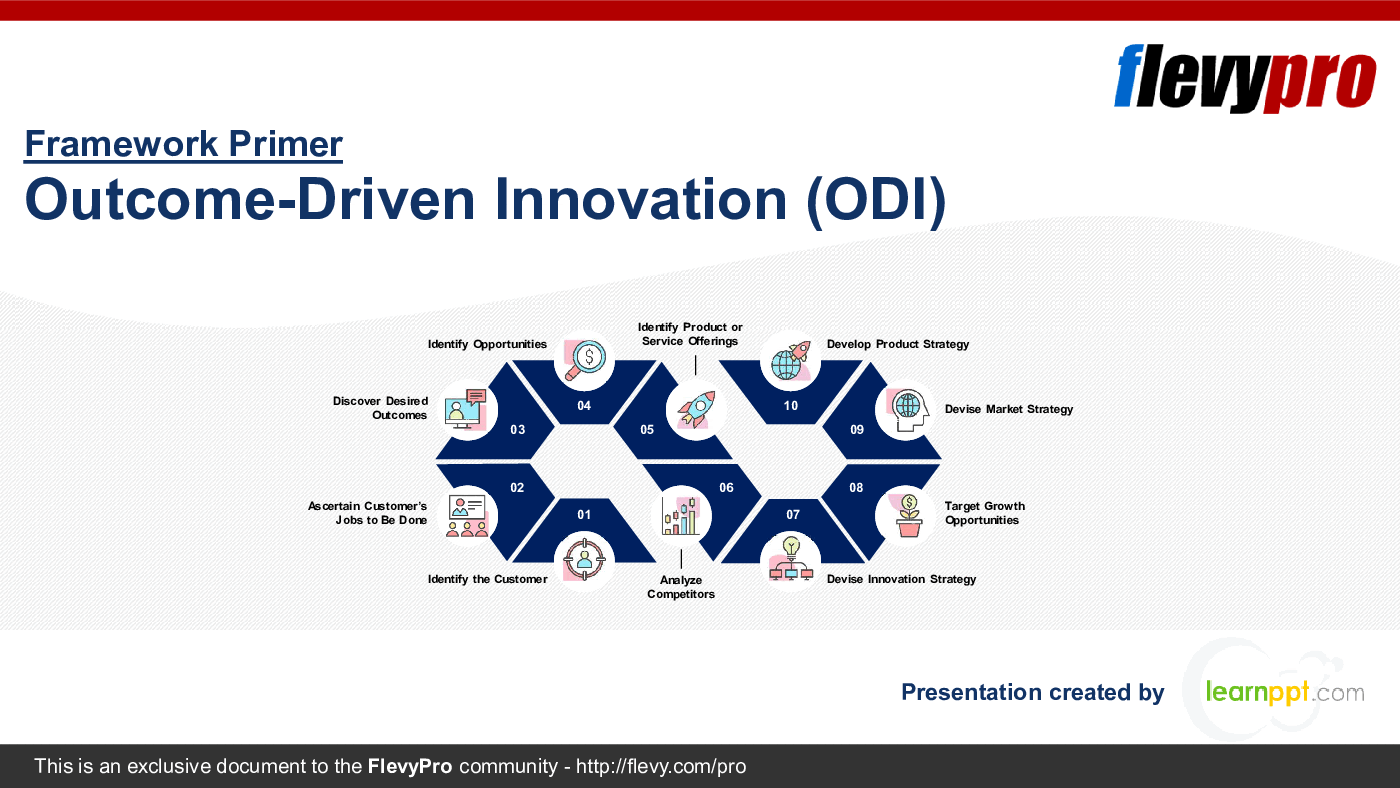
The implementation of the ODI process entails 10 key steps:
1. Identify the Customer
2. Ascertain Customer's Jobs to Be Done
3. Discover Desired Outcomes
4. Identify Opportunities
5. Identify Product or Service Offerings
6. Analyze Competitors
7. Devise Innovation Strategy
8. Target Growth Opportunities
9. Devise Market Strategy
10. Develop Product Strategy
In this presentation, we dig into each of these steps in detail. Additional concepts discussed include the 5 JTBD Growth Strategies, Job Map, Opportunity Algorithm, Opportunity Landscape, Product Strategy, among others.
This PowerPoint presentation on Outcome-Driven Innovation also includes some slide templates for you to use in your own business presentations.
This PPT provides a deep dive into the JTBD Growth Strategy Matrix, offering a robust framework for categorizing value propositions across different customer segments. Leadership can leverage this matrix to determine the optimal strategy for market success, whether it involves enhancing existing products or developing entirely new solutions. The presentation also includes practical templates and detailed guidelines for structuring your slides, ensuring your presentations are both professional and impactful. The ODI methodology has been instrumental for numerous multinational organizations in achieving significant growth by addressing unmet customer needs effectively.
This PPT slide outlines a strategic approach using Outcome-Driven Innovation (ODI) to market offerings effectively. The first step is identifying offerings that address specific, previously uncommunicated customer problems, requiring a deep understanding of customer segments. Organizations must convey the strengths of their value propositions, demonstrating how they meet unmet customer outcomes compared to competitors. Marketing messages should focus on product features that align with customer desires, utilizing relevant keywords in digital campaigns to enhance online engagement. A short website survey can identify customer needs, guiding them to suitable solutions. Training the sales team with the right tools is essential for pitching tailored solutions effectively. This structured methodology enhances market strategy by building trust and fostering stronger customer relationships.
This PPT slide outlines the third step in the Outcome-Driven Innovation (ODI) process, focusing on understanding customer needs through a Job Map. The Job Map visually represents the complete job customers aim to accomplish and identifies shortcomings in existing solutions. It consists of stages: defining, locating, preparing, confirming, executing, monitoring, modifying, and concluding. Each stage is essential for identifying Desired Outcomes, which serve as benchmarks for success. For example, minimizing the germination time of corn seeds is a Desired Outcome for farmers. Desired Outcome Statements synthesize improvements with performance metrics, derived from interviewing techniques like one-on-one interviews and focus groups, ensuring insights are grounded in real customer experiences. This step is critical for aligning offerings with customer expectations and tailoring products to meet specific market needs.
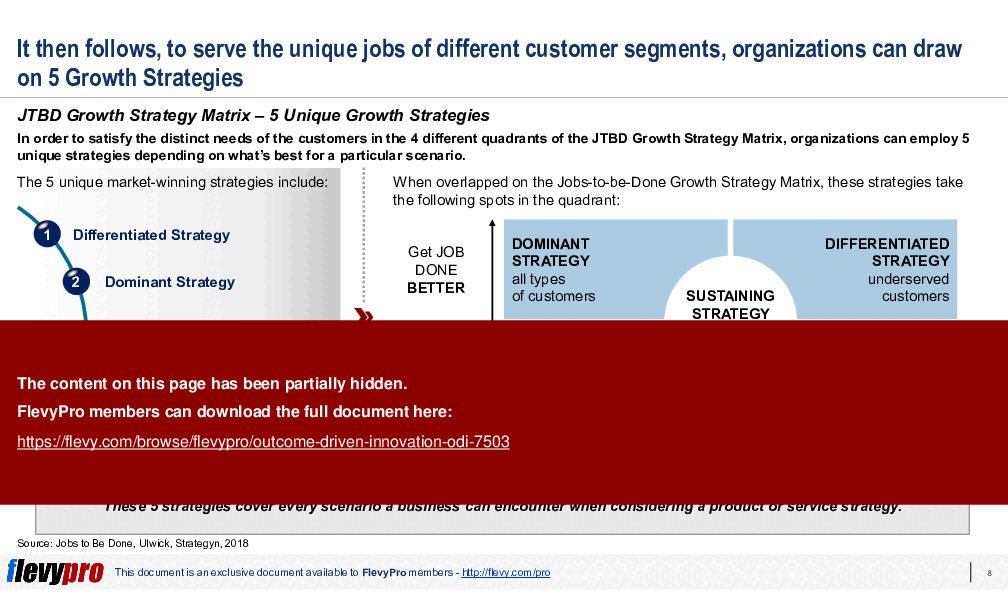
The JTBD (Jobs-to-be-Done) Growth Strategy Matrix outlines 5 growth strategies based on customer segment needs.
1. Differentiated Strategy: Targets underserved customers with unique offerings.
2. Dominant Strategy: Appeals to all customer types with broadly effective solutions.
3. Disruptive Strategy: Innovates for overserved customers and non-consumers by providing simpler alternatives.
4. Discrete Strategy: Addresses specific market gaps for customers with limited options.
5. Sustaining Strategy: Focuses on meeting the ongoing needs of existing customers.
The matrix illustrates the relationship between value delivered and pricing models, indicating that businesses must adjust pricing according to the chosen strategy. This framework guides organizations in optimizing market approaches to effectively meet customer demands and navigate competitive pressures.
The Outcome-Driven Innovation (ODI) process begins with accurately identifying customer segments: End Users, Product Lifecycle Support Team, and Purchase Decision Makers. End Users provide essential insights on product needs, reflecting practical requirements and effectiveness, such as a surgeon using a surgical tool. The Product Lifecycle Support Team focuses on operational aspects, including setup and maintenance, offering critical insights into usability and ownership costs. Purchase Decision Makers evaluate products based on financial metrics and market offerings, ensuring alignment of product features with market demands and budgetary constraints. Distinguishing these segments enables organizations to tailor innovation efforts, leading to more successful product outcomes.
This PPT slide presents the Outcome-Driven Innovation (ODI) methodology, a ten-step process for effective customer segmentation and product strategy development. It begins with discovering desired outcomes and understanding customer jobs, which is essential for identifying target segments. The methodology then analyzes competitors to inform market positioning, followed by identifying product offerings and developing strategies aligned with customer needs. This structured approach enables organizations to create targeted growth opportunities and effective market strategies. The ODI process highlights the interconnectedness of these steps, ensuring that the final product strategy is innovative and aligned with customer expectations. The methodology has been successfully implemented by multinational organizations, resulting in significant growth and new customer segments.
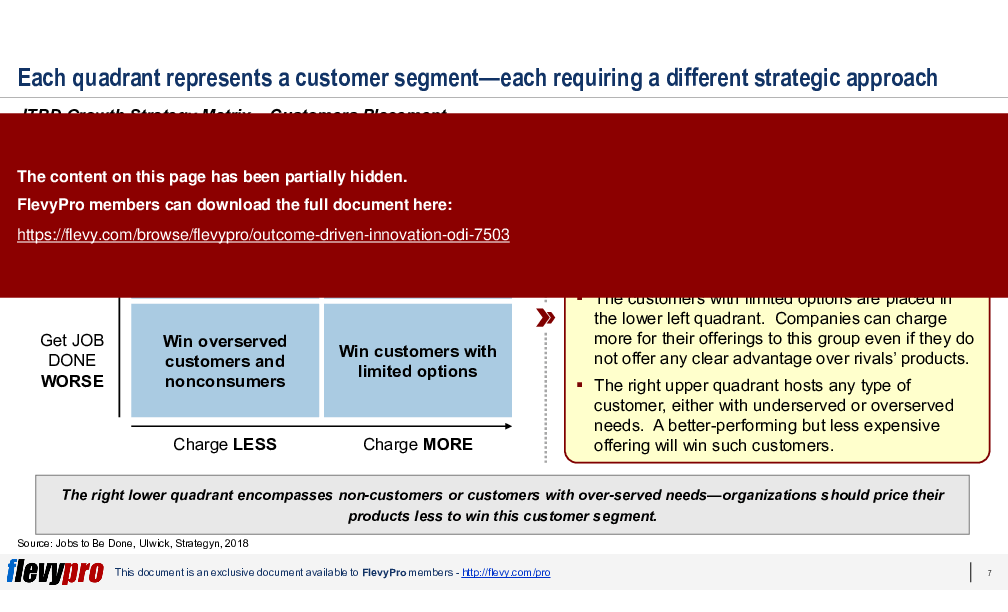
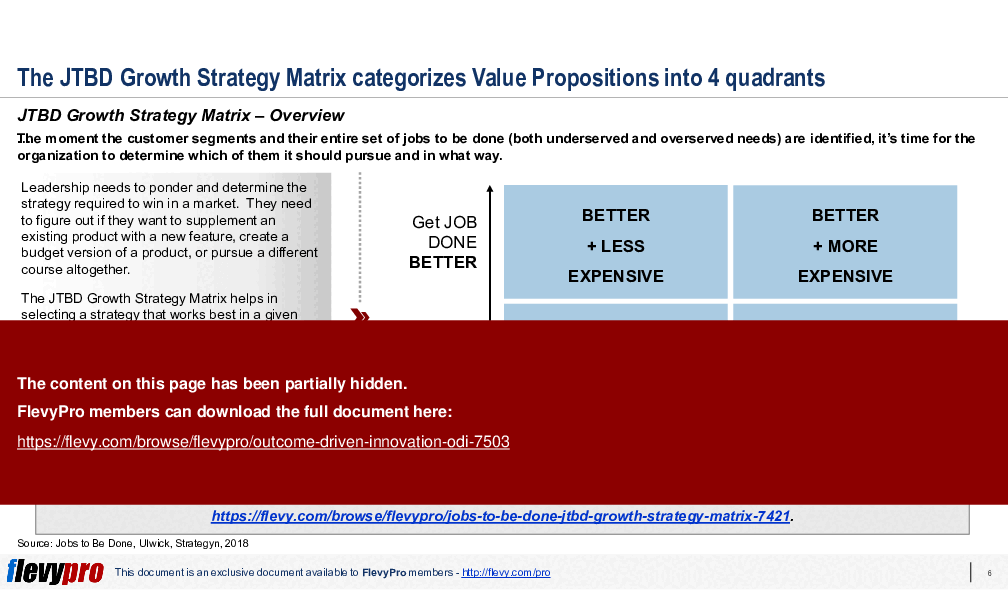
The JTBD (Jobs To Be Done) Growth Strategy Matrix helps organizations identify and pursue customer segments by understanding customer needs, both underserved and overserved. It categorizes value propositions into 4 quadrants based on 2 axes: effectiveness in accomplishing the job and associated cost. The vertical axis measures job performance, while the horizontal axis assesses pricing strategies from less to more expensive. The upper left quadrant highlights products that perform better at a lower cost, appealing to value-seeking customers. The upper right quadrant features superior offerings at a higher price for customers willing to pay for enhanced performance. The lower quadrants represent less favorable scenarios where products fail to meet needs effectively or are overpriced. This matrix aligns product development and marketing with customer expectations, prioritizing initiatives that efficiently meet demands and foster growth.
This PPT slide outlines the fifth step in the Outcome-Driven Innovation (ODI) process, focusing on identifying product or service offerings that meet customer needs. Organizations must understand customer desires and pinpoint unmet needs, recognizing their specific characteristics, extent, and intensity. A successful offering addresses these needs while outperforming competitors. Identifying the right product or service is crucial, as is effectively communicating how offerings satisfy identified needs. This process involves not only meeting current demands, but also anticipating future requirements. Fast-tracking the development of additional features can enhance customer satisfaction and drive growth, aligning offerings with customer expectations to uncover significant growth opportunities and maintain market position.
Source: Best Practices in Innovation, Value Proposition, Customer-centric Design PowerPoint Slides: Outcome-Driven Innovation (ODI) PowerPoint (PPTX) Presentation Slide Deck, LearnPPT Consulting
This framework is developed by a team of former McKinsey and Big 4 consultants. The presentation follows the headline-body-bumper slide format used by global consulting firms.
For $10.00 more, you can download this document plus 2 more FlevyPro documents. That's just $13 each.
ABOUT FLEVYPRO
This document is part of the FlevyPro Library, a curated knowledge base of documents for our FlevyPro subscribers.
FlevyPro is a subscription service for on-demand business frameworks and analysis tools. FlevyPro subscribers receive access to an exclusive library of curated business documents—business framework primers, presentation templates, Lean Six Sigma tools, and more—among other exclusive benefits.
Since 2012, we have provided business templates to over 10,000 businesses and organizations of all sizes, from startups and small businesses to the Fortune 100, in over 130 countries.
"Flevy is now a part of my business routine. I visit Flevy at least 3 times each month.
Flevy has become my preferred learning source, because what it provides is practical, current, and useful in this era where the business world is being rewritten.

many challenges and there is the need to make the right decisions in a short time, with so much scattered information, we are fortunate to have Flevy. Flevy investigates, selects, and puts at our disposal the best of the best to help us be successful in our work.
"
– Omar Hernán Montes Parra, CEO at Quantum SFE
"My FlevyPro subscription provides me with the most popular frameworks and decks in demand in today’s market. They not only augment my existing consulting and coaching offerings and delivery, but also keep me abreast of the latest trends, inspire new products and service offerings for my practice, and educate me
in a fraction of the time and money of other solutions. I strongly recommend FlevyPro to any consultant serious about success.
"
– Bill Branson, Founder at Strategic Business Architects
"I have found Flevy to be an amazing resource and library of useful presentations for lean sigma, change management and so many other topics. This has reduced the time I need to spend on preparing for my performance consultation. The library is easily accessible and updates are regularly provided. A wealth of great information."
– Cynthia Howard RN, PhD, Executive Coach at Ei Leadership
"FlevyPro has been a brilliant resource for me, as an independent growth consultant, to access a vast knowledge bank of presentations to support my work with clients. In terms of RoI, the value I received from the very first presentation I downloaded paid for my subscription many times over! The
quality of the decks available allows me to punch way above my weight – it's like having the resources of a Big 4 consultancy at your fingertips at a microscopic fraction of the overhead.
"
– Roderick Cameron, Founding Partner at SGFE Ltd
"[Flevy] produces some great work that has been/continues to be of immense help not only to myself, but as I seek to provide professional services to my clients, it gives me a large "tool box" of resources that are critical to provide them with the quality of service and outcomes they are expecting."
– Royston Knowles, Executive with 50+ Years of Board Level Experience
"As an Independent Management Consultant, I find Flevy to add great value as a source of best practices, templates and information on new trends. Flevy has matured and the quality and quantity of the library is excellent. Lastly the price charged is reasonable, creating a win-win value for
the customer, Flevy and the various authors. This is truly a service that benefits the consulting industry and associated clients. Thanks for providing this service.
"
– Jim Schoen, Principal at FRC Group
"Flevy.com has proven to be an invaluable resource library to our Independent Management Consultancy, supporting and enabling us to better serve our enterprise clients.
The value derived from our [FlevyPro] subscription in terms of the business it has helped to gain far exceeds the investment made, making a subscription a no-brainer for any growing consultancy – or in-house strategy team."
– Dean Carlton, Chief Transformation Officer, Global Village Transformations Pty Ltd.
"FlevyPro provides business frameworks from many of the global giants in management consulting that allow you to provide best in class solutions for your clients."
– David Harris, Managing Director at Futures Strategy
Save with Bundles
This document is available as part of the following discounted bundle(s):
Download our free compilation of 50+ Strategy & Transformation slides and templates. Frameworks include McKinsey 7-S, Balanced Scorecard, Disruptive Innovation, BCG Curve, and many more.